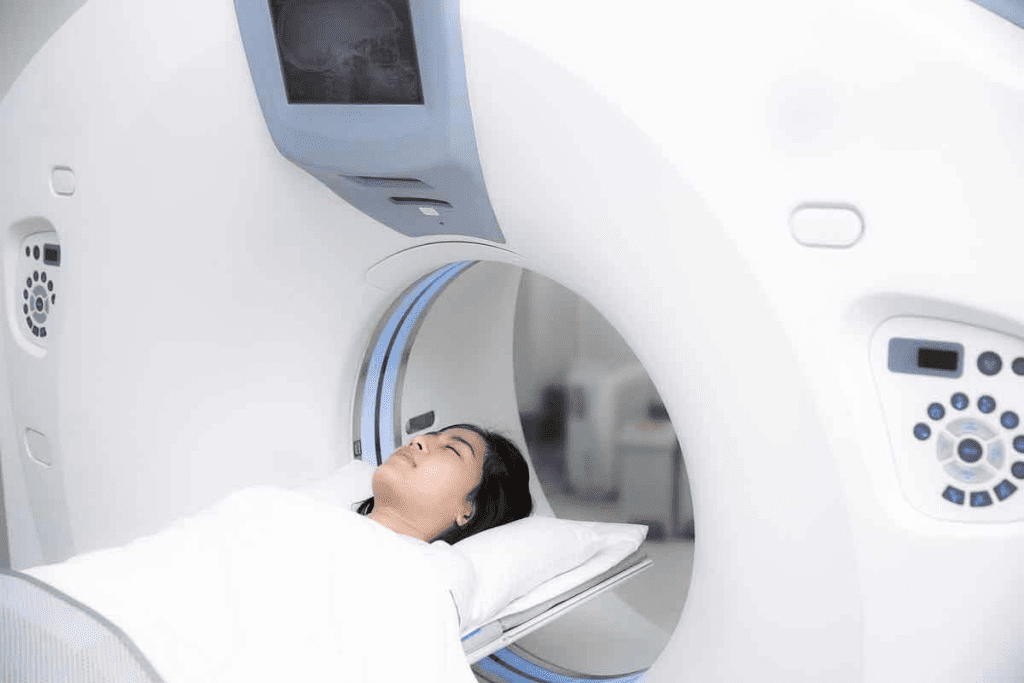
At Liv Hospital, we focus on patient care and new healthcare solutions. Knowing about DTPA scanning is key for checking the kidneys. A DTPA scan, or Diethylenetriamine Pentaacetate scan, is a test that looks at kidney function and blood flow.
The test uses a small amount of 99mtc dtpa, a radioactive tracer, injected into the blood. The kidneys take up this tracer. Then, a camera takes pictures that show how well the kidneys work. This renal scan is safe and helps doctors understand kidney health better.
Key Takeaways
- DTPA scanning is a nuclear imaging test used to assess kidney function and blood flow.
- The procedure involves injecting a radioactive tracer into the bloodstream.
- A special camera captures images to reveal kidney function.
- DTPA scans help in the management of kidney diseases.
- This non-invasive renal scan provides valuable insights into kidney function.
The Fundamentals of DTPA Scanning and Its Medical Purpose
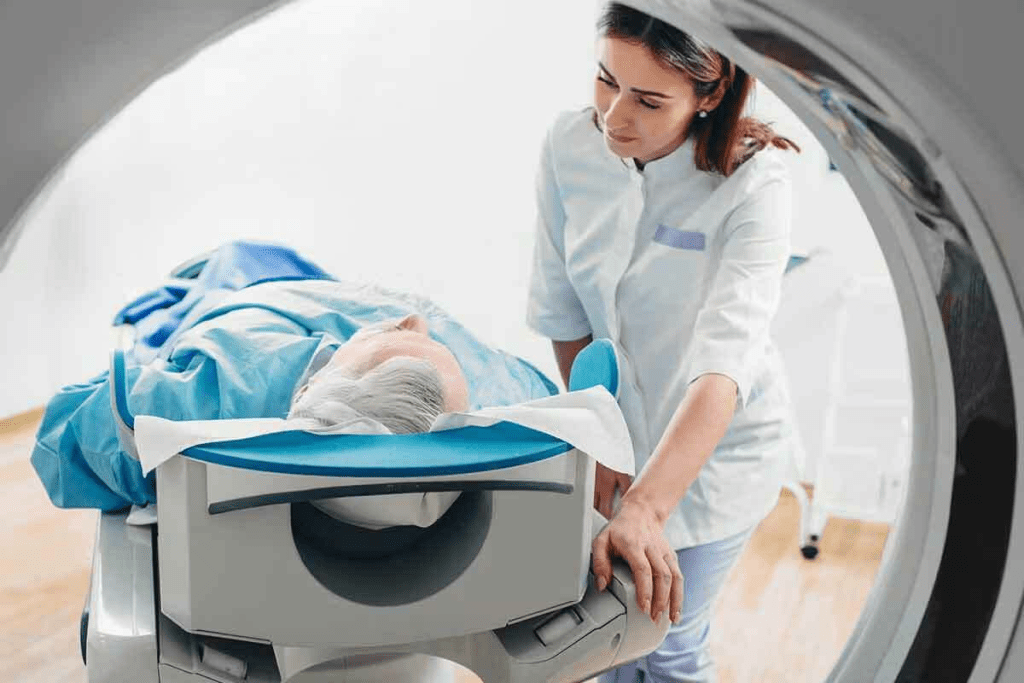
DTPA scanning uses radioactive tracers to see how organs work. It’s a part of nuclear medicine imaging. This method looks at how organs function, not just their shape.
This imaging method uses small amounts of radioactive materials. It helps diagnose and treat diseases like cancer and heart disease. It gives doctors important info on organ function, helping them treat diseases better.
Definition and Basic Principles of Nuclear Medicine Imaging
Nuclear medicine imaging works by using radioactive tracers. These tracers go to specific areas in the body. They emit gamma rays that a camera picks up.
This info helps create detailed images of organ function and structure. It’s a unique way to see inside the body.
“Nuclear medicine imaging provides a unique window into the body’s physiological processes, allowing for early diagnosis and treatment of diseases.”
The Role of Radioactive Tracers in Diagnostic Procedures
Radioactive tracers are key in DTPA scanning. They help target specific areas in the body. This gives important info on their function and structure.
In DTPA scanning, the tracer checks how well the kidneys work. It helps find problems with the kidneys.
| Radioactive Tracer | Target Organ/Tissue | Diagnostic Information |
| DTPA | Kidneys | Kidney function, obstruction, and disease |
| MAG3 | Kidneys | Kidney function, specially in those with poor kidney function |
| DMSA | Kidneys | Static images of kidney structure, good for finding scars and other issues |
The right tracer depends on what the doctor needs to know. DTPA scanning is important for checking kidney health.
Exploring DTPA scanning shows how powerful nuclear medicine is. It gives detailed info on organ function. This helps doctors diagnose and treat kidney problems better.
The Science Behind DTPA (Diethylenetriamine Pentaacetate)
Understanding DTPA is key to seeing its role in medical tests. DTPA, or Diethylenetriamine Pentaacetate, is a man-made compound used in medicine. It works as a chelating agent, which means it can bind to metal ions.
This ability makes DTPA useful in many medical uses. It’s often used as a radioactive tracer in imaging tests.
Chemical Composition and Properties of DTPA
DTPA’s chemical formula is C14H23N3O10. It has three nitrogen atoms and five carboxylate groups. This lets DTPA bind strongly to metal ions, forming stable complexes.
This chelating ability is important for its use in nuclear medicine. It helps bind to radioactive isotopes.
When DTPA is mixed with Technetium-99m (Tc-99m), it becomes Tc-99m DTPA. This is a valuable tool for checking kidney function. It’s used in tests to see how well the kidneys work.
How DTPA Functions as a Diagnostic Agent
As a diagnostic tool, DTPA is vital in nuclear medicine. When given to a patient, Tc-99m DTPA is mostly removed by the kidneys. How fast it’s cleared from the blood and urine tells us about kidney health.
The table below shows DTPA’s key properties and uses:
| Property/Application | Description |
| Chemical Formula | C14H23N3O10 |
| Role in Nuclear Medicine | Used as a chelating agent for radioactive isotopes like Tc-99m |
| Diagnostic Use | Assessment of kidney function through renal imaging |
| Excretion Pathway | Primarily excreted by the kidneys |
By understanding DTPA’s science and properties, we see its value in medical tests. It’s key for checking how well the kidneys work.
Clinical Applications of DTPA Scanning in Modern Medicine
DTPA scanning is key in modern medicine for checking kidney health and finding problems. It’s accurate and versatile, making it a must-have for doctors.
Evaluating Kidney Function and Detecting Abnormalities
DTPA scanning helps doctors check how well kidneys work. It uses a special tracer to see how kidneys filter and find issues like blockages or infections. This info is vital for treating kidney diseases.
It’s great for spotting kidney blockages early. This can prevent serious damage to the kidney.
Monitoring Kidney Transplants and Disease Progression
DTPA scans also keep an eye on kidney transplants. They check if the new kidney is working right. This helps doctors catch problems early and keep the transplant healthy.
Also, DTPA scans track how kidney diseases get worse. This lets doctors change treatment plans to help patients more.
When Physicians Recommend DTPA Scans
Doctors suggest DTPA scans when they need to check kidney function or watch disease progress. These scans are helpful when patients show signs of kidney problems or when there’s worry about a kidney transplant.
“DTPA scans offer a precise and reliable method for evaluating kidney function and detecting abnormalities, making them an essential tool in the management of kidney diseases.”
In summary, DTPA scanning is used in many ways in medicine. It helps check kidney health, find problems, and watch over transplants and diseases. Its role has greatly helped in treating kidney issues.
How a Renal DTPA Scan Works: The Complete Process
We will guide you through the step-by-step process of a renal DTPA scan. It’s a diagnostic procedure that checks kidney function. It measures the glomerular filtration rate (GFR) and tracks the flow of a radioactive tracer through the kidneys.
Measuring Glomerular Filtration Rate (GFR)
The GFR shows how well the kidneys are working. It’s the volume of fluid filtered from the blood plasma through the glomeruli per unit time. During a renal DTPA scan, the GFR is measured by tracking the clearance of the radioactive tracer, Technetium-99m DTPA, from the blood.
The tracer is injected into a vein in the arm. As it’s filtered through the kidneys, a gamma camera captures images at regular intervals. This tracks its flow and concentration. The rate at which the tracer is cleared from the blood gives a direct measure of the GFR.
“The GFR is considered one of the best overall indices of kidney function.”
National Kidney Foundation
Gamma Camera Technology and Image Acquisition
A gamma camera captures images of the kidneys as the tracer is filtered through them. This technology detects the gamma rays emitted by the tracer. It creates detailed images that reflect kidney function.
The gamma camera is placed around the patient’s abdomen. Images are acquired over a specified period. The camera captures both static and dynamic images. This provides information on the tracer’s flow, uptake, and excretion by the kidneys.
Data Collection and Analysis Techniques
The data collected during the renal DTPA scan is analyzed to assess kidney function and detect any abnormalities. The analysis involves evaluating the time-activity curves generated from the images. These curves provide information on the tracer’s uptake and excretion rates.
Key parameters assessed during the analysis include:
- Peak activity time
- Tracer clearance rate
- Relative function of each kidney
| Parameter | Description | Clinical Significance |
| Peak Activity Time | Time taken to reach maximum tracer activity | Indicates kidney function and obstruction |
| Tracer Clearance Rate | Rate at which the tracer is cleared from the blood | Directly related to GFR |
| Relative Function | Comparative function of each kidney | Helps in identifying differential kidney function |
By understanding how a renal DTPA scan works, patients can better prepare for the procedure. They can appreciate the valuable information it provides about their kidney health.
Preparing for Your Renal DTPA Scan: Patient Guidelines
Knowing what to expect during a renal DTPA scan can make you feel more at ease. We’ll help you understand the preparation, the scan itself, and what to do after. This will make your experience smoother.
Pre-Scan Instructions and Hydration Requirements
Before your scan, it’s important to follow certain steps to get accurate results. Drinking water is key; it helps the tracer move through your kidneys. You might also need to stop some medications or not eat for a few hours beforehand. Our team will give you all the details you need.
Duration and Step-by-Step Procedure Walkthrough
The scan usually lasts 30 to 60 minutes. Here’s what happens during it:
- A small amount of radioactive tracer is injected into a vein in your arm.
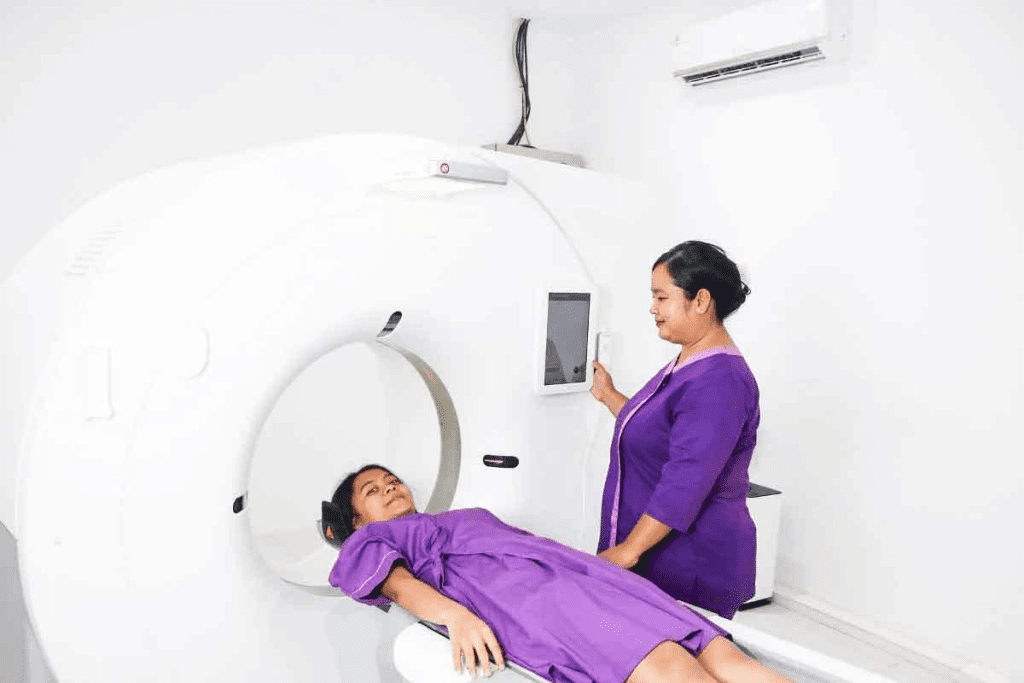
- You’ll lie on a table, and a gamma camera will take pictures of your kidneys as the tracer moves.
- You might need to stay very quiet or hold your breath for a bit to get clear images.
- The camera will track the tracer’s movement, helping our experts check your kidney function.
Post-Scan Care and Radiation Safety Measures
After the scan, you can go back to your usual activities unless your doctor says not to. Drinking lots of water is a good idea to get rid of the tracer. The radiation from the tracer is very small and usually doesn’t need special precautions. But we’ll give you all the details on what to do next and any follow-up appointments you might need.
By following these steps, you’ll help make your renal DTPA scan a success. This will also help us get accurate results. If you have any questions or worries, our team is here to help and support you.
Understanding and Interpreting Renal DTPA Scan Results
Renal DTPA scan results give us important insights into how our kidneys work. They help spot any problems early on. These scans are key in diagnosing kidney issues, showing how well our kidneys perform.
Normal vs. Abnormal Kidney Function Patterns
Healthcare providers look at renal DTPA scan results to see if our kidneys are working right. If they are, the scan shows even uptake and release of the tracer. But, if there’s a problem, like an obstruction, the scan will show it.
Abnormal patterns can mean many things, like a blockage or infection. For example, if the tracer takes too long to leave the kidney, it might mean there’s a blockage in the urinary tract.
What Different Scan Patterns Reveal About Kidney Health
Different patterns on a DTPA scan can tell us a lot about our kidneys. For example, it can spot obstructions by showing how long it takes for the tracer to leave the kidney. It also checks how well a transplanted kidney is working.
It helps figure out why our kidneys might not be working right. This helps doctors choose the best treatment. They can see how bad the problem is and track any changes.
Follow-up Recommendations Based on Scan Findings
After a renal DTPA scan, doctors might suggest more tests or treatments. If there’s a blockage, they might need to do imaging or surgery. If it shows an infection, they might prescribe antibiotics.
It’s important for patients to talk to their doctors about their scan results. They can learn what it means and what to do next.
Comparing DTPA Scanning with Alternative Kidney Function Tests
When diagnosing kidney problems, doctors often pick from various imaging tests. These include DTPA scanning, DMSA, and MAG3 renal scans. It’s important to know what each test can do well and what it can’t.
DTPA vs. DMSA and MAG3 Renal Scans
DTPA, DMSA, and MAG3 scans are all used to check how well the kidneys work. But they look at different things and give different kinds of information.
- DTPA Scans: Mainly used to check the glomerular filtration rate (GFR). This tells us how well the kidneys are working overall.
- DMSA Scans: Show the kidney’s cortex in detail. They help find scars, problems, and infections in the kidney.
- MAG3 Scans: Look at how well the kidneys function and how they drain. They’re good for checking if there’s a blockage or if the tubes in the kidneys are working right.
| Test | Primary Use | Key Benefits |
| DTPA Scan | Measuring GFR | Assesses overall kidney function |
| DMSA Scan | Static renal imaging | Identifies scarring and abnormalities |
| MAG3 Scan | Evaluating renal function and drainage | Assesses obstruction and tubular function |
Non-Nuclear Alternatives for Kidney Assessment
Nuclear medicine tests like DTPA, DMSA, and MAG3 scans give us a lot of information. But, there are also non-nuclear ways to check how well the kidneys are working.
These include:
- Ultrasound: Good for checking the size and shape of the kidneys. It can also find blockages or cysts.
- MRI: Gives detailed pictures of the kidneys. It can check how well they’re working and their structure without using radiation.
- CT Scans: Show detailed cross-sections of the kidneys. They can help find problems and see how the kidneys are structured.
Each of these options has its own benefits. Doctors choose the best one based on what they need to know and what’s best for the patient.
Conclusion: The Importance of DTPA Scanning in Kidney Health Management
DTPA scanning is key in managing kidney health. It gives insights into how well kidneys work. This helps doctors diagnose and treat kidney diseases better.
Patients and doctors can work together to keep kidneys healthy. Renal DTPA scans are a reliable way to check kidney function. They help find problems and track how diseases progress.
Medical technology keeps getting better, but DTPA scanning remains vital. It’s a top tool for diagnosing and monitoring kidney health. This helps improve patient care and quality of life.
FAQ
What is DTPA scanning?
DTPA scanning is a way to see how well your kidneys work. It uses a special dye that shows up on scans. This helps doctors find and fix kidney problems.
How does a renal DTPA scan work?
First, a dye is injected into your blood. Then, it goes through your kidneys. A camera captures images of this process. This shows how well your kidneys are working.
What is the purpose of a DTPA scan?
A DTPA scan checks your kidney health. It looks for blockages, infections, or problems with transplanted kidneys. This helps doctors understand and treat kidney issues.
How long does a renal DTPA scan take?
A DTPA scan usually takes about 30 minutes to an hour. This time lets the dye move through your kidneys and get clear images.
What are the pre-scan instructions for a renal DTPA scan?
You’ll need to drink lots of water before the scan. You might also need to arrive with a full bladder. Your doctor will give you specific instructions.
How do I interpret renal DTPA scan results?
The scan results show if your kidneys are working right. Different patterns mean different things. For example, blockages or infections might show up.
What is the difference between DTPA and DMSA renal scans?
Both tests check kidney function, but they look at different things. DTPA scans find blockages and infections. DMSA scans look for damage or scarring.
How much does a DTPA scan cost?
The cost of a DTPA scan varies. It depends on where you go, your insurance, and the doctor’s fees.
Is DTPA scanning covered by insurance?
Insurance coverage for DTPA scans changes. It depends on your policy and insurance company. Always check with your insurance first.
What are the alternatives to DTPA scanning?
Other tests like DMSA and MAG3 scans can also check kidney function. Non-nuclear tests, like ultrasound or MRI, are also options.
How do I find facilities that offer DTPA scanning services?
Look online for places that do DTPA scans. Or ask your doctor for a referral. They can help you find a good place.
What is the significance of measuring Glomerular Filtration Rate (GFR) during a DTPA scan?
Measuring GFR during a DTPA scan is very important. It tells doctors how well your kidneys are working. This helps them diagnose and treat kidney diseases.
What is a renogram?
A renogram is a graph of your kidney function. It shows how fast the dye is filtered through your kidneys. This helps doctors understand your kidney health.
References
- Rabadi, M. H., et al. (2016). Compare serum creatinine versus Renal 99mTc-DTPA for glomerular filtration rate measurement. PMC. https://www.ncbi.nlm.nih.gov/pmc/articles/PMC5137567/