As patients near the end of life, they face many physical and emotional changes. Fatigue is a big problem, affecting up to 70% of those with terminal illnesses, studies show on end-of-life care. This symptom is very hard for patients and their families to deal with.
Facing the dying process? Discover amazing ways to manage symptoms and find vital, powerful comfort for a peaceful transition.
As death gets closer, patients may pull away from the world. They might stop connecting with friends and family. Knowing this helps doctors and nurses give better care and support families during this tough time.
Key Takeaways
- Fatigue is the most common symptom seen at the end of life, affecting up to 70% of terminally ill patients.
- Patients nearing death often experience a range of physical and emotional changes.
- Palliative care plays a key role in supporting patients and their families during this difficult time.
- Other common symptoms at the end of life include shortness of breath, pain, and confusion.
- Understanding these symptoms helps healthcare providers deliver compassionate and complete care.
The Reality of End-of-Life Symptoms
It’s key to understand end-of-life symptoms for top-notch palliative care. As life nears its end, patients face many symptoms. These can greatly affect their life quality and upset both the patient and their family.
Patients starting hospice care early might not feel symptoms for months. But, as death draws near, physical and emotional changes become more obvious. It’s vital to know that impending death is marked by several signs.
Prevalence of Multiple Symptoms in Terminal Illness
Research shows 60-80% of palliative care patients face multiple symptoms. Symptoms like dyspnea, pain, death rattle, and confusion are common. These symptoms can greatly affect a patient’s comfort and life quality.
- Dyspnea (shortness of breath) affects a significant proportion of patients.
- Pain is another common symptom that requires careful management.
- Death rattle and respiratory secretions can be distressing for family members.
- Confusion and cognitive changes are also prevalent near the end of life.
The Importance of Symptom Recognition and Management
It’s vital to recognize and manage these symptoms for a comfortable end of life. Understanding the imminent meaning in end-of-life care helps healthcare providers prepare. A patient who is moribund needs careful symptom management to avoid suffering.
Managing end-of-life symptoms well involves a full approach. This includes medication, supportive care, and emotional support for the patient and their family. By tackling these symptoms with care and skill, we can enhance the quality of life for those in their final days.
Fatigue: The Most Common End-of-Life Symptom
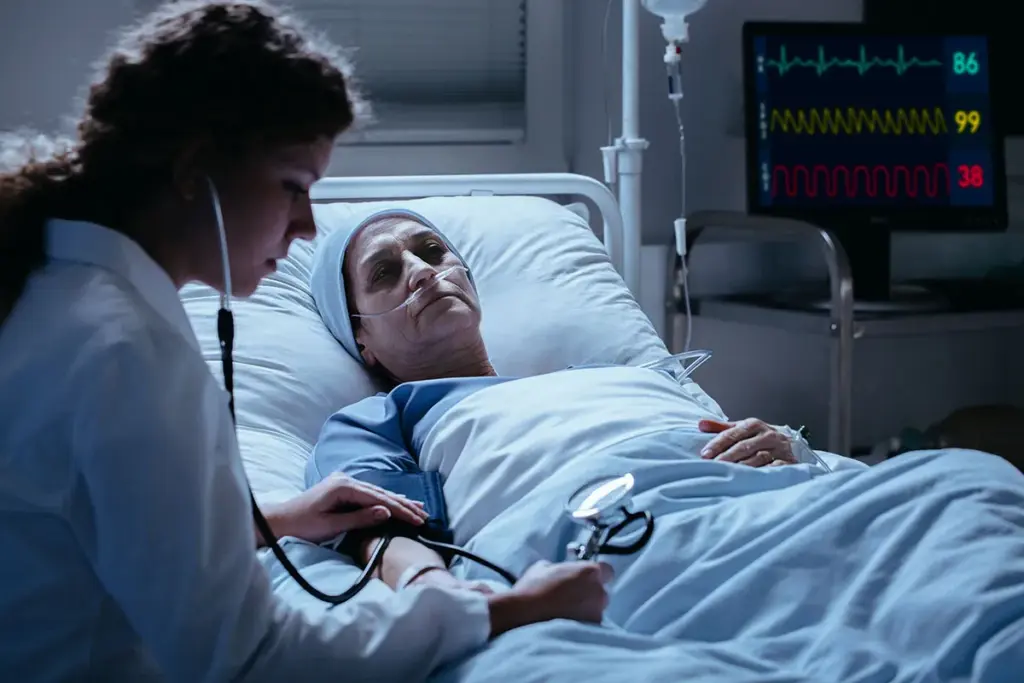
Fatigue is a common symptom for many terminally ill patients. It’s important to understand it to care for those nearing the end of life.
Prevalence and Impact of Fatigue
About 70% of terminally ill patients feel fatigued. This symptom greatly lowers their quality of life. It makes simple tasks hard due to a lack of energy.
Fatigue affects patients physically, emotionally, and mentally. As death nears, talking and activity decrease. Patients may need full-time care for even basic tasks.
Progression of Fatigue in Final Weeks and Days
In the last weeks and days, fatigue gets worse. Patients sleep more and show less interest in their surroundings. They may struggle to communicate, sometimes becoming unconscious or moaning in pain or discomfort.
Knowing this helps caregivers meet the patient’s changing needs. They can provide the right support and comfort.
Distinguishing Between Fatigue and Weakness
Fatigue and weakness are different, though they often happen together in terminally ill patients. Fatigue is a lack of energy, while weakness is a lack of muscle strength.
Let’s look at a table to understand the difference:
|
Symptom |
Characteristics |
Impact on Patient |
|---|---|---|
|
Fatigue |
Lack of energy, tiredness |
Reduces ability to perform daily activities |
|
Weakness |
Lack of muscle strength |
Makes physical tasks challenging, increases dependency on caregivers |
|
Combined Fatigue and Weakness |
Both energy and strength are compromised |
Significantly impairs quality of life, requires extensive support |
By knowing the difference, healthcare providers can better help patients. They can improve comfort and quality of life.
Dyspnea: When Breathing Becomes Difficult
Dyspnea, or shortness of breath, is a distressing symptom for many patients nearing the end of life. Nearly 56.7% of patients face this symptom, making it hard for both patients and their families.
Prevalence and Impact
Dyspnea is more than just a symptom; it’s a complex experience that affects patients’ quality of life. Studies show that 56.7% of patients experience shortness of breath as they approach the end of life. This symptom is distressing for both the patient and their loved ones.
Causes and Mechanisms
The causes of dyspnea in terminal illness are varied. Key factors include:
- Respiratory conditions such as chronic obstructive pulmonary disease (COPD)
- Cancer involving the lungs or airways
- Cardiac conditions like heart failure
- Neurological disorders affecting breathing
Understanding these causes is key for effective management. As patients near the end of life, their breathing may become irregular. This irregular breathing adds to the distress they experience.
Easing Breathing Difficulties
Several interventions can help ease breathing difficulties. These include:
- Oxygen therapy to increase oxygen levels
- Medications such as morphine to reduce the sensation of dyspnea
- Positioning the patient to optimize lung expansion
- Using fans to improve air circulation
For more information on managing symptoms during end-of-life care. There, you can learn about the signs of active dying and how to support patients and their families.
Pain Management in the Terminal Phase
Managing pain well is key in the final stages of illness. It affects how comfortable and happy a patient feels. We focus on understanding and treating pain for those close to the end.
Types and Patterns of End-of-Life Pain
About 52.4% of patients in the terminal phase feel pain. This pain can change as the disease gets worse or if they have chronic conditions. Knowing the different types and patterns of pain helps us create better plans to manage it.
- Somatic Pain: This pain comes from the skin, muscles, bones, or joints. It’s often described as aching or throbbing.
- Visceral Pain: This pain comes from inside the body. It feels deep, squeezing, or crampy.
- Neuropathic Pain: This pain is caused by nerve damage. It’s often felt as burning, stabbing, or shooting.
Assessment Challenges in Non-Verbal Patients
It’s hard to figure out pain in patients who can’t talk. They can’t tell us how they feel. We look at their vital signs and watch for signs like moaning or restlessness.
To understand pain in non-verbal patients, we need to watch closely. We use observations and our best judgment. This includes:
- Watching for changes in vital signs.
- Looking for signs of pain like grimacing or guarding.
- Using special tools to assess pain in those who can’t speak.
Effective Pharmacological and Non-Pharmacological Approaches
Dealing with pain in the terminal phase needs a mix of treatments. We use medicines and other methods together.
Pharmacological Approaches: Medicines like opioids, NSAIDs, and adjuvant analgesics are key. The right medicine depends on the pain type, how bad it is, and the patient’s health.
Non-Pharmacological Approaches: Methods like massage, heat or cold therapy, and relaxation help too. They work with medicines to make patients more comfortable.
By using both kinds of treatments, we can manage pain better. This improves the quality of life for those in the terminal phase.
Death Rattle and Respiratory Secretions
Death rattle is a distressing symptom seen in 51.4% of terminally ill patients. It’s important to understand and manage it well. As patients near the end, they can’t clear their airways as well. This leads to the noisy breathing sounds we call death rattle.
Mechanism Behind This Common Symptom
The death rattle happens when saliva and other secretions build up in the throat. As the patient’s condition worsens, the muscles for swallowing get weaker. This results in the characteristic noisy breathing.
Key factors contributing to death rattle include:
- Weakness of the muscles involved in swallowing
- Accumulation of respiratory secretions
- Changes in the level of consciousness
Emotional Impact on Family Members
The death rattle can be very upsetting for family members. They might think the patient is suffering or choking. It’s important to offer emotional support and education. This helps them understand that the patient is not in pain.
“The sound of death rattle can be very distressing for families. Yet, it’s key to reassure them that this symptom is not a sign of discomfort. It’s a natural part of the dying process.”
A Palliative Care Specialist
Management Strategies and Interventions
There are several ways to manage death rattle and improve comfort. These include:
|
Intervention |
Description |
|---|---|
|
Repositioning |
Adjusting the patient’s position to help clear secretions |
|
Anticholinergic medications |
Reducing the production of respiratory secretions |
|
Suctioning |
Removing secretions from the airways, but used carefully to avoid discomfort |
Understanding death rattle and using the right management strategies can help. Healthcare providers can offer compassionate care. This supports both patients and their families during a tough time.
Confusion and Cognitive Changes Near Death
About half of patients near death experience confusion and cognitive changes. Confusion affects 50.1% of patients, making it a key symptom to address. As death approaches, patients’ minds can change a lot, altering how they see and interact with the world.
Terminal Delirium vs. Peaceful Confusion
Terminal delirium and peaceful confusion are two conditions seen in patients nearing death. Terminal delirium is marked by a confused state, agitation, and hallucinations. On the other hand, peaceful confusion is when patients seem calm but are disoriented.
|
Characteristics |
Terminal Delirium |
Peaceful Confusion |
|---|---|---|
|
Consciousness |
Disturbed, often agitated |
Disoriented, generally calm |
|
Hallucinations |
Common |
Rare |
|
Patient State |
Agitated, restless |
Calm, may be disoriented |
Neurological Causes of End-of-Life Mental Changes
The reasons for cognitive changes near death are complex. They include metabolic issues, drug side effects, and the illness’s progression. Knowing these causes helps healthcare teams manage symptoms better.
A dying person might see the world differently due to various reasons. These include organ failure, infections, or the body’s decline.
Supporting Patients Through Cognitive Decline
Helping patients with cognitive decline requires a variety of strategies. This includes using medicine, adjusting the environment, and emotional support. We can make patients more comfortable by creating a peaceful space, reducing confusion, and clear communication.
Understanding the causes of confusion and cognitive changes helps us support patients and their families better during this tough time.
Physical Signs of Approaching Death
Knowing the physical signs of death can help caregivers support better. As patients near the end, their bodies change in ways that can be hard for everyone. Spotting these signs helps in easing symptoms and caring with kindness.
Decreased Urine Output and Renal Changes
Decreased urine output is a common sign of death. The kidneys make less urine as they decline. This can happen for many reasons, like less fluid intake or lower blood pressure. It’s important for caregivers to notice this to keep patients comfortable.
Circulatory Changes and Blood Pressure Drops
Circulatory changes are another key sign. Blood pressure often falls as the heart weakens. This can cause vital organs to not get enough blood, leading to further decline. Keeping an eye on blood pressure is vital for proper care.
Skin Mottling and Temperature Alterations
Skin mottling, or blotchy skin, is a sign of dying. It’s due to poor circulation and trouble keeping a stable body temperature. Patients might also have temperature swings, which can be upsetting. Caregivers need to be ready to handle these changes.
Changes in Vital Signs During Final Days
In the last days, vital signs like heart rate and breathing rate change a lot. They might have irregular rhythms or start Cheyne-Stokes breathing. Knowing these changes helps caregivers meet the patient’s needs better.
By spotting these signs, caregivers can offer more support and comfort to those nearing death. It’s key to manage symptoms well and ensure patients get the care and comfort they need in this important time.
The Dying Process: What Happens in the Final 48 Hours
In the last 48 hours, patients often go through physical changes that signal the end of life is near. These changes can be tough for the patient and their loved ones. It’s important to understand these changes to provide care with compassion.
Cheyne-Stokes Breathing Patterns
One key change is in breathing patterns. Cheyne-Stokes breathing is marked by quick breathing followed by pauses. This is a sign that death is close.
Seeing Cheyne-Stokes breathing can be hard for family members. But, it’s a natural part of dying. We can help families by explaining what they see and giving emotional support.
Consciousness Changes and Sensory Awareness
As death nears, patients’ consciousness can change. Some may seem less aware, while others stay alert but distant. They might have clear moments mixed with confusion or not responding.
These changes happen because the body needs less energy as it dies. We should support patients and keep their loved ones informed.
The Sequence of Physical Changes
The physical changes in the last 48 hours can differ for each patient. But, there are common ones. These include:
- Decreased urine output
- Changes in skin temperature and color
- Mottling of the skin
- Coolness of the extremities
Knowing these changes helps caregivers and family members understand what to expect. It helps them provide the right care.
Signs That Death Is Imminent
As the body shuts down, several signs show death is near. These include:
- Dropping blood pressure
- Changes in breathing patterns, such as Cheyne-Stokes breathing
- Decreased responsiveness
- Relaxation of the muscles
Spotting these signs lets us prepare families for the loss of their loved one. It helps us support them during this hard time.
Understanding the dying process and the changes in the last 48 hours helps us support patients and their families better. This knowledge lets us give care that meets each patient’s unique needs.
Managing Symptom Clusters in Palliative Care
Managing symptom clusters is key in palliative care. It greatly affects the quality of life for those nearing the end. Palliative care aims to support patients with serious illnesses, focusing on reducing suffering and improving life quality.
Prevalence of Multiple Symptoms
Research shows that 60-80% of palliative care patients face multiple symptoms. This makes it essential to have a complete care plan. Symptom clusters complicate patient care, needing a detailed approach.
Patients may deal with symptoms like fatigue, dyspnea, pain, and confusion. These can appear alone or together. Managing these symptoms is vital for quality palliative care.
Common Symptom Combinations and Their Management
Some common symptom combinations include:
- Fatigue and weakness
- Pain and dyspnea
- Confusion and agitation
Handling these combinations requires a custom plan. For example, patients with pain and dyspnea might benefit from both opioids and oxygen. This approach helps manage both symptoms at once.
It’s also important to consider the emotional and psychological effects of these symptoms. Emotional support and counseling can help reduce distress for patients and their families.
Integrated Approaches to Complex Symptom Relief
An integrated approach to symptom management combines medication and non-medication strategies. Medications can target specific symptoms. Non-medication strategies include:
- Physical therapy to keep mobility and reduce fatigue
- Respiratory therapy to ease breathing issues
- Counseling and emotional support for psychological distress
This integrated method provides full care for palliative patients. It not only improves comfort but also enhances life quality.
In conclusion, managing symptom clusters in palliative care needs a detailed and integrated strategy. Understanding the impact of multiple symptoms helps us develop effective ways to reduce suffering and improve patient outcomes.
Palliative Care Approaches to Symptom Relief
Effective symptom relief is key in palliative care, making life better for those nearing the end. We know that managing symptoms is vital. Our teams suggest medicines and therapies to ease pain, helping patients and their families.
The Goals of End-of-Life Symptom Management
The main goal is to reduce distressing symptoms, improving life quality. We focus on pain, breathing issues, and tiredness. By tackling these symptoms, we boost comfort and support families.
We assess each patient’s needs carefully. We consider their medical history and personal wishes. This helps us create a care plan that meets their unique needs.
Medication Protocols for Common Symptoms
Medicine is key in managing symptoms for terminal patients. We use various drugs to ease pain and breathing issues. Our protocols are safe, effective, and tailored to each patient.
|
Symptom |
Medication Class |
Example Medications |
|---|---|---|
|
Pain |
Opioids |
Morphine, Fentanyl |
|
Dyspnea |
Opioids, Benzodiazepines |
Morphine, Lorazepam |
|
Anxiety |
Benzodiazepines |
Lorazepam, Midazolam |
Complementary Therapies in Terminal Care
We also offer complementary therapies to support patients. These include massage, music, and mindfulness. Our aim is to provide holistic care for body, mind, and spirit.
Complementary therapies help patients have a peaceful death. Our teams work with patients and families to create a care plan. This plan includes therapies that meet their specific needs and wishes.
Supporting Family Through the Dying Process
Supporting families during the dying process is key to good end-of-life care. As loved ones near the end, families need guidance and reassurance. This helps them get through this tough time.
Preparing Loved Ones for Visual and Auditory Changes
Patients nearing death may see and hear things differently. This can upset family members. We explain what to expect to help them understand.
Patients might become less responsive and their breathing may change. Knowing these changes are part of dying helps families cope better.
Being with loved ones can comfort them. Simple actions like holding hands or playing soothing music can make a big difference.
Addressing Common Fears and Misconceptions
Families often worry about the dying process. We give them accurate info and reassurance. For example, we tell them about pain management to ease their fears.
They might fear pain, being left alone, or the unknown. Talking openly and providing support helps them feel better. We also focus on creating a supportive environment that respects the patient’s wishes.
“The way we care for our dying patients and their families is a reflection of our values as a society. It’s about compassion, dignity, and respect.”
A Palliative Care Expert
Creating Meaningful Presence at the Bedside
Being at the bedside is powerful for families. We encourage them to do things that comfort and connect them. Reading, singing, or just being together can create special moments.
|
Ways to Create Meaningful Presence |
Benefits |
|---|---|
|
Talking to the patient |
Provides comfort and reassurance |
|
Playing soothing music |
Creates a peaceful atmosphere |
|
Holding hands or touching |
Fosters emotional connection |
Supporting families through the dying process is our goal. We aim to provide care that meets the needs of patients and their families. This ensures a peaceful and dignified end-of-life experience.
Cultural and Spiritual Dimensions of End-of-Life Care
End-of-life care is complex, and cultural and spiritual aspects are key. Patients and families from different backgrounds have unique needs. It’s important to respect these differences to provide care that meets their values and preferences.
Diverse Perspectives on Death and Dying Symptoms
Cultural beliefs shape how people see and deal with terminal illness and death. Some cultures see death as a natural part of life, while others view it as a defeat or a transition. Understanding these beliefs is key to care that respects the patient’s values.
A lot of people have different views on end-of-life care, shaped by their culture.
Incorporating Spiritual Support into Symptom Management
Spiritual support is essential in holistic care. It helps patients find meaning, purpose, and connection during their dying days. This can include prayer, meditation, or just being there with them. By recognizing the spiritual aspect, healthcare providers can offer more complete care that covers the whole person, not just physical symptoms.
Honoring Cultural Practices Around Death
Death is celebrated differently in various cultures, with unique rituals and customs. Respecting these practices can bring comfort and a sense of continuity to patients and their families. Healthcare providers can work with families to understand and include these cultural practices when possible.
|
Culture |
Approach to Death |
Common Practices |
|---|---|---|
|
Western |
Often viewed as a medical event |
Focus on pain management, hospice care |
|
Asian |
May involve ancestral rituals |
Family-centered care, traditional medicine |
|
Indigenous |
Spiritual connection to nature and ancestors |
Rituals, ceremonies to honor the deceased |
Conclusion: Compassionate Care at Life’s End
Compassionate care is key at the end of life. Patients and their families face big challenges. We know that giving full care can make patients more comfortable and help families during tough times.
Good end-of-life care means managing symptoms and meeting physical and emotional needs. It also means focusing on comfort through palliative care. This way, we can make life better for patients and their families.
We focus on compassionate care in our approach to end-of-life care. We use palliative care principles to meet patients’ complex needs. This helps healthcare providers give top-notch care to patients and their families as they go through the dying process.
FAQ
What are the most common symptoms seen at the end of life?
Fatigue is the most common symptom, affecting up to 70% of terminally ill patients. Other common symptoms include dyspnea, pain, and confusion.
How does fatigue progress in the final weeks and days of life?
Fatigue tends to worsen as death approaches, making it challenging for patients to perform daily activities. Understanding the progression of fatigue can help healthcare providers better support patients.
What causes breathing difficulties in terminally ill patients?
Dyspnea, or shortness of breath, is a common symptom in terminally ill patients, affecting approximately 56.7% of patients. Causes include respiratory distress, cardiac issues, and anxiety.
How can pain be effectively managed in non-verbal patients?
Assessing pain in non-verbal patients can be challenging. Healthcare providers use various tools and techniques, such as observing behavioral cues and using pain assessment scales, to manage pain effectively.
What is death rattle, and how is it managed?
Death rattle refers to the sound of respiratory secretions in the airways, occurring in approximately 51.4% of patients near death. Management strategies include repositioning, suctioning, and medication to reduce secretions.
How can families be supported during the dying process?
Families can be supported by preparing them for changes in the patient’s condition, addressing common fears and misconceptions, and encouraging meaningful presence at the bedside.
What are the physical signs of approaching death?
Physical signs include decreased urine output, circulatory changes, skin mottling, and changes in vital signs. Understanding these signs can help families and healthcare providers prepare for the dying process.
What happens in the final 48 hours of life?
In the final 48 hours, patients may experience Cheyne-Stokes breathing, consciousness changes, and a sequence of physical changes. Understanding these changes can help healthcare providers provide compassionate care.
How can symptom clusters be managed in palliative care?
Managing symptom clusters requires an integrated approach, addressing multiple symptoms simultaneously. Healthcare providers use various strategies, including medication protocols and complementary therapies, to provide relief.
What is the role of palliative care in managing end-of-life symptoms?
Palliative care focuses on providing symptom management, improving patient comfort, and supporting families. Palliative care teams use various approaches, including medication protocols and complementary therapies, to manage symptoms.
How can cultural and spiritual dimensions be incorporated into end-of-life care?
Healthcare providers can incorporate cultural and spiritual dimensions by understanding diverse perspectives on death and dying, providing spiritual support, and honoring cultural practices around death.
What is Cheyne-Stokes breathing, and what does it indicate?
Cheyne-Stokes breathing is a pattern of breathing characterized by cycles of deep and shallow breaths. It can indicate that death is imminent.
What is moribund, and how is it related to the dying process?
Moribund refers to the state of being near death. Patients who are moribund often experience a range of physical and emotional changes as their body shuts down.
National Center for Biotechnology Information. Evidence-Based Medical Insight. Retrieved from https://pmc.ncbi.nlm.nih.gov/articles/PMC4346253/