Ear infections are very common in kids, with up to 80%“90% getting one before they are five. Recent data shows that five out of six kids have at least one ear infection before they are three. This makes ear infections a top reason for doctor visits. Understand how long kids withear infection symptoms remain contagious and how to protect others. lets check it out now.

While ear infections themselves are not contagious, the viruses or bacteria that cause them can spread. It’s important for parents to know this, to keep their kids safe in daycare or school.
This article will help parents understand otitis media, or middle ear infection. We’ll cover symptoms, treatment, and how to prevent it.
Key Takeaways
- Ear infections are extremely common in children under the age of five.
- The underlying causes of ear infections can be contagious.
- Understanding the symptoms is key to early diagnosis.
- Prevention methods can lower the risk of ear infections.
- Proper treatment can ease symptoms and prevent serious problems.
Understanding Ear Infections in Children
It’s important for parents to know about ear infections in kids. These infections, or otitis media, are common in children. They happen when a bacterial or viral infection reaches the middle ear.
What Causes Ear Infections
Ear infections come from bacteria or viruses. The eustachian tube is key to ear infections. It connects the middle ear to the throat. If it’s blocked, fluid builds up, making it easy for infections to start.
The main reasons include:
- Bacterial infections, such as Streptococcus pneumoniae
- Viral infections, like the common cold or flu
- Allergies or issues with the eustachian tube
Types of Ear Infections
There are different kinds of ear infections:
- Acute Otitis Media (AOM): Symptoms like ear pain and fever come on suddenly.
- Otitis Media with Effusion (OME): Fluid stays in the middle ear after an infection, causing hearing problems.
- Chronic Otitis Media: Long-lasting or recurring infections that can harm the ear over time.

Prevalence Statistics in Children Under Five
Ear infections are very common in kids under five. By three, many children have had an ear infection. This is because their eustachian tubes are shorter and more horizontal, making them more likely to get blocked.
Important facts are:
- By age three, about 75% of children have had an ear infection.
- Young children get ear infections more often because of their developing immune systems and eustachian tube shape.
The Truth About Contagiousness of Ear Infections
Knowing if ear infections are contagious is key for parents. Ear infections, or otitis media, are common in kids. Their contagiousness is a big worry.
Medical experts say ear infections aren’t contagious. A pediatrician explains, “Ear infections aren’t contagious themselves. But the infections that cause them can spread between kids.”
“The key is understanding that while the ear infection itself isn’t contagious, the viruses or bacteria that lead to it can be transmitted through respiratory droplets, contact with contaminated surfaces, or close contact with an infected person.”
Ear Infections Themselves Are Not Contagious
It’s important to know the difference between an ear infection and its cause. The infections that cause ear infections, like the common cold or flu, can spread. Ear infections are a complication of these infections, not the main cause of spreading.
How Related Upper Respiratory Infections Spread
Upper respiratory infections, which can lead to ear infections, are very contagious. They spread through:
- Respiratory droplets are released when an infected person coughs or sneezes
- Close contact with an infected person, such as touching or shaking hands
- Contact with contaminated surfaces or objects
To stop the spread, good hygiene is key. This includes washing hands often and avoiding close contact with the sick.
Contagious Period for Common Infections Leading to Ear Infections
The contagious time for infections that can lead to ear infections varies. For example:
- The common cold is contagious for 1-2 days before symptoms appear and can stay contagious for up to 2 weeks
- Influenza is contagious from 1 day before symptoms start until up to 5-7 days after becoming sick
Knowing how long an infection is contagious helps parents take steps to prevent it. If your child has an ear infection, they don’t need to stay isolated. But it’s important to watch their condition and follow the doctor’s advice. This might include an infected ear remedy.
By taking these steps and understanding ear infections, parents can lower the risk of spreading them. This ensures their child gets the right care.
Common Ear Infection Symptoms to Watch For
It’s important to know the signs of ear infections in kids. Ear infections, or otitis media, can be very uncomfortable. They can also lead to bigger problems if not treated right away.
Physical Symptoms in Different Age Groups
The signs of ear infections change with age. Babies and toddlers can’t tell us how they feel. So, we need to watch for other signs.
- Infants: Fever, fussiness, and trouble feeding.
- Toddlers: Ear tugging, irritability, and trouble sleeping.
- Older children: Ear pain, hearing problems, and sometimes fever.
These symptoms often come with upper respiratory infections. These infections can help ear infections start.
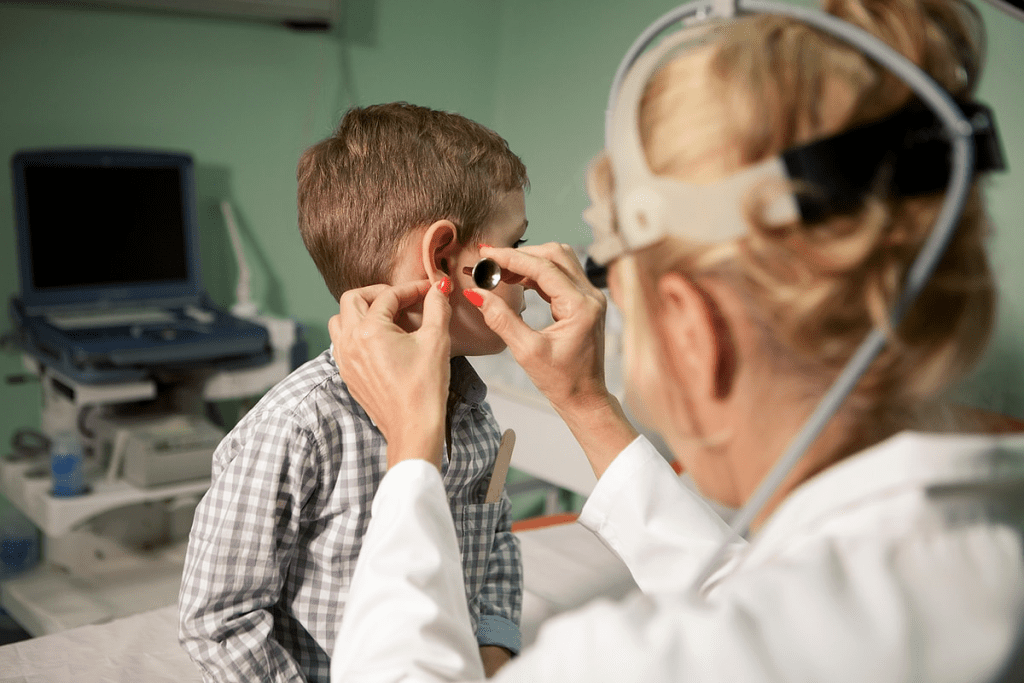
Behavioral Changes Indicating Ear Pain
Young kids, who can’t talk much, show ear pain in different ways. They might:
- Tug or pull at their ear.
- Get really upset or cranky.
- Have trouble sleeping or seem restless.
- Not want to eat or refuse food.
These signs mean the child is uncomfortable. They might have an earache. We need to check if they have an ear infection.
When Symptoms Require Immediate Medical Attention
Some ear infections need quick medical help. Look out for:
- Severe ear pain or headaches.
- High fever (over 102 °F).
- Fluid or discharge from the ear.
- Hearing loss or big trouble hearing.
If your child shows these signs, get medical help fast. This can stop otitis media disease problems.
When Can Children Return to School or Daycare?
After diagnosing an ear infection, parents often wonder when their child can safely return to school or daycare. The answer depends on several factors. These include the type of infection, the effectiveness of antibiotics, and the child’s overall health.
Guidelines for School Attendance
For children with ear infections treated with antibiotics, the general guideline is to keep them home until they have been on antibiotics for at least 24 hours. They should also show significant improvement in their symptoms. This ensures that the child is no longer contagious and can participate fully in school activities.
- Check with your pediatrician for specific guidance based on your child’s condition.
- Ensure your child is fever-free for at least 24 hours without the use of fever-reducing medications. For reference, a fever above 39 degrees Celsius is equivalent to 102.2 degrees Fahrenheit, which is considered high.
- Monitor your child’s overall health and watch for signs of complications or worsening symptoms.
Considerations for Daycare Settings
In daycare settings, the risk of infection transmission is higher due to the proximity of children. It’s important to follow strict guidelines:
- Keep your child home until they have completed 24 hours of antibiotic treatment for an ear infection.
- Ensure they are comfortable and able to participate in daycare activities.
- Inform daycare staff about your child’s condition and the measures you’ve taken to treat it.
Signs Your Child Is No Longer Contagious
It’s essential to identify when your child is no longer contagious to prevent the spread of infection. Signs include:
- A noticeable improvement in their symptoms.
- Completion of 24 hours of ear infection antibiotic treatment.
- Being fever-free for at least 24 hours.
By following these guidelines, parents can make informed decisions about when their child can safely return to school or daycare. This minimizes the risk of spreading infections to others.
Prevention Strategies to Reduce Ear Infection Risk
To prevent ear infections, making lifestyle changes, getting timely vaccinations, and practicing good hygiene are key. Parents can lower their child’s risk of ear infections by understanding and using these strategies.
Lifestyle and Environmental Modifications
Changing your lifestyle and environment can help prevent ear infections. Breastfeeding is known to lower the risk in infants. Also, staying away from secondhand smoke is important, as it can raise the risk of ear infections.
Keeping your child away from sick people and making sure they rest and drink water can also help. This reduces the chance of upper respiratory infections, which often lead to ear infections.
Vaccination Recommendations
Vaccines are essential in preventing ear infections. The pneumococcal conjugate vaccine (PCV) and the influenza vaccine are key. The PCV protects against pneumococcal disease, which can cause ear infections, pneumonia, and meningitis. The flu vaccine helps prevent influenza, which can also lead to ear infections.
Keeping up with these vaccinations can greatly lower the risk of ear infections. It’s important to follow the recommended vaccination schedule to keep your child safe.
Hygiene Practices to Prevent the Spread of Infections
Good hygiene is key to stopping infections that can lead to ear infections. Frequent handwashing is a simple yet effective way to prevent the spread of infection. Encourage your child to wash their hands often, after blowing their nose, coughing, or sneezing.
Also, avoiding the sharing of utensils, cups, or other personal items can help prevent infection spread. Teaching your child to cover their mouth and nose when coughing or sneezing can also reduce the spread of germs.
Conclusion
Ear infections, also known as otitis media or middle ear infections, are common in children. They are not contagious, but knowing their causes and symptoms is key. This knowledge helps manage them effectively.
It’s important to recognize ear infection symptoms. These symptoms can cause discomfort and serious problems if ignored. By knowing the signs and taking steps to prevent them, parents can lower the risk of ear infections in their kids.
Preventing ear infections involves making lifestyle changes, getting vaccinations, and practicing good hygiene. These actions help reduce ear infection occurrences. They also ensure children stay healthy overall.
Knowing that upper respiratory infections are contagious, but ear infections are not, helps parents. They can then take steps to stop the spread of infections. This creates a healthier environment for their children.
FAQ
What is an ear infection, and how does it occur?
An ear infection, or otitis media, happens when bacteria or viruses infect the middle ear. This often starts with a cold or other respiratory infection. The eustachian tube, which connects the middle ear to the back of the throat, is key to ear infections.
Are ear infections contagious?
Ear infections themselves aren’t contagious. But the causes, like upper respiratory infections, can be.
What are the common symptoms of an ear infection?
Symptoms of ear infections differ by age. They can include ear pain, fever, and irritability. Young children might tug on their ears or have trouble sleeping, showing ear pain.
How long does it take for antibiotics to work for an ear infection?
Antibiotics start working in 24-48 hours for bacterial ear infections. It’s important to finish the full treatment as ordered.
When can children return to school or daycare after an ear infection?
Kids can go back to school or daycare after 24 hours on antibiotics and feeling well enough to join in.
How can I prevent ear infections in my child?
Preventing ear infections involves good hygiene and vaccines. Also, avoid secondhand smoke and make lifestyle changes.
What is the contagious period for common infections that can lead to ear infections?
The contagious time varies by infection. Generally, kids are contagious until they’ve been on antibiotics for 24 hours or symptoms have gone away.
Can ear infections be treated without antibiotics?
Sometimes, ear infections can clear up without antibiotics. But always check with a healthcare professional for the best treatment.
How can I manage my child’s ear pain due to an ear infection?
Manage ear pain with over-the-counter pain relievers like acetaminophen or ibuprofen. Also, try a warm compress on the affected ear.
Reference
- National Institute on Deafness and Other Communication Disorders. (2017). Ear Infections in Children. Retrieved fromhttps://www.ncbi.nlm.nih.gov/pmc/articles/PMC2852629/
- MedlinePlus. (2021). Ear Infection (Otitis Media). U.S. National Library of Medicine. Retrieved fromhttps://www.medicalnewstoday.com/articles/316706