Otorhinolaryngology focuses on the ear, nose, and throat. Learn about the diagnosis and treatment of hearing loss, sinusitis, tonsillitis, and voice disorders.
Send us all your questions or requests, and our expert team will assist you.
Before any surgery is scheduled, a comprehensive diagnostic process is required. Doctors do not recommend Functional Endoscopic Sinus Surgery lightly. They need to confirm with absolute certainty that the patient’s symptoms stem from a physical blockage or chronic disease that surgery can effectively resolve. Chronic sinusitis can sometimes mimic other conditions, such as migraines, jaw joint issues, or dental abscesses. Therefore, the specialist acts as a detective, gathering evidence from the patient’s history, visual examinations, and advanced imaging technology.
The diagnostic phase is also crucial for safety. Every person’s sinus anatomy is unique, like a fingerprint. Some people have thin bones near the eyes; others have sinuses that extend further back than usual. The surgeon needs a detailed roadmap of this anatomy before they enter the operating room. This section outlines the standard steps a patient will go through, from the first conversation in the office to the high-tech scans that confirm the diagnosis.


The first step is a detailed conversation with the ear, nose, and throat (ENT) specialist. The doctor needs to establish the timeline of the illness. They will look for the “12-week” marker that defines chronic sinusitis. They will ask detailed questions about the nature of the symptoms: Is the pain worse when leaning forward? Is the discharge clear or colored? Is there a loss of smell?
Crucially, the doctor will review previous treatments. This is called assessing for “medical failure” or “refractory disease.” Surgery is typically only an option after “maximum medical therapy” has failed. This situation usually means the patient has tried multiple courses of antibiotics, oral steroids, and months of topical nasal sprays without lasting relief. The doctor needs to confirm that the patient has been compliant with these treatments—for example, using the sprays correctly every day—to ensure that surgery is truly the next logical step. They will also ask about smoking habits, as smoking is a major cause of treatment failure and may need to be stopped before surgery is considered.

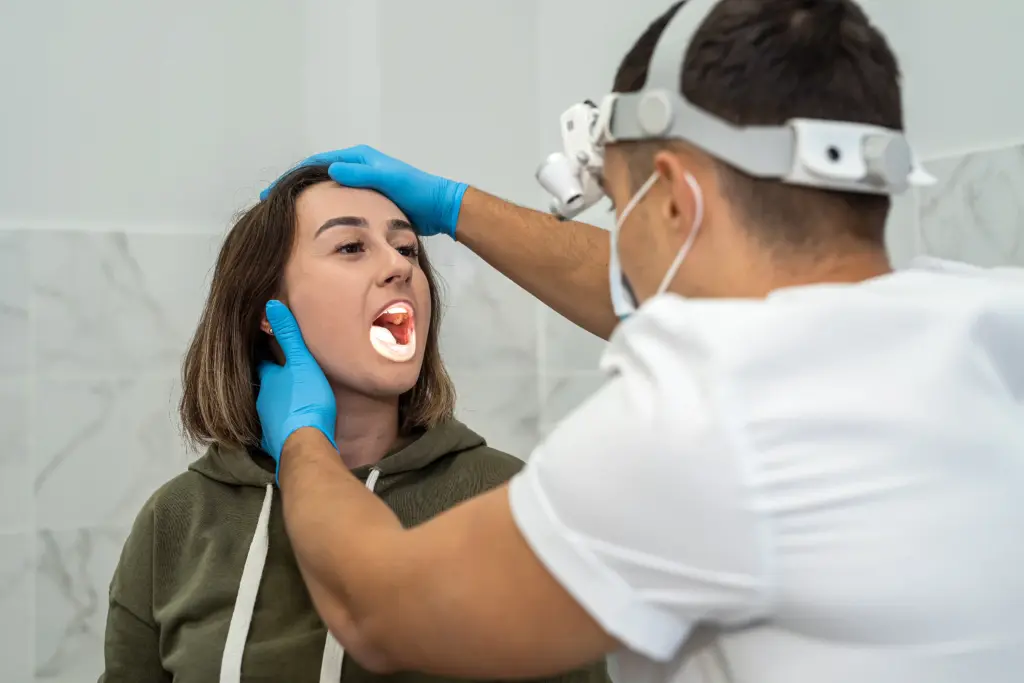
The most important tool for physical diagnosis is nasal endoscopy. This is a quick procedure performed right in the ENT office. Unlike a standard checkup where a doctor looks up the nose with a small light, endoscopy allows for a deep, panoramic view of the internal nasal cavity.
The doctor will first spray the nose with a decongestant and a numbing agent. Once the nose is numb, a thin, rigid, or flexible tube with a camera (the endoscope) is gently inserted into the nostril. This allows the doctor to see the “middle meatus,” which is the critical drainage area for most sinuses. They are looking for objective signs of disease: pus draining from the openings, swollen red tissue, or nasal polyps. Seeing these signs confirms the diagnosis. If the nose looks perfectly healthy inside despite the patient complaining of pain, the doctor may look for non-sinus causes like neurological headaches.
For the patient, the endoscopy is usually described as strange or uncomfortable, but rarely painful. There is a feeling of pressure or a “tickle” deep in the nose. The numbing spray can taste bitter and might make the throat feel thick for an hour, but it wears off quickly. The procedure takes only a minute or two. The doctor may show the patient the video on a screen, pointing out the polyps or the deviated septum, which helps the patient understand why they are suffering.
While endoscopy is excellent for visualizing the main passage of the nose, it cannot access the enclosed areas of the sinuses. To see through the bone, a Computed Tomography (CT) scan is essential. This document is the roadmap for the surgery. A sinus CT scan uses X-rays to create detailed cross-sectional images of the head.
The CT scan reveals what is happening inside the cheek, forehead, and deep sinuses. Healthy sinuses are filled with air and appear black on the scan. Diseased sinuses are filled with fluid, mucus, or thickened tissue and appear gray. The scan also shows the bony anatomy. The surgeon looks for specific structural issues, such as a deviated septum or bone spurs, that are blocking the pathways.
Modern sinus CT scans use specialized protocols that involve very low doses of radiation, significantly less than older scans. The procedure is fast, painless, and noninvasive. The patient simply lies on a table for about 10 minutes while a donut-shaped machine moves around their head. The detailed images obtained are mandatory for surgical planning; no surgeon will operate without seeing exactly where the delicate boundaries of the eye and brain are located.
Since inflammation is a primary driver of chronic sinusitis, identifying its trigger is a key part of the diagnosis. The ENT specialist may recommend allergy testing, either through skin pricks or blood tests. This helps determine if the sinus swelling is being caused by reactions to dust mites, mold, pollen, or pet dander.
Knowing the allergy status is important for long-term expectations. If a patient has severe environmental allergies, surgery will open the sinuses, but it will not cure the allergy. The patient will need to know that they must continue managing their allergies with shots or medications after surgery to prevent the swelling from returning. It helps the doctor and patient build a comprehensive “total care” plan, rather than viewing surgery as a magic bullet that fixes everything alone.
Before booking surgery, the doctor acts as an auditor of previous treatments. They verify that the medications prescribed were strong enough and taken for long enough. Occasionally, a patient might have been given an antibiotic that doesn’t kill the specific bacteria in their nose, or they stopped using their steroid spray after three days because they didn’t see instant results.
If there are gaps in the treatment history, the doctor might recommend one final “full court press” of medication—perhaps a stronger antibiotic combined with a tapered course of oral steroids—to see if surgery can be avoided. If the symptoms persist or return immediately after this optimized medical treatment, the diagnosis of refractory chronic sinusitis is confirmed, and surgery is green-lit.
A good diagnosis includes identifying what the problem is. Many patients come in convinced they have a sinus headache because they have pain in the face, but they actually have migraines or tension headaches. If the CT scan and endoscopy show clear, healthy sinuses, the ENT will refer the patient to a neurologist.
Similarly, dental infections can spread upward into the maxillary sinus. The doctor will look at the teeth on the CT scan to ensure the sinus infection isn’t actually a tooth abscess in disguise. Treating the sinus without fixing the tooth would result in immediate failure. This thorough process ensures that surgery is only performed on patients who will genuinely benefit from it.

Send us all your questions or requests, and our expert team will assist you.
Usually, no. Most sinus CT scanners are open rings that go around the head, not the long, enclosed tubes used for full-body scans. It is generally not claustrophobic.
Generally, no. MRI is excellent for soft tissue, but CT scans are far superior for seeing the fine details of the tiny bones in the nose, which is what the surgeon needs to see.
If the scan is clear, your pressure is likely not from sinus blockage. It could be from migraines, TMJ (jaw) issues, or nerve sensitivity. Surgery would not help in this case.
Yes, nasal endoscopy is a standard diagnostic medical procedure and is typically covered by insurance as part of the specialist visit.
It depends on your insurance plan, but generally, you need to see an ENT specialist to get a nasal endoscopy and to order a sinus-specific CT scan

 Ear Nose Throat
 Ear Nose Throat
 Ear Nose Throat
 Ear Nose Throat
 Ear Nose Throat
 Ear Nose Throat
Leave your phone number and our medical team will call you back to discuss your healthcare needs and answer all your questions.
Your Comparison List (you must select at least 2 packages)