
Heart disease is a major global problem, and in the United States, it causes a death every 36 seconds. An echo test, or echocardiogram, is key in checking heart health. Why the order? Echocardiogram top diagnostic purpose. Doctors see the pump in action. accurate sizing and valve checking for you.
An echocardiogram helps find heart problems and check how well the heart works. It’s a safe test that can spot issues like fluid around the heart and blood clots. It also looks at heart valves, giving us important info about the heart.
Knowing what an echo test shows helps us see why it’s so important. It helps keep our hearts healthy and guides doctors in making treatment plans.
Key Takeaways
- An echo test is used to diagnose various heart conditions.
- It assesses heart structure and function.
- The test can detect fluid around the heart and blood clots.
- Heart valve problems can be identified using an echocardiogram.
- This non-invasive test provides valuable insights into cardiac health.
Understanding Echocardiograms

Echocardiograms are key for diagnosing and managing heart conditions. They are non-invasive tests that use ultrasound waves to show the heart’s images. This helps doctors check the heart’s structure and function.
What is an Echocardiogram?
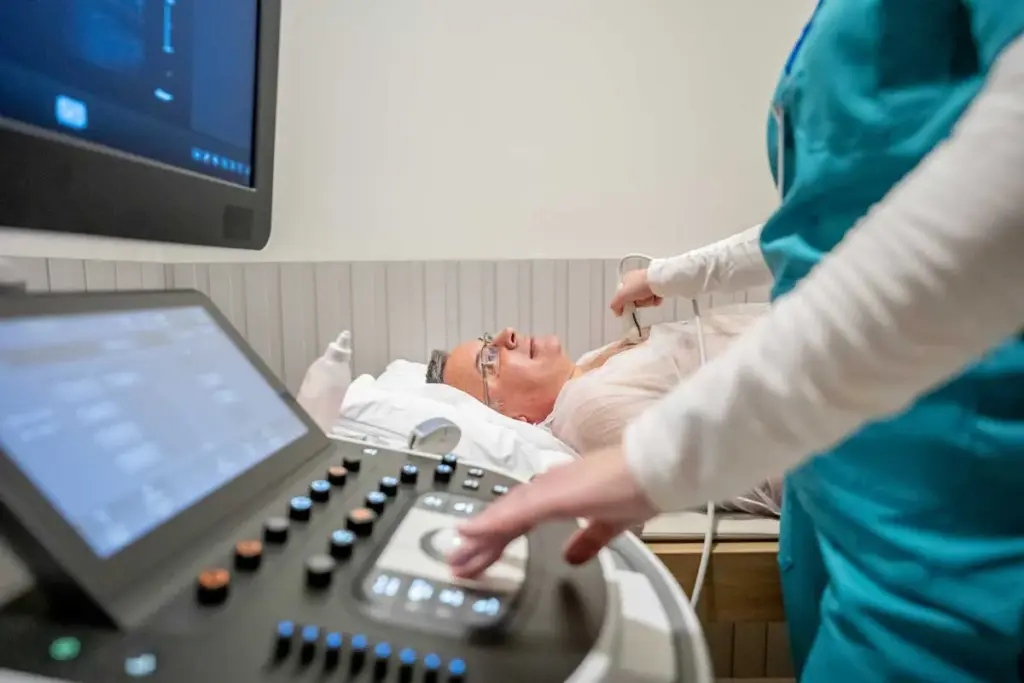
An echocardiogram, or “echo,” is a test that shows the heart’s images as it pumps blood. It’s important for checking the heart’s chambers, valves, and walls. This helps find any problems or issues.
How Does It Work?
The echocardiogram uses a probe called a transducer to send sound waves. These waves hit the heart and bounce back, captured by the transducer. This creates real-time images on a screen, showing the heart’s movement and function.
Different Types of Echocardiograms
There are several types of echocardiograms, each with its own purpose:
- Transthoracic Echocardiogram (TTE): The most common type, where the transducer is placed on the chest to capture images of the heart.
- Transesophageal Echocardiogram (TEE): Involves inserting a specialized transducer through the esophagus to obtain more detailed images, mainly of the heart’s posterior structures.
- Stress Echocardiogram: Done before and after physical stress (usually exercise) to see how the heart works under stress.
Knowing the differences between these types is important for choosing the right test for a patient. For example, a TTE is often used for initial assessments, but a TEE might be needed for more detailed views or when certain conditions are suspected.
It’s also important to understand the difference between an echocardiogram and other heart tests like ECG (electrocardiogram) or EKG. An ECG/EKG measures the heart’s electrical activity, while an echocardiogram looks at the heart’s structure and function. Both tests offer valuable insights into heart health but in different ways.
Common Reasons for an Echocardiogram
Doctors often recommend echocardiograms to get a detailed view of the heart’s structure and function. This tool is key for understanding heart health. It shows the heart’s overall structure and how its parts work.
Evaluating Heart Structure
One main reason for an echocardiogram is to check the heart’s structure. It looks at the heart’s chambers, valves, and walls for any problems. Echocardiograms help identify issues such as cardiomyopathy or heart defects, which are important for treatment.
During the test, we check the heart walls’ thickness, the size of the heart chambers, and the condition of the heart valves. This info is vital for diagnosing conditions that may affect the heart’s function.
Assessing Heart Function
Another key reason for an echocardiogram is to see how well the heart functions. It checks how well the heart pumps blood throughout the body. By assessing heart function, we can identify issues related to heart failure or other cardiovascular diseases.
The test measures the heart’s ejection fraction, a key indicator of its pumping efficiency. It also evaluates the movement of the heart walls and its overall performance under different conditions.
Diagnosing Heart Conditions
Echocardiograms are used to diagnose various heart conditions, including arrhythmias, heart valve problems, and congenital heart defects. The detailed images provided by the echocardiogram enable us to diagnose these conditions accurately, which is essential for effective treatment.
For example, echocardiograms can diagnose conditions like mitral valve prolapse or atrial septal defects. The information from the test is critical for determining the best treatment plan for these conditions.
|
Condition |
Description |
Diagnostic Insights from Echocardiogram |
|---|---|---|
|
Cardiomyopathy |
A disease of the heart muscle that makes it harder for the heart to pump blood. |
Echocardiogram helps assess the heart’s structure and function, identifying abnormal heart muscle thickness or function. |
|
Arrhythmias |
Irregular heartbeats that can be too fast, too slow, or irregular. |
Echocardiogram evaluates heart function and structure, aiding in the diagnosis of conditions that may cause arrhythmias. |
|
Heart Valve Problems |
Issues with the heart valves, such as stenosis or regurgitation. |
Echocardiogram provides detailed images of the heart valves, helping diagnose problems like leakage or narrowing. |
Preparing for an Echocardiogram
Knowing what to expect before an echocardiogram can make you feel less anxious. We help our patients get ready for this key test. This way, they are well-prepared.
What to Expect Before the Test
There are a few things to know before your echocardiogram. Removing jewelry that has metal is important. Metal can block the ultrasound waves.
Wear clothes that are easy to get to your chest. You might need to change into a gown. Knowing what will happen can ease your worries.
“The more informed you are, the less likely you are to feel anxious about the test.”
Cardiologist
Do’s and Don’ts
Here’s how to get ready for your echocardiogram:
- Avoid eating a heavy meal before the test. It can make you uncomfortable.
- You can usually eat and drink as you normally do, unless your doctor says not to.
- Inform your doctor about any medicines you take.
- Don’t wear perfume or cologne. It can mess with the test.
|
Preparation Step |
Description |
|---|---|
|
Remove Jewelry |
Take off any metal jewelry to prevent interference with the ultrasound. |
|
Wear Comfortable Clothing |
Dress in loose, comfortable clothing for ease during the test. |
|
Inform Your Doctor |
Tell your doctor about any medications or health conditions. |
By following these steps, your echocardiogram will go smoothly. If you have any questions or concerns, talk to your healthcare provider.
During the Echocardiogram
During an echocardiogram, our team follows a precise process to capture detailed images of your heart. This test is key for diagnosing and monitoring heart conditions. We’re here to guide you through every step.
The Examination Process
The echocardiogram procedure involves several key steps. First, we apply a clear gel to your chest to help sound waves transmit. Then, a technician uses a transducer to capture images of your heart from multiple angles. This lets us assess your heart’s structure and function in real-time.
The examination process typically involves the following:
- Preparation: You’ll be asked to lie on an examination table and expose your chest.
- Gel application: A clear gel will be applied to your chest to help the transducer move smoothly.
- Imaging: The technician will use the transducer to capture images of your heart.
- Multiple views: Images will be taken from various angles to provide a complete view of your heart.
As one medical expert noted,
“Echocardiography has revolutionized the way we diagnose and manage heart disease, providing high-quality images that help us make informed decisions about patient care.”
Duration of the Test
The duration of an echocardiogram can vary, but it usually takes about 30 minutes to an hour. The test is non-invasive and painless. You’ll be able to resume your normal activities immediately after the test.
|
Test Component |
Typical Duration |
|---|---|
|
Preparation |
5 minutes |
|
Imaging |
20-30 minutes |
|
Total Test Time |
30-60 minutes |
We understand that undergoing medical tests can be a source of anxiety. Rest assured, our team is dedicated to making the echocardiogram process as comfortable and stress-free as possible. If you have any questions or concerns, please don’t hesitate to ask.
Interpreting Echocardiogram Results
Echocardiogram results give us important information about heart health. They can show if the heart is working well or if there are problems like valve issues or heart failure. We’ll help you understand what these results mean and how they affect your care.
What the Results Indicate
Echocardiogram results can reveal many things about heart health, including:
- The size and thickness of the heart’s chambers
- The heart’s pumping efficiency
- The condition of the heart valves
- The presence of any abnormalities, such as tumors or blood clots
These details are key for diagnosing heart conditions and finding the right treatment. Getting echocardiogram results right is critical for good care.
Normal vs. Abnormal Findings
It’s important to know the difference between normal and abnormal echocardiogram results. Normal results usually mean the heart is working fine. But, abnormal results might show issues like:
- Valve disorders, like stenosis or regurgitation
- Heart failure, where the heart is not pumping well
- Abnormal heart rhythms or other conditions that may need more tests
Abnormal findings don’t always mean a big problem, but they do need careful checking and possibly more tests to figure out the cause and treatment.
We’re dedicated to giving you accurate and caring care. We make sure you get the support and guidance you need based on your echocardiogram results.
Risks and Limitations of Echocardiograms
Echocardiograms are key for diagnosing heart issues, but they come with risks and limits. We aim to educate our patients fully about their tests. This way, they can make informed decisions about their health.
Potential Risks Involved
Echocardiograms are mostly safe, but some types carry more risks. For example, a transesophageal echocardiogram (TEE) might pose a bit more danger. This is because a probe is inserted through the esophagus.
Risks of TEE include:
- Gagging or discomfort during the procedure
- Rarely, esophageal perforation
But these risks are small. Our skilled team works hard to keep you safe during the test.
Limitations in Diagnosis
The success of an echocardiogram depends on the operator’s skill and the equipment’s quality. Operator dependency is a big factor, as reading the images needs expertise. Also, the patient’s body type and certain health conditions can affect image quality.
Some challenges include:
- It can be hard to get clear images in obese patients or those with lung disease
- Interpretation can vary based on the operator’s experience
Echocardiograms are useful for checking heart structure and function. But, they’re just one part of diagnosing heart issues. Sometimes, an EKG or other tests are needed for a full picture of heart health.
Knowing these risks and limits helps us give better care. It also helps us make smarter decisions about your health.
Follow-Up After an Echocardiogram
The results of your echocardiogram will guide your healthcare provider in determining the next course of action. After the test, your doctor will review the findings with you. They will discuss the appropriate follow-up steps. This may include additional testing, treatment for diagnosed conditions, or recommendations for lifestyle changes to improve your heart health.
Next Steps Based on Results
The next steps after an echocardiogram depend on the test results. If the results are normal, your doctor may recommend a routine follow-up echocardiogram in the future. But, if the test reveals any abnormalities, such as heart valve problems or issues with the heart’s pumping function, further evaluation or treatment may be necessary.
Additional testing might include other imaging tests, stress tests, or cardiac catheterization. Your healthcare provider will discuss these options with you. They will explain why they are necessary.
Lifestyle Changes Recommended
Lifestyle modifications are often recommended to improve heart health, regardless of the echocardiogram results. These changes can help prevent heart disease or manage existing conditions. Some recommended lifestyle changes include:
- Eating a heart-healthy diet rich in fruits, vegetables, and whole grains
- Engaging in regular physical activity, such as walking or other aerobic exercises
- Maintaining a healthy weight to reduce the strain on your heart
- Quitting smoking and avoiding secondhand smoke
- Managing stress through techniques like meditation or deep breathing exercises
Here are some key heart health tips summarized in the following table:
|
Heart Health Tip |
Description |
Benefit |
|---|---|---|
|
Eat a Balanced Diet |
Focus on consuming fruits, vegetables, whole grains, and lean proteins. |
Helps maintain healthy blood pressure and cholesterol levels. |
|
Exercise Regularly |
Engage in at least 150 minutes of moderate-intensity aerobic activity per week. |
Improves heart function and overall cardiovascular health. |
|
Maintain a Healthy Weight |
Combine a healthy diet with regular exercise to achieve and maintain a healthy weight. |
Reduces the risk of heart disease and other health issues. |
By following these lifestyle changes and heart health tips, you can take proactive steps towards maintaining a healthy heart. We are committed to supporting you throughout your healthcare journey. We provide guidance and care tailored to your needs.
Insurance Coverage for Echocardiograms
Knowing if your insurance covers an echocardiogram is key to managing healthcare costs. The coverage for echocardiograms can change a lot based on your health plan.
Understanding Your Health Plan
To see if your insurance covers an echocardiogram, you need to know your health plan well. Most plans cover echocardiograms if they are needed for health reasons. But, how much they cover can differ a lot.
It’s a good idea to check your insurance policy or call your insurance company to see what’s covered. Some plans might need a doctor’s referral or pre-approval.
“It’s essential to know the specifics of your insurance coverage before undergoing an echocardiogram to avoid unexpected medical bills.”
Cardiologist
Cost Considerations
The cost of an echocardiogram can change based on a few things. These include where the test is done, the type of echocardiogram, and if other tests are done at the same time.
|
Facility Type |
Average Cost |
Insurance Coverage |
|---|---|---|
|
Hospital |
$1,000 – $3,000 |
Partially to fully covered |
|
Private Clinic |
$800 – $2,500 |
Partially to fully covered |
|
Outpatient Center |
$500 – $2,000 |
Partially to fully covered |
Also, think about any costs you might have to pay out of pocket. This includes deductibles, copays, or coinsurance. Knowing these costs ahead of time can help you budget better.
Tips for Managing Costs:
- Choose in-network providers when possible.
- Ask about any additional fees associated with the test.
- Discuss financial assistance options if available.
Frequently Asked Questions
Many patients wonder about echocardiograms. They ask how often they should get one and what they can learn about heart health. We answer some common questions here.
How Often Should an Echo Be Done?
The need for echocardiograms varies by individual health needs. For example, those with heart disease or implanted devices might need them more often.
Things like heart valve issues, heart failure, or other heart problems can affect how often you need an echo. Regular monitoring is key to managing these conditions well.
Are There Alternatives to Echocardiograms?
Yes, there are other tests like electrocardiograms (ECG), cardiac MRI, and cardiac CT scans. Each test gives different insights into the heart.
|
Diagnostic Test |
Description |
Use Case |
|---|---|---|
|
Echocardiogram |
Uses sound waves to create images of the heart. |
Evaluating heart structure and function. |
|
Electrocardiogram (ECG) |
Measures the electrical activity of the heart. |
Diagnosing arrhythmias and other electrical disturbances. |
|
Cardiac MRI |
Uses magnetic fields to create detailed images of the heart. |
Assessing heart structure and detecting scar tissue. |
|
Cardiac CT Scan |
Uses X-rays to create detailed images of the heart. |
Evaluating coronary artery disease and other structural issues. |
Knowing the differences between these tests helps patients and doctors pick the best one for their needs.
Conclusion
Echocardiograms are key for keeping our hearts healthy. Regular checks can stop or manage heart disease. Knowing how important echocardiograms are helps us take care of our hearts.
Key Takeaways
Echocardiograms show us how our heart works and what it looks like. Doctors use this info to find and watch heart problems. Getting regular heart checks can spot issues early, leading to better care.
Prioritizing Heart Health
We should all make our heart health a top priority. This means getting regular echocardiograms and following good heart health tips. Eating right, staying active, and managing stress can all help keep our hearts strong.
FAQ
What is the difference between an echocardiogram and an EKG?
An echocardiogram uses ultrasound to show the heart’s structure and function. An EKG measures the heart’s electrical activity. Both help diagnose heart issues but in different ways.
What does an echocardiogram show?
It shows the heart’s structure and function. This includes the heart valves, chambers, and walls. It can spot problems like heart valve issues, heart failure, and cardiomyopathy.
How often should an echocardiogram be done?
The need for echocardiograms varies. It depends on heart disease or other health issues. Doctors might suggest one as a starting point and then more as needed.
Are there alternatives to echocardiograms?
Yes, tests like cardiac MRI, CT scans, or stress tests can be used. They depend on the condition being checked or monitored.
What are the possible risks or limitations of an echocardiogram?
Echocardiograms are usually safe. But, they might not work for all conditions or body types. Talk to your doctor about any worries.
How do I prepare for an echocardiogram?
Wear comfy clothes and avoid big meals. Follow any special instructions from your doctor.
What happens during an echocardiogram?
A technician will put gel on your chest and use a probe. It’s painless and takes 30-60 minutes.
What do the results of an echocardiogram indicate?
They can show normal heart function or problems like valve issues. Your doctor will explain the results and what to do next.
Will my insurance cover the cost of an echocardiogram?
Many insurances cover echocardiograms. But, it depends on your plan and provider. Check with your insurance to see if it’s covered.
Can an echocardiogram detect a heart attack?
It can spot conditions that might lead to a heart attack. But, it’s not used to diagnose an acute heart attack.
What is the difference between an echocardiogram and an electrocardiogram (EKG/ECG)?
An echocardiogram shows the heart’s structure and function. An EKG/ECG measures the heart’s electrical activity. Both are used to diagnose heart conditions but in different ways.
References
National Center for Biotechnology Information. Evidence-Based Medical Insight. Retrieved from https://pubmed.ncbi.nlm.nih.gov/25559473/