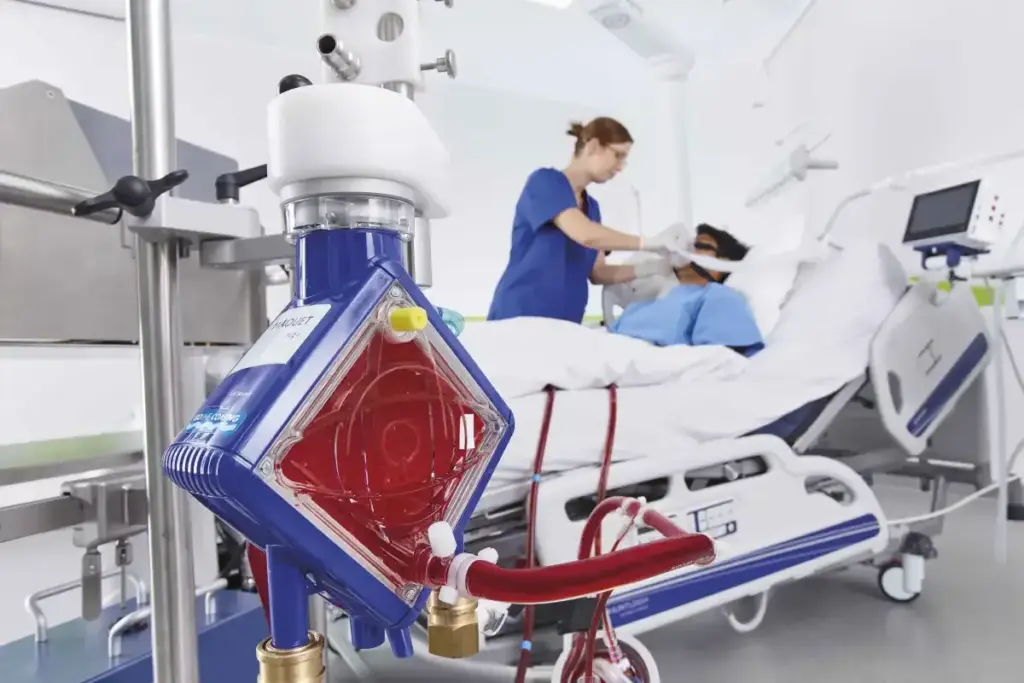
Understanding ECMO: A Life-Supporting Technology
Extracorporeal membrane oxygenation, or ECMO, is a complex medical technology. It supports patients with severe heart or lung failure. This technology has been key in critical care medicine for decades.
What is Extracorporeal Membrane Oxygenation?
ECMO is a mechanical support that takes over the heart and/or lungs. It lets these organs rest and recover. Blood is diverted to a bypass machine, where it’s oxygenated and cleaned before returning to the patient.
Historical Development of ECMO Technology
ECMO technology has seen big improvements over the years. It was first used in neonatal care. Now, it helps adults and children with severe heart or lung issues. Better materials and techniques have made it safer and more effective.
When ECMO Becomes Necessary
ECMO is needed when a patient’s heart and/or lungs fail. They can’t keep blood flowing and oxygen levels up, even with the best treatments. Doctors decide to use ECMO based on how severe the condition is and if recovery is possible.
Learning about ECMO helps us see its vital role in saving lives. It supports patients through their toughest medical times.
The ECMO Circuit: How It Works
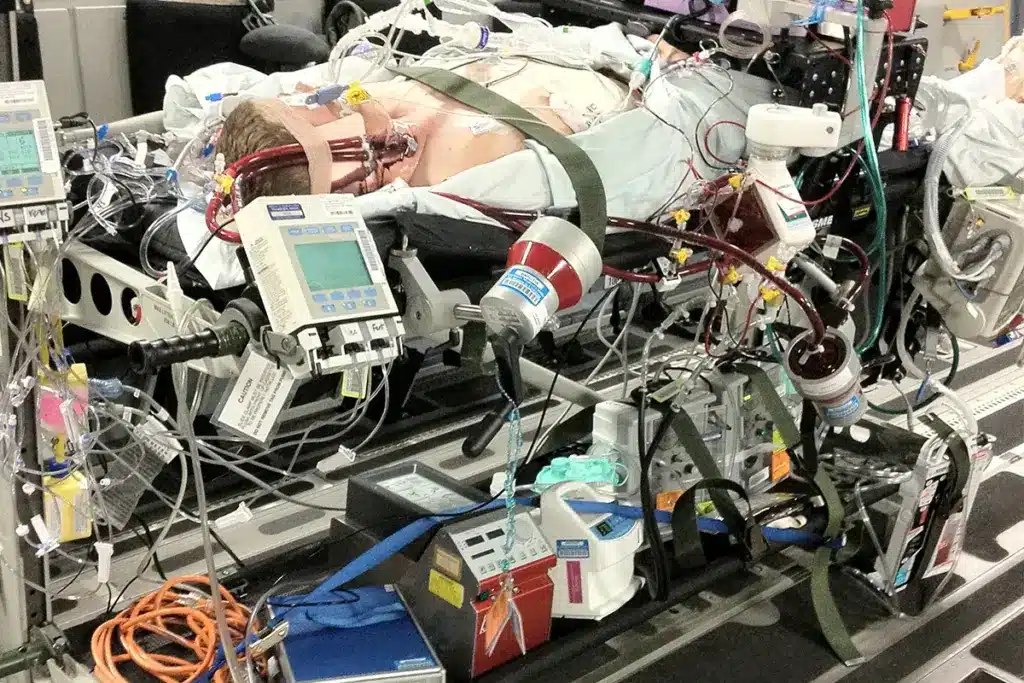
At the heart of ECMO therapy is a complex circuit. It mimics the heart and lungs’ natural processes. This system supports patients with severe heart or lung failure, acting as a lifeline when their organs are strained.
Components of an ECMO Machine
The ECMO circuit has several key parts. These include a pump, an oxygenator, and a heat exchanger. The pump moves the blood through the circuit. The oxygenator adds oxygen and removes carbon dioxide. The heat exchanger keeps the blood at the right temperature for the patient.
Blood Flow and Oxygenation Process
The blood flow and oxygenation in an ECMO circuit are carefully managed. Blood is drawn from the patient and goes through the oxygenator. There, it gets oxygen and loses carbon dioxide. Then, the oxygen-rich blood is pumped back into the patient, either through a vein or artery.
|
Component |
Function |
|---|---|
|
Pump |
Propels blood through the ECMO circuit |
|
Oxygenator |
Adds oxygen to the blood and removes carbon dioxide |
|
Heat Exchanger |
Regulates the temperature of the blood returning to the patient |
Monitoring and Management Systems
Monitoring and managing the ECMO circuit is key for patient safety and therapy success. This involves watching the patient’s vital signs and the circuit’s performance. Adjustments are made as needed to keep support optimal.
Understanding the ECMO circuit helps healthcare professionals manage ECMO therapy better. This leads to better outcomes and higher survival rates for patients.
Types of ECMO Support
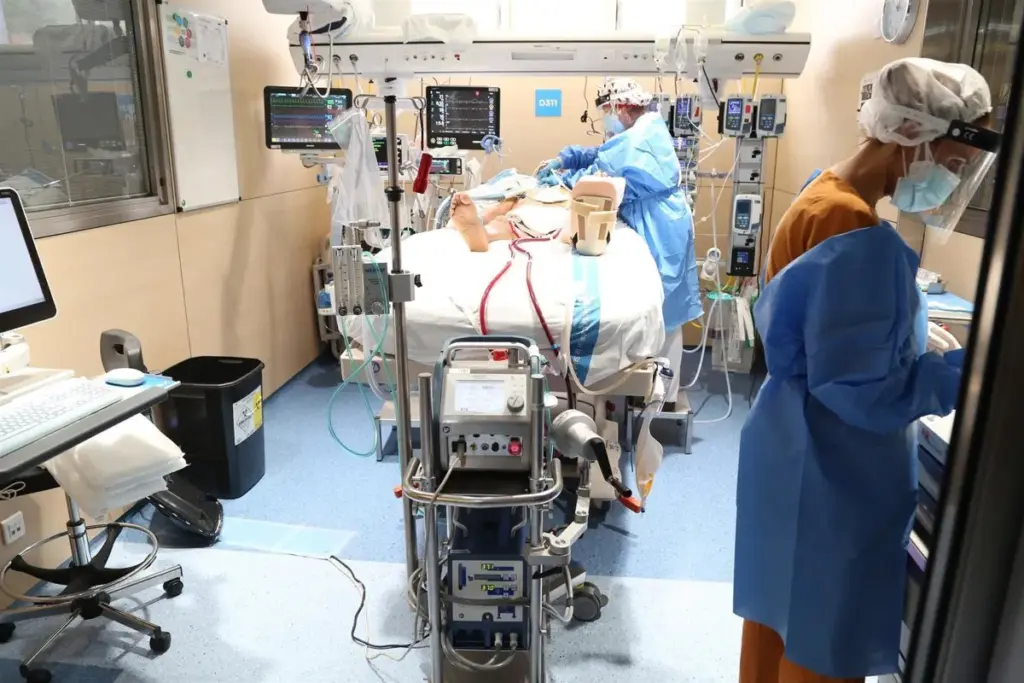
There are mainly two types of ECMO support. Extracorporeal Membrane Oxygenation (ECMO) is a therapy for failing hearts or lungs. The two types are Venoarterial (VA) ECMO and Venovenous (VV) ECMO.
Venoarterial (VA) ECMO Explained
Venoarterial (VA) ECMO is for patients needing heart and lung support. It uses a vein and an artery to pump blood. VA ECMO is used for severe heart failure or shock.
It’s a lifesaver for very sick patients. VA ECMO supports both the heart and lungs.
“VA ECMO provides both cardiac and respiratory support, making it a critical therapy for patients with severe cardiac dysfunction.”
Venovenous (VV) ECMO Explained
Venovenous (VV) ECMO mainly supports the lungs. It uses two veins to oxygenate blood without helping the heart. VV ECMO is for severe lung failure when the heart works well.
It helps the lungs rest and recover. VV ECMO removes carbon dioxide and adds oxygen.
Knowing the difference between VA and VV ECMO is key. The choice depends on the patient’s condition and needs. It’s up to the healthcare team’s judgment.
Heart Function During ECMO Support
ECMO support greatly affects heart function. It’s key to know how it impacts the heart for better patient care. We’ll look at how ECMO changes heart activity, comparing VA and VV ECMO.
Cardiac Activity During VA ECMO
VA ECMO lets the heart rest because the ECMO does most of the work. This helps a failing heart recover. The heart’s lighter load is a big plus of VA ECMO, helping it heal.
VA ECMO’s main benefits are:
- Less work for the heart
- Chance for the heart to get better
- Helps with both heart and lung functions
Cardiac Activity During VV ECMO
VV ECMO doesn’t help the heart with its work. The ECMO just helps the lungs by adding oxygen to the blood. So, the heart keeps pumping blood on its own.
VV ECMO’s effects on the heart are:
- The heart has to keep up with all the blood flow.
- The ECMO helps with breathing, adding oxygen.
- The heart’s function isn’t directly helped by VV ECMO.
It’s vital for doctors to know the difference between VA and VV ECMO. This knowledge helps them make the best choices for their patients. By understanding how each ECMO type affects the heart, doctors can better care for their patients.
The Heart-ECMO Relationship: Physiological Changes
ECMO changes a patient’s blood flow and heart load. These changes help us understand how well the heart is working. They also guide how to care for the patient.
Hemodynamic Effects of ECMO
ECMO changes a patient’s blood flow. Venous drainage and arterial return affect blood pressure and heart output. VA ECMO can increase blood pressure, which might lower heart output if the heart can’t keep up.
Monitoring these changes is key to keeping the patient stable. We use tools to check the heart’s function and adjust ECMO as needed.
|
Hemodynamic Parameter |
Pre-ECMO |
On ECMO |
|---|---|---|
|
Cardiac Output |
4 L/min |
3.5 L/min |
|
Blood Pressure |
90/60 mmHg |
80/50 mmHg |
Cardiac Loading Conditions
Cardiac loading conditions are about the heart’s workload. ECMO can change this. In VA ECMO, the heart might face too much pressure, leading to swelling if not managed right.
It’s important to understand these changes to manage ECMO patients well. By watching blood flow and adjusting ECMO, we can help the heart work better and improve patient results.
Monitoring Cardiac Function While on ECMO
It’s very important to watch how the heart works for patients on ECMO. This helps doctors see how the heart is doing and make changes if needed. By keeping an eye on the heart, doctors can make better choices for the patient’s care and adjust the ECMO settings for better results.
Echocardiography Assessment
Echocardiography is a key tool for checking the heart in ECMO patients. It shows details about the heart’s shape and how well it works. Doctors use both transthoracic echocardiography (TTE) and transesophageal echocardiography (TEE). TEE gives clearer pictures in some cases.
Hemodynamic Monitoring
Hemodynamic monitoring tracks important signs to see how the heart is doing. It looks at blood pressure, how much blood the heart pumps, and central venous pressure. These signs help doctors understand the heart’s health and adjust the ECMO as needed.
Biomarkers of Cardiac Function
Biomarkers like troponin and natriuretic peptides help check for heart damage or stress in ECMO patients. High levels of these biomarkers mean the heart might be in trouble. This helps doctors decide how to treat the patient.
|
Monitoring Method |
Parameters Assessed |
Clinical Utility |
|---|---|---|
|
Echocardiography |
Ventricular size, contractility, valvular function |
Assesses cardiac structure and function |
|
Hemodynamic Monitoring |
Blood pressure, cardiac output, central venous pressure |
Evaluates cardiovascular status |
|
Biomarkers |
Troponin, natriuretic peptides |
Indicates cardiac injury or stress |
In summary, checking the heart while on ECMO involves echocardiography, watching hemodynamic signs, and using biomarkers. These methods help doctors fully understand the heart’s condition and improve patient care.
ECMO Specialists: The Team Behind the Machine
ECMO therapy’s success depends on the skills of ECMO specialists. This life-saving tech needs a team to work well.
Roles and Responsibilities
Healthcare pros like intensivists, perfusionists, nurses, and respiratory therapists make up the ECMO team. Each one has important roles and responsibilities. They set up the ECMO circuit, watch over the patient, and fix any problems.
Training and Certification
ECMO specialists get deep ecmo training. They learn both theory and hands-on skills. Programs like those from the Extracorporeal Life Support Organization (ELSO) help them prepare.
Good teamwork and communication are key for ECMO specialists. Together, they can meet the complex needs of ECMO patients. This teamwork boosts the patient’s recovery chances.
Indications for ECMO Therapy
It’s key for healthcare teams to know when to use ECMO therapy. ECMO, or Extracorporeal Membrane Oxygenation, helps when usual treatments don’t work for severe heart or lung problems.
Cardiac Indications
ECMO is needed for severe heart failure that can’t be fixed with usual treatments. Some reasons include:
- Post-cardiotomy cardiogenic shock
- Acute myocardial infarction complicated by cardiogenic shock
- Severe myocarditis
- Cardiac arrest unresponsive to conventional resuscitation measures
ECMO is very important for patients with severe heart problems. It gives the heart time to heal.
Respiratory Indications
ECMO is also used for severe lung failures. Key reasons include:
- Acute Respiratory Distress Syndrome (ARDS)
- Severe pneumonia
- Influenza or other viral infections causing respiratory failure
- Trauma-induced respiratory distress
ECMO helps the lungs rest and recover. This can lower the risks of being on a ventilator.
In summary, ECMO is a critical treatment for severe heart and lung failures. Knowing when to use it helps doctors save more lives.
ECMO Survival Rates: What the Data Shows
ECMO’s success is often judged by how many patients survive. This success rate changes based on many important factors. Knowing these rates helps doctors, patients, and their families make better choices.
In-Hospital Mortality Statistics
The death rate for ECMO patients in the hospital is a big worry. For adults, about 56% do not make it. This shows how serious the conditions treated with ECMO are.
Many things affect this death rate. These include the patient’s health, the type of ECMO used, and when it starts. Knowing these helps doctors improve survival chances.
Specialized Centers vs. General Hospitals
Where a patient gets ECMO care can greatly affect their chances. Specialized centers, with their skilled teams and lots of ECMO cases, usually do better. They are better at handling ECMO’s complex needs.
- Specialized centers have higher success rates due to their experience and expertise.
- General hospitals may not have the same level of ECMO expertise, potentially leading to higher complication rates.
- The difference in outcomes highlights the importance of referral to specialized centers when possible.
Factors Influencing Survival
Several key factors affect ECMO patient survival rates. These include:
- Patient Selection: Choosing the right patients for ECMO is key.
- Timing of ECMO Initiation: Starting ECMO early can help more patients.
- Underlying Health Conditions: Patients with fewer health problems tend to live longer.
By focusing on these factors, doctors can aim to save more lives. As ECMO technology and care methods get better, we can expect better results for patients.
Factors Affecting ECMO Outcomes
Understanding what affects ECMO outcomes is key for better patient care. ECMO therapy is complex and needs careful thought about many factors for the best results.
Patient Age and Comorbidities
Patient age and health conditions greatly impact ECMO outcomes. Older patients or those with many health issues face higher risks. We must consider these when deciding on ECMO therapy.
Timing of ECMO Initiation
When ECMO starts is very important. Starting it early can help save lives by stopping things from getting worse. But starting it too late can lead to more problems and death.
Pre-ECMO Interventions
Interventions before ECMO, like using ventilators and medicines, also matter. The type and how long these interventions last can affect the patient’s readiness for ECMO.
By looking at these factors, we can make ECMO therapy better. Good ECMO care needs a team effort. We must think about the patient’s health, the decisions made, and the treatments used.
Common Complications of ECMO
ECMO can save lives, but it comes with risks. It’s important to know the possible complications that can happen.
Bleeding and Thrombosis
Bleeding is a big risk with ECMO. We use anticoagulation to stop the circuit from clotting, but this can lead to bleeding. Bleeding can happen at the cannula sites, surgical areas, or inside the body.
On the other hand, clotting in the circuit or the patient is also a worry. We have to find the right balance with anticoagulation to avoid these problems.
Infection Risks
Patients on ECMO face a higher risk of infections. This is because the therapy is very invasive and the patients are very sick. Infections can come from the cannula, the ECMO circuit, or other areas.
We must watch closely and take steps to prevent infections. This is key to keeping patients safe.
Mechanical Complications
ECMO can also have mechanical problems. Issues like pump failure, oxygenator failure, or tubing rupture can be very serious. It’s important to regularly check and maintain the ECMO circuit to avoid these problems.
Problems with the cannula, like it getting moved or kinked, can also happen. We need to act quickly if this happens.
Dealing with these complications well is essential for better outcomes for ECMO patients. By knowing the risks and acting early, we can give the best care to these critically ill patients.
Recovery After ECMO: The Long Road Ahead
Recovering from ECMO is tough and needs careful help. We must understand the early stages, long-term issues, and how to get back to normal life.
Immediate Post-ECMO Period
The first days after ECMO are very important. Patients are watched closely in the ICU. Weaning from ECMO support happens slowly, based on how well they do.
A study in the Journal of Critical Care Medicine found many risks after ECMO. These include bleeding, infections, and heart problems. So, careful care is key during this time.
Long-term Recovery Challenges
Recovering long-term means facing physical and mental hurdles. Getting strong and moving well again is a big part of it. Physical therapy is very important for this.
Also, dealing with feelings like anxiety, depression, or PTSD is vital. A good support system, including counseling, helps a lot.
|
Challenge |
Support Mechanism |
|---|---|
|
Physical Weakness |
Physical Therapy |
|
Psychological Trauma |
Counseling and Therapy |
|
Nutritional Deficiencies |
Dietary Counseling |
Return to Work and Normal Activities
Going back to work and daily life is a big step. How long it takes depends on the person and their job. Gradual reintroduction to activities helps avoid too much strain.
“The recovery journey after ECMO is not just about surviving; it’s about thriving and regaining a fulfilling life.” -Critical Care Specialist
Supporting patients through ECMO recovery is key. We need to care for their physical, emotional, and social needs. This way, we help them overcome recovery challenges and reach the best outcomes.
Life After ECMO: Patient Experiences
Patients who have had ECMO therapy face a tough road to recovery. They need both physical and psychological support. The path to healing is unique for each person, based on their health before ECMO and why they needed it.
Physical Rehabilitation Journey
Recovering physically after ECMO is hard. Patients often feel weak, tired, and have trouble moving because of bed rest and illness. Rehabilitation programs are made just for them, aiming to build strength, improve movement, and boost overall health.
A team of experts is key in helping patients get better. This team includes physical therapists, occupational therapists, and others. They work together to help patients reach their recovery goals.
Psychological Impact and Support
The mental effects of ECMO therapy are significant. Patients might feel anxious, depressed, or have PTSD. Providing emotional support and counseling is vital to help them deal with these feelings.
It’s important to offer full psychological support to ECMO patients. This can include counseling, therapy, and support groups. The goal is to help patients and their families handle the emotional side of recovery.
The Cost of ECMO Treatment
Knowing the cost of ECMO treatment is key for those thinking about it. ECMO is a pricey therapy. It has big financial effects on patients and their families.
Financial Implications for Patients and Families
The cost of ECMO can be too much to handle. It includes the ECMO procedure, hospital stay, medical staff, and follow-up care. Patients and their families need to think about these costs when deciding on ECMO therapy.
Some important financial points to keep in mind are:
- The initial cost of ECMO cannulation and setup
- Ongoing costs for ECMO management and monitoring
- Hospital stay and ICU costs
- Follow-up care and rehabilitation expenses
Insurance Coverage and Financial Assistance
Many insurance plans cover ECMO treatment, either partly or fully. It’s important for patients to check their insurance coverage before getting ECMO therapy. There are also financial help programs available.
Some ways to get financial help include:
- Hospital financial aid programs
- Non-profit organizations that help with ECMO costs
- Government programs for eligible patients
By understanding the financial side and looking into help options, patients and their families can handle the ECMO treatment costs better.
Conclusion: The Future of ECMO and Cardiac Support
Looking at Extracorporeal Membrane Oxygenation (ECMO), it’s clear it’s getting better. A study with over 3,860 ECMO patients shows its challenges. It can save lives but comes with big risks and long-term health issues.
As we look ahead,ECMO’s future looks bright. New tech and practices will help more patients. This means better survival rates and less long-term damage.
The future of ECMO is all about better cardiac support. We’ll see more advanced ECMO tech soon. This will lead to better care and outcomes for patients needing this therapy.
FAQ
What is ECMO and how does it work?
ECMO, or Extracorporeal Membrane Oxygenation, is a life-saving technology. It helps patients with severe heart or lung failure. It works by taking some blood from the body, oxygenating it, and then returning it.
What are the main types of ECMO support?
There are two main types of ECMO support. Venoarterial (VA) ECMO supports both the heart and lungs. Venovenous (VV) ECMO mainly supports the lungs.
Is my heart stil beating on ECMO?
It depends on the ECMO type. VA ECMO can take over heart function. VV ECMO lets the heart keep beating.
What are the indications for ECMO therapy?
ECMO is used for heart and lung problems. This includes severe heart failure and lung distress.
What are the common complications of ECMO?
Common issues include bleeding, clotting, infections, and mechanical problems.
How is cardiac function monitored while on ECMO?
Cardiac function is checked through echocardiography, hemodynamic monitoring, and biomarkers.
What is the survival rate for patients on ECMO?
Survival rates vary based on several factors. These include the condition, age, and other health issues. Better outcomes are seen at specialized centers.
What is the cost of ECMO treatment?
ECMO treatment costs can be high. It depends on how long treatment lasts and any extra procedures needed. There are financial help options available.
What is the recovery process like after ECMO?
Recovery after ECMO is tough. It involves physical therapy and emotional support. There are resources to help with this process.
What is the role of ECMO specialists in patient care?
ECMO specialists are key in patient care. They set up ECMO, monitor patients, and make necessary changes. Their teamwork is vital.
References
National Center for Biotechnology Information. Evidence-Based Medical Insight. Retrieved from https://www.ncbi.nlm.nih.gov/books/NBK576426/