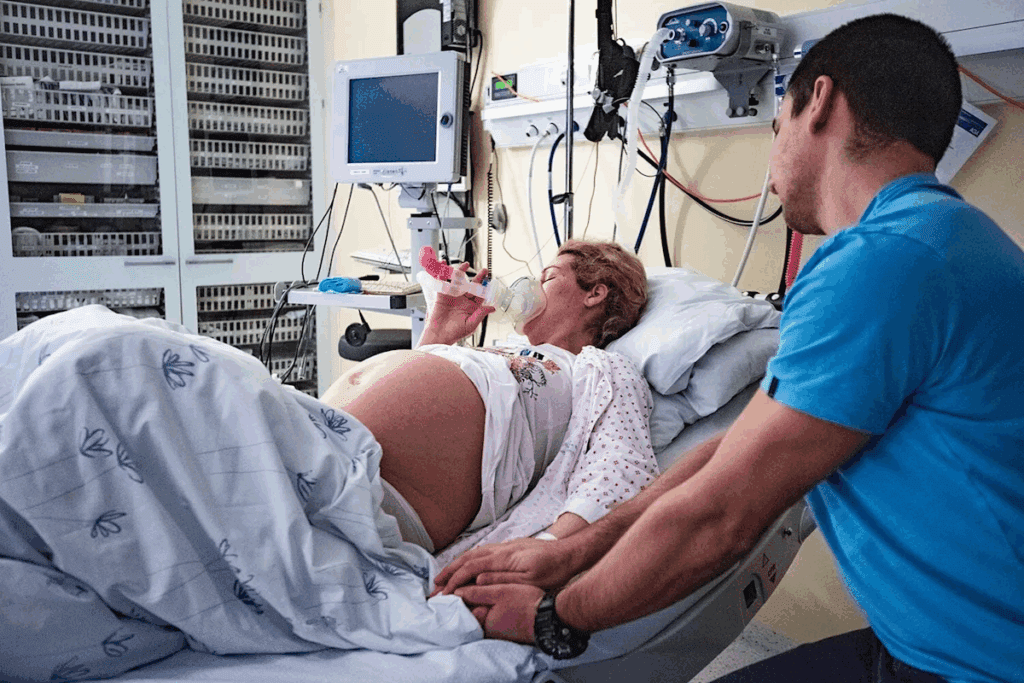
Predicting a baby’s birth weight is key for prenatal care. It helps plan for delivery and spot any issues early. We use top ultrasound tech and proven formulas to guess the baby’s weight. This ensures the best health for mom and baby.efw in pregnancyCan a Sinus Infection Make You Nauseous?
At Liv Hospital, we use the latest fetal growth assessment protocols. We look at head size, belly size, and leg length. This helps us predict the birth weight accurately. The NICHD Fetal Growth Studies Unified calculator is a big help. It figures out how big the baby is compared to others at the same stage.
Knowing how to use an EFW calculator is important. It helps both parents and doctors make smart choices during pregnancy.
Key Takeaways
- Accurate birth weight prediction is key for prenatal care and delivery planning.
- Advanced ultrasound tech and proven formulas help guess fetal weight.
- Important measurements include head size, belly size, and leg length.
- The NICHD Fetal Growth Studies Unified calculator helps estimate fetal growth.
- Understanding EFW calculators helps make informed choices during pregnancy.
The Importance of EFW in Pregnancy
Estimated Fetal Weight (EFW) is key in pregnancy. It checks how a baby is growing and predicts birth weight. Doctors use ultrasound to guess the baby’s size, but every baby grows differently.
What is Estimated Fetal Weight?
EFW is a guess of a baby’s weight from ultrasound scans. It looks at the baby’s head, belly, and leg size. This helps doctors see if the baby is growing right. Tools like a fetal weight percentile calculator or baby weight percentile calculator pregnancy show how the baby compares to others.
Why Monitoring Fetal Weight Matters
Watching a baby’s weight is very important. It helps find problems early, like if the baby is too small or too big. Using a fetal growth percentile calculator helps doctors act fast. This helps keep the mom and baby healthy.
Knowing and tracking EFW is key for a healthy pregnancy. It lets doctors fix problems quickly. This gives parents peace of mind and the best care for their baby.
The Science Behind Fetal Weight Estimation
Estimating fetal weight uses ultrasound to measure important body parts. This helps doctors track how the baby is growing. It also helps find any problems early.
Key Biometric Parameters
Ultrasound measures several key parts of the fetus. These are:
- Head Circumference (HC)
- Abdominal Circumference (AC)
- Femur Length (FL)
These measurements give a full picture of the fetus’s size and growth. Getting these measurements right is key for accurate weight estimates.
A leading expert in fetal medicine says, “The Hadlock formula is a top choice for fetal weight estimates. It’s reliable and accurate when used right.”
This formula has changed how we watch fetal growth.
The Hadlock Formula Explained
The Hadlock formula is a common way to guess fetal weight. It uses the measurements (HC, AC, and FL) in a formula. Here’s the formula:
Parameter | Description | Importance |
HC | Head Circumference | Shows the size of the fetal head |
AC | Abdominal Circumference | Shows the size of the fetal belly and fat |
FL | Femur Length | Measures the length of the fetal long bone |
The Hadlock formula is known for its accuracy and reliability in guessing fetal weight. It’s a vital tool in prenatal care.
When and How Often EFW Measurements Are Taken
During pregnancy, doctors take EFW measurements at different times. They do this to check how the baby is growing. These checks are usually done during ultrasound exams.
We will talk about when these measurements happen. We will also cover special cases that might need more checks.
Standard Ultrasound Schedule by Trimester
How often ultrasounds happen can change based on the pregnancy stage. Here’s a quick look at when EFW measurements are usually done:
Trimester | Typical Ultrasound Schedule | EFW Measurement Frequency |
First Trimester | 6-10 weeks: Dating ultrasound | Not typically done |
Second Trimester | 16-20 weeks: Anatomy scan | Initial EFW measurement |
Third Trimester | 28-32 weeks and 36 weeks: Growth scans | Regular EFW measurements |
Special Circumstances Requiring Additional Measurements
Sometimes, more EFW measurements are needed. This is true in certain situations:
- High-risk pregnancy: Women with high-risk pregnancies might need more ultrasounds.
- Fetal growth restriction: If there’s worry about the baby’s growth, more EFW checks might be done.
- Multiple pregnancy: Women expecting twins or more might need more ultrasounds.
Types of EFW Calculators Available
EFW calculators are for both doctors and parents-to-be. They help track how a baby grows and guess its birth weight. These tools are key in keeping an eye on a baby’s growth.
Clinical Calculators Used by Healthcare Providers
Doctors use special calculators in their work. For example, the NICHD Fetal Growth Studies Unified calculator helps guess how big a baby will be. It uses ultrasound data to do this.
These calculators are very accurate. They use complex math to look at many things. This includes how far along the pregnancy is and the baby’s size.
Online Resources and Tools
Online EFW calculators are easy to find. They need ultrasound data to work. They give quick estimates of a baby’s weight.
Online tools like fetal weight percentile charts by week help track a baby’s growth. They show if the baby is growing as it should.
Mobile Apps for Fetal Weight Tracking
Mobile apps are also used to track pregnancy. They have EFW calculators that use ultrasound data. Users get estimates of the baby’s weight and growth.
Some apps also track milestones and give personalized info. This helps parents stay updated on their baby’s development.
Knowing about EFW calculators helps both parents and doctors. They make it easier to care for a baby during pregnancy.
Step-by-Step Guide to Using an EFW Calculator
Calculating estimated fetal weight (EFW) is key in prenatal care. An EFW calculator makes this easier. We’ll show you how to use it to estimate birth weight effectively.
Gathering Required Measurements
To start, you need to get the right fetal measurements. These are:
- Biparietal diameter (BPD)
- Head circumference (HC)
- Abdominal circumference (AC)
- Femur length (FL)
These are usually taken during an ultrasound. Getting these measurements right is important for a good EFW calculation.
Inputting Data Correctly
With your measurements ready, put them into the EFW calculator. Make sure to enter the data correctly for an accurate estimate. Most calculators ask for the gestational age and the measured values. Always double-check your input for the best results.
Understanding the Output Results
After entering your data, the calculator will show an estimated fetal weight. It might also give a fetal weight percentile chart or prenatal growth chart percentile. It’s important to understand these results:
- The estimated fetal weight tells you your baby’s current weight.
- The percentile ranking shows how your baby’s weight compares to others.
For example, a 50th percentile means your baby’s weight is average. Being in the 90th percentile means they are heavier than 90% of others. Talking to your healthcare provider helps you understand what these numbers mean.
By following these steps and knowing what the results mean, you can track your baby’s growth well. This is important throughout your pregnancy.
Interpreting EFW Percentiles
EFW percentiles are key in keeping an eye on fetal health. They show how a baby’s growth compares to others. This helps doctors check if a baby is growing as it should.
Normal Range (10th-90th Percentile)
A normal EFW percentile is between the 10th and 90th percentiles. This means the baby’s growth is on track for its age. Percentiles are not percentages; they show the baby’s weight compared to a standard chart.
Small for Gestational Age (Below 10th Percentile)
If a baby’s weight is under the 10th percentile, it might have intrauterine growth restriction (IUGR). This needs careful watching because it can lead to health problems. Issues like this can come from the placenta, mom’s health, or genetics.
Large for Gestational Age (Above 90th Percentile)
An EFW above the 90th percentile means the baby is bigger than expected. Being big isn’t always a problem. But, it might make delivery harder, possibly leading to a cesarean section.
Using Percentile Charts Effectively
Percentile charts are great for tracking a baby’s growth. By looking at EFW percentiles at different times, doctors can spot problems early. It’s more helpful to see how a baby is growing over time than just one measurement.
When using a fetal growth percentile calculator or fetus weight percentile chart, remember the big picture. Look at other ultrasound results and the mom’s health too. This helps doctors make better plans for prenatal care and delivery.
- Monitor EFW percentiles regularly to track growth trends.
- Understand the implications of being small or large for gestational age.
- Use percentile charts as part of a complete prenatal care plan.
Accuracy and Limitations of EFW Calculations
EFW calculations are a key part of pregnancy care. But, it’s important to know their limits and possible errors. These tools give us important insights into how a baby is growing. Knowing how accurate they are helps us make better choices.
Typical Margin of Error
Studies show EFW is most accurate seven days before a baby is born. The error range is about 15%. For example, if a baby is expected to weigh 3,000 grams, it could actually weigh between 2,550 and 3,450 grams.
Knowing this range helps us set realistic expectations. It also guides us in making smart choices about pregnancy care.
Factors Affecting Prediction Accuracy
Several things can change how accurate EFW calculations are. These include:
- Fetal Position: The baby’s position during the ultrasound can affect the measurements.
- Maternal Factors: The mother’s body shape and health can also impact the accuracy of ultrasound measurements.
- Gestational Age: The closer to the due date, the more accurate EFW predictions usually are.
- Ultrasound Operator Skill: The skill and experience of the ultrasound technician can also affect the accuracy of the measurements.
Understanding these factors and the typical margin of error helps healthcare providers and parents. It lets them better understand EFW calculations. This way, they can make more informed decisions about pregnancy care.
Tracking Fetal Growth Patterns Throughout Pregnancy
Tracking fetal growth is key to monitoring a baby’s development during pregnancy. In the early weeks, a baby grows very slowly. But by the time of birth, they grow much faster, reaching about 20 inches and 8 pounds on average.
Creating a personalized growth chart is very helpful. It lets healthcare providers track a baby’s growth and spot any problems early.
Creating a Personalized Growth Chart
A personalized growth chart is made just for each baby. It considers things like how far along the pregnancy is and the baby’s measurements. This way, healthcare providers can see if the baby is growing as they should.
To make this chart, healthcare providers use data from ultrasounds and prenatal visits. This helps them understand the baby’s growth and make good decisions about the pregnancy.
Identifying Normal vs. Abnormal Growth Trajectories
It’s important to know if a baby’s growth is normal or not. If it’s normal, the baby is growing as expected. But if it’s not, it might mean there’s a problem.
Healthcare providers use the growth chart to keep an eye on the baby’s growth. They look for any changes from what’s expected. This helps them act quickly if there’s a problem.
Growth Velocity Considerations
Growth velocity is how fast a baby grows over a certain time. Watching this is important because it shows how well the baby is doing.
If a baby grows too slowly or too quickly, it could mean there’s a problem. Healthcare providers watch the growth velocity closely. This way, they can catch and fix any issues early.
How Healthcare Providers Use EFW in Clinical Decision-Making
Healthcare providers use Estimated Fetal Weight (EFW) to guide pregnancy care. EFW is key for checking fetal growth and spotting early signs of trouble.
Screening for Growth Abnormalities
EFW helps spot growth issues in the fetus. It lets doctors catch problems like too small or too big babies early.
A study in the Journal of Ultrasound in Medicine found EFW is great for predicting baby weight and spotting growth problems.
“EFW is a vital part of prenatal care. It lets doctors keep an eye on baby growth and find issues early.”
Natalie C. Lee, MD
Growth Abnormality | Description | Clinical Implication |
Intrauterine Growth Restriction (IUGR) | Fetal weight below the 10th percentile | Increased risk of fetal distress, preterm birth |
Macrosomia | Fetal weight above the 90th percentile | Increased risk of birth injuries, cesarean delivery |
Planning for Delivery Method
EFW is also key in deciding how to deliver the baby. For example, a big baby might need a cesarean to avoid problems during birth.
Important things to think about for delivery planning include:
- Fetal weight estimation
- Maternal health conditions
- Previous delivery history
Determining Timing of Delivery
The right time for delivery is also influenced by EFW. If a baby isn’t doing well, doctors might decide to deliver early.
The American College of Obstetricians and Gynecologists (ACOG) suggests:
- Keep a close eye on fetal growth if there’s a worry about size
- Think about the pros and cons of early delivery
When to Be Concerned About Fetal Weight
Knowing when to worry about your baby’s weight is key for expectant parents. Fetal weight shows how well your baby is doing. Spotting issues early can lead to better outcomes.
Signs of Intrauterine Growth Restriction
Intrauterine growth restriction (IUGR) happens when a baby’s growth slows or stops. If your baby’s weight is below the 10th percentile, they might have IUGR. Look out for these signs:
- Slowing of fetal growth on ultrasound
- Decreased amniotic fluid levels
- Abnormal blood flow patterns in the umbilical artery
IUGR can be due to many reasons like a bad placenta, health issues in the mom, or genetics. If your doctor suspects IUGR, they might want to check your baby more often.
Signs of Macrosomia
Macrosomia is when a baby is way bigger than usual. If your baby’s weight is above the 90th percentile, they might be considered too big. Watch for these signs:
- Rapid fetal growth on ultrasound
- Increased risk of gestational diabetes
- A history of previous macrosomic births
Being too big can make delivery harder, like with shoulder dystocia. Your doctor might talk about a cesarean delivery.
When to Contact Your Healthcare Provider
If you’re worried about your baby’s weight, talk to your doctor. They can check your baby’s growth and tell you what to do next. Tell them if you notice any changes in your baby’s movement.
Here’s a sample chart to help you understand fetal weight percentiles:
Gestational Age (weeks) | 10th Percentile (grams) | 50th Percentile (grams) | 90th Percentile (grams) |
28 | 900 | 1200 | 1500 |
32 | 1400 | 1800 | 2200 |
36 | 2200 | 2800 | 3400 |
Knowing about your baby’s weight and being alert to issues can make your pregnancy easier. Always ask your doctor if you have any questions or worries about your baby’s growth.
Common Misconceptions About Fetal Weight Prediction
Many expectant parents have wrong ideas about how fetal weight is guessed. This guessing is a key tool for doctors to check on the baby’s growth and spot problems early. We’ll clear up some common wrong beliefs about this topic.
Limitations of EFW Calculations
EFW guesses, though helpful, have some big limits. The accuracy of these guesses can be affected by:
- The formula used for estimation
- The skill of the sonographer performing the ultrasound
- The position of the fetus during the ultrasound
The margin of error for EFW calculations can be as high as 15%. This means if the guess is 3 kg, the real weight could be between 2.55 kg and 3.45 kg. Knowing this range is key for setting realistic hopes.
Why Your Baby Is Unique
Every baby grows at their own speed, and their growth can change a lot. Things like genetics, mom’s health, and the environment all affect how a baby grows. It’s important to remember that every baby is unique, and comparing them to others can be misleading.
The Difference Between Estimated and Actual Birth Weight
There’s often a gap between the guessed fetal weight and the real birth weight. This gap can come from changes in growth right before birth or from the limits of the guessing formula. Knowing this gap can help parents prepare for the real birth weight.
By understanding the limits of EFW guesses and that every baby is different, parents can have more realistic hopes for fetal weight predictions. It’s always good to talk to a healthcare provider about any worries or questions.
Conclusion
Learning to use an EFW calculator and understanding EFW percentiles is key for expectant parents. It helps them see how their baby is growing. Estimated Fetal Weight (EFW) is a big part of prenatal care. It gives doctors important info to watch how the baby is growing and guess the birth weight.
Using an efw calculator or a fetal weight percentile calculator helps parents understand their baby’s growth. This knowledge lets them get ready for a healthy birth. It also helps them talk to their doctor about any worries they have.
Good prenatal care needs accurate EFW numbers. So, it’s a very important tool in today’s obstetrics. We suggest that expectant parents talk about their EFW results with their doctor. This way, they get the best prenatal care possible.
FAQ
What is an EFW calculator, and how is it used in pregnancy?
An EFW calculator helps guess how big a baby is by looking at ultrasound pictures. It looks at the baby’s head, belly, and leg size. This tool helps doctors keep an eye on how the baby is growing and guess how much it will weigh at birth.
How accurate are EFW calculations?
EFW guesses are usually off by about 15%. Things like how the baby is lying, how much amniotic fluid there is, and the skill of the sonographer can change how accurate it is.
What is the Hadlock formula, and why is it used?
The Hadlock formula is a common way to guess a baby’s weight. It uses measurements like head size, belly size, and leg length. This helps doctors get a good guess of how big the baby will be.
How often are EFW measurements taken during pregnancy?
How often EFW measurements are done can change. Usually, ultrasounds are done in each trimester. More measurements might be needed if there are worries about the baby’s growth.
What is considered a normal EFW percentile?
A normal EFW percentile is usually between 10th and 90th. Being in this range means the baby is growing as it should.
What does it mean if my baby’s EFW is below the 10th percentile or above the 90th percentile?
If the EFW is below 10th percentile, the baby might be smaller than expected. If it’s above 90th percentile, the baby might be bigger than expected. We watch these cases closely to make sure the baby is healthy.
Can EFW calculations predict the exact birth weight of my baby?
No, EFW guesses are just estimates. The actual birth weight can be different. Things like how the baby grows and when it’s born can affect the weight.
How can I track my baby’s fetal growth patterns throughout pregnancy?
We make a special growth chart for your baby. This lets us see how the baby is growing. We can spot any problems early.
When should I be concerned about my baby’s fetal weight?
We worry about fetal weight if the baby is growing too slow or too fast. If you’re worried, you should talk to your doctor.
What are the limitations of EFW calculations?
EFW guesses aren’t perfect because of their margin of error. Every baby is different. EFW guesses should be seen as part of the bigger picture of the baby’s health.
How do healthcare providers use EFW in clinical decision-making?
Doctors use EFW to check for growth problems, plan for delivery, and decide when to deliver. It’s a key tool for the best care for mom and baby.
Are there different types of EFW calculators available?
Yes, there are many EFW calculators. There are ones for doctors, online tools, and apps. Each has its own role in tracking baby weight.
How do I use an EFW calculator effectively?
To use an EFW calculator well, you need to get the right measurements, put them in correctly, and understand what it says. This helps us keep an eye on the baby’s growth and guess the birth weight.
References
Government Health Resource. Pituitary Gland: Alternative Names and Functions. Retrieved from https://histology.siu.edu/erg/pituit.htm
.