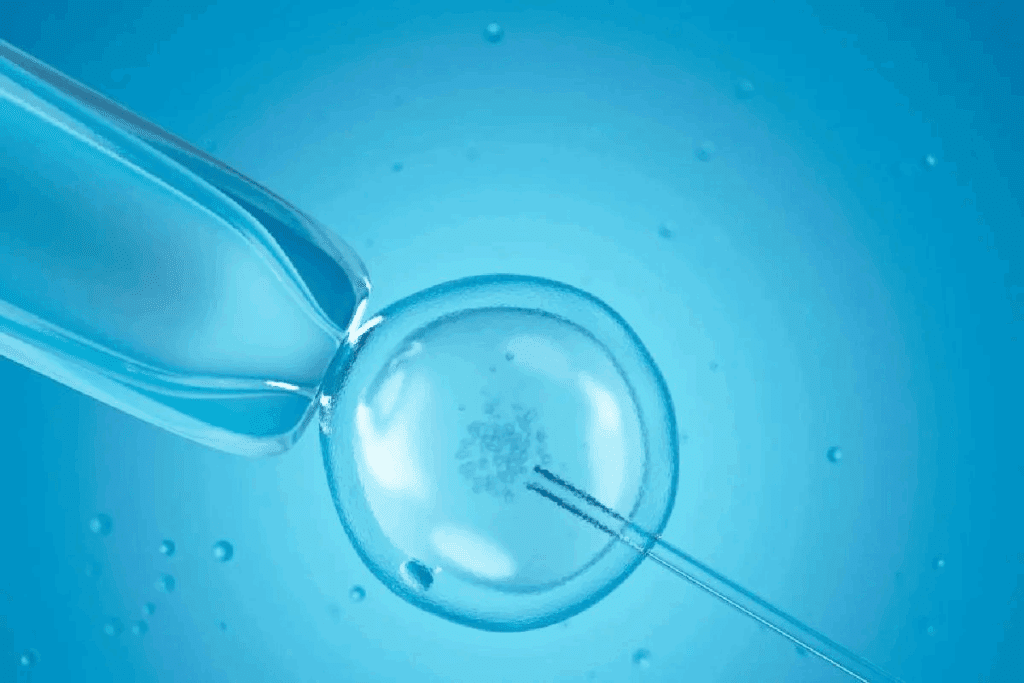
Knowing the stages of embryo development is key for those going through IVF. From the start, when eggs are taken out, a big change happens in the lab. This change goes through different stages as the embryos grow embryo growth stages ivf.
At Liv Hospital, we help our patients understand their fertility journey. We focus on you, making sure the best embryo monitoring and selection are used. This is done with the highest care.
Every day is important in your IVF journey. Knowing what happens each day helps you make better choices. We’ll look at the important stages of embryo growth. This will help you understand your journey through assisted reproduction.
Key Takeaways
- Understanding embryo development stages is key for IVF patients.
- Liv Hospital’s patient-centered approach ensures high standards in embryo monitoring.
- Advanced techniques are used for embryo selection.
- Daily progress is vital in the IVF journey.
- Knowledge empowers patients to make informed decisions.
The Importance of Understanding Embryo Growth Stages in IVF
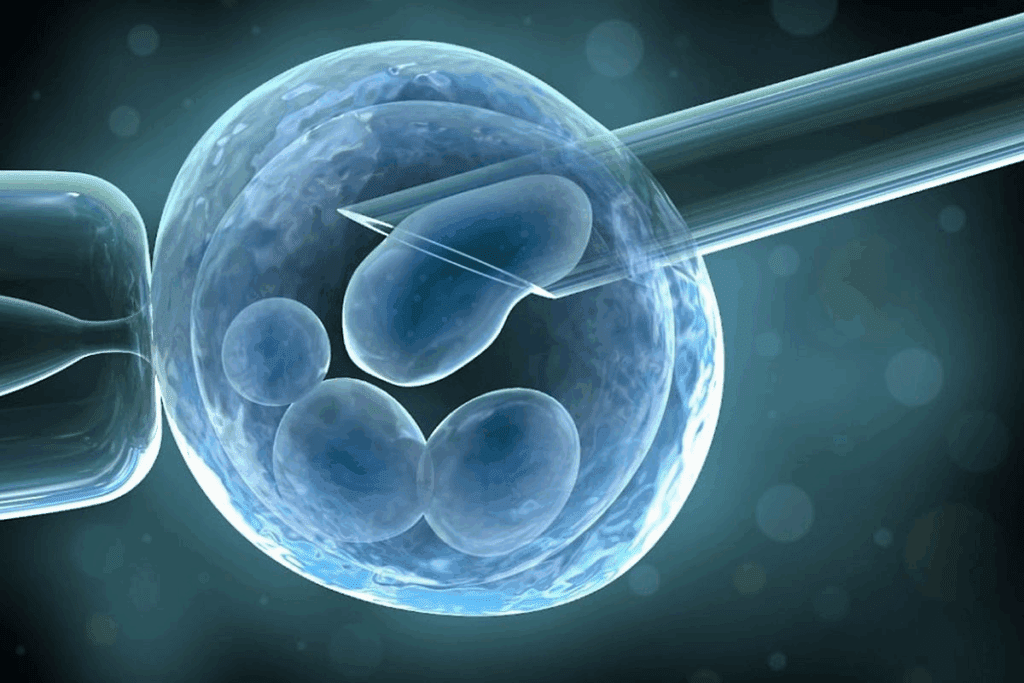
Knowing about embryo growth stages is key for managing hopes and making smart choices during IVF. It helps patients grasp the IVF journey and what can affect its success.
Why Embryo Development Knowledge Matters for IVF Patients
For IVF patients, knowing about embryo development can lessen worry and help in making better choices. It sets realistic hopes about the IVF journey and its results.
Also, this knowledge lets patients ask the right questions and work better with their doctors. This teamwork can lead to better IVF results.
Key Factors Affecting Embryo Development Success
Many things can affect how well an embryo develops in IVF. These include the egg and sperm quality, the age of the people involved, and the lab conditions during IVF.
Key Factors Influencing Embryo Development:
| Factor | Description | Impact on Embryo Development |
|---|---|---|
| Egg Quality | The quality of the egg used in IVF | High-quality eggs are more likely to result in successful fertilization and embryo development. |
| Sperm Quality | The quality of the sperm used for fertilization | Good sperm quality is key for successful fertilization and healthy embryo development. |
| Age | The age of the individuals providing the eggs and sperm | Age can greatly affect egg and sperm quality, impacting embryo development. |
| Laboratory Conditions | The conditions under which embryos are cultured in the lab | Best lab conditions are vital for supporting embryo growth and development. |
Grasping these factors and their role in embryo development helps both patients and doctors make better choices for IVF success.
Preparing for the IVF Journey: Before Day 0
The path to successful IVF starts well before Day 0. Important steps are taken to prepare for embryo development and treatment success. These steps are key to a healthy pregnancy.
Ovarian Stimulation and Monitoring
Ovarian stimulation is the first step. Hormone medications are used to make the ovaries produce more eggs. This boosts the chances of getting healthy eggs for fertilization.
While being stimulated, patients get regular ultrasound scans and blood tests. These check the growth of follicles in the ovaries. This helps doctors adjust the medication for the best egg retrieval.
Final Preparations for Egg Retrieval
When follicles are ready, patients get ready for egg retrieval. They learn about medication timing, lifestyle changes, and what to expect on the big day.
Following these instructions is vital for the best results. Knowing what to expect helps patients feel less anxious and more in control. This way, they can move forward with confidence in their IVF journey.
Day 0: The Egg Retrieval Process
The egg retrieval process is a key moment in IVF treatment, happening on Day 0. It’s the end of the ovarian stimulation phase. We’ve watched many follicles grow in the ovaries. Now, we’re ready to get the eggs for fertilization.
What Happens During Egg Retrieval
Egg retrieval is done under intravenous sedation to keep the patient comfortable. A needle is guided by ultrasound through the vaginal wall to get the eggs. This whole process usually takes about 20-30 minutes.
The eggs are then checked under a microscope to see their quality and how mature they are. This is a key step because it shows how many eggs are ready for fertilization.
Egg Quality Assessment and Preparation for Fertilization
The quality of the eggs is judged by their maturity and shape. Eggs that are mature and of good quality are ready for fertilization. This is usually done through conventional IVF or ICSI.
The embryologists handle the eggs with great care to reduce stress and increase the chance of successful fertilization. The eggs are then put in a special medium, waiting for insemination or ICSI.
On Day 0, the egg retrieval process is a big step in the IVF journey. Knowing about this process helps patients understand the complexity and care in IVF treatment.
Day 1: Fertilization and Pronuclear Formation
Fertilization is a key moment in IVF, happening on Day 1. This is when eggs from Day 0 meet sperm. They can be fertilized through standard insemination or ICSI. We watch closely to make sure the embryos grow well.
The Fertilization Process in IVF
On Day 1, our team carefully mixes eggs with sperm. This can be done in two ways: standard insemination or ICSI. ICSI is often chosen for couples facing male infertility or past fertilization issues.
The choice between these methods depends on sperm quality and past success. Our team will talk to you about what’s best for your case.
Identifying Successful Fertilization: The Two Pronuclei Stage
We look for two pronuclei (2PN) after fertilization. This shows the egg has been fertilized and is moving towards becoming an embryo. Usually, a fertilized egg has two pronuclei, one from each parent.
“The presence of two pronuclei is a strong indicator of successful fertilization and proper embryo development.”
Day 1 Success Rates: What to Expect
On Day 1, we check how many eggs have fertilized. The success rate can change based on egg and sperm quality. Typically, ICSI has a 60-80% fertilization rate, while standard insemination is slightly lower.
Our team will keep you updated on your embryos’ progress. Knowing about fertilization on Day 1 can make you feel more ready for your IVF journey.
Day 2: Early Cleavage and Cell Division
On Day 2, embryos start to divide and grow. This is a key time for their development. We watch them closely to see if they can implant and grow into a baby.
The 2-4 Cell Stage Development Process
By Day 2, embryos usually have 2-4 cells. This is the start of their growth. The cells, called blastomeres, keep dividing and growing, ready for the next step.
Key aspects of the 2-4 cell stage include:
- Initial cell divisions
- Cellular growth and preparation for further development
- Early indicators of embryo viability
Early Embryo Quality Indicators and Developmental Milestones
Checking embryo quality on Day 2 is very important. We look at how fast they divide, if their cells are the same size, and if there’s any damage.
Key indicators of embryo quality include:
- Rate of cell division
- Uniformity of cell size and shape
- Presence or absence of cellular fragmentation
These signs help us pick the best embryos for a good chance of pregnancy.
Day 3: Critical Cell Division and First Embryo Grading
On Day 3 of IVF treatment, embryos go through a key stage. They usually reach the 6-8 cell stage, a big step in their growth. This stage is important because it shows if the embryo can implant well.
Reaching the 6-8 Cell Stage: Normal vs. Abnormal Development
By Day 3, embryos should have 6-8 cells from cell division. Normal development means:
- Synchronous cell division
- Minimal fragmentation
- Uniform cell size
But, abnormal development can show as uneven cell division, a lot of fragmentation, or irregular cell sizes. These signs affect the embryo’s health and are checked during grading.
Day 3 Embryo Grading Criteria and Classification
Grading embryos on Day 3 looks at several important points:
- Cell number: The number of cells, usually 6-8.
- Fragmentation: The amount of cellular fragments, showing abnormal division.
- Symmetry: How uniform the cell size and shape are.
Embryos are graded from 1 to 5, with Grade 1 being the best. Grade 1 embryos have the right cell number, little fragmentation, and even cell size. This grading helps pick the best embryo for transfer.
Day 3 vs. Day 5 Transfer Considerations and Success Rates
Choosing to transfer embryos on Day 3 or Day 5 depends on many things. These include the number and quality of embryos, the patient’s age, and past IVF results. Day 3 transfer happens when the embryo is at the cleavage stage, while Day 5 transfer is at the blastocyst stage.
Day 5 transfer often has better success rates because it lets for better choosing of good embryos. But, Day 3 transfer might be better when there are fewer embryos. Our fertility experts will talk about the best choice for you.
Knowing about embryo development and grading on Day 3 is key for IVF patients. It gives insights into treatment success and helps in making transfer decisions.
Day 4: The Morula Stage Transition
On the fourth day of IVF embryo development, a key transition happens. Embryos compact into a morula. This stage is important as it prepares them for growth into blastocysts.
Cell Compaction and Morula Formation Process
Day 4 sees embryos compacting, where cells stick together to form a morula. This is vital for their growth. It helps cells differentiate into groups that will form the fetus and placenta.
The morula stage is marked by cells getting closer together. This makes the embryo more compact. It’s all about cell adhesion and keeping the embryo’s structure strong.
Preparing for Blastocyst Development: Key Cellular Changes
As embryos reach the morula stage, they start getting ready to become blastocysts. They begin to differentiate into the inner cell mass and the trophectoderm. The inner cell mass will form the fetus, while the trophectoderm will make the placenta and other tissues.
The compaction and differentiation are key for a successful blastocyst. A well-formed morula shows the embryo’s strong chance of becoming a healthy blastocyst.
| Developmental Stage | Key Characteristics | Significance |
|---|---|---|
| Morula Stage (Day 4) | Cell compaction, tight cell adhesion | Preparation for blastocyst formation, differentiation of cells |
| Blastocyst Stage (Day 5-6) | Formation of inner cell mass and trophectoderm, fluid-filled cavity | Implantation, fetal and placental development |
Knowing about the morula stage transition is important. It shows the complex journey embryos go through in IVF. By Day 4, the embryo has already started to compact and differentiate, setting the stage for the next critical stage: the blastocyst.
Embryo Growth Stages in IVF: Day 5-6 Blastocyst Development
Blastocyst development on Day 5-6 is a key moment in IVF. It shows how well an embryo might do. At this point, embryos have grown into blastocysts. These are complex structures with two main parts: the inner cell mass and the trophectoderm.
Blastocyst Formation and Structure: Inner Cell Mass and Trophectoderm
The blastocyst stage is marked by a fluid-filled cavity. This cavity is surrounded by the trophectoderm. This part will form the placenta and other tissues. The inner cell mass will grow into the fetus. Knowing about these cells is key to judging embryo quality.
Comprehensive Blastocyst Grading Systems Explained
Blastocysts are graded for their growth, inner cell mass, and trophectoderm quality. This grading helps doctors see how likely an embryo is to succeed. The Gardner grading system is often used. It looks at three things: how much the blastocyst has grown, the inner cell mass, and the trophectoderm quality.
| Grade | Expansion | Inner Cell Mass | Trophectoderm |
|---|---|---|---|
| 1 | Early blastocyst | Loose cells | Few cells |
| 2 | Partially expanded | Some cells | Moderate cells |
| 3 | Fully expanded | Many cells | Many cells |
| 4 | Expanded, hatching | Tightly packed | Many cells, cohesive |
| 5 | Hatched | Very tightly packed | Very many cells, very cohesive |
Blastocyst Transfer vs. Freezing: Making Informed Decisions
After grading, the next choice is whether to transfer the blastocyst or freeze it. This choice depends on the blastocyst’s quality, the patient’s medical history, and personal wishes. Blastocyst transfer has a higher success rate than earlier transfers. Blastocyst freezing allows for future transfers without needing more egg retrieval.
Understanding blastocyst development and grading helps patients make better choices in their IVF journey. By working with their healthcare provider, patients can decide what’s best for them.
Conclusion: Understanding Your IVF Embryo Journey
Exploring the 7 stages of embryo growth in IVF shows how key it is to understand the journey. Each step, from the start to the end, is important for IVF success.
Knowing about the embryo growth stages helps patients make better choices during treatment. We’ve learned how development changes from Day 0 to Day 5-6. Factors like ovarian stimulation, egg quality, and fertilization methods also play a role.
We aim to give patients the knowledge they need for their IVF journey. This way, we hope to offer a more supportive and tailored experience. Understanding IVF and embryo development can greatly improve treatment success.
FAQ
What are the stages of embryo development in IVF?
In IVF, embryo development goes through several stages. Day 0 is egg retrieval. Day 1 is fertilization. Then, on Day 2, the embryo is at the 2-4 cell stage.
On Day 3, it’s at the 6-8 cell stage and gets its first grading. Day 4 sees the morula stage. And Days 5-6 are for blastocyst development.
How does ovarian stimulation affect embryo development?
Ovarian stimulation is key before egg retrieval. It uses hormone meds to get the ovaries to make more eggs. This boosts the chances of successful fertilization and embryo growth.
What happens during the egg retrieval process on Day 0?
On Day 0, a minor surgery collects eggs from the ovaries. These eggs are then checked for quality and ready for fertilization.
What is the significance of the two pronuclei stage on Day 1?
The two pronuclei stage on Day 1 shows successful fertilization. It means the sperm and egg nuclei are visible. The embryo is then checked for normal growth.
How are embryos graded on Day 3?
On Day 3, embryos are graded for cell number, fragmentation, and symmetry. This helps figure out their viability and chance of successful implantation.
What is the morula stage, and what happens on Day 4?
The morula stage on Day 4 is when the embryo’s cells start to compact. This prepares the embryo for the next stage of development.
What is a blastocyst, and how is it graded?
A blastocyst is a stage of embryo development on Day 5-6. It has a fluid-filled cavity and two cell groups. Blastocysts are graded for expansion, inner cell mass, and trophectoderm quality.
What are the considerations for Day 3 vs. Day 5 transfer?
Choosing between Day 3 and Day 5 transfer depends on embryo quality, patient age, and medical history. Day 5 transfer often has higher success rates.
What is the difference between blastocyst transfer and freezing?
Blastocyst transfer puts a developed blastocyst into the uterus. Freezing preserves the blastocyst for later use. This lets patients save embryos for future transfers.
How does embryo quality affect IVF success rates?
Embryo quality is key to IVF success. High-quality embryos have a better chance of successful implantation and pregnancy.
References
National Center for Biotechnology Information. Evidence-Based Medical Guidance. Retrieved from https://pmc.ncbi.nlm.nih.gov/articles/PMC3274351/