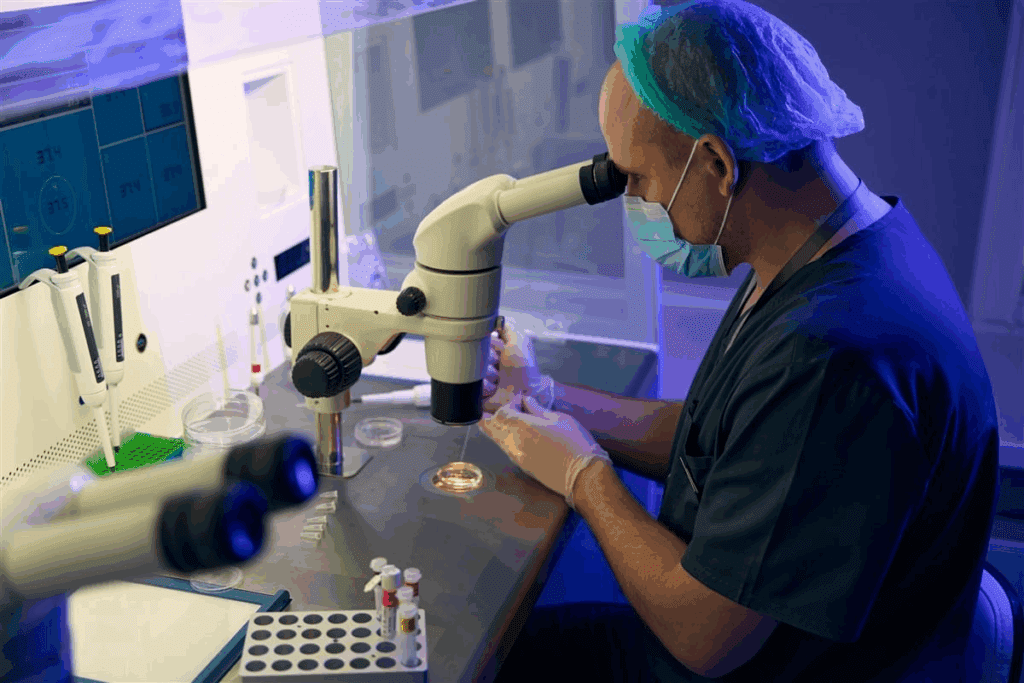
To become an embryologist, you need a solid base in life sciences and assisted reproductive technology (ART) training. Fertility centers are short on skilled workers. So, getting the right education and certification programs is key to a fulfilling career.
The American Society for Reproductive Medicine (ASRM) says the U.S. is short on clinical embryologists. To fill this need, embryologist training programs are getting better. They mix online learning with real lab work.
Choosing a career in embryology is a big step. We’re here to help you navigate it. With the right certification and training, you can help people achieve their family dreams.
Key Takeaways
- Pursue a bachelor’s degree in life sciences as a foundational step.
- Enroll in extensive embryologist training programs that include hands-on experience.
- Obtain certification to boost your career chances.
- Keep up with the newest in assisted reproductive technology.
- Join groups like the American Society for Reproductive Medicine (ASRM) for networking and resources.
Understanding the Role of an Embryologist
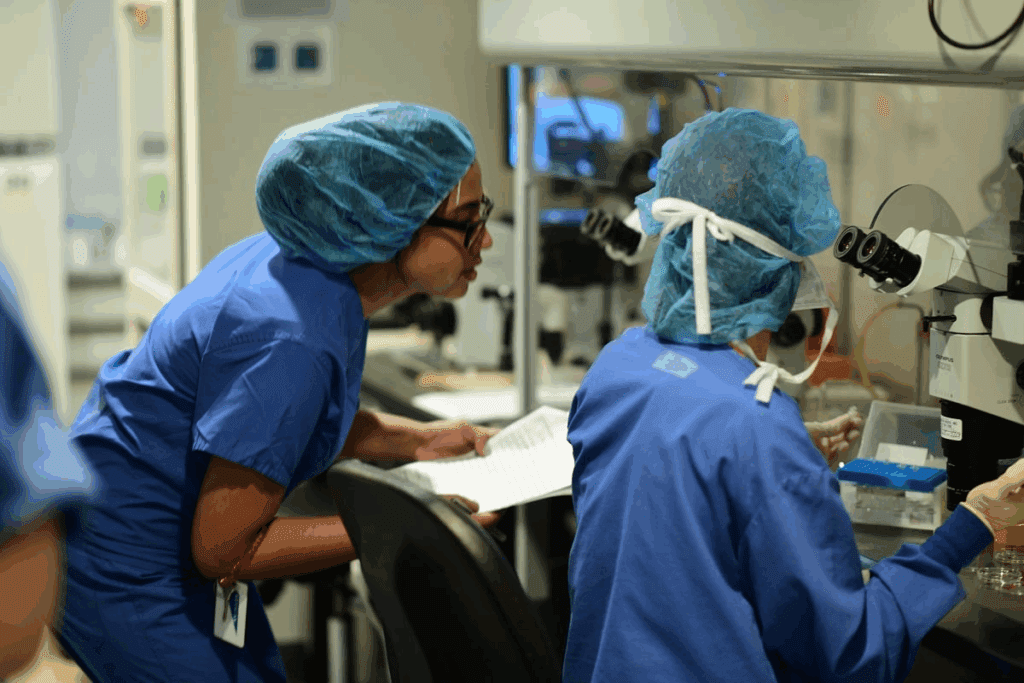
Embryologists are key in reproductive medicine. They work with fertility clinics to help people conceive. Their skills are essential for IVF training and other fertility treatments.
Key Responsibilities in Reproductive Medicine
Embryologists handle delicate lab work. This includes:
- Embryo culture
- Cryopreservation
- Micromanipulation techniques
They need precision, patience, and a strong science background. They also keep up with new reproductive medicine discoveries to give top care.
The Importance of Embryologists in Fertility Treatment
Embryologists are vital in fertility treatment. They play a big role in IVF and ART success. By managing lab work, they greatly impact patient outcomes.
“The embryologist’s role is critical in the IVF process, as they are responsible for the care and handling of embryos, which directly affects the success rates of treatments.”— Medical Expert, Fertility Specialist
Day-to-Day Work Environment
Embryologists work in lab settings in fertility clinics or hospitals. They keep the environment clean and controlled. This is to protect embryos and samples.
Their work requires focus, organization, and the ability to handle stress.
Key parts of their job include:
- Maintaining lab equipment and supplies
- Doing quality control checks
- Working with other healthcare teams
Educational Requirements for Aspiring Embryologists
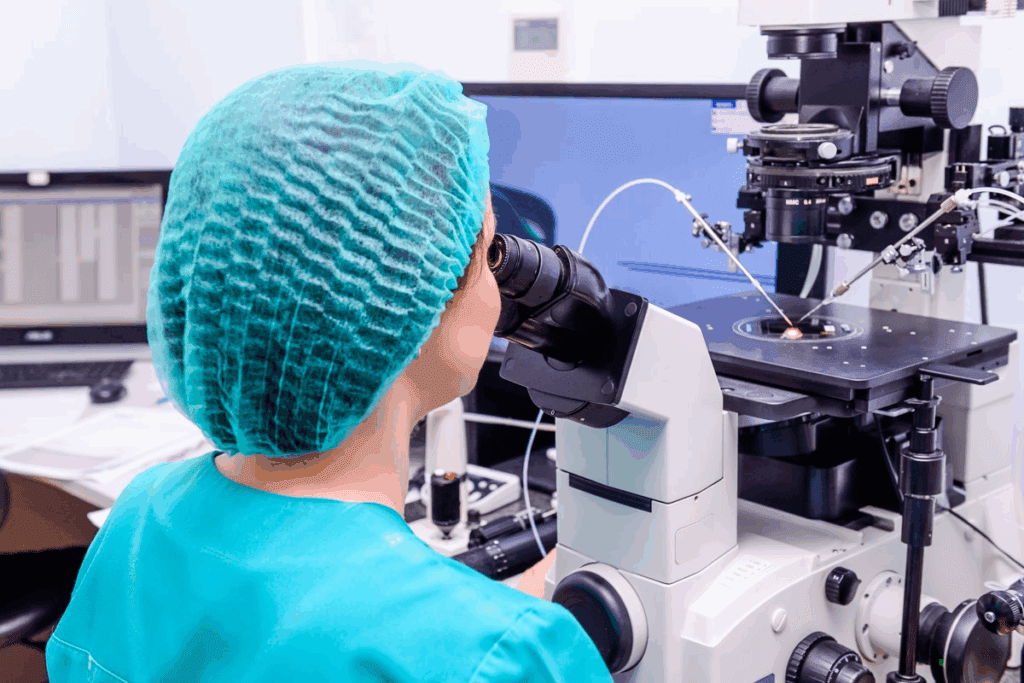
Embryologists start with a bachelor’s degree in a science field. This education lays the groundwork for understanding embryology’s complex biological processes.
Bachelor’s Degree Prerequisites
Most programs need a bachelor’s in life sciences for embryologist training. The program should cover genetics, biochemistry, and molecular biology. These subjects are key to understanding embryology.
Aspiring embryologists should focus on a few key areas:
- Cell biology
- Genetics
- Biochemistry
- Molecular biology
- Reproductive physiology
Recommended Undergraduate Majors
Good undergraduate majors for embryologists include:
| Major | Relevant Coursework |
|---|---|
| Biology | Cell biology, genetics, developmental biology |
| Chemistry | Biochemistry, molecular biology, analytical chemistry |
| Biochemistry | Biochemical pathways, molecular biology, structural biology |
| Health Science | Reproductive health, embryology, human physiology |
These majors give a solid base for understanding embryology’s biological and chemical basics.
Advanced Degree Considerations
While a bachelor’s degree is essential, some pursue advanced degrees for more specialization. A master’s or Ph.D. can lead to deeper knowledge and qualify for senior roles.
Advanced degrees can also boost career prospects. They open doors to specialize in reproductive genetics or assisted reproductive technology.
Aspiring embryologists should think about their career goals when choosing their education path.
Comprehensive Embryologist Training Program Options
There are many ways to get trained as an embryologist. Each option meets different needs and goals. Aspiring embryologists need a strong base in both theory and lab skills.
University-Based Programs
University programs give a solid education in embryology. They mix classroom learning with lab practice. Students learn from experts in reproductive medicine.
They cover important topics like lab quality, embryo culture, and freezing methods.
Hospital-Affiliated Training
Hospital training lets you work in a clinical setting. It’s great for seeing how embryology works in real life. Trainees work with skilled embryologists.
They learn in a busy, dynamic place.
Private Fertility Clinic Internships
Internships at fertility clinics are unique. They let you work with patients and see clinic life up close. They’re key for learning technical skills.
Participants learn about embryo biopsy and genetic testing.
Program Duration and Time Commitment
Training programs last from 3 to 6 months. Some may be shorter or longer. It’s a big commitment, often full-time.
Prospective trainees need to understand the program’s demands.
We offer various training paths for aspiring embryologists. This ensures they’re ready for their careers. Whether through universities, hospitals, or clinics, thorough training is essential.
Online Embryology Courses vs. In-Person Training
Embryology training now blends old-school in-person lessons with new online courses. This change helps future embryologists choose between learning online or getting hands-on lab experience.
Benefits of Digital Learning Platforms
Online embryology courses have many perks, including:
- They let you schedule learning around your life, so you can keep up with work or school.
- You get to use a lot of resources like videos, interactive lessons, and virtual labs.
- You can learn at your own speed, going back to tough topics whenever you need to.
Digital learning lets you learn at your own pace. This is great for those who need to see things over and over until they get it.
Importance of Hands-On Laboratory Experience
Online courses give you the basics, but hands-on lab experience is key for real-world skills. In-person training lets you:
- Use real lab equipment and learn techniques used in labs.
- Work with human embryos and gametes under expert guidance.
- Practice the fine motor skills needed for detailed procedures.
Hands-on training also means you get feedback and help right away. This is super helpful for learning tough skills.
Hybrid Training Models
Now, many programs mix online learning with in-person lab work. This way, you get the flexibility of online learning and the real-world practice of labs.
Hybrid models aim to give a full education. They prepare students for the challenges of their future careers.
Core Components of Embryology Training
Embryology training focuses on key areas. These include laboratory quality control, embryo culture, cryopreservation, and micromanipulation skills. These elements are the base for training embryologists in assisted reproductive technology (ART).
Laboratory Quality Control Procedures
Laboratory quality control is essential in embryology training. Trainees learn the need for a clean and controlled lab. This ensures embryo viability and treatment success. They learn about equipment calibration, environmental monitoring, and strict hygiene.
The European Society of Human Reproduction and Embryology (ESHRE) stresses the importance of quality control. It’s vital for the safety and success of ART procedures.
Embryo Culture Techniques
Embryo culture techniques are a key part of training. Trainees learn about different culture media and handling techniques. They also learn to observe and assess embryo development.
- Understanding different culture media and their applications
- Mastering techniques for handling embryos gently and safely
- Observing and assessing embryo development stages
Cryopreservation Methods
Cryopreservation is a critical skill in embryology. It allows for long-term storage of embryos and gametes. Training covers the basics of cryopreservation, including cryoprotectants and vitrification techniques.
| Cryopreservation Method | Description | Advantages |
|---|---|---|
| Slow Freezing | Gradual reduction of temperature to prevent ice crystal formation | Well-established method, widely used |
| Vitrification | Rapid cooling using high concentrations of cryoprotectants | High survival rates, reduced ice crystal damage |
Micromanipulation Skills
Micromanipulation techniques, like ICSI and embryo biopsy, require precise training. Embryologists learn to work under high magnification. This demands technical skill and a steady hand.
“The precision required for micromanipulation is akin to performing surgery on a microscopic scale, demanding utmost care and concentration.”
Consider ICSI, where a single sperm is injected into an egg. This technique has greatly helped in treating certain types of infertility.
By mastering these core components, embryologists are ready to provide top-notch care in reproductive medicine. They help in the success of fertility treatments, bringing hope to prospective parents.
Specialized Techniques in Assisted Reproductive Technology
Advanced techniques like preimplantation genetic testing have changed reproductive medicine. These methods in assisted reproductive technology (ART) have greatly improved fertility treatment results. They bring hope to many individuals and couples facing infertility.
Intracytoplasmic Sperm Injection (ICSI)
Intracytoplasmic sperm injection (ICSI) is a new way to help with fertilization. A single sperm is injected into an egg. This method has changed how we treat male infertility, helping even when sperm count is very low.
Key benefits of ICSI include:
- High success rates even with low sperm count
- Effective in cases of previous fertilization failure
- Reduced risk of certain genetic abnormalities
Embryo Biopsy Procedures
Embryo biopsy removes cells from an embryo for genetic testing. It’s key for finding genetic issues and picking the healthiest embryos for transfer.
Medical Expert, a top embryologist, says,
“Embryo biopsy has become a cornerstone in the practice of preimplantation genetic diagnosis, enabling us to make informed decisions about embryo selection.”
| Procedure | Description | Benefits |
|---|---|---|
| Embryo Biopsy | Removal of cells from an embryo for genetic analysis | Identification of genetic abnormalities, selection of healthy embryos |
| ICSI | Injection of a single sperm into an egg | Effective in treating male infertility, high success rates |
Preimplantation Genetic Testing
Preimplantation genetic testing (PGT) checks embryos for genetic issues before IVF. It can lower the risk of genetic disorders and boost IVF success.
PGT is a key part of modern reproductive medicine. It helps pick embryos without genetic problems, cutting down on miscarriage and failed implantation risks.
The future of ART lies in the continued advancement of these specialized techniques, opening new possibilities for individuals and families worldwide.
Professional Certification Pathways for Embryologists
Getting certified is key for embryologists to show they know their stuff in reproductive tech. As the field grows, getting certified is more important than ever. It helps them move up in their careers and keep their skills sharp.
European Society of Human Reproduction and Embryology (ESHRE) Certification
The ESHRE certification is a big deal. It shows an embryologist is really good at reproductive medicine. To get it, you need to have the right education and training. You also need to show you can handle tough procedures.
Key Requirements for ESHRE Certification:
- Relevant academic qualifications in biological sciences or medicine
- Completion of specialized training in embryology
- Hands-on experience in IVF laboratories
- Passing the ESHRE certification examination
American Society for Reproductive Medicine (ASRM) Recognition
The ASRM recognition is also very respected. It’s not a formal certification, but it shows you’re up-to-date with the latest in embryology.
Benefits of ASRM Recognition:
- Access to exclusive educational resources and workshops
- Opportunities for networking with peers and industry leaders
- Enhanced credibility in the field of reproductive medicine
Continuing Education Requirements
ESHRE and ASRM both stress the need for ongoing learning. Embryologists must keep up with new tech and techniques. This helps them stay at the top of their game.
| Certifying Organization | Continuing Education Requirements | Renewal Period |
|---|---|---|
| ESHRE | Minimum of 30 hours of relevant training | Every 5 years |
| ASRM | Participation in annual meetings and workshops | Ongoing, with periodic reviews |
Certification Renewal Process
To keep your certification, you need to show you’re keeping up with the latest in embryology. You must document your education and training. This proves you’re up to date and ready for new challenges.
Getting and keeping certifications is vital for embryologists. It ensures they give the best care in reproductive tech. We urge all professionals to get certified. It helps them grow in their careers and improve the field of embryology.
Career Opportunities and Job Outlook
The need for assisted reproductive technology is growing fast. This means more jobs for embryologists. The field of embryology is booming because of more fertility treatments and new advances in reproductive medicine.
Addressing the Shortage of Clinical Embryologists
There’s a big need for clinical embryologists. Many fertility clinics and reproductive medicine centers can’t find enough skilled people. This shortage is a big chance for those who want to be embryologists to have a fulfilling career.
Employment Settings for Embryologists
Embryologists can work in many places, such as:
- Fertility clinics
- Research institutions
- University laboratories
- Private practices specializing in reproductive medicine
These different jobs let embryologists pick a career that fits their interests and skills.
Growth Projections in Reproductive Medicine
The field of reproductive medicine is expected to keep growing. This is because of new technology and more people wanting fertility treatments. This growth means more jobs for skilled embryologists who can help patients.
International Career Opportunities
Embryologists can also work abroad. Many countries need skilled people in reproductive medicine. This opens up career chances in different cultures and places.
Salary Expectations and Advancement Opportunities
Embryologists have a bright future ahead, with chances for salary growth and career advancement. Their pay can increase based on their skills and certifications. It’s important to look at different factors that affect their earnings.
Entry-Level Compensation
Newcomers to the field can expect to earn between $60,000 and $80,000 a year. This range depends on where they work, their education, and the employer.
Starting out, embryologists usually work in labs or fertility clinics. They get valuable experience that helps them grow professionally.
Factors Affecting Embryologist Salaries
Several things can change how much an embryologist makes. These include:
- Where they live, with cities often paying more
- How long they’ve been working, with more experience leading to higher pay
- Who they work for, like private clinics or universities
- Any special skills or certifications, like those from ESHRE
Career Progression Opportunities
As they gain experience, embryologists can move up in their careers. They might take on leadership roles, get into research, or even switch to genetic counseling.
Advancing in your career often means getting more education and certifications. This not only improves your skills but also your salary.
Additional Certifications for Salary Growth
Getting additional certifications can really help an embryologist’s salary. Certifications from places like ESHRE or ASRM can greatly improve their career and earnings.
These certifications show a commitment to being the best and keeping up with new discoveries. They make embryologists more attractive to employers.
Conclusion: Embarking on Your Journey to Become an Embryologist
Becoming an embryologist takes hard work, a lot of education, and special training. We know it’s tough, but with the right education and training, you can do it. You’ll learn the skills needed to succeed in this field.
To start, you need to finish a tough embryologist training program. It includes learning a lot and getting hands-on experience in the lab. This way, you can help people and families have babies.
The need for fertility treatments is growing, which means good job prospects for embryologists. If you’re interested, look into programs like those from the European Society of Human Reproduction and Embryology (ESHRE). Getting professional certifications can also boost your career.
FAQ
What are the initial educational requirements to become an embryologist?
To start as an embryologist, you need a bachelor’s degree in biology, chemistry, or a life science. Your courses should include genetics, biochemistry, and molecular biology. This foundation is key.
What kind of training programs are available for embryologists?
There are many training programs for embryologists. You can find them at universities, hospitals, or private clinics. These programs teach both theory and practical skills.
Are online embryology courses sufficient for becoming an embryologist?
Online courses are good for learning theory, but hands-on experience is essential. Many programs now mix online learning with lab training.
What specialized techniques are taught in embryology training?
Training covers many skills, like embryo culture and cryopreservation. You’ll also learn about micromanipulation, ICSI, and embryo biopsy for genetic testing.
How important is professional certification for embryologists?
Certification is very important for embryologists. It shows you’re skilled and dedicated. Organizations like ESHRE and ASRM offer recognized certifications.
What are the career prospects for embryologists?
Embryologists can work in many places, like fertility clinics and research labs. The field is growing, with more jobs available worldwide.
How do factors like location and experience affect an embryologist’s salary?
Salary varies based on location, experience, and job. Starting salaries are lower, but you can earn more with experience and certifications.
What is the typical duration and time commitment for embryologist training programs?
Training programs are intense and can last from months to years. The time needed depends on the program and your background.
Can embryologists work internationally?
Yes, embryologists can work abroad. Their skills and certifications are recognized worldwide, opening doors in many countries.
References
National Center for Biotechnology Information. Embryologist Training: Education and Certification in Assisted Reproductive Technology. Retrieved from https://www.ncbi.nlm.nih.gov/pmc/articles/PMC6781115/