About 1 in 10 women of reproductive age suffer from endometriosis. This condition is often hard to diagnose. Finding it accurately is key for good treatment.
One helpful tool is theendometriosis ultrasound, which uses imaging to detect signs of the condition. While not always 100% conclusive, an endometriosis ultrasound can identify ovarian endometriomas and other visible abnormalities linked to the disease.
The effectiveness of an endometriosis ultrasound depends on the type and location of the endometrial tissue. Deep infiltrating endometriosis, for example, may require advanced imaging or further diagnostic methods.
Still, ultrasound plays an important role in the early evaluation of symptoms like pelvic pain or infertility, helping guide next steps in diagnosis and treatment.
Key Takeaways
- Endometriosis affects a significant portion of women worldwide.
- Accurate diagnosis is key to managing the condition.
- Ultrasound technology is being increasingly used for diagnosis.
- The effectiveness of ultrasound in detecting endometriosis depends on various factors.
- Understanding these factors is important for both patients and healthcare providers.
Understanding Endometriosis
Endometriosis is a chronic and often painful disorder. It happens when tissue like the lining inside the uterus grows outside of it.
What is Endometriosis?
Endometriosis is when endometrial-like tissue grows outside the uterus. This leads to inflammation, scarring, and adhesions. The misplaced tissue thickens and bleeds with each menstrual cycle, causing pain and discomfort.
Key characteristics of endometriosis include:
- Painful periods (dysmenorrhea)
- Heavy or irregular menstrual bleeding
- Infertility or difficulty conceiving
- Pelvic pain or cramping
Common Symptoms and Signs
Symptoms of endometriosis vary among women. Common signs include:
- Severe menstrual cramps
- Pelvic pain during or after sex
- Bleeding or spotting between periods
- Digestive issues during menstruation
Some women may have few or no symptoms. Others may experience severe pain.
Prevalence and Impact
Endometriosis affects about 1 in 10 women of reproductive age. The actual number might be higher because of underdiagnosis.
| Aspect | Statistic |
| Prevalence | Affects approximately 10% of reproductive-age women |
| Impact on Quality of Life | Can cause significant pain, infertility, and emotional distress |
| Economic Burden | Results in substantial healthcare costs and lost productivity |
Knowing about endometriosis is key. It helps raise awareness, improve diagnosis, and find better treatments.
The Challenge of Diagnosing Endometriosis
Diagnosing endometriosis is hard because its symptoms are not clear and there’s no simple test. This condition affects millions of women, causing pain, infertility, and a big impact on their lives.
Why Endometriosis is Difficult to Diagnose
Endometriosis is hard to diagnose because its symptoms are like those of other conditions. There’s no specific biomarker or clear test to help diagnose it.
Average Time to Diagnosis
It can take 6 to 10 years to get diagnosed with endometriosis. During this time, patients may see many doctors and try different treatments without getting better. This delay can cause a lot of suffering and lower their quality of life.
- Multiple visits to healthcare providers
- Misdiagnosis or delayed diagnosis
- Inadequate initial treatment plans
The Importance of Early Detection
Finding endometriosis early is key for effective treatment. Early action can lessen symptoms, improve life quality, and prevent long-term issues like infertility and chronic pain.
Early diagnosis and treatment greatly improve outcomes for women with endometriosis.
Endometriosis Ultrasound: Basic Principles
Ultrasound technology has greatly improved in detecting endometriosis. It’s a big step forward in gynecological diagnostics. This technology helps doctors diagnose and manage endometriosis better.
How Ultrasound Technology Works
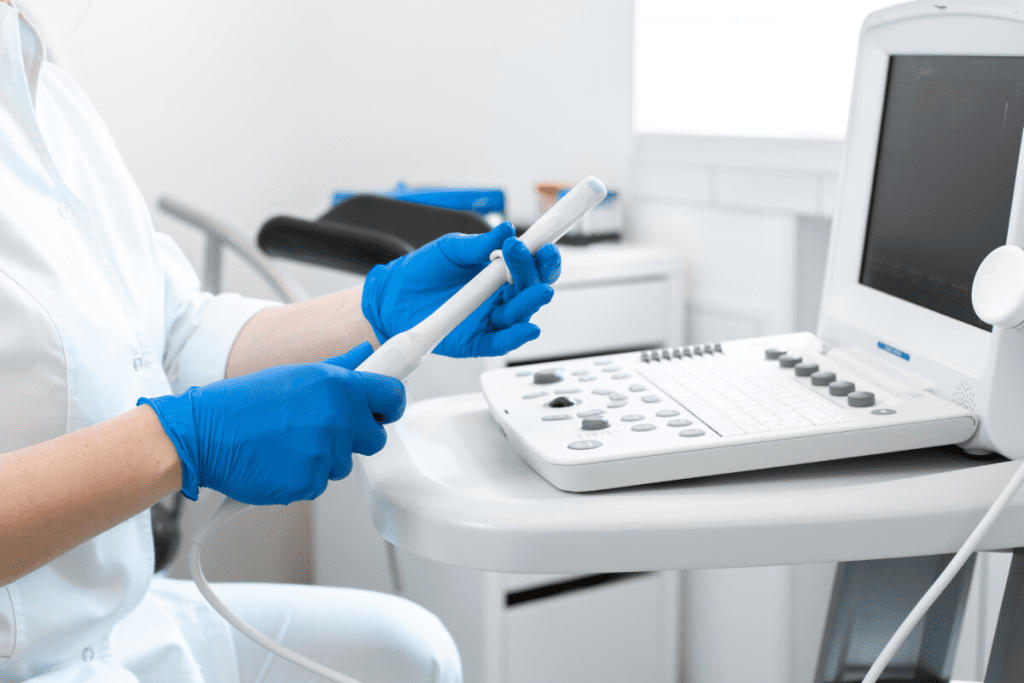
Ultrasound uses high-frequency sound waves to show the body’s internal structures. It’s a safe way to see inside without surgery. A transducer sends and receives sound waves, turning them into images on a screen.
Key components of ultrasound technology include:
- The transducer, which converts electrical energy into sound waves and vice versa.
- The ultrasound machine, which processes the received sound waves into visual images.
- Gel or lubricant, used to facilitate the movement of the transducer over the skin.
Types of Ultrasounds Used for Endometriosis
There are many ultrasounds for diagnosing endometriosis, each with its own benefits. The right one depends on where and how much endometriosis is present.
Common types of ultrasounds for endometriosis include:
- Transvaginal ultrasound, which gives a detailed view of the reproductive organs.
- Transabdominal ultrasound, good for seeing larger areas like the abdomen.
- 3D and 4D ultrasounds, which show more detailed and moving images.
Preparing for an Endometriosis Ultrasound
Getting ready for an ultrasound can vary based on the type. Doctors usually give specific instructions to get the best images.
Preparation tips:
- For transvaginal ultrasounds, a full bladder or specific menstrual cycle timing may be required.
- For transabdominal ultrasounds, a full bladder is often needed for a clearer view.
- Inform your doctor about any medications or allergies you have.
Can You See Endometriosis on an Ultrasound?
Using ultrasound to find endometriosis is complex. It depends on knowing what ultrasound can and can’t do. Today’s ultrasound tech is better at showing endometriotic lesions and cysts.
Detection Capabilities and Limitations
Ultrasound works well for some types of endometriosis, like ovarian endometriomas and deep infiltrating endometriosis. But it’s not as good at finding superficial peritoneal endometriosis. The person doing the ultrasound and the quality of the machine matter a lot for getting a correct diagnosis.
- Good for finding ovarian endometriomas and deep infiltrating endometriosis
- Not so great for superficial peritoneal endometriosis
- How skilled the operator is and the machine’s quality are key
What Endometriosis Looks Like on Ultrasound
Endometriomas look like cysts with a “ground glass” look on ultrasound. Deep infiltrating endometriosis shows up as dark spots with unclear edges. The look can change based on where and how deep the endometriosis is.
Endometriosis Ultrasound vs. Normal Ultrasound Images
Looking at endometriosis ultrasound images next to normal ones shows big differences. Normal ovaries and pelvic areas look a certain way on ultrasound. But endometriosis can change things, like making cysts, causing adhesions, and messing with normal shapes.
- Normal ultrasound images show typical ovarian and pelvic structures.
- Endometriosis ultrasound images may reveal cysts, adhesions, and anatomical distortions.
Different Types of Ultrasound for Endometriosis Detection
There are many ultrasound types used to find endometriosis. Each has its own benefits and drawbacks. The choice depends on where and how severe the endometriosis is thought to be.
Transvaginal Ultrasound
Transvaginal ultrasound is the top choice for spotting endometriosis, like ovarian endometriomas and deep infiltrating endometriosis. A special probe is put into the vagina. This gets closer to the reproductive organs, giving clearer images.
Advantages: It shows the ovaries and nearby areas in high detail. This helps spot endometriomas and adhesions well.
Limitations: It might not work for everyone. This includes those who find it uncomfortable or have certain health issues.
Transabdominal Ultrasound
Transabdominal ultrasound is also used to find endometriosis, mainly for big structures and surface endometriosis. A gel is applied to the belly, and a transducer captures the images.
Transabdominal ultrasound is not as good as transvaginal for finding deep endometriosis. But, it’s useful for bigger endometriomas and surface lesions. It’s best when used with transvaginal ultrasound.
To answer if an abdominal ultrasound can find endometriosis, yes, but with some limits. It can spot big endometriomas and some surface lesions. But, it might miss smaller or deeper ones.
3D and 4D Ultrasound
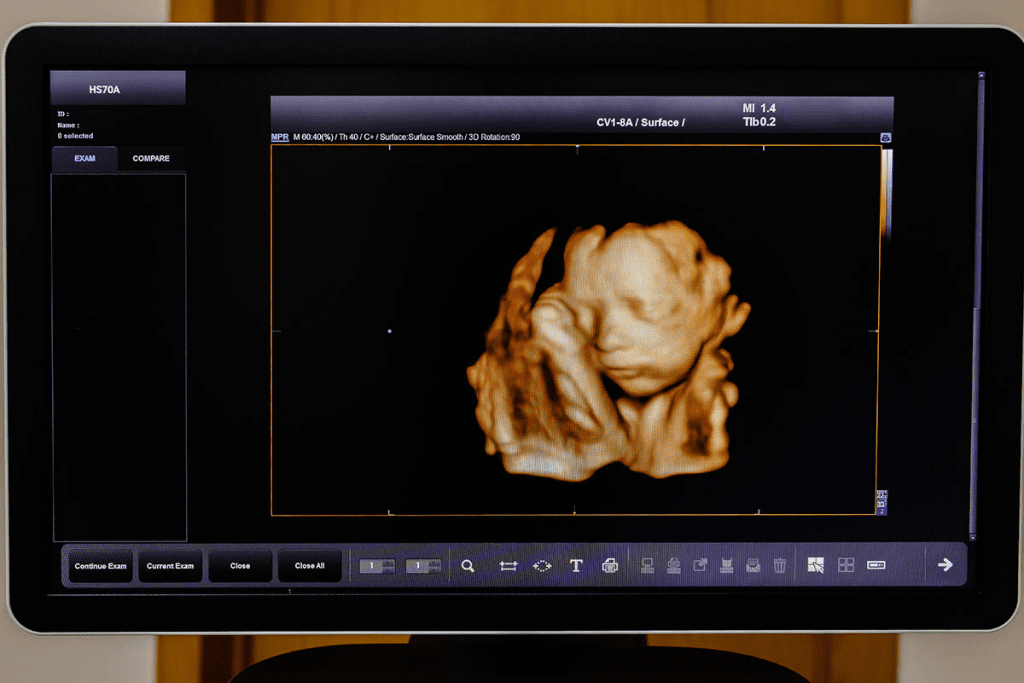
3D and 4D ultrasounds are advanced imaging that give more detailed views of anatomy and possible endometriosis spots. 3D makes a 3D image from 2D ones. 4D adds time, making a live video.
| Ultrasound Type | Advantages | Limitations |
| Transvaginal Ultrasound | High-resolution images, detailed assessment of ovaries and surrounding structures | May not be suitable for all patients, particularl |
| Transabdominal Ultrasound | Useful for larger structures, can detect superficial endometriosis | Inferior to transvaginal ultrasound for deep infiltrating endometriosis |
| 3D and 4D Ultrasound | Provides detailed 3D images, can help in assessing complex anatomy | May not be widely available, requires specialized equipment and expertise |
Specialized Ultrasound Techniques for Endometriosis
Diagnosing endometriosis has become more accurate with specialized ultrasound techniques. These methods help spot endometriosis more clearly, giving doctors detailed views of the condition.
Transvaginal Ultrasound with Bowel Preparation
Transvaginal ultrasound with bowel prep is a technique used to see endometriotic lesions better. It’s great for spotting lesions in the bowel.
- Before the ultrasound, you’ll follow a clear liquid diet and clean your bowel.
- This method is good for finding deep infiltrating endometriosis.
- A transvaginal probe gives clear images of the pelvic area.
Sonovaginography
Sonovaginography uses a saline solution to fill the vagina during an ultrasound.
This technique helps in:
- Finding endometriotic lesions in the vaginal wall and rectovaginal septum.
- Getting detailed images of the posterior compartment.
- Seeing adhesions and scar tissue better.
Contrast-Enhanced Ultrasound
Contrast-enhanced ultrasound uses a contrast agent to show blood flow and tissue vascularity better.
The benefits include:
- Spotting endometriotic lesions based on their blood flow.
- Distinguishing endometriomas from other ovarian cysts.
- Assessing how widespread endometriosis is.
These specialized ultrasound techniques are a big step forward in diagnosing endometriosis. They offer more accurate results and detailed info for treatment plans.
Accuracy of Ultrasound in Detecting Different Types of Endometriosis
Ultrasound’s accuracy in spotting endometriosis changes with the type and where it is. Endometriosis comes in many forms, making it hard to find. Knowing what ultrasound can and can’t do is key for right diagnosis and treatment.
Ovarian Endometriosis (Endometriomas)
Ultrasound shines when it comes to finding ovarian endometriosis, or endometriomas. These are blood-filled cysts that show up clearly on ultrasound. Studies show that ultrasound is very good at spotting endometriomas, making it a top choice for this diagnosis.
Key features of endometriomas on ultrasound include:
- A cyst with homogeneous low-level echoes
- A ground-glass appearance
- Often associated with adhesions and surrounding inflammation
Deep Infiltrating Endometriosis
Deep infiltrating endometriosis (DIE) is harder to spot with ultrasound. DIE gets into deeper tissues, like the uterosacral ligaments, bowel, and bladder. Ultrasound can find some DIE, but it depends on the skill of the person doing it and the quality of the equipment.
Advanced ultrasound methods, like transvaginal ultrasound with bowel prep, help find DIE better. This means cleaning the bowel before to get a clearer view of the pelvic area.
Superficial Peritoneal Endometriosis
Superficial peritoneal endometriosis is the toughest to find with ultrasound. It’s about small implants on the peritoneum that ultrasound can’t see well. High-resolution ultrasound might help a bit, but laparoscopy is the best way to find it.
Ultrasound’s limits in finding superficial peritoneal endometriosis show we need a full diagnostic plan. This might include different imaging methods and a doctor’s check-up.
Endometriosis in Different Locations and Ultrasound Detection
Endometriosis can show up in many places in the female body. Knowing how ultrasound finds these spots is key for a correct diagnosis. It’s tricky because it can affect so many areas, making it hard to spot and treat.
Ovarian Endometriosis
Ovarian endometriosis, or endometriomas, are cysts on the ovaries. Ultrasound can spot these cysts, showing them as complex cysts with ground-glass echogenicity. Finding these cysts is important for diagnosing endometriosis.
Bowel Endometriosis

Bowel endometriosis is when endometrial tissue grows into the bowel wall. Finding this with ultrasound is tough, but transvaginal ultrasound with bowel preparation helps. It needs a skilled person to see.
Bladder and Urinary Tract Endometriosis
Endometriosis in the bladder and urinary tract can cause a lot of pain. Ultrasound can find these lesions, thanks to special techniques for the bladder and ureters.
Rectovaginal Septum Endometriosis
Rectovaginal septum endometriosis is in the area between the rectum and vagina. Ultrasound needs careful use, often transvaginal, to spot this deep endometriosis.
| Location | Ultrasound Detection Method | Characteristics on Ultrasound |
| Ovarian | Transvaginal Ultrasound | Complex cysts with ground-glass echogenicity |
| Bowel | Transvaginal Ultrasound with Bowel Preparation | Infiltration into bowel wall, often hypoechoic lesions |
| Bladder and Urinary Tract | Transvaginal and Transabdominal Ultrasound | Lesions in bladder wall or around ureters |
| Rectovaginal Septum | Transvaginal Ultrasound | Deep infiltrating endometriosis between rectum and vagina |
It’s vital to know where endometriosis can happen and how ultrasound spots it. This knowledge helps in giving the right diagnosis and treatment.
Stages of Endometriosis and Ultrasound Findings
Endometriosis is divided into four stages, each with its own ultrasound signs. Knowing these stages helps doctors diagnose and treat the condition better.
Stage 1 and 2 (Minimal to Mild)
In the early stages (Stage 1 and 2), ultrasound might show only small signs. These stages have a few adhesions and small implants. These implants look like small, dark spots on an ultrasound.
Finding these signs early is key for treatment.
Stage 3 (Moderate)
Stage 3 is more serious. Ultrasound shows bigger adhesions, larger implants, and more implants. The ovaries might stick to the pelvic wall or other parts.
Stage 4 Endometriosis Ultrasound Findings (Severe)
Stage 4 is the worst case. Ultrasound shows a lot of adhesions, big implants, and deep implants. It might also show big masses in the pelvis and problems with the bowel or bladder.
| Stage | Ultrasound Findings |
| Stage 1 & 2 | Minimal adhesions, few endometrial implants, small hypoechoic lesions |
| Stage 3 | More pronounced adhesions, larger endometriomas, extensive endometrial implants |
| Stage 4 | Extensive adhesions, large endometriomas, deep infiltrating endometriosis, complex pelvic masses |
Knowing what ultrasound shows for each stage is important for diagnosis and treatment. Ultrasound is a big help, but doctors also look at symptoms and other tests for a full picture.
Limitations of Ultrasound in Endometriosis Diagnosis
Ultrasound is a helpful tool for diagnosing endometriosis, but it has its limits. The complexity of endometriosis, with its varied forms and locations, makes it hard to detect accurately.
Types of Endometriosis Difficult to Detect
Some types of endometriosis are harder to spot with ultrasound than others. Superficial peritoneal endometriosis is small and on the peritoneal surface, making it tricky. Deep infiltrating endometriosis in areas like the bowel or urinary tract also needs special ultrasound methods.
The table below shows which types of endometriosis are harder to find with ultrasound:
| Type of Endometriosis | Detectability via Ultrasound |
| Ovarian Endometriosis (Endometriomas) | High |
| Deep Infiltrating Endometriosis | Moderate to High (depending on location and technique) |
| Superficial Peritoneal Endometriosis | Low |
Factors Affecting Ultrasound Accuracy
Several things can affect how well ultrasound works for diagnosing endometriosis. The operator’s skill and experience are key, as is the quality of the ultrasound equipment. Also, the timing of the ultrasound can matter, as some lesions are more visible at certain times.
When Ultrasound Might Miss Endometriosis
Ultrasound might miss endometriosis if the lesions are small, deep, or not typical. Early-stage endometriosis and superficial lesions are often missed. If the ultrasound isn’t done right or the operator isn’t experienced, it can lead to missed diagnoses.
It’s important for both doctors and patients to know these limitations. This shows why a full diagnostic approach is needed, which might include more imaging or laparoscopy for a correct diagnosis.
Other Imaging Methods for Endometriosis
Ultrasound is not the only tool used to diagnose endometriosis. Other imaging methods help doctors plan treatments. These methods give more information than ultrasound alone.
MRI for Endometriosis
Magnetic Resonance Imaging (MRI) is great for finding endometriosis, like deep infiltrating endometriosis. It shows the pelvic area in detail. This helps doctors see how far the disease has spread.
MRI’s strengths include seeing the disease in different angles and spotting lesions well. But, it costs more than ultrasound and might not be as easy to get.
CT Scan for Endometriosis
Computed Tomography (CT) scans are not the first choice for endometriosis. But, they’re good for checking the urinary tract or bowel. They give clear images quickly, which helps in complex cases.
But, CT scans use radiation, which is a big deal for young patients. They’re not the top pick for endometriosis because they don’t show soft tissues as well as MRI or ultrasound.
Comparing Ultrasound with Other Imaging Methods
Ultrasound is the main tool for looking at endometriosis. It’s easy to get, affordable, and lets doctors see things in real-time. But, MRI and CT scans have their own roles in certain situations.
Ultrasound is best for first checks and follow-ups because it’s safe and doesn’t use radiation. MRI is better for complex cases because it shows more detail. CT scans are good for looking at specific problems.
Choosing an imaging method depends on the case. Doctors consider how far the disease might be, the patient’s symptoms, and if they need detailed plans before surgery.
The Gold Standard: Laparoscopy for Endometriosis Diagnosis
Laparoscopy is the top choice for finding endometriosis. It lets doctors see the pelvic organs up close. They can spot endometrial lesions right away.
What is Laparoscopy?
Laparoscopy means making small cuts in the belly. A thin tube with a camera and light is put in. This lets surgeons look for endometriosis signs like adhesions and implants.
Laparoscopic examination gives a clear view of the pelvic area. It helps find even tiny lesions that ultrasound might miss.
Advantages of Laparoscopic Diagnosis
Laparoscopy has many benefits for diagnosing endometriosis:
- Direct view of endometrial lesions
- Can spot small or unusual lesions
- Chance to treat lesions right away
- Very accurate in seeing how widespread the disease is
Laparoscopy helps not just in finding the problem but also in treating it. It’s a key tool in managing endometriosis.
Ultrasound vs. Laparoscopy: Pros and Cons
Ultrasound and laparoscopy both help find endometriosis. But they work in different ways and have different results.
| Diagnostic Method | Pros | Cons |
| Ultrasound | Non-invasive, Quick, Cost-effective | Can’t find small or deep lesions well |
| Laparoscopy | Very accurate, Can see directly, Can treat at the same time | Needs surgery, Needs a skilled surgeon, Takes time to recover |
Choosing between ultrasound and laparoscopy depends on the situation. The doctor will decide based on what’s best for you.
What to Expect During an Endometriosis Ultrasound Appointment
If you’re getting an endometriosis ultrasound, knowing what to expect can ease your worries. This test helps doctors see your reproductive organs and find any signs of endometriosis.
Before the Procedure
Before your ultrasound, there are a few things to keep in mind. For a transabdominal ultrasound, you might need a full bladder. This helps the intestines move out of the way, giving a clearer view of your pelvic area. For a transvaginal ultrasound, you’ll need to empty your bladder. Wear comfy clothes and be ready to change into a gown if needed.
During the Ultrasound
During the ultrasound, the sonographer will explain everything and make sure you’re comfortable. For a transvaginal ultrasound, a covered probe will be gently put into your vagina. The sonographer will take pictures of your reproductive organs. You might feel some pressure but it shouldn’t hurt.
You might need to change positions or hold your breath for a few seconds. This helps get the best images. The ultrasound usually takes 15 to 30 minutes. The sonographer aims to get clear images to diagnose endometriosis or rule out other conditions.
After the Ultrasound
After the ultrasound, you can go back to your usual activities right away. The images will be checked by a radiologist, and your doctor will get the results. It’s important to talk to your doctor about the findings and what to do next. This might include more tests or treatment for endometriosis.
Understanding your ultrasound results and talking to your doctor is key to managing your condition. It helps you find the right treatment options.
Interpreting Endometriosis Ultrasound Results
When you get your endometriosis ultrasound results, it’s key to know what they mean. An ultrasound can show if you have endometriosis, how much, and what kind. This info helps with your treatment plan.
Understanding Your Ultrasound Report
Your ultrasound report will describe the images taken during the test. It might talk about cysts, adhesions, or deep infiltrating endometriosis. Look for details on endometrioma size and location, deep infiltrating endometriosis, and any other issues.
Let’s look at an example of what your report might say:
| Finding | Description | Implication |
| Endometrioma | A cyst on the ovary related to endometriosis | May indicate ovarian endometriosis |
| Deep Infiltrating Endometriosis | Endometriosis lesions penetrating deep into tissues | Could be associated with severe symptoms |
| Adhesions | Scarring that can bind organs together | May cause pelvic pain and other complications |
Common Terminology in Endometriosis Imaging
It’s important to know the terms in your ultrasound report. Words like “endometrioma,” “deep infiltrating endometriosis,” and “adhesions” are used to describe endometriosis. Knowing these terms helps you understand your diagnosis better.
Next Steps After Your Ultrasound
After getting your ultrasound results, your doctor will talk about what they found. They might suggest more tests or start a treatment plan. It’s important to follow up with your doctor to know your options and what to do next.
In summary, understanding your endometriosis ultrasound results is a big step in managing your condition. By knowing your report and the terms used, you can make informed choices about your care.
When to Seek Medical Attention for Suspected Endometriosis
Knowing when to get medical help for suspected endometriosis is key. This condition affects many women, causing pain and discomfort. It’s important to get diagnosed and treated properly.
Recognizing Warning Signs
Spotting the signs of endometriosis is the first step. Look out for pelvic pain, heavy or irregular bleeding, and trouble getting pregnant. If you notice these, see a doctor right away.
Key symptoms to watch out for:
- Pelvic pain or cramping during menstruation
- Heavy or prolonged menstrual bleeding
- Infertility or difficulty conceiving
- Pain during intercourse
- Bloating or abdominal discomfort
Questions to Ask Your Healthcare Provider
When talking to a doctor about endometriosis, be ready with questions. Ask about your symptoms, tests, and treatment options. This helps ensure you get the best care.
Some questions to consider:
- What are the possible causes of my symptoms?
- What diagnostic tests are available to determine if I have endometriosis?
- Can you see endometriosis on an ultrasound, and what are its limitations?
- What treatment options are available if I am diagnosed with endometriosis?
Advocating for Proper Diagnosis
It’s important to speak up for yourself when getting tested. If you think you have endometriosis, ask for a second opinion. Don’t let your concerns be ignored.
Tips for advocating for yourself:
- Keep a symptom journal to track your experiences
- Be clear and specific about your symptoms when consulting your healthcare provider
- Seek support from endometriosis support groups or online forums
- Consider consulting a specialist if your primary care provider is not knowledgeable about endometriosis
Recent Advances in Endometriosis Ultrasound Technology
Ultrasound technology for diagnosing endometriosis has made big strides. These improvements help doctors spot and treat this complex condition better.
New Ultrasound Techniques
New methods in ultrasound are being created to find endometriosis better. One method is transvaginal ultrasound with bowel preparation. This lets doctors see the pelvic area more clearly by cleaning the bowel first.
Another new technique is sonovaginography. It uses saline solution to make the vaginal and uterine areas clearer. This is great for spotting deep infiltrating endometriosis.
Artificial Intelligence in Endometriosis Detection
Artificial intelligence (AI) is now part of ultrasound tech to find endometriosis better. AI looks at ultrasound images for signs of endometriosis. This makes diagnosis more accurate and less dependent on the doctor’s skill.
Research shows AI helps find ovarian endometriomas and deep infiltrating endometriosis better. Using AI could make diagnosis more consistent and accurate.
Future Directions in Imaging
The future of diagnosing endometriosis looks bright with new ultrasound tech and AI. As research goes on, ultrasound will get even better at finding different types of endometriosis.
New tools like contrast-enhanced ultrasound and other advanced imaging might help even more. These advancements could lead to earlier and more accurate diagnoses, improving patient care.
Conclusion
Ultrasound technology has changed how we diagnose endometriosis. It’s a non-invasive way to find this painful condition. Studies show it’s good at spotting different types and stages of endometriosis.
Ultrasound is key in finding out how bad endometriosis is. Doctors can see how much it affects the body. This helps them plan the best treatment. Even though it’s not perfect, new ultrasound methods are making it better.
Knowing how ultrasound helps in diagnosing endometriosis is important. It helps people get the right care sooner. As research and technology get better, there’s hope for better treatments and diagnosis in the future.
FAQ
Can you see endometriosis on an ultrasound?
Yes, endometriosis can show up on an ultrasound. But, it depends on the type and where it is. Also, how skilled the person doing the ultrasound is.
What does endometriosis look like on an ultrasound?
On an ultrasound, endometriosis might look like cysts, nodules, or thick tissues. For example, ovarian endometriomas are often seen as cysts with a “ground glass” look.
Can an ultrasound detect deep infiltrating endometriosis?
Yes, with special ultrasound techniques, like transvaginal ultrasound with bowel prep, deep infiltrating endometriosis can be spotted.
Is ultrasound accurate for diagnosing endometriosis?
Ultrasound is good for finding certain types of endometriosis, like ovarian endometriomas. But, its accuracy can change based on the operator and the type of endometriosis.
Can you see superficial peritoneal endometriosis on an ultrasound?
Superficial peritoneal endometriosis is hard to see on an ultrasound. It might not cause enough change in the tissue to be visible.
What are the limitations of ultrasound in diagnosing endometriosis?
Ultrasound might miss some types of endometriosis, like superficial peritoneal endometriosis. Its accuracy can also be affected by the operator’s skill and the equipment quality.
Can a transvaginal ultrasound detect endometriosis?
Yes, a transvaginal ultrasound is useful for finding endometriosis. It’s good for spotting ovarian endometriomas and deep infiltrating endometriosis.
How do I prepare for an endometriosis ultrasound?
To prepare for an endometriosis ultrasound, you might need a full bladder or bowel prep. Your healthcare provider will give you specific instructions.
What is the difference between a transabdominal and transvaginal ultrasound for endometriosis?
Transabdominal ultrasound gives a wider view of the pelvic area. Transvaginal ultrasound offers a closer look at the reproductive organs. It’s often used to find endometriosis.
Can 3D or 4D ultrasound detect endometriosis?
Yes, 3D and 4D ultrasounds can help find endometriosis. They provide detailed images of the pelvic area, which is useful in complex cases.
How does ultrasound compare to laparoscopy for diagnosing endometriosis?
Laparoscopy is the top choice for diagnosing endometriosis. It lets doctors see the pelvic area directly. Ultrasound is a non-invasive tool that can spot some types of endometriosis.
What are the next steps after an endometriosis ultrasound?
After an ultrasound, your healthcare provider will talk about the results with you. They will suggest further tests or treatments based on what they found.
Can an ultrasound detect stage 4 endometriosis?
Yes, ultrasound can spot stage 4 endometriosis. This type is marked by big endometriomas and extensive adhesions.
What does endometriosis on the bowel look like on an ultrasound?
Bowel endometriosis might look like nodules or thickening of the bowel wall on an ultrasound. Specialized techniques might be needed to see it.
References
- World Health Organization. (2023). Endometriosis.https://www.who.int/news-room/fact-sheets/detail/endometriosis
- Guerriero, S., Condous, G., Van den Bosch, T., Valentin, L., Sallam, H., Gerber, B., Van Schoubroeck, D., Exacoustos, C., Osborn, A., & Ferrara, A. (2020). Systematic approach to sonographic evaluation of the pelvis in women with suspected endometriosis, including terms, definitions and measurements: a consensus process from the International Deep Endometriosis Analysis (IDEA) group. Ultrasound in Obstetrics & Gynecology, 55(5), 664“673.https://doi.org/10.1002/uog.20379
- National Institute for Health and Care Excellence. (2022). Endometriosis: diagnosis and management.https://www.nice.org.uk/guidance/ng73