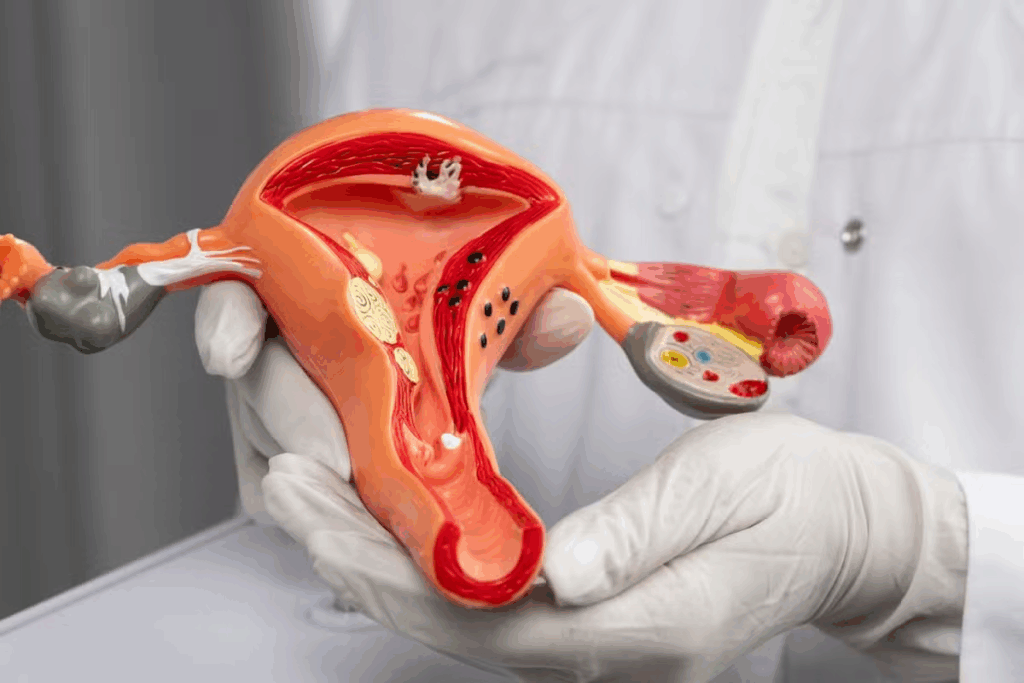
Knowing the normal endometrium thickness is key for women’s health. It’s important for getting pregnant and staying pregnant. What is normal endometrium thickness? This ultimate, simple guide explains vital ultrasound measurements by age and why it matters.
The uterine lining thickness changes a lot during the menstrual cycle. Things like age and if you’re going through menopause also play a part. We’ll look at what’s normal and when it might be a sign of a problem.
Grasping what’s a normal endometrial thickness helps women take care of their health. It lets them spot any issues early.
Key Takeaways
- Normal endometrium thickness varies throughout the menstrual cycle.
- Age and menopausal status are significant factors affecting uterine lining thickness.
- Understanding normal ranges can help identify early health issues.
- Normal endometrial thickness is key for getting and staying pregnant.
- Too thick can mean there’s a health problem.
Understanding the Endometrium and Its Function

The endometrium is a thin layer of tissue inside the uterus. It’s key for women’s reproductive health. It helps with the menstrual cycle and pregnancy.
What Is the Endometrium?
The endometrium is a complex tissue that lines the uterus. It has two layers: the basal and the functional. The functional layer changes with hormones, thickening for pregnancy and shedding if not.
The Role of the Endometrium in Reproductive Health
The endometrium is essential for reproductive health. It creates a space for a fertilized egg to implant. It also gives nutrients and supports the embryo’s early growth. Plus, it protects the fetus during pregnancy.
How Endometrial Thickness Changes Throughout Life
Endometrial thickness changes with hormonal shifts throughout a woman’s life. It thickens and thins with estrogen and progesterone levels.
- In the proliferative phase, the endometrium thickens with estrogen.
- Around ovulation, it reaches its maximum, ready for implantation.
- In the secretory phase, progesterone keeps it ready for implantation.
What Is Endometrium Thickness and How Is It Measured?

Measuring the endometrium thickness is key in women’s health check-ups. It’s done with a transvaginal ultrasound. This helps check reproductive health and spot problems.
Definition of Endometrium Thickness
The endometrium is the uterus lining, important for the menstrual cycle and pregnancy. It’s measured from one side to the other. A normal endometrial thickness changes with the menstrual cycle and hormones.
Transvaginal Ultrasound Measurement
Transvaginal ultrasound is the main way to measure endometrium thickness. It uses a probe in the vagina to see the uterus clearly. This method is key for diagnosing and tracking gynecological issues. The transvaginal ultrasound shows the uterine lining’s thickness and look.
Homogeneous vs. Heterogeneous Appearance
The endometrium can look either uniform or irregular. A homogeneous endometrium is normal and uniform. But, a heterogeneous or inhomogeneous endometrium looks irregular, suggesting a problem. Knowing this difference is vital for correct diagnosis and treatment.
Factors That Influence Measurement Accuracy
Many things can affect how accurate endometrial thickness measurements are. These include when the measurement is taken, the ultrasound quality, and the operator’s skill. Also, conditions like fibroids or polyps can skew the results. It’s important to understand these factors to correctly interpret the measurements and care for patients.
Normal Endometrial Thickness During the Menstrual Cycle
Knowing the normal endometrial thickness is key for women’s health. The endometrium, or the uterus lining, changes a lot during the cycle. It gets ready for a possible pregnancy.
The endometrium’s thickness can be from 1 to 16 millimeters. It starts at 3-4mm after menstruation. Then, it gets thicker as the cycle goes on.
Early Proliferative Phase (5-7mm)
Right after menstruation, the endometrium starts to grow and get thicker. It’s usually 5-7mm thick. This happens because estrogen levels go up, making the lining grow.
Around Ovulation (8-11mm)
As ovulation gets closer, the endometrium gets even thicker, to 8-11mm. This is important for a fertilized egg to implant. Research shows that less than 7mm can lower pregnancy chances in fertility treatments.
Secretory Phase (7-16mm)
After ovulation, the endometrium keeps getting thicker, up to 16mm. It becomes more blood-rich and ready for an embryo.
Endometrium Thickness of 5.4mm After Menstruation
An endometrial thickness of 5.4mm after menstruation is normal. It’s a bit more than right after menstruation but fits the early growth phase.
To wrap it up, the endometrial thickness changes a lot in the menstrual cycle. Here’s a table showing the typical thickness at different times:
Menstrual Cycle Phase | Typical Endometrial Thickness |
After Menstruation | 3-4mm |
Early Proliferative Phase | 5-7mm |
Around Ovulation | 8-11mm |
Secretory Phase | 7-16mm |
The table shows how the endometrium’s thickness changes. It shows how hormones affect the uterus throughout the cycle.
“The thickness of the endometrium is a critical factor in the success of implantation and subsequent pregnancy. Understanding these changes can help healthcare providers assess fertility and identify possible issues.”
Medical Expert, Fertility Specialist
Endometrial Thickness in Premenopausal Women
Throughout their menstrual cycle, premenopausal women see changes in endometrial thickness. These changes are normal within a certain range. It’s key to understand these variations for good reproductive health and to spot issues early.
Normal Range Throughout the Cycle
The endometrial thickness in premenopausal women changes a lot during their cycle. It usually ranges from 1 to 16 millimeters. This change is tied to the different cycle phases.
Early Proliferative Phase: The endometrium is thinnest here, usually 5-7mm.
Around Ovulation: It gets thicker, ready for pregnancy, measuring 8-11mm.
Secretory Phase: After ovulation, it gets even thicker, up to 16mm.
Cycle Phase | Typical Endometrial Thickness |
Early Proliferative Phase | 5-7mm |
Around Ovulation | 8-11mm |
Secretory Phase | 7-16mm |
Endometrium Thickness Around Ovulation
Around ovulation, the endometrium is about 9.2mm thick. This is important as it shows if the endometrium is ready for a fertilized egg.
Variations Based on Age and Health Status
Endometrial thickness varies with age and health. Younger women might have a thicker endometrium because of higher estrogen levels.
Impact of Hormonal Contraceptives
Hormonal contraceptives change endometrial thickness. Women on these might have a thinner endometrium because of the hormonal changes.
We suggest premenopausal women talk to their healthcare provider about endometrial health. This is important, even if they’re using hormonal contraceptives or have irregular cycles.
Endometrium Thickness in Perimenopause and Postmenopause
Understanding endometrial thickness in perimenopause and postmenopause is key for women’s health. These periods see big hormonal changes that affect the endometrium.
Normal Thickness in Perimenopause
In perimenopause, endometrial thickness can change a lot due to hormone shifts. Normal thickness ranges from 1 to 16mm, similar to before menopause. It’s important to watch for any changes, as they might show health problems.
Perimenopause is a time of change, and hormone shifts can make endometrial thickness vary.
Normal Thickness in Postmenopause
In postmenopause, endometrial thickness is usually thinner. A thickness of 5mm or less is normal. This thinning is mainly because of lower estrogen levels after menopause.
“The normal endometrial thickness in postmenopausal women is generally considered to be 5mm or less.”
Why Postmenopausal Thickness Standards Are Different
Postmenopausal endometrial thickness standards are stricter. The risk of endometrial problems grows with age. Any thickness over 5mm in postmenopausal women not on HRT needs checking.
Menopausal Status | Normal Endometrial Thickness |
Perimenopause | 1-16mm |
Postmenopause | 5mm or less |
Hormone Replacement Therapy and Endometrial Thickness
Hormone replacement therapy, like estrogen, can make the endometrium thicker. Women on HRT should be closely watched to avoid abnormal thickness.
Women on HRT should talk to their doctor about risks and benefits. This includes how it might affect endometrial thickness.
Abnormal Endometrium Thickness: Warning Signs
It’s important for women to know the signs of abnormal endometrial thickness. This can mean there’s a health issue that needs attention. Spotting these signs early can help catch problems before they get worse.
Endometrial Thickness of 12mm or Greater in Premenopausal Women
If a premenopausal woman’s endometrium is 12mm or thicker, it’s a red flag. This size is usually not normal. It might mean there’s a hormonal problem or something called endometrial hyperplasia.
Key factors to consider:
- Hormonal influences
- Presence of symptoms like irregular bleeding
- History of reproductive health issues
Abnormal Thickness with Bleeding Symptoms
Bleeding after menopause is a big warning sign. It’s a sign that needs to be checked out right away. It could mean something serious like cancer.
Postmenopausal bleeding should never be ignored and requires immediate medical evaluation.
Bleeding Symptom | Potential Concern |
Postmenopausal bleeding | Endometrial cancer, hormonal imbalances |
Irregular menstrual bleeding | Hormonal fluctuations, endometrial hyperplasia |
Heterogeneous or Inhomogeneous Endometrium
When the endometrium looks uneven on ultrasound, it’s a sign to pay attention. This could mean there are polyps, fibroids, or other problems.
8mm Endometrial Thickness in Postmenopausal Women
For postmenopausal women, an endometrium of 8mm is too thick and needs checking. It’s a sign of possible hyperplasia or cancer.
Diagnostic steps may include:
- Transvaginal ultrasound
- Endometrial biopsy
- Hysteroscopy
Knowing these signs and getting medical help when needed is key. It helps keep reproductive health in check and catches problems early.
Medical Conditions Associated with Abnormal Endometrial Thickness
We look into medical conditions that cause abnormal endometrial thickness. This can affect women’s health a lot. It’s a sign of several issues that need a doctor’s check-up.
Endometrial Hyperplasia
Endometrial hyperplasia means too many cells in the endometrium, making it thick. It can lead to serious problems, like cancer. Hormonal imbalances, like too much estrogen, are big risk factors.
Endometrial Polyps
Endometrial polyps are growths in the uterus lining, causing uneven thickness. They’re usually not cancerous but can cause bleeding issues. They often happen in women with hormonal imbalances.
Endometrial Cancer
Endometrial cancer is a serious issue that can show up as abnormal thickness, mainly in older women. Being overweight, having diabetes, or past estrogen exposure without progesterone increases risk. Finding it early is key to treating it well.
Hormonal Imbalances
Hormonal issues, like too much estrogen or not enough progesterone, affect endometrial thickness. Conditions like PCOS can cause these imbalances. Managing hormonal imbalances is vital for endometrial health.
These conditions show why it’s important to watch endometrial thickness and see a doctor if it’s off. Knowing what causes abnormal thickness helps women protect their reproductive health.
When to Consult a Doctor About Endometrial Thickness
It’s important to know when to talk to a doctor about endometrial thickness. This can help spot health problems early. Knowing when to seek help can lead to quick diagnosis and treatment.
Symptoms That Warrant Medical Attention
Some symptoms need immediate doctor visits. These include:
- Abnormal uterine bleeding
- Pelvic pain or discomfort
- Unusual or heavy vaginal discharge
- Difficulty conceiving or recurrent miscarriages
If you notice any of these, see a healthcare provider. They can check your condition and suggest tests.
Diagnostic Procedures Your Doctor May Recommend
Your doctor might suggest several tests to check endometrial thickness. These include:
- Transvaginal ultrasound to measure endometrial thickness
- Endometrial biopsy to examine tissue for abnormalities
- Hysteroscopy to visually inspect the uterine cavity
- Blood tests to check hormone levels
These tests help your doctor understand your symptoms. They can then plan the best treatment for you.
Questions to Ask Your Healthcare Provider
When talking to your doctor about endometrial thickness, ask important questions. Consider asking:
- What is the cause of my endometrial thickness?
- Are there any possible complications if left untreated?
- What treatment options are available?
- How can I manage my symptoms?
These questions can help you understand your condition better. They also help you know what treatment you need.
Follow-up and Monitoring Protocols
After treatment, regular check-ups are key. Your doctor might suggest:
Follow-up Procedure | Purpose | Frequency |
Regular ultrasounds | Monitor endometrial thickness | Every 3-6 months |
Endometrial biopsies | Check for abnormal cell changes | As recommended by your doctor |
Hormone level checks | Assess hormonal balance | Periodic blood tests |
Following these check-up plans is important. It helps manage your condition well and catch any changes early.
Conclusion: Managing Your Endometrial Health
Understanding and managing endometrial health is key for reproductive well-being. We’ve looked at how endometrial thickness changes over a woman’s life. This includes premenopausal endometrial thickening.
Living a healthy lifestyle and knowing risk factors are vital. Also, getting medical help when needed is important. By being informed and proactive, women can lower their risk of health problems.
Managing endometrial health means being aware, making healthy choices, and getting medical help when needed. We urge women to be active in their health. Stay informed and talk to healthcare providers about any concerns.
By focusing on endometrial health, women can greatly improve their overall well-being. This helps reduce the risk of problems linked to abnormal endometrial thickness.
FAQ
What is the normal range for endometrial thickness in premenopausal women?
In premenopausal women, endometrial thickness changes throughout the cycle. It usually ranges from 1-16mm. Each phase of the cycle has its own average thickness.
How is endometrial thickness measured?
Doctors use transvaginal ultrasound to measure endometrial thickness. This method gives a clear view of the endometrium’s thickness and look.
What does a heterogeneous endometrium indicate?
A heterogeneous endometrium might show hormonal imbalances, endometrial hyperplasia, or other issues. These need further check-ups.
What is considered an abnormal endometrial thickness in postmenopausal women?
Postmenopausal women with an endometrial thickness over 5mm should get checked. This is because of the higher risk of endometrial cancer.
Can hormonal contraceptives affect endometrial thickness?
Yes, hormonal contraceptives can change endometrial thickness. They often make the endometrium thinner by altering hormone levels.
What are the warning signs of abnormal endometrial thickness?
Look out for thickness over 12mm in premenopausal women or 8mm in postmenopausal women. Also, watch for bleeding and a heterogeneous endometrium.
What medical conditions are associated with abnormal endometrial thickness?
Abnormal thickness is linked to endometrial hyperplasia, polyps, cancer, and hormonal imbalances. These need proper diagnosis and treatment.
When should I consult a doctor about endometrial thickness?
See a doctor for abnormal bleeding or if your ultrasound shows unusual thickness. This helps find the cause and the right treatment.
What diagnostic procedures may be recommended for abnormal endometrial thickness?
You might need more ultrasounds, a biopsy, or hysteroscopy. These tests help check the endometrium and find the cause of the thickness.
How can I manage my endometrial health?
To keep your endometrium healthy, know what affects its thickness. Live a healthy lifestyle. And seek medical help if you have symptoms or unusual ultrasound results.
References
National Center for Biotechnology Information. Endometrium Thickness: Normal Range and Pregnancy Considerations. Retrieved from https://www.ncbi.nlm.nih.gov/pmc/articles/PMC8310815/