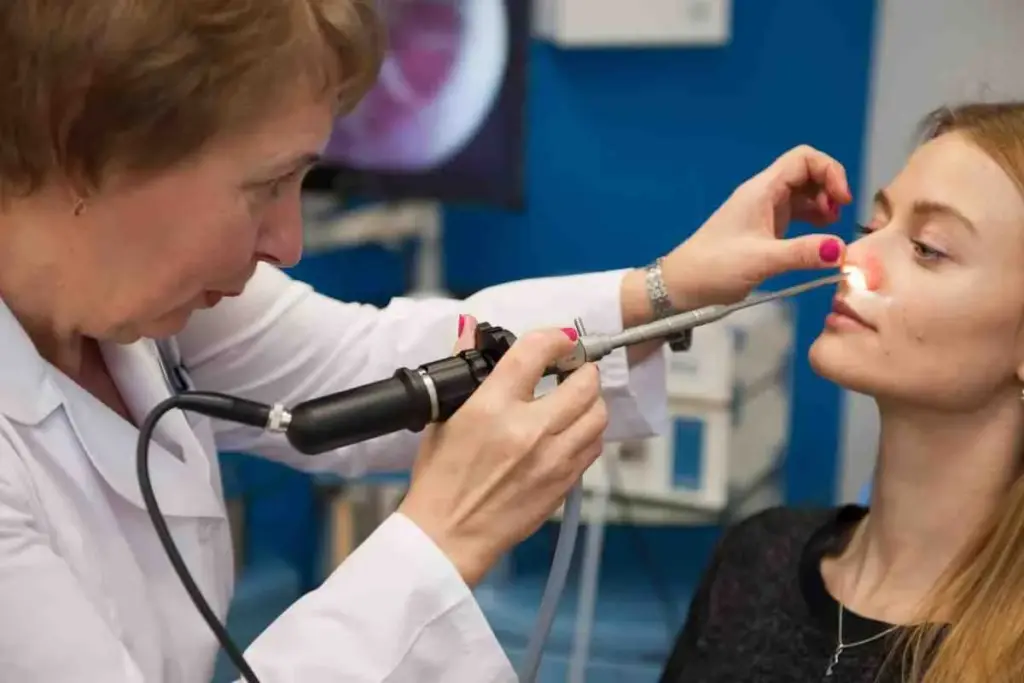
At LIV Hospital, our experts use nasal endoscopy to see the upper airway clearly. This method is often used to look at the upper airway with 95% accuracy.
Many patients ask how far a nasal endoscopy goes down the throat. We use it to check the upper airway, guided by anatomical depth. A nasal endoscopy usually goes about 9.4 cm in women and 10.1 cm in men from the nose to the nasopharynx.
Key Takeaways
- Nasal endoscopy is used to visualize the upper airway with 95% accuracy.
- The procedure advances about 9.4 cm in women and 10.1 cm in men.
- Nasal endoscopy is guided by anatomical depth.
- It is a high-precision diagnostic procedure.
- Patients may experience throat pain after endoscopy.
Understanding Nasal Endoscopy

Nasal endoscopy is a key tool for doctors to see inside the nasal passages and upper airway. It helps in diagnosing and treating many nasal and sinus problems.
We use nasal endoscopy to look at the nasal passages and upper airway. A nasal endoscope, which can be flexible or rigid, is used. Our experts are skilled in using these tools to make accurate diagnoses.
Definition and Purpose
Nasal endoscopy lets a doctor see inside the nasal passages and sinuses with a flexible or rigid endoscope. Its main goal is to find and sometimes treat problems in the nasal cavity and sinuses.
The procedure is done for several reasons, including:
- Diagnosing chronic sinusitis
- Investigating nasal obstruction or difficulty breathing
- Identifying the source of nasal discharge or infection
- Locating nasal polyps or tumors
Types of Nasal Endoscopes
There are two main types of nasal endoscopes: flexible and rigid.
Flexible Nasal Endoscopes are great for looking at the nasal passages and upper airway. They are good for complex anatomy and sensitive nasal passages.
Rigid Nasal Endoscopes give a clearer view. They are used for detailed exams and procedures, like biopsies or removing nasal polyps.
Both types have a camera and light source for detailed views of the nasal cavity and sinuses.
The Anatomy of the Nasal Passage and Throat
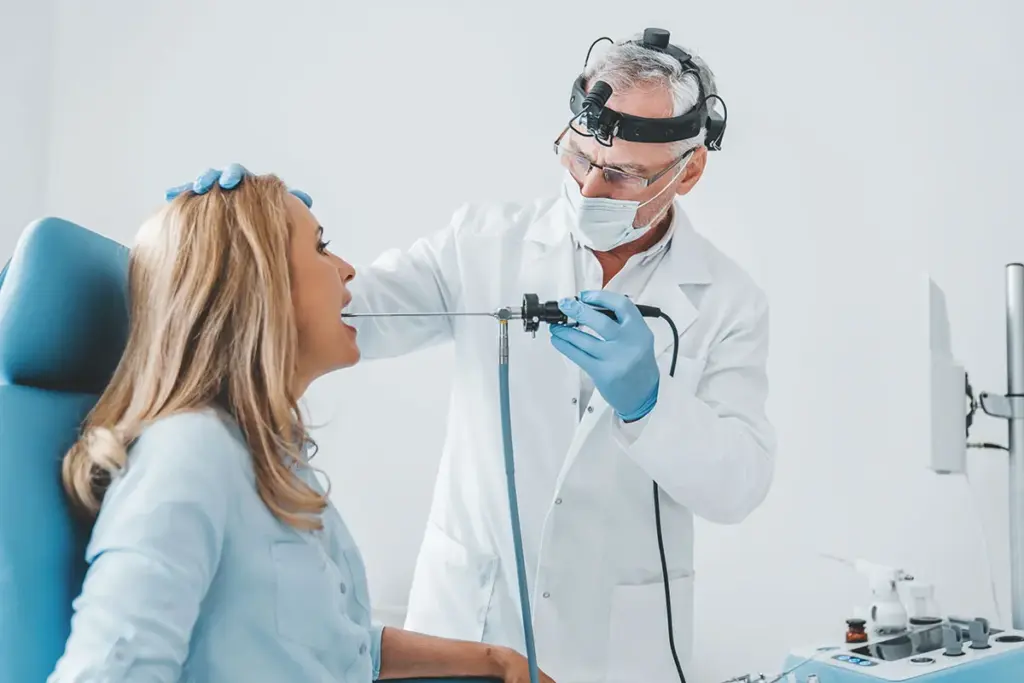
To diagnose nasal conditions well, knowing the nasal passage and throat anatomy is key. The nasal cavity and throat are complex parts that are vital for breathing and smelling.
Key Structures in the Nasal Cavity
The nasal cavity has important structures. The turbinate bones warm and humidify the air we breathe. The olfactory epithelium helps us smell. The nasal septum, a thin wall, divides the nasal cavity into two sides.
ENT specialists need to know about these structures. Problems with them can cause nasal issues. For example, nasal polyps can block airflow and affect our sense of smell.
The Connection Between Nose and Throat
The nasal cavity connects to the throat through the nasopharynx. This area is key for breathing and digestion. It’s located behind the nasal cavity and above the soft palate.
This connection helps us understand how nasal issues can affect the throat. Our team at LIV Hospital knows this well. They can diagnose and treat nasal problems effectively.
Precise Measurements: How Deep Does a Nasal Endoscope and Procedure Reach
When you have a nasal endoscopy, you might wonder how deep the endoscope goes. The depth can change based on your body’s shape. Knowing this is important for both you and your doctor.
Average Depth in Adult Patients
Research shows that the endoscope’s depth is different for men and women. On average, it goes about 9.4 cm in women and 10.1 cm in men. This difference is something doctors need to think about during the procedure.
Doctors consider these differences to make sure you’re comfortable and safe during the procedure. Knowing the exact depth is key to a successful and safe check-up.
Gender Differences in Endoscopic Depth
Studies have found that men and women have different endoscope depths. Men’s average depth is about 10.1 cm, while women’s is around 9.4 cm. Doctors need to know this to fit the procedure to each person’s body.
Experts say knowing these differences is essential for safe and effective nasal endoscopies. By understanding and adjusting for these differences, we can improve your experience and get better results.
“The depth of nasal endoscope insertion varies significantly between genders, stressing the importance of personalized approaches.”
The Science Behind Endoscopic Depth Calculation
Figuring out how deep a nasal endoscope goes is all about precise anatomy. At LIV Hospital, we use certain body landmarks to get it right. This way, we can see the upper airway clearly.
Anatomical Landmarks and Measurements
Landmarks are key for placing the nasal endoscope correctly. We measure the distance between important facial features. This helps us find the best depth for the procedure.
Key Landmarks Include:
- The tragus-to-philtrum plane
- The nasal cavity’s dimensions
- The distance to the nasopharynx
The Tragus-to-Philtrum Plane as a Guide
The tragus-to-philtrum plane is a major guide for endoscope depth. It’s the space between the tragus (in front of the ear) and the philtrum (between the nose and upper lip).
|
Landmark |
Average Measurement (cm) |
Relevance to Endoscopy Depth |
|---|---|---|
|
Tragus to Philtrum Plane |
12-15 |
Guides the initial insertion depth |
|
Nasal Cavity Length |
7-9 |
Determines the scope’s navigation path |
|
Distance to Nasopharynx |
8-12 |
Affects the visualization of upper airway structures |
With these landmarks and measurements, we can figure out the endoscope’s depth. This makes the procedure safe and effective.
Clinical Research on Nasal Endoscopy Depth
Clinical research has made big steps in understanding nasal endoscopy depth. Medical professionals are always looking to improve this procedure for better patient care.
Multicenter Studies and Their Findings
Recent studies across many medical centers have looked into nasal endoscope depth. They’ve given us important insights into how deep the endoscope can go and what affects it.
Key findings from these studies show us landmarks in the nose that tell us how deep we can go. By looking at data from many places, researchers have a better grasp of nasal endoscopy depth.
Statistical Variations and Standard Deviations
These studies found that there are variations in how deep the endoscope can go. These variations help us understand what’s normal and what might be unusual.
Looking at statistical variations helps us see how complex the nose is. Our team at LIV Hospital keeps up with the latest research to give our patients the best care.
By studying these findings, we can make nasal endoscopy better for each patient. We tailor the procedure to meet each person’s needs, making it more effective.
What Structures Can Be Visualized During a Nasal Endoscopy
Healthcare professionals use nasal endoscopy to see the upper airway. This includes the nasopharynx and nearby areas. It helps them diagnose and treat conditions well.
Upper Airway Visualization
Nasal endoscopy lets us look at important parts of the upper airway. The procedure shows us the nasal cavity, nasopharynx, and oropharynx. It gives us insights into the anatomy and any issues.
During the procedure, we check:
- Nasal passages and turbinates
- Adenoids and surrounding tissues
- Opening of the Eustachian tube
- Nasopharyngeal mucosa
Nasopharyngeal Examination
The nasopharyngeal examination is key in nasal endoscopy. It involves a detailed look at the nasopharynx, the area behind the nasal cavity. This helps find any problems, like masses or lesions, and checks the health of the nasopharyngeal mucosa.
“Nasal endoscopy is a valuable diagnostic tool that provides a clear view of the upper airway, enabling healthcare professionals to diagnose and manage various conditions effectively.”
LIV Hospital
By looking at these areas, we get detailed info. This info helps in diagnosing and planning treatment for patients having nasal endoscopy.
Diagnostic Accuracy of Nasal Endoscopy
Nasal endoscopy is a trusted method for diagnosing nasal issues. At LIV Hospital, we use it to make informed decisions and plans for treatment.
Sensitivity Rate of 91.6%
The sensitivity rate of nasal endoscopy is 91.6%. This means it’s very good at finding nasal and sinus problems. It’s key for catching issues early.
Specificity Rate of 88.3%
Nasal endoscopy also has a specificity rate of 88.3%. This shows it’s great at saying who doesn’t have nasal or sinus issues. It helps avoid unnecessary treatments and eases patient worries.
Diagnostic Accuracy: The sensitivity and specificity rates together show nasal endoscopy’s accuracy. It has a 95% diagnostic accuracy, making it a reliable tool in healthcare.
Our specialists use nasal endoscopy for accurate diagnoses. It’s backed by studies showing its high sensitivity and specificity. This makes it valuable in planning treatments.
Common Conditions Diagnosed with Nasal Endoscopy
Nasal endoscopy is key for spotting issues in the nasal and sinus areas. At LIV Hospital, we use it to give our patients the right diagnosis and treatment.
Nasal Polyps and Structural Abnormalities
Nasal polyps are non-cancerous growths in the nasal passages. They often come with chronic inflammation. Symptoms include nasal blockage, loss of smell, and discharge.
Nasal endoscopy lets us see these polyps and understand their size and effect. Getting an accurate diagnosis is key to finding the right treatment. This might be medication or surgery.
Structural problems like a deviated septum or issues with the nasal turbinate bone can also be found. These can lead to breathing troubles, nasal blockage, or other respiratory issues. We can pinpoint the cause and create a treatment plan tailored to the patient.
Chronic Sinusitis and Inflammatory Conditions
Chronic sinusitis is a long-term inflammation of the sinuses. Nasal endoscopy helps us see the sinuses and understand the inflammation or infection level. This is important for choosing the best treatment, which could include antibiotics or anti-inflammatory drugs.
Allergic rhinitis, an inflammatory condition, can also be diagnosed and treated with nasal endoscopy. We can see the nasal mucosa and check for signs of inflammation or allergies. “The detailed view provided by nasal endoscopy allows for targeted treatment strategies”, helping patients feel better and live better lives.
Nasal endoscopy helps us find and manage many conditions in the nasal and sinus areas. By using this tool and our medical knowledge, we offer complete care to our patients.
Preparing for a Nasal Endoscopy
At LIV Hospital, we help our patients through every step of the nasal endoscopy process. This includes preparation and recovery. It’s important to follow the pre-procedure instructions carefully for a smooth experience.
Pre-Procedure Instructions
Before a nasal endoscopy, patients get clear instructions on how to prepare. These instructions help reduce discomfort and ensure the procedure’s success. Patients are told about dietary restrictions, medication management, and other preparations.
It’s important to tell your doctor about any medications you’re taking, like blood thinners. These may need to be adjusted before the procedure. Also, arrange for someone to take you home after the procedure. The sedation’s effects may last.
What to Expect on the Day
On the day of the nasal endoscopy, patients get a detailed explanation from our medical team. We answer any questions or concerns, making sure patients feel comfortable and informed.
When you arrive, you’ll be prepared for the procedure. This includes local anesthesia or sedation if needed. Our team will then guide the nasal endoscope through your nasal passage. They’ll show what they see on a monitor.
By following our pre-procedure instructions and knowing what to expect, patients can have a successful and stress-free nasal endoscopy experience.
The Step-by-Step Process of a Nasal Endoscopy
At LIV Hospital, we take a detailed step-by-step approach for nasal endoscopies. This method ensures both accuracy and patient comfort. It’s key for diagnosing nasal and sinus issues.
Initial Examination and Preparation
We start with a thorough check of the patient’s nasal passages. We look at their medical history and any past nasal procedures. Preparation is key for a safe and effective procedure.
We then get ready the needed tools, like the nasal endoscope. This is a flexible or rigid tube with a camera and light. The patient sits comfortably, and we might use a local anesthetic to reduce pain.
Insertion and Navigation Technique
Inserting the nasal endoscope is done gently to avoid discomfort. Our experienced specialists guide the endoscope through the nasal cavity. They use the camera’s feed to see the nasal passages and sinuses on a monitor.
“The precision in navigating the nasal endoscope is key for a successful diagnosis,” says one of our lead ENT specialists.
During the procedure, we might take tissue samples for further checks if we find any issues.
Duration and Completion
The time needed for a nasal endoscopy varies based on the case and patient’s health. It usually takes 15 to 30 minutes. After it’s done, we remove the endoscope carefully. Then, we watch the patient for a bit to see if they have any immediate reactions.
After the procedure, we talk to the patient about what we found. We explain the next steps in their care plan. We make sure patients understand their diagnosis and treatment options well.
Patient Experience During Nasal Endoscopy
A nasal endoscopy is a quick procedure, but comfort is key. We know patients might worry about their experience during it.
Comfort Levels and Sensations
Patients may feel different things during a nasal endoscopy. This can range from mild discomfort to feeling pressure. We make sure patients are as comfortable as they can be during the procedure.
We use topical anesthesia to numb the nasal passages. This helps reduce discomfort. We also explain each step of the procedure to the patient. This helps manage their expectations and lowers anxiety.
Managing Anxiety and Discomfort
Managing anxiety is very important during a nasal endoscopy. We aim to create a calm and reassuring environment. We address any concerns or questions patients have before, during, and after the procedure.
To reduce discomfort, we use the smallest endoscope needed. We move it slowly, letting the nasal passages adjust. Patients are encouraged to tell us if they feel any discomfort. This way, we can adjust our approach if needed.
By focusing on comfort and managing anxiety, we aim to make the nasal endoscopy experience positive. Our goal is to make the procedure as smooth as possible. This way, patients can get back to their normal activities with little disruption.
Recovery and Aftercare Following Nasal Endoscopy
Knowing what to do after a nasal endoscopy can make your recovery better. At LIV Hospital, we stress the need for good care after the procedure. This helps you recover smoothly and comfortably.
Immediate Post-Procedure Effects
Right after a nasal endoscopy, you might feel some discomfort or stuffiness in your nose. These feelings usually go away in a few hours. We suggest you rest for the rest of the day and avoid hard activities.
Some people might feel numbness in their nose due to the local anesthesia. This numbness should fade in a few hours.
When to Contact Your Doctor
Most people get better without issues, but knowing when to call your doctor is key. If you have severe bleeding, pain, trouble breathing, or fever, reach out to your doctor.
Our team at LIV Hospital is ready to help with any worries or questions you have. We aim to give you the best care and support from start to finish.
|
Symptom |
Action |
|---|---|
|
Mild nasal congestion |
Monitor and rest |
|
Severe nasal bleeding |
Contact your doctor |
|
Increasing pain |
Seek medical attention |
By following these tips and knowing about possible effects, you can have a safe and successful recovery. Our team cares about your health and is here to support you every step of the way.
Potential Risks and Complications
Nasal endoscopy is generally safe, but there are risks and complications. At LIV Hospital, we take all necessary precautions. We aim to ensure a safe procedure for all patients.
Common Minor Side Effects
Most patients have minor side effects after nasal endoscopy. These side effects usually go away on their own. They might include:
- Nasal discomfort or pain
- Mild bleeding or nasal discharge
- Sore throat
These side effects are usually temporary. They can be managed with over-the-counter pain relievers or saline nasal sprays.
Rare but Serious Complications
While rare, serious complications can happen during or after nasal endoscopy. These may include:
- Significant bleeding requiring intervention
- Infection
- Damage to the nasal or sinus structures
We want to assure you that such complications are rare. Our experienced medical team is ready to handle any situation.
It’s essential for patients to follow pre- and post-procedure instructions carefully. This helps minimize the risk of complications.
Modern Advances in Endoscope Technology
New developments in endoscope technology have changed nasal endoscopy. These changes make procedures more accurate and effective. This helps doctors give better care to their patients.
3D imaging is a big step forward in endoscope technology. It gives a clearer view of the nasal cavity. This makes it easier to diagnose and treat problems.
3D Imaging Integration
The use of 3D imaging in nasal endoscopy has improved how we see inside the nose. It helps doctors understand the layout of the nasal cavity better. This leads to more accurate diagnoses.
- Enhanced visualization of nasal cavity structures
- Improved diagnostic accuracy
- Better understanding of spatial relationships
A study in the journal Frontiers in Neurorobotics shows the benefits of 3D imaging. It can lead to better results in endoscopic procedures.
AI-Based Reconstruction and Analysis
AI-based reconstruction and analysis is another key advancement. It uses artificial intelligence to analyze images from nasal endoscopy. This gives doctors insights that help in making treatment plans.
The advantages of AI-based reconstruction are:
- Improved image analysis
- Enhanced diagnostic accuracy
- Personalized treatment plans
Thanks to these modern advancements in endoscope technology, we can make more accurate diagnoses. This leads to better treatments and outcomes for patients.
How Nasal Endoscopy Differs from Other Endoscopic Procedures
Nasal endoscopy is unique because it focuses on the nasal cavity and throat. It’s different from other endoscopic procedures that look at the digestive system or other parts of the body. This makes it a specialized tool for checking the nasal passages and sinuses.
It’s used to find and treat problems in the nasal area. Unlike gastroscopy and colonoscopy, which look at the stomach and colon, nasal endoscopy is made for the nasal and throat area.
Comparison with Gastroscopy and Colonoscopy
Gastroscopy and colonoscopy check different parts of the digestive system. Gastroscopy uses a tube with a camera to see the esophagus, stomach, and duodenum. Colonoscopy looks at the colon and rectum with a similar tube.
|
Procedure |
Area Examined |
Equipment Used |
|---|---|---|
|
Nasal Endoscopy |
Nasal cavity and throat |
Specialized nasal endoscope |
|
Gastroscopy |
Esophagus, stomach, and duodenum |
Gastroscope |
|
Colonoscopy |
Colon and rectum |
Colonoscope |
Each procedure needs specialized equipment for the area it checks. Nasal endoscopy uses a thin, flexible endoscope for the nasal cavity’s delicate structures.
Specialized Equipment for Nasal Applications
The tools for nasal endoscopy are made for the nasal passages’ unique shape. Our team at LIV Hospital knows how to use this specialized equipment well. This ensures patients get top care.
Nasal endoscopy is different in equipment, technique, and area examined. It needs a deep understanding of nasal anatomy and skill in navigating the nasal cavity’s complex structures.
Conclusion
Nasal endoscopy is a key tool for doctors to see inside the upper airway. It helps them find and fix many nasal and sinus problems.
At LIV Hospital, we aim to give top-notch care to all our patients. We support international patients with the best technology and skills.
Knowing about nasal endoscopy can make patients feel more ready for it. Our team works hard to make sure you’re comfortable and well-informed every step of the way.
Thanks to new tech like 3D imaging and AI, we can make diagnoses more precise. If you’re thinking about nasal endoscopy, check out what LIV Hospital offers.
FAQ
How far down the throat does a nasal endoscopy typically go?
On average, a nasal endoscopy goes about 9.4 cm in women and 10.1 cm in men. This is from the nasal sill down to the nasopharynx.
What is a nasal endoscopy used for?
Nasal endoscopy is a tool for diagnosing issues. It helps see the nasal passages and upper airway. It’s used to find problems like nasal polyps, structural issues, and chronic sinusitis.
What types of endoscopes are used in nasal endoscopy?
Nasal endoscopy uses a nasal endoscope. There are flexible and rigid types available.
How is the depth of a nasal endoscope calculated?
The depth is measured using landmarks. The tragus-to-philtrum plane is a key reference point.
What structures can be visualized during a nasal endoscopy?
It gives a detailed look at the upper airway. This includes the nasopharynx and surrounding areas.
How accurate is nasal endoscopy in diagnosis?
Nasal endoscopy is very accurate. It has a sensitivity rate of 91.6% and specificity rate of 88.3%.
What can I expect during a nasal endoscopy procedure?
The procedure starts with a thorough check and preparation. Then, the endoscope is inserted and moved around. It’s usually done quickly and efficiently.
Is nasal endoscopy a painful procedure?
Nasal endoscopy is usually not painful. Some might feel a bit uncomfortable. Our experts help manage any anxiety or discomfort.
What are the possible risks and complications of nasal endoscopy?
There are minor side effects and rare serious complications. Our experts take steps to avoid risks.
How does nasal endoscopy differ from other endoscopic procedures?
Nasal endoscopy is different from procedures like gastroscopy and colonoscopy. It uses specialized equipment for the nose.
What are the latest advances in endoscope technology?
New technology includes 3D imaging and AI-based reconstruction. These advancements improve nasal endoscopy’s accuracy and effectiveness.
What should I do after a nasal endoscopy?
After the procedure, you might feel some effects. Our experts advise on when to contact your doctor if you have concerns.
References
National Center for Biotechnology Information. Evidence-Based Medical Insight. Retrieved from https://pubmed.ncbi.nlm.nih.gov/38329226/