Brain aneurysm treatment has improved a lot with minimally invasive procedures like endovascular cerebral aneurysm repair. At Liv Hospital, we focus on top-notch care and use the newest medical tech. This ensures our patients get the best results.
This method uses a catheter to reach the aneurysm site in the blood vessels. There, coils or other materials are placed to stop bleeding or rupture. It’s a safer option than old surgical methods.
Our team is all about giving personalized care and support. We want our patients to be well-informed about their health. This way, they can make smart choices about their treatment.
Key Takeaways
- Endovascular cerebral aneurysm repair is a minimally invasive procedure.
- It involves navigating a catheter to the site of the aneurysm.
- Coils or embolic materials are used to prevent further bleeding or rupture.
- Liv Hospital is committed to providing high-quality care and leveraging the latest medical advancements.
- Personalized care and support are provided throughout the treatment process.
Understanding Cerebral Aneurysms
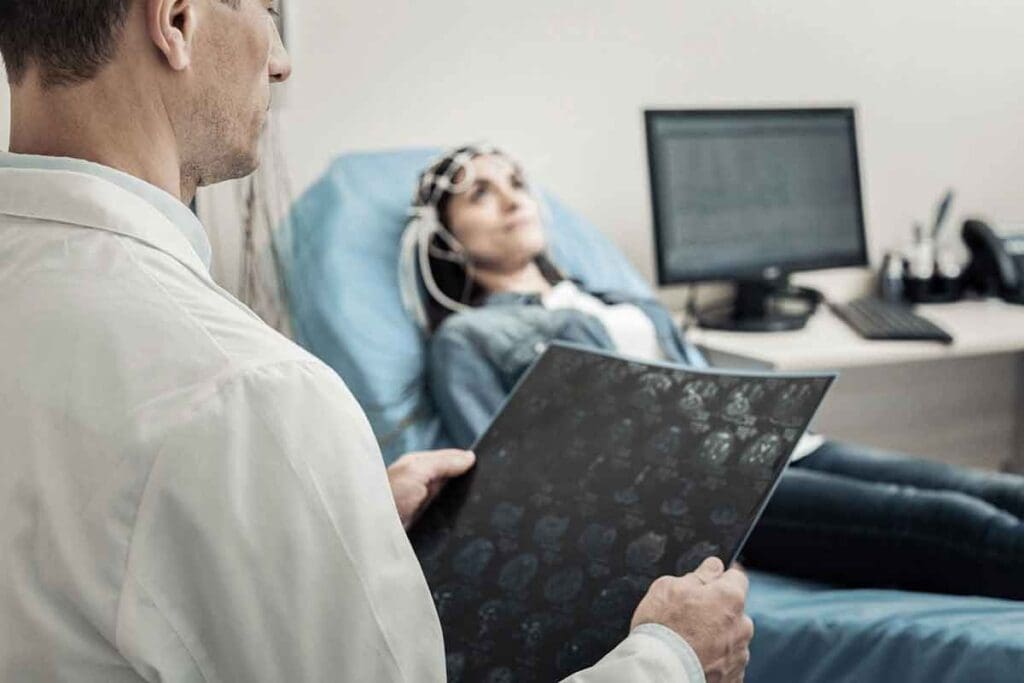
A cerebral aneurysm is a complex condition in the brain. It happens when a blood vessel wall weakens. This can cause a bulge or sac-like structure. If it ruptures, it can lead to severe bleeding in the brain.
Definition and Pathophysiology
A cerebral aneurysm is a bulge in a brain blood vessel. It occurs when the vessel wall weakens. This can happen for many reasons, like being born with it, high blood pressure, or atherosclerosis.
Risk Factors and Prevalence
Several factors can increase the risk of getting a cerebral aneurysm. These include:
- Family history of aneurysms
- Hypertension
- Smoking
- Atherosclerosis
Not everyone is at the same risk. About 3-5% of people might have an aneurysm in their brain.
| Risk Factor | Relative Risk |
| Family History | 4-7 times higher |
| Hypertension | 2-3 times higher |
| Smoking | 2-5 times higher |
Knowing about these risks and how common aneurysms are is important. It helps find people at high risk and take steps to prevent them.
Indications for Endovascular Cerebral Aneurysm Repair

Deciding on endovascular repair for cerebral aneurysms involves looking at several things. We check the size, location, and shape of the aneurysm. We also consider the patient’s health and how they’re feeling.
Clinical Presentations
Cerebral aneurysms can show up in different ways. Some are found by chance, while others cause ruptured aneurysms leading to bleeding in the brain. How the aneurysm presents affects our choice to use endovascular repair.
Even if an aneurysm hasn’t ruptured, it can cause problems like mass effect or nerve issues. We look at the patient’s symptoms and health to decide the best treatment.
Diagnostic Criteria
Imaging tests are key in figuring out if an aneurysm needs endovascular repair. We use digital subtraction angiography (DSA), computed tomography angiography (CTA), and magnetic resonance angiography (MRA) to check the aneurysm’s details.
- Aneurysm size and location
- Aneurysm morphology, including neck size and dome-to-neck ratio
- Presence of daughter sacs or other complex features
- Vascular anatomy and possible access routes
By looking at these details, we can pick the best treatment for each patient.
Pre-Procedure Assessment and Planning
Success in endovascular aneurysm repair starts with careful planning before the procedure. This step is key to understanding the patient’s health fully. It helps us choose the best treatment for them.
Patient Evaluation
Checking the patient’s health is a detailed process. It starts with looking at their medical history and doing a physical exam. We look at their overall health and any health issues that might affect the procedure or recovery. Checking the heart and brain is very important to spot any risks.
We also think about the patient’s age, past health, and any surgeries they’ve had. This helps us make a treatment plan that fits their needs.
Imaging Requirements
Good imaging is key for planning the procedure. We use Computed Tomography Angiography (CTA), Magnetic Resonance Angiography (MRA), and Digital Subtraction Angiography (DSA) to get clear pictures of the aneurysm. These images show us the aneurysm’s size, shape, and where it is.
| Imaging Modality | Advantages | Limitations |
| CTA | Quick, high-resolution images, excellent for detecting calcifications | Requires contrast, radiation exposure |
| MRA | No radiation, good for soft tissue characterization | Longer examination time, not suitable for patients with certain metal implants |
| DSA | Gold standard for vascular imaging, provides dynamic flow information | Invasive, requires contrast and radiation |
Aneurysm Morphology Considerations
Knowing the aneurysm’s shape is key to picking the right treatment. We look at its size, neck width, and any side sacs or bumps. These details help us choose the best treatment.
We use this information to decide between coiling, stent-assisted coiling, or flow diversion. Our goal is to close the aneurysm completely while keeping the main artery safe and reducing risks.
Essential Equipment and Materials
Specialized tools are key in treating cerebral aneurysms through endovascular repair. The right tools are vital for success.
Angiography Suite Setup
The angiography suite is a key part of treating aneurysms. It needs top-notch imaging, like biplane fluoroscopy, for clear views of blood vessels. It also needs space for anesthesia and monitoring.
Catheters and Guidewires
Catheters and guidewires help navigate the brain’s blood vessels. Microcatheters and guide catheters reach the aneurysm. Guidewires help place catheters correctly.
| Device Type | Description | Application |
| Microcatheters | Small, flexible catheters for precise navigation | Aneurysm access and coiling |
| Guide Catheters | Larger catheters providing support and stability | Guiding microcatheters to the aneurysm site |
| Guidewires | Wires used for steering and supporting catheters | Navigation through cerebral vasculature |
Embolic Materials
Materials like coils and flow diverters treat aneurysms. Coils fill the aneurysm to stop bleeding. Flow diverters steer blood flow to heal the aneurysm.
- Coils: Used for filling aneurysms, promoting thrombosis.
- Flow Diverters: Redirect blood flow away from the aneurysm.
Knowing the tools needed for endovascular cerebral aneurysm repair shows the procedure’s complexity.
Patient Preparation Protocol
To get the best results in treating cerebral aneurysms, a detailed preparation plan is key. This plan is made just for each patient, based on their unique needs.
Anesthesia Considerations
Choosing the right anesthesia is very important. It depends on the patient’s health, where the aneurysm is, and how complex the surgery will be. General anesthesia is usually the best choice. It helps keep the patient stable and prevents movement during the surgery.
In some cases, conscious sedation might be better. This is for patients who could face big risks with general anesthesia. The choice between these options depends on the patient’s situation and what the doctor thinks is best.
Anticoagulation Management
Managing blood thinners is also very important. The goal is to stop blood clots during the surgery without causing too much bleeding.
Heparin is often used during the surgery to thin the blood. The dose is adjusted based on the patient’s weight and kidney function. This is checked with tests called activated clotting time (ACT).
- Before surgery, patients usually stop taking blood thinners.
- During surgery, heparin is given to keep the blood thin enough.
- After surgery, blood thinners are managed based on how the patient is doing and the surgery details.
By carefully managing anesthesia and blood thinners, we can make endovascular cerebral aneurysm repair safer and more effective.
Performing Endovascular Cerebral Aneurysm Repair: Step 1 – Access
To start endovascular cerebral aneurysm repair, we need to get into the vascular system. This first step is key. It lets us use special tools to reach the aneurysm in the brain.
Femoral Artery Access Technique
The femoral artery is often used for access because it’s big and easy to get to. We use a special method called the modified Seldinger technique. First, we make a small hole in the artery with a needle. Then, we put a guidewire through the needle.
Key steps in femoral artery access include:
- Patient preparation and local anesthesia administration
- Ultrasound-guided puncture of the femoral artery
- Insertion of a guidewire and subsequent catheter placement
Using ultrasound makes accessing the femoral artery safer and more effective.
Alternative Access Routes
While the femoral artery is the top choice, other routes might be needed sometimes. These include:
- Radial artery access
- Brachial artery access
- Direct carotid access (in rare cases)
We might choose other routes if there are special reasons. This could be because of the patient’s body or past surgeries that make femoral access hard.
| Access Route | Advantages | Disadvantages |
| Femoral Artery | Large size, relatively straightforward access | Risk of groin complications, possible retroperitoneal hemorrhage |
| Radial Artery | Lower risk of bleeding, easier to move after the procedure | Smaller artery, risk of radial artery blockage |
Picking the right access route is very important. It depends on the patient’s body, where the aneurysm is, and the doctor’s experience.
Step 2 – Navigation and Aneurysm Catheterization
Careful navigation and catheterization of the aneurysm are key for effective treatment. This step involves several important considerations. They ensure the success of the endovascular cerebral aneurysm repair.
Selecting Appropriate Catheters
Choosing the right catheter is critical for navigating the complex vascular anatomy. We consider factors such as the aneurysm’s location, size, and the patient’s vascular anatomy when selecting. Different types of catheters, including microcatheters and guide catheters, are used based on the specific requirements of the procedure.
Navigating the Vascular Anatomy
Navigating through the vascular anatomy to the aneurysm site requires a deep understanding of the patient’s vascular structure. We use advanced imaging techniques to guide the catheter through the blood vessels, ensuring precise placement and minimizing the risk of complications.
Positioning at the Aneurysm Site
Once the catheter is navigated to the aneurysm site, precise positioning is essential. We carefully adjust the catheter’s position to ensure optimal access to the aneurysm, facilitating the subsequent steps of the repair procedure.
By carefully selecting the appropriate catheters, navigating the vascular anatomy, and positioning at the aneurysm site, we can effectively perform the endovascular cerebral aneurysm repair. This step is critical for the overall success of the treatment.
Step 3 – Implementing Coiling Techniques
Coiling techniques are key in treating cerebral aneurysms. There are several methods for doctors to choose from. The right technique depends on the aneurysm’s shape, location, and the patient’s health.
Standard Coiling Approach
The standard coiling method is the most used for treating cerebral aneurysms. It uses detachable coils to stop bleeding by causing clotting. This method works well for aneurysms with a small neck and a good dome-to-neck ratio. We pick the right coil size and type to pack the aneurysm well and avoid problems.
Balloon-Assisted Coiling
Balloon-assisted coiling helps with wide-necked or complex aneurysms. A balloon is inflated across the neck to stop coils from going into the main artery. This method needs careful balloon sizing and placement to avoid issues.
Stent-Assisted Coiling
Stent-assisted coiling uses a stent to hold coils in place across the aneurysm neck. It’s great for wide-necked or complex aneurysms. The stent keeps coils from moving and helps clot the aneurysm. We plan the stent size and placement to block the aneurysm and keep the artery open.
In summary, using coiling techniques is a vital part of treating cerebral aneurysms. Knowing about standard coiling, balloon-assisted coiling, and stent-assisted coiling lets us tailor treatment for each patient. This approach improves results and reduces risks.
Step 4 – Flow Diversion Strategies
Flow diverters have changed how we treat cerebral aneurysms. They help manage aneurysms in a more detailed way. This method redirects blood flow away from the aneurysm. It helps the aneurysm to clot and eventually stop blood flow.
Flow Diverter Selection
Choosing the right flow diverter is key for success. It depends on the aneurysm’s shape, where it is, and the patient’s blood vessels. We look at different flow diverters. Each has its own features like pore density, flexibility, and how much force it applies.
| Flow Diverter Type | Pore Density | Flexibility | Radial Force |
| Pipeline Embolization Device | High | High | Medium |
| Surpass Streamline | Medium | Medium | High |
| Silk Flow Diverter | Low | High | Low |
Deployment Techniques
Putting in a flow diverter needs careful technique and knowing how the device works. We use different ways to place the flow diverter. This includes the “push-pull” method to make sure it fits well and covers the aneurysm neck.
Key considerations for deployment include:
- Accurate sizing and positioning
- Adequate wall apposition
- Coverage of the aneurysm neck
We also use advanced imaging, like intraoperative angiography, to check how it’s done. This helps us make any needed changes.
Managing Intraoperative Complications
Intraoperative complications can happen during endovascular aneurysm repair, even with careful planning. These issues can affect patient outcomes a lot. So, it’s key for doctors to be ready.
Aneurysm Rupture Response
Aneurysm rupture is a serious problem that needs quick action. Experts say “Prompt recognition and response are critical to preventing severe consequences.” We need to handle the rupture well, using methods like:
- Immediate heparin reversal
- Rapid coil deployment to occlude the aneurysm
- Maintaining blood pressure control
Good teamwork is essential during this time. Clear and swift decision-making can greatly affect the outcome.
Thromboembolic Events
Thromboembolic events are another big problem during endovascular aneurysm repair. These can cause serious neurological deficits if not dealt with fast. Our strategy includes:
- Administering anticoagulation therapy
- Using mechanical thrombectomy devices when necessary
- Monitoring for signs of thromboembolism
As one study shows, “The timely management of thromboembolic events is critical for minimizing neurological damage.” We stress the need to be ready for such events.
Device-Related Complications
Device-related issues, like stent or coil malfunction, can happen too. These need a flexible and adaptive management strategy. We must be ready to:
- Reposition or replace the device as needed
- Manage any resulting thromboembolic events
- Monitor for signs of device failure
In conclusion, handling intraoperative complications during endovascular cerebral aneurysm repair needs a detailed and multi-faceted plan. Being ready for complications and having a clear strategy can improve patient results.
Post-Procedure Care and Monitoring
Good care after a procedure is key for the best results. We focus on both the first steps after surgery and checking the brain’s health.
Immediate Post-Operative Management
Right after surgery, it’s important to avoid problems and help the patient heal well. Key aspects include:
- Watching vital signs and brain health closely
- Helping with pain and discomfort
- Stopping and managing issues like blood clots or aneurysm bursts
We follow a set plan for care right after surgery. This includes:
| Care Aspect | Description | Responsibility |
| Vital Signs Monitoring | Keeping an eye on blood pressure, heart rate, and oxygen levels | Nursing Staff |
| Neurological Assessment | Checking brain health often, using the Glasgow Coma Scale (GCS) | Neurological Team |
| Pain Management | Using the right medicines to control pain | Anesthesiology Team |
Neurological Assessment Protocol
Checking the brain well is key to catch any problems early. Our protocol includes:
- Checking the patient right when they get to the recovery area
- Checking again at set times (like every 15 minutes for the first hour)
- Doing a full check, including nerves, movement, and thinking skills
By sticking to a detailed care plan, we can make sure patients do well after surgery. This helps lower the chance of problems.
Conclusion
Endovascular cerebral aneurysm repair is a complex procedure. It needs precision and skill. We’ve outlined a step-by-step guide to help practitioners understand this treatment option.
By summarizing the key points, we stress the importance of patient evaluation and aneurysm assessment. Choosing the right embolic materials is also key. Managing complications during the procedure is vital for success.
As we wrap up, it’s clear that endovascular repair is a valuable option for cerebral aneurysms. Skilled practitioners are needed to ensure the best results for patients. This summary emphasizes the need for ongoing education and training in this field.
FAQ
What is endovascular cerebral aneurysm repair?
This is a minimally invasive way to treat cerebral aneurysms. It fills or blocks the aneurysm with materials. This stops it from rupturing and bleeding.
How is an aneurysm treated using endovascular coiling?
A catheter is guided to the aneurysm. Coils are then deployed to fill it. This promotes clotting and stops blood flow into the aneurysm.
What are the benefits of endovascular aneurysm repair over traditional surgery?
It’s less invasive, leading to quicker recovery times. There’s less risk of complications and damage to brain tissue. This is compared to traditional open surgery.
What is flow diversion in the context of cerebral aneurysm treatment?
Flow diversion uses a stent to redirect blood flow. This promotes thrombosis and eventually excludes the aneurysm from blood circulation.
How is patient preparation done for endovascular cerebral aneurysm repair?
Preparation includes a thorough evaluation and imaging studies. Anticoagulation management and anesthesia considerations are also key. This ensures a safe and successful procedure.
What are the risks and complications associated with endovascular cerebral aneurysm repair?
Risks include aneurysm rupture and thromboembolic events. Device-related complications and neurological deficits are also possible. These are managed with prompt care.
What is the role of imaging in diagnosing and treating cerebral aneurysms?
Imaging studies like angiography, CT, and MRI are vital. They help diagnose aneurysms, plan treatment, and assess repair outcomes.
How is anticoagulation managed during endovascular cerebral aneurysm repair?
Anticoagulation is managed carefully. This prevents thromboembolic complications while minimizing bleeding risks during and after the procedure.
What is the post-procedure care for patients undergoing endovascular cerebral aneurysm repair?
Post-procedure care includes monitoring and neurological assessment. It also involves managing complications to ensure a smooth recovery and optimal outcome.
Can endovascular cerebral aneurysm repair be used for all types of cerebral aneurysms?
While suitable for many, it depends on aneurysm morphology, location, and patient factors. Careful evaluation and planning are necessary.
What is the significance of aneurysm morphology in endovascular repair?
Aneurysm morphology affects treatment choice and device selection. It influences the overall strategy for endovascular repair.
How is access achieved for endovascular cerebral aneurysm repair?
Access is usually through the femoral artery. Alternative routes may be used based on patient anatomy and procedural needs.
What are the different coiling techniques used in endovascular cerebral aneurysm repair?
Techniques include standard coiling, balloon-assisted coiling, and stent-assisted coiling. Each has its own indications and benefits for specific aneurysm characteristics.
Reference
- Cognard, C., & Januel, A. C. (2016). Cerebral aneurysm treatment: modern neurovascular perspectives. Neurovascular Imaging, 2(1), Article 12. https://pmc.ncbi.nlm.nih.gov/articles/PMC5435202/



 Departments
 Related Videos
 Our Doctors
 News
News