
Discovering that your ovaries are enlarged can be concerning. It’s important to know the difference between normal changes and serious conditions. This knowledge helps you understand when to worry.enlarged ovaryPolycystic Ovary Syndrome Infertility Treatment
An ovarian enlargement isn’t always a reason to panic. Sometimes, it’s due to functional ovarian cysts. These are common and usually harmless, and they often go away on their own.
We will look into the reasons for enlarged ovaries. We’ll cover both normal changes and serious conditions. We’ll also talk about when you should see a doctor.
Key Takeaways
- Ovarian enlargement can result from various factors, including ovarian cysts and polycystic ovary syndrome (PCOS).
- Not all ovarian enlargements are a cause for concern; some are benign and self-limiting.
- Understanding the causes and symptoms is key to knowing when to worry and seek medical help.
- Pathological conditions such as ovarian torsion, endometriosis, and ovarian cancer can cause ovarian enlargement.
- Seeking medical evaluation is essential for proper diagnosis and treatment.
Understanding Normal Ovary Size and Function
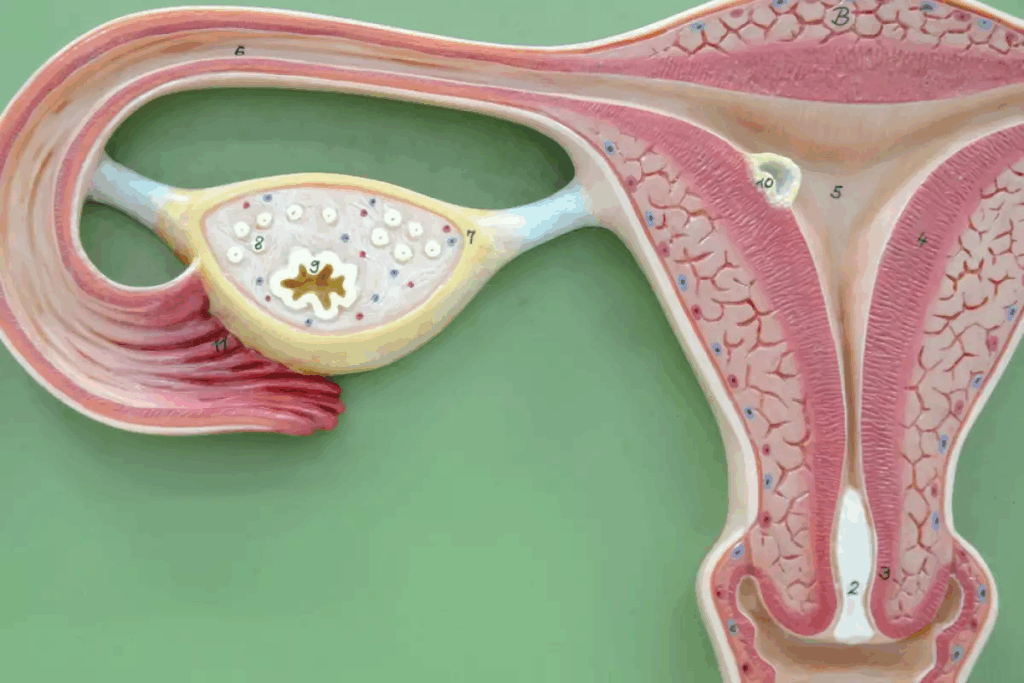
The ovaries are key to the female reproductive system. Their normal size shows how well reproductive health is doing. To know if ovaries are too big, we must first know what’s normal.
Normal Ovary Dimensions Through Life Stages
Ovary size changes as a woman ages. Adult ovaries are usually 3 to 5 centimeters long, 1.5 to 3 centimeters wide, and 0.5 to 1.5 centimeters thick. After menopause, they shrink to about 2 to 3 centimeters or less.
In the reproductive years, ovaries are busy. They have many follicles at different stages. The size can change a bit during the menstrual cycle. Knowing these changes helps spot problems.
The Role of Ovaries in Reproductive Health
Ovaries do two main things. They help make eggs and release them for fertilization. They also make hormones like estrogen and progesterone. These hormones help control the menstrual cycle and support pregnancy.
The hormones made by ovaries are very important. They:
- Regulate the menstrual cycle
- Help keep bones strong
- Support pregnancy
- Influence secondary sexual characteristics
Knowing how ovaries should function and what size they should be is key. It helps doctors spot and treat problems with enlarged ovaries. By knowing what’s normal, doctors can give better care.
What Is an Enlarged Ovary?

An enlarged ovary can worry many women. But what does it mean? We’ll look into its definition, medical criteria, and how doctors detect it.
Definition and Medical Criteria
An enlarged ovary means the ovary is bigger than usual. Ovaries are normally 3 cm long, 1.5 cm wide, and 1 cm thick. But, their size can change due to things like the menstrual cycle and age.
Doctors use ultrasounds to spot an enlarged ovary. They check the ovary’s size to see if it’s too big. For women after menopause, an ovary over 10 cm³ is considered enlarged. For women before menopause, the size depends on where they are in their cycle.
How Doctors Measure and Detect Ovarian Enlargement
Doctors use imaging to find and measure ovarian enlargement. Ultrasound is the top choice because it’s safe and shows the ovaries well.
Ultrasound measures the ovaries’ size and looks for problems like cysts or tumors. The size is figured out by multiplying length, width, and height by 0.523.
Key Indicators for Ovarian Enlargement:
- Ovarian volume > 10 cm³ in postmenopausal women
- Presence of cysts or tumors
- Irregular ovarian shape or margins
Unilateral vs. Bilateral Enlargement
Ovarian enlargement can happen on one side (unilateral) or both sides (bilateral). Knowing which is the case helps doctors figure out the best treatment.
Characteristics | Unilateral Enlargement | Bilateral Enlargement |
Definition | Enlargement of one ovary | Enlargement of both ovaries |
Common Causes | Cysts, tumors, or benign growths on one ovary | PCOS, hormonal imbalances, or systemic conditions |
Symptoms | May cause localized pain or discomfort on one side | Can cause more widespread symptoms due to hormonal imbalances |
Ovarian enlargement often comes from cysts, affecting up to 18 percent of women of childbearing age. Knowing the cause helps doctors decide the right treatment.
Physiological Causes of Enlarged Ovaries
The ovaries change a lot during a woman’s menstrual cycle, sometimes getting bigger. These changes are a normal part of being female and are linked to ovulation and other body processes.
Normal Menstrual Cycle Changes
During the menstrual cycle, the ovaries grow and shrink because of follicle changes. This natural process can sometimes make them swell up.
Ovulation and Temporary Enlargement
Ovulation happens when a big follicle releases an egg. This can make the ovaries swell up. But, this swelling usually goes away by itself.
Pregnancy-Related Changes
In pregnancy, the ovaries can change too, like forming corpus luteal cysts. This can make them bigger. Doctors keep an eye on these changes to make sure they’re okay.
Cause | Description | Typical Outcome |
Normal Menstrual Cycle Changes | Fluctuations in ovarian size due to follicle development and regression | Temporary swelling, resolves on its own |
Ovulation | Release of an egg from a dominant follicle | Temporary enlargement, resolves after ovulation |
Pregnancy-Related Changes | Formation of corpus luteal cysts | Enlargement, typically monitored and resolves |
Knowing why ovaries might get bigger can help ease worries. It’s key to talk to doctors for advice and care that fits you.
Common Benign Causes of Enlarged Ovaries
There are many reasons why ovaries can get bigger, and most of them are not serious. Knowing about these reasons helps doctors find the right treatment.
Functional Ovarian Cysts
Functional ovarian cysts are fluid-filled sacs in the ovaries. They happen in up to 18% of women of childbearing age. These cysts are usually harmless and often go away by themselves without any symptoms.
Key characteristics of functional ovarian cysts include:
- They are usually linked to the normal menstrual cycle.
- Most are without symptoms, but some may cause pelvic pain or discomfort.
- They can grow big enough to cause torsion or rupture.
Hemorrhagic Cysts
Hemorrhagic cysts happen when a functional ovarian cyst bleeds. This can cause sudden and severe pelvic pain, leading to a doctor’s visit.
“The presence of hemorrhagic cysts can sometimes be confused with other more serious conditions, making accurate diagnosis critical.”
Notable aspects of hemorrhagic cysts:
- They can cause acute pain due to the bleeding within the cyst.
- Diagnosis is typically made through ultrasound imaging.
- Most hemorrhagic cysts resolve on their own, but in some cases, surgical intervention may be necessary.
Healthcare providers need to know about these benign causes to give patients the right care. While these conditions are usually not dangerous, they can be uncomfortable and sometimes need medical help.
Polycystic Ovary Syndrome (PCOS) and Ovarian Enlargement
PCOS is a hormonal disorder that affects millions of women worldwide. It causes the ovaries to grow larger. We will look at how PCOS affects the ovaries, the hormonal imbalances it causes, and how to manage enlarged ovaries long-term.
Impact on Ovarian Size and Appearance
In women with PCOS, the ovaries grow because of many small cysts. These cysts are immature follicles that didn’t develop right. This growth can be big and might be seen during a pelvic exam or ultrasound.
The ovaries in PCOS look “polycystic” because of these many follicles. This look is a key sign of PCOS.
Hormonal Imbalances Associated with PCOS
PCOS is known for hormonal imbalances, like too much androgen. This can cause acne, extra hair, and baldness. These imbalances also help create ovarian cysts and make the ovaries bigger.
The hormonal issues in PCOS are complex. They often include insulin resistance. This can make symptoms worse and affect hormone levels.
Long-term Management of PCOS-Related Enlarged Ovaries
Managing PCOS-related enlarged ovaries needs a few steps. Changing your diet and exercise can help balance hormones and insulin. Doctors might also give birth control pills or anti-androgen drugs to help with menstrual cycles and androgen levels.
Management Strategy | Description | Benefits |
Lifestyle Modifications | Diet and exercise changes to improve insulin sensitivity | Improved hormonal balance, weight management |
Medications | Birth control pills and anti-androgen drugs | Regulation of menstrual cycles, reduction in androgen levels |
Monitoring | Regular ultrasound and hormonal level checks | Early detection of complications, adjustment of treatment plans |
It’s important to keep an eye on PCOS to manage it well and avoid serious problems. By understanding how PCOS affects the ovaries and using the right treatments, women with PCOS can live healthier lives.
Types of Enlarged Cystic Ovaries and Their Causes
Enlarged cystic ovaries can come from different types of ovarian cysts. Each cyst has its own cause. Knowing the type of cyst is key to the right treatment.
Dermoid Cysts (Teratomas)
Dermoid cysts, or teratomas, are a kind of ovarian cyst. They can have skin, hair, and other tissues inside. These cysts are usually not cancerous but can grow big and hurt.
Characteristics of Dermoid Cysts:
- Can contain various tissue types
- Typically benign
- Can grow large
Endometriomas (Chocolate Cysts)
Endometriomas, or “chocolate cysts,” are linked to endometriosis. They happen when endometrial tissue grows in the ovaries, forming cysts.
Endometriomas can cause a lot of pain and discomfort.
Key Features of Endometriomas:
- Associated with endometriosis
- Can cause pain and discomfort
- Filled with old blood, giving them a characteristic appearance
Cystadenomas
Cystadenomas are benign tumors from the ovarian surface epithelium. They can be serous or mucinous and come in different sizes.
Characteristics of Cystadenomas:
- Benign ovarian tumors
- Can be serous or mucinous
- Vary in size and impact on ovarian function
Different types of enlarged cystic ovaries have unique causes and traits. Knowing these differences is vital for effective treatment.
“The accurate diagnosis and characterization of ovarian cysts are essential for selecting the appropriate treatment strategy,” says Medical Expert, a leading expert in gynecology.
When Enlarged Ovaries May Signal Cancer
Ovarian cancer is rare but serious when talking about enlarged ovaries. Most cases of big ovaries are not cancer, but it’s important to know the risk. We’ll look at signs and risks of ovarian cancer, its types, and how hard it is to find early.
Warning Signs and Risk Factors
Knowing the signs of ovarian cancer is key to finding it early. Symptoms include ongoing pain in the belly, feeling bloated, and trouble eating. These signs can also mean other things, but if they last, see a doctor.
Some things make a woman more likely to get ovarian cancer. These include:
- A family history of ovarian or breast cancer
- Genetic mutations, like in BRCA1 and BRCA2 genes
- Having had breast, uterine, or colorectal cancer before
- Being over 50
- Never having been pregnant or having trouble getting pregnant
- Endometriosis
Types of Ovarian Cancer
Ovarian cancer is not just one disease. It’s a group of cancers based on where they start. The main types are:
Type | Origin | Frequency |
Epithelial tumors | Surface epithelial cells | About 90% |
Germ cell tumors | Cells that produce eggs | About 5% |
Stromal tumors | Connective tissue cells | About 1% |
Screening and Early Detection Challenges
Finding ovarian cancer early is hard because there’s no good test for everyone. Doctors usually find it when symptoms are clear, which can make treatment harder.
Early detection is key to better survival chances. Scientists are working on better tests and ways to find people at high risk.
Symptoms Associated with Enlarged Ovaries
It’s important to know the symptoms of enlarged ovaries for early treatment. These symptoms can range from mild to severe.
Common Symptoms
Women with enlarged ovaries may notice:
- Pelvic pain or discomfort
- Bloating or swelling in the abdominal area
- Changes in menstrual cycles, such as irregular periods or heavy bleeding
- Difficulty emptying the bladder
- Frequent urination
The symptoms can differ based on the cause of the enlargement. For example, functional ovarian cysts might cause pain due to their size or rupture.
When Symptoms Require Immediate Medical Attention
Some symptoms are serious and need quick medical help. These include:
- Severe pelvic pain
- Fever
- Vomiting
- Heavy vaginal bleeding
If you have these severe symptoms, get medical help right away. They could mean a serious issue like a ruptured cyst or ovarian torsion, which needs fast treatment.
Symptom | Possible Cause | Action Required |
Pelvic pain | Cysts, PCOS, or other conditions | Consult a healthcare provider |
Severe pelvic pain, fever, vomiting | Ruptured cyst, ovarian torsion | Seek immediate medical attention |
Bloating, changes in menstrual cycle | Hormonal imbalances, cysts | Schedule a medical evaluation |
Knowing the symptoms of enlarged ovaries and when to see a doctor is key. If you notice unusual or ongoing symptoms, talk to a healthcare professional.
Diagnosis and Evaluation of Enlarged Ovaries
To diagnose enlarged ovaries, doctors use several methods. These include physical exams, imaging tests, and sometimes laparoscopy. We’ll look at each method to see how doctors figure out why ovaries get bigger.
Physical Examination Techniques
A doctor’s first step is a physical exam. They might do a pelvic exam to check the ovaries’ size and feel. This exam can give clues about ovarian enlargement and its possible causes.
Imaging Tests
Imaging tests are key in diagnosing enlarged ovaries. Ultrasound is often used because it lets doctors see the ovaries. They can spot cysts, tumors, or other issues. The type of ultrasound used depends on the patient’s situation and what the doctor needs to see.
Blood Tests and Tumor Markers
Blood tests are also important. They help find hormonal imbalances that might cause ovarian enlargement. Doctors might check for tumor markers like CA-125 to see if there’s a risk of ovarian cancer. These tests give important clues when combined with ultrasound results.
Blood Test | Purpose |
Hormone Level Tests | Assess hormonal imbalances |
CA-125 | Evaluate risk of ovarian cancer |
Laparoscopy and Tissue Sampling
Sometimes, a more detailed look is needed. Laparoscopy lets doctors see the ovaries and nearby areas directly. They can take tissue samples for more tests. This is helpful when other tests don’t give clear answers or when there’s a strong suspicion of conditions like endometriosis or ovarian cancer.
By using these different methods, doctors can find out why ovaries are enlarged. They then create a treatment plan. The tests chosen depend on the patient’s symptoms, medical history, and what the initial exams show.
Treatment Options and Management Strategies
Treatment for enlarged ovaries can range from waiting and watching to surgery. The right treatment depends on the cause, how bad the symptoms are, and the patient’s health and plans for having children.
Watchful Waiting Approach
For some, like those with functional cysts or no symptoms, waiting and watching is a good choice. This means regular check-ups and ultrasounds to see if the ovaries change size or shape. A study found that many ovarian cysts go away on their own. This method is often used for women who might want to have children, as it avoids surgery.
Medication Options
Medicine is used when symptoms are there or if hormone levels are off. For example, birth control pills can shrink cysts and ease pain. For PCOS, drugs like metformin or clomiphene help with insulin and ovulation. A doctor said, “Hormonal treatments can help with symptoms of enlarged ovaries.” It’s important to talk about the good and bad of these medicines with a doctor.
Surgical Interventions
Surgery is needed for big or lasting cysts, or if cancer is suspected. There are different surgeries, like removing just the cyst or the whole ovary. Laparoscopic surgery is often chosen because it’s less invasive and heals faster. “Surgery can give a clear diagnosis and fix the problem,” a medical journal said. The choice to have surgery depends on many things, like age, symptoms, and if the patient wants to have kids.
In short, treating enlarged ovaries needs a plan that fits each person. Knowing the different treatments helps patients make better choices for their health.
Conclusion
Knowing why and how ovaries get bigger is key to handling it right. We’ve looked at why ovaries might grow, like changes in the body, harmless growths, and even cancer.
Getting a diagnosis early and treating it can make a big difference. Spotting the signs and getting help fast can help avoid serious problems.
We talked about how important it is to get a full check-up. This includes tests and blood work to find out why the ovaries are enlarged. The treatment can be anything from just watching it to surgery, based on what’s found.
In short, knowing about enlarged ovaries helps women take care of their health. By understanding the reasons, signs, and ways to treat it, they can make smart choices and get the right care.
FAQ
What causes enlarged ovaries?
Many things can make ovaries bigger. This includes cysts, polycystic ovary syndrome (PCOS), and even cancer.
Is an enlarged ovary a sign of cancer?
Not always. Sometimes, a big ovary can mean cancer. But often, it’s just a cyst or PCOS.
What are the symptoms of enlarged ovaries?
You might feel pain in your pelvis or belly. You could also feel bloated or have irregular periods. Some women don’t notice anything.
How are enlarged ovaries diagnosed?
Doctors use a physical exam and ultrasound to check. They might also do blood tests or laparoscopy to find the cause.
What is the normal size of an ovary?
Ovaries are usually 3-4 cm long. They can change size with your menstrual cycle and age.
Can PCOS cause enlarged ovaries?
Yes, PCOS often leads to bigger ovaries. It’s marked by cysts, hormonal imbalances, and other health issues.
What is the difference between unilateral and bilateral ovarian enlargement?
One ovary is big in unilateral enlargement. Both ovaries are big in bilateral. Knowing this helps doctors figure out what to do.
Can ovarian cysts cause ovarian enlargement?
Yes, cysts can make ovaries bigger. This includes different kinds of cysts.
When should I seek medical attention for enlarged ovaries?
See a doctor if you have bad pain, heavy bleeding, or worry about your health.
What are the treatment options for enlarged ovaries?
Treatment varies based on the cause. It might be watching and waiting, taking medicine, or surgery for some problems.
Why do my ovaries feel swollen?
Many reasons can make ovaries feel big. This includes normal changes, cysts, or PCOS. If it hurts or doesn’t go away, see a doctor.
Can pregnancy cause ovarian enlargement?
Yes, pregnancy can make ovaries bigger. This is because of hormonal changes and a corpus luteum cyst.
What is ovarian torsion?
Ovarian torsion is when the ovary twists and cuts off blood. It’s a serious emergency that needs quick treatment.
References
National Center for Biotechnology Information. Enlarged Ovary: Causes, Diagnosis, and Treatment Options. Retrieved from https://pmc.ncbi.nlm.nih.gov/articles/PMC10047373/