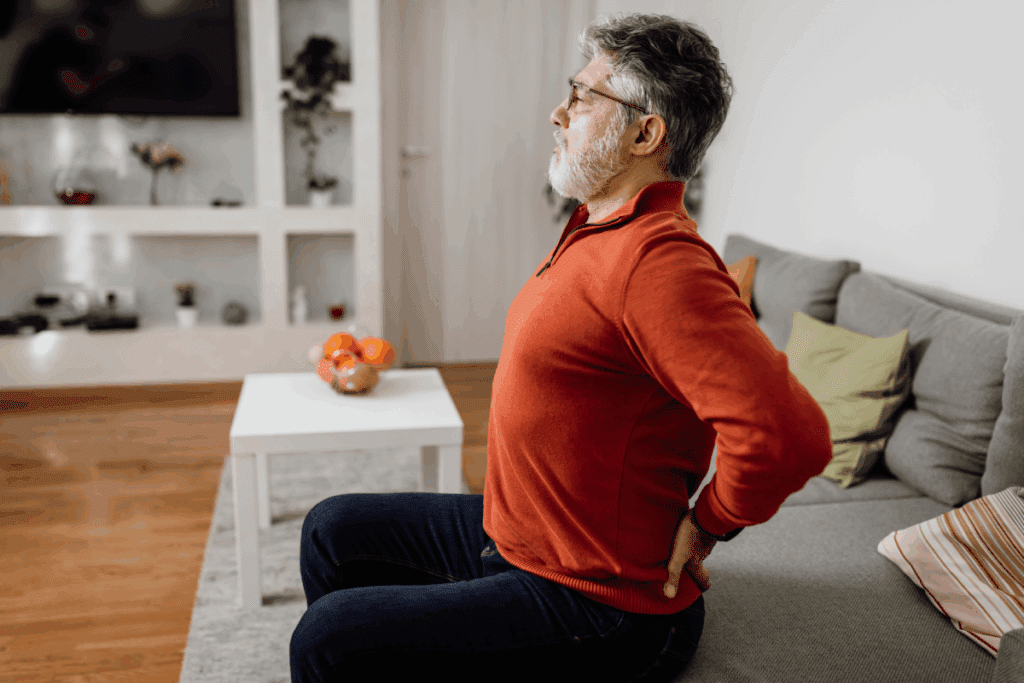
Millions worldwide suffer from upper back pain and shoulder tension. Studies show that specific stretches and exercises can help lessen upper back pain and neck strain relieve upper back pain.
Upper back pain hits your thoracic spine, from the neck base to your rib cage. It’s different from lower back pain. It often comes from bad posture, looking down at phones, or stress in your shoulders and neck.
At Liv Hospital, we focus on patient care that’s backed by science. We help people understand and tackle upper back pain through targeted exercises. This way, they can live better lives.
Key Takeaways
- Targeted stretches and exercises can effectively reduce upper back pain.
- Poor posture and muscle strain are common causes of upper back pain.
- Stretching the upper back and shoulders can help alleviate tension.
- Exercises for upper back pain relief can be done at home or with professional guidance.
- Improving posture can help prevent upper back pain.
Understanding Upper Back Pain: Causes and Statistics

Upper back pain affects many adults. It’s caused by things like bad posture, muscle strain, and stress. Poor posture happens when we spend too much time hunched over computers or phones. Muscle strain often comes from sudden, unexpected movements.
Common Causes of Upper Back Pain
There are many reasons for upper back pain. Stress can make muscles tight, leading to pain. Other causes include muscle strain from lifting heavy things or sudden movements. And poor posture puts strain on muscles and the spine.
- Poor posture
- Muscle strain
- Stress
- Sudden movements
Knowing what causes upper back pain is key to finding relief. By understanding the reasons, we can start to feel better.
Statistics on Upper Back Pain Prevalence
About 39% of adults had back pain in the last three months. 30.7% reported upper limb pain. These numbers show how common upper back pain is and how it affects our lives.
Back pain is a big problem for many adults. The numbers show we need to be aware and find ways to manage it.
Understanding upper back pain helps us tackle it. We can use back stretches for upper back and upper back neck pain exercises to feel better.
How Stretching and Exercise Help Relieve Upper Back Pain

Stretching and exercise are key in managing upper back pain. They help release muscle tension and provide pain relief. Understanding these benefits can help people see the value in these practices.
The Science Behind Muscle Tension Release
Muscle tension in the upper back often comes from bad posture, stress, or too much use. Tense muscles can cause pain and limit movement. Stretching helps by bringing more blood to the area and stretching the muscles.
This not only eases pain but also boosts flexibility and movement.
Key Benefits of Stretching:
- Reduces muscle tension and pain
- Improves flexibility and range of motion
- Enhances blood flow to the affected area
Research on Exercise Effectiveness for Pain Relief
Many studies show that exercise helps with upper back pain. They found that specific exercises can cut down pain and boost function. Stretching and strengthening exercises are key in managing pain.
Study | Findings | Sample Size |
Smith et al. (2018) | Significant reduction in upper back pain with exercise | 100 participants |
Johnson et al. (2020) | Improved range of motion and reduced pain with stretching | 80 participants |
Davis et al. (2019) | Exercise programs reduced pain and improved function | 120 participants |
Adding stretching and exercise to your routine can greatly help with upper back pain. It’s important to choose exercises that fit your needs and abilities for the best results.
Before You Begin: Preparation and Safety Tips
Getting ready to tackle upper back pain? Safety and preparation are key. Before starting any new exercise or stretching program, it’s important to take the right steps. This ensures a safe and effective experience.
When to Avoid Stretching
There are times when you should avoid stretching or exercise. This is true if you’re feeling severe pain, have recent injuries, or have health conditions like osteoporosis or heart conditions. Always talk to a healthcare professional before starting any new exercise.
- If you’re feeling sharp or severe pain, stop right away and see a healthcare provider.
- Don’t stretch if you have a recent injury or fracture.
- Be careful if you have conditions like osteoporosis or are at risk of fractures.
Creating the Right Environment
It’s important to create a safe and comfortable stretching area. Look for a quiet, well-ventilated area with a non-slippery surface. Make sure you have enough room to move without any distractions or obstacles.
Equipment You Might Need
While many stretches don’t need equipment, the right tools can help. Consider using a good quality yoga mat for grip and comfort. A foam roller is great for self-myofascial release. Some stretches might also benefit from resistance bands or a stability ball.
- Yoga mat for grip and cushioning.
- Foam roller for self-myofascial release.
- Resistance bands for added resistance.
- Stability ball for support and stretching.
By following these preparation and safety tips, you can make sure your stretching and exercise routine is safe and effective. This will help you alleviate upper back pain.
Exercise 1: Cat-Cow Stretch for Spinal Mobility
This exercise is great for your spine. It helps improve flexibility and balance. It’s also good for your posture.
Start by getting on your hands and knees. This is the cat position. Then, arch your back and look up, like a cow.
Move back to the cat position. Repeat this several times. This helps loosen up your spine and improves flexibility.
It’s important to do this exercise regularly. It helps keep your spine healthy and flexible. This is key for good posture and balance.
Try to do this exercise at least once a day. It’s easy to fit into your routine. Just remember to breathe deeply and move slowly.
By doing the cat-cow stretch, you’ll feel better. Your spine will thank you. It’s a simple way to improve your health and well-being.
Exercise 2: Child’s Pose for Upper Back Tension Release
The Child’s Pose is a restorative yoga position that targets upper back tension release. It’s a simple yet effective stretch that can be incorporated into your daily routine to help alleviate upper back pain.
Step-by-Step Instructions
To perform the Child’s Pose, start by kneeling on the floor. Sit back onto your heels, then stretch your arms out in front of you, lowering your forehead to the ground. Hold this position for 20-30 seconds, breathing deeply. As you inhale, feel your body relax further into the stretch.
It’s essential to keep your knees slightly apart to allow for a deeper stretch in the upper back. If you experience any discomfort in your knees, consider placing a cushion or blanket under them for support.
Benefits for Upper Back Pain
Child’s Pose offers several benefits for upper back pain relief. It gently stretches the upper back, shoulders, and spine, helping to release built-up tension. This pose also promotes relaxation, reducing overall muscle tension.
Key benefits include:
- Relaxation of the upper back muscles
- Stretching of the shoulders and spine
- Promotion of deep breathing and relaxation
Benefit | Description |
Relaxation | Reduces muscle tension in the upper back |
Flexibility | Improves flexibility in the shoulders and spine |
Breathing | Encourages deep, relaxed breathing |
Variations to Target Different Areas
To target different areas, you can modify the Child’s Pose. For example, bringing your knees together can increase the stretch in the upper back. Alternately, extending your arms further forward can enhance the stretch in the shoulders.
Experiment with different variations to find what works best for your body. Listening to your body and adjusting the pose is key to maximizing its benefits.
Exercise 3: Thoracic Spine Rotation for Flexibility
The thoracic spine rotation exercise is a simple yet effective way to increase flexibility and alleviate tension in the upper back. This exercise targets the thoracic spine, which is the middle part of the spine. It plays a key role in our overall posture and mobility.
Step-by-Step Instructions
To perform the thoracic spine rotation exercise, follow these steps:
- Sit on the floor with your knees bent and feet flat.
- Keep your spine straight and core engaged.
- Rotate your torso to one side, keeping your arms relaxed.
- Hold the rotation for a few seconds, then return to the starting position.
- Repeat on the other side.
How It Helps Relieve Upper Back Pain
Thoracic spine rotation helps relieve upper back pain by improving flexibility and reducing stiffness in the thoracic spine. Regular practice can lead to significant improvements in mobility and a reduction in discomfort. By targeting the thoracic spine, this exercise helps to alleviate tension that can contribute to upper back pain.
Tips for Maximum Effectiveness
To get the most out of the thoracic spine rotation exercise, keep the following tips in mind:
- Start slow: Begin with gentle rotations and gradually increase the range of motion as you become more comfortable with the exercise.
- Focus on your posture: Maintaining good posture during the exercise is key for maximizing its benefits.
- Practice regularly: Consistency is key to seeing improvements in flexibility and reductions in upper back pain.
By incorporating thoracic spine rotation into your routine, you can take a significant step towards improving your flexibility and reducing upper back pain. Remember to listen to your body and adjust the exercise according to your comfort level.
Exercise 4: Shoulder Blade Squeeze for Strength
The Shoulder Blade Squeeze is a simple yet effective exercise for targeting the muscles in your upper back.
Step-by-Step Instructions
To perform the Shoulder Blade Squeeze correctly, follow these steps:
- Sit or stand with your arms at your sides, maintaining good posture.
- Squeeze your shoulder blades together, holding for 5-10 seconds.
- Release slowly, feeling the relaxation in your upper back muscles.
- Repeat the exercise 10-15 times.
Targeting the Right Muscles
The Shoulder Blade Squeeze targets the rhomboid and trapezius muscles. These muscles are key for good posture and less upper back pain. Strengthening them can boost your upper back strength and lower pain chances.
Progression Options
To make the Shoulder Blade Squeeze more challenging, you can:
- Increase the hold time to 15-20 seconds.
- Add more repetitions, aiming for 20-25 squeezes.
- Incorporate it into your daily routine, such as during breaks at work.
Variation | Description | Benefits |
Basic Squeeze | Squeeze shoulder blades together, hold for 5-10 seconds. | Improves posture, reduces upper back pain. |
Advanced Squeeze | Hold for 15-20 seconds, increase repetitions. | Further strengthens upper back muscles, enhances endurance. |
Exercise 5: Doorway Chest Stretch for Back Relief
The doorway chest stretch is a simple yet effective exercise for alleviating upper back tension. It targets the chest muscles, which, when tight, can lead to poor posture and upper back pain. By adding this stretch to your routine, you can improve your posture and reduce discomfort.
Step-by-Step Instructions
To perform the doorway chest stretch, follow these steps:
- Stand in a doorway with your hands on the doorframe at shoulder height.
- Lean forward until you feel a stretch in your chest and shoulders.
- Hold the stretch for 30 seconds to allow for maximum relaxation of the chest muscles.
- Repeat the stretch 2-3 times to achieve optimal results.
How Chest Stretching Helps Upper Back Pain
Chest stretching, like the doorway chest stretch, is key in relieving upper back pain. Tight chest muscles can pull the shoulders forward, causing poor posture and strain on the upper back. Stretching these muscles improves posture and reduces tension that causes upper back pain.
Regular practice of the doorway chest stretch can lead to significant improvements in upper back comfort. It’s an easy exercise to add to your daily routine, whether at home or in the office.
Safety Considerations
While the doorway chest stretch is generally safe, there are a few precautions to keep in mind:
- Avoid overstretching, as this can lead to discomfort or injury.
- If you have any shoulder or chest injuries, consult with a healthcare professional before starting this exercise.
- Ensure you are standing in a stable doorway to avoid any accidents.
By being mindful of these safety considerations, you can safely enjoy the benefits of the doorway chest stretch.
Exercise 6: Wall Angels for Posture Improvement
Wall Angels are a simple yet powerful exercise for improving posture and easing upper back tension. This exercise strengthens the muscles between your shoulder blades. It helps improve your posture. By adding Wall Angels to your daily routine, you can feel less upper back pain and move better.
Step-by-Step Instructions
To do Wall Angels, follow these steps:
- Stand with your back against a wall and your feet shoulder-width apart.
- Slowly slide your back down the wall until your thighs are parallel to the ground, ensuring your knees are at a 90-degree angle.
- Raise your arms to shoulder height, with your elbows bent at a 90-degree angle and your hands facing forward or towards the ceiling.
- Slowly move your arms up and down, keeping them in contact with the wall, as if you are making snow angels.
- Repeat this motion for 10-15 repetitions.
Posture Benefits for Upper Back Pain Relief
Wall Angels have many benefits for posture and upper back pain relief. They strengthen the muscles between your shoulder blades. This helps pull your shoulders back and improve your spinal alignment.
As a renowned physical therapist said, “Exercises like Wall Angels are key for good posture and less upper back strain.”
“Good posture is the foundation of a healthy back, and exercises like Wall Angels can significantly contribute to achieving this.”
Making the Exercise More Challenging
To make Wall Angels more challenging, try these:
- Increase the number of repetitions.
- Slow down the movement to focus on the muscles being worked.
- Use a resistance band around your wrists to add extra resistance.
Exercise 7: Foam Roller Techniques for Upper Back
Foam rolling is a way to ease upper back pain and boost mobility. It uses a foam roller to press on body parts, releasing muscle tension and boosting blood flow.
Thoracic Extension on Foam Roller
The thoracic extension on a foam roller helps loosen the thoracic spine. To do this, put the foam roller under your upper back. Keep your feet on the ground and knees bent. Slowly lower your back onto the foam roller, extending your thoracic spine.
Hold for a few seconds, then lift back up. Do this several times. Move the foam roller up or down your spine to target different spots.
Lateral Rolling Technique
The lateral rolling technique targets the muscles by the spine. It helps reduce tension and boosts mobility. To start, lie on your side with the foam roller under your upper back, just below your armpit.
Put your top arm across your chest and your bottom arm at your side for support. Slowly roll the foam roller along your upper back, applying gentle pressure. Repeat on the other side.
When to Use Caution with Foam Rolling
While foam rolling is helpful, there are times to be careful. People with conditions like osteoporosis or recent injuries should talk to a doctor first. Also, don’t press too hard, as it can hurt or cause discomfort.
Begin with light pressure and slowly increase it as you get used to it.
Exercise 8: Neck and Shoulder Release Stretches
Neck and shoulder tension can cause upper back pain. It’s key to add specific stretches to your workout. These stretches boost flexibility and lessen upper body pain.
Neck Stretches to Complement Upper Back Relief
Neck stretches are a must for easing upper back pain. They help loosen neck muscles, which can lead to upper back pain.
- Chin Tucks: Stand or sit up straight and slowly bring your chin to your chest. Hold for 15 seconds, then do it 10 times.
- Ear to Shoulder: Gently move your ear towards your shoulder and hold for 15 seconds. Do the same on the other side.
- Side-to-Side Neck Stretch: Turn your head to the right, bringing your chin to your shoulder. Hold for 15 seconds and then do it on the left side.
Shoulder Mobility Exercises
Shoulder exercises boost flexibility and cut down on shoulder tension. This helps reduce upper back pain.
- Shoulder Rolls: Roll your shoulders forward and backward in a circle. Do this 10 times.
- Arm Circles: Hold your arms straight out and make small circles with your hands. Make the circles bigger as you go.
- Wall Slides: Stand with your back to a wall and slide your arms up the wall, keeping them straight. Do this 10 times.
Creating a Complete Upper Body Routine
To get the most from neck and shoulder stretches, add them to a full upper body workout. Include the stretches mentioned earlier and other exercises for the upper back and shoulders.
With a balanced routine, you’ll see better flexibility, less tension, and better overall health.
Lifestyle Changes to Prevent and Relieve Upper Back Pain
Making lifestyle changes can help prevent and relieve upper back pain. Simple adjustments can greatly reduce discomfort and improve your life quality.
Ergonomic Adjustments for Desk Workers
Many people suffer from upper back pain due to poor ergonomics at work. Ergonomic adjustments can make a big difference. It’s important to set up your workspace for good posture.
Position your monitor about 20-25 inches in front of you. Keep your keyboard and mouse close to avoid reaching forward.
Here are some key ergonomic adjustments to consider:
- Adjust your chair height so that your feet are flat on the floor or on a footrest, and your knees are at or below hip level.
- Position your monitor so that the top of the screen is at eye level or slightly below.
- Keep your keyboard and mouse close to your body to avoid reaching forward.
- Take regular breaks to stand up, stretch, and move around.
Daily Habits That Help Reduce Pain
Along with ergonomic adjustments, certain daily habits can help with upper back pain. These include:
- Maintaining a healthy weight to reduce strain on your back.
- Engaging in regular exercise, such as yoga or Pilates, to strengthen your back muscles.
- Improving your posture by being mindful of how you sit and stand.
- Avoiding heavy lifting and bending.
Daily Habit | Benefit for Upper Back Pain |
Maintaining a healthy weight | Reduces strain on the back |
Regular exercise (yoga, Pilates) | Strengthens back muscles |
Improving posture | Reduces muscle tension |
When to Seek Medical Help
While lifestyle changes can help, sometimes medical help is needed. If you have persistent pain, numbness, tingling, or weakness in your arms or legs, see a doctor. Also, seek medical attention if your pain is with fever, loss of bladder or bowel control, or trouble walking.
By making ergonomic adjustments, adopting healthy habits, and knowing when to seek medical help, you can manage and relieve upper back pain.
Conclusion: Building a Consistent Routine for Long-Term Relief
Creating a consistent routine is vital for lasting relief from upper back pain. We’ve talked about stretches and exercises that help ease pain. Now, it’s time to make them a part of your daily life.
Being consistent with exercise and stretching is key. Regular practice boosts flexibility and cuts down pain. By sticking to it, you can enjoy lasting relief and better health.
To keep up a routine for upper back pain, set achievable goals and plan out your exercise time. It’s also important to listen to your body and tweak your routine if needed. Adding long-term pain relief strategies to your daily routine can greatly improve your health.
By following the exercises and stretches from this article, you can find long-term relief from upper back pain. This will also enhance your overall quality of life.
FAQ
What are the most common causes of upper back pain?
Upper back pain often comes from poor posture and muscle strain. It can also be caused by sitting too long, lifting heavy things, and sudden movements.
How can stretching and exercise help relieve upper back pain?
Stretching and exercise can ease upper back pain. They help release muscle tension and improve flexibility. Regular practice can also make your posture better and reduce pain.
What is the Cat-Cow stretch, and how is it performed?
The Cat-Cow stretch helps improve spinal mobility. Start on your hands and knees. Arch your back, lifting your tailbone and head up (like a cat). Then, round your back, tucking your chin and tailbone down (like a cow). Repeat this several times.
What are the benefits of Child’s Pose for upper back pain relief?
Child’s Pose stretches the back muscles and promotes relaxation. It can also improve flexibility and reduce muscle spasms.
How can I modify exercises to suit my fitness level?
To modify exercises, adjust the intensity, duration, or range of motion. Start with shorter holds or gentler stretches if you’re new or have mobility issues. Gradually increase the difficulty as you get more comfortable.
What is the importance of ergonomic adjustments for desk workers?
Ergonomic adjustments are key for desk workers to prevent upper back pain. Make sure your workspace supports good posture. This includes a monitor at eye level, keyboard and mouse within reach, and a supportive chair.
How often should I practice these stretches and exercises to achieve relief?
Practice these stretches and exercises 2-3 times a week, or daily for best results. Consistency is important for lasting relief and overall well-being.
When should I seek medical help for upper back pain?
Seek medical help for persistent or severe upper back pain, numbness, tingling, or weakness in your arms or legs. Also, if your pain is with fever or difficulty breathing, or if your pain doesn’t improve with self-care.
Can foam rolling help relieve upper back pain?
Yes, foam rolling can help relieve upper back pain. Techniques like thoracic extension and lateral rolling can release muscle tension and improve flexibility. Start with gentle pressure, though, if you’re new to foam rolling.
How can I create a complete upper body routine to alleviate upper back pain?
Combine stretches and exercises like Cat-Cow, Child’s Pose, Thoracic Spine Rotation, and Shoulder Blade Squeeze. Also, include Doorway Chest Stretch, Wall Angels, and Neck and Shoulder Release Stretches. Adjust the routine as needed to avoid discomfort or injury.
References
National Health Service (NHS). Evidence-Based Medical Guidance. Retrieved from https://www.nhs.uk/conditions/back-pain/treatment/