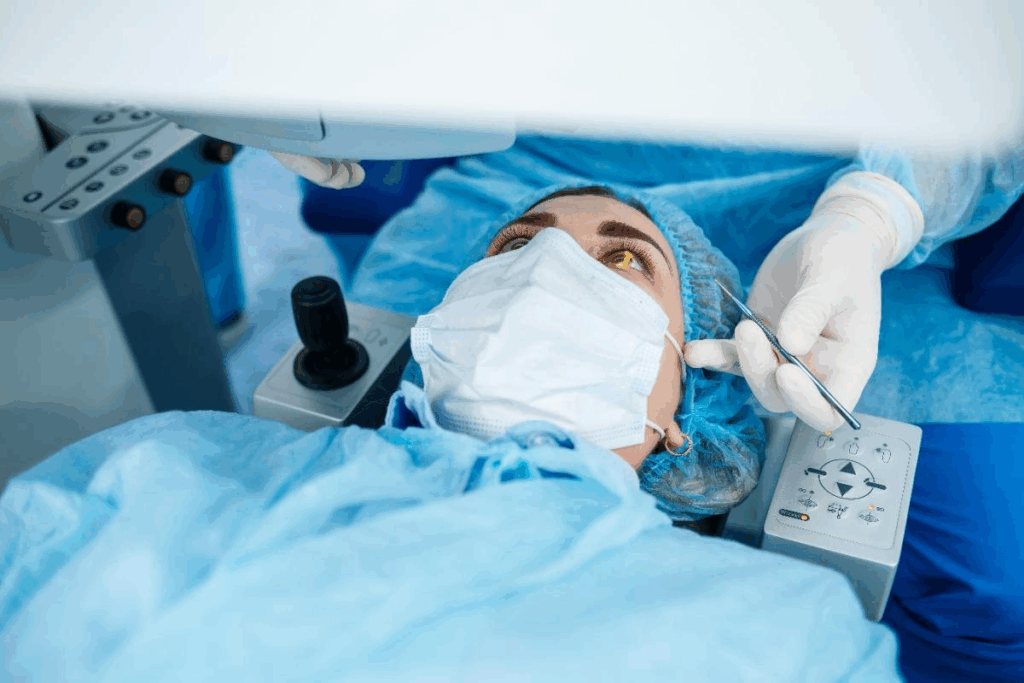
Recovering from silicone oil removal eye surgery needs careful care to heal well and see better. At Liv Hospital, we know how key this surgery is for fixing complex retinal detachment. Guide to recovery and expectations for what is the next step after removing oil from eye post-vitrectomy. Focus on what is the next step after removing oil from eye.
After surgery, patients usually go home the same day with someone to drive them. The eye might look swollen and red for weeks. But with the right care, patients can avoid problems and get better.
We help you understand what to expect and how to care for your eye during this important time. Our team offers detailed care to guide patients through the complex weeks after silicone oil removal.
Key Takeaways
- Recovering from silicone oil removal eye surgery requires careful post-operative care.
- Patients typically return home the same day as the surgery.
- The eye may be swollen and red for several weeks after surgery.
- Proper care minimizes complications and promotes recovery.
- Comprehensive care monitoring is provided to help patients navigate the recovery period.
Understanding Silicone Oil in Eye Surgery

Silicone oil has changed how we treat eye problems. It acts as a temporary support for the retina. This helps it heal during surgery.
“Silicone oil has been a game-changer in vitreoretinal surgery,” as it allows surgeons to treat conditions that were previously difficult to manage. Its role is to keep the retina in place, allowing it to heal properly.
What Is Silicone Oil and Its Purpose in Eye Surgery
Silicone oil is used in vitrectomy surgery to treat retinal detachment. It acts as a tamponade, keeping the retina in place. This is key for healing in cases like giant retinal tears and diabetic detachment.
The main goal of silicone oil is to support the retina. This is vital for complex cases where the retina might detach again.
Conditions Requiring Silicone Oil Tamponade
Silicone oil is used for several eye conditions, including:
- Giant retinal tears
- Proliferative vitreoretinopathy (PVR)
- Diabetic tractional retinal detachment
These conditions need the support silicone oil provides. It ensures the retina heals and attaches properly. Understanding its role helps patients see the complexity of their treatment.
In conclusion, silicone oil is essential in treating complex retinal detachments. Its use as a temporary tamponade has greatly improved surgery outcomes for patients.
The Timeline for Silicone Oil Removal

Silicone oil is used in eye surgery as a temporary fix. Its removal is a key part of healing. How long it stays in the eye depends on the condition being treated and the surgeon’s advice.
Why Silicone Oil Is Temporary
Silicone oil is not meant to be permanent. It’s used because of possible long-term issues like high eye pressure or cataracts. Typically, it’s removed between 3 to 6 months after surgery.
Knowing you’ll need more surgery can be scary. But, removing silicone oil is usually easier than the first surgery.
Determining the Right Time for Removal
When to take out the silicone oil depends on many things. These include:
- The condition treated with silicone oil
- The eye’s overall health
- Any complications
- The surgeon’s view of the retina’s stability
Usually, it’s removed when the retina is strong enough without the oil. Your surgeon will check this during follow-up visits. They’ll watch your eye’s progress and advise when to remove the oil.
Following the recommended removal time is key to avoiding risks. Our team will help you through this, making sure you get the best care for your eyes.
Preparing for Silicone Oil Removal Surgery
The journey to silicone oil removal starts with detailed pre-surgical checks. Getting ready for the surgery includes important steps for a smooth process. We know this prep phase is key to avoid complications and get the best results.
Pre-Surgical Evaluations and Tests
Before surgery, we do many tests to see how the retina is doing. These tests help us figure out the best way to move forward. They are vital to know the eye’s current state and spot any possible problems.
Some key tests include:
- Comprehensive eye examination to check vision and eye health
- Retinal imaging to see the retina’s condition and look for detachment signs
- Ultrasound biomicroscopy (UBM) or optical coherence tomography (OCT) to look at the retina and nearby tissues closely
These tests help us make a plan tailored to each patient. This ensures we meet their specific needs and concerns.
The Importance of Prophylactic Laser Treatment
Studies show that laser treatment around the retina 1 to 3 months before oil removal lowers retinal redetachment rates. This treatment helps prevent detachment.
“Prophylactic laser photocoagulation is a critical step in reducing the risk of retinal redetachment after silicone oil removal.”
— Ophthalmology Research
The role of prophylactic laser treatment is huge. It cuts down the risk of retinal redetachment. This means better surgery outcomes and fewer follow-up procedures.
Procedure | Benefits |
Pre-surgical evaluations | Assesses retina’s status, identifies possible issues |
Prophylactic laser treatment | Reduces risk of retinal redetachment |
By doing thorough pre-surgery tests and laser treatment, we prepare patients well. This gives them the best chance for a successful surgery.
What Happens During Silicone Oil Removal Surgery
Patients often wonder what happens during silicone oil removal surgery. This surgery removes the silicone oil from the eye. It’s a key step for the eye’s recovery and health.
Surgical Procedure Overview
The surgery involves making a small incision in the eye to remove the oil. It’s usually done on an outpatient basis, so patients can go home the same day. The goal is to remove all the silicone oil to help the eye heal.
Anesthesia Options and Hospital Stay
The type of anesthesia used can vary. Local anesthesia numbs the eye, allowing the patient to stay awake. Sometimes, general anesthesia is used, mainly for anxious patients or complex surgeries. The choice depends on the patient’s health and the surgeon’s judgment.
Because it’s an outpatient surgery, the hospital stay is short. Patients are watched for a bit after surgery to check for any issues. Then, they’re sent home to recover.
What Is the Next Step After Removing Oil from Eye
After removing silicone oil from your eye, taking good care of your eye is key. This time is when your eye starts to heal. The right care can greatly affect how well your surgery goes.
Immediate Post-Operative Care
Right after surgery, rest and avoid hard work. Your doctor will tell you how to care for your eye. This includes using eye drops to help it heal and prevent infection.
Also, wear an eye shield every night for 4 weeks. This keeps you from accidentally touching or rubbing your eye. This can make healing harder.
First 24 Hours After Surgery
The first 24 hours after surgery are very important. Here are some things to remember:
- Rest your eye as much as possible.
- Avoid heavy lifting, bending, or strenuous activities.
- Use your prescribed eye drops as directed by your surgeon.
- Wear the eye shield at night to protect your eye.
Also, follow your doctor’s advice about any follow-up visits or extra care. This helps you recover smoothly and well.
The First Week of Recovery
The first week after silicone oil removal surgery is key for healing. Patients might feel some pain and blurry vision. These are normal signs as the eye starts to mend.
Managing Pain and Discomfort
It’s important to manage pain well in the first week. Stick to the pain medication plan given by your doctor. Always take the pain meds as told to keep your pain in check.
There are other ways to ease discomfort too. A cold compress on the eye can help with swelling. But, make sure not to press on the eye to avoid problems.
Medication Schedule and Eye Protection
Following your medication plan is essential for a smooth recovery. Your doctor will give you a detailed schedule for antibiotics and anti-inflammatory meds. Make sure to finish all antibiotics to avoid infections.
Protecting your eye is also key. Use an eye shield at night to stop accidental rubbing or bumping. This can greatly lower the chance of complications.
Avoid hard work like heavy lifting, bending, or straining in the first week. Keep a record of what you do and how you feel. This helps your doctor see how you’re doing and adjust your care if needed.
By managing pain, sticking to your meds, and protecting your eye, you can have a good recovery in the first week after silicone oil removal surgery.
Follow-Up Appointments and Monitoring
After silicone oil removal surgery, it’s important to have follow-up appointments. These visits help your doctor check how your eye is healing. They can also spot any problems early on.
Schedule of Post-Operative Visits
The first visit is usually the day after surgery. Then, you’ll have more visits based on how you’re healing. You might see your doctor every week, month, and three months after surgery.
Visit | Typical Timing | Purpose |
First Visit | Day after surgery | Initial assessment of healing |
Second Visit | 1 week after surgery | Monitor for complications, assess vision |
Third Visit | 1 month after surgery | Evaluate eye health, adjust treatment as needed |
What Your Doctor Will Check During Follow-Ups
Your doctor will look for any complications and check your vision during these visits. They will also check the health of your eye. This includes looking at the retina for any damage.
“Regular follow-up appointments are essential to ensure that the eye is healing properly after silicone oil removal surgery.” – Medical Expert, Ophthalmologist
By keeping a close eye on your healing, your healthcare team can quickly handle any problems. This helps ensure your vision and eye health are the best they can be.
Vision Improvement Timeline After Oil Removal
Knowing when your vision will get better after silicone oil removal is important. Everyone heals at their own pace. This depends on the condition treated and if any complications arise.
What to Expect in the First Month
In the first month, vision changes are common. At first, it might be blurry or distorted. But as the eye heals, vision usually gets better.
How fast you see improvement can differ. Some notice big changes in a few weeks. Others might take longer. A study in a top ophthalmology journal found that most patients see big improvements in 4 to 6 weeks.
Long-Term Visual Recovery
While you might see big changes in the first month, it can take longer for vision to fully settle. The health of your retina, any underlying conditions, and post-operative complications play a role.
Here’s a closer look at how vision recovery unfolds:
Timeframe | Expected Vision Improvement |
1-4 weeks | Initial improvement, reduction in blur |
4-6 weeks | Noticeable improvement, sharper vision |
Several months | Complete stabilization of vision |
As we help patients recover, it’s key to remember that everyone is different. Regular check-ups with an eye doctor are important. They help track your progress and address any issues.
Key Takeaways:
- Vision improvement is expected within 4 to 6 weeks.
- Complete stabilization may take several months.
- Regular follow-ups are vital for monitoring progress.
Driving and Activity Restrictions
It’s important to know the rules for driving and activities after silicone oil removal. This is to keep patients safe and help them recover well. Many patients wonder when they can start driving again and resume their daily tasks.
Can I Drive with Silicone Oil in My Eye?
Most doctors tell patients not to drive with silicone oil in their eyes. This is because it can cause blurry vision or other vision problems. Driving should be avoided until your surgeon advises it is safe to do so. Silicone oil can make it hard to see well enough to drive safely.
Some important things to think about are:
- Visual acuity: Blurred vision or other disturbances can impact driving ability.
- Surgeon’s advice: Always follow the specific guidance provided by your surgeon regarding driving.
- Safety first: If in doubt, it’s best to err on the side of caution and avoid driving.
When You Can Resume Driving After Oil Removal
When you can start driving again after silicone oil removal depends on your recovery and the doctor’s say. Typically, patients are advised to wait until their vision has sufficiently recovered and their surgeon has given clearance.
- Follow-up appointments: Attend all scheduled follow-ups to monitor recovery.
- Vision assessment: Ensure your vision meets the required standards for safe driving.
- Surgeon’s clearance: Obtain explicit permission from your surgeon before resuming driving.
By following these steps, patients can ensure a safe and effective recovery process.
Potential Complications After Silicone Oil Removal
It’s important for patients to know about possible complications after silicone oil removal. This surgery is usually safe, but there are risks. Patients should be aware of these risks for a smooth recovery.
Common Complications and Their Symptoms
Complications like retinal redetachment, increased intraocular pressure, and cataract formation can happen. Retinal redetachment is serious and can cause vision loss if not treated quickly. Symptoms include flashes of light, more floaters, or a shadow over your vision.
Increased intraocular pressure can also occur, leading to glaucoma if not managed. You might feel eye pain, see redness, or have vision problems. It’s key to watch for changes in eye pressure.
When to Seek Emergency Medical Attention
Knowing when to seek emergency help is vital. Severe eye pain, sudden vision loss, or increased light sensitivity are red flags. Contact your doctor right away if you notice these symptoms. Prompt action can prevent serious damage.
If you see signs of complications during recovery, contact your healthcare provider. Early treatment is essential for managing complications effectively.
Long-Term Eye Care After Silicone Oil Removal
Keeping your eye healthy after silicone oil removal is a big deal. It’s a time when your eye needs extra care and attention. We know how important it is to watch over your eye closely.
After you’ve recovered, it’s key to stick to a long-term care plan. You should see your eye doctor regularly. This helps catch any problems early on.
Ongoing Monitoring Requirements
Watching your eye closely is vital after silicone oil removal. Regular check-ups are a must. They help make sure your eye is healing right and there are no complications.
Key aspects of ongoing monitoring include:
- Regular visual acuity tests to assess the clarity of your vision
- Intraocular pressure checks to ensure that the pressure within your eye is within a normal range
- Retinal examinations to monitor the health of your retina
By keeping an eye on these things, we can spot and fix any problems fast. This helps keep your eye in the best shape possible.
Protecting Your Eye Health in the Future
There are also ways to keep your eye safe for the long haul. Taking care of your overall health is a big part of it. Also, avoid eye injuries or infections.
Protective measures include:
- Maintaining a healthy lifestyle, including a balanced diet and regular exercise
- Avoiding activities that could potentially harm your eyes, such as contact sports without proper eye protection
- Following your doctor’s advice regarding any post-operative care and medication
By doing these things, you can lower the risk of eye problems. This helps keep your eye healthy for a long time.
Conclusion
Recovering from silicone oil removal eye surgery needs careful post-operative care and follow-up. Knowing the recovery process helps patients have a smooth and successful recovery.
With the right care and follow-up, patients can get the best results from the surgery. Keeping the eyes well cared for is key during this time. Our guidelines aim to help patients through this journey.
By following the guidelines in this article, patients can confidently navigate the recovery process. It’s important to stick to the recommended post-operative care and keep up with scheduled follow-up appointments. This helps monitor progress and address any concerns.
Successful recovery is a team effort between the patient and their healthcare team. By working together and focusing on eye care, patients can achieve the best outcomes after silicone oil removal eye surgery.
FAQ
What is the recovery time after silicone oil removal eye surgery?
Recovery time after silicone oil removal eye surgery can vary. Most people heal in a few weeks. It’s key to follow the post-op instructions for the best healing.
Can I drive with silicone oil in my eye?
Driving with silicone oil in your eye is not advised. It can affect your vision. Wait until after the surgery and follow our driving guidelines.
What is the next step after removing oil from the eye?
After removing oil, you’ll need to follow a care plan. This includes medication, follow-up visits, and eye protection. We’ll help you through the recovery.
How long does it take to see vision improvement after silicone oil removal?
Vision improvement times vary. Some see changes in a month, while others take longer. Everyone’s healing is different.
What are the long-term restrictions after retinal detachment surgery?
Avoid heavy lifting and bending for weeks after surgery. We’ll give you specific advice on activities and eye care.
What are the common complications after silicone oil removal?
Complications like retinal detachment or cataracts can occur. We’ll talk about risks and symptoms to watch for at follow-ups.
How often do I need to follow up after silicone oil removal surgery?
We’ll schedule check-ups to monitor your healing. Visit frequency depends on your needs and progress.
Can I resume normal activities after silicone oil removal surgery?
We’ll tell you when to start normal activities again. It’s important to follow our advice for a smooth recovery.
How do I protect my eye health after silicone oil removal?
We’ll recommend ongoing care and monitoring. We’ll also discuss additional treatments. We’ll help you plan for long-term eye health.
References
National Center for Biotechnology Information. Silicone Oil Removal: Post-Surgery Recovery and Care. Retrieved from https://pubmed.ncbi.nlm.nih.gov/8750994/