


Managing critically ill patients with acute kidney injury is a big challenge. Continuous Renal Replacement Therapy (CRRT) is key in treating them. It helps keep fluid balance and removes waste from the blood. Master eturn lines for crrt management. Discover amazing connection tips and vital, powerful ways to ensure successful blood flow.
To work well, vascular access is essential. This is usually done through dual-lumen central venous catheters (CVCs). One part draws blood, and the other returns filtered blood to the patient.
It’s important to place and manage these lines safely. This ensures the therapy works and keeps the patient safe. We’re always looking to improve our methods to better help our patients.
Key Takeaways
- CRRT is essential for managing critically ill patients with acute kidney injury.
- Vascular access is critical for CRRT’s success.
- Dual-lumen CVCs are the go-to for vascular access in CRRT.
- Safe placement and management of access and return lines are vital.
- Improving CRRT protocols boosts patient outcomes.
The Critical Role of CRRT in Acute Kidney Injury Management
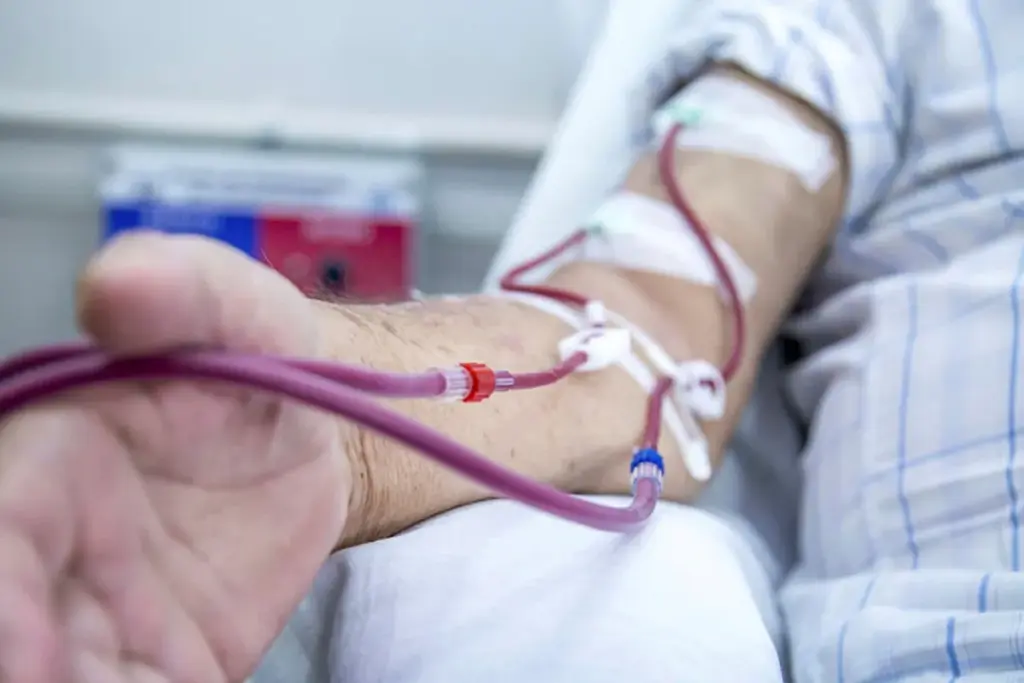
Continuous Renal Replacement Therapy (CRRT) is key for treating acute kidney injury (AKI) in seriously ill patients. It’s vital to understand CRRT’s role in managing AKI. This involves many therapeutic principles and new technologies.
Definition and Basic Principles of Blood Purification
CRRT is a type of renal replacement therapy that cleans blood continuously. It’s for patients who can’t handle the quick fluid changes of regular dialysis. The therapy uses a semipermeable membrane to remove waste and extra fluids from the blood.
This process goes on for 24 hours a day. It ensures toxins are removed gently and continuously.
Indications for Continuous Renal Replacement Therapy
CRRT is for patients with AKI who are very sick and unstable. It’s also for those with severe electrolyte imbalances, too much fluid, and poisoning. The therapy is great for ICU patients who need constant care.
CRRT helps keep patients stable and aids in their recovery. It provides continuous kidney support.
Evolution of CRRT Technology
CRRT technology has greatly improved over time, leading to better patient results. Today’s CRRT machines have advanced features like precise fluid control, better membranes, and safety alarms. These advancements enhance the efficiency, safety, and manageability of CRRT.
Healthcare providers can now tailor therapy to each patient’s needs. CRRT has become a vital part of AKI management. It offers a gentle and effective dialysis alternative for critically ill patients.
Understanding the CRRT Circuit Design
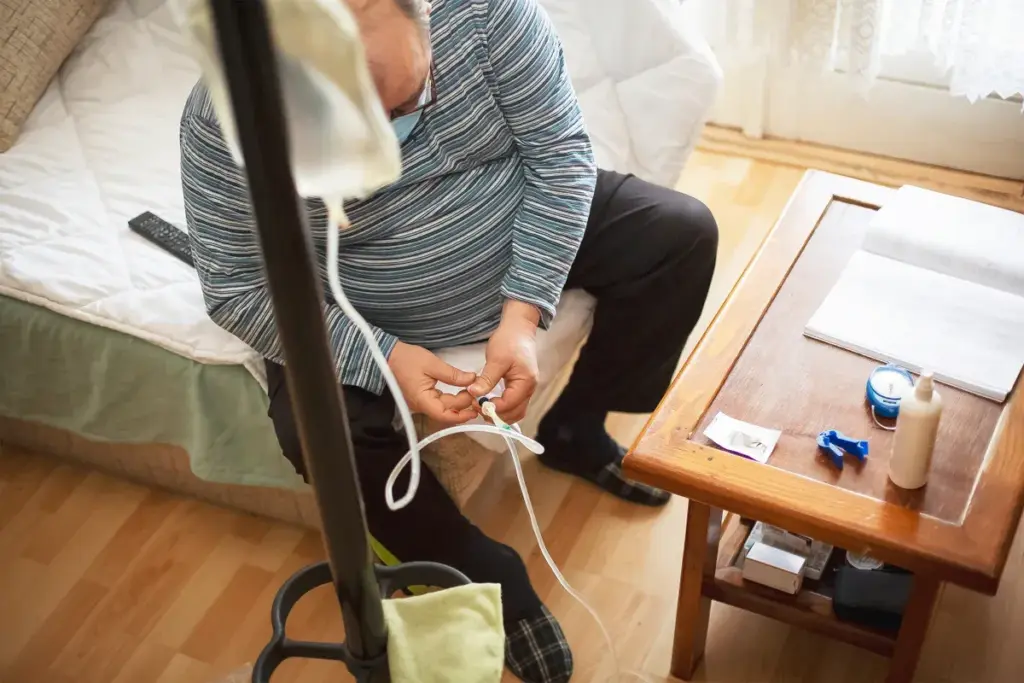
The CRRT circuit design is key for treating acute kidney injury in critical care. We’ll look at its main parts, how blood moves through it, and why vascular access is so important.
Essential Components of a CRRT System
The blood lines carry blood from the patient to the CRRT machine and back. They’re made to handle the blood pump’s pressure and are safe for the body.
The filter or dialyzer cleans the blood. It removes waste and extra fluids while keeping important nutrients and electrolytes balanced.
Blood Flow Dynamics and Pressure Gradients
Blood flow in the CRRT circuit depends on several things. These include the blood pump’s speed, the lines’ resistance, and the filter’s pressure. Getting these right is key for good treatment.
It’s also important to manage the pressure across the filter. Too much can cause problems with blood flow.
Importance of Vascular Access Quality
The quality of vascular access is critical for CRRT success. It affects how well the treatment is delivered. Bad vascular access can lower blood flow, increase recirculation, and reduce treatment effectiveness.
In summary, knowing about the CRRT circuit design is essential for effective treatment. Understanding its parts, blood flow, and vascular access quality helps healthcare professionals improve patient care.
Vascular Access Requirements for Effective CRRT
vascular access for CRRT
The success of CRRT depends a lot on the quality of vascular access. Good vascular access is key for delivering treatment well. It helps keep the patient’s fluid and electrolyte levels right.
Blood Flow Rate Considerations
For CRRT to work well, the blood flow rate must be just right. Optimal blood flow rates are between 100 to 200 mL/min. This depends on the CRRT method and the patient’s needs.
Things like catheter size and tip placement matter a lot. So does the presence of stenosis or thrombosis. Careful selection and management of vascular access are vital to avoid problems and keep blood flow steady.
Patient-Specific Factors Affecting Access Selection
Choosing the right vascular access for CRRT involves looking at several things. These include the patient’s vascular anatomy, coagulation status, and any vascular disease. For example, patients with vascular disease need more careful planning.
The patient’s overall health also plays a big role. This includes their blood pressure and if they need other treatments. Personalized assessment and planning are important for the best vascular access for CRRT.
Impact of Access Quality on Treatment Efficacy
The quality of vascular access is very important for CRRT. High-quality access means stable blood flow. This is key for keeping fluid and electrolyte levels right. Bad access quality can cause problems like recirculation and infections.
So, keeping an eye on vascular access is a big part of managing CRRT. This means checking access often, fixing any problems fast, and following best practices for catheter care.
Dual-Lumen Central Venous Catheters: The Gold Standard
dual-lumen central venous catheters
Dual-lumen central venous catheters are the top choice for CRRT. They mix efficiency with safety. These catheters have changed how CRRT is given, making it a reliable treatment for acute kidney injury.
Design Features and Functional Anatomy
The design of these catheters focuses on good blood flow and safety. They have two lumens: one for blood withdrawal and the other for blood reinfusion. This setup allows for CRRT without needing multiple access sites. It also cuts down on complications.
The anatomy of these catheters includes precise tip design and side holes. These features help blood flow smoothly and prevent catheter problems. The catheters are also flexible, so they don’t get damaged when patients move.
Size and Length Specifications
The size and length of these catheters are key to their success. Catheter length depends on the patient’s size and the access site. Longer catheters are used for femoral access, while shorter ones are for jugular or subclavian access. The diameter also matters, as it affects blood flow and complication risk.
- Catheter lengths range from 15 to 25 cm, fitting different patient sizes.
- Diameter sizes vary, with larger diameters allowing for higher blood flow rates.
Materials and Biocompatibility Advancements
New materials and biocompatibility have made these catheters safer and more effective. Modern catheters are made from materials that fight off thrombosis and infection, like antimicrobial-coated ones. These improvements have lowered the risk of complications, making CRRT safer for patients.
The use of biocompatible materials also lowers the chance of bad reactions. This keeps the catheters working well during treatment. Research and development keep improving catheter technology, bettering patient outcomes in CRRT.
The Access Line: Blood Withdrawal Mechanics in CRRT
CRRT Access Line
The access line’s design controls how blood is taken out in CRRT. It’s a key part of the CRRT circuit, pulling blood from the patient.
Function and Flow Characteristics
The access line draws blood from the patient and sends it to the CRRT machine. Flow characteristics like the blood flow rate are very important. The rate is usually set between 100 to 200 mL/min, based on the patient’s needs.
The resistance to blood flow in the access line is also critical. High resistance can make it hard to get enough blood, which might hurt treatment results. The size and length of the access catheter, and any kinks or blockages, affect how well blood flows.
Negative Pressure Considerations
Negative pressure helps pull blood out of the access line. But, we must watch the pressure closely to avoid hemolysis or damage to blood cells. Too much pressure can break the blood cells, causing problems.
We need to keep an eye on the negative pressure and adjust it as needed. The right pressure depends on the CRRT system and the patient’s blood vessels.
Access Recirculation Challenges
Access recirculation happens when blood goes back into the patient without being fully treated. This makes treatment less effective and can harm the patient.
To avoid this, we must place the access catheter correctly. The catheter tip should be in a spot that reduces recirculation. We also need to check the CRRT circuit often and adjust the catheter if necessary.
|
Factor |
Impact on CRRT |
Mitigation Strategy |
|---|---|---|
|
Catheter Size and Length |
Affects flow rate and resistance |
Choose appropriate catheter size |
|
Negative Pressure Level |
Influences blood withdrawal and hemolysis risk |
Monitor and adjust negative pressure |
|
Catheter Positioning |
Impacts access recirculation |
Ensure proper catheter tip placement |
The Return Line: Blood Reinfusion Dynamics in CRRT
CRRT return line dynamics
Understanding the return line is key to better CRRT treatment. It’s where blood goes back into the patient after filtering. This is done by the CRRT machine.
Function and Pressure Management
The return line’s main job is to return filtered blood safely. Proper pressure management is vital to avoid problems like hemolysis and air embolism.
We control pressure in the return line in a few ways:
- Watching venous pressure to keep it safe
- Adjusting the CRRT machine settings for better blood flow
- Choosing the right catheter size to reduce resistance
Preventing Hemolysis and Air Embolism
Hemolysis and air embolism are big risks with the return line in CRRT. Hemolysis is when red blood cells get damaged. Air embolism is when air gets into the blood.
To lower these risks, we:
- Check the CRRT circuit for damage or wear
- Use air detection systems to find air leaks
- Use anticoagulation to prevent clotting
Optimizing Return Flow Efficiency
Improving return flow is critical for CRRT’s success. It’s about returning blood at the right rate and pressure.
Ways to improve return flow include:
- Picking the right catheter size and type for the patient
- Adjusting CRRT machine settings to fit the patient’s needs
- Watching how the patient responds and adjusting as needed
By managing the return line’s dynamics, we make CRRT safer and more effective. This leads to better results for patients.
Internal Jugular Vein: Preferred Access Site for CRRT
ultrasound-guided insertion
The internal jugular vein is the top choice for CRRT access. It has many benefits that make it ideal. We’ll look at why it’s preferred, including its anatomy, the benefits of ultrasound, and fewer complications.
Anatomical Advantages for Blood Flow
The internal jugular vein is great for CRRT access. It has a straight path and a big size, which helps blood flow well. This is key for CRRT to work right. Plus, it’s easy to put in a catheter and less likely to get kinked or placed wrong.
Key anatomical features include:
- Large diameter, allowing for higher blood flow rates
- Straight course, reducing the risk of catheter malfunction
- Favorable location for cannulation and catheter stability
Ultrasound-Guided Insertion Techniques
Ultrasound guidance is now the norm for putting in central venous catheters. It makes the procedure safer and more effective. It lets doctors see the vein and nearby structures live, avoiding mistakes like hitting an artery or a nerve.
Lower Infection Rates and Complications
The internal jugular vein has fewer infections and mechanical issues compared to other sites. This is because it’s easy to care for the catheter and stays stable once in.
|
Access Site |
Infection Rate |
Mechanical Complications |
|---|---|---|
|
Internal Jugular Vein |
Low |
Low |
|
Femoral Vein |
Higher |
Moderate |
|
Subclavian Vein |
Moderate |
Higher |
In summary, the internal jugular vein is the best for CRRT access. Its anatomy, ultrasound benefits, and fewer complications make it the top choice. This understanding aids healthcare providers in enhancing CRRT delivery and overall patient care.
Femoral Vein Access: Emergency Option for CRRT
In emergency cases, femoral vein access is key for starting Continuous Renal Replacement Therapy (CRRT). It’s useful when other access sites are not available or not safe for the patient.
When to Consider Femoral Placement
Femoral vein access is for urgent CRRT starts. It’s needed for severe kidney injury, dangerous electrolyte levels, or too much fluid that other methods can’t handle. The choice to use femoral access must weigh the patient’s health and the risks.
Technique and Positioning Considerations
For femoral vein cannulation, the patient must be positioned carefully and kept sterile to avoid infections. Ultrasound guidance is highly advised to place the catheter right and avoid problems. The catheter’s position is critical to ensure blood flow and treatment success.
“The use of ultrasound guidance during femoral vein cannulation has been shown to significantly reduce the risk of mechanical complications and improve the success rate of the procedure.”
Source: Clinical Guidelines for CRRT
Managing Higher Infection Risk
Femoral vein access carries a higher infection risk. Following strict sterile procedures during insertion and care is vital. Watch for infection signs like redness, swelling, or discharge. Antimicrobial catheters or lock solutions can also help prevent infections.
Knowing when and how to use femoral vein access for CRRT helps healthcare providers. It leads to better patient care and outcomes.
Subclavian Vein Access: Alternative Approach
Subclavian vein access is a good option for patients needing Continuous Renal Replacement Therapy (CRRT). It’s used when other sites are not possible or have failed.
Anatomical Considerations and Challenges
The subclavian vein is under the clavicle, surrounded by many structures. Precise anatomical knowledge is key to avoid issues like pneumothorax.
Important anatomical points include:
- The subclavian vein’s close location to the lung apex
- Its relationship with nearby muscles and bones
- Varied anatomy among patients
Stenosis Risk and Long-term Implications
Subclavian vein access carries a risk of stenosis. This can cause long-term issues like chronic arm swelling and pain.
Risks for stenosis include:
- Catheter size compared to the vein
- How long the catheter is in place
- Previous damage or disease in the subclavian vein
Situations Favoring Subclavian Access
Despite challenges, subclavian vein access is preferred in some cases. This is when other veins are hard to access or the patient’s anatomy requires it.
Specific scenarios include:
- Patients with previous central venous catheters
- Those needing long-term vascular access
- Cases where other sites are not safe due to infection or clotting
Understanding the anatomy, risks, and when to use subclavian vein access helps healthcare providers. They can make better choices for CRRT.
Comparative Analysis of CRRT Access Sites
Choosing the right vascular access site is key for CRRT treatment success. Different sites have different flow rates, infection risks, and effects on patient comfort and mobility. We’ll look at these factors to help make informed decisions.
Flow Dynamics and Treatment Efficiency
The flow rate of the access site greatly affects CRRT efficiency. Internal jugular and femoral veins are often chosen because they have a straight path and are less likely to kink.
|
Access Site |
Flow Rate |
Treatment Efficiency |
|---|---|---|
|
Internal Jugular Vein |
High |
Excellent |
|
Femoral Vein |
Moderate |
Good |
|
Subclavian Vein |
Variable |
Fair |
The table shows the internal jugular vein has the highest flow rates and efficiency. It’s often the first choice for CRRT.
Infection Rates and Complications
Infection rates differ among access sites. The femoral vein has a higher infection risk than the internal jugular vein.
“The choice of vascular access site significantly impacts the risk of catheter-related bloodstream infections in CRRT patients.”
- Internal Jugular Vein: Lower infection rates
- Femoral Vein: Higher infection rates
- Subclavian Vein: Moderate infection rates
Patient Mobility and Comfort Considerations
Considering patient mobility and comfort is also important. The femoral vein can restrict movement due to the risk of catheter issues.
Evidence-Based Selection Criteria
When picking a vascular access site for CRRT, we look at several key factors. These include the patient’s health, the therapy’s length, and the risk of complications.
- Assess the patient’s vascular anatomy and possible access sites.
- Think about the patient’s mobility and comfort needs.
- Look at the risk of infection and other issues.
By carefully weighing these factors, we can improve CRRT outcomes and better care for patients.
Catheter-Related Complications in CRRT
In CRRT, catheter problems are a big challenge. We need to prevent and manage these issues well. This is key to keeping treatment effective and patients safe.
Infection Prevention Protocols
Infections from catheters are a big worry in CRRT. We follow strict rules to prevent infections. These include:
- Proper hand hygiene before handling the catheter
- Use of sterile equipment and supplies
- Regular inspection of the catheter site for signs of infection
- Antimicrobial lock therapy in high-risk patients
Following these steps can greatly lower the chance of infections.
Thrombosis Management Strategies
Thrombosis, or blood clots, is another problem with CRRT catheters. We use several strategies to manage this:
- Regular monitoring of catheter function and blood flow rates
- Use of anticoagulation therapy as needed
- Thrombolytic therapy for occluded catheters
These steps help keep the catheter open and treatment flowing smoothly.
Mechanical Complications and Troubleshooting
Mechanical issues, like kinking or wrong placement, can happen. To fix these, we:
- Regularly inspect the catheter and its positioning
- Use imaging techniques to verify catheter placement
- Adjust or replace the catheter as necessary
Quickly solving mechanical problems is vital for CRRT success.
By tackling catheter-related issues, we can better patient care and CRRT treatment results.
The Growing Market for CRRT Technology
The global CRRT market is growing fast. This is thanks to new tech and the need for better healthcare in different places. As medical tech gets better, more people need Continuous Renal Replacement Therapy (CRRT) in hospitals.
Current Market Size and Projections
The CRRT market has grown a lot in the last few years. This is because more people have acute kidney injury and need good treatments. We think this growth will keep going, with the CRRT market getting bigger over the next ten years.
Several things are helping this market grow. More patients need kidney treatments, CRRT tech is getting better, and more hospitals are using CRRT.
Technological Innovations in Catheter Design
New designs in catheters are key to CRRT’s progress. We’re seeing better materials, designs, and features. These changes are making treatments work better and patients feel better.
- Improved biocompatibility of catheter materials
- Enhanced designs for better blood flow and reduced recirculation
- Advanced coatings to prevent infection and thrombosis
These catheter design innovations make CRRT more effective. They also make patients more comfortable and reduce risks.
Regional Adoption Patterns and Trends
How fast CRRT is adopted varies by region. This depends on things like healthcare setup, money, and how doctors practice. Regional adoption patterns are influenced by local health policies, how many doctors are trained, and how common kidney disease is.
|
Region |
Adoption Rate |
Key Drivers |
|---|---|---|
|
North America |
High |
Advanced healthcare infrastructure, high prevalence of kidney disease |
|
Europe |
Moderate to High |
Strong clinical guidelines, increasing adoption in critical care |
|
Asia-Pacific |
Growing |
Increasing healthcare expenditure, rising awareness of CRRT benefits |
Knowing about regional adoption patterns is important. It helps companies and healthcare groups reach more people in the global CRRT market.
Advanced Protocols for CRRT Access Management
Advanced protocols for CRRT access management are key to better patient care. They include good catheter care, the right anticoagulation strategies, and training for staff.
Catheter Care and Maintenance
Keeping the catheter clean is critical to avoid infections and blood clots. Here are some important steps:
- Regularly check the catheter site for signs of infection or problems
- Always use sterile methods when handling the catheter
- Use a catheter locking solution to stop blood clots
Anticoagulation Strategies
Preventing blood clots in the CRRT circuit is vital. We focus on:
- Using heparin or citrate-based anticoagulation
- Keeping an eye on anticoagulation levels to adjust as needed
- Considering each patient’s unique needs for anticoagulation
Staff Training and Competency Requirements
Staff need thorough training to manage CRRT effectively. We make sure they:
- Get regular training on CRRT management and solving problems
- Pass competency tests to show they’re skilled
- Stay updated on the latest CRRT technologies and methods
By using these advanced protocols, we can greatly improve CRRT access management. This leads to better care for our patients.
Conclusion
Continuous Renal Replacement Therapy (CRRT) is key for patients with acute kidney injury. It’s important to know how to set up and manage the access and return lines. This ensures the therapy works well.
The access line takes blood out, and the return line puts it back in. Managing these lines right is critical to avoid problems like infections and blockages. We’ve looked at the different places to put these lines, like in the neck or leg veins.
In short, CRRT is a complex treatment that needs careful line management. Knowing how to do this helps doctors improve patient care. As more patients need CRRT, keeping up with new technology and methods is vital.
FAQ
What is Continuous Renal Replacement Therapy (CRRT) and how does it work?
CRRT is a treatment for acute kidney injury. It works by constantly exchanging fluids to remove waste from the blood. This mimics the kidneys’ function.
What are the access and return lines in CRRT used for?
The access line takes blood from the patient. The return line puts the filtered blood back into the patient. This keeps the blood purification process going.
Why is vascular access quality so important for CRRT?
Good vascular access is key for CRRT. It ensures blood flows well, lowers complication risks, and boosts treatment success. It’s essential for CRRT to work well.
What are the advantages of using dual-lumen central venous catheters for CRRT?
Dual-lumen catheters are the best for CRRT. They let blood flow in and out at the same time. They’re made of materials that are safe for the body.
What are the common complications associated with CRRT catheters?
CRRT catheters can cause infections, blood clots, and mechanical problems. But, using prevention and management strategies can help avoid these issues.
How is the internal jugular vein used as a preferred access site for CRRT?
The internal jugular vein is chosen for CRRT because it’s safe and effective. Using ultrasound makes the procedure even safer and more precise.
When is femoral vein access considered for CRRT?
Femoral vein access is used in emergencies or when other sites are not possible. It’s important to use the right technique to lower infection risks.
What are the considerations for selecting the most appropriate vascular access site for CRRT?
Choosing the right access site depends on several factors. These include how well the blood flows, infection rates, patient comfort, and evidence-based practices.
How is CRRT technology evolving?
CRRT technology is improving. New designs, better materials, and more adoption in different areas are shaping the future of kidney treatment.
What are the key components of advanced protocols for CRRT access management?
Advanced protocols for CRRT include proper catheter care, anticoagulation strategies, and training for staff. These steps help manage CRRT effectively and reduce complications.
How does CRRT contribute to the management of acute kidney injury?
CRRT helps manage acute kidney injury by continuously purifying the blood. It removes waste and helps keep fluid balance in critically ill patients.
National Center for Biotechnology Information. Evidence-Based Medical Insight. Retrieved from
References
https://my.clevelandclinic.org/health/treatments/14618-dialysis

























