
At Liv Hospital, our expert team uses advanced endovascular techniques for endovascular aortic aneurysm repair (EVAR). We offer cutting-edge treatment and safe outcomes with a focus on the patient.
EVAR for aneurysm provides a precise and effective treatment for abdominal aortic aneurysms (AAA). It is a minimally invasive vascular surgery that reinforces the weakened, bulging aorta. The procedure uses a stent-graft delivered through the femoral arteries to the aneurysm site, guided by real-time imaging. This method significantly reduces recovery time and complications compared to traditional open surgery.
Careful preoperative planning is key to measure the aneurysm and assess vessel anatomy. This ensures the best outcome for our patients.
Key Takeaways
- EVAR is a minimally invasive procedure for treating abdominal aortic aneurysms.
- Preoperative planning is essential for successful EVAR.
- Real-time imaging guides the delivery of a stent-graft to the aneurysm site.
- EVAR reduces recovery time and complications compared to open surgery.
- Patient-centered care is a priority in our treatment approach.
Understanding EVAR for Aneurysm Treatment
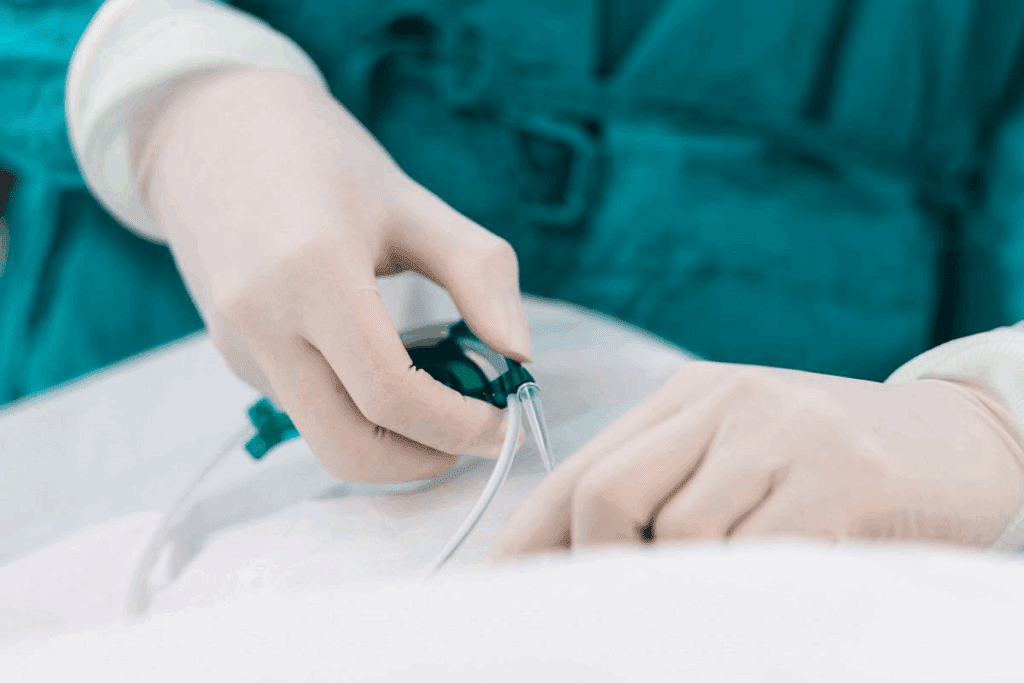
EVAR has changed how we treat aneurysms. We’ll look into what EVAR is, its history, and why it’s often chosen over open repair.
Definition and Medical Terminology
EVAR means Endovascular Aneurysm Repair. It’s a new way to fix an aortic aneurysm. An aortic aneurysm happens when the aorta gets too big. EVAR uses a stent-graft to keep the aorta strong and stop it from bursting.
Terms like “endovascular” and “stent-graft” are key in EVAR. “Endovascular” means it’s done inside the blood vessels. A “stent-graft” is a tool that helps support the aorta.
Historical Development of EVAR
The idea of EVAR started in the 1980s. Doctors like Julio Palmaz began working on stents. Over time, EVAR has gotten better with new stent-grafts and ways to put them in.
- The first time a stent-graft was put in the aorta.
- New imaging tools help place stent-grafts more accurately.
- Many stent-grafts were made for different types of aneurysms.
Advantages Over Traditional Open Repair
EVAR has many benefits over open surgery. Here are a few:
- Shorter Recovery Time: EVAR is less invasive, so you get to go home sooner.
- Less Blood Loss: Because it’s less invasive, there’s less chance of losing a lot of blood.
- Lower Risk of Complications: EVAR has fewer risks than open surgery, which is good for older patients or those with health issues.
Knowing about EVAR helps us see why it’s a key treatment for aortic aneurysms.
Patient Selection Criteria for EVAR
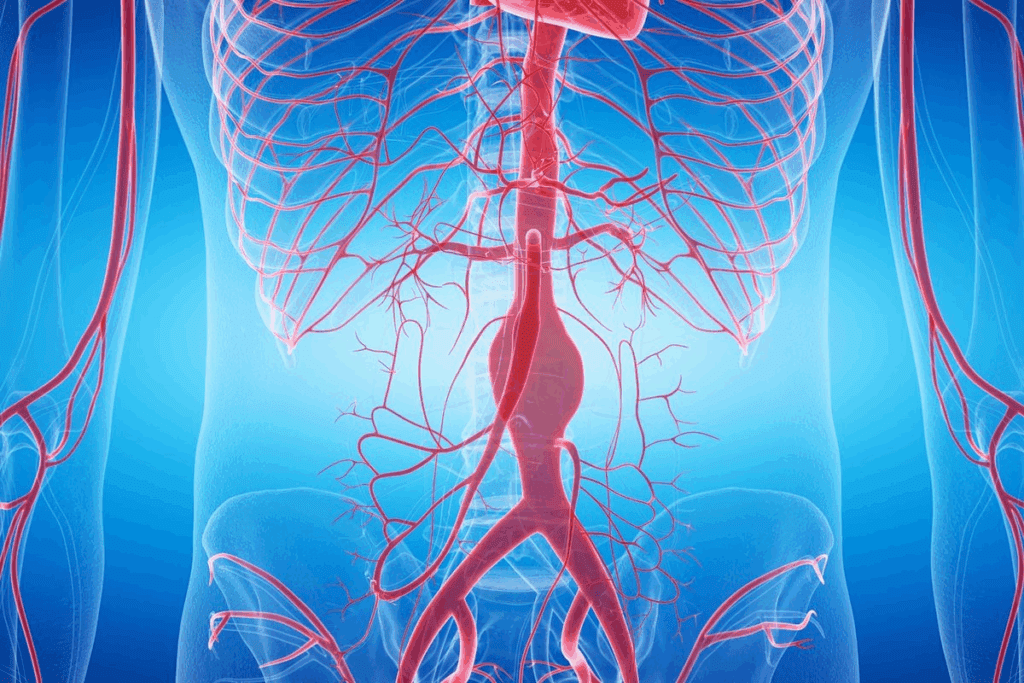
To get the best results, it’s key to check if a patient is right for EVAR. This depends on their body and health. Choosing the right patients for EVAR is very important.
Anatomical Requirements
Checking if a patient’s body is right for EVAR is a big deal. We look at a few important things:
- Aortic Neck Length and Diameter: The neck and size of the aorta are key for placing the stent-graft right.
- Iliac Artery Anatomy: The size and twists of the iliac arteries matter for putting in the stent-graft.
- Aneurysm Morphology: The shape and size of the aneurysm help pick the right stent-graft and how to put it in.
Clinical Indications
Here are when EVAR is a good choice:
- Aneurysm Size: Big aneurysms that could burst are often fixed with EVAR.
- Symptomatic Aneurysms: People with symptoms from their aneurysm might do well with EVAR.
- High-Risk Surgical Patients: Those who are too risky for surgery might be good for EVAR.
Contraindications and Limitations
Even though EVAR is helpful, there are times it’s not the best choice:
- Complex Aortic Anatomy: Some complex aortic shapes might not work for EVAR.
- Severe Kidney Disease: EVAR uses contrast, which is a worry for those with bad kidneys.
- Unfavorable Iliac Artery Anatomy: Big problems with the iliac arteries can make EVAR hard or impossible.
By looking at these body and health factors, we can figure out if EVAR is right for someone. This helps make sure treatment works well.
Comprehensive Preoperative Planning
Success in EVAR for aneurysm treatment depends on detailed preoperative planning. This phase is key to understanding the patient’s anatomy and the aneurysm’s specifics. It lets us customize our approach for each patient’s needs.
Essential Imaging Studies
Imaging studies are vital for EVAR planning. We use CT angiography to get detailed info on the aneurysm’s size, shape, and location. CT angiography gives us high-resolution images for planning stent-graft placement.
We also use MRI and ultrasound to get more insights. These studies help us spot any challenges that might come up during the EVAR procedure.
Aneurysm Measurement Techniques
Getting accurate aneurysm measurements is key. We analyze imaging data with special software. This gives us precise measurements for choosing the right stent-graft size.
Stent-Graft Selection and Sizing
Choosing the right stent-graft is a big decision. We look at the aneurysm’s size, the patient’s anatomy, and any accessory vessels. Our goal is to pick a stent-graft that seals the aneurysm safely and effectively.
With careful planning, we can improve EVAR outcomes and lower complication risks. Detailed preoperative planning is vital for treating abdominal aortic aneurysms with EVAR.
Operating Room Setup and Team Preparation
Getting the operating room ready and having a skilled team are key steps for EVAR procedures. EVAR for aneurysm treatment is complex. It needs a team working together well.
Equipment and Instrument Requirements
The operating room needs advanced imaging tech. This includes a top-notch fluoroscopy system and angiography gear. Fluoroscopy lets us see what’s happening in real time. Angiography helps us see the blood vessels and the aneurysm.
Specialized tools are also needed. These include guidewires, catheters, and stent-grafts. The right tools depend on the patient’s anatomy and the aneurysm’s type.
Hybrid Operating Room Configuration
A hybrid operating room has features of both traditional ORs and advanced imaging. This setup lets us do both open and endovascular procedures in one place. It makes EVAR surgery safer and more flexible.
The hybrid OR is big enough for a large team and complex gear. It’s great for complex EVAR cases that might need to switch to open repair.
Team Composition and Responsibilities
The success of EVAR vascular procedures depends on teamwork. The team includes vascular surgeons, interventional radiologists, anesthesiologists, and nurses. Each team member has their own job:
- Vascular surgeons do the EVAR procedure and place the stent-graft.
- Interventional radiologists help with imaging and guiding the guidewire.
- Anesthesiologists take care of the patient’s anesthesia and monitoring.
- Nurses help with patient care, handling instruments, and keeping things clean.
Good communication and teamwork are key for EVAR surgery. Together, the team can handle any problems and get the best results for the patient.
Anesthesia Options and Patient Positioning
Anesthesia for EVAR is customized for each patient. Options range from general to regional anesthesia. The choice depends on the patient’s health, the procedure’s complexity, and the team’s preferences.
General vs. Regional Anesthesia Considerations
General anesthesia is common for EVAR. It helps the surgical team work in a controlled setting. But, regional anesthesia like epidural and local can offer benefits like less risk of breathing problems and quicker recovery. A study on theNational Center for Biotechnology Information shows anesthesia choice affects patient results.
Optimal Patient Positioning
Proper positioning is key for EVAR success. Patients lie on a special table that lets doctors see them clearly during surgery. The team makes sure the patient is safe and all tools are within reach.
Preoperative Medications Protocol
The pre-surgery medication plan for EVAR is carefully chosen. It includes drugs to keep the patient comfortable and safe. The plan varies based on the patient’s health and the team’s approach.
In summary, anesthesia and patient positioning for EVAR surgery are vital. They need careful planning and execution. By choosing the right anesthesia and positioning, teams can make the surgery safer and more successful for patients.
Performing EVAR for Aneurysm: Core Procedure Steps
Doing EVAR for an aneurysm treatment needs careful steps. These steps are key to the procedure’s success. We will go over them in this part.
Vascular Access Techniques
Getting vascular access is the first big step in EVAR. We usually do this through the femoral artery. This can be done with a surgical cutdown or a less invasive method.
The choice depends on the patient’s body, the surgeon’s preference, and hospital rules.
Guidewire and Catheter Navigation
After getting access, we guide wires and catheters to the aneurysm. We use imaging, like fluoroscopy, to make sure they are in the right place. This helps avoid problems.
Main Body Deployment Technique
Putting in the main part of the stent-graft is a key moment. We have to place it right, near the renal arteries and the aneurysm neck. This ensures a good seal and prevents leaks.
Contralateral Limb Cannulation
After the main body is in, we add the contralateral limb. This step is vital for the stent-graft’s stability and success. We guide a wire into the other limb of the stent-graft.
Here’s a table that shows the main steps and what to think about in the EVAR procedure:
| Procedure Step | Critical Considerations | Imaging Guidance |
| Vascular Access | Femoral artery access, surgical cutdown vs. percutaneous | Fluoroscopy |
| Guidewire and Catheter Navigation | Accurate placement, avoiding complications | Fluoroscopy |
| Main Body Deployment | Precise positioning, secure seal | Fluoroscopy, angiography |
| Contralateral Limb Cannulation | Successful cannulation, stent-graft stability | Fluoroscopy |
Advanced EVAR Techniques for Complex Anatomies
Vascular surgery is getting better, thanks to new EVAR techniques. These advancements help with tough aneurysm cases. They’re key for complex aortic anatomies that don’t fit the usual EVAR criteria.
Fenestrated EVAR Approach
Fenestrated EVAR is for aneurysms with tricky neck anatomy. It customizes the stent-graft with special fenestrations. These fit the patient’s visceral arteries, securing the graft and keeping blood flow to vital organs.
Planning for fenestrated EVAR needs detailed imaging studies. These studies measure the aneurysm and its relation to nearby vessels. This info helps make a stent-graft that fits the patient’s needs perfectly.
Branched Endografts
Branched endografts tackle aneurysms with major branch vessels. They have branches that go into the visceral arteries. This keeps blood flowing to important organs.
Creating and deploying branched endografts is complex. It needs a deep understanding of the patient’s anatomy and the device’s features. This method is a hopeful solution for complex aneurysms that were once thought impossible to treat.
Chimney and Snorkel Techniques
Chimney and snorkel techniques help keep blood flowing in complex aortic aneurysms. They involve placing a stent-graft alongside the main one. This creates a path for blood to reach the visceral arteries.
These techniques are valuable for complex cases but come with challenges. There’s a risk of endoleaks and the need for precise deployment. Choosing the right patient and using careful technique are critical for success.
Iliac Branch Devices
Iliac branch devices are for aneurysms in the iliac arteries. They keep blood flowing to the internal iliac artery. This reduces the risk of problems like buttock claudication and spinal cord ischemia.
Using iliac branch devices requires knowing the patient’s iliac anatomy well. It also needs accurate device deployment. This method is a good option for patients with complex iliac aneurysms.
Intraoperative Complications and Management Strategies
During EVAR for aneurysm treatment, several intraoperative complications can arise. These need quick and effective management strategies. It’s key for vascular surgeons to know these complications to ensure the best outcomes for their patients.
Access-Related Complications
Access-related complications are common during EVAR. These can include:
- Vascular injury: Tears or dissections of the access vessels can occur, potentially leading to significant bleeding or thrombosis.
- Hematoma: Bleeding at the access site can result in hematoma formation, which may require drainage or surgical intervention.
Managing these complications often involves a combination of preoperative planning, precise technique during access, and having appropriate tools and strategies available for addressing any issues that arise.
Deployment Challenges
Deployment challenges during EVAR can be complex and may involve:
- Stent-graft migration: The stent-graft may not deploy in the intended position, requiring additional maneuvers to correctly place it.
- Inadequate stent-graft expansion: Failure of the stent-graft to fully expand can lead to endoleaks or other complications.
To mitigate these challenges, surgeons must have a thorough understanding of the stent-graft systems they are using. They also need to be skilled in the techniques required for their deployment.
Endoleak Classification and Management
Endoleaks are a significant complication of EVAR, representing a failure to completely exclude the aneurysm sac from the circulation. They are classified into several types:
- Type I: Leak at the attachment site
- Type II: Retrograde flow from branches
- Type III: Leak through the graft
- Type IV: Graft porosity
- Type V: Endotension
Management strategies vary depending on the type and severity of the endoleak. They range from observation to additional endovascular interventions or conversion to open repair.
Conversion to Open Repair: Indications and Technique
In some cases, intraoperative complications during EVAR may necessitate conversion to open surgical repair. Indications for this include:
- Uncontrollable bleeding
- Significant stent-graft migration or malposition
- Failure to resolve endoleak
The technique for conversion involves careful planning. It requires a clear understanding of the patient’s anatomy and the nature of the complication. It also needs a skilled surgical team and appropriate equipment to manage the transition effectively.
Postoperative Care Protocol
Effective postoperative care is key for the best results after EVAR. It includes immediate recovery, discharge planning, patient education, and spotting early complications.
Immediate Recovery Management
Right after surgery, patients are watched closely in the PACU. They are checked for vital signs, pain, and any issues. We make sure they’re okay before moving them to a regular floor.
Key aspects of immediate recovery management include:
- Continuous monitoring of vital signs and neurological status
- Effective pain management using a multimodal approach
- Early mobilization to prevent venous thromboembolism and promote recovery
- Monitoring for signs of bleeding or hematoma at the access site
Discharge Planning and Criteria
Discharge planning starts early. We check patients daily to see if they’re ready to go home. They must have stable vital signs, manage their pain, and do basic daily tasks.
Discharge criteria include:
- Stable vital signs and no evidence of acute complications
- Adequate pain control with oral medications
- Ability to ambulate and perform basic self-care
- Understanding of postoperative instructions and follow-up appointments
Patient Education and Instructions
Teaching patients is a big part of care after surgery. We give them clear instructions on wound care, taking meds, and watching for complications.
Key patient education topics include:
- Signs and symptoms of possible complications, like endoleak or graft migration
- Why follow-up appointments and tests are important
- How to manage medications, including blood thinners
- What activities to avoid after going home
Early Complication Recognition
Spotting problems early is vital. We teach patients to look out for signs of trouble and to get help if they see anything odd.
Common complications to watch for include:
- Endoleak or graft endoleak
- Graft migration or kinking
- Access site problems, like pseudoaneurysm or hematoma
- Heart or kidney issues
By following a detailed care plan, we can help patients recover well from EVAR and avoid complications.
Long-term Surveillance and Follow-up
Managing EVAR long-term means regular check-ups and scans. These help watch the stent-graft and catch problems early.
Imaging Schedule and Modalities
After EVAR, we suggest a set imaging schedule. This usually includes CT angiography at regular times to check the aneurysm sac and stent-graft.
CT angiography is best for spotting endoleaks and checking if the graft is open. But, we also use duplex ultrasound to lower radiation and contrast use.
Endoleak Detection and Management
Endoleaks are a big worry during follow-up. They’re divided into types based on where they come from. We stress finding them early to avoid aneurysm rupture.
- Type I endoleaks happen when the graft ends don’t seal well.
- Type II endoleaks come from backward flow in branch vessels.
- Type III endoleaks are when the graft fails.
How we handle endoleaks depends on the type. We might just watch Type II endoleaks, but need to act fast for Type I and III.
Device-Specific Surveillance Considerations
Different stent-grafts need different follow-up plans. We look at how durable the material is and the design when planning check-ups.
| Stent-Graft Type | Surveillance Focus |
| Endurant | Migrate risk assessment |
| Zenith | Graft material durability |
Reintervention Indications and Techniques
Sometimes, we need to do more surgery for issues like endoleaks, graft migration, or aneurysm growth. We talk about when and how to do this, like endovascular repair or open surgery.
For reintervention, we might add more stent-grafts, block off Type II endoleaks, or fix graft migration or endoleaks.
Conclusion
We’ve looked into EVAR for treating aneurysms, from choosing patients to aftercare. EVAR vascular surgery is a top choice for fixing aortic aneurysms. It’s less invasive than open surgery and offers many benefits.
Theendovascular aortic aneurysm repair evar method cuts down on deaths from aneurysms. It has a 30-day death rate of 1.7%, much lower than open surgery’s 4.7%. It’s great for big AAAs and those who can’t have open surgery.
As we keep improving EVAR for aneurysms, we’re using new stent-grafts for complex cases. Research into new devices and methods is underway. This could make EVAR even better.
In short, EVAR is a big step forward in treating aortic aneurysms. It makes patients’ lives better and improves their health. We need to keep watching and improving EVAR to give the best care to patients.
FAQ
What is EVAR?
EVAR stands for Endovascular Aortic Aneurysm Repair. It’s a new way to fix an abdominal aortic aneurysm (AAA). A stent-graft is placed in the aorta through the arteries, guided by imaging.
What are the benefits of EVAR compared to traditional open surgery?
EVAR is better because it heals faster and has fewer risks. Patients also spend less time in the hospital. It’s less bloody and safer than old-school surgery.
What is the significance of preoperative planning in EVAR?
Planning before surgery is key for EVAR. Doctors use CT scans to see the aneurysm and aorta clearly. They must measure it right to pick the right stent-graft.
What are the anatomical requirements for EVAR?
EVAR needs a certain aortic neck size and length. The size of the aneurysm and symptoms also matter. These help decide if EVAR is right for a patient.
What are the advanced EVAR techniques for complex aortic aneurysms?
For tough cases, EVAR uses special techniques. Fenestrated EVAR and branched endografts help with tricky necks and branch vessels. Chimney and snorkel methods keep arteries open.
What are the possible intraoperative complications during EVAR?
EVAR can face issues like access problems and stent-graft deployment challenges. Endoleaks are also a risk during surgery.
What is the postoperative care protocol for EVAR patients?
After surgery, patients get quick care in the hospital. They learn about post-op care and follow-up. Doctors watch for early signs of trouble.
Why is long-term surveillance necessary after EVAR?
Watching the stent-graft over time is vital. It catches endoleaks and other issues. CT scans are used for this check-up.
What is the role of EVAR in the management of aortic aneurysms?
EVAR is a top choice for treating aortic aneurysms. It’s less invasive and speeds up recovery. It greatly improves patients’ lives.
How is EVAR performed?
EVAR uses a stent-graft placed through the arteries. It’s guided by imaging. The process includes accessing the arteries and deploying the stent-graft.
References
- Wanhainen, A., Verzini, F., Van Herzeele, I., Allaire, E., Bown, M., Cohnert, T., Dick, F., van Herwaarden, J., Karkos, C., Koelemay, M., Kolbel, T., Loftus, I., Mani, K., Melissano, G., Powell, J., Szeberin, Z., Esvs Guidelines Committee, Bjorck, M., & Debus, S. (2019). Editor’s Choice – European Society for Vascular Surgery (ESVS) 2019 Clinical Practice Guidelines on the Management of Abdominal Aorto-iliac Artery Aneurysms. European Journal of Vascular and Endovascular Surgery, *57*(1), 8-93. https://www.ncbi.nlm.nih.gov/pmc/articles/PMC7025346/