
Ewing sarcoma is a rare and aggressive cancer that mainly affects children and young adults. Understanding its severity, survival rates, and risk factors related to Ewing sarcoma death is crucial for patients and their families.
Recent studies show that the overall 5-year survival rate for Ewing sarcoma patients is around 74.5%. However, outcomes vary depending on when the cancer is diagnosed. Patients whose cancer is localized have a 5-year survival rate of about 84.7%, while those with metastatic disease face a much lower rate of around 50.4%. These numbers highlight the importance of early detection and treatment to reduce the risk of Ewing sarcoma death.
At Liv Hospital, specialists are transforming how Ewing sarcoma patients are treated, offering world-class care focused on improving survival and quality of life.
Key Takeaways
- Overall 5-year survival rate for Ewing Sarcoma is approximately 74.5%.
- Localized cancer has a 5-year survival rate of 84.70%.
- Macrometastatic disease has a significantly lower survival rate of 50.4%.
- Liv Hospital offers patient-centered, internationally acclaimed care.
- Understanding survival rates and prognostic factors is key for patients.
Understanding Ewing Sarcoma: A Rare and Aggressive Cancer
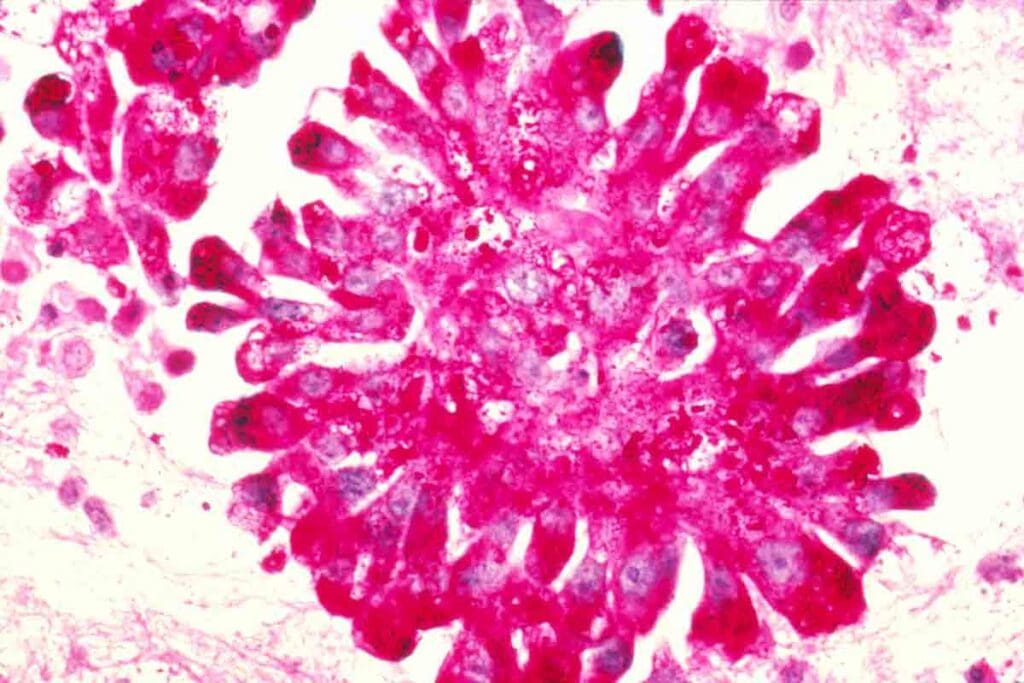
Ewing sarcoma is a rare and aggressive cancer. It mainly affects bones and soft tissues. It belongs to a group of tumors called the Ewing’s Sarcoma Family of Tumors (ESFT).
Ewing sarcoma starts from a special cell in bone marrow. This is key to understanding the disease. The exact cause is not known, but it’s thought to be due to genetic changes.
What is Ewing Sarcoma and How Does It Develop?
Ewing sarcoma grows quickly and can spread. It happens when normal cells change into cancer cells. This change is caused by genetic changes.
The disease can happen in any bone or soft tissue. It often affects long bones and the pelvis. Symptoms include pain, swelling, and a mass that can be felt.
Demographics and Risk Factors
Ewing sarcoma is most common in kids and young adults. Most cases are in people under 20. It’s more common in White people than Black people.
The ewing sarcoma prognosis depends on age. Kids and teens have a better chance of survival than adults. Knowing this helps with early detection and treatment.
Many things affect the ewing’s sarcoma prognosis. These include the disease’s stage, where and how big the tumor is, and the patient’s health. Early treatment is key to better survival chances.
Fact 1: Ewing Sarcoma Death Rates Vary by Patient Population

Ewing sarcoma’s death rates change based on who gets it. This shows how complex the disease is. It also points to the importance of treatments that fit each patient’s needs.
Current Mortality Statistics in the United States
In the U.S., Ewing sarcoma death rates have improved, mainly for younger people. Kids under 15 now have a 5-year survival rate of 80% to 85%. Teens aged 15 to 19 see their survival rate jump from 20% to 69%.
Global Mortality Trends and Disparities
Worldwide, Ewing sarcoma death rates show big differences. Survival rates for patients vary greatly by region and country. These differences are due to healthcare access, treatment options, and economic status.
| Region | 5-Year Survival Rate (%) | Main Contributing Factors |
| North America | 70-85 | Advanced healthcare, multimodal treatment |
| Europe | 65-80 | Access to modern treatment protocols |
| Developing Countries | 40-60 | Limited access to healthcare, delayed diagnosis |
The table shows big survival rate gaps for Ewing sarcoma patients worldwide. These gaps stress the need for global cancer research efforts. They also underline the importance of standardizing treatments.
Fact 2: Age Significantly Impacts Ewing Cancer Survival Rate
Ewing sarcoma survival rates vary a lot among different age groups. The age at diagnosis is key in determining survival chances.
Pediatric and Adolescent Survival Rates
Children and teens with localized Ewing sarcoma have a good chance of survival. Their 5-year relative survival rate is 81%. This high rate is thanks to effective treatments for the young.
Adult Survival Outcomes
Adults with Ewing sarcoma, on the other hand, face a much lower survival rate. Their 5-year relative survival rate is between 37% and 49%. This shows the need for better treatments for adults.
There are many reasons for the survival rate gap between the young and old. These include differences in tumor biology, treatment tolerance, and comorbidities in adults.
Fact 3: Disease Stage Determines Survival Probability
The stage of the disease is key in figuring out how long someone with Ewing sarcoma might live. How far the disease has spread at the start affects treatment choices and the patient’s chances of survival.
Localized Ewing Sarcoma Survival Rates
People with localized Ewing sarcoma have a 81% chance of living for 5 years after diagnosis. This is because the cancer is only in one place and hasn’t spread. Treatment usually includes chemotherapy, surgery, and radiation.
The National Cancer Institute says, “Ewing sarcoma treatment often combines chemotherapy, surgery, and radiation therapy.”
Regional Disease Outcomes
For Ewing sarcoma that has spread to nearby areas or lymph nodes, the survival rate is 77%. This is a bit lower than for cancer that’s only in one place. But it’s better than for more advanced stages.
Stage 4 Ewing’s Sarcoma Survival Rate
Stage 4 Ewing’s sarcoma, where cancer has spread far away, has a 41% 5-year survival rate. Sadly, the stage 4 Ewing’s sarcoma survival rate is much lower, sometimes under 20%.
| Disease Stage | 5-Year Relative Survival Rate |
| Localized | 81% |
| Regional | 77% |
| Distant (Stage 4) | 41% |
Early detection and aggressive treatment are critical for advanced disease. Knowing the survival rate of stage 4 Ewing sarcoma and other stages helps patients and families make better care choices.
“The prognosis for Ewing sarcoma patients largely depends on the stage of the disease when it is diagnosed, as well as other factors such as age, tumor size, and treatment response.”
Fact 4: Multiple Factors Influence Ewing Sarcoma Prognosis
The Ewing Sarcoma prognosis is complex, with many factors affecting patient outcomes. It’s important for patients and doctors to understand these factors. This helps in dealing with the disease’s challenges.
Tumor Size, Location, and Biology
The tumor’s characteristics are key in predicting prognosis. Tumor size matters a lot, with bigger tumors often leading to a worse outcome. Where the tumor is also plays a role, with pelvic or spine tumors facing tougher challenges than others.
Genetic makeup of the tumor also impacts prognosis. Some genetic traits can change a patient’s risk level. This affects treatment choices and survival hopes.
Treatment Response as a Prognostic Indicator
How well a patient responds to treatment is a big factor in Ewing Sarcoma prognosis. Those who fully respond to chemotherapy and local treatments tend to do better. This is compared to those with remaining disease.
Doctors use many tools to check treatment response. These include imaging and looking at tumor samples under a microscope. How much the tumor shrinks after chemotherapy is a key indicator of how well a patient will do.
| Prognostic Factor | Favorable Prognosis | Poor Prognosis |
| Tumor Size | <8 cm | >8 cm |
| Tumor Location | Peripheral | Pelvis or Spine |
| Treatment Response | Complete Response | Partial or No Response |
Knowing these factors helps doctors create better treatment plans. It also gives patients and their families a clearer idea of what to expect.
Fact 5: Treatment Advances Have Improved Survival Chances
Ewing sarcoma survival rates have seen a big jump thanks to new treatments. Getting a quick diagnosis and the right treatment plan are key. New strategies in treatment have greatly helped patients.
Evolution of Multimodal Therapy Approaches
Treatment for Ewing sarcoma now includes surgery, radiation, and chemotherapy. This mix of treatments has greatly boosted survival chances.
- Combination Therapy: Mixing treatments attacks cancer from all sides, leading to better results.
- Personalized Medicine: Tailoring treatment to each patient’s needs is now more important than ever.
Impact of Surgical Techniques and Radiation Advances
New surgical and radiation methods have also helped a lot. Better surgery lets doctors remove tumors more accurately. New radiation therapy is more precise and causes fewer side effects.
Key Developments:
- Less invasive surgeries mean faster recovery and better results.
- Intensity-modulated radiation therapy (IMRT) targets tumors more accurately.
Chemotherapy Intensification and Survival Gains
Chemotherapy is a big part of Ewing sarcoma treatment. Making chemotherapy stronger has led to better survival rates, mainly for those with early-stage disease.
Using high-dose chemotherapy and stem cell rescue is showing promise. It offers hope for those with tough or resistant disease.
Survival gains from these advances highlight the need for ongoing research and investment in Ewing sarcoma treatment.
Fact 6: Metastatic Disease Remains the Greatest Challenge
Metastatic Ewing sarcoma is a big problem in cancer treatment. It greatly affects how well patients do. When cancer spreads, it makes treatment harder and lowers survival chances.
Current Approaches for Metastatic Ewing Sarcoma
Patients with metastatic Ewing sarcoma have a tough road ahead. Their treatment plan includes many steps. This includes strong chemotherapy, radiation, and sometimes surgery.
The 5-year survival rate for those with distant metastasis is 41%. This is much lower than for those with cancer that hasn’t spread. For stage 4 Ewing sarcoma, the survival rate is below 20%. This shows we need better ways to treat it.
Emerging Strategies for Improving Metastatic Outcomes
Researchers are looking into new ways to help patients with metastatic Ewing sarcoma. They are exploring:
- Targeted therapies that focus on specific genetic changes
- Immunotherapy, like CAR-T cell therapy
- High-dose chemotherapy with stem cell rescue
- New combinations of chemotherapy drugs
These new methods might improve survival rates and quality of life for these patients. It’s important to keep testing these approaches in clinical trials.
Fact 7: Long-term Survival and Recurrence Patterns
It’s key to know about long-term survival rates for Ewing sarcoma patients. They need long-term follow-up because of the chance of late recurrence and second cancers.
Ewing’s Sarcoma 10-Year Survival Rate
The 10-year survival rate for Ewing sarcoma patients depends on several things. These include the disease’s stage at diagnosis and the patient’s age.
Recent studies show that the 10-year survival rate for patients with localized Ewing sarcoma can be 60-70%. But, for those with metastatic disease, the survival rates are much lower, often under 20%.
Late Recurrence and Second Malignancies
Late recurrence is a big worry for Ewing sarcoma survivors. Even after successful treatment, recurrences can happen. So, long-term monitoring is very important.
The risk factors for late recurrence include:
- Incomplete initial treatment response
- Presence of metastatic disease at diagnosis
- Large tumor size
Also, survivors of Ewing sarcoma face a higher risk of second cancers. This is because their initial treatment was very intense, including chemotherapy and radiation.
To wrap it up, long-term survival and recurrence patterns in Ewing sarcoma depend on many factors. These include the disease stage, patient age, and how well the treatment worked.
Conclusion: Navigating Ewing Sarcoma Diagnosis and Treatment
Understanding Ewing Sarcoma is key when you get a diagnosis. Knowing the disease and treatment options is important. Quick diagnosis and the right treatment can help patients live longer.
The prognosis for Ewing Sarcoma depends on several things. These include the patient’s age, how far the disease has spread, and how well they respond to treatment. Doctors need to know these details to create the best treatment plan.
New treatments like surgery, radiation, and stronger chemotherapy have helped more people survive. But, dealing with cancer that has spread is a big challenge. More research is needed to find new ways to fight it.
It’s important for patients and doctors to work together. They should use the latest research and treatments to help those with Ewing Sarcoma. This way, they can improve survival chances for this rare and aggressive cancer.
FAQ
What is the survival rate for Ewing sarcoma?
The survival rate for Ewing sarcoma depends on the stage and age of the patient. For kids and teens with localized disease, the 5-year survival rate is about 81%. For adults, it’s between 37-49%. Stage 4 Ewing’s sarcoma has a 5-year survival rate under 20%.
How does age impact Ewing sarcoma survival rates?
Age greatly affects Ewing sarcoma survival rates. Kids and teens do better than adults. The 5-year survival rate for localized disease is 81% for the young. For adults, it’s lower, between 37-49%.
What are the current mortality statistics for Ewing sarcoma in the United States?
Ewing sarcoma death rates vary in the United States. The disease is more common in certain ethnicities and age groups.
How does the stage of Ewing sarcoma at diagnosis affect survival probabilities?
The stage at diagnosis greatly affects survival chances. Patients with localized disease have better survival rates. Those with regional or stage 4 disease face tougher challenges.
What factors influence the prognosis of Ewing sarcoma?
Several factors affect Ewing sarcoma prognosis. These include tumor size, location, and biology, as well as treatment response. These factors can influence survival and recurrence likelihood.
How have advancements in treatment impacted Ewing sarcoma survival rates?
Treatment advancements have improved Ewing sarcoma survival rates. These include better multimodal therapy, surgical and radiation techniques, and chemotherapy intensification.
What are the challenges posed by metastatic Ewing sarcoma?
Metastatic Ewing sarcoma is the biggest challenge. Current treatments show limited success. New strategies are being explored to improve outcomes for metastatic patients.
What are the long-term survival rates and recurrence patterns for Ewing sarcoma?
The 10-year survival rate for Ewing sarcoma varies. Patients are at risk of late recurrence and second malignancies. Long-term follow-up is key to monitor these risks.
What is the survival rate for stage 4 Ewing’s sarcoma?
The 5-year survival rate for stage 4 Ewing’s sarcoma is under 20%.
How does Ewing sarcoma affect different age groups and ethnicities?
Ewing sarcoma affects different age groups and ethnicities. Some populations are more susceptible to the disease.
References
- Dehghani, N., et al. (2018). The Survival and Incidence Rate of Ewing Sarcoma: A Population-Based Study. Journal of Bone Oncology, 13, 1-7. Retrieved from https://www.ncbi.nlm.nih.gov/pmc/articles/PMC7358229/