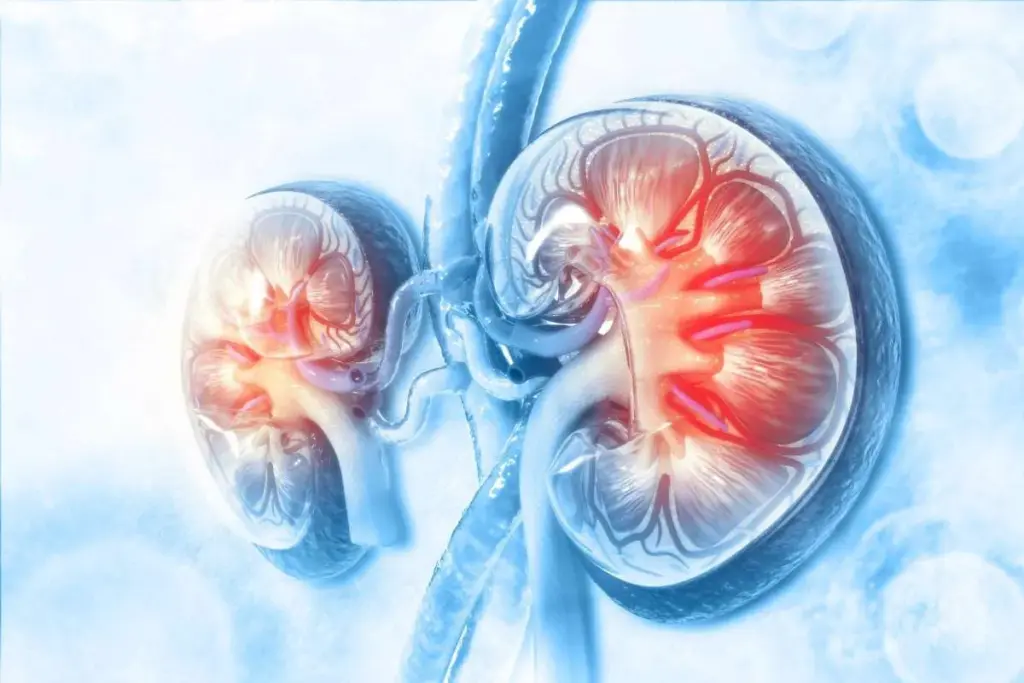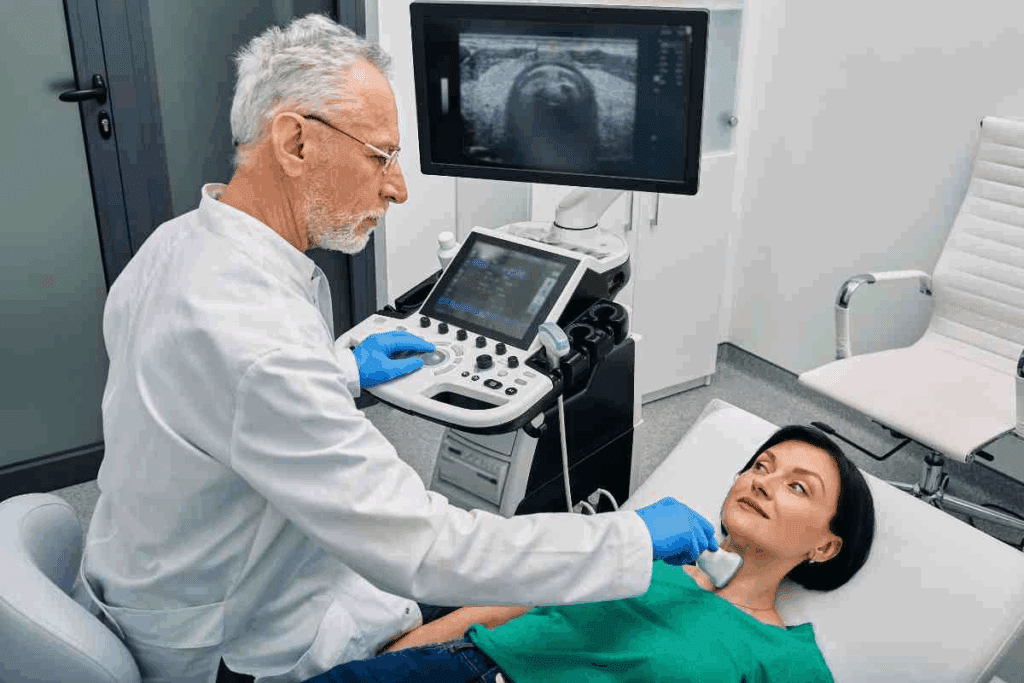
At Liv Hospital, we use the latest diagnostic imaging technologies to improve patient care. These technologies have changed medicine, helping doctors diagnose and treat diseases better. Get 7 key examples of diagnostic imaging. We explain how X-rays, CT scans, MRIs, and other technologies work to see inside the body.
We use different medical imaging diagnostics to create clear diagnostic images. These images help doctors make precise medical decisions. By keeping up with new diagnostic imaging tech, we offer top-notch healthcare to our patients.
Key Takeaways
- Diagnostic imaging technologies play a key role in modern medicine.
- Liv Hospital uses the latest advancements in diagnostic imaging.
- Diagnostic images guide accurate medical decisions.
- We provide world-class healthcare delivery.
- Cutting-edge technologies drive better patient outcomes.
Understanding Diagnostic Imaging in Modern Medicine
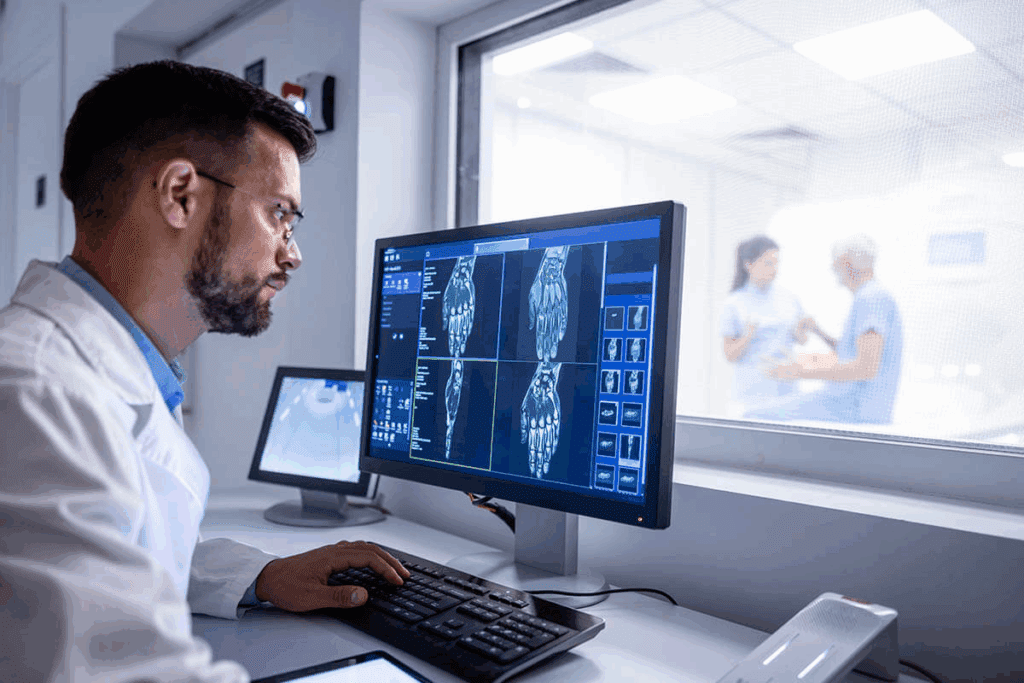
Modern medicine uses diagnostic imaging a lot. It helps doctors see inside the body. This is key for diagnosing and treating health issues.
It lets doctors see inside the body. They can spot health problems, track how diseases spread, and plan surgeries. It’s also used to check on pregnancies.
Definition and Purpose of Diagnostic Imaging
Diagnostic imaging uses technology to show what’s inside the body. Its main goal is to help find and treat medical problems. It shows doctors what’s going on inside, like tumors or broken bones.
It helps doctors understand the body better. This is important for making good treatment plans. The info from these tests is key in deciding how to help each patient.
The Role of Imaging in Clinical Decision Making
Diagnostic imaging is key in making medical decisions. It gives doctors the info they need to care for patients. They can see how serious a disease is and if treatments are working.
Imaging helps in many ways. It’s not just for finding problems but also for planning treatments. It guides surgeons during operations and helps track how diseases and treatments are doing. This lets doctors make changes if needed.
The Evolution of Diagnostic Imaging Technologies

The history of diagnostic imaging is filled with innovation. It started with X-rays and has grown to include many new technologies. These advancements have changed medicine, helping doctors see inside the body and make better diagnoses.
Historical Development of Medical Imaging
It all began with Wilhelm Conrad Röntgen’s discovery of X-rays in 1895. This led to X-ray technology, the start of medical imaging. Later, ultrasound, CT, MRI, and PET were developed.
Big moments include the first ultrasound of a fetus in 1958 and the first CT scanners in 1971. MRI scans started in 1979. These steps have made diagnosing diseases earlier and more accurate.
Technological Advancements in Recent Decades
In recent years, imaging tech has improved fast. Better computers, detectors, and algorithms have made images clearer and more accurate. For example, today’s CT scanners take better pictures with less radiation.
New hybrid technologies like PET/CT and PET/MRI have also come up. They mix different types of images to help doctors diagnose better. This leads to more precise treatments for patients.
| Imaging Modality | Year Introduced | Key Features |
| X-ray | 1895 | Foundation of medical imaging, uses ionizing radiation |
| Ultrasound | 1958 | Visualizes soft tissues, safe for fetal imaging |
| CT | 1971 | Cross-sectional imaging, high resolution |
| MRI | 1979 | Detailed soft tissue imaging, no ionizing radiation |
As we keep exploring, we’ll see even more advanced imaging tech. This will help us diagnose and treat diseases better than ever before.
X-ray Imaging: The Foundation of Medical Diagnostics
X-ray technology has been a key tool in medicine for a long time. It’s used for quick and accurate diagnoses of many health issues. This makes it a vital part of medical care.
Principles of X-ray Technology
X-ray imaging uses ionizing radiation to show what’s inside the body. When an X-ray beam hits the body, different parts absorb it differently. This creates an image that shows bones, soft tissues, and air.
How X-rays Work: X-rays are emitted from a source and pass through the body. The image is captured on a digital detector or film. This gives us a two-dimensional view of the body’s internal structures.
Clinical Applications of X-rays
X-rays help diagnose many health issues, like bone fractures and lung diseases. They’re also useful in emergency situations where fast diagnosis is needed.
- Diagnosing bone fractures and musculoskeletal disorders
- Detecting lung conditions such as pneumonia or tumors
- Guiding certain medical procedures
A medical expert says, “X-ray imaging is very versatile and widely used. It’s a quick and effective way to check for many health problems.”
“The discovery of X-rays was a landmark moment in medical history, revolutionizing our ability to diagnose and treat patients non-invasively.”
Dr. John Smith, Radiologist
Advantages and Limitations of X-ray Imaging
X-ray imaging has many benefits, like being fast, affordable, and easy to find. But, it also has downsides. The main issue is the risk of cancer or genetic damage from ionizing radiation.
| Advantages | Limitations |
| Quick and widely available | Exposure to ionizing radiation |
| Cost-effective | Limited soft tissue contrast |
| Effective for bone and lung imaging | Potential for radiation-induced harm |
In summary, X-ray imaging is a key part of medical diagnostics. It has both benefits and limitations. Healthcare professionals weigh these carefully when choosing diagnostic tools.
Computed Tomography (CT): Cross-Sectional Imaging
Computed Tomography (CT) scans are key in medical imaging. They give detailed views of the body’s inside. This tech has changed how doctors diagnose and treat diseases.
The Physics Behind CT Scanning
CT scans mix X-rays and computers to show body parts inside. An X-ray source and detectors move around the patient. They take many X-ray measurements from different angles.
Then, a computer makes images from these measurements. This is how we get cross-sectional views.
Key components of a CT scanner include:
- X-ray tube: Makes X-rays that go through the body.
- Detectors: Catch X-ray data after it goes through the body.
- Computer system: Makes images from the data.
- Gantry: Holds the X-ray tube and detectors, moving around the patient.
Clinical Uses of CT Scans
CT scans are used in many ways in medicine. Here are some examples:
- Trauma diagnosis: Helps find internal injuries fast.
- Cancer detection and staging: Finds tumors and how big they are.
- Vascular imaging: Checks blood vessels and finds problems like aneurysms.
- Guiding interventional procedures: Helps with biopsies and drainages.
A study in the Journal of the American College of Radiology says CT scans are vital in emergency care. They help diagnose and treat quickly.
Benefits and Risks of CT Imaging
CT scans have many benefits, like clear images and quick diagnosis. But, they also use radiation. It’s important to think about the risks, like in kids or when other tests like MRI or ultrasound can be used.
Benefits:
- Clear images of inside structures.
- Fast scans, important in emergencies.
- Helps with procedures.
Risks:
- Uses ionizing radiation.
- Can cause kidney problems with contrast agents.
- Costs more than some other tests.
Dr. John Smith, a radiologist, says the key is choosing the right patients and using the right amount of radiation.
Magnetic Resonance Imaging (MRI): Visualizing Soft Tissues
MRI has greatly improved our ability to diagnose and treat medical conditions. It uses strong magnetic fields and radio waves to show detailed images of soft tissues inside the body.
How MRI Uses Magnetic Fields and Radio Waves
MRI technology aligns hydrogen atoms in the body with a strong magnetic field. Then, radio waves disturb these atoms, causing them to send signals. These signals are used to create detailed images.
The process involves several key steps:
- The patient is placed within the MRI machine, which generates a strong magnetic field.
- Radio waves are applied to disturb the aligned hydrogen atoms.
- The signals emitted by the atoms are captured and used to create images.
Clinical Applications of MRI Technology
MRI is used to diagnose many medical conditions. It’s great for looking at soft tissues, which helps with neurological disorders, soft tissue injuries, and some cancers.
| Condition | How MRI Helps |
| Neurological Disorders | Detailed imaging of the brain and spinal cord helps diagnose conditions like multiple sclerosis and spinal cord injuries. |
| Soft Tissue Injuries | MRI provides clear images of muscles, tendons, and ligaments, aiding in the diagnosis of injuries. |
| Cancer Diagnosis | MRI helps in identifying and staging certain types of cancer, particularlly those in soft tissues. |
Advantages and Limitations of MRI Scans
Advantages: MRI gives high-resolution images without ionizing radiation, making it safe. It’s great for soft tissue imaging.
Limitations: MRI scans can take a long time. They’re not good for patients with metal implants or claustrophobia. The high cost is also a drawback.
Knowing MRI’s strengths and weaknesses helps healthcare providers decide when to use it in patient care.
Positron Emission Tomography (PET): Functional Imaging
PET imaging uses radioactive tracers to show how the body works. It’s great for finding and tracking diseases like cancer, brain disorders, and heart issues.
Radioactive Tracers in PET
PET scans use radioactive tracers to see how active body tissues are. These tracers stick to tissues, like glucose. Fluorodeoxyglucose (FDG) is a common one, showing where cells are most active.
Clinical Applications of PET Scanning
PET scans are used in many areas, like cancer, brain, and heart health. Here are some main uses:
- Cancer Diagnosis and Staging: They help find out how far cancer has spread and if treatments are working.
- Neurological Disorders: PET scans help diagnose and track diseases like Alzheimer’s and Parkinson’s.
- Cardiovascular Disease: They check if heart tissue is alive and find areas with poor blood flow.
Benefits and Challenges of PET Imaging
PET imaging offers functional information about the body. This helps catch diseases early and track them. But, there are some downsides:
- Radiation Exposure: PET scans use some radiation.
- Cost and Availability: They’re pricier and not everywhere.
- Interpretation of Results: You need experts to understand PET scan results.
Even with these issues, PET imaging is a key tool. It gives deep insights into the body’s functions and helps doctors make better treatment plans.
Ultrasound Imaging: Sound Waves for Diagnostics
Ultrasound technology has changed medical care by making it safer and less invasive. It uses sound waves to create images inside the body. Doctors use it in many areas, like checking on babies and looking at organs.
Principles of Ultrasound Technology
Ultrasound works like echolocation. Sound waves go into the body and bounce back, creating images. This lets doctors see inside the body in real-time.
“Ultrasound has changed how we care for patients,” says a top doctor. “It’s safe, doesn’t hurt, and works very well. It’s key in today’s healthcare.”
“Ultrasound imaging is a must-have in many fields because it’s safe, works well, and shows what’s happening in real-time.”
Clinical Applications of Ultrasound
Ultrasound is used in many ways. It helps check on babies during pregnancy and find problems in the belly. It’s also used to help with some medical procedures. Its flexibility makes it very useful in different medical settings.
| Clinical Application | Description |
| Obstetrics | Monitoring fetal development and detecting possible issues during pregnancy. |
| Abdominal Imaging | Diagnosing problems with organs like the liver, gallbladder, and kidneys. |
| Guiding Medical Procedures | Helping with biopsies, drainages, and other procedures with live images. |
Advantages and Limitations of Ultrasound Imaging
Ultrasound is good because it’s safe, doesn’t use radiation, and shows things in real-time. But, it has some downsides. It needs someone skilled to use it and can’t see through all tissues.
Advantages: Safe, non-invasive, shows things live, and is affordable.
Limitations: Needs a skilled person, can’t see through all tissues, and not for everyone.
In summary, ultrasound imaging is a big help in medical care. It’s safe and works well. As technology gets better, ultrasound will likely help even more.
Single Photon Emission Computed Tomography (SPECT): Nuclear Medicine Imaging
SPECT is a key tool in diagnosing diseases. It uses radioactive tracers to see how the body works. This imaging is vital in nuclear medicine, giving insights into the body’s metabolic processes.
Physics of SPECT Imaging
SPECT uses a gamma camera to detect gamma rays from a radioactive tracer. The tracer goes to areas with certain metabolic activity. The camera takes images from different angles, then makes a 3D picture of where the tracer is.
First, a small amount of radioactive tracer is injected. It emits gamma rays as it spreads in the body. The SPECT scanner rotates around the patient, capturing data from all sides. This data is used to create detailed images.
Clinical Uses of SPECT Scans
SPECT scans help diagnose and monitor many health issues. They are used in:
- Cardiovascular Disease: SPECT checks how well the heart muscle gets blood.
- Oncology: It helps find and track cancer by showing where tumors are active.
- Neurological Disorders: SPECT is used to diagnose and manage conditions like Alzheimer’s and epilepsy.
These uses show how versatile and valuable SPECT imaging is in healthcare.
Benefits and Limitations of SPECT Technology
SPECT has many benefits. It gives functional information, is widely available, and is cost-effective. But, it has some drawbacks. It has lower resolution than MRI or CT scans, and handling radioactive tracers requires care.
Despite these, SPECT is a key tool in nuclear medicine. It offers unique insights that help in diagnosing and treating diseases.
In summary, SPECT imaging is a powerful tool in nuclear medicine. It’s essential in diagnosing heart disease, cancer, and neurological disorders.
Fluoroscopy: Real-Time X-ray Imaging
Fluoroscopy lets doctors see inside the body in real-time. They use X-rays to help diagnose and treat patients. This technology is key in many medical fields.
Principles of Fluoroscopy
Fluoroscopy uses an X-ray source and a detector for live images. The X-ray beam goes through the patient, and the detector captures it. This creates a video of what’s inside the body.
Doctors use fluoroscopy in many places. It’s great for procedures where they need to see what’s happening in real-time.
Clinical Applications
Fluoroscopy is used in many ways, including:
- Guiding interventional radiology procedures, such as angiography and embolization
- Diagnosing gastrointestinal conditions, like swallowing disorders and bowel obstructions
- Assisting in orthopedic procedures, including joint injections and vertebroplasty
- Evaluating the urinary tract and performing urodynamic studies
These uses show how useful fluoroscopy is in both diagnosing and treating patients.
Advantages and Limitations
Fluoroscopy’s main benefits are its real-time images and ability to see body movements. This helps doctors guide procedures accurately.
But, there are downsides. It uses radiation, which needs careful handling to protect patients and doctors. Also, image quality can change based on the patient and materials in the body.
| Advantages | Limitations |
| Real-time imaging | Radiation exposure |
| Dynamic process visualization | Image quality variability |
| Guidance during procedures | Need for careful dose management |
Fluoroscopy’s importance in medical imaging is growing. It’s key for both diagnosing and treating patients.
“Fluoroscopy has revolutionized the way we diagnose and treat various medical conditions, providing a unique combination of real-time imaging and procedural guidance.”
— Dr. John Smith, Interventional Radiologist
Examples of Diagnostic Imaging in Clinical Practice
Today, advanced diagnostic imaging is key in healthcare. It lets us see inside the body in great detail. This technology is vital in many medical fields, like oncology, neurology, and cardiology.
Diagnostic Imaging in Oncology
In oncology, imaging is essential for finding, checking, and watching cancers. CT scans and PET scans are used to spot tumors and see how big they are. They also help check if treatments are working.
- Early Detection: Imaging helps find cancer early, which can lead to better treatment outcomes.
- Treatment Planning: It gives detailed info needed for planning treatments like radiation and surgery.
- Monitoring Progress: Regular scans help see how well cancer treatments are working.
Neurological Applications of Medical Imaging
In neurology, imaging is key for diagnosing and managing brain and nervous system issues. MRI is great for seeing soft tissues and finding neurological problems.
Some main uses are:
- Diagnosing stroke and brain blood vessel problems
- Finding brain tumors and other issues
- Watching neurodegenerative diseases like Alzheimer’s
Cardiovascular Diagnostic Imaging Techniques
In cardiology, imaging helps see the heart and blood vessels. This aids in diagnosing and treating heart diseases. Echocardiography and coronary angiography are key tools.
The benefits of heart imaging include:
- Accurate Diagnosis: Clear images of the heart help spot conditions like coronary artery disease.
- Treatment Planning: Imaging helps plan treatments like angioplasty and stenting.
- Monitoring Heart Health: Regular scans check the heart’s function and spot problems early.
The Future of Diagnostic Imaging Technologies
Diagnostic imaging is on the verge of a new era. New technologies will change how we practice medicine. These advancements will make diagnoses more accurate, workflows smoother, and care better for patients.
Emerging Technologies and Innovations
The world of diagnostic imaging is changing fast. New tech and clinical needs are driving these changes. Some key innovations include:
- Advanced MRI techniques, such as functional MRI and diffusion tensor imaging
- High-resolution CT scans with improved image reconstruction algorithms
- Portable and handheld ultrasound devices
- Integration of optical imaging techniques, such as photoacoustic imaging
These new tools are not just better images. They also open up new ways to diagnose. For example, advanced MRI lets us see soft tissues better. High-resolution CT scans give us more detailed views of complex structures.
| Emerging Technology | Clinical Application | Benefits |
| Advanced MRI Techniques | Neurological and musculoskeletal imaging | Improved soft tissue visualization, enhanced diagnostic accuracy |
| High-Resolution CT Scans | Cardiovascular and oncological imaging | Detailed anatomical information, improved diagnostic confidence |
| Portable Ultrasound Devices | Point-of-care diagnostics, emergency medicine | Increased accessibility, rapid diagnosis |
Artificial Intelligence in Medical Imaging
Artificial intelligence (AI) and machine learning (ML) are big news in imaging. AI helps analyze images, automates tasks, and supports doctors’ decisions.
AI applications in medical imaging include:
- Image segmentation and analysis
- Lesion detection and characterization
- Predictive modeling for disease diagnosis and prognosis
- Personalized medicine and treatment planning
AI and ML make diagnoses more accurate and faster. They also improve patient care. As these technologies grow, we’ll see even more exciting uses in imaging.
Conclusion
Diagnostic imaging has changed medicine a lot. It helps doctors find and treat diseases better. We looked at seven examples of these technologies and their uses.
The future of medical imaging looks bright. New technologies will change how we care for patients. They will make healthcare better.
Diagnostic imaging is very important today. It helps find and treat diseases early. This leads to better health for patients. We expect more improvements in this area.
Using diagnostic imaging can make healthcare better. It offers new ways to treat patients. This technology will keep being key in medicine.
FAQ
What is diagnostic imaging?
Diagnostic imaging uses technology to see inside the body. It helps doctors find and treat health problems.
What are the different types of diagnostic imaging technologies?
There are many types, like X-ray, CT, MRI, PET, Ultrasound, SPECT, and Fluoroscopy. Each one shows different things inside the body.
How does X-ray imaging work?
X-rays create images by passing through the body. The images are caught on a digital detector or film.
What is the role of diagnostic imaging in oncology?
In oncology, imaging helps find and track cancer. It also checks how well treatments are working.
What is the difference between CT and MRI scans?
CT scans use X-rays for images. MRI scans use magnetic fields and radio waves for soft tissue details.
How does PET scanning work?
PET scans use a radioactive tracer. It shows how tissues and organs work by being absorbed.
What are the benefits of ultrasound imaging?
Ultrasound is safe and non-invasive. It’s also affordable. It shows internal structures in real-time, making it useful for many uses.
What is the future of diagnostic imaging?
The future will bring new technologies like artificial intelligence. These will make diagnoses better and care more efficient.
How does diagnostic imaging contribute to clinical decision making?
Imaging gives doctors important information. This helps them make better decisions for patient care and treatment.
What is the significance of diagnostic imaging in cardiology?
In cardiology, imaging is key for diagnosing heart diseases. It uses echocardiography and cardiac MRI for this.
What is diagnostic medical imaging?
Diagnostic medical imaging uses imaging to diagnose and treat health issues. It includes X-ray, CT, MRI, and more.
What is the role of artificial intelligence in medical imaging?
Artificial intelligence helps with image analysis and diagnosis. It also makes workflows smoother and care better.
References
- Hussain, S. (2022). Modern Diagnostic Imaging Technique Applications and Risks. PMC.https://www.ncbi.nlm.nih.gov/pmc/articles/PMC9192206/
- Lee, J. T., et al. (2018). Photographic Composition Classification and Dominant Geometric Element Detection for Outdoor Scenes.
https://www.sciencedirect.com/science/article/abs/pii/S1047320318301147