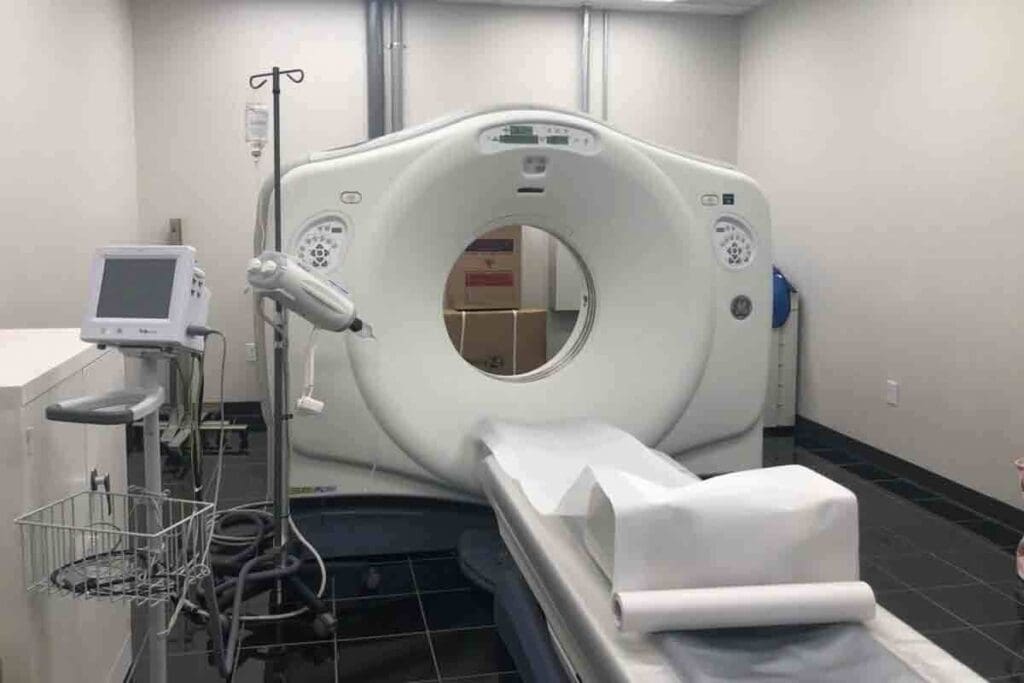
We use 18F-FDG (Fluorodeoxyglucose), a special sugar that lights up on scans, in PET imaging. It shows how active tissues are. This is great for finding cancer and seeing how treatments work.
18F-FDG goes to places that are very active, like tumors or inflamed areas. This lets doctors spot diseases early. So, PET imaging with 18F-FDG is key for diagnosing and planning cancer treatments.
Key Takeaways
- PET imaging with 18F-FDG helps detect cancer and monitor treatment response.
- 18F-FDG accumulates in areas with high metabolic activity.
- This technology enables early disease detection and treatment planning.
- 18F-FDG is a glucose analog radiotracer used in PET imaging.
- PET scans using 18F-FDG are useful for identifying changes at the cellular level.
Understanding F Fluorodeoxyglucose: Basic Principles and Structure

To understand 18F-FDG in PET imaging, we need to know its basics and structure. 18F-FDG, or Fluorodeoxyglucose, is a glucose-like compound key in nuclear medicine.
We’ll look at 18F-FDG’s chemical makeup and how it’s made. Knowing this helps us see how it works in imaging.
Chemical Composition of 18F-FDG
The formula for 18F-FDG is C6H11FO5. It’s glucose with F fluorine instead of a hydroxyl group on the second carbon. This change lets 18F-FDG act like glucose but can’t be broken down further. This makes it perfect for PET scans.
Chemical Structure: 18F-FDG looks like glucose but has F on the second carbon. This lets it get trapped in cells, like cancer ones, because they take up a lot of glucose.
| Chemical Property | Description |
| Chemical Formula | C6H11FO5 |
| Molecular Weight | 181.15 g/mol |
| Radioactive Label | F (Fluorine-18) |
Production and Synthesis Methods
18F-FDG is made through a reaction with F, created in a cyclotron. The steps include making F-fluoride and adding it to glucose. For more on making 18F-FDG, see NCBI’s guide.
Making 18F-FDG is complex and needs careful control to get a good product. After making it, it’s purified and ready for patients in PET scans.
Knowing how 18F-FDG is made and what it’s made of is key to understanding its use in PET scans. Its special properties make it a vital tool for diagnosing and treating diseases, like cancer.
The Science Behind PET Imaging Technology
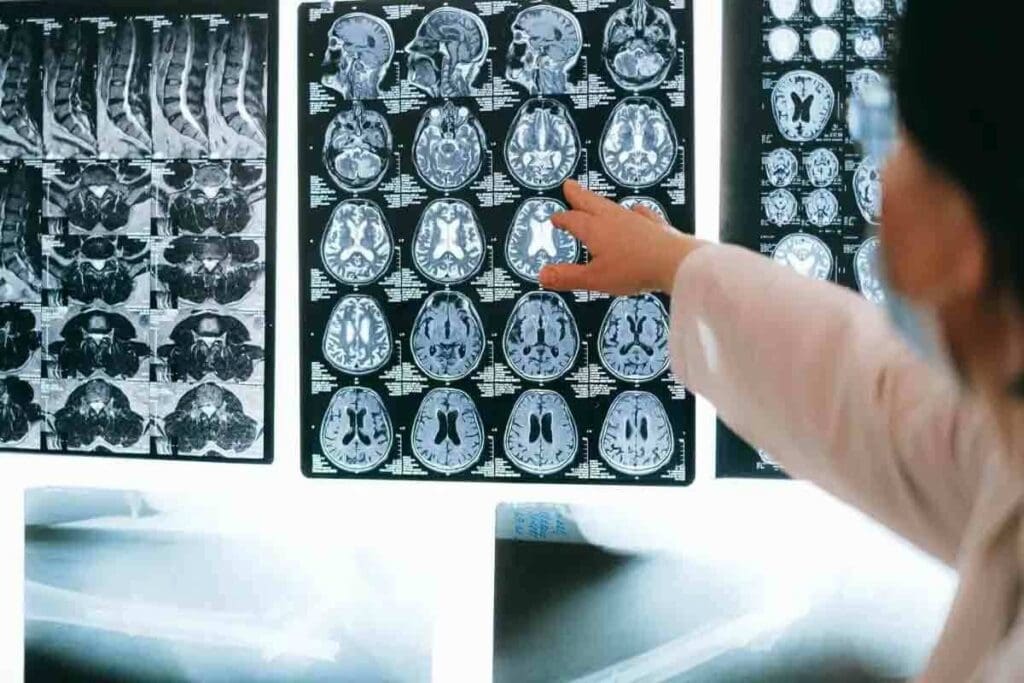
PET imaging uses positron emissions from radiopharmaceuticals like 18F-FDG to detect metabolic activity in the body. This technology helps us see how different tissues and organs work. We’ll look into how PET scanners find these emissions and how they create images.
How PET Scanners Detect Positron Emission
PET scanners find the radiation from positron emissions. When a positron meets an electron, it creates two gamma photons that go in opposite directions. The scanner has detectors around the body that catch these photons.
When two detectors see a photon at the same time, it means an annihilation happened. This helps the scanner build a picture of where the radiopharmaceutical is in the body.
Image Reconstruction Techniques in PET
Reconstructing images in PET means turning coincidence data into pictures. Different algorithms, like filtered backprojection and iterative methods, are used. These improve the images’ quality and detail.
Good images depend on the scanner’s sensitivity, how much radiopharmaceutical is used, and the algorithm. New technologies and methods keep making PET imaging better. It’s now a key tool in diagnosing diseases in oncology, neurology, and cardiology.
Metabolic Mechanism: How 18F-FDG Functions in the Body
The way 18F-FDG works in our bodies is closely tied to how we use glucose. As a glucose analog, it is taken up by cells in the same way glucose is. This makes it a great tool for studying glucose use.
Glucose Metabolism and FDG Uptake
Cancer cells, which use a lot of glucose, take up 18F-FDG more than normal cells do. Inside the cell, 18F-FDG gets turned into 18F-FDG-6-phosphate by hexokinase. Unlike glucose, this compound can’t be broken down further. It stays trapped in the cell, helping us see how glucose is being used.
Glucose metabolism is key to how cells work. 18F-FDG uptake is a way to measure this. It’s useful for finding and tracking diseases, like cancer.
The Warburg Effect in Cancer Cells
Cancer cells use a lot of glucose, even when there’s plenty of oxygen around. This is called the Warburg effect. It’s a sign of cancer and helps us spot it with 18F-FDG PET scans.
The Warburg effect is not just for finding cancer. It’s also a clue for new treatments. Knowing how cancer cells change their metabolism helps us find better ways to fight them. 18F-FDG PET scans have changed how we diagnose and treat cancer.
Learning about 18F-FDG’s role in glucose use and the Warburg effect helps us fight cancer better. Its ability to show how cancer cells work is a big help in treating the disease. It gives doctors important information to make better choices for patients.
Clinical Applications of 18F-FDG in Oncology
The use of 18F-FDG in oncology has changed how we diagnose and monitor cancer. We use 18F-FDG PET/CT scans to find and stage cancer, check how treatments work, and see if cancer comes back. This method is key in managing many types of cancer.
Cancer Detection and Staging
18F-FDG PET/CT is great at finding tumors and where cancer has spread. It shows areas with high glucose use. This helps us understand how far cancer has spread. For example, studies have shown it greatly helps in managing lymphoma and other cancers.
Monitoring Treatment Response
We use 18F-FDG PET/CT to see how treatments are working. By looking at glucose metabolism changes, we know if a tumor is responding. This info helps us adjust treatments for better results.
Recurrence Evaluation
Finding cancer early is key to managing it well. 18F-FDG PET/CT is good at spotting cancer coming back, even when there are no obvious signs. This leads to quicker action and can help patients live longer.
Patient Preparation and PET/CT Procedure
Getting good PET/CT results starts with the right preparation. We help our patients get ready for their scan. This way, they are well-prepared for the PET/CT scan.
Pre-Scan Patient Instructions
Before the scan, patients must fast for a few hours. This helps the fluoro deoxy glucose (FDG) work right. We also tell them to avoid hard exercise and wear clothes without metal.
We also ask for a list of medications and allergies. This helps us make the scan safe and right for them.
FDG Administration and Uptake Period
FDG is given as an injection during the scan. The time between the injection and the scan is key. It lets the F 18 FDG soak into the tissues.
We make sure patients are calm and relaxed during this time. This makes the scan better. Our team watches over them to make sure everything goes well.
By following these steps and working with our team, patients help get the best results from their PET/CT scan.
Neurological and Cardiac Applications of F-18 Fluorodeoxyglucose
F-18 fluorodeoxyglucose is used in more than just cancer treatment. It helps in studying brain disorders and checking heart health. Its uses in neurology and cardiology are growing as research improves.
Brain Disorders Evaluation
F-18 fluorodeoxyglucose PET imaging is key in diagnosing brain diseases. Alzheimer’s disease is a big area where FDG-PET shines. It spots changes in glucose use linked to Alzheimer’s.
- FDG-PET helps spot Alzheimer’s early and tell it apart from other dementias.
- It shows how severe and how fast the disease is getting.
- FDG-PET is also used in studies to check how new treatments affect the brain.
Cardiac Viability Assessment
In heart care, F-18 fluorodeoxyglucose checks if heart muscle can recover. This is key for picking the best treatment for heart disease or failure.
- FDG-PET finds heart muscle that’s alive but not working well, which might get better with treatment.
- It helps doctors choose between surgery or just medicine.
- FDG-PET can also predict how well a patient will do and tailor treatment plans.
Looking at how F-18 fluorodeoxyglucose is used in the brain and heart shows its wide usefulness in medicine.
Limitations and Considerations When Using 18F-FDG
18F-FDG PET/CT is a powerful tool for diagnosis. But, its accuracy can be affected by several factors. It has changed the field of imaging, but we must consider its limitations for effective use.
False Positive and False Negative Results
One big issue with 18F-FDG PET/CT is false positives and negatives. False positives can happen when non-cancerous conditions increase glucose uptake. This leads to unnecessary worry and more tests. False negatives occur when tumors have low glucose or are small, missing diagnoses.
To avoid these problems, we must look at the patient’s history and the tumor’s characteristics. Some cancers may not show up well on PET/CT scans because they don’t take up 18F-FDG.
Radiation Exposure Concerns
Radiation exposure is another key concern with 18F-FDG PET/CT scans. While they are often necessary for cancer diagnosis, we must be mindful of long-term radiation effects. We aim to find a balance between getting accurate diagnoses and keeping radiation doses low.
To reduce radiation, we follow strict dose protocols and use the latest PET/CT technology. We also educate patients to prepare them for scans and reduce the need for repeat tests. This makes the diagnostic process safer and more effective.
By understanding these limitations and taking steps to address them, we can make 18F-FDG PET/CT imaging more effective. This helps us provide accurate diagnoses and effective treatment plans for patients.
Advanced Hybrid Imaging: PET/CT and PET/MRI with FDG
PET/CT and PET/MRI have changed how we diagnose diseases with 18F-FDG. These methods mix different imaging ways. They give doctors more accurate and detailed info for treatment plans.
Technological Integration Benefits
PET with CT or MRI brings many advantages. It leads to better diagnosis and better care for patients. PET/CT shows metabolic info from PET and anatomical details from CT. PET/MRI adds MRI’s top-notch soft-tissue contrast.
PET/CT is great for finding and checking cancer stages. It gives both metabolic and anatomical info. PET/MRI is good for complex structures and soft-tissue tumors.
Clinical Impact of Hybrid Imaging
PET/CT and PET/MRI with FDG have a big impact on care. They help in better diagnosis, treatment planning, and patient results. For example, PET/CT is key for cancer staging and tracking treatment success.
In neurology, PET/MRI helps with brain disorders and neurological diseases. It offers important info on function and anatomy.
In short, PET/CT and PET/MRI with FDG have greatly improved diagnostics. They offer better accuracy and care for patients. As these technologies advance, their role in healthcare will only grow.
Conclusion: The Future of F Fluorodeoxyglucose in Medical Imaging
F fluorodeoxyglucose is key in medical imaging, mainly in PET scans. It has changed how we diagnose diseases in oncology, neurology, and cardiology.
The future of F fluorodeoxyglucose looks bright. Researchers are working hard to make it even better. New hybrid imaging methods like PET/CT and PET/MRI are making FDG scans more powerful.
We think F fluorodeoxyglucose will keep being a big help in finding and treating diseases. It gives doctors important metabolic info. This helps them make better choices for their patients.
As imaging tech gets better, so will the use of fluorodeoxyglucose PET. This could lead to better care for patients and more effective disease management.
FAQ
What is 18F-FDG and how is it used in PET imaging?
18F-FDG, or Fluorodeoxyglucose, is a glucose-like substance used in PET scans. It shows where cells are most active in the body. This is useful for finding cancer cells.
How is 18F-FDG produced and synthesized?
To make 18F-FDG, a cyclotron creates fluorine-18. Then, it’s attached to glucose. This creates 18F-FDG.
What is the role of 18F-FDG in cancer detection?
18F-FDG helps find cancer because cancer cells use more glucose. This makes tumors stand out in PET scans.
How does 18F-FDG PET/CT work?
18F-FDG PET/CT combines PET scans with CT scans. This gives detailed metabolic info and clear images. It helps doctors make better diagnoses.
What are the neurological applications of F-18 fluorodeoxyglucose?
F-18 fluorodeoxyglucose helps diagnose brain disorders like Alzheimer’s and epilepsy. It shows how brain cells use glucose.
What are the limitations of using 18F-FDG in PET imaging?
Using 18F-FDG can lead to false results and concerns about radiation. But, proper preparation and understanding of how it works can reduce these issues.
How does the Warburg effect relate to 18F-FDG uptake in cancer cells?
The Warburg effect shows cancer cells use more glucose. 18F-FDG picks up on this, making it a key tool for finding and tracking cancer.
What patient preparation is required for a PET/CT scan with 18F-FDG?
Patients need to fast, avoid exercise, and stay hydrated before the scan. This ensures accurate results.
Can 18F-FDG PET/CT be used to monitor treatment response in cancer patients?
Yes, it helps see how well cancer treatments are working. It checks for changes in tumor activity.
What are the benefits of advanced hybrid imaging modalities like PET/CT and PET/MRI with FDG?
These advanced imaging methods combine metabolic info with detailed images. This improves diagnosis and helps in making treatment plans.
How is 18F-FDG used in cardiac applications?
It helps check the heart’s health by looking at glucose use. This shows which parts of the heart are working well.
What is the significance of 18F-FDG in medical imaging?
18F-FDG is vital in imaging, mainly for cancer, brain, and heart studies. It gives important metabolic info for diagnosis and treatment.
Reference
Ashraf MA, et al. Fludeoxyglucose (18F). StatPearls, 2023.
https://www.ncbi.nlm.nih.gov/books/NBK557653
Comprehensive overview of FDG’s chemical properties and PET imaging principle.