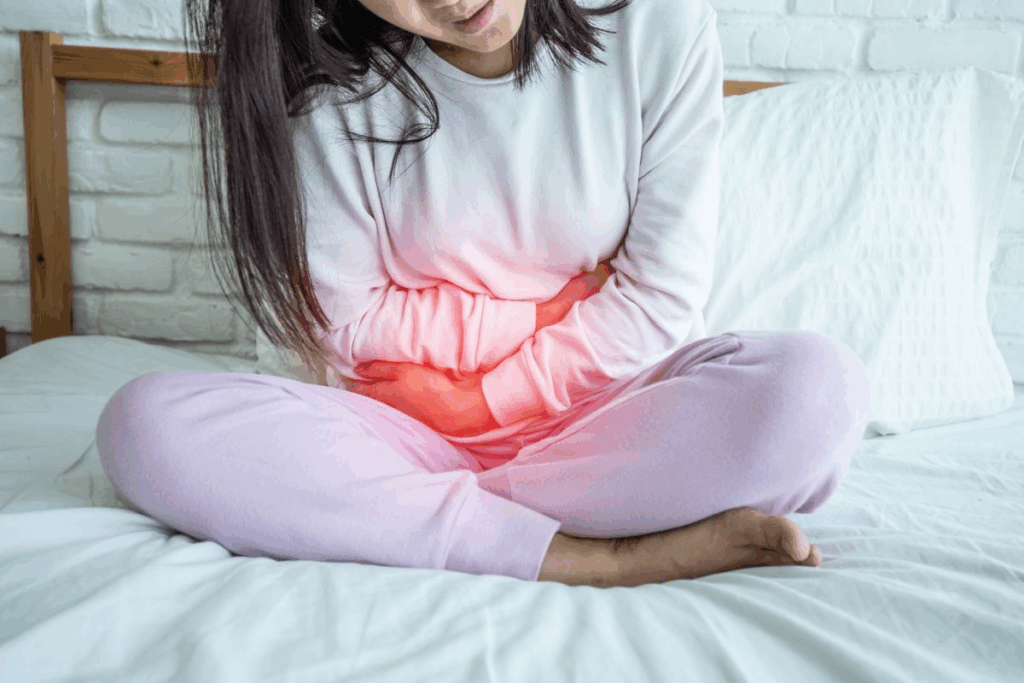
Ovarian cysts are fluid-filled sacs that grow in or on the ovaries. They are very common in women of childbearing age. Most of these cysts are harmless and form as part of the menstrual cycle.
Many women find out they have ovarian cysts during routine pelvic exams. Often, they don’t have any symptoms. While most cysts go away on their own in a few months, many women wonder about their causes and how they might affect their periods.
Understanding the link between ovarian cysts and reproductive health is key for good care. At Liv Hospital, we offer trusted international medical advice to help with these concerns.
Key Takeaways
- Ovarian cysts are common and often harmless.
- Most ovarian cysts form as part of the normal menstrual cycle.
- Ovarian cysts can affect menstrual cycles, but the impact varies.
- Understanding ovarian cysts is vital for reproductive health.
- Liv Hospital provides trusted medical expertise for ovarian cyst concerns.
Understanding Ovarian Cysts and Their Prevalence

Ovarian cysts are fluid-filled sacs on the ovaries. They are more common than you might think. Knowing about ovarian cysts is key for women’s health.
What Are Ovarian Cysts?
Ovarian cysts are sacs or pockets on the ovaries. They are usually filled with fluid and can vary in size. Most are non-cancerous and happen in women of all ages, but more in the reproductive years.
Types of Ovarian Cysts: There are several types, including functional cysts, dermoid cysts, and cystadenomas. Functional cysts are the most common and often relate to the menstrual cycle.
How Common Are Ovarian Cysts Among Women?
Ovarian cysts are common in women, mainly in their reproductive years. Studies show many women will get them at some point. They are more common in women of childbearing age and are often linked to normal ovary function.
Prevalence in Different Age Groups: Ovarian cysts are more common in women aged 20 to 40. After menopause, they are less common.
Normal Size Range of Ovarian Cysts
Most ovarian cysts are small, between 1 to 3 centimeters. These small cysts are often normal and may go away on their own. Larger cysts are less common and might need medical help.
Monitoring Cyst Size: Women with ovarian cysts should have regular check-ups. This ensures the cysts don’t grow or cause problems. Ultrasound is often used to check the size and type of cysts.
The Formation of Ovarian Cysts During the Menstrual Cycle

During each menstrual cycle, the ovaries go through changes that can lead to cysts. This starts with follicular development. Many follicles grow in the ovaries, but usually, only one becomes dominant and releases an egg during ovulation.
Follicular Development and Ovulation Process
The menstrual cycle is controlled by hormones. At the start, the pituitary gland releases follicle-stimulating hormone (FSH). This hormone makes the follicles in the ovaries grow.
As these follicles grow, they make estrogen. This hormone makes the uterine lining thicken, getting ready for a possible pregnancy.
Ovulation happens when the dominant follicle releases an egg. This usually happens mid-cycle, around day 14 in a typical 28-day cycle. After ovulation, the empty follicle turns into the corpus luteum. It then produces progesterone to keep the uterine lining.
How Functional Cysts Develop Naturally
Functional cysts are the most common type of ovarian cyst. They are closely related to the ovaries’ normal functioning during the menstrual cycle. They can be either follicular cysts or corpus luteum cysts.
- Follicular cysts happen when the dominant follicle doesn’t release an egg and keeps growing.
- Corpus luteum cysts form if the corpus luteum doesn’t dissolve after ovulation and fills with fluid.
These cysts are usually harmless and often go away on their own without treatment.
Physiological Cysts vs. Pathological Cysts
It’s important to know the difference between physiological cysts and pathological cysts. Physiological cysts are related to normal ovarian function and are usually harmless. They may go away on their own.
Pathological cysts, on the other hand, are abnormal growths. They can be caused by things like endometriosis or polycystic ovary syndrome (PCOS). These cysts might need medical attention and treatment.
Knowing the difference between these cysts is key to figuring out the right treatment and easing worries about ovarian health.
Primary Causes of Ovarian Cyst Development
Ovarian cysts develop due to many factors. Hormonal imbalances, genetic predispositions, and environmental influences all play a role.
Hormonal Imbalances and Their Impact
Hormonal imbalances are a key factor in ovarian cysts. Fluctuations in hormone levels, like estrogen and progesterone, can cause cysts. Conditions like polycystic ovary syndrome (PCOS) are linked to these imbalances.
Genetic Factors in Ovarian Cyst Formation
Genetics also play a part in ovarian cysts. Family history can increase the risk. Genetic conditions can affect hormone regulation and ovarian function.
Environmental and Lifestyle Influences
Environmental and lifestyle factors also matter. Lifestyle choices, like diet and exercise, can impact hormone levels. Exposure to toxins and endocrine disruptors can also contribute to cysts.
Knowing these factors helps manage and prevent ovarian cysts. Addressing hormonal imbalances and making smart lifestyle choices can reduce the risk.
Types of Ovarian Cysts and Their Characteristics
There are many types of ovarian cysts, each with its own features. Knowing these differences is key for the right diagnosis and treatment.
Functional Cysts: Follicular and Corpus Luteum
Functional cysts are the most common and are tied to the menstrual cycle. They are usually harmless and often go away on their own.
- Follicular Cysts: These cysts form when a follicle doesn’t release an egg during ovulation. They are small and often don’t cause symptoms.
- Corpus Luteum Cysts: After ovulation, the follicle turns into the corpus luteum. If it fills with fluid, it becomes a corpus luteum cyst.
Dermoid Cysts and Cystadenomas
Dermoid cysts and cystadenomas are types of ovarian cysts that can grow and may need medical help.
- Dermoid Cysts: Also known as teratomas, these cysts have different tissues like hair, skin, or teeth. They are usually not cancerous but can cause problems if they twist or rupture.
- Cystadenomas: These cysts grow from the outer layer of the ovary and can fill with fluid. They can get big and might turn cancerous.
Endometriomas and Hemorrhagic Cysts
Endometriomas and hemorrhagic cysts are significant types of ovarian cysts with unique features.
- Endometriomas: These cysts are linked to endometriosis, where endometrial tissue grows outside the uterus. They are filled with old blood, making them look like “chocolate cysts.”
- Hemorrhagic Cysts: Hemorrhagic cysts happen when there’s bleeding into a functional cyst. They can hurt and might need medical care.
The table below shows the main types of ovarian cysts and their characteristics:
Type of Cyst | Description | Characteristics |
Follicular Cyst | Develops when a follicle doesn’t release an egg | Usually small, often asymptomatic |
Corpus Luteum Cyst | Forms after ovulation when the corpus luteum fills with fluid | Can cause pain if it ruptures or twists |
Dermoid Cyst | Contains various tissues like hair, skin, or teeth | Benign, but can cause complications if it twists or ruptures |
Cystadenoma | Develops from the outer layer of the ovary | Can be large, has a chance to turn cancerous |
Endometrioma | Associated with endometriosis, filled with old blood | Looks like a “chocolate cyst” |
Hemorrhagic Cyst | Bleeding into a functional cyst | Can cause pain, might need medical care |
Medical Conditions That Cause Ovarian Cysts
Ovarian cysts can be a sign of several health issues in women. These conditions can make it more likely for women to get these cysts. It’s important to know how these conditions and cysts are connected.
Polycystic Ovary Syndrome (PCOS)
PCOS is a hormonal disorder that affects many women of childbearing age. It often leads to ovarian cysts. Women with PCOS may have irregular periods, gain weight, and have trouble getting pregnant.
Medical Expert, a law professor and women’s health expert, says,
“PCOS is a complex condition that affects not just the ovaries but also overall metabolic and cardiovascular health.”
The exact cause of PCOS is not known. But it’s thought to be caused by genetics and environment. Treating PCOS often involves lifestyle changes, hormones, and medicines.
Endometriosis and Its Relationship to Ovarian Cysts
Endometriosis can also cause ovarian cysts, called endometriomas. These cysts form when endometrial tissue grows in the ovaries. This can cause pain, heavy bleeding, and infertility.
The connection between endometriosis and ovarian cysts shows how complex women’s reproductive health is. As research finds out more about endometriosis, it’s clear that treating it needs a full approach. This may include hormones, pain relief, and surgery.
Pelvic Inflammatory Disease and Infections
Pelvic inflammatory disease (PID) and infections can also cause ovarian cysts. PID happens when bacteria move up from the vagina and cervix to the reproductive organs. This can cause inflammation and cysts or abscesses.
Treating PID with antibiotics quickly is key to avoid serious problems. These include chronic pain, infertility, and a higher risk of ectopic pregnancy. Knowing the link between infections and cysts shows why reproductive health care is so important.
In summary, conditions like PCOS, endometriosis, and PID are big factors in ovarian cysts. Understanding these connections is key to helping women with these conditions.
Fallopian Tube Cysts and Related Reproductive System Cysts
Ovarian cysts are common, but cysts can also appear in other parts of the female reproductive system. This includes the fallopian tubes. These cysts can greatly affect reproductive health. It’s important to know their causes, types, and effects.
Paratubal and Paraovarian Cyst Development
Paratubal and paraovarian cysts form near the fallopian tubes. Paratubal cysts grow on the tube itself. Paraovarian cysts appear in the tissue around the tube. They can vary in size and may cause pelvic pain or discomfort.
A study in the Journal of Minimally Invasive Gynecology found that paratubal cysts are often found by accident during surgery. But they can cause symptoms if they get too big.
Hydrosalpinx and Tubal Blockage Concerns
Hydrosalpinx is when fluid builds up in the fallopian tube, often because of a blockage. This can swell the tube and may harm fertility. It’s key to understand the causes and treatments for hydrosalpinx to manage reproductive health.
Condition | Causes | Symptoms |
Hydrosalpinx | Tubal blockage, infection | Pelvic pain, infertility |
Paratubal Cysts | Abnormal cell growth | Pelvic discomfort, pain |
Paraovarian Cysts | Embryonic remnants | Often asymptomatic |
Relationship Between Fallopian and Ovarian Cysts
Fallopian tube cysts and ovarian cysts are different but can both impact reproductive health. Both can cause pelvic pain and may affect fertility. It’s vital to understand their connection for complete reproductive care.
“The presence of cysts in the fallopian tubes or ovaries can complicate reproductive health, making it essential to address these conditions with appropriate medical care.”
Uterine Cysts and Their Distinction from Ovarian Cysts
It’s important to know the difference between uterine and ovarian cysts. Both can affect women’s health, but they are different in many ways. Their locations, causes, and effects on health vary.
Cysts on the Womb Wall: Causes and Types
Uterine cysts happen on the womb wall. They can be caused by hormones and genetics. Most are not harmful but can cause pain and other issues.
“Uterine cysts can be linked to adenomyosis,” says Medical Expert, a top gynecologist. “This is when uterine lining grows into the walls, causing cysts.”
Cysts in the Uterine Lining: Endometrial Cysts
Endometrial cysts are linked to endometriosis. They happen when uterine lining grows outside the uterus. This can lead to pain, heavy bleeding, and trouble getting pregnant.
Doctors use ultrasound or MRI to find endometrial cysts. Treatment focuses on managing symptoms and treating related conditions like endometriosis.
Differential Diagnosis of Pelvic Cysts
It’s key to tell uterine and ovarian cysts apart. Doctors must also check for other cysts or growths. This ensures the right treatment.
A detailed check-up might include:
- Pelvic exams
- Imaging tests (ultrasound, MRI)
- Laparoscopy for direct look
Getting the right diagnosis helps patients get the right treatment. This is true for uterine cysts or other reproductive issues.
How Ovarian Cysts Affect Menstruation
It’s important for women to know how ovarian cysts can change their menstrual cycles. These cysts are fluid-filled sacs on the ovaries. They can disrupt normal cycles, but how they affect menstruation depends on their size and type.
Can Ovarian Cysts Stop Periods Completely?
Ovarian cysts can change menstrual cycles, but stopping periods completely is rare. Large cysts or those that disrupt hormone levels can lead to changes in bleeding. But, remember, cysts aren’t the only reason for missing periods. Hormonal issues, stress, or other health problems can also cause it.
Menstrual Irregularities Associated with Different Cyst Types
Each type of ovarian cyst can cause different menstrual problems. For example:
- Functional Cysts: These cysts, like follicular and corpus luteum cysts, are common. They can delay or change when you get your period.
- Dermoid Cysts and Cystadenomas: These cysts are less likely to mess with your period. But, big sizes or problems can cause irregularities.
- Endometriomas: Linked to endometriosis, these cysts can make periods painful and heavy.
Each cyst type has its own effects on menstruation.
When to Be Concerned About Cyst-Related Menstrual Changes
Some menstrual changes from ovarian cysts go away on their own. But, if they don’t, or if they’re severe, you should see a doctor. Look for:
- Prolonged amenorrhea
- Heavy or long menstrual bleeding
- Severe pelvic pain
- Difficulty conceiving
Getting help early can prevent bigger problems and keep your reproductive health good.
Growth Patterns of Ovarian Cysts
It’s important to know why ovarian cysts grow to help manage women’s health. These cysts are fluid-filled sacs on the ovaries. Their growth can be influenced by many factors.
Why Do Ovarian Cysts Grow in Size?
Ovarian cysts grow for several reasons. Hormonal influences are a big factor, as hormone changes can impact cyst growth. Also, genetic predisposition can play a role in cyst growth.
- Hormonal changes during the menstrual cycle
- Genetic factors that predispose women to cyst development
- Presence of underlying medical conditions such as PCOS
Factors That Influence Cyst Growth
Many factors can affect how ovarian cysts grow. These include:
- Hormonal imbalances: Changes in estrogen and progesterone levels can affect cyst growth.
- Environmental and lifestyle factors: Certain lifestyle choices and environmental exposures may contribute to cyst development.
- Underlying medical conditions: Conditions like endometriosis and PCOS can increase the risk of ovarian cysts.
Understanding these factors is key to managing ovarian cysts effectively.
When Cyst Growth Becomes Concerning
While many ovarian cysts are harmless and may go away on their own, some can grow large. Rapid growth or severe symptoms like pelvic pain, bloating, or trouble emptying the bladder are signs to see a doctor.
“Monitoring ovarian cysts is key to prevent complications and ensure timely action when needed.”
We suggest women with ovarian cysts keep in close touch with their healthcare providers. This way, they can monitor cyst growth and address any concerns quickly.
Diagnosis and Treatment Options for Ovarian Cysts
Understanding how to diagnose and treat ovarian cysts is key. These cysts can be tricky to spot because of their different sizes and types. But, doctors use several methods to figure out if you have one and what kind it is.
Diagnostic Methods
Doctors use a mix of physical exams and advanced imaging to find ovarian cysts. They might do a pelvic exam to check your reproductive organs for any oddities.
Imaging tests are vital to confirm the presence of ovarian cysts. The most common test is ultrasound. It shows the cyst’s size, location, and type.
Medical Treatments
Treatment for ovarian cysts varies based on several factors. These include the cyst’s size and type, your symptoms, and if you’re in menopause. Often, doctors suggest watchful waiting for small, likely functional cysts.
For some, medications can help manage symptoms or shrink the cyst. Hormonal birth control pills might be used to stop new cysts from forming.
Treatment Approach | Description | Typical Candidates |
Watchful Waiting | Monitoring the cyst with regular ultrasounds | Women with small, asymptomatic cysts |
Hormonal Medications | Using birth control pills to prevent new cysts | Women experiencing recurrent cysts |
Surgical Intervention | Removing the cyst or ovary surgically | Women with large, complex, or symptomatic cysts |
Surgical Interventions
For big, complex, or bothersome cysts, surgical removal is often needed. The surgery can be done through laparoscopy or laparotomy, depending on the situation.
Laparoscopic surgery is less invasive and leads to quicker recovery. Laparotomy is used for bigger or more complex cysts.
The choice of surgery depends on the cyst’s size and type, and your overall health.
Conclusion: Managing Ovarian Cysts and Protecting Reproductive Health
Managing ovarian cysts is key to keeping reproductive health in check. We’ve looked into the causes, symptoms, and treatments for these cysts. Knowing most are harmless and often go away on their own is important. But, it’s also vital to watch out for complications and take action early.
Ovarian cysts can mess with menstrual cycles and reproductive health. Spotting the signs and symptoms early helps women get the right medical help. Tests like physical exams and imaging are critical in finding cysts and figuring out how to treat them.
Keeping reproductive health safe means being aware, taking preventive steps, and acting fast when needed. Understanding how ovarian cysts affect reproductive health helps women make better choices for their care. We stress the need to manage ovarian cysts and related issues to keep reproductive health at its best.
Handling ovarian cysts well needs teamwork between doctors and patients. Together, women can get the care they need to keep their reproductive health and overall well-being in top shape.
FAQ
What are ovarian cysts and how common are they?
Ovarian cysts are fluid-filled sacs on the ovaries. They are common among women and usually harmless. Many women get them as part of their menstrual cycle.
Can ovarian cysts stop my periods?
Yes, they can disrupt menstrual cycles. This can lead to irregular periods or even stop them. The cyst’s size and cause play a role.
What causes ovarian cysts to form?
Hormonal imbalances, genetics, and certain conditions like PCOS or endometriosis can cause them. These factors can lead to cyst formation.
Are ovarian cysts genetic?
Yes, genetics can play a part. Women with a family history of cysts or certain conditions are more likely to get them.
What are the different types of ovarian cysts?
There are several types, including functional, dermoid, cystadenomas, endometriomas, and hemorrhagic cysts. Each type affects health differently.
How do ovarian cysts affect menstruation?
They can lead to irregular periods, changes in flow, or stop periods. The impact depends on the cyst’s type and size.
Can cysts on the ovaries cause other symptoms?
Yes, they can cause pelvic pain, bloating, and discomfort. Some cysts can rupture or twist, causing severe pain.
How are ovarian cysts diagnosed?
They are diagnosed with physical exams, ultrasound, and sometimes more tests. The method depends on the cyst’s suspected type and size.
What are the treatment options for ovarian cysts?
Treatment varies based on the cyst’s type, size, and symptoms. Options include watchful waiting, medication, or surgery.
Can ovarian cysts be prevented?
While not all can be prevented, a healthy lifestyle and managing hormonal imbalances can help. Addressing underlying conditions also reduces risk.
What is the difference between ovarian cysts and uterine cysts?
Ovarian cysts are on the ovaries, while uterine cysts are in or on the uterus. They have different causes and effects.
Can ovarian cysts grow and get bigger?
Yes, some cysts can grow. The growth pattern varies by cyst type and individual factors. Monitoring size is key in managing them.
When should I be concerned about ovarian cysts?
Be concerned with severe symptoms like intense pelvic pain or significant menstrual changes. Regular check-ups with a healthcare provider are important.
References
National Center for Biotechnology Information. Ovarian Cysts: Causes and Menstrual Cycle Interruption. Retrieved from https://www.ncbi.nlm.nih.gov/pmc/articles/PMC7594261/