The nervous system is a complex network that controls every function in the human body. It is divided into two main parts: the central nervous system (CNS) and the peripheral nervous system (PNS) organs in nervous system.
We will explore the 7 main parts of the nervous system. We will understand their roles and importance in regulating bodily functions. Knowing these components is key to appreciating the significance of this complex system.
Key Takeaways
- The nervous system is a complex network controlling various bodily functions.
- It is divided into the central nervous system (CNS) and the peripheral nervous system (PNS).
- Understanding the 7 main parts is essential for comprehending its significance.
- The nervous system’s components work together to maintain consciousness and respond to stimuli.
- Knowledge of the nervous system’s parts is essential for appreciating its role in sustaining life.
The Nervous System: Our Body’s Command Center
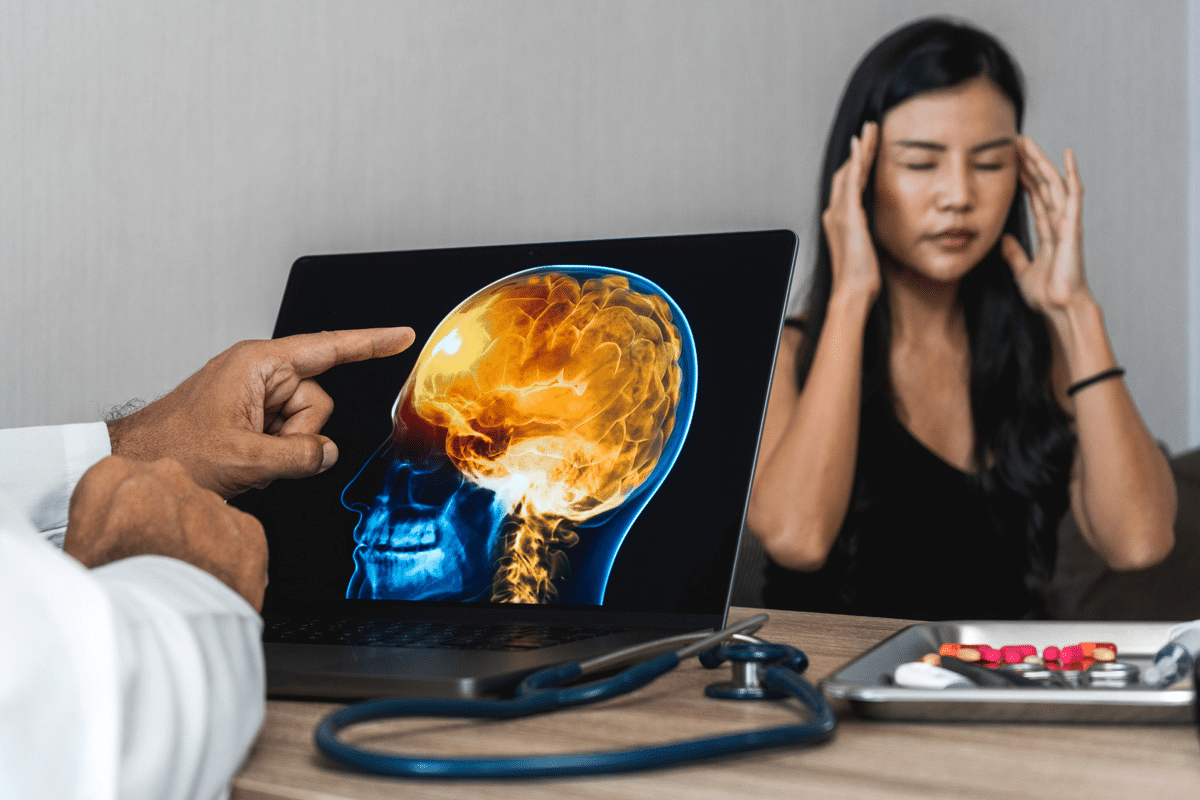
The nervous system is our body’s command center. It controls and coordinates many bodily functions. This complex system helps us respond to different stimuli, making both voluntary and involuntary actions possible.
Functions and Importance of the Nervous System
The nervous system is key to our health and well-being. It has two main parts: the Central Nervous System (CNS) and the Peripheral Nervous System (PNS). The CNS includes the brain and spinal cord. The PNS covers all neural tissues outside the CNS.
Its main job is to manage and coordinate our body’s functions. This includes movement, sensation, perception, and thinking. It helps us do things like walk and talk, and also controls things we don’t think about, like our heartbeat and digestion.
Overview of Nervous System Organization
The nervous system is divided into two main parts: the CNS and PNS. This division helps us understand how it works. The CNS, with the brain and spinal cord, is the control center. It processes information and sends signals to the body.
The PNS, made up of nerves, connects the CNS to the rest of the body. It helps the control center talk to the body’s tissues. This setup lets the nervous system work well, helping us respond to stimuli and keep our body balanced.
In short, the nervous system is a complex and vital system. It lets us control and coordinate our body’s functions. Knowing how it works is important for understanding its role in our health and well-being.
Understanding the Two Major Divisions of the Nervous System
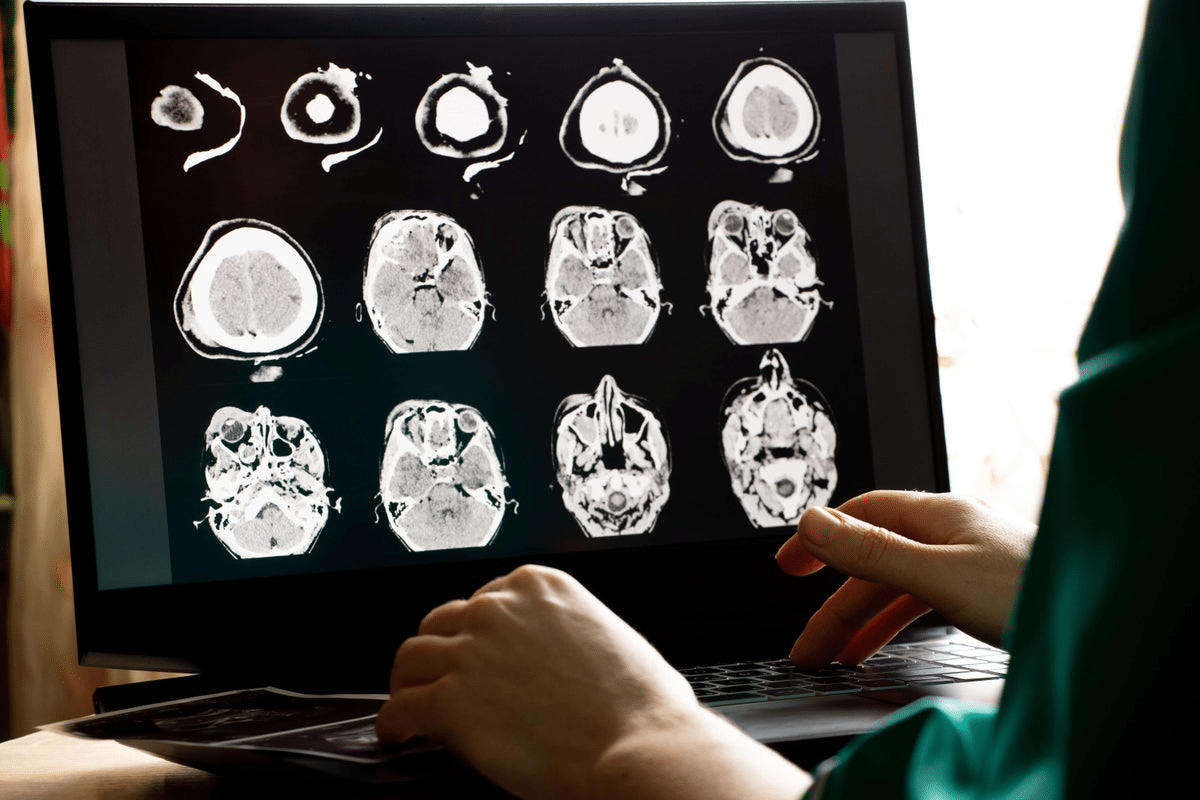
To understand how our nervous system works, we need to know about its two main parts: the Central Nervous System (CNS) and the Peripheral Nervous System (PNS). These parts work together to help our body react to different things and keep everything balanced.
Breaking down the nervous system into CNS and PNS makes it easier to grasp its complex tasks. Let’s look at each part to see what they do and why they’re important.
The Central Nervous System
The Central Nervous System (CNS) includes the brain and spinal cord. It acts as the main control center of our body, handling information and making decisions. The CNS is in charge of processing sensory info, controlling movements, and managing body functions.
- The brain handles thoughts, feelings, and control.
- The spinal cord connects the brain to the rest of the body.
The Peripheral Nervous System
The Peripheral Nervous System (PNS) covers all neural tissues outside the CNS, like nerves connecting the CNS to the body. It helps the CNS talk to the rest of the body, making both voluntary and involuntary actions possible.
The PNS has two parts: the somatic nervous system and the autonomic nervous system. Each part has its own job. The PNS is key to how we react to our surroundings and keep our body running smoothly.
- Somatic Nervous System: handles voluntary actions.
- Autonomic Nervous System: controls involuntary actions.
In short, the CNS and PNS are vital to our nervous system’s function. Knowing about these two parts helps us see the amazing complexity and beauty of our nervous system.
The Brain: Command Headquarters of the Nervous System
The brain is the main control center of our body. It has about 100 billion neurons, making it very complex.
We will look at the brain’s structure, its functions, and how it is protected.
Structure and Regions of the Brain
The brain has different areas, each with its own job. It is divided into the cerebrum, cerebellum, and brainstem.
- The cerebrum has two halves: the left and the right.
- The cerebellum is at the brain’s base and helps with movement.
- The brainstem connects the cerebrum to the spinal cord. It controls basic functions like breathing and heart rate.
Functions of Different Brain Areas
The brain does many things. It handles responses, sensations, movements, emotions, communication, thinking, and memory.
|
Brain Region |
Primary Functions |
|---|---|
|
Cerebrum |
Controls movement, sensation, and higher-level cognitive functions |
|
Cerebellum |
Coordinates movements and maintains posture |
|
Brainstem |
Regulates basic functions such as breathing and heart rate |
Protection Systems: Meninges and Cerebrospinal Fluid
The brain has layers of tissue called the meninges. These layers, along with cerebrospinal fluid, act as a cushion. They protect the brain from harm.
The meninges have three layers: the dura mater, arachnoid mater, and pia mater. The cerebrospinal fluid moves between these layers. It adds extra protection and support.
The Spinal Cord: Information Highway
The spinal cord is key for nerve signals between the brain and body. It helps with many functions. As part of the central nervous system, it’s vital for our response to stimuli and body coordination.
Anatomy and Structure
The spinal cord is a long, thin tube of nervous tissue. It runs from the brain to the lower back. It’s protected by the spinal column, made of vertebrae.
Key Components of the Spinal Cord:
- Gray Matter: Holds the cell bodies of neurons, key for information processing.
- White Matter: Made of myelinated nerve fibers for signal transmission.
The spinal cord has different segments for body regions. These segments control functions like motor control and sensation.
Functions and Reflex Actions
The spinal cord does more than just carry nerve signals. It can process info and start responses without the brain. This is seen in reflex actions, where it can act without brain input.
“The spinal cord is capable of mediating reflex actions, demonstrating its role as more than just a pathway for nerve signals.”
A good example is the knee-jerk reaction. Tapping the patellar tendon makes the leg jerk up. This shows the spinal cord can work on its own in some cases.
|
Reflex Action |
Description |
Spinal Cord Level |
|---|---|---|
|
Knee-Jerk Reaction |
Tapping the patellar tendon causes the leg to jerk upward. |
L2-L4 |
|
Withdrawal Reflex |
Removing a limb from a painful stimulus. |
Varies by stimulus location |
In conclusion, the spinal cord is essential for the CNS. It’s a key path for nerve signals and plays a big role in reflex actions. Knowing about its anatomy and functions helps us understand the nervous system better.
Neurons: The Basic Units of the Nervous System
The neuron is the basic unit of the nervous system. It plays a key role in sending information. Neurons, or nerve cells, send and receive information through electrical and chemical signals. We will look at how neurons are structured, their types, and how they talk to each other.
Structure of a Neuron
A neuron has a cell body, or soma, which holds the nucleus. This is where the neuron’s metabolism happens. Dendrites branch out from the cell body to get signals from other neurons. The axon carries signals away to other neurons, muscles, or glands. The axon terminals are where chemical signals are released.
The unique structure of neurons lets them do their job in the nervous system.
Types of Neurons
There are many types of neurons, each with its own role. Sensory neurons send information from sensory receptors to the brain. Motor neurons send signals from the brain to muscles and glands, controlling movements. Interneurons, or association neurons, help process and integrate information in the brain.
How Neurons Communicate
Neurons talk to each other through electrical and chemical signals. When a neuron is excited, it sends an electrical impulse, or action, down its axon. This impulse reaches the axon terminals, where the neuron releases chemical messengers, or neurotransmitters. These messengers then bind to receptors on the target cell, passing on the signal.
The Somatic Nervous System: Voluntary Control
The somatic nervous system is key to our voluntary actions. It’s a network of nerves and neurons. It lets us move on purpose, like walking, talking, and writing.
Structure and Components
The somatic nervous system has motor and sensory neurons. Motor neurons send signals to muscles from the brain. Sensory neurons send info from our body to the brain. This lets us move and feel things.
Motor neurons are split into alpha and gamma types. Alpha neurons control big muscle fibers. Gamma neurons work with muscle spindles.
Sensory receptors in our skin, muscles, and joints send us info. They tell us about touch, pressure, temperature, and vibration. This info helps us understand our surroundings and body state.
Functions and Pathways
The main job of the somatic nervous system is to control our movements. It sends signals from the brain to muscles. This is done through the corticospinal tracts and the dorsal column-medial lemniscus pathway.
This system helps us do complex actions with accuracy. For example, when we write, it guides our hand and fingers. It uses feedback from our eyes and the pen’s feel.
In short, the somatic nervous system is essential for our voluntary actions. Its parts work together to help us move and feel our surroundings.
The Autonomic Nervous System: Involuntary Control
Our body’s automatic functions are managed by the autonomic nervous system. It keeps us in balance without us even thinking about it. This system is key for our survival.
Overview and Importance
The autonomic nervous system controls actions we don’t think about, like our heartbeat and breathing. It has two main parts: the sympathetic and parasympathetic systems. These work together to keep our body balanced.
The Importance of the Autonomic Nervous System is huge. It helps us react to our surroundings. For example, it speeds up our heart when we’re stressed. But it also helps us relax and recover.
“The autonomic nervous system is a key regulator of the body’s internal environment, maintaining homeostasis through its complex control mechanisms.” –
A leading neuroscientist
Comparison with Somatic Nervous System
The autonomic nervous system is different from the somatic nervous system. The somatic system controls things we can choose to do, like walking. But the autonomic system handles things we can’t control, like our heart rate.
|
Characteristics |
Autonomic Nervous System |
Somatic Nervous System |
|---|---|---|
|
Control |
Involuntary |
Voluntary |
|
Functions |
Regulates heart rate, digestion, breathing |
Controls movements, sensations |
|
Components |
Sympathetic and parasympathetic nervous systems |
Motor neurons |
Dual Control Mechanism
The autonomic nervous system has a special way of working. It uses the sympathetic and parasympathetic systems to control our body. This balance is key for staying healthy and responding to our environment.
In conclusion, the autonomic nervous system is essential for our body’s automatic functions. It helps us stay balanced and healthy. Knowing how it works can help us understand our body better.
The Sympathetic Nervous System: Fight-or-Flight Response
The sympathetic nervous system is key in how we react to stress. It triggers the fight-or-flight response. This prepares our body to face or run away from danger.
Anatomical Structure
The sympathetic nervous system is part of the autonomic nervous system. It works alongside the parasympathetic nervous system. It has a chain of ganglia along the spinal cord, from the base of the skull to the coccyx.
These ganglia connect to the spinal cord and each other, forming a chain. The preganglionic neurons start in the thoracic and lumbar regions of the spinal cord. They synapse with postganglionic neurons in the sympathetic ganglia.
Functions and Activation
The main job of the sympathetic nervous system is to get ready for action when we face stress or threats. It does this by releasing neurotransmitters like norepinephrine. This neurotransmitter acts on organs and systems to start the fight-or-flight response.
Stress signals from the brain activate the sympathetic nervous system. These signals can come from physical, emotional, or psychological threats.
When it’s activated, the sympathetic nervous system boosts heart rate, blood pressure, and energy. This gets the body ready to fight or flee.
Effects on Body Systems
The activation of the sympathetic nervous system affects many body systems. These include:
- Increased heart rate and blood pressure to improve circulation and oxygen delivery to muscles.
- Dilation of airways to enhance oxygen intake.
- Mobilization of energy stores (glycogen and fat) to provide fuel for the muscles.
- Reduced digestion and other non-essential functions to conserve energy.
- Increased sweating to help cool the body during intense activity.
These effects show how important the sympathetic nervous system is in responding to stress. It prepares the body for action. Knowing how it works can help us manage stress and health issues.
The Parasympathetic Nervous System: Rest and Digest
Our body’s ability to rest and digest is controlled by the parasympathetic nervous system. It’s a key part of our nervous system health. This system helps us relax and balance out the body’s stress response.
Anatomical Structure
The parasympathetic nervous system starts from the cranial nerves and the sacral part of the spinal cord. It has a network of nerves that help organs work right when we’re resting.
The cranial nerves involved are the oculomotor, facial, glossopharyngeal, and vagus nerves. The vagus nerve is key in controlling heart rate and digestion.
Functions and Activation
The main job of the parasympathetic nervous system is to help us relax and digest. It balances out the “fight-or-flight” response of the sympathetic system, keeping us stable.
Deep breathing, meditation, and muscle relaxation can activate this system. These activities calm us down, reduce stress, and improve our well-being.
Balance with Sympathetic System
The parasympathetic and sympathetic systems work together for balance in our body. The sympathetic system gets us ready for action, while the parasympathetic system helps us relax and recover.
|
System |
Primary Function |
Effects on Body |
|---|---|---|
|
Parasympathetic |
Rest and Digest |
Decreased heart rate, increased digestion |
|
Sympathetic |
Fight-or-Flight |
Increased heart rate, decreased digestion |
Knowing how these systems balance is key to understanding our body’s stress response and health. By focusing on activities that boost the parasympathetic system, we can relax better and recover faster, leading to better health.
Conclusion: The Integrated Organs in Nervous System
We’ve looked into the complex network of the nervous system. It has two main parts: the central nervous system (CNS) and the peripheral nervous system (PNS). The brain, spinal cord, and nerves work together to control our body’s functions.
The nervous system’s structure is quite complex. are key in sending and processing information. By understanding this, we see how vital it is for our health and well-being.
Knowing how the nervous system works is key to seeing its importance. The organs in it help us react to things, move, and keep our body balanced. This is just a small part of what it does.
FAQ
What are the main parts of the nervous system?
The nervous system has two main parts. The central nervous system (CNS) includes the brain and spinal cord. The peripheral nervous system (PNS) has nerves that connect the CNS to the rest of the body.
What is the basic unit of the nervous system?
The basic unit is the neuron. It’s key for sending and processing information.
What are the two major divisions of the nervous system?
The nervous system is divided into two main parts. These are the central nervous system (CNS) and the peripheral nervous system (PNS).
What is the role of the spinal cord in the nervous system?
The spinal cord is like a highway. It sends signals between the brain and body. It’s also important for reflex actions.
What is the difference between the somatic nervous system and the autonomic nervous system?
The somatic nervous system controls voluntary actions. The autonomic nervous system handles involuntary actions, like breathing and heart rate.
What is the function of the sympathetic nervous system?
The sympathetic nervous system helps the body react to threats. It prepares the body for action.
What is the role of the parasympathetic nervous system?
The parasympathetic nervous system helps the body relax and digest. It balances the sympathetic nervous system.
How do neurons communicate with each other?
Neurons talk to each other through electrical and chemical signals. It’s a complex process.
What are the main branches of the nervous system?
The main branches include the CNS, PNS, somatic, and autonomic nervous systems. There’s also the sympathetic and parasympathetic systems.
What is the structure of the nervous system?
The nervous system is a complex network. It includes the brain, spinal cord, nerves, and neurons. Together, they control the body’s functions.
References
Fascinating 7 Main Organs In Nervous System Explained https://www.ncbi.nlm.nih.gov/books/NBK542179/