The geniculate ganglion is a key part of the facial nerve, also known as cranial nerve VII. It’s a sensory ganglion where the cell bodies of sensory neurons are found. These neurons are important for sending sensory information ganglion of facial nerve.
The facial nerve controls the muscles of facial expression. It also carries taste sensations from the tongue’s front two-thirds. Knowing about the geniculate ganglion helps doctors diagnose and treat facial nerve problems.
Key Takeaways
- The geniculate ganglion is a sensory ganglion associated with the facial nerve.
- It contains cell bodies of first-order unipolar sensory neurons.
- The facial nerve controls facial expression and taste sensation.
- Understanding the geniculate ganglion is key for diagnosing facial nerve disorders.
- The geniculate ganglion plays a vital role in sending sensory information.
The Anatomy and Definition of the Geniculate Ganglion
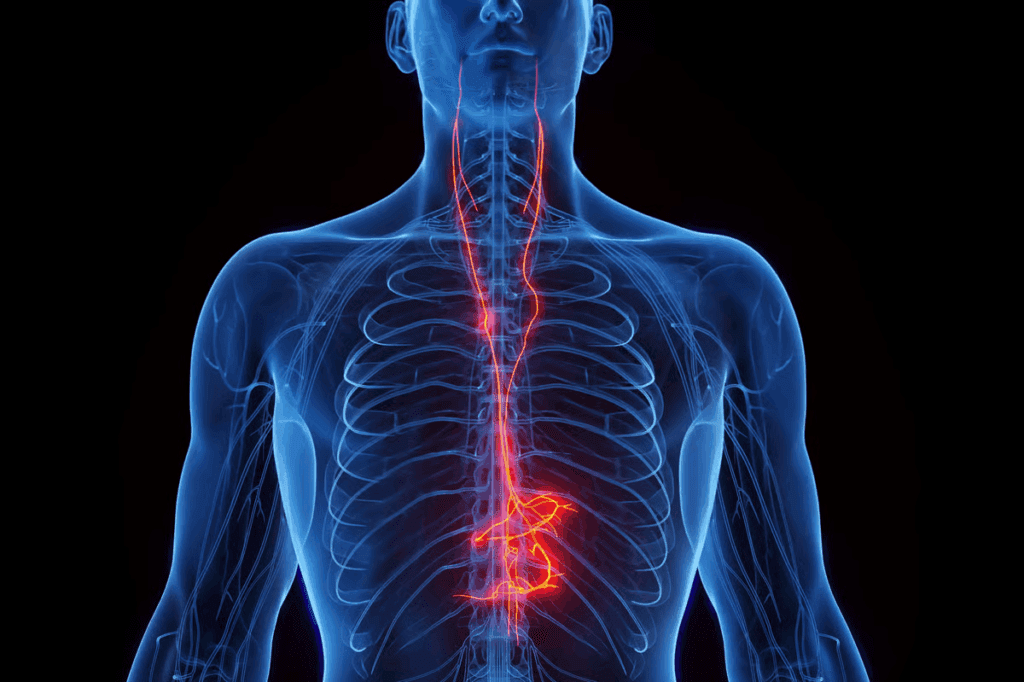
The facial nerve’s geniculate ganglion is a key part of the sensory system. It houses the cell bodies of sensory neurons. These neurons carry taste information from the tongue and handle other sensory tasks.
Basic Structure and Cellular Composition
The geniculate ganglion has a unique structure. It’s filled with sensory neuron cell bodies. These cells are key for sending taste and other sensory information.
Cellular Composition: The ganglion is made up of different types of neurons. These include neurons for taste and somatic sensation. This variety shows the ganglion’s complex role in sensory processing.
Neuron Type | Function |
Pseudounipolar Neurons | Transmit taste and somatic sensory information |
Taste Sensory Neurons | Convey taste information from the anterior two-thirds of the tongue |
Somatic Sensory Neurons | Provide somatic sensation from the face and ear |
Developmental Origins
The geniculate ganglion develops from the facial nerve’s second branchial arch. It forms from cells that migrate from the neural crest. This process is vital for the ganglion’s formation and connection with the facial nerve.
The ganglion’s developmental origins highlight its importance in the facial nerve’s anatomy and function. Knowing these origins helps us understand its role in sensory processing and its link to neurological disorders.
Location of the Geniculate Ganglion in the Facial Canal

The geniculate ganglion is a key part of the facial nerve’s anatomy. It’s located in the facial canal, which is inside the petrous temporal bone. The facial canal is a narrow path that the facial nerve follows through the temporal bone.
Relationship to the Petrous Temporal Bone
The geniculate ganglion is closely tied to the petrous part of the temporal bone. This bone is very hard and holds important parts of the hearing and balance systems. The facial canal, where the geniculate ganglion is found, is carved out of this bone. This shows how closely the facial nerve is connected to the bone around it.
The Genu of the Facial Nerve
The geniculate ganglion is at the genu of the facial nerve. This is the first bend the nerve makes as it goes through the facial canal. This bend is a key spot, showing where the nerve changes from one part to another. The geniculate ganglion’s location here is very important for the nerve’s function.
Knowing where the geniculate ganglion is in the facial canal and its connection to the petrous temporal bone is key. It helps us understand how the facial nerve works. The way the nerve moves through its surroundings is important for both its normal function and for finding problems.
The Ganglion of Facial Nerve: Functional Overview
The geniculate ganglion is key to the facial nerve’s work. It helps send sensory info. We’ll look at the types of neurons and their role in these pathways.
Types of Neurons Present
The geniculate ganglion has many types of neurons. Pseudounipolar neurons are mostly found here. They are vital for sending taste info from the tongue’s front two-thirds.
These neurons send signals, including taste, through the facial nerve. Their presence shows how important the ganglion is for sensing.
Role in Sensory Pathways
The geniculate ganglion is vital for the facial nerve’s sensory paths. It helps with taste and somatic sensation. It acts as a relay for sensory info to the brain.
Sensory Pathway | Function | Relevance to Geniculate Ganglion |
Taste Sensation | Transmission of taste information from the anterior two-thirds of the tongue | Critical for conveying taste signals |
Somatic Sensation | Transmission of sensory information from the ear and other areas | Important for overall sensory perception |
Understanding the geniculate ganglion’s role helps us see its importance in the facial nerve’s function.
Taste Sensation Pathway Through the Geniculate Ganglion
The geniculate ganglion is key to our taste. It helps send signals from the front part of the tongue. This is linked to the chorda tympani nerve, a part of the facial nerve.
Anterior Two-thirds of the Tongue Connection
The geniculate ganglion gets taste info from the front part of the tongue. The chorda tympani nerve helps by carrying these signals. This is vital for enjoying food and spotting harmful tastes.
The process involves several steps:
- Taste buds on the tongue’s front part detect food chemicals.
- The chorda tympani nerve sends these signals to the geniculate ganglion.
- The ganglion then sends this info further along the facial nerve.
Chorda Tympani Nerve Relationship
The chorda tympani nerve is essential in this pathway. It’s a branch of the facial nerve that carries taste info from the tongue to the ganglion. It also helps the submandibular gland, showing its two roles.
Key aspects of the chorda tympani nerve include:
- It’s a branch of the facial nerve (cranial nerve VII).
- It carries taste fibers from the tongue’s front part.
- It helps the submandibular gland through parasympathetic fibers.
Somatic Sensory Functions of the Geniculate Ganglion
The geniculate ganglion is key to how we feel our surroundings. It helps us sense the ear and palate. This ganglion sends important signals that shape our sensory experience.
Sensory Input from the Ear
The geniculate ganglion gets signals from the ear. These signals help us feel touch and pressure. Sensory input from the ear is essential for us to interact with our world.
It works with the ear to send these signals. This complex process lets us react to different things around us.
Palatal Sensation Pathways
The geniculate ganglion also deals with palatal sensation pathways. These pathways are vital for feeling sensations in the palate. This is important for swallowing and speaking.
Its role in palatal sensation shows its importance in our sensory experience. Understanding this helps us see how complex human senses are.
The Greater Petrosal Nerve and Its Connection to the Geniculate Ganglion
The greater petrosal nerve comes from the facial nerve’s geniculate ganglion. It plays a key role in parasympathetic functions in the head. We’ll look at its path and how it helps send parasympathetic signals.
Anatomical Course
The greater petrosal nerve starts at the geniculate ganglion and goes through the temporal bone. It moves through the middle cranial fossa to its final spot. There, it helps form the pterygopalatine ganglion. This journey is important for its parasympathetic fiber transmission.
Parasympathetic Functions
The greater petrosal nerve has parasympathetic fibers for tear and nasal mucosa functions. These fibers meet in the pterygopalatine ganglion. From there, they send signals to the lacrimal gland and nasal mucosa. This is key for keeping eyes and noses working right.
Relationship Between the Geniculate Ganglion and Surrounding Structures
The geniculate ganglion is closely tied to several structures in the temporal bone. Its exact location is key to understanding its role and any possible health issues.
Proximity to the Cochlea
The geniculate ganglion is near the cochlea, a vital part for hearing. This close relationship shows how complex the temporal bone’s anatomy is. It also points to how the facial nerve and hearing systems might interact.
Relationship to the Tympanic Cavity
The geniculate ganglion is also near the tympanic cavity. This cavity is home to the middle ear’s ossicles, which help transmit sound. The connection between the ganglion and the cavity highlights the detailed anatomy of the middle ear and its link to the facial nerve.
Position Relative to the Middle Cranial Fossa
Also, the geniculate ganglion is located near the middle cranial fossa. This fossa is a major part of the skull that holds important structures. The ganglion’s spot below the fossa shows its deep place in the temporal bone. This makes it clear why knowing its exact location is so important for medical and surgical work.
Grasping these connections is vital for diagnosing and treating issues with the geniculate ganglion and nearby areas. The complex relationships between these parts show why detailed knowledge is so important in ear, nose, and throat medicine, as well as neurology.
Clinical Significance of the Geniculate Ganglion
Knowing about the geniculate ganglion’s role is key for diagnosing and treating diseases. It’s linked to Bell’s palsy, Ramsay Hunt syndrome, and geniculate neuralgia. These conditions can really affect a person’s life quality.
Role in Bell’s Palsy
Bell’s palsy causes sudden weakness or paralysis on one side of the face. The geniculate ganglion might play a part in this, but the exact reasons are not clear. Studies point to inflammation and nerve compression at the geniculate ganglion as possible causes.
The symptoms of Bell’s palsy include:
- Facial weakness or paralysis
- Difficulty closing the eye
- Altered taste sensation
- Increased sensitivity to sound
Ramsay Hunt Syndrome
Ramsay Hunt syndrome is linked to the geniculate ganglion, caused by the varicella-zoster virus. It’s marked by:
- Painful rash in the ear
- Facial paralysis
- Vertigo and hearing loss
The virus affects the facial nerve at the geniculate ganglion, causing these symptoms.
Geniculate Neuralgia
Geniculate neuralgia is a rare condition with severe ear pain, triggered by sound or touch. The geniculate ganglion is thought to be involved, possibly due to nerve irritation or compression.
Geniculate neuralgia’s main features are:
- Severe, sharp pain in the ear
- Pain triggered by sound or touch
- Potential for misdiagnosis due to its rarity
In summary, the geniculate ganglion is important in Bell’s palsy, Ramsay Hunt syndrome, and geniculate neuralgia. Knowing its role helps in diagnosing and treating these conditions effectively.
Diagnostic Approaches for Geniculate Ganglion Disorders
Geniculate ganglion disorders are tricky to diagnose. Advanced imaging and detailed clinical checks help solve this problem. Getting the diagnosis right is key for the right treatment.
Imaging Techniques
Imaging is key in finding geniculate ganglion disorders. Magnetic Resonance Imaging (MRI) and Computed Tomography (CT) scans are top choices.
Imaging Modality | Advantages | Limitations |
MRI | High soft tissue resolution, ability to detect nerve inflammation | Contraindicated in patients with certain metal implants, higher cost |
CT Scan | Quick, good for visualizing bony structures | Radiation exposure, less effective for soft tissue evaluation |
A study in a top medical journal says MRI is best for the geniculate ganglion. It shows details and catches small changes in nerves.
“The use of MRI in diagnosing geniculate ganglion disorders has significantly improved our ability to identify and manage these conditions effectively.”
– Leading Medical Journal
Clinical Assessments
Clinical checks are also vital for diagnosing geniculate ganglion disorders. We look at symptoms, medical history, and do physical exams.
- Evaluating taste sensation and facial nerve function
- Assessing for pain or discomfort in the ear or face
- Checking for any signs of nerve dysfunction
We mix these clinical checks with imaging to get a correct diagnosis. The table below shows how we approach different conditions.
Condition | Primary Diagnostic Approach | Additional Tests |
Geniculate Neuralgia | MRI, Clinical Assessment | Electrophysiological tests |
Ramsay Hunt Syndrome | Clinical Assessment, MRI | Viral titers |
In conclusion, diagnosing geniculate ganglion disorders needs a mix of advanced imaging and detailed clinical checks. This way, we can spot and treat these conditions well.
Surgical Considerations Involving the Geniculate Ganglion
When surgeons operate near the geniculate ganglion, they face a big challenge. This part of the facial nerve is key for taste and other senses. Its location in the temporal bone makes surgery tricky.
Approaches to the Geniculate Ganglion
There are different ways to reach the geniculate ganglion during surgery. Each method has its own benefits and drawbacks. The right approach depends on the problem and the surgeon’s skill.
- Transmastoid Approach: This method is often used. It involves taking out part of the mastoid bone to get to the facial nerve.
- Middle Cranial Fossa Approach: This is for problems in the middle cranial fossa. It needs a craniotomy to access the ganglion.
Preservation Techniques During Surgery
Keeping the geniculate ganglion working during surgery is very important. Here are some ways to do it:
Technique | Description | Benefits |
Intraoperative Monitoring | Monitoring the facial nerve function during surgery. | Can spot nerve damage early and fix it quickly. |
Microsurgical Techniques | Using high-resolution microscopes and precise tools. | Helps avoid damaging the ganglion. |
Anatomic Preservation | Dissecting carefully to keep the ganglion and its surroundings safe. | Helps keep facial nerve function after surgery. |
Using these techniques helps surgeons avoid problems and get better results. Keeping the geniculate ganglion working is very important. It affects how well a patient can live after surgery.
Conclusion
We’ve looked into the geniculate ganglion’s role in the facial nerve. It’s key for sensing taste and touch. This ganglion helps send face sensations to the brain.
Knowing about the geniculate ganglion is vital for treating facial nerve issues. This includes Bell’s Palsy and Ramsay Hunt Syndrome. It shows how important it is to diagnose and treat these problems carefully.
In summary, the geniculate ganglion is essential for our senses. More research and awareness will help us better manage facial nerve disorders.
FAQ
What is the geniculate ganglion, and what is its role in the facial nerve?
The geniculate ganglion is a part of the facial nerve. It sends taste info from the tongue and ear feelings to the brain.
Where is the geniculate ganglion located?
It’s found in the facial canal. More precisely, at the facial nerve’s bend in the temporal bone.
What is the function of the geniculate ganglion in taste sensation?
It’s key in sending taste info from the tongue to the brain. This is through the chorda tympani nerve.
What is the relationship between the geniculate ganglion and the greater petrosal nerve?
The greater petrosal nerve comes from the geniculate ganglion. It carries nerve fibers to the lacrimal gland and other areas.
What are the clinical implications of geniculate ganglion disorders?
Disorders like Bell’s palsy and Ramsay Hunt syndrome can cause facial weakness and pain. They also affect taste and cause discomfort.
How are geniculate ganglion disorders diagnosed?
Doctors use history, physical exams, and scans like MRI or CT to diagnose these disorders.
What are the surgical considerations involving the geniculate ganglion?
Surgery near the facial nerve must be done carefully. It’s important to keep the geniculate ganglion’s function intact.
What is the significance of the geniculate ganglion in somatic sensory functions?
It receives sensory info from the ear. This helps with overall sensation, including in the palate.
How does the geniculate ganglion relate to surrounding structures?
It’s close to the cochlea, tympanic cavity, and middle cranial fossa. This shows its complex anatomy.
What is the developmental origin of the geniculate ganglion?
It comes from the neural crest cells. These cells migrate to form many structures during development.
References
National Center for Biotechnology Information. Evidence-Based Medical Guidance. Retrieved from https://www.ncbi.nlm.nih.gov/books/NBK538321/