Seeing kidney stones in the toilet can be both a relief and a mystery. It raises important questions about what you are looking at and what it means for your health. At Liv Hospital, we believe in empowering patients with knowledge and compassionate care. We want to help you understand your condition and take control of your health journey.What do female kidney stones in toilet look like? Learn how to identify a passed stone and the unique challenges women face with stones.
Kidney stones are hard mineral deposits that form when urine becomes highly concentrated. When passed, they might appear as small, hard pieces in the toilet. They can be as small as grains of sand or as big as a pea.
Understanding what kidney stones look like can help individuals identify them. It’s important to seek appropriate medical attention. Recognizing these stones is key for medical follow-up and future prevention.
Key Takeaways
- Kidney stones are hard mineral deposits that form in the kidneys.
- They can appear as small, hard pieces in the toilet.
- The size of kidney stones can vary significantly.
- Identifying kidney stones is important for medical follow-up.
- Understanding kidney stones can help individuals take control of their health.
Understanding Kidney Stones and Their Formation
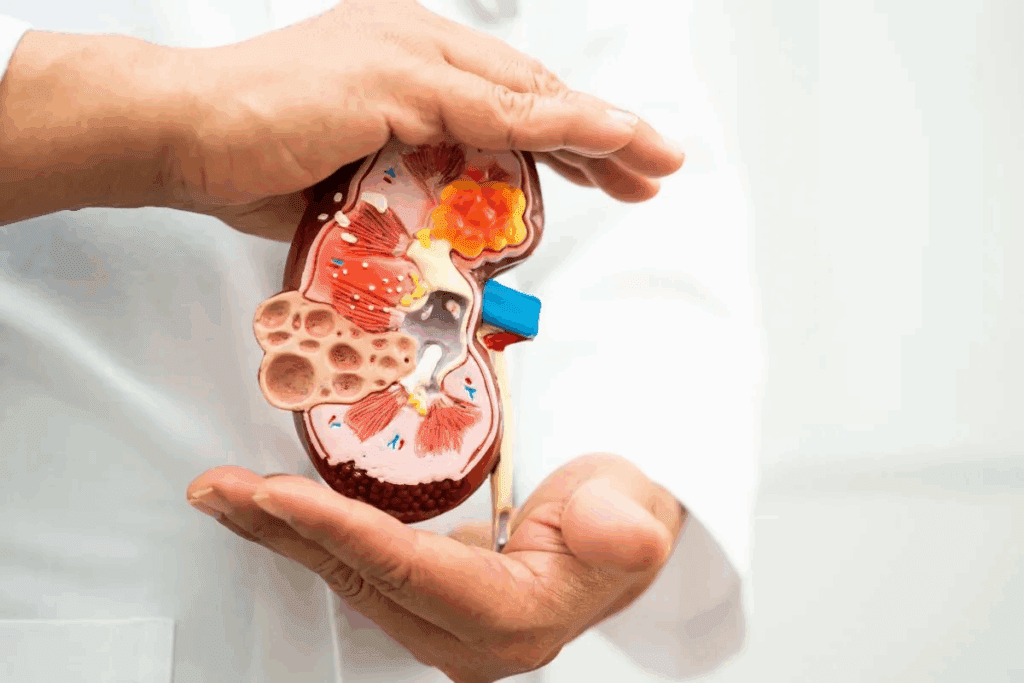
Kidney stones form from many factors, like diet, how much we drink, and health conditions. They are a big health problem for millions around the world. Let’s look into what kidney stones are and how they come to be.
What Are Kidney Stones?
Kidney stones are solid pieces that form in the kidneys from substances in the urine. They can happen due to not drinking enough water, certain diets, and health issues. The most common type is the calcium oxalate stone, making up about 70-80% of cases.
How Kidney Stones Form in the Body
Kidney stones form when crystals in the urine clump together, often because of not drinking enough water or certain diets. When urine gets too concentrated, minerals can turn into crystals and stick together, forming stones. Knowing how this happens is key to stopping them from forming again.
Things that help kidney stones form include not drinking enough water, eating too much of certain minerals, and health problems. By knowing these, people can lower their chance of getting kidney stones.
Common Types of Kidney Stones and Their Appearances
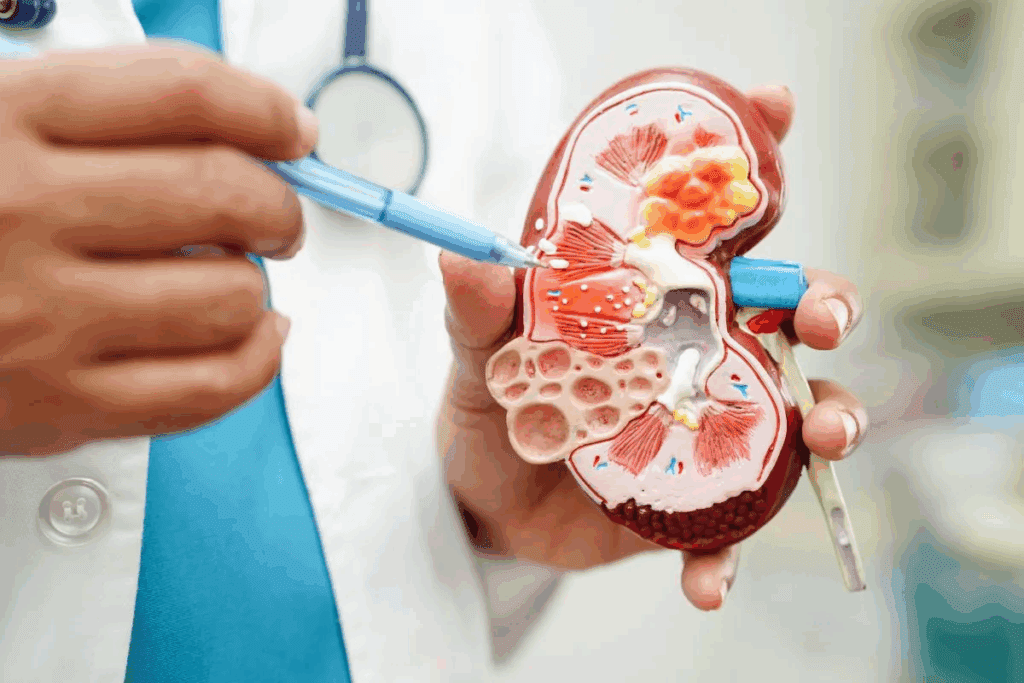
Kidney stones come in different types, each with its own look. Knowing what to look for can help you spot them in the toilet. This is important for identifying kidney stones.
Calcium Oxalate Stones
Calcium oxalate stones are the most common. They are dark brown, black, or yellow and have a rough surface. These stones often come from a diet high in oxalate or low in calcium.
Calcium Phosphate Stones
Calcium phosphate stones are lighter, usually white, cream, or pale yellow. They have a smoother texture. These stones are linked to issues with phosphate in the body.
Uric Acid Stones
Uric acid stones are yellow, orange, or reddish-brown. They have a smoother surface than calcium oxalate stones. These stones are more common in people with gout or who are obese.
Struvite Stones
Struvite stones are often white or gray and can grow large. They are linked to urinary tract infections (UTIs). These stones can block the urinary tract.
To better understand these stones, let’s look at their typical colors and textures in the table below:
Type of Stone | Typical Color | Surface Texture | Common Associations |
Calcium Oxalate | Dark brown, black, or yellow | Rough, spiky | Diet high in oxalate, low in calcium |
Calcium Phosphate | White, cream, or pale yellow | Smooth | Conditions affecting phosphate regulation |
Uric Acid | Yellow, orange, or reddish-brown | Smooth to somewhat rough | Gout, obesity |
Struvite | White or gray | Rough | Urinary tract infections |
Knowing about the different types of kidney stones and their looks helps you spot them. This knowledge is also useful when talking to doctors about your findings.
Small Kidney Stones in Toilet: Visual Identification Guide
Kidney stones can pass through urination and end up in the toilet. Their look can change a lot. Knowing what they look like can help you spot them and know what to do next.
Size Range of Passable Kidney Stones
Kidney stones come in all sizes, from tiny sand grains to big pearls or even golf balls. The size of the stone can affect how much pain you feel when it passes.
Size Comparison
Stone Size | Common Objects for Comparison |
Small (<5 mm) | Grain of sand, small pebble |
Medium (5-10 mm) | Pea, small marble |
Large (>10 mm) | Pearl, golf ball |
Common Colors and Textures
Kidney stones come in different colors and textures. You might see yellow, brown, black, or red stones. This depends on what they’re made of.
The texture can be smooth or jagged. Some stones look like crystals. Their look can tell you what they’re made of.
Distinguishing Kidney Stones from Other Substances
It’s not always easy to tell if something in the toilet is a kidney stone. But, kidney stones are usually hard and have a unique shape or texture.
To spot a kidney stone, look for:
- A hard, solid object
- Unusual colors or textures not typical of toilet waste
- A shape that is not characteristic of normal fecal matter
If you’re not sure if you’ve passed a kidney stone, it’s best to talk to a doctor. They can help figure it out and give advice.
The Journey of Kidney Stones Through the Urinary Tract
Learning about kidney stones’ journey through the urinary tract helps us understand their challenges. The body tries to pass these stones through the urinary tract in a complex way. This process involves several stages.
How Stones Travel from Kidneys to Bladder
Kidney stones form in the kidneys due to mineral concentration and other substances in the urine. Once formed, they start their journey through the urinary tract. The first step is passing from the kidney into the ureter, a muscular tube to the bladder.
This journey can cause a lot of pain and discomfort, known as renal colic. The pain is often felt in the side or back, below the ribs, and can spread to the lower abdomen or groin.
“The pain associated with passing a kidney stone can be excruciating,” medical professionals say. The ureter’s muscular walls contract to move the stone towards the bladder. This process is slow and painful.
The Final Passage: Bladder to Toilet
When the stone reaches the bladder, it’s almost done. The bladder stores urine and signals when it’s full to urinate. When a person urinates, the stone is expelled from the bladder and passes out of the body through the urethra and into the toilet.
The final passage can sometimes be accompanied by a feeling of relief, as the body has successfully expelled the stone. But, seeing a kidney stone in the toilet doesn’t always mean it’s over. Medical evaluation may be needed to prevent future occurrences.
We stress that while passing a kidney stone is a natural process, it can be very uncomfortable and risky for health. Understanding this journey helps us see why seeking medical care is important if we think we’re passing a kidney stone.
Factors Affecting the Appearance of Kidney Stones
Kidney stones can look different due to diet, how much you drink, and health conditions. Knowing these factors helps prevent stones and understand how they form.
Diet and Hydration Influences
What you eat and drink affects kidney stones. Eating too much of certain foods, like spinach, can lead to certain types of stones. Not drinking enough water can also cause stones to form.
But, eating right and drinking enough water can help avoid stones. Drinking eight glasses of water a day is a good start.
Medical Conditions That Alter Stone Appearance
Some health issues can change how kidney stones look. For example, too much parathyroid hormone can cause calcium phosphate stones. UTIs can lead to struvite stones, which are linked to infections.
Conditions like gout can cause uric acid stones. Knowing your health can help guess what kind of stone you might get.
Medications That Can Change Stone Color
Some medicines can change how kidney stones look. Antibiotics and anti-inflammatory drugs can alter stone color or texture. It’s important to talk to your doctor about any concerns.
Understanding what makes kidney stones look different helps prevent them. It also shows how complex their formation is.
How to Collect Kidney Stones from the Toilet
Collecting kidney stones from the toilet is a simple yet important step. It helps manage kidney stone disease. When a stone is passed, it can tell us about its composition. This information helps prevent future stones.
Using a Urine Strainer
Using a urine strainer is a great way to catch kidney stones. It’s a device that catches the stone as it’s passed. “A urine strainer is a straightforward method that ensures the stone is not lost down the drain,” says a urologist. We recommend using a clean strainer or a small mesh screen to carefully remove the stone.
The steps to use a urine strainer are as follows:
- Place the strainer over the toilet bowl before urinating.
- After passing the stone, carefully remove the strainer from the toilet.
- Rinse the strainer gently with water to remove any debris.
- Inspect the strainer to locate the stone.
Proper Handling and Storage
Once the stone is collected, it’s important to handle and store it properly. We should handle the stone gently to avoid damaging it. It’s recommended to place the stone in a clean container, such as a plastic bag or a specimen container, and seal it tightly.
Proper handling includes:
- Avoiding direct contact with the stone to prevent contamination.
- Keeping the stone away from extreme temperatures.
- Not attempting to crush or break the stone.
What to Do With Collected Stones
After collecting and storing the stone, the next step is to have it analyzed. We should take the stone to a healthcare provider or a laboratory for examination. The analysis will help determine the stone’s composition, which is key to understanding the cause of the stone formation.
As Medical Expert, a nephrologist, notes, “Analyzing the composition of the kidney stone can provide insights into dietary and genetic factors that may have contributed to its formation.” This information can guide preventive measures and reduce the risk of future stones.
In conclusion, collecting kidney stones from the toilet is a valuable step in managing kidney stone disease. By using a urine strainer, handling the stone properly, and having it analyzed, we can gain a better understanding of our condition. This helps us take steps towards prevention.
Real-Life Examples: What Passed Kidney Stones Look Like
Kidney stones come in many shapes and sizes. Real-life stories can give us a good idea of what they look like. Their looks change based on their makeup and how they form.
Patient Experiences with Different Types of Stones
People who have had kidney stones share their experiences. For example, calcium oxalate stones are usually small, hard, and dark. On the other hand, uric acid stones are smooth and yellowish.
“I was surprised by the size and color of my kidney stone when I passed it,” said one patient. “It was much smaller than I expected, and it had a rough texture.”
Another patient shared their story: “My kidney stone was black and had jagged edges. It was a relief to pass it, but its appearance was shocking.”
Common Misconceptions About Kidney Stone Appearance
There are many myths about kidney stones. One is that all stones are big and hurt a lot. But, many stones are small and don’t hurt much.
- Kidney stones are always visible to the naked eye.
- All kidney stones are the same color.
- Only large stones cause pain.
The truth is, kidney stones can look very different. Some are too small to see without a magnifying glass. Their color can be dark brown, yellow, or even white, depending on their makeup.
As a healthcare provider said, “Learning about passed kidney stones helps both patients and doctors. It helps us manage and prevent future stones.”
Analyzing Your Kidney Stones: What Doctors Look For
When a kidney stone is passed, doctors often recommend analyzing it. This helps them understand its composition and the reasons behind its formation. Such analysis offers valuable insights into a patient’s health. It also helps doctors spot risk factors for future stones.
Laboratory Testing Methods
Laboratory testing of kidney stones uses different methods to figure out their composition. The most common techniques include:
- Infrared Spectroscopy: This method analyzes the stone’s molecular structure, helping to identify its composition.
- X-ray Diffraction: This technique measures the way X-rays scatter off the stone’s atoms, providing information about its crystalline structure.
- Chemical Analysis: This involves breaking down the stone into its chemical components, allowing for a detailed analysis of its composition.
These methods help doctors find out the exact composition of the kidney stone. This is key to understanding its causes and finding ways to prevent future stones.
What Stone Analysis Reveals About Your Health
The analysis of a kidney stone can reveal important information. It can show what your diet, hydration levels, and health are like. For example:
Stone Composition | Possible Causes | Prevention Strategies |
Calcium Oxalate | Diet high in oxalate, low calcium intake | Increased calcium intake, reduced oxalate consumption |
Uric Acid | High purine diet, dehydration | Dietary changes, increased hydration |
Struvite | Urinary tract infection | Antibiotic treatment, urinary tract infection prevention |
By knowing the composition of a kidney stone and what caused it, doctors can create prevention plans. These plans aim to lower the risk of future stones.
When to Seek Medical Attention for Kidney Stones
Knowing when to get medical help for kidney stones is key. Passing a stone can hurt a lot. But, some cases need quick medical care to avoid serious problems.
Warning Signs and Symptoms
If you notice these signs, get medical help right away:
- Severe pain that doesn’t go away with medicine or treatment
- Signs of infection, like fever, chills, or nausea
- Inability to urinate or a big drop in urine output
- Blood in the urine or ongoing blood in the pee
- Vomiting or trouble keeping fluids down
Emergency Situations
Some kidney stone cases are emergencies. They need quick medical help. These include:
- Severe obstruction causing kidney damage or injury
- Infection spreading to other urinary tract parts or blood
- Uncontrolled pain or pain that doesn’t get better with treatment
- If you’re in one of these emergency situations, get medical help fast.
Follow-up Care After Passing Stones
After passing a stone, see your doctor for:
- To check the stone’s type and find out why it formed
- To talk about how to avoid more stones in the future
- To handle any health issues that might lead to stones
Differentiating Kidney Stones from Other Medical Conditions
When you have symptoms of kidney stones, it’s important to think about other possible causes. This ensures you get the right care. Kidney stones can be mistaken for other health issues, making it key to get a correct diagnosis.
Gallstones vs. Kidney Stones
Gallstones and kidney stones are both painful but affect different areas. Gallstones form in the gallbladder, while kidney stones form in the kidneys. Knowing the difference is vital for the right diagnosis.
Characteristics | Kidney Stones | Gallstones |
Location | Kidneys | Gallbladder |
Symptoms | Severe pain in the side and back, below the ribs | Severe pain in the upper right abdomen |
Triggers | Dehydration, diet, genetics | Diet, obesity, certain medical conditions |
The National Institute of Diabetes and Digestive and Kidney Diseases says, “Kidney stones are hard deposits made of minerals and salts that form inside the kidneys.”
Urinary Tract Infections and Their Signs
Urinary tract infections (UTIs) can look like kidney stones, with pain while urinating. But UTIs are caused by bacteria, unlike kidney stones which are mineral deposits.
Common signs of UTIs include:
- A strong, persistent urge to urinate
- A burning sensation when urinating
- Cloudy or strong-smelling urine
Medical Expert, a urologist says, “It’s important to tell UTIs and kidney stones apart, as their treatments are different.”
Other Conditions That Mimic Kidney Stone Symptoms
Other health issues can also have symptoms like kidney stones. These include:
- Appendicitis
- Diverticulitis
- Musculoskeletal pain
Getting a correct diagnosis from a healthcare professional is key. It helps figure out what’s causing your symptoms and the right treatment.
Prevention Strategies for Recurring Kidney Stones
To stop kidney stones from coming back, you need to make changes in your diet, drink plenty of water, and sometimes take medicine. If you’ve had kidney stones before, knowing how to prevent them is key.
Dietary Modifications
Your diet is very important in preventing kidney stones. Lowering sodium intake is a must because too much sodium can lead to more calcium in your urine. This can cause stones to form.
Try to eat less of foods high in oxalate, like spinach and beets, if you’re at risk for calcium oxalate stones. Foods high in calcium can help bind oxalate in your intestines. But, get your calcium from food, not supplements, unless a doctor tells you to.
Hydration Recommendations
Drinking enough water is a top way to prevent kidney stones. Water helps dilute your urine, making it less likely for stones to form. Aim for 8-10 glasses of water a day. Drink more if you’re active or live in a warm place.
Medications That Help Prevent Stone Formation
If diet and hydration aren’t enough, medicine can help. Thiazide diuretics can lower calcium in your urine. Potassium citrate can make your urine less acidic, helping prevent uric acid stones.
Always talk to your doctor to find the right medicine and plan for you.
Prevention Strategy | Description | Benefit |
Dietary Modifications | Reduce sodium intake, limit high oxalate foods | Decreases risk of stone formation |
Hydration | Drink at least 8-10 glasses of water per day | Dilutes urine, reducing stone risk |
Medications | Thiazide diuretics, potassium citrate | Reduces calcium in urine, prevents uric acid stones |
Conclusion: Understanding Your Kidney Stone Journey
Knowing what kidney stones look like and how they form is key. It’s important for those who have had them or might get them. By spotting the signs and understanding how they form, we can avoid them in the future.
We’ve looked at the types of kidney stones, their looks, and how they form. We’ve also talked about the need to study passed stones and how to stop more from forming. This knowledge helps us manage and prevent kidney stones.
Understanding kidney stones helps us make better health choices. Seeing a kidney stone in the toilet is a big step in taking care of our health. We hope this info helps people take charge of their kidney stone journey.
FAQ
What do kidney stones look like when they are passed in the toilet?
Kidney stones can look different. They can be small or big, and their color and texture vary. They might be white, yellow, brown, or black, and can be smooth or rough.
How can I identify kidney stones in the toilet?
Look for small, hard mineral deposits in the toilet bowl. Using a urine strainer can help catch them. Pay attention to their size, color, and texture to tell them apart from other things.
What are the different types of kidney stones and how do they appear?
There are several types of kidney stones. Calcium stones are usually white or yellow. Uric acid stones are yellow or brown. Struvite stones are big and have a rough texture.
Can diet and hydration affect the appearance of kidney stones?
Yes, diet and hydration matter. Dehydration can lead to stone formation. What you eat, like oxalate or calcium, can also affect the stones’ appearance.
How do I collect kidney stones from the toilet for analysis?
Use a urine strainer to catch the stones. Rinse them with water and store them in a clean container. Talk to a healthcare provider about how to handle and send them for analysis.
What should I do if I pass a kidney stone?
Save the stone for analysis and see a healthcare provider. They can tell you what type of stone it is and help prevent future stones.
When should I seek medical attention for kidney stones?
See a doctor if you have severe pain, trouble urinating, or signs of infection. Emergency situations include severe pain, vomiting, or trouble urinating.
How can I prevent recurring kidney stones?
To prevent stones, change your diet and stay hydrated. In some cases, medications can help. Knowing why you get stones is key to preventing them.
Can other medical conditions be mistaken for kidney stones?
Yes, other conditions like gallstones or infections can seem like kidney stones. A doctor’s diagnosis is important to get the right treatment.
What does a kidney stone analysis reveal about my health?
A stone analysis shows what it’s made of. This helps understand why it formed. It’s important for preventing future stones and managing health issues.
References
Kok, D. J. (2016). Timelines of the “free-particle” and “fixed-particle” models of renal stone formation. World Journal of Nephrology, 5(6), 213–219. https://pmc.ncbi.nlm.nih.gov/articles/PMC5250668/