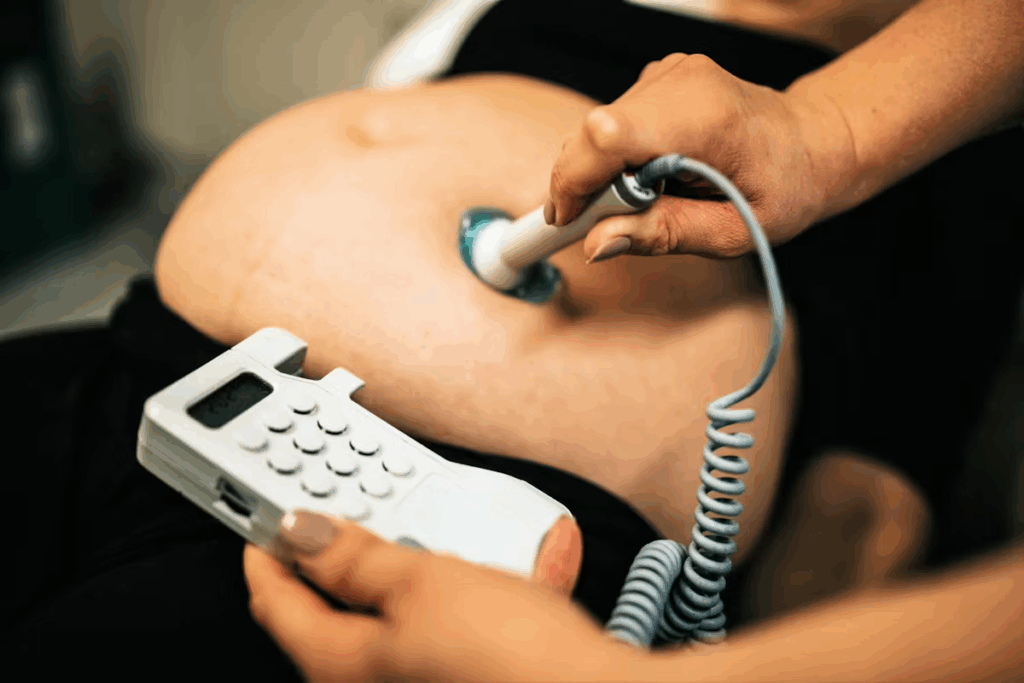
Understanding fetal development is key for good prenatal care. We need exact measurements to check how the fetus is growing and spot any problems early.
At Liv Hospital, we mix the world’s top perinatology practices with care that focuses on the patient. This way, we give families clear info on their baby’s growth.
Accurate fetal biometry is critical for knowing the baby’s age, tracking growth, and finding any issues. We measure things like biparietal diameter (BPD), head circumference (HC), abdominal circumference (AC), and femur length (FL).
Key Takeaways
- Understanding fetal biometry is vital for assessing fetal growth and development.
- Fetal biometry measurements help estimate gestational age and detect growth abnormalities.
- Parameters like BPD, HC, AC, and FL are critical for a full assessment.
- Liv Hospital follows international best practices in perinatology for precise care.
- Accurate fetal biometry is essential for maternal and fetal well-being.
The Science of Fetal Biometry and Its Clinical Significance

Fetal biometry is key for doctors to manage pregnancies well. It measures different parts of the fetus to check growth and health. This helps doctors spot problems early.
Definition and Role in Modern Perinatology
Fetal biometry measures the size of the fetus to check its age and growth. It looks at the head, belly, and legs. These measurements help doctors know how big the baby will be and if it’s healthy.
The Australian Society for Ultrasound in Medicine says these measurements are very important. They help doctors decide how to care for the pregnancy.
Key Parameters and Their Developmental Significance
Each measurement gives doctors different information about the fetus:
- BPD: Shows how big the head is and if it’s growing right.
- HC: Gives a full picture of how the head is growing.
- AC: Tells about the size of the belly and how much the baby weighs.
- FL: Looks at the length of the bones, showing how the baby is developing.
Parameter | Significance |
BPD | Assesses fetal head size and growth |
HC | Comprehensive assessment of fetal head growth |
AC | Indicates fetal abdominal size and growth |
FL | Measures fetal long bone length and skeletal development |
Impact on Pregnancy Management
Getting the measurements right is very important. It helps doctors find and fix problems early. Experts say it’s key for spotting growth issues and other problems.
“The accurate assessment of fetal biometry is fundamental to modern obstetric care, enabling healthcare providers to make informed decisions about pregnancy management and improve outcomes for both mother and fetus.”
Knowing about fetal biometry helps doctors take better care of pregnant women and their babies. This leads to better health for both.
Essential Equipment and Technical Prerequisites
Getting accurate fetal measurements depends a lot on ultrasound technology and how well patients are prepared. Healthcare providers must follow strict technical rules to get reliable results.
Ultrasound Technology Requirements
Top-notch ultrasound gear is key for precise fetal measurements. Modern machines need features like harmonic imaging and speckle reduction for clear images. The ASUM guidelines say high-resolution transducers, between 3.5 to 7 MHz, are best for different ages and positions of the fetus.
Patient Preparation and Positioning
Getting the patient ready is very important for accurate measurements. They should drink water to fill their bladder, which helps see the fetus better. The patient lies on their back, sometimes with a tilt to the left to avoid blood pressure issues.
Making sure the patient is comfortable helps reduce baby movement and improves the picture quality.
Image Optimization Techniques
Image optimization is key for accurate fetal measurements. Adjusting the gain, depth, and focus is important. Using harmonic imaging helps clear up the picture by reducing artifacts.
It’s also important to make sure the fetus is in the right spot and the image is taken when the baby is not moving much. This helps get accurate measurements.
By using the latest ultrasound technology, careful patient preparation, and image optimization techniques, healthcare providers can greatly improve fetal biometry accuracy. This leads to better care for pregnant women.
Measuring Biparietal Diameter (BPD): Step-by-Step Guide
The biparietal diameter (BPD) is a key part of fetal biometry. It’s important to measure it accurately to track fetal growth. Healthcare providers must follow a set method to get reliable results.
Identifying the Correct Transventricular Plane
To measure BPD right, finding the correct plane is key. This plane has the cavum septum pellucidum, thalami, and the third ventricle. The Australasian Society for Ultrasound in Medicine (ASUM) says to use this plane for BPD.
“The correct identification of the transventricular plane is fundamental to obtaining accurate BPD measurements, which in turn, are critical for assessing fetal development.”
To get the right plane, the sonographer needs to adjust the ultrasound probe. They should see the fetal head in a transverse section. This makes sure the midline structures are clear.
Proper Caliper Placement Technique
Putting calipers in the right spot is essential for BPD measurement. Place them on the outer edge of the proximal skull wall and the inner edge of the distal skull wall. This follows the ASUM guidelines.
- Ensure the calipers are correctly positioned on the skull edges.
- Verify that the measurement is taken at the widest part of the skull.
- Use the correct caliper placement technique to minimize measurement errors.
Normal BPD Values and Growth Patterns
BPD values change as the pregnancy progresses. Knowing the normal growth patterns helps spot any issues. The table below shows expected BPD values at different gestational ages.
Gestational Age (Weeks) | Expected BPD (mm) |
16 | 35-40 |
20 | 45-50 |
24 | 55-60 |
28 | 65-70 |
32 | 75-80 |
By following these steps and using a bpd calculator or fetal biometry charts, healthcare providers can accurately measure BPD. This helps them track fetal growth well.
Head Circumference (HC) Measurement Protocol
Accurate measurement of fetal head circumference (HC) is key for tracking fetal growth and spotting issues early. We’ll cover how to measure HC, including the landmarks to look for, the methods to use, and the expected sizes at different stages of pregnancy.
Anatomical Landmarks for Accurate HC Assessment
To get a precise HC measurement, it’s important to know the right landmarks. The standard plane for HC measurement is the transventricular plane. This includes:
- The cavum septum pellucidum, a fluid-filled space between the frontal horns of the lateral ventricles.
- The thalami, which should be symmetrical and in the middle.
- The third ventricle, a thin, hypoechoic structure between the thalami.
Manual vs. Automated Measurement Methods
There are two main ways to measure HC: manual and automated. Manual measurement uses calipers on a frozen ultrasound image to trace the head’s circumference. It needs skill and experience for accuracy.
Automated measurement tools in modern ultrasound machines can automatically trace the head’s outer edge. While they offer consistency, it’s important to check their accuracy.
HC Reference Ranges Across Gestation
Knowing the normal HC range at different pregnancy stages is critical for spotting issues. These ranges come from large studies and can vary slightly by population.
Gestational Age (weeks) | Mean HC (mm) | Lower Limit (mm) | Upper Limit (mm) |
20 | 174 | 158 | 190 |
24 | 219 | 201 | 237 |
28 | 262 | 244 | 280 |
Abdominal Circumference (AC) Assessment Techniques
Measuring the fetal abdominal circumference (AC) is key to tracking growth during pregnancy. We’ll look at how to measure AC, including the best plane and method. We’ll also cover what’s considered normal and how growth patterns change.
Locating the Standard AC Plane
Finding the right plane for AC measurement is critical. The Australian Society of Ultrasound in Medicine (ASUM) has guidelines. They say the plane should show a round fetal abdomen, the spine, and the stomach and portal vein umbilical segment.
Measurement Methodology and Validation
To measure AC, trace the outer edge of the abdomen at the standard plane. You can use manual or automated methods. Automated measurements might be more consistent.
It’s important to validate AC measurements. Check the image quality, make sure the plane is correct, and measure at the right time in the cardiac cycle.
AC Normal Ranges and Growth Patterns
Knowing the normal range for AC is key to spotting growth problems. The range changes with gestation. Reference charts help healthcare providers. Generally, AC should be between the 10th and 90th percentile for age.
Gestational Age (weeks) | AC Mean (mm) | AC 10th Percentile (mm) | AC 90th Percentile (mm) |
20 | 144 | 128 | 160 |
24 | 194 | 174 | 214 |
28 | 244 | 220 | 268 |
32 | 294 | 266 | 322 |
36 | 344 | 312 | 376 |
Understanding how to assess AC and its normal ranges helps healthcare providers. This way, they can better track fetal growth and improve pregnancy outcomes.
Femur Length (FL) and Additional Biometric Parameters
Fetal biometry goes beyond basic measurements. It includes important parameters like femur length to check fetal growth. Understanding femur length and other biometric parameters is key. They help in assessing fetal development.
Proper FL Measurement Technique
Accurate femur length measurement is essential for tracking fetal growth. The Australasian Society for Ultrasound in Medicine (ASUM) guidelines state that the femur should be measured in a longitudinal view. The correct caliper placement is vital, ensuring the measurement is from one end of the diaphysis to the other, excluding the epiphysis.
To get an accurate FL measurement:
- Make sure the femur is parallel to the ultrasound beam.
- Use a clear image with both ends of the femur visible.
- Place calipers correctly on the diaphysis, excluding the epiphysis.
FL:BPD Ratio Clinical Significance
The femur length to biparietal diameter (FL:BPD) ratio is key in fetal biometry. It helps in checking fetal growth patterns and spotting abnormalities. A normal FL:BPD ratio is between 0.7 and 0.8, but it can vary slightly with gestational age.
An abnormal FL:BPD ratio may signal:
- Skeletal dysplasias
- Growth restriction
- Other fetal developmental issues
Supplementary Measurements: Humerus, Tibia, and Fibula
Long bones like the humerus, tibia, and fibula also offer valuable insights into fetal development. These measurements are useful in diagnosing skeletal dysplasias or growth abnormalities.
Mean Sac Diameter Measurement in Early Pregnancy
In early pregnancy, the mean sac diameter (MSD) is a key parameter. It’s calculated by averaging the diameters of the gestational sac in three planes. MSD is very useful before the embryo is visible, helping to estimate gestational age and monitor early pregnancy.
“The mean sac diameter is a critical parameter in early pregnancy ultrasound, providing essential information for dating and monitoring embryonic development.”
— ASUM Guidelines
Using a mean sac diameter calculator can help accurately determine gestational age. It can also spot issues in early pregnancy.
Calculating Estimated Fetal Weight (EFW) Using Biometric Parameters
Getting the exact weight of a fetus is key in today’s perinatology. It helps doctors make important decisions during pregnancy. They use ultrasound to measure different parts of the fetus to guess its weight.
The Hadlock Formula: Methodology and Application
The Hadlock formula is a top choice for guessing fetal weight. The Australasian Society for Ultrasound in Medicine (ASUM) says it’s very reliable. It looks at several measurements from ultrasound, like:
- Biparietal Diameter (BPD)
- Head Circumference (HC)
- Abdominal Circumference (AC)
- Femur Length (FL)
The formula is: Log10EFW = 1.326 + 0.0107(HC) + 0.0438(AC) + 0.158(FL) – 0.00326(AC*FL). It uses many measurements to give a good guess.
“The Hadlock formula is very accurate for guessing EFW at different times in pregnancy,” which makes it very useful for doctors.
Alternative EFW Calculation Methods
There are other ways to guess fetal weight, like the Shepard formula. But it only looks at BPD and AC. The Hadlock formula is usually more accurate because it uses more measurements.
EFW Accuracy and Limitations
It’s important to know what EFW guesses can’t always be right. Things like how the fetus is lying, the mom’s body shape, and the quality of the ultrasound can affect it. “EFW should always be looked at with other ultrasound findings.”
Doctors use percentiles to see if the EFW is normal for the pregnancy time. They use this information to decide how to manage the pregnancy.
“Using EFW in practice needs a deep understanding of how it works and its limits.”
By knowing how to guess EFW and what it means, doctors can take better care of pregnancies. They can make smart choices about when to intervene or keep a closer eye on things.
Interpreting Fetal Growth Patterns Through Serial Biometry
Serial biometry is key for spotting early signs of trouble. It uses ultrasound to track a fetus’s growth at different times in pregnancy. This helps doctors see if the fetus is growing right and find any problems that need extra care.
Tracking Growth Velocity Across Gestation
Watching how fast a fetus grows is very important. It shows if the fetus is growing at a normal pace. If it’s not, it might mean there’s a problem like fetal growth restriction (FGR).
We use a fetal growth calculator to track this. It looks at things like the fetus’s head size, belly size, and leg length from ultrasound scans.
Understanding Fetal Growth Percentiles
Fetal growth percentiles compare a fetus’s size to a standard group. They tell if the fetus is bigger or smaller than usual for its age. The baby percentile calculator pregnancy helps understand how a fetus is growing.
Knowing these percentiles is key to spotting growth problems. For example, a fetus that’s too small or too big might need extra attention.
Identifying and Managing Growth Abnormalities
Finding growth problems early is a big part of serial biometry. By watching growth and percentiles, doctors can catch issues early. The percentiles for fetal weight are very important for spotting risks.
Here’s a table showing fetal weight percentiles at different ages:
Gestational Age (weeks) | 10th Percentile (grams) | 50th Percentile (grams) | 90th Percentile (grams) |
28 | 900 | 1100 | 1300 |
32 | 1400 | 1700 | 2000 |
36 | 2200 | 2600 | 3000 |
40 | 2800 | 3300 | 3800 |
Seeing the data can help understand fetal growth better. Here’s an example:
Special Considerations in Fetal Biometry
Fetal biometry needs careful thought and special attention. Healthcare providers must consider many factors to get accurate measurements. These factors can greatly affect the results.
Multiple Gestation Biometry Techniques
When there are multiple fetuses, biometry gets more complicated. Accurate measurement is key. It requires a detailed and precise approach to measure each fetus correctly.
- Identify each fetus with a clear label to avoid confusion during measurements.
- Use a systematic approach to measure each biometric parameter for every fetus.
- Consider the possible differences in growth between fetuses.
Maternal Conditions Affecting Measurements
Some maternal conditions can make fetal biometry tricky. For example, maternal obesity can make ultrasound images blurry. This can lead to less accurate measurements.
Diabetes can also change how a fetus grows. This means healthcare providers need to watch closely and might need to adjust their measurement methods.
Ethnic and Population-Specific Variations
Fetal growth patterns differ among ethnic and population groups. It’s important to understand these differences. This helps in accurately interpreting fetal biometry measurements.
Perinatology EDD and Due Date Calculations
Calculating the Estimated Date of Delivery (EDD) is a big part of fetal biometry. A reliable perinatology due date calculator is essential. It helps ensure the due date is accurate, which is vital for managing the pregnancy.
The perinatology EFW (Estimated Fetal Weight) calculation is also key. Healthcare providers use it to track fetal growth and development.
By taking these special factors into account and using tools like the perinatology due date calculator, healthcare providers can improve fetal biometry. This leads to better pregnancy outcomes.
Conclusion: Optimizing Fetal Biometry in Clinical Practice
Improving fetal biometry is key for better health outcomes. Following guidelines, like those from the Australasian Society for Ultrasound in Medicine (ASUM), helps. This ensures our measurements are accurate and consistent.
Fetal biometry is critical in perinatology. It includes measurements like biparietal diameter (BPD), abdominal circumference (AC), and estimated fetal weight (EFW). Accurate EFW calculation is vital for tracking growth and spotting issues.
When dealing with special cases, like twins or certain health conditions, we need to be extra careful. Using a fetal growth calculator helps track growth and spot problems early.
Combining technical skills with knowledge of fetal development is essential. As we improve our methods and stay current with research, we can make fetal biometry more accurate. This leads to better health outcomes for our patients.
FAQ
What is fetal biometry, and why is it important in pregnancy?
Fetal biometry is key in modern pregnancy care. It measures things like the size of the baby’s head and body. This helps doctors check how the baby is growing and doing well.
How is fetal biometry performed, and what equipment is required?
To do fetal biometry, doctors use special ultrasound machines. It’s important for the mom to be ready and for the doctor to know how to use the machine right. This way, they get accurate measurements.
What is the significance of measuring biparietal diameter (BPD) in fetal biometry?
Measuring BPD is very important. It shows how the baby is growing. Doctors need to find the right spot and use the right tools to get the measurements right.
How is abdominal circumference (AC) measured, and what are its normal ranges?
Measuring AC is key to checking how the baby is growing. Doctors need to know how to measure it and what’s normal. This helps them take good care of the baby.
What is the clinical significance of the femur length (FL) to BPD ratio?
The FL:BPD ratio is very useful. It helps doctors see how the baby is growing. Knowing how to measure it and what it means is important for doctors.
How is estimated fetal weight (EFW) calculated, and what are its limitations?
EFW is important for knowing how the baby is growing. The Hadlock formula is often used. But doctors need to know its limits to make sure the results are right.
What are the special considerations in fetal biometry for multiple gestation pregnancies?
When there are twins or more, doctors have to be extra careful. They need to know how to measure each baby right. This is important for getting accurate measurements.
How do maternal conditions affect fetal biometry measurements?
Things like diabetes or high blood pressure can change how the baby grows. Doctors need to know this to make sure they’re measuring right. This helps keep the baby healthy.
What are fetal growth percentiles, and how are they used in clinical practice?
Fetal growth percentiles help track how the baby is growing. They help doctors spot any problems early. This is key for taking good care of the baby.
How can healthcare providers optimize fetal biometry in clinical practice?
To do the best fetal biometry, doctors need to know a lot. They should follow guidelines and use the best methods. This helps them get accurate measurements and keep the baby healthy.
References
Government Health Resource. Pituitary Gland: Alternative Names and Functions. Retrieved from https://histology.siu.edu/erg/pituit.htm