At Liv Hospital, we know how complex aortic repairs can be. We also know how vital expert care is. Aortic aneurysms, like abdominal aortic aneurysms (AAA), need careful treatment. That’s why we use Fenestrated Endovascular Aneurysm Repair (FEVAR) and Endovascular Aneurysm Repair (EVAR). These minimally invasive methods are changing how we treat patients.
A study in Sweden looked at treating juxtarenal abdominal aortic aneurysms. They compared open surgery with FEVAR. This shows how treatment for aortic aneurysms is changing. We’re dedicated to top-notch healthcare and helping international patients.
Key Takeaways
- Knowing the differences between FEVAR and EVAR is key for treating aortic aneurysms.
- FEVAR and EVAR are new, less invasive ways to treat aortic aneurysms, promising better results for patients.
- Liv Hospital leads in innovative, patient-centered aortic repair methods.
- Getting expert care and understanding is vital for complex aortic repairs.
- We offer full support and guidance for international patients looking for advanced medical care.
Understanding Aortic Aneurysms: The Foundation of EVAR and FEVAR
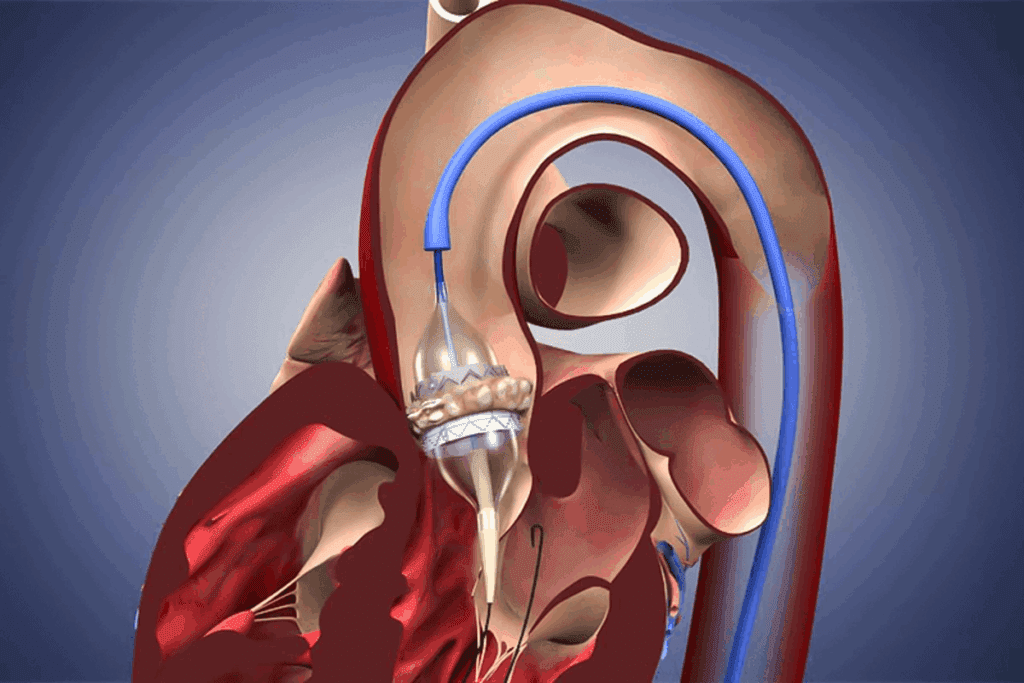
To understand EVAR and FEVAR, we must first know about aortic aneurysms. These occur when the aorta, the body’s largest artery, expands. This can be dangerous and needs quick medical care.
What is an Abdominal Aortic Aneurysm (AAA)?
An Abdominal Aortic Aneurysm (AAA) is when the abdominal aorta gets bigger. Often, people don’t notice it until it’s too late. That’s why regular checks are key.
Smoking, high blood pressure, and family history can increase your risk. Doctors use ultrasound or CT scans to find and measure AAA.
Aortic Dissection and Related Conditions
Aortic dissection happens when the aorta’s inner layer tears. This lets blood flow between the layers, causing severe pain. It’s a serious emergency.
The Stanford classification system helps doctors understand the extent of the dissection. Other issues like intramural hematoma and penetrating atherosclerotic ulcers can also harm the aorta.
ICD-10 Classification of Aortic Conditions
The ICD-10 system helps doctors code diagnoses. For aortic problems, specific codes show where and what the issue is. For example, an aneurysm below the kidneys is coded differently than one above.
Knowing these codes is vital for accurate patient records and insurance. They help doctors talk clearly and track health trends.
Endovascular Aneurysm Repair (EVAR): An Overview
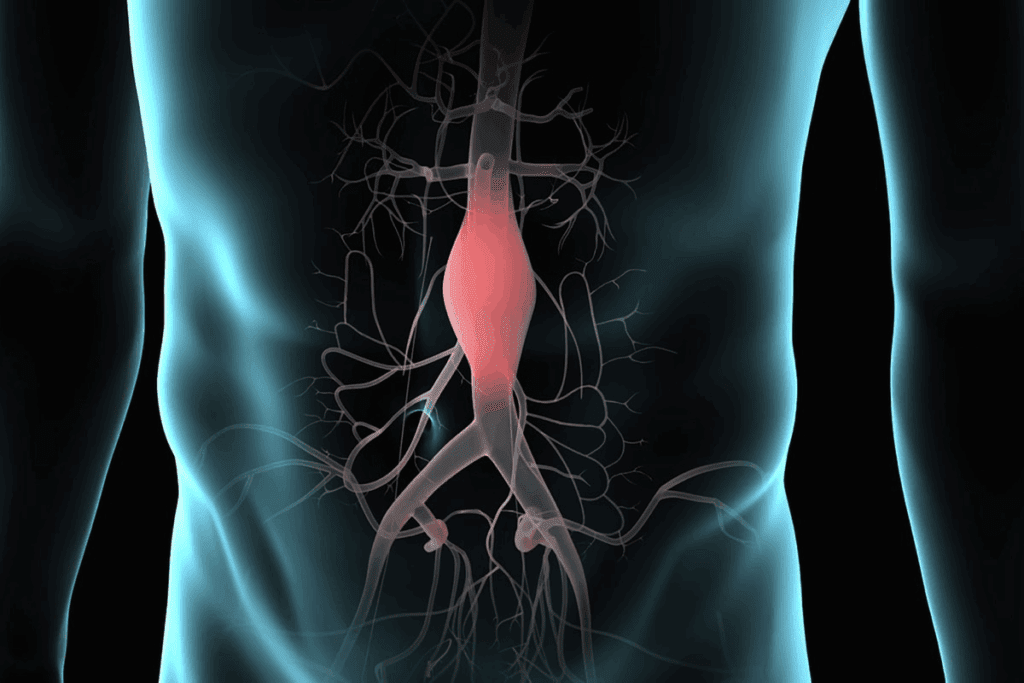
EVAR has become a top choice for treating aortic aneurysms. It has seen big improvements in technology. Now, it’s a key part of vascular surgery.
EVAR Medical Abbreviation Explained
EVAR means Endovascular Aneurysm Repair. It’s a minimally invasive procedure for aortic aneurysms. “Endovascular” means it uses minimally invasive techniques through blood vessels, not big cuts.
The Evolution of EVAR Technology
EVAR technology has changed a lot over time. At first, it was hard to find the right grafts and the procedure was complex. But, new vascular graft technology and advanced imaging have made EVAR better.
Now, EVAR uses customized grafts and advanced imaging. This has improved patient outcomes a lot.
Standard EVAR Procedure Components
A standard EVAR procedure includes several important steps:
- Pre-operative planning and imaging
- Access to the femoral arteries
- Deployment of the stent graft
- Angiographic confirmation of the exclusion of the aneurysm sac
These steps are key to a successful EVAR procedure. They help treat the aneurysm well and lower the risk of problems.
Fenestrated Endovascular Aneurysm Repair (FEVAR): Advancing Treatment Options
Complex aortic aneurysms need precise treatment. FEVAR is a key solution in vascular surgery. It’s designed for aneurysms near or involving critical branch vessels, where standard EVAR fails.
What Does “Fenestrated” Mean in Medical Context?
In medicine, “fenestrated” means a graft with precise holes or fenestrations. These holes match the patient’s visceral arteries. They allow blood to flow to vital organs while excluding the aneurysm.
The term “fenestrated” comes from the Latin “fenestra,” meaning window. It shows the graft’s ability to keep blood flowing through the fenestrations to branch vessels.
The Development of FEVAR Procedure
The FEVAR procedure has greatly improved over time. Advances in graft technology and imaging have driven this progress. Fenestrated grafts now allow surgeons to treat complex aneurysms more precisely and safely.
Now, grafts are more customized to fit each patient’s anatomy. This personalization has led to better outcomes and more patients benefiting from endovascular aneurysm repair.
Key Components of Fenestrated Grafts
Fenestrated grafts have several important parts. These include the main graft body, fenestrations, and stent structures. The stents support and keep the graft in place.
| Component | Description | Function |
| Main Graft Body | The primary structure of the graft | Excludes the aneurysm from blood flow |
| Fenestrations | Precise holes in the graft | Allows blood flow to branch vessels |
| Stent Structures | Provides support to the graft | Maintains graft position and patency |
FEVAR vs EVAR: 9 Critical Differences in Approach and Application
It’s key to know the differences between FEVAR and EVAR for treating aortic aneurysms. Both methods tackle aortic aneurysms but differ in how they’re applied.
Anatomical Considerations: Where Each Procedure Excels
The choice between FEVAR and EVAR depends on the patient’s body shape. EVAR is best for aneurysms below the kidneys. FEVAR is for more complex cases near or involving the kidneys.
EVAR suits patients with simple anatomy. FEVAR is for complex cases. Its design fits around the kidneys and other vital arteries precisely.
Technical Complexity Comparison
FEVAR is more complex than EVAR because of its custom grafts. It needs precise placement to fit the patient’s arteries.
“The technical complexity of FEVAR requires a high level of expertise and advanced imaging techniques to ensure accurate graft placement.”
EVAR is complex but follows a standard method. It fits various anatomies but lacks the precision of FEVAR in complex cases.
Patient Selection Criteria Differences
Choosing patients for FEVAR and EVAR depends on their anatomy, health, and other conditions. FEVAR is for high-risk patients with complex aneurysms not fit for EVAR.
Choosing the right patient is vital for both procedures. For FEVAR, detailed imaging and planning are needed to match the graft with the patient’s anatomy.
Comparing FEVAR and EVAR shows the need for tailored treatment in vascular surgery. Knowing the differences helps doctors make better choices for patients.
Stent Placement in the Aorta: Technical Aspects
Stent placement in the aorta has seen big changes thanks to vascular graft technology. The details of this process are key for fixing aneurysms and helping patients.
Vascular Graft Technology
New vascular graft technology has greatly improved stent placement in the aorta. Today’s grafts are stronger and fit better with the body, cutting down on risks. Studies show that these new grafts have made a big difference in fixing aneurysms(Source).
Aorta Graft Materials and Design
Different materials are used for aorta grafts, like polyester and PTFE, and even biological ones. Each graft is made to fit the patient perfectly, ensuring good blood flow. The right material and design are key for the graft’s success.
Fenestrations: Purpose and Design
Fenestrations are special openings in the graft for blood flow to important branches. They keep blood flowing to vital areas while keeping the aneurysm out. Making sure fenestrations fit with the branch vessels is critical for keeping organs working right.
EVAR for AAA: Standard Applications and Limitations
Endovascular Aneurysm Repair (EVAR) is a key treatment for Abdominal Aortic Aneurysms (AAA). It’s a less invasive option compared to traditional surgery. We’ll look at when EVAR is used and its limitations.
Infrarenal Abdominal Aortic Aneurysm Treatment
EVAR is often used for infrarenal AAA, which is below the renal arteries. It involves placing an endograft in the aorta. This stops the aneurysm from growing and rupturing.
Doctors check several things before EVAR, like the aneurysm’s size and the patient’s health. Preoperative imaging helps plan the treatment.
EVAR Surgery Process
The EVAR surgery has several steps:
- Accessing the femoral arteries under local or general anesthesia.
- Guiding catheters and wires through the arteries to the aortic aneurysm.
- Deploying the endograft to exclude the aneurysm.
- Confirming the exclusion of the aneurysm and patency of the graft.
When EVAR Is Not Suitable
Even though EVAR is a game-changer for AAA, it’s not for everyone. It’s not suitable for:
- Complex aneurysm shapes, like juxtarenal or suprarenal ones.
- Short or poor aortic necks for endograft fixation.
- Significant iliac artery disease that makes access or graft placement hard.
In these cases, other treatments like fenestrated EVAR (FEVAR) or open surgery might be better. The right treatment depends on the patient’s specific situation.
FEVAR Procedure: Complex Cases and Specialized Applications
The FEVAR procedure has changed how we treat complex aortic aneurysms. It offers a new hope for patients with tough anatomical conditions. We’ll look at how FEVAR handles juxtarenal and suprarenal aneurysms and the unique customization of fenestrated grafts.
Juxtarenal and Suprarenal Aneurysms
Juxtarenal and suprarenal aneurysms are tough for traditional EVAR procedures. These aneurysms are close to or involve the renal arteries. Fenestrated grafts are key in the FEVAR procedure for these cases.
The FEVAR procedure for these aneurysms includes:
- Precise planning and imaging to find the best spot for fenestrated grafts.
- Customizing grafts to fit the patient’s anatomy, ensuring they align with arteries.
- Using advanced catheter techniques to place the graft.
Customization of Fenestrated Grafts
The success of FEVAR depends on customizing fenestrated grafts. These grafts are made to fit each patient’s unique anatomy. They have fenestrations that match the patient’s arteries. This ensures blood flow to vital organs, lowering the risk of problems.
Customizing these grafts involves:
- Using detailed imaging and measurements to plan the graft’s design.
- Working together with vascular surgeons and biomedical engineers to design the graft.
- Creating the graft with precise fenestrations that match the patient’s anatomy.
Challenging Anatomical Variations
Patients with complex anatomies need special treatments. The FEVAR procedure is flexible and can handle these cases where standard EVAR can’t.
Key points for FEVAR in complex cases include:
- Using advanced imaging to understand the anatomy.
- Being able to design grafts that fit unique aortic morphologies.
- Having expertise in navigating complex anatomy during the procedure.
By tackling these complex cases with precision, the FEVAR procedure gives new hope to those at high risk for surgery.
Procedural Comparison: From Diagnosis to Operating Room
The path from diagnosis to surgery for aortic aneurysms is complex. It involves imaging, planning, and technical skills, varying between FEVAR and EVAR. Each step, from imaging to surgery, is key to a patient’s outcome.
Pre-operative Imaging and Planning
Pre-operative imaging is vital for both FEVAR and EVAR. Techniques like CT angiography and MRI help assess the aneurysm’s size and location. A study in the Journal of Vascular Surgery highlights the importance of accurate imaging for choosing the right stent graft.
FEVAR planning is more detailed due to the need for custom grafts. These must fit the patient’s anatomy perfectly, requiring careful measurement and planning.
AAA Radiology Considerations
Radiology is key in diagnosing and planning treatment for Abdominal Aortic Aneurysms (AAA). It looks at the aneurysm’s size, any blood clots, and its position. EVAR and FEVAR need precise imaging to check the aneurysm neck for stent graft placement.
The choice between EVAR and FEVAR depends on radiology findings. FEVAR is often chosen for more complex cases involving the renal or visceral arteries.
Intraoperative Techniques and Tools
Intraoperative techniques and tools have greatly improved, making EVAR and FEVAR safer and more precise. Fusion imaging and advanced navigation systems guide stent graft placement in real-time.
A vascular surgeon notes, “Advanced imaging in surgery has changed endovascular repair. It makes procedures more accurate and safer.”
Also, new tools and stent grafts for FEVAR have opened up treatment options for complex aortic aneurysms.
Recovery and Outcomes: What Patients Can Expect
Recovery and outcomes after FEVAR and EVAR procedures are key for patient care. It’s vital to understand the recovery process to improve patient results.
Post-Procedure Hospital Stay
The time in the hospital after FEVAR or EVAR varies. It depends on the procedure’s complexity and the patient’s health. Usually, patients stay 1-3 days to manage any immediate issues and ensure a smooth recovery.
Our medical team watches over the patient closely. They manage pain and adjust medications as needed. Early movement is encouraged to avoid complications like deep vein thrombosis.
Long-term Follow-up Requirements
Long-term follow-up is essential for FEVAR or EVAR patients. Regular CT scans are needed to check the aneurysm’s size and the graft’s integrity. The scan frequency decreases over time if there are no issues.
We create a personalized follow-up plan for each patient. This ensures they get the care needed to prevent long-term problems.
Neuropsychological Considerations After Aortic Procedures
Research shows aortic procedures like FEVAR and EVAR may affect the brain. Studies on aaa neuropsychology are ongoing. But, it’s clear that checking cognitive function is important after the procedure.
We stress the need for a complete care plan. This includes neuropsychological support to help with any cognitive or emotional challenges after the procedure.
By understanding the recovery process and following a structured follow-up plan, patients can get the best results after FEVAR or EVAR procedures. Our team is dedicated to providing top-notch care throughout the recovery journey.
Complications and Risk Management
It’s important to know about the possible problems with FEVAR and EVAR. These surgeries are usually safe, but there are risks. We need to manage these risks well.
Types of Endoleaks and Their Management
Endoleaks are a big problem with FEVAR and EVAR. They happen when there’s a leak around the graft. There are different kinds of endoleaks, each needing its own way to be fixed.
- Type I Endoleak: This happens when the graft doesn’t seal well at the ends. We might use more stent-grafts or ballooning to fix it.
- Type II Endoleak: It’s caused by blood flowing back into the aneurysm from aorta branches. We might watch it, block it with embolization, or do surgery.
- Type III Endoleak: This is due to the graft failing, like tears or breaks. We usually fix it with more stent-grafts.
- Type IV Endoleak: It’s caused by the graft being too porous. It’s rare with today’s grafts and often goes away on its own.
- Type V Endoleak (Endotension): This is when the aneurysm sac keeps getting pressurized without any visible leaks. It’s hard to manage and might need constant watching or intervention.
Device-Related Complications
Problems with the device can include the graft moving, breaking, or wearing out. These issues can cause leaks or blockages. We use high-tech imaging to catch these problems early and fix them fast.
Most of these problems can be avoided by choosing the right patients and doing the surgery carefully.
Long-term Surveillance Protocols
Keeping an eye on patients long-term is key for FEVAR and EVAR. We use CT scans to check the graft and the aneurysm sac regularly.
- First check-ups are usually within a month after the surgery.
- Then, we schedule follow-ups at 6, 12 months, and every year after that.
- We might change the schedule based on how each patient is doing.
By understanding and managing these risks, we can make sure patients do well after FEVAR and EVAR.
Advancements in Research: Michigan AAA Studies and Beyond
Michigan AAA is leading the way in endovascular aneurysm repair research. Their work is key to improving aortic aneurysm treatment.
Michigan Centers of Excellence
Michigan boasts several top centers for aortic aneurysm research and treatment. These places are known for their innovative methods and latest technology. The University of Michigan, for instance, has been a leader in vascular surgery research, helping develop new techniques and devices.
These centers focus on bettering EVAR and FEVAR procedures. They’re working on graft technology and techniques to improve patient care and treatment options.
TEVAR Surgery: Related Thoracic Procedures
Thoracic endovascular aortic repair (TEVAR) surgery is a major advancement in treating aortic aneurysms. It involves placing a stent graft in the thoracic aorta. This minimally invasive procedure has changed how we treat thoracic aortic conditions, making it safer for many patients.
Research on TEVAR surgery is ongoing. Studies aim to improve stent graft design, reduce complications, and broaden its use. Advanced imaging and navigation systems are also making TEVAR more precise and effective.
Future Directions in Endovascular Aneurysm Repair
Research is moving towards more personalized treatments for aortic aneurysms. The future holds customizable grafts, better imaging, and enhanced procedures. These advancements will lead to better patient outcomes and more people benefiting from these treatments.
The use of artificial intelligence and machine learning will also be key. They will help predict outcomes, spot complications, and refine treatment plans. Collaboration between research, clinicians, and industry will be vital in driving these innovations and improving care.
Conclusion: Choosing Between FEVAR and EVAR
Choosing between Fenestrated Endovascular Aneurysm Repair (FEVAR) and Endovascular Aneurysm Repair (EVAR) is important. It depends on the patient’s anatomy, the aneurysm’s complexity, and the team’s skills.
Studies show FEVAR is good for complex aneurysms near the renal arteries. It offers a more precise treatment. EVAR is a standard for abdominal aortic aneurysms below the kidneys.
Deciding between FEVAR and EVAR needs a thorough look at the patient’s situation. It’s about following the latest guidelines and using the right expertise. This way, doctors can choose the best treatment for each patient.
New technology and more research are helping to improve these treatments. They make it easier to pick the right procedure for aortic aneurysm repair. This leads to better care for patients.
FAQ
What is the difference between FEVAR and EVAR?
FEVAR and EVAR are both ways to treat aortic aneurysms. EVAR is for aneurysms below the kidneys. FEVAR is for more complex cases above or near the kidneys. It uses special grafts to keep vital arteries open.
What is an abdominal aortic aneurysm (AAA)?
An AAA is when the aorta in your belly gets too big. It’s more than 3 cm or 50% bigger than normal. This is a serious problem that can burst if not treated.
What does “fenestrated” mean in the context of FEVAR?
“Fenestrated” in FEVAR means the graft has holes. These holes match up with arteries to keep blood flowing. It helps keep vital organs safe while fixing the aneurysm.
How is EVAR performed?
EVAR uses a stent-graft through the femoral arteries. It’s guided by images. The stent-graft is placed in the aneurysm to stop it from getting worse or bursting.
What are the possible complications of EVAR and FEVAR?
Complications can include leaks, the graft moving, or clotting. There are also risks during the procedure like bleeding. Watching the graft over time is important.
What is the recovery process like after EVAR or FEVAR?
Recovery starts with a short hospital stay. Then, rest at home is needed. It’s important to follow up closely to check on the graft and aneurysm.
What is TEVAR surgery?
TEVAR is like EVAR but for the upper part of the aorta. It uses a stent-graft to fix aneurysms or dissections in the chest.
How are endoleaks managed?
Managing endoleaks depends on their type and how bad they are. Some need more treatment, while others can be watched closely.
What is the role of pre-operative imaging in EVAR and FEVAR?
Imaging before surgery is key. It helps plan the procedure, size the graft, and spot any challenges.
Can EVAR or FEVAR be used for all types of aortic aneurysms?
No, EVAR or FEVAR works based on the aneurysm’s location, size, and shape. The patient’s health and blood vessels also matter.
Reference
- Yoon, W. J., et al. (2019). Fenestrated endovascular aneurysm repair versus snorkel EVAR for complex aneurysms: A review. PMC.



 Departments
 Related Videos
 Our Doctors
 News
News