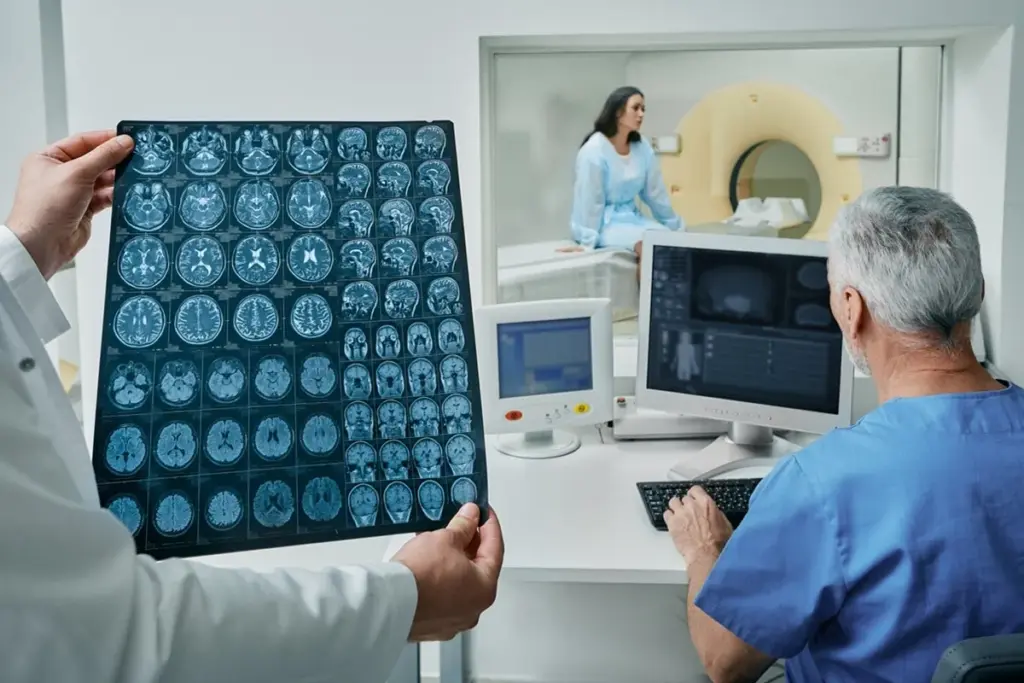
Did you know that CT scans can detect tumors as small as a few millimeters in diameter? This is key in catching cancer early. The process of finding tumors can be scary and complex. CT scans are very important in this journey, giving doctors clear images to plan treatments. Recovering from a cystoscopy? Learn what constitutes a normal recovery timeline and when you can safely return to your daily work and activities.
CT scans use X-rays to create detailed cross-sectional images of the body. They help spot tumors in different parts of the body. This tool is great because it’s safe and gives quick results. Quick results are vital for acting fast in medical care.
Key Takeaways
- CT scans can detect tumors as small as a few millimeters.
- They provide detailed images that aid in diagnosis and treatment planning.
- CT scans are a non-invasive diagnostic tool.
- Rapid results from CT scans enable timely medical interventions.
- CT scans are key in early cancer detection and treatment.
Understanding CT Scans and Their Function
What is a CT Scan?
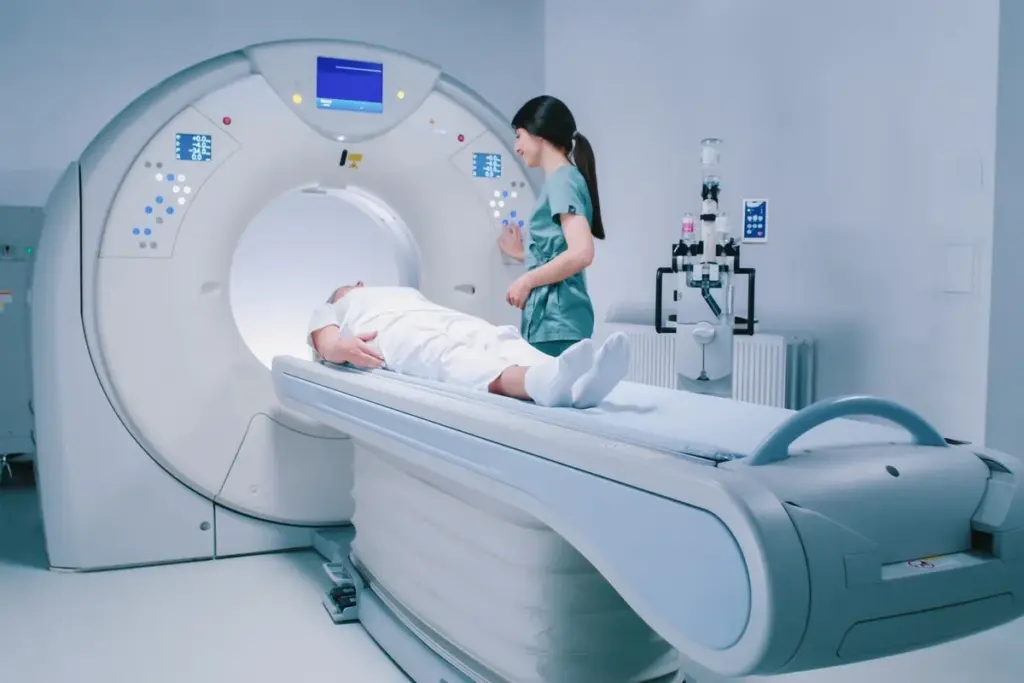
A CT scan, or Computed Tomography scan, uses X-rays and computer tech to show body parts inside. This non-invasive tool is great for seeing inside injuries, finding tumors, and helping with some medical procedures.
How Does a CT Scan Work?
An X-ray machine moves around the body, taking pictures from different sides. A computer then makes detailed pictures of the body’s inside. The whole thing is quick and doesn’t hurt, taking just a few minutes.
The CT scan process includes:
- X-ray emission and detection
- Computer reconstruction of images
- Detailed cross-sectional imaging
Advantages of CT Scans in Diagnostic Imaging
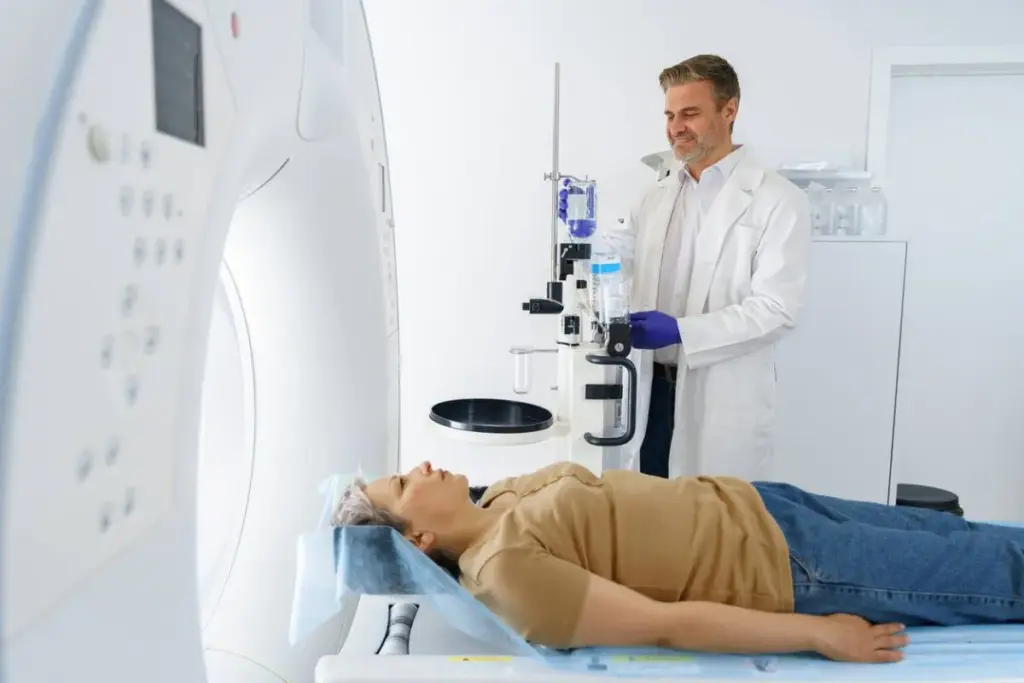
CT scans have many benefits in medical imaging, such as:
- High-resolution images: They give doctors clear pictures to help diagnose better.
- Speed and efficiency: The scan is fast, perfect for urgent cases.
- Non-invasive: Unlike some tests, CT scans don’t need surgery or instruments inside the body.
We aim to give you the latest and most accurate info. Knowing how CT scans work and their benefits helps you understand their importance in your health care.
Tumors: Definition and Types
Tumors are abnormal growths that can happen in different parts of the body. Knowing their types is key for good diagnosis and treatment. They can be benign or malignant, and finding them is a big part of medical care.
What are Tumors?
A tumor is a growth of tissue that happens when cells divide too much or don’t die when they should. Tumors can be benign (non-cancerous) or malignant (cancerous).
Benign tumors don’t spread to other areas or invade nearby tissues. But, malignant tumors can spread and cause serious harm.
Benign vs. Malignant Tumors
It’s important to know if a tumor is benign or malignant to choose the right treatment. Benign tumors are usually not dangerous and don’t need aggressive treatment. On the other hand, malignant tumors are cancerous and can be deadly if not treated right away.
- Benign Tumor Characteristics:Non-cancerous
- Does not invade surrounding tissues
- Does not metastasize
- Malignant Tumor Characteristics:Cancerous
- Invades surrounding tissues
- Can metastasize to other parts of the body
Common Types of Tumors Detected by CT Scans
CT scans are great for finding different kinds of tumors, both benign and malignant. Some common tumors found by CT scans include:
Tumor Type | Description |
|---|---|
Liver Tumors | Can be benign (e.g., hemangiomas) or malignant (e.g., hepatocellular carcinoma) |
Lung Tumors | Often malignant (e.g., lung carcinoma), but can also be benign (e.g., hamartomas) |
Pancreatic Tumors | Can be benign (e.g., pancreatic cysts) or malignant (e.g., pancreatic adenocarcinoma) |
The Role of CT Scans in Tumor Detection
CT scans play a key role in finding tumors early. They help doctors see inside the body clearly. This makes it easier to spot tumors accurately.
Effectiveness in Tumor Detection
Research shows CT scans are good at finding tumors. They give detailed pictures of the body. This helps doctors see things that regular X-rays can’t.
The accuracy of CT scans comes from their ability to spot small differences in tissue. This means doctors can find tumors early. Early detection is key for good treatment plans.
Tumor Type | Detection Rate | Diagnostic Accuracy |
|---|---|---|
Lung Tumors | 85% | High |
Liver Tumors | 80% | Moderate to High |
Pancreatic Tumors | 75% | Moderate |
Types of Tumors Typically Identified
CT scans can find many types of tumors. They work well for lung, liver, and pancreatic tumors.
- Lung tumors, both small cell and non-small cell lung cancer
- Liver tumors, including hepatocellular carcinoma
- Pancreatic tumors, such as pancreatic adenocarcinoma
Limitations of CT Scans in Tumor Diagnosis
Even though CT scans are very useful, they have some downsides. They might not always tell if a tumor is benign or malignant.
Also, CT scans use radiation. This is something to think about, as patients might need more than one scan. We always consider the risks and benefits for each patient.
Understanding the capabilities and limitations of CT scans is vital for patients and healthcare providers in making informed decisions. It helps us understand the results and plan the next steps.
Cystoscopy: An Overview
A cystoscopy lets doctors see inside the bladder and urethra. It helps find problems that might be causing symptoms. This is key for checking the urinary tract’s health.
What is a Cystoscopy?
A cystoscopy lets doctors see inside the bladder and urethra. They use a thin, flexible tube with a camera and light. This gives a clear view of the inside.
The procedure can be done with local anesthesia or sedation. The cystoscope is inserted through the urethra into the bladder. This allows for a detailed look.
When is a Cystoscopy Recommended?
A cystoscopy is often needed for symptoms like persistent urinary tract infections, blood in the urine, or urinary incontinence. It helps find the cause of blockages or monitor conditions.
It can also treat problems like removing bladder stones or tumors. Or, it can inject medications into the bladder.
Comparing Cystoscopy with Other Diagnostic Options
Cystoscopy gives a direct view of the bladder and urethra. But, tests like CT scans or ultrasound can give more information. The choice depends on the symptoms and the doctor’s judgment.
Sometimes, doctors might use more than one test. This ensures they get the right diagnosis and treatment plan.
Is a CT Scan Better than a Cystoscopy?
It’s important to know the differences between CT scans and cystoscopy. Both are used for different reasons in healthcare. They each have their own strengths.
Strengths of CT Scans in Tumor Detection
CT scans are great at showing detailed images of the body. They help find tumors in places like the abdomen, pelvis, and chest. They’re really good at spotting tumors in organs like the liver, kidneys, and pancreas. This makes them a top choice for many first tests.
CT scans are fast and can look at many parts of the body at once. This is great in emergencies or when checking how far cancer has spread. They also help guide biopsies and other procedures.
Circumstances Favoring Cystoscopy
Cystoscopy lets doctors see inside the bladder and urethra directly. It’s best for finding problems in the urinary tract, like bladder cancer, stones, and strictures. It can spot things that CT scans might miss.
Cystoscopy is also good for treating some problems. It can do biopsies, remove stones, or widen narrow spots in the urinary tract. This makes it very useful in urology.
Expert Opinions on Diagnostic Efficacy
Doctors have different views on when to use CT scans versus cystoscopy. It depends on the situation and what’s being looked for. Some think CT scans are best because they’re non-invasive and can look at many areas. Others say cystoscopy is better for seeing the urinary tract up close.
Diagnostic Tool | Primary Use | Key Benefits |
|---|---|---|
CT Scan | General diagnostic imaging for various body parts | Non-invasive, quick, and capable of imaging multiple body areas |
Cystoscopy | Direct visualization of the bladder and urethra | Detailed examination, allows for biopsies and therapeutic interventions |
Choosing between a CT scan and cystoscopy depends on your situation and what your doctor thinks is best. Always talk to a healthcare professional to find the right test for you.
Preparing for a CT Scan
We’re here to help you get ready for a CT scan. This test is key for spotting health issues like tumors. Knowing what to expect makes the process easier.
What to Expect During a CT Scan?
You’ll lie on a table that slides into a big, doughnut-shaped machine. The scan is quick, lasting just a few minutes. Our team will make sure you’re comfy and guide you through it.
It’s a painless procedure, and you can talk to our team through an intercom. Sometimes, a contrast dye is used to highlight body areas. You might feel a slight coolness or warmth from the dye.
Patients’ Preparatory Guidelines
To get ready for your CT scan, follow these tips:
- Take off any jewelry or metal objects that could get in the way.
- Wear loose, comfy clothes.
- If you’re getting a scan with contrast, you might need to fast for a few hours first.
- Tell us about any allergies or health conditions you have.
By following these steps, your CT scan will be safe and effective.
Potential Side Effects to Consider
CT scans are usually safe, but there are some side effects to watch out for, mainly with contrast dye. You might feel:
- A metallic taste in your mouth.
- A feeling of warmth or coldness.
- In rare cases, an allergic reaction to the dye.
Our team is ready to handle any reactions and will keep a close eye on you. If you’re worried, just ask us.
Being informed and prepared can help reduce anxiety. We’re dedicated to giving you the best care during this time.
Post-Scan Procedures and Interpretations
Getting your CT scan results is a big moment in your health journey. We’re here to help you understand what they mean and what to do next. Our specialists are ready to support and guide you through this important time.
Understanding Your Results
CT scans can show important details about your health, like tumors or injuries. Our radiologists will look at the images and write a detailed report. This report will be shared with you and your doctor. It’s important to talk about the results with your doctor to know what they mean and what to do next.
When looking at your results, consider a few things:
- The quality of the images
- If there are any abnormalities
- If more tests or scans are needed
Follow-Up Testing After a CT Scan
Your doctor might suggest more tests to get more information or to watch your condition. This could be more imaging, biopsies, or other tests. We know more tests can be scary, but we’re here to support you.
More testing is key to your health journey. It helps:
- Confirm or rule out findings
- Watch how a condition changes or how treatment works
- Get a more accurate diagnosis for better treatment plans
Importance of Specialist Consultations
After getting your CT scan results, talking to specialists is very important. Our team works with your doctor to make sure you get the best care. Specialists can give valuable insights into your condition, helping make treatment decisions.
“The collaboration between radiologists, clinicians, and other specialists is key to making sure patients get accurate diagnoses and effective treatment plans.”
By working with our specialists, you can be sure you’re getting the best care for your needs.
Frequently Asked Questions About CT Scans
CT scans are used more often for medical diagnosis. This raises questions about their safety and how well they work. We aim to clear up some common questions about CT scans. This includes their role in finding tumors, their safety, and how often they can be used.
Tumor Detection Capabilities
Many patients wonder if CT scans can find all tumors. CT scans are very good at spotting many tumors. But, they can miss some, depending on the tumor’s size, location, and type.
Key factors influencing tumor detection by CT scans:
- Tumor location and size
- Type of tumor (benign or malignant)
- Use of contrast agents
Tumor Type | Detectability by CT Scan |
|---|---|
Liver tumors | Highly detectable with contrast |
Pancreatic tumors | Detectable, sometimes challenging |
Kidney tumors | Highly detectable |
Safety of CT Scans
Patients often worry about the safety of CT scans, mainly because of radiation. It’s true that CT scans use radiation. But, the benefits usually outweigh the risks, as long as they are used correctly.
It’s worth noting that:
- The dose of radiation from a CT scan is typically low.
- Modern CT scanners are designed to minimize radiation exposure.
- The risk of radiation-induced harm is generally considered to be low.
Frequency of CT Scans
Another question is how often a patient can have a CT scan. The answer depends on the condition being monitored and the doctor’s judgment.
Guidelines for CT scan frequency:
- For cancer patients, CT scans may be performed at regular intervals to monitor treatment response.
- For patients with certain chronic conditions, CT scans may be used to monitor disease progression.
- In emergency situations, CT scans may be performed as needed.
Conclusion: Making Informed Choices on Diagnostic Testing
It’s important to know about diagnostic testing options for good patient care. We guide you through choices like CT scans and cystoscopy. This way, you get the best care.
Weighing Diagnostic Options
CT scans and cystoscopy are key tools in diagnosis. CT scans show detailed images and spot tumors well. Cystoscopy lets doctors see the bladder and urethra directly. Your healthcare team will pick the best test for you.
Guidance from Healthcare Professionals
Talking to healthcare professionals is key for making smart diagnostic choices. They explain the testing process, understand the results, and suggest more tests if needed.
The Impact of Timely Diagnosis
Getting a diagnosis quickly is very important. Choosing the right test and working with your healthcare team ensures top care.
FAQ
What is a CT scan, and how does it work?
A CT scan uses computer tech and X-rays to show detailed images inside the body. It’s great for finding tumors and other problems.
Can a CT scan detect all types of tumors?
CT scans can find many kinds of tumors, both good and bad. But, they might miss very small tumors or those in hard-to-reach spots.
What is the difference between a CT scan and a cystoscopy?
A CT scan uses X-rays to see inside the body. A cystoscopy uses a special camera to look at the bladder and urethra. They serve different purposes.
How safe is a CT scan?
CT scans are mostly safe, but they do use some radiation. The good they do usually outweighs the risk. Always talk to your doctor if you’re worried.
How often can you have a CT scan?
How often you can get a CT scan depends on your health and what your doctor says. While there’s no limit, try to avoid too much radiation.
What is a cystoscopy, and when is it recommended?
A cystoscopy lets doctors see inside the bladder and urethra. It’s used to check for problems like bladder cancer or infections.
What are the advantages of CT scans in diagnostic imaging?
CT scans show detailed pictures of the body’s inside. They help find many health issues, like tumors and injuries. They’re good for spotting things other tests can’t see.
How do I prepare for a CT scan?
To get ready for a CT scan, take off jewelry and wear loose clothes. Follow any food rules your doctor gives you. They’ll tell you exactly what to do.
What are the possible side effects of a CT scan?
Side effects from a CT scan are usually small. They might include reactions to dye used in the scan. Always tell your doctor about any allergies or worries before the scan.
How do I understand my CT scan results?
To get your CT scan results, talk to a doctor, like a radiologist. They’ll explain what the scan found and what it means. They might suggest more tests or treatment.
AUG-22841National Center for Biotechnology Information. Evidence-Based Medical Insight. Retrieved from https://pubmed.ncbi.nlm.nih.gov/40293346/**