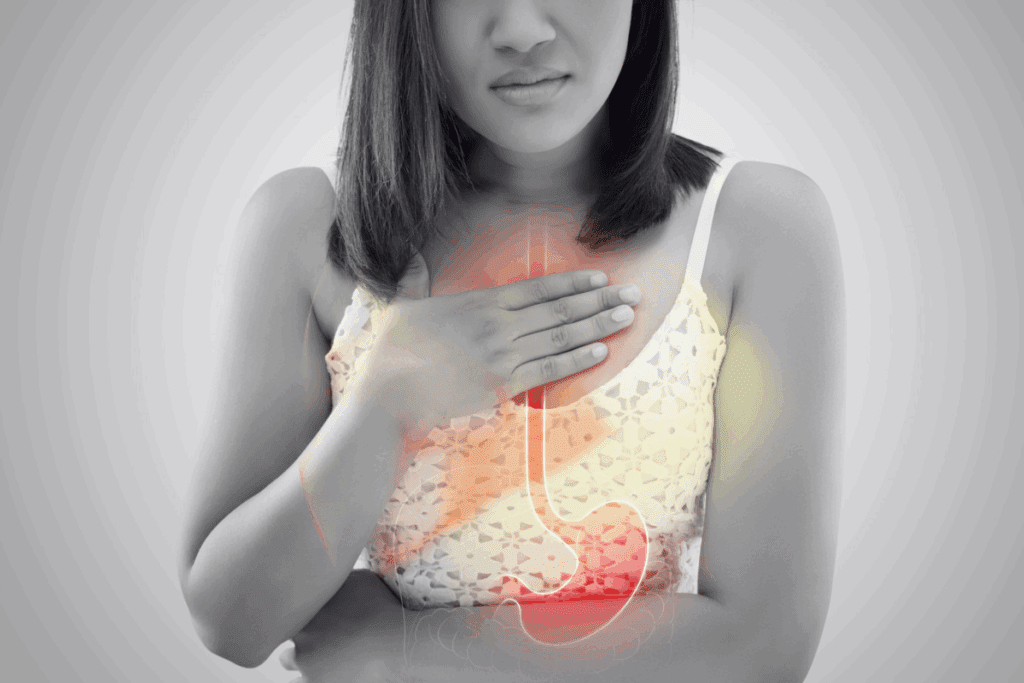
Gastroesophageal reflux disease, or GERD, is a long-term condition. It happens when stomach contents leak into the esophagus, leading to discomfort. At Liv Hospital, we know how upsetting it can be to feel like food coming back up my throat.
GERD affects millions worldwide, making life harder for them. We’re dedicated to giving you trusted, evidence-based care. Our goal is to help you manage this condition well.
Key Takeaways
- GERD is a chronic gastrointestinal disorder.
- It involves the regurgitation of stomach contents into the esophagus.
- Common symptoms include food coming back up the throat.
- GERD can significantly impact your quality of life.
- Liv Hospital offers patient-centered care for GERD management.
Understanding GERD: What It Means for Your Digestive Health
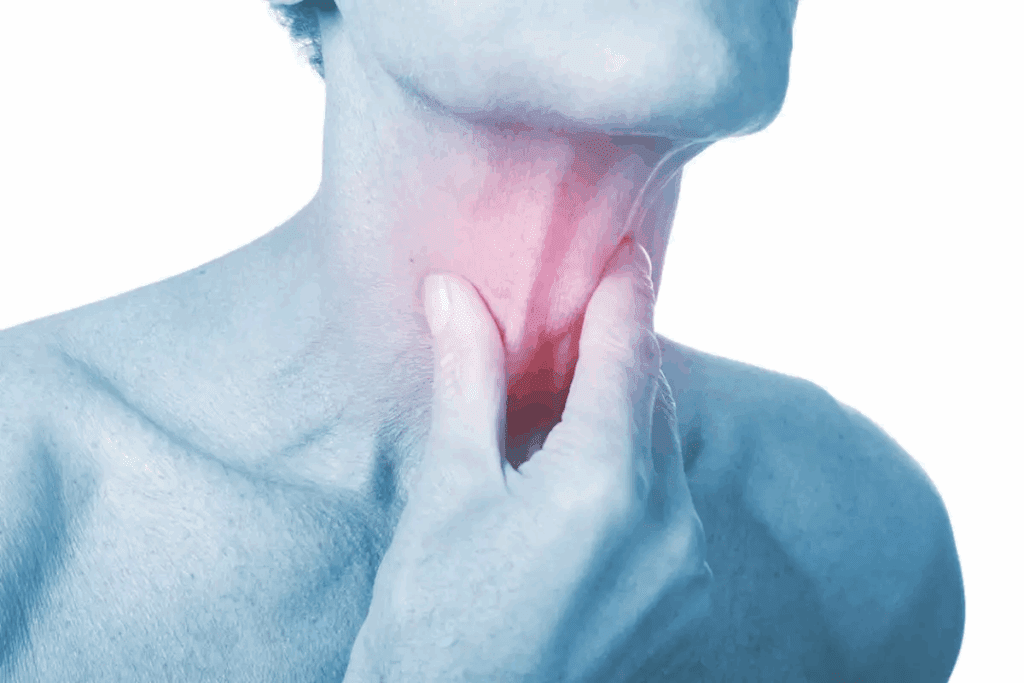
GERD, or gastroesophageal reflux disease, is a long-term condition. It happens when stomach acid flows back into the esophagus. This can cause uncomfortable symptoms and serious problems.
What Does GERD Stand For in Medical Terms?
In medical terms, GERD stands for Gastroesophageal Reflux Disease. It’s when stomach acid often flows back into the esophagus. This can irritate the esophagus lining and cause discomfort. Knowing what GERD means is key to treating it right.
The Prevalence and Economic Impact of GERD
GERD affects many people worldwide, with 5% to 25% of the population having it. It also has a big economic impact. Costs include healthcare, lost work time, and lower quality of life.
| Region | Prevalence of GERD | Economic Impact |
| North America | 20% | $10 billion annually |
| Europe | 15% | €8 billion annually |
| Asia | 10% | $5 billion annually |
Knowing how common and costly GERD is shows why we need to tackle it. We must focus on diagnosing, treating, and managing it well.
Why Is Food Coming Back Up My Throat? The Mechanics Explained
GERD, or Gastroesophageal Reflux Disease, happens when the Lower Esophageal Sphincter (LES) weakens. This lets stomach acid flow back into the esophagus. This backflow can cause discomfort, pain, and make swallowing hard.
The LES is key in stopping stomach acid from going back up. It relaxes to let food into the stomach and then tightens to keep acid out. But, in GERD, the LES might not work right, leading to symptoms.
Symptoms of GERD include heartburn, chest pain, and trouble swallowing. Knowing the causes and symptoms of GERD helps manage the condition and ease discomfort.
Common Symptoms of GERD Beyond Regurgitation
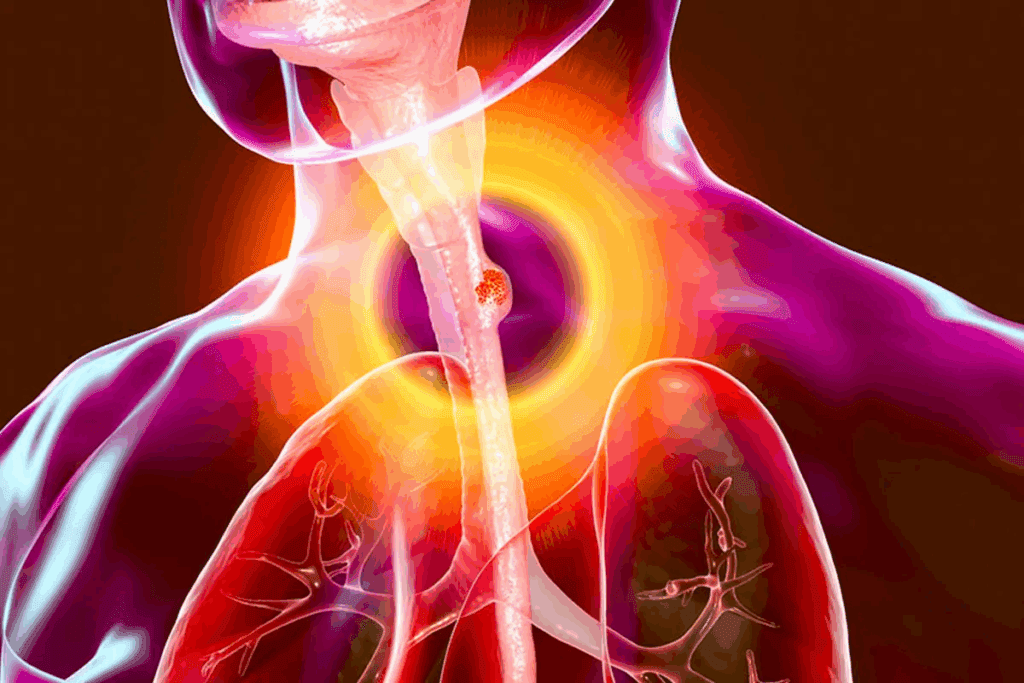
Regurgitation is a key sign of GERD, but many people face other symptoms too. These symptoms can really disrupt daily life. It’s important to know and spot them.
Heartburn and Chest Discomfort
Heartburn is a common GERD symptom. It feels like a burning in the chest. It can get worse with certain foods or lying down after eating.
Heartburn feels like a burning pain that moves up from the chest. It happens when stomach acid goes back into the esophagus, irritating it.
Food Sitting on Chest or Feeling Stuck at Top of Stomach
Some people with GERD feel like food is stuck in their chest or upper stomach. This can be scary and uncomfortable. It often makes them worry about what’s wrong.
This feeling usually comes from the lower esophageal sphincter (LES) not working right. It lets stomach contents go back up into the esophagus.
Stomach Acid Leaking Sensations
GERD patients might also feel stomach acid leaking into their throat or mouth. This can be very upsetting. It might taste sour or bitter.
Stomach acid leaking happens when the LES is weak. This lets acidic stomach contents move up. It can cause discomfort and might harm the esophageal lining over time.
| Symptom | Description | Common Triggers |
| Heartburn | Burning sensation in the chest | Certain foods, lying down after eating |
| Food Stuck Sensation | Feeling of food being stuck in the chest or upper stomach | Eating large or fatty meals |
| Stomach Acid Leaking | Sensation of stomach acid in the throat or mouth | Bending over, tight clothing |
Experiencing Food Coming Up When Burping: Why It Happens
GERD, or Gastroesophageal Reflux Disease, is a condition where stomach acid flows back into the esophagus. This can cause discomfort and pain. Symptoms include heartburn and regurgitation.
When food comes up after burping, it often means there’s an issue, like GERD. The weakened lower esophageal sphincter (LES) lets stomach contents flow back up. This can cause discomfort and may lead to more serious problems.
Risk Factors and Causes of GERD
Gastroesophageal reflux disease (GERD) is a long-term condition. It happens when stomach acid flows back into the esophagus. This can cause heartburn and discomfort.
Many things can lead to GERD. Lifestyle choices and some medical conditions play a big role.
Lifestyle Factors Contributing to GERD
Lifestyle choices can increase the risk of GERD. Being overweight and smoking are two big factors. Obesity puts extra pressure on the stomach, causing acid to flow back.
Smoking weakens the LES. This makes it easier for stomach acid to flow back up.
Medical Conditions Associated with GERD
Some medical conditions can also lead to GERD. For example, a hiatal hernia can disrupt the LES. This allows stomach acid to flow more easily into the esophagus.
Knowing these conditions is key to managing GERD. It helps to find ways to reduce symptoms.
By understanding GERD’s causes and risk factors, people can manage their condition. They can do things like stay at a healthy weight, avoid certain foods, and elevate their bed.
Diagnosing GERD: How Doctors Identify the Condition
Doctors use a detailed approach to diagnose GERD. This includes looking at your medical history and doing a physical exam. They also use tests like upper endoscopy and ambulatory acid probe tests.
Changing your lifestyle and taking medications are key to managing GERD. These steps help improve life quality for those with the condition.
Treatment Options for Managing GERD
Managing Gastroesophageal Reflux Disease (GERD) requires a mix of lifestyle changes, medications, and sometimes surgery. The aim is to ease symptoms, prevent complications, and enhance life quality.
Lifestyle Changes
Starting with lifestyle changes is key. Avoid foods that trigger symptoms, like citrus fruits, tomatoes, chocolate, and spicy or fatty foods. Also, raising the bed’s head by 6-8 inches helps keep stomach acid from rising into the esophagus at night.
Medications
For some, lifestyle changes aren’t enough. Medications like antacids, H2 blockers, and PPIs can help. Antacids neutralize acid, while H2 blockers and PPIs cut down acid production.
Surgical Options
In severe cases, surgery might be needed. Fundoplication is a procedure where the stomach wraps around the esophagus to stop reflux.
Combining these methods helps manage GERD symptoms and improves life quality.
Lifestyle Modifications to Prevent Food Feels Stuck in Chest
Making lifestyle changes is key to managing GERD symptoms. Simple daily habits can greatly reduce symptoms like feeling food stuck in the chest.
Dietary Changes That Make a Difference
Changing what you eat is a big step in managing GERD. Some foods can make symptoms worse, while others can help. Avoiding trigger foods like citrus fruits and chocolate can help. Eating foods like lean proteins and low-fat dairy can also be beneficial.
How you eat matters too. Eating smaller, more frequent meals can ease pressure on your esophagus. Also, eating at least 2-3 hours before bed can prevent nighttime symptoms.
| Food Category | Recommended Foods | Foods to Avoid |
| Fruits | Non-citrus fruits like bananas and apples | Citrus fruits like oranges and lemons |
| Proteins | Lean proteins like chicken and fish | Fatty meats and processed meats |
| Dairy | Low-fat dairy products | High-fat dairy products |
Positional and Timing Strategies
Small changes in how and when you eat can help. Elevating the head of the bed by 6-8 inches can prevent acid reflux at night. Also, avoid lying down after eating and take a walk after meals to manage symptoms.
Stress Management Techniques
Stress can make GERD symptoms worse. Using stress management techniques like meditation can help. Deep breathing exercises and yoga can also reduce stress and symptoms.
By making these lifestyle changes, you can actively manage your GERD symptoms. This can greatly improve your quality of life.
Conclusion
We’ve looked into GERD, a common issue affecting millions. Understanding how GERD works helps us see why food can come back up. This includes the role of the lower esophageal sphincter.
Our look at GERD shows how key it is to know its signs. These include heartburn, chest pain, and feeling stomach acid. We’ve also talked about what can cause GERD, like lifestyle choices and other health issues.
Managing GERD well means making lifestyle changes, using medicines, and sometimes surgery. By changing what we eat, how we sit, and managing stress, we can feel better. This helps reduce symptoms a lot.
We aim to have given a full view of GERD and how to handle it. We hope this helps readers take charge of their digestive health.
FAQ
Q: What is GERD?
A: GERD stands for Gastroesophageal Reflux Disease. It’s when stomach acid flows back into the esophagus. This causes symptoms like heartburn and discomfort.
Q: What are the common symptoms of GERD?
A: Symptoms include heartburn, regurgitation of food, and discomfort in the chest and throat.
Q: How is GERD diagnosed?
A: Doctors use a medical history, physical exam, and tests like endoscopy and pH monitoring to diagnose GERD.
Q: What are the treatment options for GERD?
A: Treatment includes lifestyle changes, medications to reduce acid, and sometimes surgery.
Q: What lifestyle changes can help manage GERD?
A: Changes include dietary modifications, avoiding trigger foods, losing weight if needed, and elevating the bed head.
Q: Can GERD be cured?
A: GERD can’t be cured, but its symptoms can be managed with the right treatment and lifestyle changes.
Q: How does GERD affect quality of life?
A: GERD can cause discomfort, pain, and difficulty sleeping, impacting quality of life.
Q: Are there any complications associated with untreated GERD?
A: Yes, untreated GERD can lead to complications like esophagitis, stricture, and Barrett’s esophagus.
Q: Can GERD be prevented?
A: While some risk factors can’t be avoided, maintaining a healthy weight, avoiding trigger foods, and eating smaller meals can reduce GERD risk.
Q: What is the difference between GERD and heartburn?
A: Heartburn is a symptom of GERD, a burning sensation in the chest and throat. GERD is a chronic condition that can cause heartburn and other symptoms.
Q: How is GERD related to acid reflux?
A: GERD is a type of acid reflux, where stomach acid flows back into the esophagus, causing symptoms.
Q: What are the long-term effects of GERD?
A: Untreated GERD can lead to long-term complications, including esophageal damage and an increased risk of esophageal cancer.
Q: Can GERD be managed with medication alone?
A: While medication can help manage GERD symptoms, lifestyle changes and other interventions may also be necessary.
Reference
National Center for Biotechnology Information. (2025). Why Is Food Coming Back Up My Throat. Retrieved from https://pubmed.ncbi.nlm.nih.gov/16895212/