

Hearing loss is a big problem worldwide. Over 37.5 million Americans struggle with it. What is that sound? Going deaf symptoms are subtle. Learn the best warning signs, like muffled speech, to catch issues early today.
It shows up in many ways. People might hear muffled sounds or have trouble with certain sounds. Some even experience tinnitus. It’s important to know the symptoms.
Spotting the signs of hearing loss early is key. It helps people get help fast. This can really improve their life.
Key Takeaways
- Understanding hearing loss symptoms is vital for early detection.
- Hearing loss can manifest in different ways, including muffled sounds and tinnitus.
- Millions of people worldwide are affected by hearing impairment.
- Early detection and management can significantly improve quality of life.
- Recognizing the signs of hearing loss enables individuals to seek timely medical attention.
The Experience of Hearing Loss
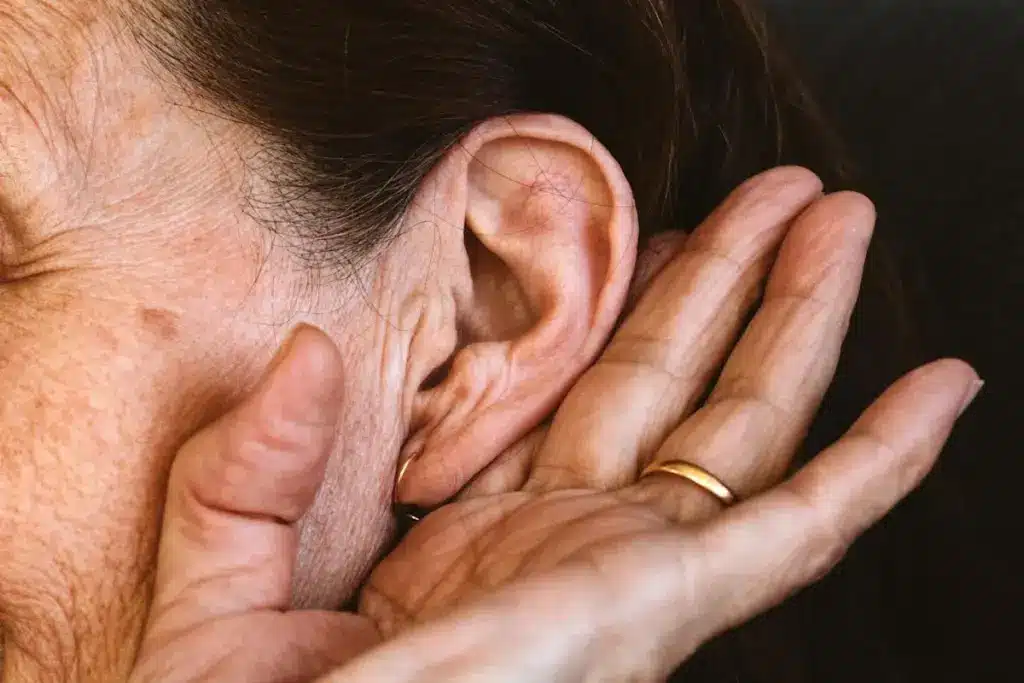
Understanding hearing loss means looking at personal stories. It’s not just a condition; it changes life in many ways. It affects how people talk and interact with others.
Subjective Descriptions from People with Hearing Loss
Those with hearing loss share their struggles. They often say sounds seem muffled and unclear. This makes it hard to follow conversations.
Muffled Sounds and Reduced Clarity
Many say sounds are like listening through fog. This makes it tough to understand speech, even in quiet places.
Difficulty with Certain Frequencies
Some find it hard to hear certain sounds. For example, high sounds are often missed. This makes it hard to catch some consonants in speech.
Audio Simulations of Different Types of Hearing Loss

Audio simulations help us get what hearing loss feels like. They show how different levels of loss affect sound perception.
How Mild, Moderate, and Severe Hearing Loss Sound
Simulations show the range of hearing loss. Mild loss might just muffle sounds a bit. Severe loss makes it hard to hear almost everything.
|
Type of Hearing Loss |
Description |
Example |
|---|---|---|
|
Mild |
Slightly muffled sounds |
Conversing in a quiet room is manageable, but background noise is challenging. |
|
Moderate |
Noticeably muffled sounds |
Conversing requires concentration, and loud environments are very challenging. |
|
Severe |
Significant difficulty hearing most sounds |
Conversing is very difficult, even in quiet environments, and reliance on lip-reading or sign language may increase. |
Learning about these experiences helps us understand and support those with hearing loss. It encourages them to seek help and treatment.
Common Going Deaf Symptoms to Watch For
Knowing the signs of hearing loss is important. It helps people get help early. Hearing loss can really change your life, and catching it early is key.
Early Warning Signs
Hearing loss starts with small changes that are easy to miss. Two early signs are:
- Turning up the volume on devices
- Asking people to repeat themselves
Turning Up the Volume on Devices
One sign is needing to turn up the volume too much. This is because you can’t hear well.
Asking People to Repeat Themselves
Another sign is asking people to repeat what they say. This happens at home and at work.
Progressive Symptoms
As hearing loss gets worse, symptoms get clearer. People might have trouble hearing in loud places. They might also hear ringing in their ears.
Difficulty Following Conversations in Noisy Environments
It’s hard to hear in loud places. This is because it’s hard for the brain to pick out sounds.
Tinnitus (Ringing in the Ears)
Tinnitus is a constant ringing in the ears. It can mean you have hearing loss or another problem.
When to Seek Medical Attention
If you notice these signs, see a doctor. A doctor can find out why you’re losing your hearing. They can also suggest how to treat it. Knowing what causes hearing loss helps manage it better.
Types of Hearing Loss and Their Distinct Characteristics
Hearing loss is not just one thing; it’s many types. These include conductive, sensorineural, and mixed hearing loss. Each type has its own causes and how it affects hearing.
Conductive Hearing Loss
Conductive hearing loss happens when sound can’t get through the outer ear, eardrum, or middle ear. It’s caused by different things.
Causes and Symptoms
Earwax buildup, ear infections, and middle ear problems can cause conductive hearing loss. You might feel like your ear is full and hear less.
How It Affects Sound Perception
It’s hard to hear soft sounds with conductive hearing loss. This makes it tough to hear in noisy places. Sound perception is muffled, but speech is usually clear.
Sensorineural Hearing Loss
Sensorineural hearing loss is about damage to the inner ear or auditory nerve. It can come from aging, loud noises, or certain medicines.
Damage to Inner Ear or Auditory Nerve
The inner ear or auditory nerve can get damaged. This is from aging, loud noises, or certain medicines. This damage causes the symptoms of sensorineural hearing loss.
Characteristic Sound Distortions
People with sensorineural hearing loss hear sounds that are not just soft but also unclear or distorted. This makes it hard to understand speech, even more so in noisy places.
Mixed Hearing Loss
Mixed hearing loss is when you have both conductive and sensorineural hearing loss. This means damage to both the outer/middle ear and the inner ear or auditory nerve.
Combined Effects on Hearing
Mixed hearing loss makes hearing problems more complex. People with it might hear sounds that are both muffled and distorted.
Knowing about the different types of hearing loss is key. It helps find the right treatment. Understanding each type can guide you to the right medical help.
- Conductive hearing loss involves issues with sound conduction through the outer or middle ear.
- Sensorineural hearing loss is related to damage to the inner ear or auditory nerve.
- Mixed hearing loss combines elements of both conductive and sensorineural hearing loss.
Sudden vs. Gradual Hearing Loss
Hearing loss can start suddenly or gradually. Knowing the difference is key to finding the right treatment. It helps prevent long-term damage.
Recognizing Sudden Hearing Loss as a Medical Emergency
Sudden hearing loss is a serious issue that needs quick action. It happens fast, often in just hours or days.
Symptoms and Timeframe
Symptoms include a sudden drop in hearing. You might also feel tinnitus or a fullness in your ear. It’s important to see a doctor within 72 hours.
Importance of Immediate Treatment
Quick treatment is essential to fix hearing loss. It helps prevent permanent damage. Getting help right away can make a big difference.
The Subtle Progression of Gradual Hearing Loss
Gradual hearing loss happens slowly, often without clear signs. It can sneak up on you until it’s quite bad.
Why It Often Goes Unnoticed
Because it develops slowly, you might not notice it at first. Your brain might adjust, making it seem less severe.
Timeline of Progression
|
Stage |
Age Range |
Typical Symptoms |
|---|---|---|
|
Early |
40-50 |
Difficulty hearing high frequencies |
|
Moderate |
50-60 |
Trouble understanding speech |
|
Advanced |
60+ |
Significant difficulty with speech and hearing |
Age-Related Hearing Loss (Presbycusis)
Presbycusis, or age-related hearing loss, is a gradual decline in hearing ability that occurs as people get older. It is a natural part of the aging process, affecting a significant portion of the elderly population. Understanding age-related hearing loss is key for early detection and management.
Natural Aging Process and Hearing
The natural aging process can lead to changes in the auditory system, resulting in hearing loss. Age affects the auditory system in several ways. This includes the degeneration of hair cells in the inner ear, changes in the auditory nerve, and declines in the brain’s ability to process sound.
How Age Affects the Auditory System
As people age, the hair cells in the inner ear deteriorate. This deterioration can lead to a decline in hearing sensitivity. It also makes it harder to understand speech, specially in noisy environments.
Typical Timeline and Progression
Age-related hearing loss typically progresses gradually over several years. Understanding the typical timeline can help individuals anticipate and prepare for hearing changes.
What to Expect in Each Decade
While the rate of hearing loss can vary among individuals, there are general trends associated with aging. For instance, in their 60s, many people begin to notice difficulties in hearing high-frequency sounds or understanding conversations in noisy settings. By their 70s and 80s, the hearing loss can become more pronounced, affecting a wider range of frequencies.
|
Decade |
Common Hearing Changes |
|---|---|
|
60s |
Difficulty hearing high-frequency sounds, trouble understanding speech in noisy environments |
|
70s |
Noticeable decline in hearing sensitivity, increased difficulty understanding conversations |
|
80s |
Significant hearing loss across various frequencies, possible need for hearing aids |
Distinguishing Age-Related Hearing Loss from Other Types
It’s essential to distinguish age-related hearing loss from other types of hearing loss, such as noise-induced or conductive hearing loss. A thorough hearing evaluation by an audiologist or hearing specialist can help determine the cause and extent of hearing loss.
By understanding age-related hearing loss and its progression, individuals can take proactive steps to manage their hearing health. This includes regular hearing checks and the use of hearing protection strategies.
What Causes Hearing Loss?
Hearing loss comes from many sources, like the environment, health issues, and genetics. Knowing these causes helps in preventing and treating hearing problems.
Noise-Induced Hearing Loss
Noise-induced hearing loss is a big worry, mainly in places with lots of sound. It can happen from work or fun activities that are too loud.
Occupational Hazards
Jobs in construction, manufacturing, and music can expose workers to loud sounds. Wearing protective gear is very important.
Recreational Noise Exposure
Listening to music that’s too loud, at concerts or on personal devices, can harm your hearing. Being careful and listening responsibly is key.
Medical Conditions Associated with Hearing Loss
Some health issues can cause hearing loss, either directly or as a side effect. These include ear infections and diseases, as well as systemic conditions that affect hearing.
Ear Infections and Diseases
Chronic ear infections, otosclerosis, and other ear diseases can hurt your hearing. Getting medical help quickly is important to avoid lasting damage.
Systemic Conditions Affecting Hearing
Diabetes, heart disease, and autoimmune disorders can also lead to hearing loss. Taking care of these conditions is important for your overall health, including your hearing.
Medications That Can Affect Hearing
Some medicines can harm your hearing. It’s important to know the risks of these drugs.
Ototoxic Drugs
Some antibiotics, chemotherapy drugs, and other medicines can be harmful to your hearing. It’s good to be aware of the risks when taking these drugs.
Monitoring Hearing When Taking High-Risk Medications
People taking drugs that might harm their hearing should get regular hearing tests. Catching hearing changes early can help prevent long-term damage.
|
Cause |
Description |
Prevention/Treatment |
|---|---|---|
|
Noise-Induced Hearing Loss |
Prolonged exposure to loud noises |
Use protective gear, limit exposure |
|
Medical Conditions |
Ear infections, systemic diseases |
Prompt medical treatment, manage underlying conditions |
|
Ototoxic Medications |
Certain antibiotics, chemotherapy |
Monitor hearing, alternative treatments if possible |
Diagnosing Hearing Loss: What to Expect
Understanding your hearing loss is key. This is done through detailed hearing assessments. These tests help figure out how much and what kind of hearing loss you have.
Types of Hearing Tests
Hearing tests check different parts of your hearing. There are two main types:
- Pure-tone audiometry, which checks your hearing at different sounds and volumes.
- Speech recognition tests, which see how well you understand speech in different settings.
Pure-Tone Audiometry
Pure-tone audiometry uses headphones to test your hearing. You say when you hear a sound. The results are shown on an audiogram.
Speech Recognition Tests
Speech recognition tests check how well you understand words and sentences at different volumes. They help figure out how you’ll do in everyday conversations.
Understanding Audiogram Results
An audiogram shows your hearing test results. It shows how much hearing loss you have and which frequencies are affected.
Interpreting the Degrees of Hearing Loss
The degree of hearing loss is shown on the audiogram. It ranges from normal hearing to very severe loss. Knowing this helps decide the best treatment.
Frequency-Specific Hearing Loss Patterns
Hearing loss can target certain sound ranges, like high or low. Finding these patterns is important for diagnosing and planning treatment.
Preventing and Managing Hearing Loss
Learning how to protect your hearing is key to a better life, as you age. This is true for age-related hearing loss or gradual hearing loss.
Effective Hearing Protection Strategies
Keeping your hearing safe from loud sounds is a top way to avoid hearing loss. You can use different types of hearing protection devices for this.
Types of Hearing Protection Devices
- Earplugs: Disposable or custom-made to fit your ears.
- Earmuffs: Cover the entire ear to block out noise.
- Custom Hearing Protection: Tailored to individual needs, such as musicians’ earplugs.
When to Use Hearing Protection
Always wear hearing protection in loud places. This includes construction sites, concerts, or when using power tools.
Modern Hearing Aid Technology
For those with hearing loss, today’s hearing aids can greatly improve life.
Types of Hearing Aids Available
There are many styles, like behind-the-ear, in-the-ear, and completely-in-canal. Each has its own benefits.
Smart Features and Connectivity
Many hearing aids now have smart features. They can connect to devices via Bluetooth, making streaming easy.
Alternative Interventions
For severe hearing loss, other options might be needed.
Cochlear Implants
Cochlear implants are medical devices. They bypass damaged parts of the ear to directly stimulate the auditory nerve.
Assistive Listening Devices
These devices help in specific situations. They’re great for watching TV or in noisy places.
By using hearing protection, modern technology, and other options, you can manage hearing loss well. This improves your life quality a lot.
Conclusion: Living Well with Hearing Loss
Understanding and managing hearing loss is key to a better life. Recognizing going deaf symptoms and acting early can help a lot. This way, you can lessen the impact of hearing loss.
Practical tips to prevent hearing loss include avoiding loud sounds and scheduling regular hearing checks. If you notice any odd symptoms, see a doctor right away.
Knowing about the different types of hearing loss helps you make smart choices for your ears. Today’s hearing aids and other treatments can greatly enhance life for those with hearing issues.
To live well with hearing loss, you need to be aware, prevent it, and manage it. This article offers valuable advice. By following it, you can handle hearing loss better and keep enjoying life.
FAQ
What are the early warning signs of hearing loss?
Signs of hearing loss include trouble hearing high-pitched sounds. You might also struggle to understand speech in noisy places. Another sign is asking people to repeat themselves often.
How does age-related hearing loss progress?
Age-related hearing loss, or presbycusis, gets worse slowly. Older people often find it hard to hear high-pitched sounds. They also struggle to understand speech in loud places.
What is the difference between sudden and gradual hearing loss?
Sudden hearing loss happens quickly, often in one ear. It’s a medical emergency. Gradual hearing loss, on the other hand, develops slowly. It can be due to age, loud noises, or medical conditions.
Can certain medications cause hearing loss?
Yes, some medications can harm your hearing or cause tinnitus. Always talk to a doctor about the risks if you’re taking these drugs.
How can I protect my hearing from noise-induced hearing loss?
To keep your hearing safe, wear earplugs or earmuffs in loud places. Keep music volumes low. Also, take breaks in quiet spots to rest your ears.
What are the benefits of modern hearing aid technology?
New hearing aids offer better sound quality and more features. They’re also more discreet. This makes it easier to manage hearing loss and talk better.
What is the role of cochlear implants in managing hearing loss?
Cochlear implants help people with severe hearing loss. They bypass damaged parts of the ear. Instead, they directly send sound signals to the auditory nerve.
How is hearing loss diagnosed?
Doctors diagnose hearing loss with a detailed hearing test. This includes tests for pure tones and speech recognition. It helps figure out the type and extent of hearing loss.
Can hearing loss be prevented?
Some hearing loss can’t be prevented. But, many cases can be avoided. Protect your hearing from loud noises. Manage health conditions and avoid harmful medications.
National Center for Biotechnology Information. Evidence-Based Medical Insight. Retrieved from https://www.ncbi.nlm.nih.gov/pmc/articles/PMC3564588/