
Central Retinal Vein Occlusion (CRVO) is a serious condition that affects millions worldwide. It can lead to severe vision loss if not treated promptly. At Liv Hospital, we understand the importance of preserving vision. We are committed to providing the most effective treatments.Review of the eye drops for crvo and other retina-related conditions for effective treatment. Find the right eye drops for crvo.
CRVO treatment has evolved significantly with the introduction of anti-VEGF therapies. These therapies have shown remarkable success in clinical trials. They can dramatically improve outcomes when diagnosed early.
We prioritize patient care, providing advanced retina treatments that cater to individual needs. Our goal is to offer world-class healthcare to international patients seeking CRVO treatment.
Key Takeaways
- CRVO is a serious retinal vascular disorder that can lead to severe vision loss.
- Anti-VEGF therapies have revolutionized CRVO treatment.
- Early diagnosis is key for effective treatment.
- Liv Hospital offers advanced retina treatments.
- Comprehensive care is provided for international patients.
Understanding Central Retinal Vein Occlusion (CRVO)

CRVO happens when the main vein draining blood from the retina gets blocked. This blockage makes blood and fluids leak into the retina. It causes swelling and damage.
Definition and Prevalence of CRVO
Central Retinal Vein Occlusion is when the vein draining the retina gets blocked. This stops the retina from draining blood properly, causing vision issues. It’s a big reason for vision loss in older adults.
CRVO gets more common with age, mainly in people with vascular risk factors. It affects a lot of older people, happening in about 1 in 1,000 over 40.
Causes and Risk Factors
The main cause of CRVO is a blood clot blocking the vein. Risk factors include high blood pressure, diabetes, and glaucoma. Other factors are cardiovascular disease and blood clotting conditions.
Knowing these risk factors helps prevent and manage CRVO. For example, controlling high blood pressure and diabetes can lower CRVO risk.
Symptoms and Diagnosis
CRVO symptoms vary but often include sudden vision loss or blurring in one eye. Some people see floaters or a sudden drop in vision. Symptoms depend on how bad the blockage is and the person’s eye health.
Diagnosing CRVO involves a detailed eye exam. This includes visual tests, a dilated fundus exam, and imaging like OCT. These tools help see how much damage there is and guide treatment.
How CRVO Affects the Retina
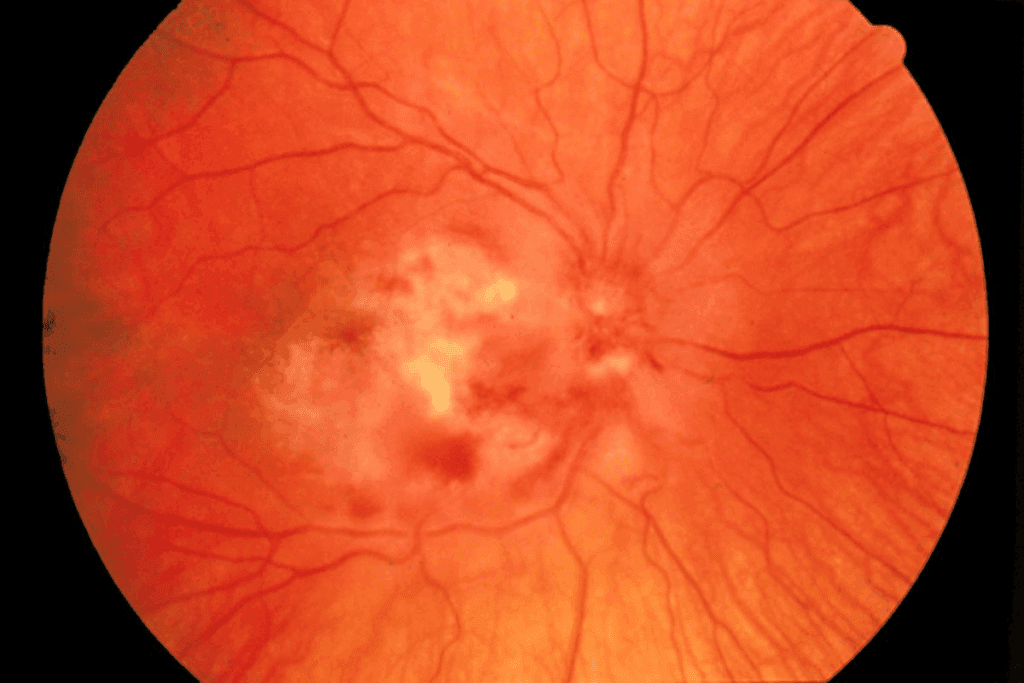
It’s important to know how CRVO impacts the retina to create good treatment plans. CRVO can cause big changes in the retina, leading to serious vision loss if not treated right.
Pathophysiology of CRVO
CRVO happens when the central retinal vein gets blocked. This blockage builds up pressure and fluid in the retina. It damages the retinal tissue and messes up its function.
The blockage results in:
- Increased pressure within the retinal veins
- Fluid accumulation in the retina
- Hemorrhages in the retina
Macular Edema Development
CRVO can cause macular edema, a big problem. Macular edema happens when fluid builds up in the macula. The macula is key for sharp, central vision.
Potential Complications
CRVO can lead to several serious issues, including:
Complication | Description |
Macular Edema | Fluid accumulation in the macula, causing vision distortion |
Neovascularization | Growth of new, fragile blood vessels in the retina |
Retinal Ischemia | Reduced blood flow to the retina, potentially leading to vision loss |
Understanding CRVO’s effects on the retina is key for good treatment plans. Knowing the possible complications helps doctors give better care to improve patient results.
Best Eye Drops for CRVO Treatment
For those with CRVO, knowing about eye drop options is key. We’ll look at the types of eye drops for CRVO. We’ll focus on how they work and their benefits.
Mechanism of Action
Eye drops for CRVO mainly fight inflammation and stop more damage. Anti-VEGF eye drops cut down on vascular growth factor. This helps prevent swelling in the macula and keeps the retina healthy.
Different eye drops work in different ways. Some have corticosteroids, strong anti-inflammatory agents. These reduce swelling and protect the retina.
Benefits of Topical Treatments
Topical treatments, like eye drops, have many advantages for CRVO patients. They are simpler to use than injections and can be just as effective.
- Less risk of problems from invasive treatments
- Easier to use, helping patients stick to treatment
- Medicine goes straight to the eye
Prescription vs. Over-the-Counter Options
Eye drops for CRVO come in prescription and OTC forms. Prescription drops, like anti-VEGF agents, are stronger. They need a doctor’s guidance.
OTC drops help with mild symptoms but might not be enough for CRVO. It’s important to talk to a doctor to find the right treatment.
Looking for something different from eye drops? There are options like sustained-release devices and new delivery systems. These might be more convenient and effective.
Anti-VEGF Eye Drops and Injections
Anti-VEGF treatments have changed how we treat Central Retinal Vein Occlusion (CRVO). They target the main causes of the condition. These treatments have shown great promise in trials, helping patients see better.
How Anti-VEGF Agents Work
Anti-VEGF agents stop vascular endothelial growth factor (VEGF) from working. VEGF is a protein that helps blood vessels grow and become leaky. In CRVO, VEGF levels are too high, causing swelling and new blood vessels. By stopping VEGF, these treatments reduce swelling, slow the disease, and help eyes see better.
Key benefits of anti-VEGF treatments include:
- Reduced macular edema
- Improved visual acuity
- Slowed disease progression
Types of Anti-VEGF Treatments
There are several anti-VEGF agents for CRVO treatment:
- Ranibizumab (Lucentis)
- Aflibercept (Eylea)
- Faricimab (Vabysmo)
Each treatment works a bit differently and is given at different times. For example, ranibizumab is given every month. Aflibercept is given every 8 weeks after the first month. Faricimab, the newest, might be given even less often because it targets two proteins at once.
Clinical trials have shown these treatments improve vision for CRVO patients. For example, the COPERNICUS and GALILEO trials found aflibercept greatly improved vision.
As research goes on, we’ll likely see even better anti-VEGF treatments. Maybe new forms or combinations that work better and are easier to use.
Clinical Evidence for Anti-VEGF Therapies
Anti-VEGF therapies are key in treating CRVO, backed by strong clinical evidence. They target vascular endothelial growth factor (VEGF), which causes macular edema and vision loss. This has changed how we manage CRVO.
COPERNICUS and GALILEO Trials
The COPERNICUS and GALILEO trials showed aflibercept (Eylea) improves vision in CRVO patients. These studies found that aflibercept injections greatly improved vision and reduced macular edema compared to sham injections.
“The COPERNICUS and GALILEO trials provided robust evidence for the use of anti-VEGF agents in CRVO treatment, showing significant improvements in visual outcomes.”
These trials helped make aflibercept a standard treatment for CRVO. Real-world evidence has also supported its use, showing its effectiveness in clinical practice.
Comparative Effectiveness
Studies have compared different anti-VEGF agents for treating CRVO. Aflibercept has shown similar or better results than other drugs like ranibizumab (Lucentis) and bevacizumab (Avastin) in some cases.
Anti-VEGF Agent | Mean Change in Visual Acuity | Reduction in Macular Edema |
Aflibercept (Eylea) | +15 letters | Significant reduction |
Ranibizumab (Lucentis) | +12 letters | Moderate reduction |
Bevacizumab (Avastin) | +10 letters | Moderate reduction |
The choice of anti-VEGF agent depends on patient response, treatment frequency, and cost.
Long-term Outcomes
Long-term use of anti-VEGF therapy in CRVO has shown promising results. Many patients keep their improved vision over time. But, repeated injections and treatment fatigue are concerns for long-term management.
Long-term efficacy and safety data from the COPERNICUS and GALILEO trials support aflibercept use in CRVO. They show sustained visual gains and a good safety record.
In conclusion, the evidence for anti-VEGF therapies in CRVO treatment is strong. They offer significant benefits in vision and macular edema reduction. Ongoing research and real-world evidence continue to improve our understanding and use of these treatments.
Steroid Treatments for Retinal Conditions
Steroid treatments for retinal diseases, like CRVO, are getting more attention. They help reduce inflammation and macular edema.
Triamcinolone acetonide and dexamethasone intravitreal implants (Ozurdex) are effective. They help with macular edema, making them a good choice for CRVO patients.
Triamcinolone Acetonide
Triamcinolone acetonide is a corticosteroid used for retinal conditions, including CRVO. It works by reducing inflammation and making blood vessels less leaky. This helps decrease macular edema.
The benefits of triamcinolone acetonide include:
- Effective reduction of macular edema
- Improvement in visual acuity
- Potential for repeated injections as needed
Dexamethasone Intravitreal Implants (Ozurdex)
Dexamethasone intravitreal implants, known as Ozurdex, are another steroid treatment. Ozurdex is a biodegradable implant that slowly releases dexamethasone. This provides long-lasting benefits.
Key advantages of Ozurdex include:
- Sustained release of dexamethasone, reducing the need for frequent injections
- Effective management of macular edema associated with CRVO
- Potential for improved patient compliance due to less frequent administration
A study found that Ozurdex improves vision and reduces macular thickness in CRVO patients.
This highlights the therapeutic value of steroid treatments for retinal diseases.
The SCORE Study Results
The SCORE study was a major trial on treating CRVO with intravitreal triamcinolone acetonide.
The SCORE study showed that:
Treatment Outcome | Triamcinolone Acetonide | Standard Care |
Improvement in Visual Acuity | Significant improvement | Limited improvement |
Reduction in Macular Edema | Effective reduction | Less effective |
In conclusion, steroid treatments like triamcinolone acetonide and dexamethasone intravitreal implants are effective for retinal conditions like CRVO. Ongoing research and trials are helping us understand these treatments better.
Combination Therapies for Enhanced Efficacy
CRVO treatment is getting better with new combination therapies. These therapies mix different treatments to improve patient results. This approach is showing great promise in treating Central Retinal Vein Occlusion.
Anti-VEGF with Steroids
Researchers are looking at combining anti-VEGF agents with steroids. Anti-VEGF eye drops are key in treating CRVO. They help reduce swelling and improve vision by targeting vascular growth factors.
Adding steroids to this mix can enhance the treatment. Steroids have strong anti-inflammatory effects. Together, they might lead to better results for patients.
“The idea is to use anti-VEGF agents and steroids together,” studies say. This combination tackles both swelling and inflammation in CRVO. It could offer a more complete treatment.
Sequential Treatment Approaches
Another method being tested is sequential treatment. It starts with one treatment, like anti-VEGF injections, then adds or changes to another, like steroids. This way, treatment can be adjusted based on how the patient responds.
- Start with anti-VEGF to reduce swelling and improve vision
- Check how the patient is doing after a while
- Add steroids if more inflammation needs to be controlled
Personalized Treatment Plans
Creating personalized treatment plans is key in managing CRVO. Doctors consider how severe the occlusion is, any other health issues, and how the patient reacts to treatment. This makes treatment more effective and efficient for each patient.
In summary, combining treatments is a big step forward in CRVO care. Using anti-VEGF agents and steroids together, and adjusting treatment as needed, can lead to better results. This approach helps tailor care to each patient’s needs.
Patient Considerations for Retina Eye Drops
Using eye drops for CRVO treatment works best when patients follow the instructions well. It’s important to know how to use the drops right. This affects how well the treatment works.
Administration Techniques
Using eye drops correctly is key for treating CRVO. Here’s how to do it right:
- Tilt your head back and pull down the lower lid to create a pocket.
- Instill one drop into the pocket, avoiding the eyelid or any other surface.
- Close your eyes gently for a few seconds to allow the medication to spread.
Consistency is key. Make a routine to remember to use your eye drops every day.
Managing Side Effects
Eye drops for CRVO are usually safe, but some people might feel side effects. These can include stinging or blurry vision. If you feel these, contact your healthcare provider for advice.
“Proper management of side effects is key for keeping treatment effective.”
Your doctor might suggest other treatments or changes to your current plan to lessen side effects.
Treatment Schedules and Compliance
Sticking to your treatment plan is very important for managing CRVO. Missing doses can make the treatment less effective and might affect its success.
To stay on track, try these tips:
- Set reminders on your phone or calendar.
- Link using your eye drops to your daily habits, like brushing your teeth.
- Keep your eye drops where you can see them to remember to use them.
Knowing how to use eye drops, handling side effects, and following your treatment plan can help you get the most from your CRVO treatment.
What to Use Instead of Traditional Eye Drops
New ways to treat CRVO are being explored. These alternatives aim to improve patient care. It’s key to know their benefits and how they stack up against traditional treatments.
Sustained-Release Devices
Sustained-release devices slowly release medication over time. They aim to keep drug levels steady in the eye. This means you don’t need to take medication as often.
Benefits of Sustained-Release Devices:
- Less need to take medication
- Easier for patients to stick to treatment
- Drug levels stay consistent
The Ozurdex dexamethasone intravitreal implant is a good example. It slowly releases dexamethasone for months, helping to reduce inflammation.
Novel Delivery Systems
New delivery systems are being studied to make CRVO treatments better. These include:
- Nanoparticle-based delivery
- Hydrogel-based systems
- Ionotophoresis
Nanoparticle-based delivery can help drugs reach the retina better. This could lead to better treatment results.
Home Care Alternatives
Home care options are growing for easier patient care. These include:
- Portable injection devices
- Self-administered eye drops with special applicators
Treatment Option | Key Features | Potential Benefits |
Sustained-Release Devices | Continuous drug release over time | Less frequent dosing, improved compliance |
Nanoparticle-Based Delivery | Enhanced drug penetration | Improved efficacy, targeted treatment |
Home Care Alternatives | Self-administration, portable devices | Increased convenience, reduced clinic visits |
As research goes on, these new options might bring hope to CRVO patients. They could lead to better treatment results and a better life for those affected.
Conclusion: Optimizing CRVO Treatment Outcomes
Managing Central Retinal Vein Occlusion (CRVO) well needs a full approach. This includes using anti-VEGF eye drops and other treatments. We’ve looked into CRVO’s effects on the retina and the treatments available.
Choosing the right treatment for each patient is key. This depends on how severe the disease is and what the patient needs. Anti-VEGF eye drops are very helpful in treating CRVO. They help reduce swelling in the macula and improve vision.
Deciding between different eye drops for CRVO should be based on solid evidence and what’s best for the patient. Using more than one treatment and making plans tailored to each patient can make treatments work better.
Healthcare providers can create better plans for patients by knowing about the different eye drops and treatments for CRVO. Keeping up with new research in CRVO treatment is important for giving the best care to patients.
FAQ
What are anti-VEGF eye drops and how do they work in treating CRVO?
Anti-VEGF eye drops target a protein that can cause macular edema in CRVO. They stop new blood vessels from growing and reduce leakage. This helps restore vision.
Are there any substitutes for eye drops in treating CRVO?
Yes, there are substitutes like sustained-release devices and novel delivery systems. They aim to make treatment easier and more effective for CRVO patients.
What are the benefits of using anti-VEGF eye drops for CRVO treatment?
Anti-VEGF eye drops can reduce macular edema and improve vision in CRVO patients. They are a targeted treatment with a good safety record.
Can I use over-the-counter eye drops for CRVO treatment?
Over-the-counter eye drops might help with dry or irritated eyes. But, they can’t replace prescription anti-VEGF eye drops or injections for CRVO treatment.
What are the possible side effects of anti-VEGF eye drops, and how can they be managed?
Side effects include eye irritation, increased pressure, and rare infections. Managing these involves proper use, regular checks, and adjusting treatment as needed.
Are there any home care alternatives to traditional eye drops for CRVO treatment?
Yes, home care options like sustained-release devices are available. But, they should be used with a healthcare professional’s guidance for safe and effective treatment.
What is the difference between anti-VEGF eye drops and injections?
Eye drops are applied directly to the eye, while injections go into the vitreous gel. Injections are used for severe cases or when drops aren’t enough.
How do steroid treatments, such as triamcinolone acetonide and dexamethasone intravitreal implants, work in treating CRVO?
Steroids reduce inflammation and swelling in the retina. This can improve vision. They’re often used with anti-VEGF therapies or as an alternative.
What are the benefits and risks associated with combination therapies for CRVO?
Combination therapies, like anti-VEGF agents with steroids, can be more effective. But, they also have risks like more side effects. They need careful monitoring and personalized plans.
How can I ensure I’m using retina eye drops correctly and safely?
Follow the right administration techniques, stick to the treatment schedule, and report any side effects to your healthcare professional.
What are sustained-release devices, and how do they work in treating CRVO?
Sustained-release devices slowly release medication, like anti-VEGF agents, over time. This reduces the need for frequent injections or eye drops. They’re a promising alternative to traditional treatments.
References
National Health Service (NHS). CRVO: Eye Drops for Retina Treatment and Vision Preservation. Retrieved from https://www.hey.nhs.uk/patient-leaflet/treatment-central-retinal-vein-occlusion-crvo/