Becoming a physical therapist takes about seven years of education. This job is both challenging and rewarding. It involves learning a lot and getting hands-on experience. Physical therapists help people get better by teaching them exercises and giving them care meaning physical therapy.
The US Bureau of Labor Statistics says physical therapists earned a median annual salary of $101,020 as of May 2024. To start this career, you need a bachelor’s degree first. Then, you must apply to a Doctor of Physical Therapy (DPT) program. We’ll look at what education and licenses you need, and the different jobs you can have as a physical therapist.
Key Takeaways
- Earn a bachelor’s degree before enrolling in a DPT program.
- Complete a Doctor of Physical Therapy (DPT) program.
- Obtain licensure to practice as a physical therapist.
- Pursue specialized certifications for advanced career opportunities.
- Stay updated with continuing education requirements.
The Path to Becoming a Physical Therapist
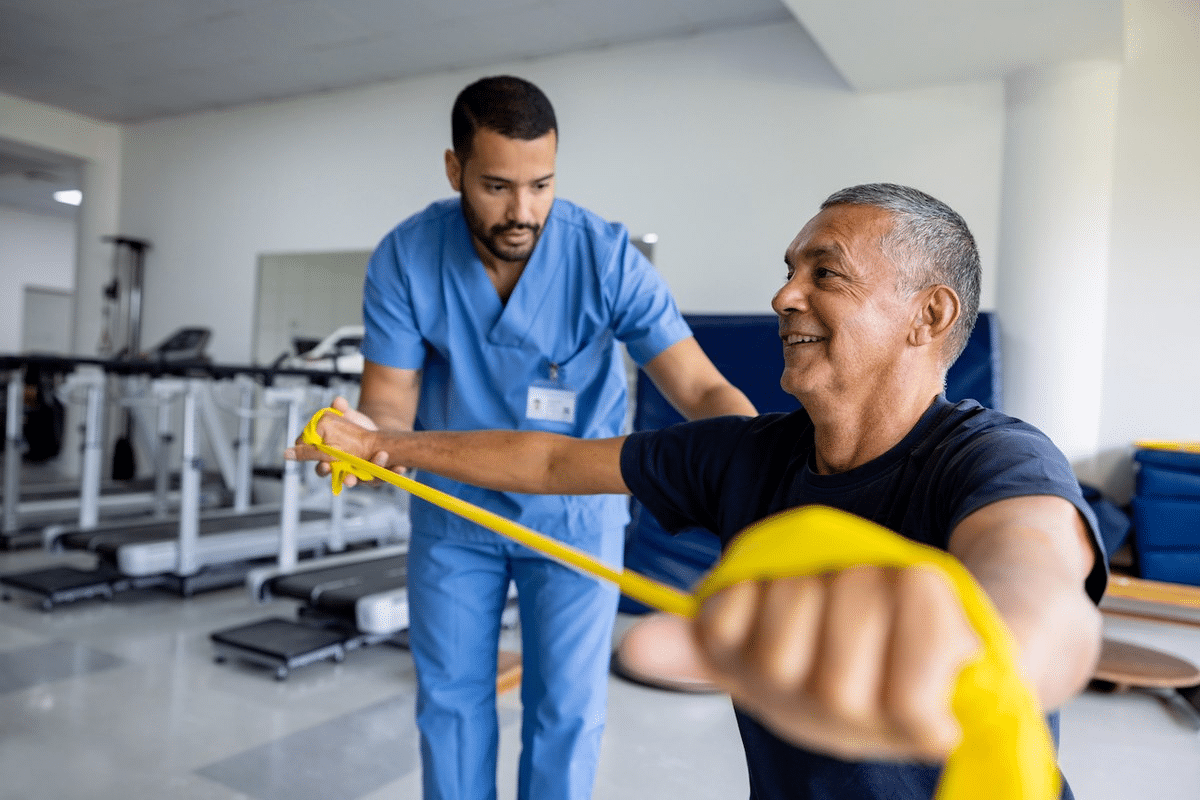
Starting a career as a physical therapist takes a lot of education. We know it’s tough but also very rewarding. We’re here to help you understand the journey.
Overview of the 7-Year Educational Journey
Getting to be a physical therapist takes seven years. First, you need to finish a four-year undergraduate degree. You’ll study subjects like biology, chemistry, and physics.
After your bachelor’s degree, you apply to a Doctor of Physical Therapy (DPT) program. This takes three years to finish.
In your DPT program, you learn in class and get hands-on experience. This education gets you ready for the challenges of physical therapy.
Career Outlook and Growth Opportunities
The job outlook for physical therapists is very good. The US Bureau of Labor Statistics says jobs will grow by 14 percent from 2023 to 2033. This is because more people need healthcare, and the population is getting older.
As healthcare changes, physical therapists have many chances to grow and specialize. From sports therapy to caring for the elderly, there are many paths to make a difference.
Understanding the Meaning of Physical Therapy in Healthcare
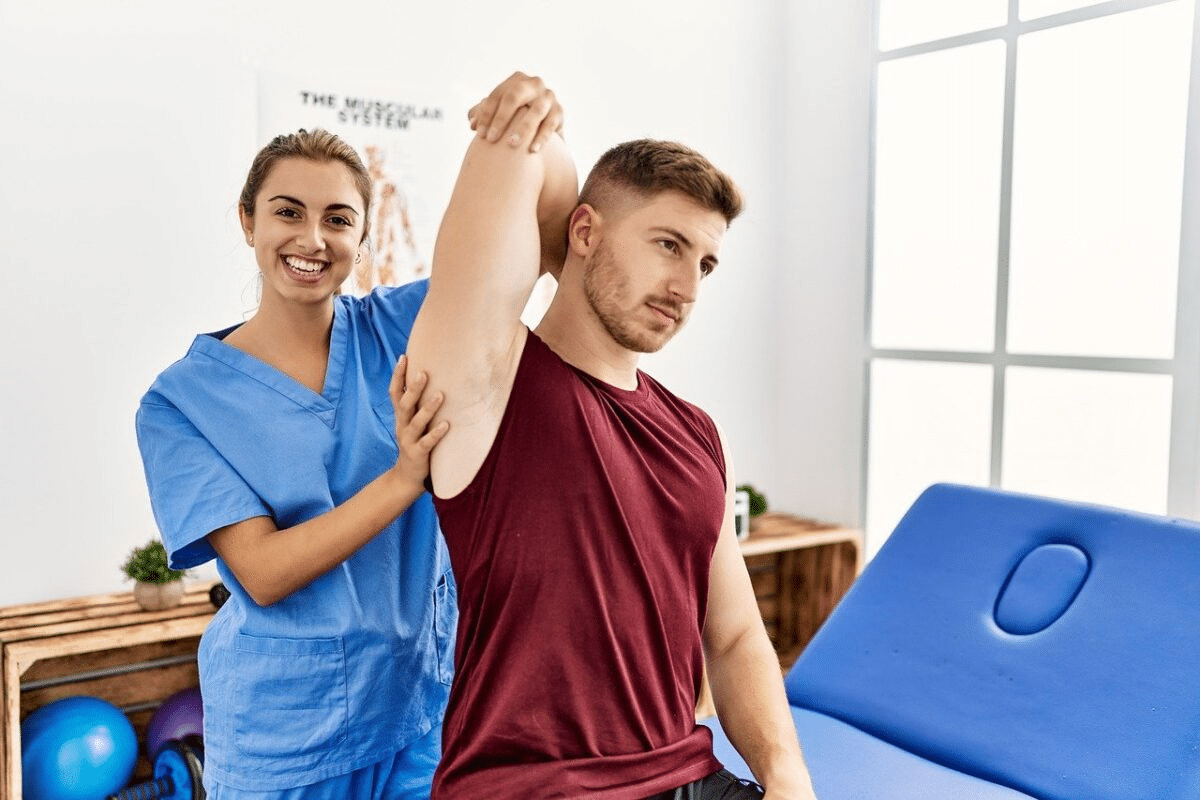
Physical therapy is all about understanding how we move and helping us reach our best physical state. It’s a key part of healthcare, giving patients care and plans made just for them.
Physical therapists are experts who check patients, find out what’s wrong with their movement, and make plans to help them get better. They work with patients to build strength, move better, and live better lives.
Core Functions and Patient Impact
The main jobs of physical therapy include:
- Checking how patients move and their physical state
- Creating plans that fit each patient’s needs and goals
- Using different methods like exercises and teaching how to move right
- Watching how patients do and changing plans if needed
Physical therapists have a big impact on people’s lives. They help patients get over injuries, manage long-term health issues, and reach their physical goals. As Medical Expert, a renowned physical therapist, notes, “Physical therapy is not just about treating the body; it’s about empowering individuals to take control of their health and well-being.”
Specialization Areas in Physical Therapy
Physical therapy has many special areas, letting therapists focus on certain groups or issues. Some main areas include:
- Orthopedics: Working on bone and muscle problems and injuries
- Neurology: Helping with brain and nerve issues like stroke and Parkinson’s
- Pediatrics: Helping kids with growth delays, injuries, or birth conditions
- Sports Physical Therapy: Helping athletes avoid, find, and treat sports injuries
These special areas help therapists become experts in certain areas. They can give more focused care, leading to better results for patients.
Undergraduate Preparation for PT School
Aspiring physical therapists need to prepare well during their undergraduate years. There’s no specific major needed for PT school. But, picking a major that meets the DPT program’s prerequisites is key.
Recommended Bachelor’s Degrees
Most future physical therapists major in health sciences like biology or exercise science. These majors include the needed prerequisite courses. They also give a solid base in human anatomy and physiology.
|
Major |
Relevance to PT |
|---|---|
|
Biology |
Covers foundational courses in anatomy, physiology, and biology. |
|
Exercise Science |
Focuses on human movement, exercise physiology, and biomechanics. |
|
Health Sciences |
Provides a broad understanding of health-related topics and healthcare systems. |
Essential Prerequisite Courses
DPT programs need specific prerequisite courses. These include:
- Anatomy and Physiology
- Biology
- Chemistry
- Physics
- Psychology
- Statistics
These courses are vital for DPT program success. As one expert says,
“A strong foundation in sciences is indispensable for success in PT school.”
Gaining Relevant Experience Before DPT Programs
Getting hands-on experience in physical therapy settings boosts an applicant’s profile. This can be done by volunteering, interning, or working in physical therapy clinics, rehabilitation centers, or sports medicine facilities.
By focusing on undergraduate preparation, aspiring physical therapists can prepare well for their future careers.
Applying to Doctor of Physical Therapy Programs
Aspiring physical therapists face a complex application process for DPT programs. These programs must be accredited by the Commission on Accreditation in Physical Therapy Education (CAPTE). This ensures they get a quality education that meets the profession’s standards.
Finding CAPTE-Accredited Programs
The first step is to find CAPTE-accredited DPT programs. CAPTE is the agency that checks if programs meet high standards. You can find a list of accredited programs on the CAPTE website.
When looking at DPT programs, consider the curriculum, clinical opportunities, and faculty expertise. Also, check the program’s NPTE pass rates and graduate employment rates.
Application Timeline and Requirements
The application for DPT programs usually starts in the summer or fall before the start date. You’ll need to submit transcripts, GRE scores, and letters of recommendation.
To meet deadlines, make a checklist of application requirements. Here’s a typical application timeline:
|
Task |
Deadline |
|---|---|
|
Submit transcripts |
October 1 |
|
Take GRE |
September 15 |
|
Secure letters of recommendation |
October 15 |
|
Submit application |
November 1 |
Interview Preparation and Tips
After applying, you might get an interview. This is a chance for the program to see if you’re a good fit and for you to learn about the program.
To prepare, research the program, practice interview questions, and prepare questions for the interviewer. Common questions include:
- Why do you want to become a physical therapist?
- What are your strengths and weaknesses?
- Can you describe a time when you overcame a challenge?
Being prepared and showing your passion for the profession can make a good impression. This can help increase your chances of getting into a DPT program.
DPT Program Structure and Curriculum
DPT programs are designed to prepare students for a career in physical therapy. They last three years, combining classroom learning, lab practice, and clinical education. This mix provides a solid foundation for success.
Three-Year Program Breakdown
The DPT curriculum covers many subjects like anatomy, biomechanics, and physical therapy techniques. The program is split into three years. The first year focuses on basics, the second on specialized topics, and the third on practical application.
Here’s a typical DPT program structure:
|
Year |
Focus |
Key Subjects |
|---|---|---|
|
1 |
Foundational Knowledge |
Anatomy, Biomechanics, Physiology |
|
2 |
Specialized PT Content |
Physical Therapy Techniques, Pharmacology, Pathology |
|
3 |
Clinical Application |
Clinical Internships, Case Studies, Professional Development |
Balancing Classroom Learning and Laboratory Practice
DPT programs focus on both classroom learning and lab practice. Students spend most of their time on these activities. This helps them understand physical therapy principles deeply.
This balanced approach is key for preparing students for real-world physical therapy. It combines theory with practical skills, making graduates ready and confident.
Managing the Rigors of PT School
PT school is demanding. The curriculum is tough, and students must be dedicated. Clinical education is a big part, with students spending about 22 weeks in real-world settings.
To succeed, students should stay organized and manage their time well. They should also ask for help when needed. This way, they can handle PT school and become skilled physical therapists.
Clinical Education Requirements
Clinical education is key in Doctor of Physical Therapy (DPT) programs. It gives students the hands-on experience needed to become skilled physical therapists. Students get to work in different places like hospitals, clinics, and rehabilitation centers. This helps them learn a wide range of skills.
Types of Clinical Rotations
Clinical rotations are a big part of DPT programs. They let students get practical experience in many settings. These include:
- Orthopedic and sports physical therapy
- Neurological rehabilitation
- Pediatric physical therapy
- Geriatric care
- Cardiopulmonary rehabilitation
Each rotation offers a unique chance to learn. Students can apply what they’ve learned in real situations. They also get better at making clinical decisions.
Developing Hands-On Patient Care Skills
During rotations, students work with patients under the watch of licensed therapists. This hands-on experience is vital for learning patient care skills. Students learn to:
- Do thorough patient assessments
- Make and carry out effective treatment plans
- Use different therapy techniques and methods
- Keep track of patient progress and change treatment plans as needed
Building Professional Networks During Clinicals
Clinical rotations also help students build professional networks. By working in different places and with many healthcare professionals, they can make valuable connections. These connections can help with job opportunities in the future. A strong network is good for:
- Finding a job after graduation
- Working together on tough patient cases
- Keeping up with the latest in physical therapy
The table below shows the main points about clinical education in DPT programs:
|
Clinical Rotation Type |
Setting |
Skills Developed |
|---|---|---|
|
Orthopedic and Sports |
Outpatient clinics, sports teams |
Injury assessment, rehabilitation techniques |
|
Neurological Rehabilitation |
Hospitals, rehabilitation centers |
Neuroassessment, treatment planning |
|
Pediatric Physical Therapy |
Pediatric hospitals, clinics |
Developmental assessment, pediatric interventions |
Licensing and Certification Process
To become a licensed physical therapist, you must pass the National Physical Therapy Examination. You also need to meet state-specific requirements. All states require physical therapists to have a license to practice.
Preparing for the National Physical Therapy Examination
The National Physical Therapy Examination (NPTE) is given by the Federation of State Boards of Physical Therapy. It tests your knowledge in physical therapy. To get ready, study the exam content outline. It covers patient care, diagnosis, and treatment.
Good study tips include making a study plan and using review materials. Practice exams are also helpful. Review courses and study groups can boost your confidence.
State-Specific Licensing Requirements
Even though the NPTE is a national test, each state has its own licensing rules. After passing the NPTE, you must follow the state’s rules. This might include background checks, jurisprudence exams, and extra certifications.
- Check the specific licensing rules for the state where you want to work.
- Make sure you pass any state-specific exams or get the needed certifications.
- Keep records of your license and certification for later use.
Maintaining and Renewing Your PT License
To keep and renew your license, you must meet continuing education needs. These vary by state. You might need to get a certain number of continuing education units (CEUs) within a time frame.
Keeping up with professional growth helps you meet license needs. It also improves your skills and knowledge. This benefits your patients.
Understanding the licensing and certification process helps aspiring physical therapists. They can prepare well for the NPTE and know the state rules. This ensures a successful career in physical therapy.
Advanced Certifications and Specializations
As physical therapists grow in their careers, getting advanced certifications and specializations boosts their skills and patient care. We believe in the value of ongoing learning and growth in physical therapy.
Board Certification Options
The American Board of Physical Therapy Specialties (ABPTS) has board certifications in areas like orthopedics, neurology, and sports physical therapy. Getting board certified shows a physical therapist’s deep knowledge and dedication to quality care in their specialty.
To get certified, physical therapists need to meet certain requirements, like passing a tough exam. This not only improves their skills but also gives them more confidence in treating complex cases.
Residency and Fellowship Opportunities
Residency and fellowship programs offer advanced training and specialization for physical therapists. These programs, linked to universities or healthcare places, provide real-world experience and guidance from seasoned pros.
Being in a residency or fellowship can greatly improve a physical therapist’s skills and get them ready for leadership or specialized roles. We urge physical therapists to look into these chances for their career growth.
Developing a Specialized Practice Area
Creating a specialized practice area lets physical therapists focus on certain patient groups or issues, like pediatrics, geriatrics, or sports injuries. By deepening their expertise, they can give better care and help advance their specialty.
To build a specialized area, physical therapists should take relevant continuing education, keep up with new research and best practices, and think about getting board certified in their interest area. We back physical therapists in their quest to specialize and better patient results.
Physical Therapist Salary and Career Growth
Understanding the salary and career growth in physical therapy is key for aspiring therapists. It helps them make smart choices about their career paths. We’ll look at the financial side of this rewarding career, including factors that affect pay and career advancement.
Entry-Level vs. Experienced PT Compensation
The salary for physical therapists changes with experience. Entry-level positions start with a lower pay, but as therapists gain experience, their pay goes up. The US Bureau of Labor Statistics reports the median annual salary for physical therapists was $101,020 as of May 2024.
Here’s a table showing how salary grows with experience:
|
Experience Level |
Median Salary |
|---|---|
|
Entry-Level (0-3 years) |
$80,000 – $90,000 |
|
Mid-Level (4-7 years) |
$95,000 – $110,000 |
|
Experienced (8+ years) |
$120,000 – $140,000 |
Practice Settings and Their Financial Implications
Physical therapists work in different places like hospitals, outpatient clinics, and private practices. Each place affects their pay differently. For example, those in private practice might earn more but also have to handle costs like marketing and practice management.
Leadership and Management Career Paths
Experienced physical therapists can take on leadership and management roles. These roles come with higher pay and the chance to shape healthcare services. They might manage departments, be clinical directors, or even start their own practices.
But career growth in physical therapy isn’t just about clinical work. Many therapists get advanced certifications or specializations. This opens up new career paths and can lead to higher pay.
Conclusion: Is Physical Therapy the Right Career for You?
Becoming a physical therapist needs a big educational effort. But for those who love helping others, it’s a very rewarding job. We’ve looked at the education needed, the job outlook, and chances for special roles and leadership in physical therapy.
The job outlook for physical therapists is bright, with a 14 percent growth rate expected. This shows there’s a big need for skilled people in this field. If you’re thinking about a PT career, it could be a fulfilling and challenging job with chances to move up.
When thinking about your career, ask if your skills, interests, and values match what physical therapy offers. Getting advice from professionals in the field can also help you decide if this path is right for you.
FAQ
What is the typical educational pathway to become a physical therapist?
First, you need a bachelor’s degree. Then, you go to a Doctor of Physical Therapy (DPT) program. This is a three-year graduate program.
How long does it take to become a physical therapist?
It takes seven years. Four years for a bachelor’s degree and three years for a DPT program.
What undergraduate major is required for PT school?
You don’t need a specific major for PT school. But, health sciences like biology or exercise science are common choices.
What are the essential prerequisite courses for DPT programs?
You need courses like anatomy, physiology, and biology.
How can I gain relevant experience before applying to DPT programs?
Volunteer or intern in physical therapy settings. This makes your application stronger.
What is the significance of CAPTE accreditation for DPT programs?
CAPTE accreditation means a program meets high standards. It’s important when choosing a program.
What does the application process for DPT programs entail?
You’ll need to submit transcripts, GRE scores, and letters of recommendation. Also, prepare for interviews.
What is the structure of a DPT program?
DPT programs last three years. They mix classroom learning, lab practice, and clinical education.
What is the role of clinical education in DPT programs?
Clinical education gives students real-world experience. It helps them apply what they’ve learned and develop skills.
How do I become a licensed physical therapist?
You must pass the National Physical Therapy Examination (NPTE) and meet state requirements.
Can physical therapists specialize in specific areas?
Yes, they can get advanced certifications in areas like orthopedics or sports physical therapy.
What is the career outlook for physical therapists?
The outlook is good, with a 14 percent growth rate from 2023 to 2033, according to the US Bureau of Labor Statistics.
How does experience impact physical therapist salary?
More experience means higher pay. Leaders or managers can earn even more.
What are the different practice settings for physical therapists?
They work in hospitals, clinics, and private practices. Each setting affects their salary differently.
Reference
Guide Meaning Physical Therapy: Become A PT & Requirements https://pmc.ncbi.nlm.nih.gov/articles/PMC10757068