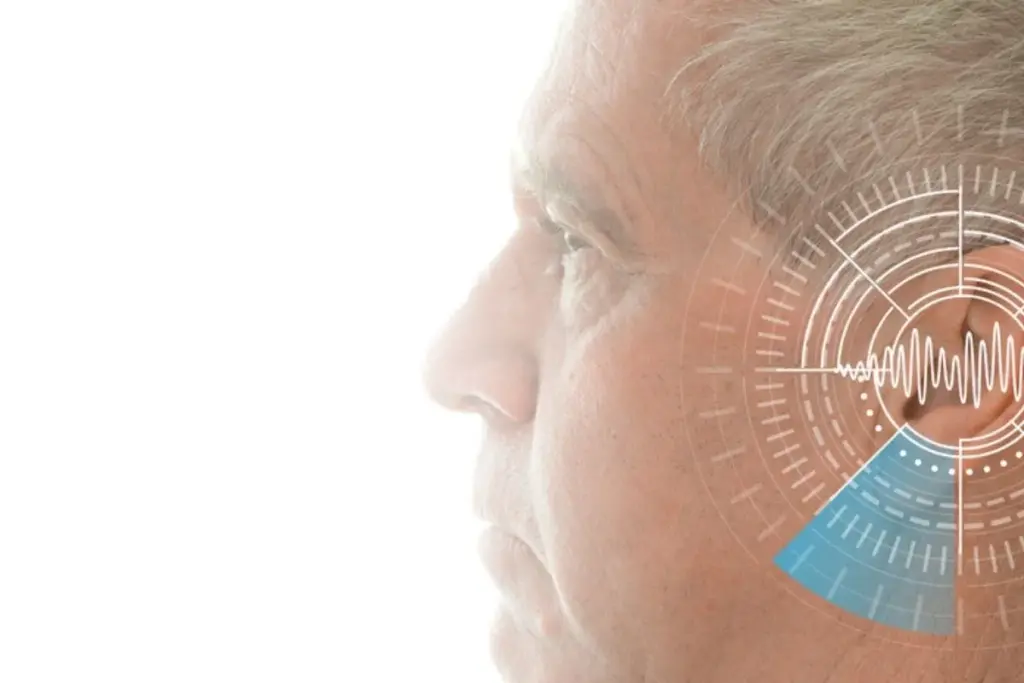
Knowing about these hearing tests helps doctors and patients tackle hearing problems. With hearing loss on the rise globally, it’s more critical than ever to have audiometry standards.
Key Takeaways
- Three primary types of audiometry: pure-tone audiometry, speech audiometry, and tympanometry.
- Audiometry is essential for diagnosing hearing loss.
- Accurate diagnosis through audiometry improves patient care.
- Over 1.6 billion people worldwide are affected by hearing loss.
- Standardized audiometric testing is crucial for addressing hearing issues.
The Science Behind Audiometry and Hearing Assessment
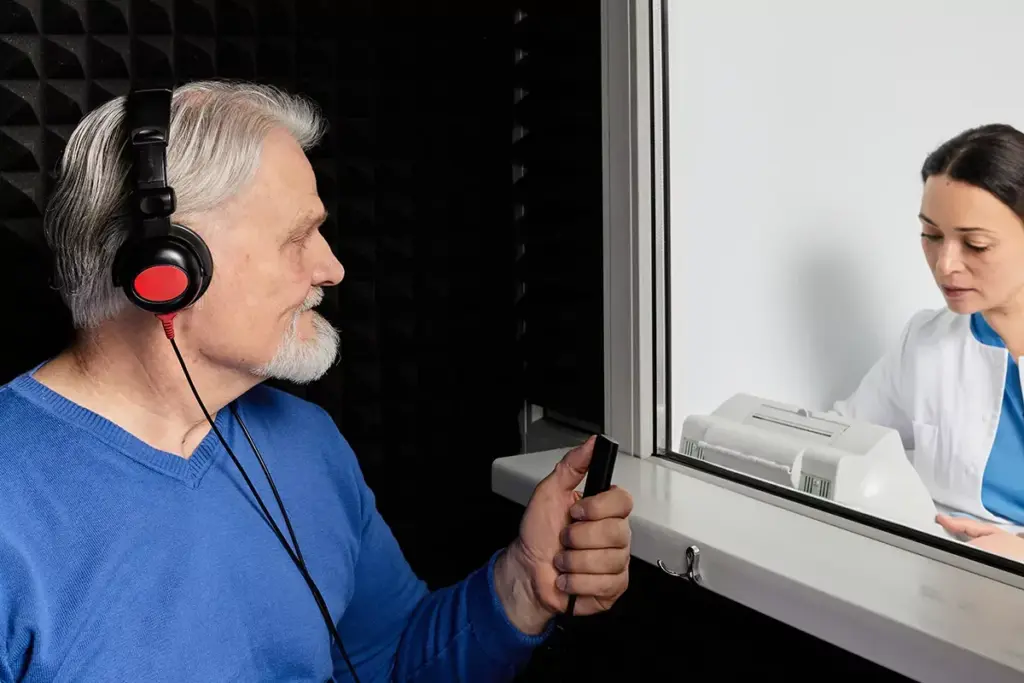
Audiometric testing is a complex process that helps check how well we can hear. It uses different tests to find out if someone has hearing loss. It also helps figure out how bad it is and what treatment they might need.
Definition and Purpose of Audiometric Testing
An audiometer is used in audiometric testing to measure hearing. The main goal is to see if someone has hearing loss. It helps find out what kind and how severe it is. This information helps doctors create the best treatment plans.
Recent studies on the National Center for Biotechnology Information show how important these tests are. They are key in diagnosing and managing hearing loss.
The Global Prevalence of Hearing Loss
Worldwide, about 1.6 billion people have some hearing loss. This makes hearing tests very important. Hearing testing helps catch hearing loss early. This can greatly improve the lives of those affected.
Knowing how common hearing loss is helps healthcare providers. It lets them offer better support and treatment. This improves care for those with hearing loss.
The Complete Guide to Hearing Test Types and Procedures
It’s important to know about different hearing tests for good hearing care. Diagnostic audiometry is a detailed method that uses many tests to find out about hearing loss.
Overview of Diagnostic Audiometry
Diagnostic audiometry includes tests like pure-tone audiometry, speech audiometry, and tympanometry. Pure-tone audiometry checks how well you can hear different sounds. Speech audiometry looks at how well you understand speech. Tympanometry checks the middle ear’s function.
These tests help figure out the type and how bad the hearing loss is. Knowing this helps make a good treatment plan. An audiogram shows the test results in a graph, making it easy to see your hearing levels.
When to Seek Professional Hearing Evaluation
If you have trouble hearing or notice ringing in your ears, get help. An audiologist will do tests and tell you about your hearing loss. They’ll also suggest ways to help.
The table below shows signs you might need a hearing check:
|
Signs of Hearing Loss |
Description |
|---|---|
|
Difficulty understanding speech |
Struggling to follow conversations, especially in noisy environments |
|
Ringing or buzzing in the ears |
Experiencing tinnitus, which can be a sign of underlying hearing issues |
|
Feeling like you’re straining to hear |
Frequently asking others to repeat themselves or turn up the volume |
The Role of Audiologists in Hearing Healthcare
Audiologists are key in hearing care. They diagnose and manage hearing loss. They guide patients through tests and suggest treatments. An audiologist will explain your hearing exam results and your audiogram.
We count on audiologists for personalized care. They help people with hearing loss feel better and live better lives. Knowing what audiologists do helps us see why getting professional help is important.
Pure-Tone Audiometry: The Gold Standard
Pure-tone audiometry is the top choice for hearing tests globally, used in over 95% of them. Its widespread use shows how vital it is for checking hearing.
What is Pure-Tone Audiometry?
Pure-tone audiometry is a key tool for checking how well people can hear different sounds. It uses pure tones to find out the quietest sounds people can hear. This test is key for spotting hearing loss and finding the right treatment.
Air Conduction Testing Methodology
Air conduction testing is a big part of pure-tone audiometry. It tests how well people can hear sounds through headphones. This helps audiologists see if there’s a hearing problem.
Recent studies, like the one on Nature.com, show how testing is getting better. This helps us understand hearing loss more.
Bone Conduction Testing Procedures
Bone conduction testing is also important in pure-tone audiometry. It uses a device on the skull to check the inner ear’s sound response. This helps figure out if the hearing problem is in the outer or inner ear.
Threshold Shifts and Clinical Significance
Threshold shifts mean changes in hearing levels, which can show hearing loss. Knowing these shifts helps audiologists find the right treatment. This could be hearing aids or other devices.
Pure-tone audiometry is a key part of hearing tests. It gives important info for diagnosing and treating hearing problems. Its role in hearing screening shows its value in keeping ears healthy.
The Process of Conducting a Pure-Tone Hearing Test
Conducting a pure-tone hearing test is a detailed process. It uses special equipment in a quiet room. This test checks how well you can hear different sounds.
Equipment and Testing Environment
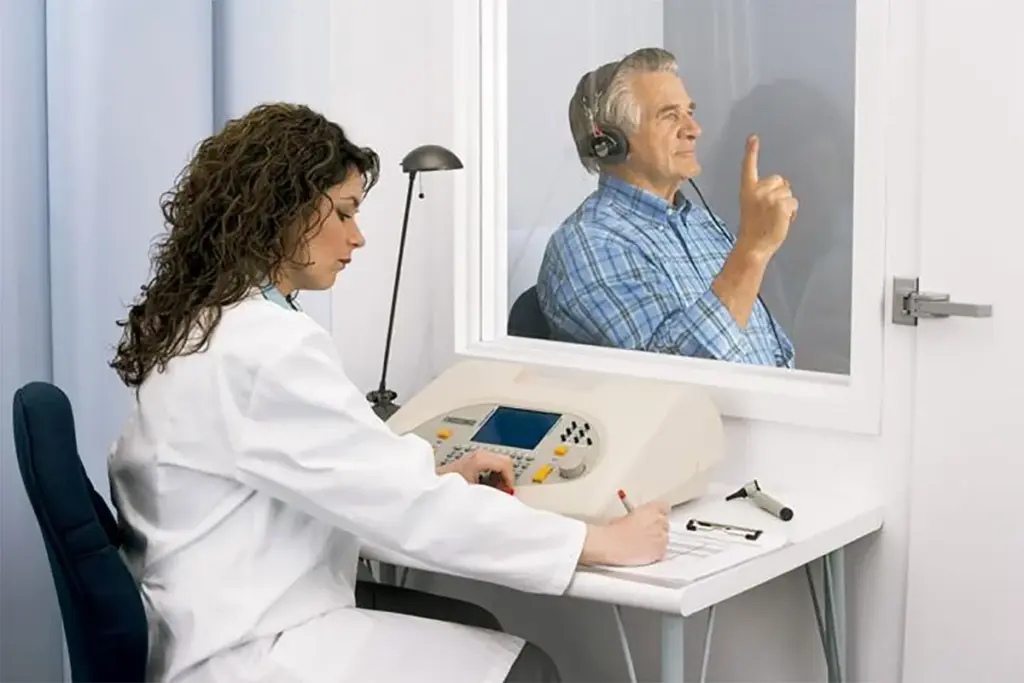
The test uses a pure-tone audiometer to make sounds. It also needs headphones or earphones and a bone oscillator. The test takes place in a soundproof booth to avoid outside noise.
Step-by-Step Testing Protocol
The test has two parts: air conduction testing and bone conduction testing. In air conduction, you wear headphones and listen for tones. Bone conduction uses a bone oscillator on your skull.
We follow a set protocol for the test. It starts with a brief explanation. Then, you hear tones in a certain order, from easy to harder.
Patient Instructions and Response Methods
It’s important to give clear instructions. You should raise your hand or press a button when you hear a tone. This makes the test simple and clear.
We watch your responses closely. This helps us find out your hearing limits accurately. By controlling the environment and following steps, we get reliable results.
Interpreting Pure-Tone Audiometry Results
Understanding pure-tone audiometry results means knowing about audiograms and how they show hearing levels. An audiogram is a graph that shows your hearing at different frequencies. It helps see where your hearing is compared to normal ranges.
Understanding Audiograms and Frequency Mapping
An audiogram shows how well you hear at different frequencies. The x-axis is for frequency, from 125 Hz to 8000 Hz. The y-axis is for the hearing threshold in decibels (dB). Looking at the audiogram helps figure out the type and degree of hearing loss.
Types of Hearing Loss Identified Through Pure-Tone Testing
Pure-tone audiometry can spot different hearing loss types. Conductive hearing loss happens when the middle ear has a problem. Sensorineural hearing loss is about issues in the inner ear or auditory nerve.
|
Type of Hearing Loss |
Description |
Common Causes |
|---|---|---|
|
Conductive |
Problem with the middle ear |
Ear infections, otosclerosis |
|
Sensorineural |
Issue with the inner ear or auditory nerve |
Aging, noise exposure, ototoxicity |
|
Mixed |
Combination of conductive and sensorineural |
Multiple factors |
Severity Classifications and Their Implications
The severity of hearing loss is based on how much the hearing threshold is raised. Knowing these levels is key for finding the right treatment and help.
|
Severity Classification |
Hearing Threshold (dB) |
Implications |
|---|---|---|
|
Normal |
0-20 dB |
No significant hearing difficulty |
|
Mild |
21-40 dB |
Difficulty with soft speech |
|
Moderate |
41-60 dB |
Difficulty with normal conversation |
|
Severe |
61-80 dB |
Difficulty with loud speech |
|
Profound |
81 dB or more |
Significant difficulty or inability to hear speech |
Speech Audiometry: Evaluating Real-World Communication Ability
Speech audiometry is a key tool for checking how well someone understands speech. It helps us see how well a person can communicate in everyday life. This test is very important for understanding a person’s hearing health.
Fundamentals of Speech Audiometry
Speech audiometry tests how well someone can recognize and process speech. These tests are crucial for figuring out a person’s communication skills and spotting hearing problems. They help us understand how well someone can hear and understand speech.
To learn more about interpreting audiograms, which are related to speech audiometry results, you can visit this resource for detailed guidance.
Speech Recognition Testing Methods
Speech recognition testing is a big part of speech audiometry. It tests how well a person can repeat words at different volumes. The results show how well someone can understand speech in different settings.
Speech Discrimination Assessment
Speech discrimination assessment is also key in speech audiometry. It checks how well someone can tell apart words that sound similar. This helps us see how well they can understand speech in noisy places.
Word Recognition Scoring Systems
Word recognition scoring systems measure a patient’s speech understanding. They present a list of words and score how well the patient can repeat them. This score tells us a lot about their communication skills.
By using results from speech tests, discrimination assessment, and scoring systems, we get a full picture of a patient’s communication abilities. This helps us create effective plans to help with any hearing problems.
The Process of Conducting Speech Audiometry Evaluations
Speech audiometry evaluations need a detailed approach. We use standardized tests to get accurate results. This method helps us see how well someone can hear and understand speech, which is key for communication.
Test Materials and Standardized Word Lists
Choosing the right test materials is key in speech audiometry. We pick phonetically balanced word lists to match everyday speech. These lists are recorded and played back through headphones at different volumes.
Standardized word lists are vital for comparing different patients. They help reduce variability and make results reliable.
|
Test Material |
Description |
Clinical Use |
|---|---|---|
|
Phonetically Balanced Word Lists |
Word lists that are balanced to represent the phonetic distribution of everyday speech. |
Used to assess speech recognition thresholds and word recognition scores. |
|
Speech Recognition Threshold (SRT) Tests |
Tests designed to determine the lowest intensity at which speech can be understood. |
Used to verify the pure-tone thresholds and assess the patient’s ability to hear speech. |
|
Word Recognition Score (WRS) Tests |
Tests that evaluate the patient’s ability to understand words at a comfortable listening level. |
Used to assess the clarity of hearing and the potential benefit of amplification. |
Testing Methodology and Protocols
In speech audiometry, patients are given words at different volumes and asked to repeat them. The testing is designed to be thorough, considering the patient’s comfort and understanding.
“The goal of speech audiometry is not just to assess hearing thresholds, but to understand the functional impact of hearing loss on communication.” – Audiology Expert
We follow strict protocols to ensure accurate testing. This includes reducing background noise and making sure the patient understands the task.
Factors Affecting Speech Audiometry Results
Several factors can affect speech audiometry results. These include the patient’s cognitive status, background noise, and equipment calibration. We consider these factors to ensure accurate results.
Understanding these factors is key to correctly interpreting results and making informed decisions about hearing healthcare.
Interpreting Speech Audiometry Results for Hearing Aid Fittings
Speech audiometry is key in finding the right hearing aid for people with hearing loss. It checks how well someone can understand speech in different settings. This helps audiologists choose the best hearing aid for each person.
Speech Reception Thresholds and Their Significance
The speech reception threshold (SRT) is a key part of speech audiometry. It shows the lowest sound level needed to understand 50% of words. This measure is important because it matches well with pure-tone audiometry results.
An accurate SRT is crucial for setting hearing aid gain and output. It makes sure speech is loud enough to be heard and understood clearly.
Word Recognition Scores and Communication Function
Word recognition scores (WRS) are also very important. They show how well someone can understand speech at a comfortable level. WRS helps see how well someone can talk and listen in everyday life.
A low WRS might mean the need for more advanced hearing aids or extra help. By looking at WRS, audiologists can make hearing aids better for understanding speech.
Using Speech Audiometry to Customize Hearing Aids
Speech audiometry results help make hearing aids fit each patient’s needs. By knowing SRT and WRS, audiologists can adjust hearing aids for better speech understanding. For example, if WRS is low, they might suggest a hearing aid with special features for clearer speech.
The aim is to help patients talk and listen better in different places, improving their life quality.
In summary, understanding speech audiometry results is very important for fitting hearing aids right. By knowing about SRT and WRS, audiologists can offer hearing solutions that really help each patient.
Tympanometry: Objective Assessment of Middle Ear Function
Tympanometry is a key tool for checking the middle ear’s health. It shows how well the middle ear moves and its air pressure. This helps us find and treat middle ear problems.
Principles and Purpose of Tympanometry
Tympanometry changes the air pressure in the ear canal and checks the eardrum’s movement. It uses a device called a tympanometer. This test helps us see if the middle ear is working right, which is key for diagnosing issues like otitis media.
“Tympanometry is a vital tool for audiologists,” leading experts say. “It gives us important info about the middle ear that we can’t get other ways.”
Impedance Audiometry Fundamentals
Impedance audiometry, which includes tympanometry, looks at how the middle ear changes with air pressure. It helps us understand the middle ear’s function and spot problems. This term also covers acoustic reflex testing.
Tympanogram Types and Clinical Interpretations
A tympanogram shows the results of tympanometry. There are different types, each showing a different middle ear condition. For example, a Type A tympanogram means the middle ear is working well. But a Type B suggests fluid or a hole in the eardrum.
- Type A: Normal middle ear function
- Type Ad: Hypermobile tympanic membrane
- Type As: Reduced compliance, often due to fixation of the ossicles
- Type B: Flat tympanogram, indicating fluid in the middle ear or perforation
- Type C: Negative pressure in the middle ear, often associated with Eustachian tube dysfunction
Acoustic Reflex Testing and Analysis
Acoustic reflex testing checks how the middle ear muscles react to sound. It helps us see if the auditory pathway and middle ear muscles are working right. This test can spot problems like ossicular discontinuity or facial nerve paralysis.
By using both tympanometry and acoustic reflex testing, we get a full picture of the middle ear’s health. This helps us find and treat any issues that need medical help.
Diagnosing Middle Ear Disorders Through Tympanometry
Tympanometry has changed how we diagnose middle ear problems. It’s a key tool for checking the middle ear’s function. This helps us find and treat various issues that can harm hearing and ear health.
Identifying Otitis Media and Its Prevalence
Otitis media, or middle ear infection, is common in all ages but more in kids. Tympanometry helps spot otitis media by checking the eardrum’s movement and middle ear muscle reflexes. It shows that otitis media causes about 16% of hearing loss worldwide, making early diagnosis and treatment crucial.
With tympanometry, we measure the eardrum’s movement and middle ear muscle reflexes. This tells us if there’s fluid, a perforated eardrum, or other problems. Knowing this helps us choose the right treatment for otitis media.
Eustachian Tube Dysfunction Assessment
Eustachian tube dysfunction can also be checked with tympanometry. The Eustachian tube is key for ear pressure and drainage. If it doesn’t work right, it can cause hearing issues and discomfort. Tympanometry measures the eardrum’s pressure and movement to check the Eustachian tube’s function.
Detecting Ossicular Chain Abnormalities
The ossicular chain is vital for sound transmission to the inner ear. Problems here can cause hearing loss. Tympanometry, along with other tests, helps find issues like fixation or discontinuity in the ossicular chain. This allows for the right treatment plan.
To show how good tympanometry is for diagnosis, let’s look at a table. It lists key features of middle ear disorders found through tympanometry:
|
Condition |
Tympanometry Findings |
Clinical Implications |
|---|---|---|
|
Otitis Media |
Reduced eardrum mobility, high compliance |
Fluid in the middle ear, potential hearing loss |
|
Eustachian Tube Dysfunction |
Abnormal pressure readings, reduced eardrum mobility |
Eustachian tube dysfunction, potential for hearing difficulties |
|
Ossicular Chain Abnormalities |
High or low compliance, abnormal reflexes |
Fixation or discontinuity of the ossicular chain, significant hearing loss |
Clinical Applications and Integration of the Three Audiometry Types
Using pure-tone audiometry, speech audiometry, and tympanometry together is key. This mix helps doctors understand a person’s hearing fully. It’s crucial for making good treatment plans.
Comprehensive Diagnostic Approach
In audiology, a detailed check is essential. It combines pure-tone, speech, and tympanometry results. This way, doctors can see exactly how someone’s hearing is affected.
- Pure-tone audiometry checks how well someone hears different sounds.
- Speech audiometry looks at how well someone understands speech in various settings.
- Tympanometry tests the middle ear, helping spot issues like otitis media or Eustachian tube problems.
Treatment Planning Based on Audiometric Results
Test results are key for planning treatments. Knowing the extent and type of hearing loss helps doctors suggest the right help. This could be hearing aids, cochlear implants, or other devices.
Key considerations in treatment planning include:
- The degree and type of hearing loss.
- The individual’s communication needs and lifestyle.
- The potential benefits and limitations of different treatment options.
Monitoring Hearing Changes and Treatment Efficacy
Regular tests are vital for tracking hearing changes and treatment success. This lets doctors tweak plans as needed. It ensures the best care for those with hearing loss.
By using pure-tone, speech, and tympanometry results together, we offer tailored care. This approach is key to top-notch hearing healthcare.
Special Populations and Modified Audiometric Techniques
Modified audiometric techniques are needed for different patient groups. Audiologists must adjust their methods for those who can’t do standard tests.
Pediatric Audiometry Considerations
Pediatric audiometry needs methods that fit the child’s age and development. For babies and young kids, behavioral observation or visual reinforcement audiometry is used. These methods are fun and easy for them to understand.
Older kids might use play audiometry. They learn to do tasks, like dropping blocks, when they hear sound. This makes testing fun and helps get accurate results.
Geriatric Hearing Assessment Challenges
Geriatric patients face special challenges due to aging and possible cognitive decline. Audiologists need to be patient and explain things clearly. Speech audiometry is key for this group, as it checks their speech understanding.
Older adults might struggle with certain sounds or need a quiet test area. By adjusting the test, audiologists can get better results.
Testing Patients with Cognitive or Developmental Impairments
Patients with cognitive or developmental issues need special care. Audiologists might use simple instructions or gestures for answers. Testing might take place over several sessions to keep the patient comfortable.
It’s crucial to consider the patient’s feelings and any anxiety during testing. A calm and supportive setting helps reduce stress and improves test accuracy.
Conclusion: The Future of Audiometric Assessment
Technology keeps getting better, and so will hearing tests. New tools and methods are making tests more accurate and quick. We’re always learning about these new things to help our patients more.
The future of hearing tests looks bright. They will be part of bigger health checks. This will help doctors find and fix hearing problems better. It will make life better for people with hearing issues.
We’re excited to use the latest in hearing tech. It will help us understand and treat hearing loss better. Our goal is to give top-notch care to everyone, especially our international patients.
FAQ
What is audiometry, and why is it important?
Audiometry is a detailed process to check how well you can hear. It’s key for spotting hearing loss, figuring out its cause and how bad it is, and finding the right treatment.
What are the three primary types of audiometry?
The main types of audiometry are pure-tone, speech, and tympanometry. These tests give a full picture of your hearing health.
What is pure-tone audiometry, and how is it conducted?
Pure-tone audiometry tests your ability to hear different sounds. It checks how well you can hear through air and bone conduction. This helps find out when you can first hear sounds.
What is speech audiometry, and what does it evaluate?
Speech audiometry checks how well you understand speech. It looks at how well you can recognize words and follow conversations. This helps in finding the best way to improve your hearing.
What is tympanometry, and what does it assess?
Tympanometry is a test that looks at the middle ear’s function. It helps find problems in the middle ear and diagnose various issues.
How are audiometry results used in treatment planning?
Audiometry results help plan your treatment. They guide the fitting of hearing aids and other treatments. By combining results from different tests, we get a full picture of your hearing.
Are there special considerations for certain populations during audiometric testing?
Yes, testing is different for children, the elderly, and those with special needs. It needs to be done carefully and with sensitivity.
What is the significance of speech reception thresholds and word recognition scores?
Speech reception thresholds and word recognition scores are key. They help us understand how well you communicate and tailor hearing aids to your needs.
How does tympanometry help in diagnosing middle ear disorders?
Tympanometry is great for finding middle ear problems. It helps diagnose issues like otitis media and Eustachian tube dysfunction.
What is the future of audiometric assessment?
As technology gets better, audiometry will too. We’ll see more accurate and efficient tests. This will improve patient care and outcomes.
National Institutes of Health. Evidence-Based Medical Insight. Retrieved from https://www.nidcd.nih.gov/health/statistics/quick-statistics-hearing



 Departments
 Related Videos
 Our Doctors
 News
News