
Cardiac surgery is key in treating heart issues, with over 300,000 procedures done in the U.S. each year. We’re seeing more advanced and less invasive cardiac interventions. This is making recovery times shorter and outcomes better.
It’s important for patients to know about the different types of heart surgery. This knowledge helps them make better choices about their care. We’ll look at the options, from open-heart procedures to minimally invasive surgeries, and other cardiac interventions.
Key Takeaways
- Cardiac surgery includes many procedures for heart conditions.
- Minimally invasive surgeries lead to faster recovery than traditional open-heart surgery.
- Knowing about heart surgery types helps patients make informed choices.
- Cardiac interventions keep getting better with new technology and techniques.
- Patients should talk to their healthcare provider to find the best treatment.
The Fundamentals of Cardiac Procedures
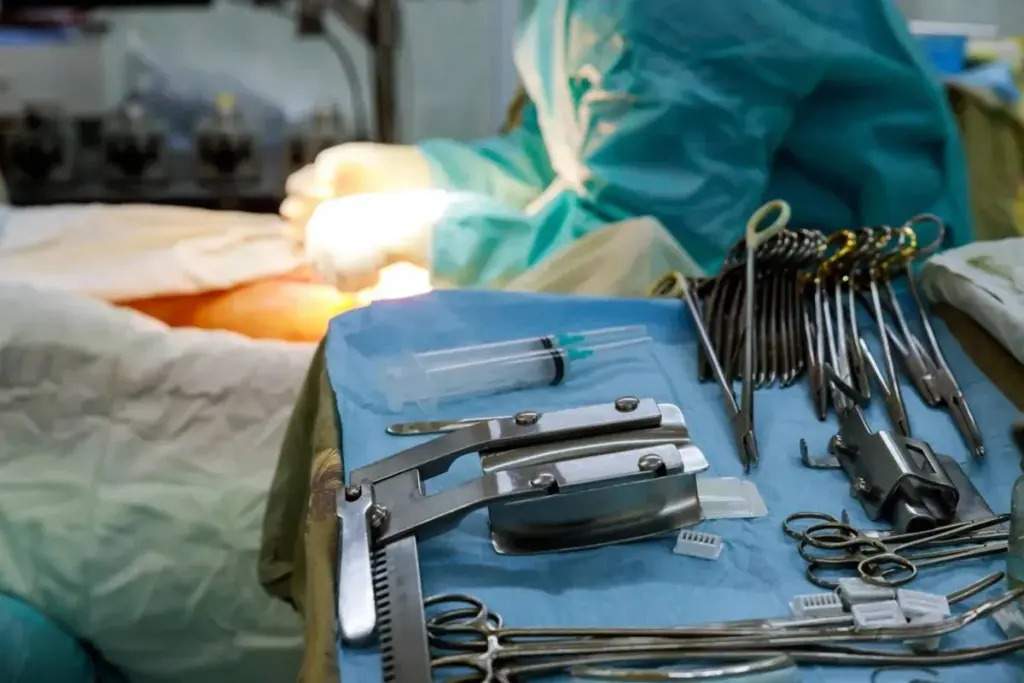
Cardiac procedures are key in diagnosing and treating heart issues. They offer many options to help with heart health. These treatments aim to fix heart problems and improve patient results.
It’s important to know what cardiac procedures are and why they’re needed. Cardiac interventions include many treatments, from simple to complex surgeries. Each one is chosen based on the patient’s needs.
Definition and Purpose of Cardiac Interventions
Cardiac interventions are medical steps to diagnose and treat heart issues. Their main goal is to fix heart function, ease symptoms, and improve life quality for those with heart disease. Cardiac procedures can be for checking or treating, and often work with other treatments like medicine and lifestyle changes.
There are many cardiac interventions, like angiography, angioplasty, and heart surgery. Each one targets specific heart problems, like blocked arteries or valve issues. Knowing about these interventions helps patients understand their role in heart health.
When Surgical Intervention Becomes Necessary
Surgery is needed when other treatments can’t fix a heart problem. Doctors decide this after a detailed review, looking at the problem’s severity, the patient’s health, and surgery’s benefits and risks.
Surgical intervention is needed for serious heart issues like blocked arteries or valve problems. Surgery aims to fix the heart issue, improve function, and better the patient’s life quality.
Understanding when surgery is needed helps patients make informed choices. It prepares them for the next steps in their treatment.
The Evolution of Heart Surgery Through History
The history of heart surgery is filled with innovation and hard work. It shows how cardiac surgery has changed a lot. From simple beginnings to today’s advanced, life-saving surgeries, it’s a remarkable journey.
Early Cardiac Surgical Procedures
Heart surgery started in the early 1900s. Ludwig Rehn did the first heart surgery in 1896, fixing a heart wound. This early work set the stage for future breakthroughs.
In the 1940s and 1950s, doctors started fixing heart defects in babies. This was a big step forward in heart surgery.
The 1950s saw the creation of the heart-lung machine. This machine let surgeons do more complex surgeries. It was a key step in making heart surgery better.
Modern Advancements in Cardiovascular Surgery

Today, heart surgery includes many procedures like CABG and heart transplants. Modern surgery aims to be less invasive and quick to recover from. Techniques like minimally invasive and robotic surgery help achieve this.
Key advancements include:
- Minimally invasive surgical techniques
- Robotic-assisted cardiac surgery
- Transcatheter aortic valve replacement (TAVR)
- Improved cardiopulmonary bypass techniques
A leading cardiac surgeon said, “Technology has changed heart surgery a lot. Now, we can do complex surgeries safely and precisely.”
“Surgical techniques have evolved significantly, allowing for more precise and less invasive procedures.”
Statistical Overview of Heart Surgeries in the United States
In the U.S., thousands of heart surgeries are done every year. The Society of Thoracic Surgeons (STS) reports high success rates and improving results.
|
Procedure Type |
Number Performed Annually |
Success Rate |
|---|---|---|
|
CABG |
Approximately 200,000 |
95-98% |
|
Heart Valve Repair/Replacement |
Over 100,000 |
90-95% |
These numbers show how important it is to keep improving heart surgery. We aim to make surgeries better, faster, and more accessible.
Open Heart Surgery: The Traditional Approach
For years, open heart surgery has been the main way to fix complex heart problems. It involves cutting open the chest to see and fix the heart.
Defining Open Heart Surgery
Open heart surgery means opening the chest to work on the heart. Surgeons cut the breastbone to get to the heart. This method is used for many heart issues that need direct heart access.
Key aspects of open heart surgery include:
- Making an incision in the chest to access the heart
- Using a heart-lung machine to maintain blood circulation during surgery
- Directly visualizing and repairing or replacing damaged heart structures
Common Conditions Treated with Open Chest Procedures
Open heart surgery fixes many heart problems, like blocked arteries and heart valve issues. It’s also used for complex cases needing precise heart repairs.
|
Condition |
Description |
Treatment |
|---|---|---|
|
Coronary Artery Disease |
Narrowing or blockage of coronary arteries |
CABG (Coronary Artery Bypass Grafting) |
|
Heart Valve Problems |
Diseased or damaged heart valves |
Valve Repair or Replacement |
|
Congenital Heart Defects |
Structural heart defects present at birth |
Corrective Surgery |
Risks and Benefits of Traditional Open Heart Surgery
Open heart surgery is very effective for many heart issues but comes with risks. We weigh these risks against the benefits to choose the best treatment for each patient.
The benefits of open heart surgery include:
- Effective treatment for complex heart conditions
- Improved heart function and quality of life
- Long-term results
The risks associated with open heart surgery include:
- Bleeding and blood clots
- Infection
- Reaction to anesthesia
Understanding the risks and benefits helps us make informed decisions about open heart surgery. This traditional method is a key tool in treating heart conditions.
Coronary Artery Bypass Grafting (CABG)
Coronary Artery Bypass Grafting (CABG) is a lifesaving surgery. It helps patients with blocked coronary arteries. These arteries carry blood to the heart and can get blocked by plaque.
How Bypass Surgery Works
CABG uses a graft from another part of the body. This graft is usually a vein from the leg or an artery from the chest or arm. It’s used to bypass the blocked part of the artery.
The graft is attached to the artery above and below the blockage. This reroutes blood flow to the heart muscle. The goal is to improve blood flow and reduce symptoms like chest pain and shortness of breath.
The surgery is done under general anesthesia. A team of cardiac surgeons, anesthesiologists, and perfusionists work together. They aim to prevent heart attacks and improve heart function.
Types of Bypass Grafts
There are different types of grafts used in CABG:
- Venous Grafts: These are usually taken from the saphenous vein in the leg. They are common because of their availability and length.
- Arterial Grafts: These are often taken from the internal mammary artery (IMA) or radial artery. They have better long-term success rates than venous grafts.
The choice of graft depends on the patient’s health and the extent of their disease. The surgeon’s preference also plays a role.
Bypass vs. Open Heart: Understanding the Difference
CABG is often called “open-heart surgery,” but not all open-heart surgeries are CABG. Open-heart surgery means any surgery where the chest is opened to work on the heart. CABG is a specific procedure to bypass blocked arteries.
The main difference is in purpose and technique. CABG aims to bypass blockages to restore blood flow. Other open-heart surgeries might fix heart valves, repair defects, or transplant a heart.
It’s important for patients to understand these differences. This helps them make informed choices about their treatment.
Heart Valve Surgeries
When heart valves get sick or damaged, surgery is often needed. Heart valve surgeries fix or replace valves that don’t work right. This helps blood flow normally and relieves symptoms of valve problems.
Valve Repair Procedures
Valve repair fixes the patient’s own valve instead of replacing it. This method keeps the natural valve tissue and might avoid long-term blood thinners.
The repair techniques vary based on the valve and its problem. For example, a ring annuloplasty might fix a mitral valve that leaks.
Valve Replacement Options
If valve repair isn’t possible, replacement is needed. There are two main types: mechanical and bioprosthetic valves.
- Mechanical Valves: Made from materials like titanium, these valves last long but need blood thinners forever to prevent clots.
- Bioprosthetic Valves: Made from animal tissue, these valves clot less and need less blood thinners. But, they might not last as long and could need to be replaced.
Minimally Invasive Approaches to Valve Surgery
Minimally invasive valve surgery is a big step forward. It uses smaller cuts, less damage, and faster recovery than traditional surgery.
Techniques like transcatheter valve repair or replacement use catheters through the groin or chest. This avoids big chest cuts.
Choosing between traditional surgery and minimally invasive depends on many things. These include the patient’s health, the valve problem, and the surgeon’s skills.
|
Surgical Approach |
Benefits |
Considerations |
|---|---|---|
|
Valve Repair |
Preserves natural valve, potentially fewer complications |
Not suitable for all valve conditions |
|
Mechanical Valve Replacement |
Durable, long-lasting |
Requires lifelong anticoagulation therapy |
|
Bioprosthetic Valve Replacement |
Lower risk of clotting, less need for anticoagulation |
May have limited durability |
|
Minimally Invasive Surgery |
Smaller incisions, quicker recovery |
Technically challenging, limited applicability |
Heart valve surgeries, whether repair or replacement, greatly help patients with valve disorders. The right surgery depends on the patient and the surgeon’s skills.
Types of Heart Surgery: Minimally Invasive Techniques
Minimally invasive heart surgery has changed cardiac care a lot. It makes recovery times shorter and reduces trauma. These new methods use smaller cuts, cause less pain, and let patients get back to normal life faster than old surgery ways.
Robotic-Assisted Cardiac Surgery
Robotic-assisted cardiac surgery uses advanced robots for precise heart surgeries. This technology boosts the surgeon’s skills, making it possible to do detailed operations through small cuts. The robot offers clear 3D views and precise tools, leading to better patient results.
The benefits of robotic-assisted surgery include:
- Smaller cuts, meaning less scarring
- Less blood loss during surgery
- Less pain after surgery
- Shorter hospital stays and recovery times
Thoracoscopic Procedures
Thoracoscopic procedures, or VATS, use a small camera and tools through tiny chest cuts. This method causes less tissue damage and helps healing happen faster.
These procedures help with many heart issues, like:
- Mitral valve repair
- Atrial septal defect closure
- Coronary artery bypass grafting in some cases
Benefits and Limitations of Minimally Invasive Approaches
Minimally invasive heart surgery has many good points, but it also has some downsides. The main benefits are less harm to the patient, fewer complications, and faster healing. Yet, these methods might not work for every patient or complex heart problems.
Some downsides are:
- Technical challenges for surgeons
- Limited access for complex cases
- Higher costs due to new tech
We look at each patient’s situation to pick the best surgery method. We balance the good and bad of these new techniques.
Interventional Cardiac Procedures
Interventional cardiac procedures have changed how we treat heart issues. They offer less invasive ways to fix heart problems. These methods use catheters and tools to diagnose and treat heart diseases, often avoiding the need for big surgeries.
Angioplasty and Stent Placement
Angioplasty helps open up narrowed arteries or veins. It’s used to treat blockages in arteries. A catheter is used to reach the blockage, and a balloon is inflated to widen the artery.
A stent is often placed to keep the artery open. Stent placement has greatly improved angioplasty results by lowering the chance of artery narrowing again.
The benefits of angioplasty and stent placement are:
- They are minimally invasive, which means less recovery time
- They are safer than open-heart surgery
- They are effective in treating blockages and improving blood flow
Transcatheter Aortic Valve Replacement (TAVR)
TAVR is a new way to treat severe aortic stenosis for high-risk patients. It involves placing a new valve in the heart through a catheter, usually from the leg. This method avoids the need for a big cut in the chest and heart bypass, lowering the risk of problems.
TAVR has been shown to:
- Improve survival and quality of life for patients with severe aortic stenosis
- Reduce symptoms like shortness of breath and chest pain
- Offer a less invasive option compared to traditional surgery
Other Catheter-Based Heart Procedures
There are many other catheter-based procedures for heart conditions. These include:
- Cardiac catheterization for diagnosis
- Closure devices for atrial septal defects or patent foramen ovale
- MitraClip device for mitral valve repair
These procedures show the progress in interventional cardiology. They give patients safer, less invasive treatments for various heart issues.
Heart Transplantation and Mechanical Support
For those with advanced heart failure, heart transplants and mechanical support are lifesavers. These treatments are chosen when other options fail and the patient’s health is at a critical point.
The Heart Transplant Process
A heart transplant replaces a sick heart with a healthy one from a donor. It’s a major treatment for severe heart failure. First, a detailed check is done to see if the patient is a good candidate for a transplant.
The transplant process includes several steps:
- Evaluation and listing for transplant
- Matching with a donor heart
- The transplant surgery itself
- Post-operative care and rehabilitation
Ventricular Assist Devices (VADs)
Ventricular assist devices (VADs) are mechanical pumps that help the heart work better. They’re used in severe heart failure to boost heart function and blood flow. VADs can be a stepping stone to a heart transplant or a long-term solution for those not eligible for a transplant.
There are various types of VADs:
|
Type |
Description |
Use Case |
|---|---|---|
|
LVAD (Left Ventricular Assist Device) |
Supports the left ventricle |
Used for patients with left-sided heart failure |
|
RVAD (Right Ventricular Assist Device) |
Supports the right ventricle |
Used for patients with right-sided heart failure |
|
BiVAD (Biventricular Assist Device) |
Supports both ventricles |
Used for patients with biventricular failure |
Total Artificial Hearts
A total artificial heart (TAH) replaces both ventricles and is for those with severe heart failure. It’s a complex device that needs careful management. It’s usually used as a temporary fix until a transplant can be done.
The TAH aims to:
- Improve cardiac output
- Reduce symptoms of heart failure
- Enhance patient survival until a transplant can be performed
Specialized Heart Surgery Types
Cardiac surgery has grown to include many specialized types. These procedures are for different heart problems. They offer patients better and more focused treatments.
Congenital Heart Defect Repairs
Congenital heart defects are heart problems present at birth. Fixing these defects needs a team of experts. Corrective surgeries can greatly improve life for those with these defects.
- Atrial septal defect (ASD) repair
- Ventricular septal defect (VSD) repair
- Tetralogy of Fallot repair
These surgeries are usually done early in life. But sometimes, they’re needed later if the defect wasn’t fully fixed or if problems come up.
Arrhythmia Surgeries
Arrhythmias, or irregular heartbeats, can be treated with surgery when other methods don’t work. Maze surgery is a key procedure. It makes scar tissue in the heart to fix abnormal heart signals.
“Surgical ablation for atrial fibrillation has become an effective treatment option, improving life quality for many patients.”
A Cardiac Surgeon
Other surgeries for arrhythmias include:
- Cardiac ablation
- Pacemaker implantation
- Implantable cardioverter-defibrillator (ICD) placement
Heart Failure Surgical Interventions
For those with severe heart failure, surgery can be a lifesaver. Ventricular assist devices (VADs) are pumps that help the heart pump blood.
- Heart transplantation
- Cardiac resynchronization therapy (CRT)
- Surgical ventricular restoration
These heart surgery types show the progress in cardiac care. They give hope and better results for those with complex heart issues.
Comparing Different Heart Surgery Approaches
Heart surgery has many techniques for various heart issues. With new technology, more options are available. It’s important to know the differences between these methods.
Open vs. Minimally Invasive: Risk-Benefit Analysis
Choosing between open and minimally invasive heart surgery is a big decision. Open heart surgery uses a big cut in the chest for direct heart access. It’s often needed for complex repairs, like in coronary artery bypass grafting (CABG).
Minimally invasive heart surgery uses smaller cuts, causing less damage and pain. It leads to faster recovery. Robotic-assisted surgery is an example, providing precise care with less intrusion.
But, picking between these methods depends on many things. These include the patient’s health, the heart issue, and the surgeon’s skills.
Surgical vs. Interventional Procedures
Surgical procedures are more invasive, needing cuts and a longer recovery. They’re done in an operating room by a cardiac surgeon.
Interventional procedures, like angioplasty and stent placement, are less invasive. They use small skin punctures and are done by cardiologists in a cath lab.
The choice between surgical and interventional depends on the heart issue, patient health, and procedure risks.
Choosing the Right Procedure for Specific Conditions
Choosing the right heart surgery needs a full look at the patient’s condition and history. For complex coronary artery disease, CABG might be best. For certain valve diseases, TAVR could be the choice.
The final decision is made with a team of doctors, including cardiologists and cardiac surgeons. They pick the best treatment for each person.
The Heart Surgery Team: Beyond the Surgeon
Heart surgery is a complex process that needs a team of skilled professionals. The cardiac surgeon is key in the operating room. But, the success of heart surgery also depends on a dedicated team working together.
Cardiologists vs. Cardiac Surgeons: Understanding the Difference
Cardiologists and cardiac surgeons are both vital in heart surgery, but they have different roles. Cardiologists are doctors who focus on treating heart conditions without surgery. They use medicines and catheter-based procedures. On the other hand, cardiac surgeons are trained to operate on the heart and its vessels.
For example, in a coronary artery bypass grafting (CABG) case, the cardiologist diagnoses and suggests surgery. The cardiac surgeon then performs the surgery.
|
Specialist |
Role |
Responsibilities |
|---|---|---|
|
Cardiologist |
Diagnoses and treats heart conditions non-surgically |
Uses medications, catheter-based procedures |
|
Cardiac Surgeon |
Performs surgical operations on the heart |
Conducts surgeries like CABG, valve repairs |
The Multidisciplinary Heart Team Approach
The multidisciplinary heart team approach brings together various healthcare professionals for heart surgery patients. This team includes cardiologists, cardiac surgeons, anesthesiologists, nurses, and more.
We believe this team approach is key for the best patient outcomes. By working together, they can create a treatment plan that meets the patient’s specific needs.
The benefits of this team approach are clear. It leads to better patient care, outcomes, and satisfaction. By combining the expertise of many professionals, we can offer complete care for heart surgery patients.
Recovery and Costs of Heart Surgery
Recovering from heart surgery is a journey with many steps. It includes medical care, lifestyle changes, and thinking about money. Knowing about recovery and costs is key for patients and their families.
Recovery Timeline and Rehabilitation Process
The time it takes to recover from heart surgery varies. It depends on the surgery type, health, and age. The first part of recovery in the hospital can last from a few days to over a week.
During this time, doctors watch over the patient closely. They manage pain and look for any problems.
After leaving the hospital, patients start a rehabilitation phase. This can last weeks to months. They slowly get back to physical activities under doctor’s watch. A good rehab program can boost heart health and lower risks.
Financial Considerations and Insurance Coverage
Heart surgery can be expensive. Costs include hospital stays, surgery fees, and care after surgery. Knowing about insurance is important, as it can affect how much you pay out of pocket.
Patients should check their insurance to see what’s covered. They might need to pay for some things themselves.
There are ways to manage these costs. Hospitals often have financial advisors to help with bills and insurance claims.
Long-term Outcomes and Quality of Life
Most people do well after heart surgery. They feel better, can do more, and live better lives.
But, success depends on following doctor’s orders and making lifestyle changes. Staying active in recovery and care helps a lot.
Understanding recovery, costs, and long-term effects helps prepare for the journey. With the right support, many can enjoy a healthier, happier life after surgery.
Conclusion
Heart surgery is used to treat many heart conditions. We’ve looked at different types, like open-heart surgery and minimally invasive methods. Knowing these options helps patients choose the best treatment for their heart disease.
Cardiac surgery has grown a lot, helping people live better lives. The right surgery can greatly improve health outcomes. A team of heart experts works together to find the best surgery for each patient.
As cardiac surgery keeps getting better, it’s key for patients to know about the available procedures. This knowledge lets them talk to their doctors about the best treatment. We aim to provide top-notch healthcare and support for patients from around the world.
FAQ
What is the difference between bypass surgery and open-heart surgery?
Bypass surgery, or CABG, is a type of open-heart surgery. It helps improve blood flow to the heart. But, not all open-heart surgeries are CABG. Open-heart surgery means the chest is opened to work on the heart.
What are the types of heart surgery?
Heart surgery includes traditional open-heart surgery and minimally invasive procedures. It also includes CABG, heart valve surgeries, heart transplantation, and mechanical support devices.
What is open-heart surgery?
Open-heart surgery is a traditional method. The chest is opened to operate on the heart. It treats conditions like coronary artery disease and heart valve problems.
What are the risks and benefits of traditional open-heart surgery?
The benefits are treating complex heart conditions and improving heart function. But, there are risks like infection, bleeding, and a longer recovery time.
How does bypass surgery work?
Bypass surgery, or CABG, uses a healthy blood vessel to bypass a blocked artery. This improves blood flow to the heart.
What is the recovery timeline for heart surgery?
Recovery time varies by surgery type and patient. Patients usually spend days in the hospital and weeks or months at home.
What is the role of a cardiologist in heart surgery?
Cardiologists diagnose and treat heart conditions. They work with cardiac surgeons to find the best treatment.
What is the difference between a cardiologist and a cardiac surgeon?
Cardiologists treat heart conditions without surgery. Cardiac surgeons perform heart surgeries.
What are the benefits of minimally invasive heart surgery?
Minimally invasive surgery has benefits like less recovery time and smaller incisions. It causes less trauma to the patient.
What is transcatheter aortic valve replacement (TAVR)?
TAVR is a minimally invasive procedure. It replaces a diseased aortic valve through a catheter in the leg.
What is a ventricular assist device (VAD)?
A VAD is a mechanical device that helps the heart pump blood. It’s used for advanced heart failure.
How do I choose the right heart surgery procedure for my condition?
Choosing the right procedure depends on your condition, health, and preferences. Discuss options with a cardiologist and cardiac surgeon to find the best treatment.
Nature. Evidence-Based Medical Insight. Retrieved from https://www.nature.com/articles/s41598-025-21830-9