
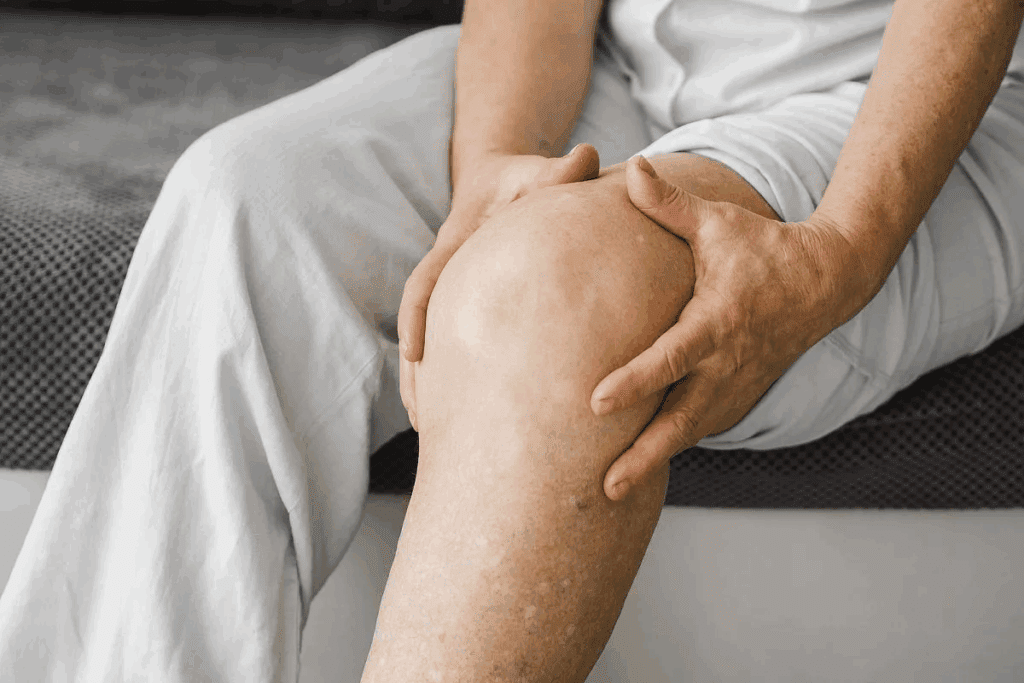
Did you know that bursitis affects millions of people worldwide, causing significant pain and discomfort? Bursitis occurs when the fluid-filled sacs (bursae) surrounding joints become inflamed. These sacs cushion joints and reduce friction between bone and soft tissue.
Getting an accurate diagnosis is key to find the best way to manage it. We will look at the tests used to confirm bursitis. These include physical exams, imaging tests, and other diagnostic procedures.
Key Takeaways
- A thorough diagnosis is vital for managing bursitis effectively.
- Many tests, like physical exams and imaging tests, help diagnose bursitis.
- Correct diagnosis is important to choose the right treatment.
- Diagnosing bursitis involves looking at medical history, physical exams, and tests.
- Early diagnosis can significantly enhance treatment outcomes.
Understanding Bursitis: What It Is and Why It Occurs

To understand bursitis, we must first know about bursa sacs. These small, fluid-filled sacs cushion bones, tendons, and muscles. They help reduce friction and allow joints to move smoothly.
Definition and Function of Bursa Sacs
Bursa sacs are synovial fluid-filled sacs found in areas where muscles, tendons, or skin rub against bone or other tissues. Their main job is to reduce friction and make movement easier. Normally, they are not noticeable and don’t cause pain. But when they get inflamed, they can hurt a lot and make it hard to move.
Common Causes of Bursa Inflammation
Bursitis happens when a bursa sac gets inflamed, often from too much movement or a direct hit. Activities like throwing or lifting can irritate the bursa. Also, falls or direct blows to a joint can cause it. Sometimes, infections or conditions like rheumatoid arthritis can lead to bursitis too.
- Repetitive motion or overuse
- Direct trauma or injury
- Infection
- Underlying inflammatory conditions
Risk Factors for Developing Bursitis
Some things make it more likely to get bursitis. Being over 40 increases the risk. Jobs or activities that involve a lot of movement or pressure on joints also raise the risk. Bad posture, not warming up before exercise, or using wrong techniques can also lead to bursitis.
Knowing these risk factors and causes helps prevent and catch bursitis early. This can make symptoms less severe and improve treatment outcomes.
Common Types and Locations of Bursitis
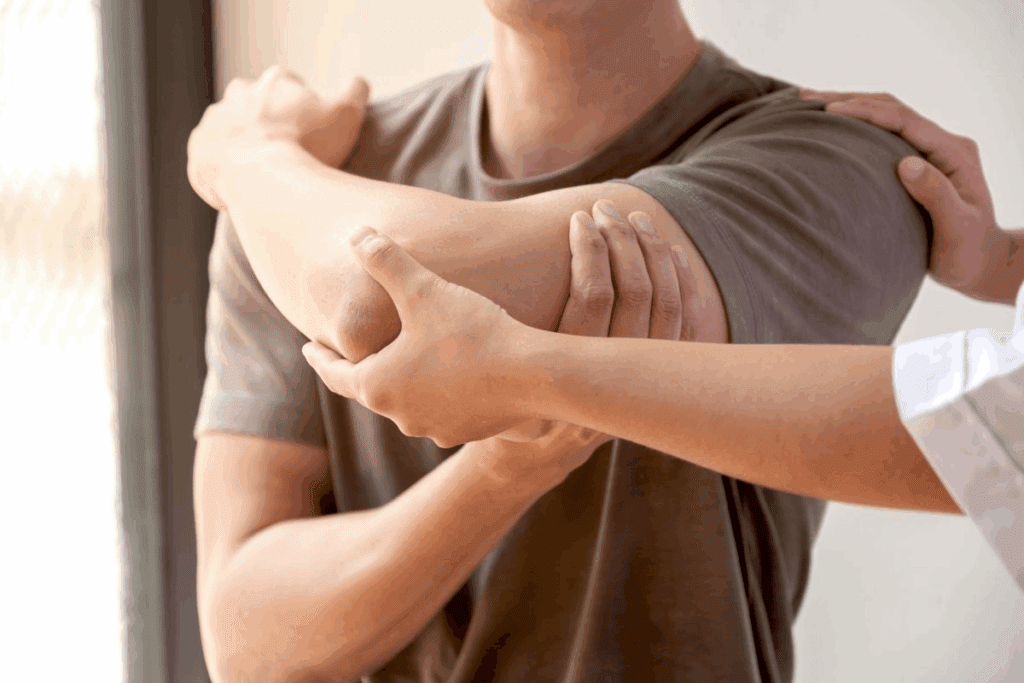
Knowing the different types of bursitis is key to treating it well. Bursitis can happen in many parts of the body. Knowing what each type is like helps in managing it.
Hip Bursitis (Trochanteric Bursitis)
Hip bursitis, or trochanteric bursitis, happens when the bursa near the hip gets inflamed. It causes pain on the outside of the hip. This pain gets worse with activities like walking or climbing stairs.
Shoulder Bursitis (Subacromial Bursitis)
Shoulder bursitis, or subacromial bursitis, is when the bursa between the acromion and rotator cuff tendons gets inflamed. It leads to shoulder pain and stiffness, making it hard to lift the arm.
Knee Bursitis (Prepatellar Bursitis)
Knee bursitis, or prepatellar bursitis, affects the bursa in front of the kneecap. It’s common in people who kneel a lot. It causes swelling and pain in the front of the knee.
Elbow Bursitis (Olecranon Bursitis)
Elbow bursitis, or olecranon bursitis, is when the bursa at the back of the elbow gets inflamed. It causes swelling and pain at the elbow, mainly when bending or straightening the arm.
| Type of Bursitis | Common Name | Location | Common Causes |
| Hip Bursitis | Trochanteric Bursitis | Outer hip | Repetitive motion, direct blow |
| Shoulder Bursitis | Subacromial Bursitis | Shoulder | Overuse, repetitive motion |
| Knee Bursitis | Prepatellar Bursitis | Front of the knee | Kneeling, direct blow |
| Elbow Bursitis | Olecranon Bursitis | Back of the elbow | Direct blow, repetitive motion |
Each type of bursitis has its own traits and needs a specific treatment plan. Knowing these differences is key to managing and recovering from bursitis effectively.
Recognizing Bursitis Symptoms Across Different Body Locations
Knowing the signs of bursitis is key to managing it and avoiding worse problems. Bursitis is when bursa sacs get inflamed. It shows up differently based on where it is and how bad it is.
General Symptoms of Bursitis
Pain, swelling, and trouble moving are common signs of bursitis. The pain can feel sharp or dull and gets worse with movement or pressure. Swelling and redness might also show up, often if it’s caused by an infection or injury.
- Pain that worsens with movement or pressure
- Swelling or redness around the affected bursa
- Limited mobility or stiffness in the affected joint
Specific Symptoms by Location
The symptoms of bursitis change based on where the bursa is. For example, hip bursitis causes pain on the outside of the hip that can spread down the thigh. Shoulder bursitis might hurt when you move your shoulder or lie on the side it’s on.
Here are some specific symptoms by location:
- Hip Bursitis: Pain on the outer hip, trouble lying on the affected side
- Shoulder Bursitis: Pain when moving the shoulder, less mobility
- Knee Bursitis: Swelling and pain just below the knee cap
- Elbow Bursitis: Swelling and pain at the back of the elbow
How Symptoms Progress Without Treatment
If bursitis isn’t treated, symptoms can get worse. This can lead to more pain and less ability to move. Long-term bursitis can cause ongoing pain and might even lead to infections or hardening of the bursa. It’s important to see a doctor if symptoms don’t get better or get worse.
Understanding how bursitis gets worse shows why early treatment is so important. By catching symptoms early and getting the right treatment, people can avoid lasting damage and live better lives.
Physical Examination for Bursitis Diagnosis
Diagnosing bursitis starts with a detailed physical exam. This exam helps us see how bad the condition is.
What Doctors Look For During Physical Assessment
We look for signs of inflammation like swelling, redness, and warmth. We also check for tenderness and pain when we touch the area.
This helps us figure out how serious the bursitis is. It also helps us rule out other possible causes of the symptoms.
Range of Motion Tests
Range of motion tests are key in the physical exam. We ask the patient to move the affected joint in different ways. This shows us how flexible the joint is and if there’s any pain.
These tests tell us how bursitis is affecting the joint’s function.
| Range of Motion Test | Purpose | What It Indicates |
| Flexion and Extension | Assess joint mobility | Limited mobility or pain |
| Rotation | Evaluate rotational movement | Restricted rotation or discomfort |
| Abduction and Adduction | Test movement away from and towards the body | Pain or limited movement |
Pain Provocation Tests
Pain provocation tests are special tests that make the patient’s pain worse. By applying pressure or having the patient move in certain ways, we can find out where the pain is coming from. This confirms if the patient has bursitis.
Together, these tests give us a full picture of the patient’s condition. This helps us create a good treatment plan.
Imaging Tests Used to Diagnose Bursitis
Healthcare professionals use various imaging tests to confirm bursitis. These tests give detailed images of the affected area. They help assess the condition’s severity and rule out other causes of symptoms.
X-rays: Can They Show Bursitis?
X-rays are often the first test for diagnosing bursitis. They’re great for bones but not soft tissues like bursae. Yet, X-rays can spot other issues like bone spurs or fractures. “X-rays are a valuable initial tool,” says a medical expert, “but they may not directly show bursitis; they’re more about ruling out other issues.”
Ultrasound Imaging for Bursa Inflammation
Ultrasound imaging is top-notch for diagnosing bursitis, like in the shoulder and hip. It uses sound waves to show soft tissues. This lets doctors see the inflamed bursa and its size. Ultrasound is also great for guiding injections into the bursa. Its real-time imaging capability makes it an invaluable tool for both diagnosis and treatment guidance.
MRI Scans for Detailed Soft Tissue Evaluation
Magnetic Resonance Imaging (MRI) scans are excellent for soft tissues, making them great for bursitis diagnosis. MRI shows the inflamed bursa’s size, location, and inflammation extent. It’s key for complex cases or when other tests are unclear. MRI’s ability to show both bone and soft tissue makes it a complete diagnostic tool.
CT Scans and Their Role in Diagnosis
Computed Tomography (CT) scans are less common for bursitis but useful in some cases. They give detailed images that help spot inflammation and other bursa changes. CT scans are good for suspecting infections or calcification in the bursa. While not the first choice, CT scans can add valuable info when needed.
In conclusion, a mix of imaging tests is used to accurately diagnose bursitis. Each test has its strengths, and the choice depends on the case and the doctor’s judgment. As technology advances, these tests become more critical for clear diagnoses and effective treatments.
Laboratory Tests for Bursitis Diagnosis
Laboratory tests are key in diagnosing bursitis. They help confirm the condition and rule out other causes. Imaging tests show the bursa’s condition, but lab tests reveal the inflammation’s cause.
Aspiration and Fluid Analysis
Aspiration, or arthrocentesis, is a key test for bursitis. It involves removing fluid from the bursa with a needle. The fluid is then analyzed for:
- Appearance: The fluid’s color and clarity can show infection or blood.
- White Blood Cell Count: High counts suggest inflammation or infection.
- Crystal Analysis: Certain crystals can point to gout.
- Culture: This checks for bacterial or fungal infections.
Blood Tests to Rule Out Other Conditions
Blood tests can’t directly diagnose bursitis but help rule out other conditions. Common tests include:
- Complete Blood Count (CBC): Identifies infections or inflammation.
- Erythrocyte Sedimentation Rate (ESR) or C-Reactive Protein (CRP): Shows body inflammation levels.
- Rheumatoid Factor and Anti-CCP: Diagnoses rheumatoid arthritis, which can cause bursitis.
By combining lab test results with clinical findings and imaging, we can accurately diagnose bursitis. This helps us create an effective treatment plan.
Differential Diagnosis: Conditions That Mimic Bursitis
Bursitis shares many symptoms with other musculoskeletal conditions, making diagnosis tricky. It’s key to look at other conditions that might show similar symptoms when diagnosing bursitis.
Tendinitis vs. Bursitis
Tendinitis and bursitis are both inflammatory conditions but affect different parts. Tendinitis is inflammation of the tendons, which connect muscles to bones. Bursitis is inflammation of the bursae, fluid-filled sacs that cushion joints and reduce friction.
The main difference is in where the pain is and what it feels like. Tendinitis pain is linked to tendon movement. Bursitis pain is more focused around the inflamed bursa.
Key differences between tendinitis and bursitis:
- Tendinitis affects tendons, while bursitis affects bursae.
- Tendinitis pain is often related to tendon movement.
- Bursitis pain is typically localized around the inflamed bursa.
Arthritis vs. Bursitis
Arthritis is a term for various joint inflammation conditions. Common types include osteoarthritis, rheumatoid arthritis, and gout. Bursitis can be mistaken for arthritis because both cause joint pain and inflammation.
But arthritis usually affects more joints and is more widespread. Bursitis is usually in one area. Tests like X-rays and blood work can tell the difference.
Differentiating factors between arthritis and bursitis:
- Arthritis involves more widespread joint inflammation.
- Bursitis is typically localized to a single area.
- Diagnostic tests can help distinguish between the two conditions.
Other Musculoskeletal Conditions
Other conditions like muscle strains, ligament sprains, and stress fractures can also mimic bursitis. These can cause pain and inflammation, making a detailed diagnosis necessary.
Diagnosing involves a physical exam, medical history, and tests like imaging and lab work. By looking at many possible causes, doctors can accurately diagnose and treat conditions.
Comprehensive Hip Bursitis Treatment Options
Treating hip bursitis requires a mix of methods. This includes non-invasive, medical, and surgical ways. Hip bursitis is when the bursa near the hip gets inflamed. This leads to pain and discomfort. We will look at the different ways to manage this condition.
Conservative Treatment Approaches
First, we try non-invasive treatments. Rest, ice, compression, and elevation (RICE) are used. Physical therapy helps improve hip movement and strength. Nonsteroidal anti-inflammatory drugs (NSAIDs) are also used to lessen pain and swelling.
Medical Interventions for Persistent Cases
If non-invasive treatments don’t work, we might use medical interventions. Corticosteroid injections are a common choice. They help by reducing inflammation. We also consider platelet-rich plasma (PRP) therapy. This involves injecting platelet-rich plasma into the bursa to aid in healing.
Surgical Options When Other Treatments Fail
If other treatments don’t help, surgery might be needed. The most common surgery is bursectomy, where the inflamed bursa is removed. Endoscopic bursectomy is a less invasive method. It allows for faster recovery times.
Medication Options for Managing Bursitis
Medication is key in treating bursitis. It helps reduce pain and swelling, making recovery easier. We’ll look at over-the-counter pain relievers, prescription drugs, and corticosteroid injections.
Over-the-Counter Pain Relievers and Anti-inflammatories
First, we try over-the-counter (OTC) meds for bursitis. These include pain meds like acetaminophen and anti-inflammatory drugs like ibuprofen or naproxen. Ibuprofen and naproxen are great because they ease pain and cut down swelling.
Prescription Medications for Severe Cases
If OTC meds don’t work, we might need prescription drugs. These can be stronger anti-inflammatory meds or muscle relaxants for muscle spasms.
Corticosteroid Injections: Benefits and Risks
Corticosteroid injections are used for severe inflammation. They can greatly reduce swelling. But, they can also cause side effects like skin problems and tissue damage.
| Medication Type | Examples | Benefits | Risks/Side Effects |
| Over-the-Counter Pain Relievers | Acetaminophen, Ibuprofen, Naproxen | Pain relief, Anti-inflammatory effects | Gastrointestinal issues, Allergic reactions |
| Prescription Medications | Stronger NSAIDs, Muscle relaxants | Effective for severe pain and inflammation | Potential for dependency, Various side effects |
| Corticosteroid Injections | Triamcinolone, Methylprednisolone | Significant anti-inflammatory effect | Skin thinning, Infection risk, Temporary flare |
In conclusion, treating bursitis well means knowing the right meds. By weighing the good and bad of each, we can choose wisely.
Physical Therapy and Rehabilitation for Bursitis
Physical therapy is key in treating bursitis. It offers treatments that fit each person’s needs. A full approach to managing bursitis includes physical therapy as a main part.
Therapeutic Exercises for Different Types of Bursitis
Exercises are a big part of treating bursitis. For hip bursitis, exercises that make the gluteal muscles stronger and improve hip flexibility are suggested. Shoulder bursitis benefits from exercises that make the scapular and shoulder more stable and mobile. Knee bursitis is helped by exercises that strengthen the quadriceps and hamstring muscles.
- Range of Motion Exercises: These help keep or improve joint mobility.
- Strengthening Exercises: These target the muscles around the affected bursa, reducing strain and pain.
- Flexibility Exercises: Stretching improves flexibility and lessens tension on the bursa.
Manual Therapy Techniques
Manual therapy, like massage and joint mobilization, is very effective for bursitis. These methods reduce pain, enhance joint mobility, and aid in healing.
Modalities Used in Physical Therapy
Physical therapy uses various treatments for bursitis, such as ultrasound, electrical stimulation, and cold laser therapy. These treatments cut down inflammation, ease pain, and help tissues heal.
By using these methods in a treatment plan, people with bursitis can see big improvements. We aim to give each patient the care they need for better symptoms and life quality.
Home Remedies and Self-Care Strategies
Bursitis can be tough to deal with, but there are ways to make it easier. Home remedies and self-care strategies can help. By adding these to your daily routine, you can manage bursitis better and live a better life.
The RICE Method for Acute Bursitis
The RICE method is a good way to handle acute bursitis. It stands for Rest, Ice, Compression, and Elevation. It helps reduce inflammation and alleviate pain.
- Rest: Stay away from activities that make it worse.
- Ice: Use ice packs on the area for 15-20 minutes, a few times a day.
- Compression: A compression bandage can help with swelling.
- Elevation: Keep the affected limb up to reduce swelling.
Natural Anti-inflammatory Approaches
There are natural ways to fight bursitis symptoms too. These include changing your diet and taking supplements. These can help with inflammation.
| Natural Approach | Description | Benefits |
| Turmeric | It has curcumin, which fights inflammation well. | It helps with pain and swelling. |
| Omega-3 Fatty Acids | Found in fish oil, these fats reduce inflammation. | They’re good for your joints. |
| Ginger | Ginger has compounds that fight inflammation. | It helps with pain and swelling. |
Lifestyle Modifications to Reduce Symptoms
Changing your lifestyle can also help with bursitis. Keep a healthy weight, stand right, and avoid repetitive motions. These can help your bursae.
Using these home remedies and self-care strategies with medical help can really help. People with bursitis can manage their symptoms better and live a better life.
Alternative and Complementary Treatments
Looking for more ways to manage bursitis? Alternative and complementary therapies offer many options. They can work alongside traditional treatments to help you feel better and live better.
Acupuncture and Acupressure
Acupuncture and acupressure come from traditional Chinese medicine. They aim to heal and ease pain by stimulating certain body points. Acupuncture uses fine needles, while acupressure uses fingers or tools to apply pressure. Both can help lessen inflammation and ease bursitis symptoms.
- Acupuncture can release natural pain-relievers and boost circulation.
- Acupressure may cut down pain and stiffness without needles.
Massage Therapy
Massage therapy is another way to tackle bursitis symptoms. It involves gently working the soft tissues. This can ease muscle tension, improve movement, and aid in healing around the bursa.
- Massage can lessen pain and boost function.
- It may also kickstart the body’s healing.
Dietary Considerations and Supplements
Changing your diet and using supplements can also help with bursitis. Some foods and nutrients have anti-inflammatory effects that can ease symptoms.
- Omega-3 fatty acids in fish oil supplements can fight inflammation.
- Turmeric and ginger have natural anti-inflammatory compounds.
- Eating a diet full of fruits, veggies, and whole grains supports health.
While these treatments can offer relief, always talk to a healthcare professional before starting. This is true if you’re already getting treatment for bursitis.
Preventing Bursitis Recurrence
To prevent bursitis from coming back, it’s key to focus on body mechanics, ergonomics, and using protective gear. Regular exercises to strengthen and improve flexibility are also important. These steps can greatly lower the chance of bursitis happening again.
Proper Body Mechanics and Ergonomics
Keeping your body in the right position is vital in avoiding bursitis. Pay attention to how you stand, lift, and move. Also, make sure your workspace is set up ergonomically. Small changes, like the right computer height and ergonomic chairs, can help a lot.
Protective Equipment for At-Risk Activities
If you’re doing activities that might lead to bursitis, wearing protective equipment is a must. This includes knee pads for kneeling and elbow pads for elbow stress. The right gear can protect your joints and lower bursitis risk.
Strengthening and Flexibility Programs
Doing strengthening and flexibility programs can stop bursitis by making joints more stable and mobile. Exercises that build muscle around the joint lessen bursa strain. Flexibility exercises also help keep joints loose and prevent stiffness. A balanced exercise routine is a strong way to prevent bursitis from coming back.
When to See a Doctor About Suspected Bursitis
Bursitis can really slow you down. Knowing when to go to the doctor is key to getting better. If you’re feeling constant pain or swelling, you should get medical help.
Red Flag Symptoms That Require Immediate Attention
Some symptoms mean you need to see a doctor right away. These include:
- Severe pain or swelling that gets worse over time
- Redness or warmth around the affected area
- Fever or chills with bursitis symptoms
- Big trouble moving the joint that’s affected
If you notice any of these red flag symptoms, get medical attention fast.
What to Expect at Your Appointment
At your doctor’s visit, you’ll get a detailed check-up. This might include a physical exam, looking at your health history, and maybe some tests to confirm the diagnosis.
Being ready for your appointment helps. Write down your symptoms and any questions you have. This makes your visit more effective.
Conclusion: Getting an Accurate Diagnosis and Effective Treatment
Getting a correct diagnosis is key to treating bursitis well. We talked about how to find out if you have bursitis. This includes physical checks, imaging tests, and lab tests.
Knowing you have bursitis helps doctors make a plan to help you feel better. This plan might include rest, medicine, and changes in how you live.
Learning about bursitis helps you manage it better. It’s important to see a doctor if your symptoms don’t get better or get worse. This way, you can get the right care and feel better sooner.
FAQ
What are the common symptoms of bursitis?
Symptoms include pain, swelling, redness, and warmth around the joint. The pain can be sharp or dull. It gets worse with movement or pressure.
How is bursitis diagnosed?
Doctors use a physical exam, medical history, and sometimes imaging tests. Tests like X-rays, ultrasound, or MRI confirm bursitis and rule out other conditions.
Can bursitis be treated without surgery?
Yes, most cases are treated without surgery. Rest, ice, compression, elevation (RICE), physical therapy, and medications are used. Corticosteroid injections might also be recommended.
What are the treatment options for hip bursitis?
Treatment for hip bursitis includes physical therapy, medications, and lifestyle changes. For persistent cases, corticosteroid injections or surgery might be needed.
How can I prevent bursitis recurrence?
Preventing bursitis means using proper body mechanics and protective gear. Doing strengthening and flexibility exercises also helps reduce inflammation risk.
When should I see a doctor about suspected bursitis?
See a doctor for severe pain, swelling, or redness. Also, if symptoms don’t get better or get worse over time. Seek immediate help for fever or intense pain.
Are there alternative treatments for bursitis?
Yes, alternative treatments include acupuncture, acupressure, massage therapy, and dietary changes. Some find these helpful in managing symptoms and recovery.
Can bursitis be cured?
Bursitis can be managed and treated effectively. The chance of a cure depends on the cause and treatment. Symptoms can often be significantly reduced or eliminated.
What is the role of physical therapy in treating bursitis?
Physical therapy is key in treating bursitis. It improves joint mobility, strengthens muscles, and promotes healing. Various exercises and modalities are used.
References
- Wunderbaldinger, P., et al. (2013). A systematic review: Diagnostic imaging techniques in bursitis. PMCID: PMC11789115. Retrieved from https://pmc.ncbi.nlm.nih.gov/articles/PMC11789115/



 Departments
 Related Videos
 Our Doctors
 News
News