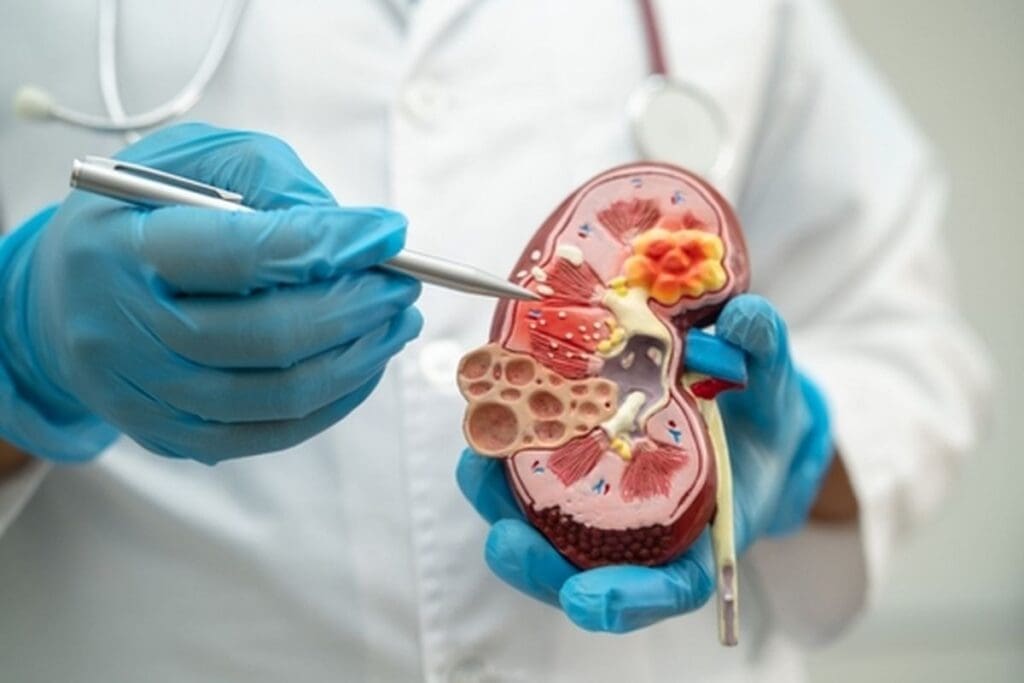
At Liv Hospital, we know how important it is to diagnose kidney stone conditions accurately. Kidney stones are hard mineral deposits that can form inside the kidneys. They can cause severe pain and other problems if not treated right.
Complete guide on how are kidney stones measured for size and treatment.
We use advanced CT imaging to measure the size, location, and type of these stones. This info helps us decide the best treatment, whether it’s just watching them or surgery. With millimeter-precise measurements, we can create treatment plans that fit each patient’s needs.
Key Takeaways
- Accurate measurement of kidney stones is key for effective treatment.
- CT scans give detailed images of kidney stones, including size, location, and type.
- Personalized treatment plans are made based on the exact measurements from CT scans.
- Liv Hospital uses advanced CT imaging technology for diagnosis.
- Treatment choices are based on the characteristics of the kidney stones.
The Importance of Accurate Kidney Stone Measurement

Measuring kidney stones accurately is key for good treatment plans. Kidney stones are hard, mineral-based deposits in the kidneys. They can cause a lot of pain, nausea, and vomiting. If not treated right, they can lead to serious problems.
What Are Kidney Stones?
Kidney stones, or renal calculi, are solid masses of crystals in the urinary tract. They come in different sizes, shapes, and types. Knowing what kidney stones are helps us see why measuring them is so important.
Why Size and Location Matter for Treatment
The size and where a kidney stone is located are key for choosing the right treatment. Stones 6mm or larger might need more serious treatments, like surgery or lithotripsy. The stone’s location in the urinary tract also affects treatment choices, as some spots can cause more problems or be harder to treat.
A 6mm kidney stone found on a CT scan might need different treatment than a smaller one. Knowing the exact size helps doctors decide if you can pass the stone on your own or if you need medical help.
Impact of Measurements on Clinical Decisions
Accurate measurements of kidney stone size and location are vital for doctors’ decisions. They help decide between watching and waiting, medical treatments, or surgery. Exact measurements lead to tailored treatment plans, which can improve patient results and lower the chance of complications.
Understanding the importance of precise kidney stone measurement shows the critical role of CT scans in managing kidney stone disease.
How Are Kidney Stones Measured: Diagnostic Methods Explained

To understand how kidney stones are measured, we must first explore the diagnostic methods used. Various imaging techniques play a key role in detecting and measuring kidney stones. Each method has its strengths and limitations.
X-Ray Imaging Techniques
X-ray imaging is a traditional method for detecting kidney stones. Plain abdominal X-rays (KUB – Kidneys, Ureters, Bladder) can spot stones that show up on X-ray. But, not all stones are visible with this method, mainly those that don’t show up on X-ray.
The limitations of X-ray include its inability to detect all types of stones. It also doesn’t provide detailed information about the stone’s size and location. Yet, X-ray is useful as a first step due to its availability and low cost.
Ultrasound Evaluation Limitations
Ultrasound is another tool used to evaluate kidney stones. It’s good for detecting swelling of the kidney and some stones. But, ultrasound has limitations in detecting smaller stones and those located in certain areas, such as the mid-ureter.
- Operator dependency can affect the accuracy of ultrasound findings.
- Obesity and bowel gas can interfere with ultrasound imaging.
- Ultrasound may not provide detailed information about stone size and composition.
CT Scanning as the Gold Standard
CT scanning is considered the gold standard for diagnosing and measuring kidney stones. Non-contrast CT scans give detailed images of the urinary tract. This allows for accurate measurement of stone size and location. CT scans can detect almost all types of stones, including those that are not visible on X-ray.
The advantages of CT scanning include:
- High sensitivity and specificity for detecting kidney stones.
- Ability to provide detailed information about stone size, location, and composition.
- Detection of alternative diagnoses if kidney stones are not present.
In conclusion, while X-ray and ultrasound have their roles, CT scanning is the most accurate and reliable method for measuring kidney stones. Its ability to provide detailed images makes it invaluable for clinical decision-making.
Understanding CT Scans for Kidney Stone Detection
CT scans have changed how we find kidney stones. They give us precise images. This helps us plan the best treatment.
Why Non-Contrast CT Is Preferred
Non-contrast CT scans are best for finding kidney stones. They show stones clearly without using contrast. This is safer because it avoids allergic reactions and kidney harm.
Key advantages of non-contrast CT scans include:
- They are very good at finding stones of all types.
- They don’t need contrast, which lowers the risk of bad reactions.
- They are fast and simple, making diagnosis quick.
How Stones Appear on CT Images
Kidney stones look like white, dense spots on CT images. This is because they have a lot of calcium. The stone’s density tells us what it’s made of.
Most stones show up well on non-contrast CT scans. Their size and where they are help doctors decide how to treat them.
| Stone Composition | Appearance on CT | Density (Hounsfield Units) |
| Calcium Oxalate | Dense, white | 1000-1500 |
| Uric Acid | Less dense, gray | 200-500 |
| Cystine | Moderately dense | 500-800 |
Radiation Considerations and Safety
CT scans do use radiation, but they are often worth it. We try to use less radiation by using low-dose scans.
Radiation safety measures include:
- We use the least amount of radiation needed.
- We only scan the area we need to.
- We use new tech to cut down on radiation.
Knowing how CT scans help find kidney stones and how we keep them safe helps us give our patients the best care.
CT Stone Protocol: Technical Parameters for Optimal Measurement
Getting the best out of CT stone protocols is key for accurate kidney stone measurements. We use advanced CT scanning to get precise measurements. These measurements help us decide the best treatment.
The technical details in CT stone protocols greatly affect image quality and accuracy. Important factors include slice thickness, tube settings, and multiplanar reformations.
Slice Thickness (1-5mm) and Image Quality
Slice thickness is a major factor in CT stone protocols, ranging from 1 to 5mm. Thinner slices give us more detailed images, helping spot small stones. But, they also mean more radiation and noise.
- Advantages of thinner slices: Better detection of small stones, more precise measurements.
- Disadvantages of thinner slices: More radiation, higher noise.
Using slice thicknesses between 2-3mm is a good middle ground. It balances image quality with safety from radiation.
Tube PotentiaL Settings (100-120 kVp)
Tube setting, measured in kilovoltage peak (kVp), controls the X-ray beam’s strength. For CT stone protocols, settings range from 100-120 kVp.
Higher kVp settings make images clearer by reducing noise but increase radiation. Lower kVp settings lower radiation but might make images less clear.
- 100 kVp: Good for most patients, balances image quality and radiation dose.
- 120 kVp: For bigger patients or when more power is needed.
Multiplanar Reformations with Bone Window Settings
Multiplanar reformations (MPRs) let us see images from different angles. This helps us see kidney stones better. Bone window settings also help spot and measure stones more accurately.
MPRs give a full view of stone size, location, and direction. This info is vital for planning treatment and checking progress.
By fine-tuning these technical aspects, we get accurate kidney stone measurements with CT protocols. This accuracy is key for making the right treatment choices and better patient care.
Visualizing Kidney Stone Size: What Do the Numbers Mean?
Seeing the size of kidney stones helps both patients and doctors understand how serious it is. Stones can be very different in size. Knowing this helps figure out if they can pass on their own and what treatment is best.
Understanding Millimeter Measurements
Kidney stones are measured in millimeters (mm). A millimeter is as thin as a paper clip wire. Stones can be from a few millimeters to several centimeters big.
Millimeters are used because they’re precise for small things. For example, a 2mm stone is tiny, while a 10mm stone is quite big.
Actual Size Comparisons of Common Stones
Comparing stones to everyday objects helps us understand their size better. A 2mm stone is like a grain of salt. A 5mm stone is about the size of a small grain of rice.
2mm, 3mm, and 5mm Stones Visualized
Let’s look at some common stone sizes. A 2mm stone is very small and might not hurt much. A 3mm stone is a bit bigger and can start to hurt. A 5mm stone is big enough to hurt a lot and might need a doctor.
| Stone Size (mm) | Comparable Object | Likelihood of Spontaneous Passage |
| 2mm | Grain of salt | High |
| 3mm | Small grain of rice | Moderate |
| 5mm | Large grain of rice | Moderate to Low |
6mm and Larger Stones: Visual Reference
Stones 6mm or bigger are big and might not pass on their own. A 6mm stone is like a pencil tip eraser. Bigger stones can be as large as a pea or even a golf ball.
Knowing your stone’s size is key to picking the right treatment. Bigger stones might need more serious treatments like lithotripsy or surgery.
Stone Size and Passage Rates: Clinical Correlations
It’s key to know how kidney stone size affects passage rates for doctors. The size of a stone helps decide if it will pass naturally or if surgery is needed.
Stones Under 5mm: Spontaneous Passage Rates
Kidney stones under 5mm often pass on their own. Research shows that stones smaller than 5mm pass about 70-80% of the time. This means most people with these stones can pass them without surgery.
The spontaneous passage rate depends on several things. These include the stone’s makeup, where it is, and the patient’s body. But size is the biggest factor in passing a stone naturally.
Medium-Sized Stones (5-10mm): What to Expect
Stones between 5-10mm have a lower chance of passing on their own. They pass about 40-50% of the time. People with these stones might need closer watch and possibly treatment to help them pass.
Guidelines say that stones 5-10mm might benefit from medical expulsive therapy. This treatment uses medicines to help the stone move. The choice to use this therapy depends on many things, like where the stone is, how the patient feels, and their overall health.
Large Stones: When Intervention Becomes Necessary
Stones bigger than 10mm rarely pass on their own, less than 10% of the time. These big stones usually need surgical intervention to be removed or broken up.
For large stones, treatments like shock wave lithotripsy, ureteroscopy, or percutaneous nephrolithotomy might be used. The best treatment depends on the stone’s size, location, makeup, and the patient’s situation.
Beyond Size: Measuring Stone Location and Composition
When we look at kidney stones, it’s not just about their size. We also need to know where they are and what they’re made of. This info helps us figure out the best way to treat each patient.
Identifying Stone Location in the Urinary Tract
The spot where a kidney stone is in the urinary tract matters a lot. Stones can be in the kidney, ureter, or bladder. Where they are decides how we should treat them.
We use CT scans to find out exactly where stones are. Knowing this helps us see if there’s a risk of problems. Then, we can pick the best treatment.
Density Measurements (Hounsfield Units)
Density measurements in Hounsfield Units (HU) tell us a lot about kidney stones. By looking at HU values, we can guess what kind of stone it is. This could be a calcium oxalate, uric acid, or another type.
This info is key because different stones need different treatments. For example, uric acid stones might need medicine to dissolve. But calcium oxalate stones might need something else.
Composition Analysis and Treatment Implications
Knowing what a kidney stone is made of is vital for treatment. By figuring out the stone’s makeup, we can guess how it will react. Then, we can choose the best way to treat it.
For example, stones like cystine or struvite might need stronger treatment. This is because they can grow big and be complex.
| Stone Composition | Typical Hounsfield Units (HU) | Treatment Approach |
| Calcium Oxalate | 1500-2000 | Conservative management or lithotripsy |
| Uric Acid | 200-500 | Medical dissolution therapy |
| Cystine | 600-1100 | Aggressive treatment, potentially including surgery |
In conclusion, knowing where and what a kidney stone is made of is key for treatment. By using advanced imaging and analyzing the stone, we can create plans that work best for each patient.
Comparing Measurement Accuracy Between Imaging Methods
The accuracy of kidney stone measurement greatly depends on the imaging method used. Different methods have varying levels of precision. This precision is key for making the right treatment decisions.
Precision Rates of CT Scans
CT scans are seen as the best for measuring kidney stones. They are very precise. Studies show CT scans can measure stone size with an accuracy of ±1 mm. This precision is vital for choosing the right treatment.
A study in the Journal of Urology found CT scans accurately measured stone size in 95% of cases. This high accuracy helps doctors make confident treatment recommendations.
Ultrasound Measurement Discrepancies
Ultrasound is also used to find kidney stones. But, it often has big discrepancies in measuring stone size. These discrepancies come from variations in how the ultrasound is done and patient factors.
A study compared ultrasound and CT scans. It found ultrasound measurements were within 2 mm of the actual size in only 70% of cases. This is less accurate than CT scans, which were right 95% of the time. This difference can lead to wrong treatment plans if not considered.
Limitations of X-Ray for Stone Measurement
X-ray imaging is used to track kidney stones. But, it has its limits when measuring stone size. X-rays can be affected by the stone’s composition and bowel gas, leading to possible inaccuracies.
“X-ray imaging may not provide the same level of detail as CT scans, which is a problem for smaller stones or certain materials.”
Why CT Remains Superior for Accurate Sizing
Despite other methods’ limitations, CT scans are the best for accurate kidney stone measurement. Their high precision and detailed images are essential for planning treatment.
| Imaging Method | Accuracy | Limitations |
| CT Scan | ±1 mm | Radiation exposure |
| Ultrasound | ±2 mm | Operator-dependent, patient factors |
| X-Ray | Variable | Stone composition, bowel gas |
In conclusion, while many imaging methods are available, CT scans are the most accurate for measuring kidney stones. Knowing the strengths and weaknesses of each method is key for effective treatment planning.
How Kidney Stone Measurements Guide Treatment Decisions
Kidney stone measurements are key in picking treatment options. The size, location, and type of stone are important. These details, seen through imaging, help doctors decide the best course of action.
Conservative Management Based on Size
Small stones, under 5mm, often start with conservative management. This means watching symptoms and waiting for the stone to pass. Regular imaging tests track the stone’s movement and size.
Deciding to stick with conservative management looks at many factors. These include the patient’s health, symptoms, and the stone’s characteristics. For example, smaller stones or those not causing trouble might stay with conservative treatment. But, bigger stones or severe symptoms might need more action.
Medical Expulsive Therapy Protocols
Medical expulsive therapy (MET) is for stones that might pass but cause symptoms. It uses medicines to help the stone move. The stone’s size is key in deciding if MET is right.
Research shows MET works for stones 5-10mm. But, how well it works depends on the patient and the stone. Alpha-blockers are used in MET to ease the stone’s passage.
Surgical Interventions Determined by Measurements
Larger stones or those not passing might need surgery. The stone’s size helps pick the surgery type. For example, big stones might get Extracorporeal Shock Wave Lithotripsy (ESWL) or Ureteroscopy.
| Stone Size (mm) | Treatment Approach | Success Rate |
| <5 | Conservative Management | High |
| 5-10 | Medical Expulsive Therapy | Moderate |
| >10 | Surgical Intervention (ESWL/Ureteroscopy) | High |
Follow-up Imaging and Measurement Changes
Follow-up imaging is key, no matter the first treatment. It checks the stone’s status and adjusts the plan as needed. Changes in size or location might mean a new treatment.
By measuring and watching kidney stones, doctors can choose the best treatment. This improves patient results.
Conclusion: Advancements in Kidney Stone Measurement Technology
CT scan technology has changed how we diagnose and treat kidney stones. It has made measuring kidney stones more accurate. This helps doctors make better choices for their patients.
New CT scan methods have improved how we handle kidney stones. These advances in technology help us treat patients better. They make sure patients get the care they need.
As CT scan tech gets better, we’ll see even more precise measurements. This will lead to better treatments and care for patients. The whole medical field will benefit from these improvements, helping patients get the best care possible.
FAQ
How are kidney stones measured?
Doctors use imaging like CT scans to measure kidney stones. These scans give detailed images. They help doctors know the size, location, and type of stone.
What is the preferred imaging method for kidney stone detection?
Non-contrast CT scans are the best for finding kidney stones. They are very accurate in spotting stones of all types.
How do CT scans measure kidney stone size?
CT scans use special settings to measure stone size. These include slice thickness and tube settings. They also use multiplanar reformations for accurate measurements.
What is the significance of measuring kidney stone size?
Knowing the size of a kidney stone is very important. It helps doctors decide if the stone can pass on its own. Larger stones might need more treatment.
How does stone size affect treatment decisions?
Stone size is key in deciding treatment. Smaller stones might pass on their own. But bigger stones often need more help.
Can ultrasound or X-ray accurately measure kidney stones?
Ultrasound and X-ray can spot kidney stones. But they might not give exact sizes. CT scans are better for precise measurements.
What are Hounsfield Units, and how are they used in kidney stone analysis?
Hounsfield Units show the density of stones on CT scans. This helps doctors understand the stone’s type. It also helps in deciding treatment.
How do I visualize the size of a kidney stone?
You can see the size of a kidney stone by comparing it to known sizes. For example, 2mm, 3mm, 5mm, and 6mm stones are common references.
What is the likelihood of spontaneous passage for stones of different sizes?
Small stones under 5mm often pass on their own. But stones 5-10mm might need medical help. Stones over 10mm usually need surgery.
How does the location of a kidney stone affect treatment?
Where a stone is located in the urinary tract matters. Some locations might need more aggressive treatment. This depends on the stone’s position.
What is a CT stone protocol, and how does it optimize kidney stone measurement?
A CT stone protocol sets specific technical parameters. These include slice thickness and tube settings. They help get clear images for accurate stone measurements.
References
National Center for Biotechnology Information. (2025). How Are Kidney Stones Measured A Complete Guide. Retrieved from https://pmc.ncbi.nlm.nih.gov/articles/PMC4313404/)