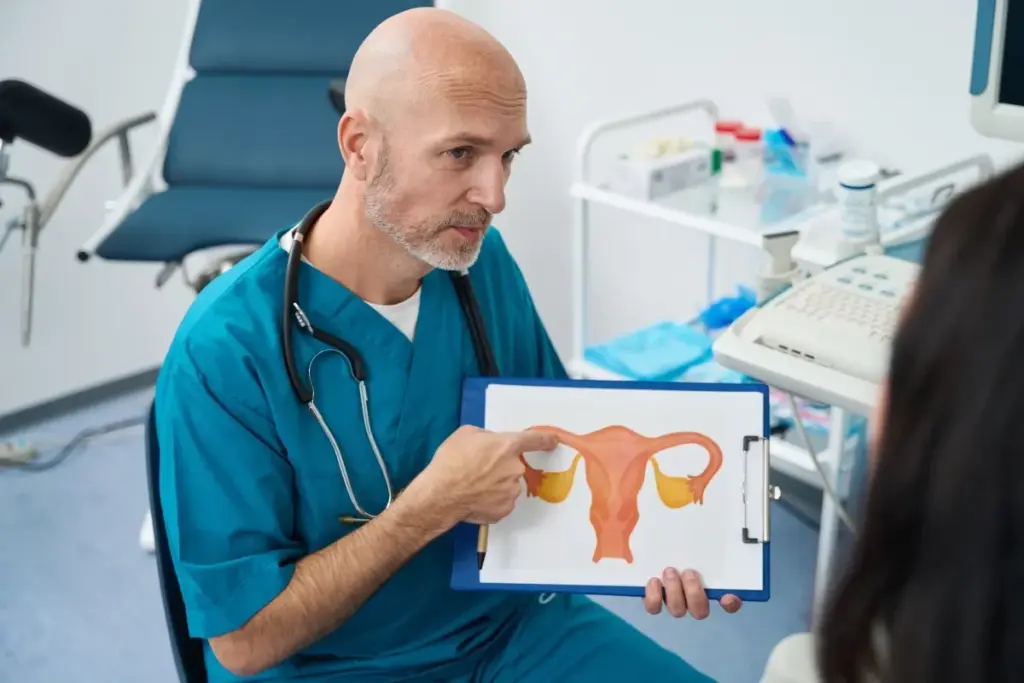
Urinary tract infections (UTIs) are a big problem for millions of women every year. Urologists play a key role in women’s health, helping with UTIs and incontinence.
How does a urologist examine a woman? Pelvic exams, yes. Pap smears? No. Get best info. See a gyno for that vital cancer screening test.
Urologists are experts in the urinary tract. They help both men and women with urinary issues. They diagnose, treat, and manage these problems.
Key Takeaways
- Urologists are medical specialists who diagnose and treat urinary tract disorders.
- Women can benefit from urologists’ expertise in managing UTIs and incontinence.
- A urologist exam for women is an essential step in maintaining urinary tract health.
- Urologists provide complete care for women, addressing various urinary tract issues.
- Understanding the role of urologists in women’s health can help alleviate concerns and promote better health outcomes.
Understanding Urology and Women’s Health

Urology is a medical field that deals with the urinary tract, affecting both men and women. It’s not just for men; it’s also key for women’s health. Urologists help diagnose and treat urinary system issues.
What is Urology?
Urology is a branch of medicine that deals with the urinary tract. It covers issues in the kidneys, bladder, and ureters. Urologists handle many problems, from infections to kidney stones and cancers.
Urology and gynecology are different, focusing on different areas of women’s health. Gynecologists look at the reproductive system, while urologists focus on the urinary tract. But, some conditions affect both areas.
Importance of Urologists in Women’s Health
Urologists are key in women’s health, providing care for urinary tract issues. The Government of Canada says knowing about medical specialties is important for getting the right care. Urologists help with urinary tract infections, incontinence, and more.
Urologists and gynecologists work together for women’s health. They address both urinary and reproductive health concerns. This teamwork is vital for managing conditions that affect both areas.
Knowing about urologists’ role in women’s health is empowering. It helps women take care of their urinary and reproductive health. This knowledge encourages them to seek specialized care when needed.
Common Conditions Treated by Urologists

Urological conditions like UTIs, incontinence, and kidney stones are common in women. These issues can really affect a woman’s life, causing pain and discomfort. It’s key to know about these conditions and how urologists help manage them.
Urinary Tract Infections (UTIs)
Urinary Tract Infections (UTIs) are bacterial infections in the urinary system. Women get UTIs more often because of their shorter urethra. Symptoms include a burning feeling while urinating, needing to go often, and urine that looks cloudy or smells bad.
Some wonder if gynecologists can treat UTIs. While they can help diagnose and sometimes treat them, urologists are better at handling these infections, even the severe ones.
UTIs can happen after a Pap smear, but it’s rare. It’s important for women to know the risk and get help if they have symptoms. Yes, women can see a urologist for UTIs and other urological issues.
Incontinence Issues
Incontinence is when you can’t control when you pee. It can be caused by weak muscles, neurological problems, or some medicines. Urologists can find out why you have incontinence and suggest treatments like exercises, medication, or lifestyle changes.
Kidney Stones
Kidney stones are hard deposits in the kidneys. They can cause a lot of pain, nausea, and vomiting. While more common in men, women can get them too. Urologists are key in finding and treating kidney stones, using tests to locate them and decide on treatment.
In short, urologists are essential for treating common urological issues in women. This includes UTIs, incontinence, and kidney stones. It’s important to get specialized care for these symptoms.
How Does A Urologist Examine A Woman
Women’s health is complex, and urologists are key players. They work alongside gynecologists to cover a wide range of health issues. This includes problems with the urinary tract and pelvic floor, which fall under urology.
Gynecologists focus on reproductive health, while urologists handle urinary system disorders in both men and women. Even though their fields are different, they often overlap in women’s health.
Collaborative Care with Gynecologists
Urologists and gynecologists team up to give women the best care. They can help with issues like UTIs, incontinence, and painful urination. This teamwork ensures women get the care they need.
For example, during pregnancy, women might face urinary problems. A urologist can help manage these issues. Conditions like pelvic organ prolapse also need the care of both a urologist and a gynecologist.
Addressing Unique Female Health Concerns
Urologists deal with health issues specific to women that aren’t just about reproductive health. These include interstitial cystitis and urinary incontinence. These conditions can greatly affect a woman’s life.
Seeing a urologist is a step towards managing these conditions. They offer treatments like medication, lifestyle changes, and sometimes surgery. This helps women manage their symptoms and improve their health.
In summary, urologists play a vital role in women’s health. By knowing when to see a urologist and how they work with gynecologists, women can take charge of their health. This includes addressing both common and complex urological issues.
Preparing for a Urologist Appointment
Going to a urologist is more than just showing up. It’s about being informed and ready to talk about your health. Knowing what to expect makes you feel more comfortable and helps you get the most from your visit.
What to Expect During the Visit
At your urologist visit, you’ll get a full check-up of your urinary health. This might include a physical exam, looking over your medical history, and some tests. It’s key to share your symptoms and any worries you have. This info is vital for a correct diagnosis and treatment plan.
The urologist will start by talking about your symptoms and medical history. For women, the exam is usually outside, focusing on the urethral and bladder areas. The aim is to find any problems or issues that might be causing your symptoms.
Necessary Medical History Documentation
It’s important to bring your medical history documents to your appointment. This includes any past diagnoses, treatments, or test results related to your urinary health. Having this info ready can greatly improve your diagnosis and treatment plan.
- List of current medications and dosages
- Previous urological or related surgical procedures
- Any relevant test results or medical records
- A detailed description of your symptoms, including when they occur and any factors that exacerbate or relieve them
Being well-prepared helps your urologist understand your condition better. This leads to better care and results for you.
Initial Consultations: Questions and Assessments
Visiting a urologist for the first time can be scary. We’re here to help you know what to expect. The first visit is key to understanding your urological health and any concerns you have.
Questions to Expect
Your urologist will ask many questions during your first visit. They want to know about your symptoms and medical history. You might be asked about:
- Your symptoms and when they started
- Any past urological problems or surgeries
- Your family’s medical history
- How your lifestyle might affect your condition
Sharing these details openly helps your urologist give you a correct diagnosis and treatment plan.
Initial Physical Examination Procedures
The first physical exam is very important. For women, this might include:
|
Examination Type |
Description |
Purpose |
|---|---|---|
|
External Examination |
Visual and manual check of the outside genital area |
To look for any oddities or signs of infection |
|
Internal Examination |
Not usually done by urologists; might include a pelvic exam if sent by a gynecologist |
To check the health of the reproductive organs |
Your urologist will explain each part of the exam. They want to make sure you’re comfortable and know what’s happening.
Knowing about the questions and exams in the first visit can make you less anxious. It also makes the visit more useful.
Specialized Tests and Procedures
Urologists use many tests to find and treat urological problems in women. These tests help spot issues like urinary tract infections, kidney stones, and bladder problems.
Urinalysis and Imaging Tests
Urinalysis checks a urine sample for problems. It looks for signs of infections, blood, or other issues. Imaging tests like ultrasound, CT scans, and MRI show detailed pictures of the urinary tract. This helps doctors see any problems.
These imaging tests are great for finding things like kidney stones or bladder tumors. For example, a CT scan can show where and how big a kidney stone is. This helps doctors plan the best treatment.
|
Diagnostic Test |
Purpose |
Common Findings |
|---|---|---|
|
Urinalysis |
Analyze urine for infections or abnormalities |
Bacteria, blood, protein |
|
Ultrasound |
Visualize urinary tract anatomy |
Kidney stones, bladder issues |
|
CT Scan |
Detailed imaging of the urinary tract |
Kidney stones, tumors, obstruction |
Cystoscopy: A Closer Look at the Bladder
Cystoscopy lets doctors see inside the bladder and urethra. A flexible or rigid cystoscope is used. It shows the bladder lining clearly.
This procedure is done under local anesthesia to make it less painful. It’s a key tool for finding and sometimes treating bladder problems.
- Cystoscopy helps diagnose bladder abnormalities.
- It can be used to take biopsies or remove small growths.
- The procedure is generally well-tolerated with minimal side effects.
Importance of Patient Confidentiality
Keeping patient information private is key in the doctor-patient relationship. It builds trust and lets patients open up. We know talking about urological health can be tough. So, we make sure women feel safe sharing their health worries.
Understanding Medical Privacy Regulations
Rules like those from the Government of Canada Publications protect patient secrets. These rules keep personal health info safe and only let the right people see it. We follow these rules closely to keep our patients’ trust.
In the U.S., HIPAA is a big deal. It sets rules for keeping patient health info safe. We promise to follow these rules, so our patients’ secrets stay safe.
Comfort During the Examination
Making patients feel at ease during exams is very important. We try to make them feel comfortable by explaining everything. Our doctors are trained to be kind and caring, making sure patients feel respected.
We do many things to make sure patients are comfortable and their secrets are safe. Here are a few examples:
|
Practice |
Description |
Benefit |
|---|---|---|
|
Private Consultation Rooms |
Ensuring discussions and examinations are conducted in private |
Enhanced patient comfort and confidentiality |
|
Clear Explanation of Procedures |
Informing patients about what to expect during examinations |
Reduced anxiety and increased trust |
|
Trained Healthcare Providers |
Staff are educated on sensitivity and patient care |
Better patient experience and care |
We follow strict privacy rules and focus on making patients comfortable. This way, we make a safe place for women to get urological care. If you’re wondering about seeing a urologist or if gynecologists treat UTIs, we’re here to help. We respect your privacy and meet your needs.
How a Urologist Conducts Physical Exams
Women’s urological health is very important. A urologist’s exam is key for diagnosing and treating many conditions. This exam includes several important steps to ensure patients get the best care.
External Examination Techniques
The external exam is a vital part of the urological check-up. The urologist will look at and touch the outside genital area. They check for any unusual discharge, inflammation, or lesions.
Key aspects of the external examination include:
- Visual inspection of the vulva and surrounding areas
- Palpation to check for tenderness or abnormalities
- Assessment of the urethral opening for signs of infection or other issues
|
Examination Technique |
Purpose |
|---|---|
|
Visual Inspection |
To identify visible abnormalities or signs of infection |
|
Palpation |
To check for tenderness, masses, or other abnormalities |
|
Urethral Assessment |
To evaluate the urethral opening for signs of infection or other conditions |
Internal Examination Practices
For some conditions, an internal exam is needed. This involves using a speculum to see the vaginal canal and cervix. The urologist can then check for any internal issues or infections. They may also do a bimanual exam to check the pelvic organs.
Internal examination practices may include:
- Speculum examination to visualize the vaginal canal and cervix
- Bimanual examination to assess the pelvic organs
Knowing about these exam techniques can make women feel more at ease when seeing a urologist. By explaining what to expect, we hope to reduce anxiety and improve women’s urological health.
Treatment Options Offered by Urologists
Urologists can treat many urological conditions. They make sure patients get the best care. A good treatment plan is key for urological health.
Every patient is different, so treatment must be tailored. Our urologists can handle many issues, like infections and kidney stones. They also help with incontinence problems.
Medication for Urological Conditions
Medicine is often the first step in treating urological issues. We have many medications for our patients. For example, antibiotics fight urinary tract infections.
Choosing the right medicine depends on several things. These include the condition’s type and how severe it is. Our urologists work with patients to find the best treatment.
“The right medication can significantly improve the quality of life for patients with urological conditions. It’s essential to work with a healthcare provider to find the most effective treatment.”
Surgical Interventions for Severe Cases
Sometimes, surgery is needed to treat urological issues. We offer various surgical options. These range from simple procedures to more complex surgeries.
Surgery can help with kidney stones or severe incontinence. It can remove or break up stones. Or, it can help control the bladder.
|
Condition |
Medication |
Surgical Intervention |
|---|---|---|
|
Urinary Tract Infections |
Antibiotics |
Rarely necessary, except in complicated cases |
|
Kidney Stones |
Pain management medication |
Yes, for removal or breakdown of stones |
|
Incontinence |
Medications to manage symptoms |
Yes, for severe cases to restore bladder control |
Surgery is usually a last resort. But, it’s sometimes needed. Our urologists help patients understand their options.
We offer many treatments to meet each patient’s needs. This ensures the best care for their urological health.
Follow-Up Care After Examination
Follow-up care after a urological exam is key to your health. For women who see a urologist, it’s more than just a check-up. It’s a vital step to manage and treat any found conditions.
Scheduling Post-Examination Appointments
After your first visit, setting up a follow-up is a must. This meeting lets the urologist review test results, discuss your diagnosis, and plan your treatment. Make sure to ask about the date of your next appointment before you leave.
At your follow-up, talk about your symptoms and any changes. Share your concerns about your diagnosis or treatment. This helps tailor your care and answer any questions you have.
Managing Treatment Plans and Lifestyle Changes
Effective treatment plans often mix medical care and lifestyle changes. Women with urological issues might need medication, therapy, or surgery. Alongside these, making lifestyle changes can greatly help.
Dietary changes can manage issues like kidney stones or UTIs. Drinking more water, avoiding certain foods, and eating well are key. For incontinence, pelvic floor exercises like Kegels can help. We help our patients create a plan that includes these changes, giving them the support they need.
Remember, follow-up care is an ongoing process. Regular visits help us track your progress, adjust your treatment, and offer ongoing support. This ensures you’re on the path to better urological health.
When to Seek a Urologist’s Expertise
Knowing when to see a urologist is key to handling urological problems. Urologists are important for women’s health, helping with urinary tract issues.
Recognizing Symptoms That Require Attention
Recognizing when to seek the expertise of a urologist is crucial for effective management of urological health. Look out for these signs:
- Persistent or recurring urinary tract infections (UTIs)
- Incontinence issues, such as leakage or difficulty controlling urination
- Pain or discomfort while urinating
- Blood in the urine or abnormal urine color
- Frequent or painful urination
If you notice any of these symptoms, get medical help. Early treatment can greatly improve your health and prevent serious problems.
Understanding the Referral Process
Often, your primary care doctor or gynecologist will send you to a urologist. But, you can also go directly if you’re feeling symptoms.
|
Condition |
Symptoms |
Referral/Urologist Visit |
|---|---|---|
|
Urinary Tract Infection (UTI) |
Burning sensation while urinating, frequent urination |
Direct visit or referral |
|
Incontinence |
Leakage, loss of bladder control |
Referral or direct visit for specialized care |
|
Kidney Stones |
Severe pain, nausea, vomiting |
Emergency visit or referral |
Knowing when to see a urologist can help you manage your health better. If you’re not sure about your symptoms, talk to a healthcare expert.
Resources for Women Seeking Urological Care
Women often wonder if they should visit a urologist or a gynecologist for their health concerns. It’s important to know the difference between urology and gynecology. Gynecologists focus on women’s reproductive health. Urologists, on the other hand, specialize in treating conditions related to the urinary tract and kidneys.
Finding the Right Specialist
When looking for a healthcare provider, finding a board-certified urologist is key. You can ask your primary care physician for a referral or check online directories. The question of whether a woman can go to a urologist is often raised, and the answer is yes. Urologists treat patients of all genders, and their expertise is vital for addressing specific female urological issues.
Support and Community
Support networks and community resources are important for managing urological health. Many organizations offer guidance, counseling, and educational materials for women dealing with urological conditions. By seeking out these resources, women can better understand their conditions and make informed decisions about their care.
FAQ
Do urologists see women?
Yes, urologists see women, mainly for urinary tract issues like infections and incontinence.
What does a urologist do for women?
Urologists help women with urinary tract problems. This includes treating UTIs, incontinence, and kidney stones.
Can a woman go to a urologist?
Yes, women can visit a urologist for urinary tract issues. They offer specialized care.
What’s the difference between a urologist and a gynecologist?
Urologists focus on the urinary tract and male reproductive system. Gynecologists deal with women’s reproductive health. But, urologists also treat women’s urinary issues.
Can gynecologists treat UTIs?
Gynecologists can diagnose and sometimes treat UTIs. But, urologists are experts in urinary tract conditions. They might be needed for complex cases.
What can I expect during a urologist exam?
At a urologist exam, you’ll get a physical check-up. This might include external and internal exams. You might also have tests like urinalysis or imaging.
How do urologists conduct physical exams for women?
Urologists use both external and internal exams to check the urinary tract and related areas.
Are urologist exams confidential?
Yes, urologist exams are private. Urologists follow strict privacy rules to keep your information safe.
What are the treatment options for urological conditions?
Treatments include medicines, lifestyle changes, and sometimes surgery. It depends on the condition and how severe it is.
How do I find a board-certified urologist?
Look for a board-certified urologist in directories or ask your doctor for a referral. You can also search online for specialists in your area.
When should I seek a urologist’s expertise?
See a urologist if you have symptoms like UTIs, incontinence, or urinary tract pain. Or if your doctor recommends it.
What kind of support networks are available for women with urological issues?
Women with urological issues can find support online, in forums, and through groups. There are also organizations focused on women’s health.
Reference
National Center for Biotechnology Information. Evidence-Based Medical Insight. Retrieved from https://pubmed.ncbi.nlm.nih.gov/24799582/