
An ACL injury can really set you back, whether you’re an athlete or just someone who loves to stay active. ACL reconstruction with an allograft is a surgery that helps fix this. It involves using a ligament from a donor who’s been carefully checked.
At Liv Hospital, our team is all about personalized care for those getting ACL reconstruction. We use the newest methods and tools to make sure you get the best results. Our goal is to give you world-class healthcare and support, no matter where you’re from.
Key Takeaways
- ACL reconstruction with an allograft is a safe and proven surgical option.
- This procedure involves transplanting a ligament from a screened donor.
- Personalized care is provided to ensure the best possible outcomes.
- Liv Hospital offers complete support for international patients.
- Restoring knee function and stability is the main aim of ACL reconstruction.
Understanding ACL Injuries and Reconstruction
The anterior cruciate ligament (ACL) is key to knee stability. Injuries to this ligament can greatly affect a person’s life. We will look into ACL injuries, their causes, symptoms, and treatment options.
The Anatomy and Function of the ACL
The ACL is a vital ligament for knee stability. It connects the femur to the tibia, controlling knee motion. Knowing the ACL’s anatomy and function is key to treating ACL injuries. It works with other ligaments and muscles to support the knee during activities.
Common Causes of ACL Tears
ACL tears are common in sports, happening during sudden stops or changes in direction. Common causes include:
- Sudden deceleration
- Direct contact or collision
- Landings from jumps awkwardly
- Pivoting or twisting movements
Knowing the symptoms of an ACL tear is important. Symptoms include a popping sound, knee instability, and pain. This is key for quick diagnosis and treatment.
When Reconstruction Becomes Necessary
Not all ACL injuries need surgery. But for young, active people or those in sports that involve pivoting, ACL reconstruction surgery is often needed. We will talk about when surgery is recommended.
Autograft vs. Allograft: Comparing ACL Reconstruction Options

Understanding the differences between autograft and allograft ACL reconstruction is key to making the right choice. The type of graft used in ACL reconstruction greatly affects the surgery’s outcome.
What is an Autograft?
An autograft uses a graft from another part of the patient’s body. It’s often taken from the patellar tendon, hamstring tendons, or quadriceps tendon. The main benefit is it lowers the risk of disease transmission and rejection.
Benefits of Autograft: It integrates faster, has lower disease transmission risk, and might have better graft survival rates.
What is an Allograft?
An allograft uses a graft from a donor. It eliminates the need for a second surgical site. This reduces donor-site morbidity and can shorten the surgery time.
Benefits of Allograft: It reduces surgery time, lowers postoperative pain, and offers a wider range of graft sizes and types.
Key Differences Between Graft Types
The main differences between autograft and allograft are their source, integration rates, and risks. Here’s a summary:
| Characteristics | Autograft | Allograft |
|---|---|---|
| Source | Patient’s own body | Donor |
| Donor-site Morbidity | Present | Absent |
| Disease Transmission Risk | None | Minimal, with proper screening |
| Operative Time | Longer | Shorter |
| Graft Availability | Limited by patient’s tissue | Wide range of sizes and types |
A leading orthopedic surgeon says, “Choosing between autograft and allograft depends on the patient’s age, activity level, and past surgeries.”
“Allografts reduce donor-site morbidity, shorten surgery time, and allow for smaller incisions.”
Choosing between autograft and allograft ACL reconstruction should consider the patient’s specific needs and preferences.
How Does an ACL from Another Person Work?
Using an ACL from another person for reconstruction is a complex process. It involves many factors to ensure the graft works well and grows strong.
The Basic Principles of Allograft Integration
When an ACL from another person is used, it must integrate into the patient’s knee. This starts with initial fixation, where the graft is secured. Then, it goes through changes as it blends with the surrounding tissue.
Advanced sterilization, like irradiation and chemical processing, is key. It reduces risks by removing pathogens and contaminants. This makes the graft safer for the recipient.
Biological Process of Incorporation
The incorporation process has several stages:
- Inflammation: The body’s first reaction to the graft.
- Revascularization: The graft gets a new blood supply.
- Cellular Repopulation: The graft is filled with the recipient’s cells.
- Remodeling: The graft is shaped like the original ACL.
This complex process depends on the graft type, donor match, and the recipient’s health.
Timeline for Graft Maturation
The time it takes for the graft to mature varies. It can take months to years. Here’s a breakdown of the typical stages and timeline:
| Stage | Timeline | Description |
|---|---|---|
| Initial Healing | 0-6 weeks | Graft fixation and initial integration |
| Revascularization | 6-12 weeks | Graft begins to receive new blood supply |
| Cellular Repopulation | 3-6 months | Graft is repopulated with recipient’s cells |
| Remodeling | 6 months-2 years | Graft is remodeled to resemble original ACL |
Knowing about the acl graft process and transplant procedure is important. It helps both surgeons and patients. Making sure the donor ACL is compatible is also key for success.
Sources and Types of ACL Allografts
It’s important for doctors and patients to know about ACL allografts. The type of graft used can greatly affect the success of ACL reconstruction surgery.
Patellar Tendon Allografts
Patellar tendon allografts are often chosen for ACL repairs. They are strong and heal well, which can mean a quicker recovery. But, they might cause problems at the donor site and lead to tendonitis.
Achilles Tendon Allografts
Achilles tendon allografts are also common for ACL grafts. They are strong and have a big size, which helps with stability. Plus, they don’t need bone plugs, making the surgery easier.
Hamstring and Quadriceps Tendon Options
Hamstring and quadriceps tendon allografts are used too. They balance strength and risk well. They’re good for those who want a less invasive surgery.
Tibialis Anterior and Posterior Tendons
Tibialis anterior and posterior tendons are less common but work well for ACL grafts. They fit well for some patients’ anatomy.
Choosing an ACL graft depends on many things. We look at the patient’s age, how active they are, and their body type. The decision between using a graft from the patient or a donor, and which type, is made carefully by the surgeon.
The Donor Selection and Screening Process
Choosing the right donor is key to safe ACL allografts. We check each donor carefully to make sure the tissue is good for transplant. Our strict rules help us provide top-notch allografts for ACL surgeries.
Criteria for Donor Eligibility
We look at a donor’s health history, lifestyle, and lab tests to decide if they’re eligible. We check for diseases and make sure the tissue will work well. Age, health, and infectious diseases are important factors.
Donor screening means we deeply check the donor’s past. This helps stop diseases from spreading and keeps the graft healthy.
Comprehensive Screening Protocols
We use detailed tests to find any problems with the tissue. We test for diseases like HIV and hepatitis. We also check the donor’s health and past to make sure the graft is strong.
- Serological testing for infectious diseases
- Physical examination of the donor
- Review of medical and social history
Tissue Banking Standards and Regulations
Following strict rules is vital for safe ACL allografts. We follow the American Association of Tissue Banks (AATB) and FDA guidelines. These rules cover how we get, process, and store tissue.
Following these rules builds trust with our patients. It means we can offer the best care for ACL surgeries with allografts.
Allograft Processing and Sterilization Techniques
To reduce risks with ACL allografts, strict processing and sterilization steps are followed. These steps are key to keeping the graft safe and intact.
The process of preparing ACL allografts includes cleaning, disinfection, and sterilization. Sterilization is a critical step that aims to remove any harmful pathogens without harming the graft’s strength.
Irradiation Methods
Irradiation is a method used to sterilize ACL allografts. It involves exposing the graft to radiation to kill off bacteria and viruses. But, irradiation can potentially alter the graft’s biomechanical properties, affecting its strength and durability.
- Gamma radiation is commonly used for sterilizing allografts.
- Low-dose irradiation is preferred to minimize damage to the graft.
Chemical Processing
Chemical processing is another way to sterilize ACL allografts. It uses chemicals to disinfect and sterilize the graft. Chemical processing can be effective against a broad spectrum of pathogens, but it needs careful control to avoid harming the graft.
“The use of chemical processing in allograft sterilization has shown promising results in reducing the risk of disease transmission.”
Impact of Processing on Graft Integrity
The methods used for processing and sterilizing ACL allografts can greatly affect the graft’s integrity. It’s vital to find a balance between sterilization and preserving the graft’s biomechanical properties.
Research has shown that proper processing techniques can minimize the risks associated with allografts and boost their success rate in ACL reconstruction. By understanding the effects of different processing methods, healthcare providers can make informed decisions for their patients.
The Allograft ACL Reconstruction Procedure
Understanding allograft ACL reconstruction is key for good results. It includes several steps from start to finish.
Preoperative Preparation
Getting ready for surgery is very important. First, we check the patient’s health and knee function. We use MRI to see how bad the ACL injury is and if other parts of the knee are damaged.
- Patient evaluation and medical history review
- Imaging studies (X-rays, MRI)
- Graft selection and sizing
Surgical Technique
The surgery for allograft ACL reconstruction is precise. We try to use minimally invasive approaches to cause less damage and help the patient heal faster.
- Arthroscopic examination of the knee joint
- Preparation of the graft
- Drilling of tunnels for graft placement
- Graft insertion and fixation
Graft Fixation Methods
Fixing the graft is a big part of the surgery. We use graft fixation methods like interference screws, cross-pins, and cortical suspension devices. This helps the graft heal well and stay in place.
- Interference screws
- Cross-pins
- Cortical suspension devices
Advantages of Minimally Invasive Approaches
Using minimally invasive methods has many benefits. It causes less damage, leads to less pain, and helps patients recover faster. This means patients can get back to their activities sooner and with fewer problems.
Understanding the allograft ACL reconstruction process helps us see its complexity. It shows how important a skilled team is. Our aim is to give the best results for patients having acl reconstruction surgery.
Ideal Candidates for ACL Allografts
Choosing the right ACL allograft depends on many factors. It’s important to know what makes a graft suitable for each person. When we talk about ACL reconstruction, several things about the patient matter a lot.
Age Considerations
Age is a big deal when picking an ACL allograft. Older people might do better with allografts because they’re less active. But, younger, very active folks might need autografts because they put more stress on the graft.
We look at the patient’s age in terms of health, not just how old they are. This helps us choose the best treatment for their lifestyle and activity level.
Activity Level Factors
How active a person is also plays a big role. Athletes or very active people might do better with autografts because they’re stronger and heal faster. On the other hand, less active people might be okay with allografts.
We check how active a person is, including their job and hobbies. This helps us pick the right graft for their lifestyle.
Previous Surgery History
People who have had knee surgeries before need careful thought when choosing a graft. Sometimes, an allograft is better to avoid more surgery.
We look at the patient’s past surgeries to see if there are any special challenges. This helps us plan the best ACL reconstruction.
Patient-Specific Anatomical Considerations
Things like the size and quality of the patient’s tendons matter. We also think about any unusual shapes or sizes of the knee. These can affect how well the graft works.
We use special imaging to see the patient’s knee in detail. This helps us pick the best graft and plan the surgery.
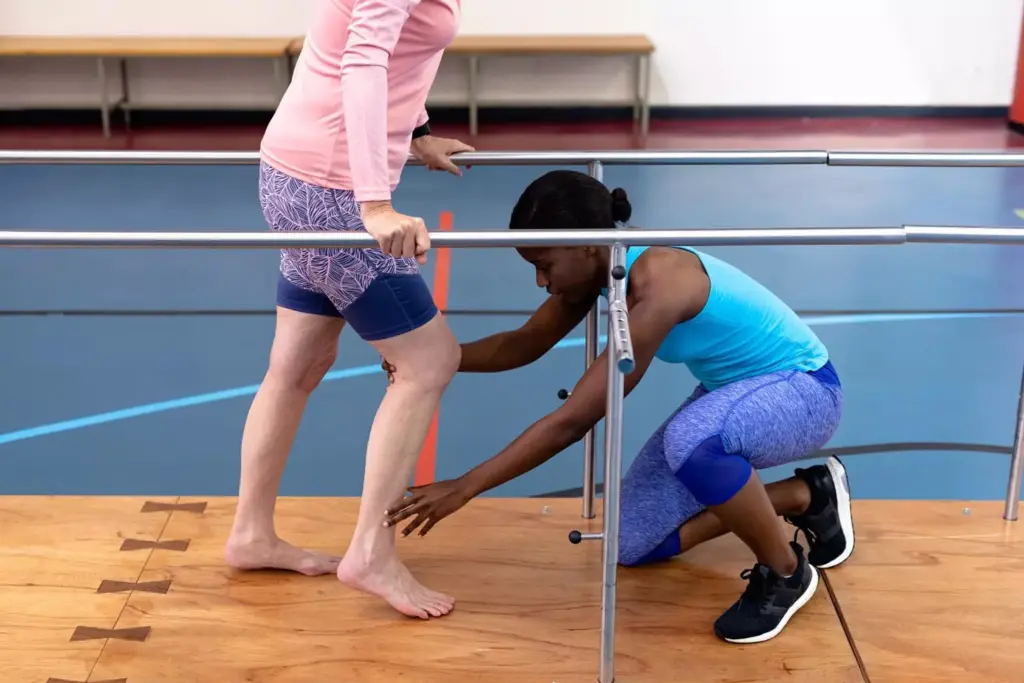
Rehabilitation and Recovery After Allograft ACL Reconstruction
A good rehabilitation plan is key for a successful recovery after ACL reconstruction with allograft. We know that rehab is a big part of getting back to normal. A well-planned program can help patients get back to their pre-injury activities.
Early Rehabilitation Phase (0-6 Weeks)
The first part of rehab aims to reduce pain and swelling. It also works on getting the knee to move better and strengthening the muscles around it. Early movement is important to avoid stiffness and help healing.
We suggest doing straight leg raises, quadriceps sets, and heel slides to gently work the knee. It’s also important to manage pain during this time. We use medication and other methods to keep patients comfortable.
Intermediate Recovery (6 Weeks to 3 Months)
As the knee heals, we focus on making the muscles stronger and improving how the knee moves. Resistance band exercises and single-leg squats are added to build strength and stability. We also work on balance and coordination with proprioception exercises.
Advanced Rehabilitation (3-6 Months)
In the advanced phase, we introduce more challenging exercises that mimic everyday and sports activities. Agility drills, plyometrics, and running are part of the program. We watch how the patient is doing and adjust the exercises as needed.
Return to Sport Considerations (6+ Months)
The last part of rehab is about getting the patient ready to go back to their sport or activity. We check their strength, agility, and confidence before saying it’s okay to return. It’s important for patients to be fully recovered and ready mentally to avoid injury.
We carefully check if a patient is ready to go back to sports. This includes functional tests and performance checks. This makes sure our patients are safe and ready to start their activities again.
Conclusion: Clinical Outcomes and Future Developments
ACL reconstruction using allografts has seen big changes. These changes have led to better success rates and outcomes for patients. This is good news for those going through ACL transplantation.
Using allografts in ACL surgery has shown positive results. More research and better graft processing are on the way. These advancements will likely make results even better.
The field of ACL surgery is getting better all the time. Thanks to new tissue banking and surgical methods, patients are recovering faster. They can get back to their usual activities sooner.
Our team is dedicated to keeping up with these advancements. We want to make sure patients get the best and safest treatments. As the field grows, we expect even better techniques and results for allografts in ACL surgery.
What is an ACL allograft and how does it work?
An ACL allograft is a graft from a donor used to fix the ACL in someone else’s knee. It’s cleaned and prepared to be safe and fit well.
What are the benefits of using an allograft for ACL reconstruction?
Using an allograft can make surgery shorter and less painful. It also lowers the chance of problems at the donor site.
How is donor eligibility determined for ACL allografts?
Donors are checked through a detailed screening. This includes their health history, physical check-ups, and lab tests. It makes sure the donor’s tissue is safe and matches well.
What are the different types of ACL allografts available?
There are several types of ACL allografts. These include patellar tendon, Achilles tendon, hamstring, and quadriceps tendon grafts. Each has its own good points and downsides.
How is the allograft processed and sterilized?
Allografts are cleaned and sterilized in different ways. This includes using radiation and chemicals. It helps prevent disease and keeps the graft strong.
What is the success rate of ACL reconstruction with an allograft?
ACL reconstruction with an allograft usually works well. Most people see big improvements in their knee’s function and stability.
What is the typical rehabilitation timeline after allograft ACL reconstruction?
The recovery time is usually 6 to 12 months. It starts with basic exercises and moves to more intense ones and sports.
Are there any risks or complications associated with ACL allografts?
Yes, ACL allografts can have risks. These include graft failure, infection, and disease transmission. It’s important to know these risks.
How does the age of the patient affect the success of ACL allograft reconstruction?
Age can affect how well ACL allograft reconstruction works. Younger people usually do better because they’re healthier and more active.
Can I return to sports after ACL allograft reconstruction?
Yes, most people can go back to sports after this surgery. But, it’s key to follow a good rehab plan and get the okay from a doctor.
What are the advantages of minimally invasive approaches for ACL allograft reconstruction?
Minimally invasive methods can cause less damage and lead to quicker healing. They also result in less scarring, making patients happier with their results.
How does the activity level of the patient influence graft selection?
A patient’s activity level is very important when choosing a graft. More active people need stronger and more durable grafts.
Reference
- PMC. Allografts in Anterior Cruciate Ligament Reconstruction. https://pmc.ncbi.nlm.nih.gov/articles/PMC7123455/
- Orthopedic Reviews. What are the Graft Options for Anterior Cruciate Ligament (ACL) Reconstruction? https://orthopedicreviews.openmedicalpublishing.org/article/143767-what-are-the-graft-options-for-anterior-cruciate-ligament-acl-reconstruction