Last Updated on November 26, 2025 by Bilal Hasdemir
Coronary angiography, or a ‘dye test for heart,’ is key for finding blockages in heart blood vessels. It’s the top choice for spotting coronary artery disease.
At Liv Hospital, we use coronary angiography to see the heart’s blood vessels with X-rays and dye. This safe test lets our cardiologists find blockages. They can then make a correct diagnosis.
Our team, known worldwide, follows the latest methods and cares for each patient. We make sure your coronary angiogram is done with skill and attention to detail.
Key Takeaways
- Coronary angiography is a minimally invasive diagnostic procedure.
- It visualizes the coronary arteries using X-rays and a special contrast dye.
- The procedure helps diagnose blockages or narrowing in the heart’s blood vessels.
- Our team uses the latest protocols and a patient-centered approach.
- Coronary angiography is the gold standard for diagnosing coronary artery disease.
Understanding Coronary Angiography and Its Purpose

Coronary artery angiography is a detailed medical test. It checks the health of the coronary arteries. These arteries are key for blood flow to the heart. We’ll explore what coronary angiography is, why it’s done, and what it can find.
What is Coronary Artery Angiography?
Coronary artery angiography, or a cardiac dye test or coronary angiogram, is a test. It uses X-rays to see the coronary arteries. A special dye is injected into the arteries to show up on X-rays.
This test helps doctors spot any blockages or problems in the arteries.
Why Doctors Recommend a Cardiac Dye Test
Doctors suggest a cardiac dye test for many reasons. It’s mainly to find and check how bad coronary artery disease is. This test shows the heart’s blood vessels’ health.
It’s often needed for people with chest pain or shortness of breath. Or those who have had heart disease before.
Conditions Diagnosed Through Coronary Angiography
Coronary angiography can spot several heart issues. This includes coronary artery disease, blockages, and other problems. It checks the arteries’ health.
This helps doctors decide on treatments like angioplasty or stenting.
Preparing for Your Coronary Angiogram Procedure

Getting ready for a coronary angiogram is key. We’ll show you how to prepare for a smooth procedure.
Medical Evaluation and Pre-Procedure Tests
Your doctor may run tests before the angiogram. These tests check your blood and kidney health. This helps plan the procedure safely.
Common pre-procedure tests include:
- Blood urea nitrogen (BUN) and creatinine levels to assess kidney function
- Complete blood count (CBC) to check for anemia or infection
- Coagulation studies to assess blood clotting
- Electrocardiogram (ECG) to evaluate heart rhythm
Medication Adjustments Before Angiography
Some medications might need to be changed before the angiogram. This is true for blood thinners, as they can cause bleeding. Your doctor will tell you how to adjust your meds.
Tell your doctor about all your medications, including:
- Blood thinners
- Diabetes medications
- Medications for high blood pressure
- Any herbal supplements or over-the-counter drugs
Fasting Requirements and Day-Before Instructions
Fasting times for a coronary angiogram vary. You might need to fast from midnight the night before.
Other day-before instructions might be:
- Avoiding certain foods or drinks
- Arranging for someone to drive you home after the procedure
- Showering or bathing with antibacterial soap
What to Bring to Your Appointment
Bring important items to your appointment. These include:
- A list of your current medications and dosages
- Any relevant medical records or test results
- Insurance information and identification
- A friend or family member to accompany you
What to Expect on the Day of Your Heart Angiogram
Getting ready for your heart angiogram? Knowing what to expect can make you feel less nervous. We aim to make sure you’re well-informed and at ease.
Arrival and Administrative Procedures
When you arrive at our Cardiac Cath Lab suite, our friendly nurses will help you get ready. You’ll need to fill out some paperwork, like your medical history and any documents you have.
Next, you’ll be taken to a cozy area for your heart angiogram prep. You’ll change into a hospital gown and get an IV line.
Pre-Procedure Preparation
Before we start, we’ll go over your medical history and the coronary angio or cardio angiography details with you. We’ll explain everything clearly, answer your questions, and make sure you’re ready.
Then, you’ll lie down on the catheterization table. This table has advanced imaging tech to show your heart’s blood vessels.
The Catheterization Laboratory Environment
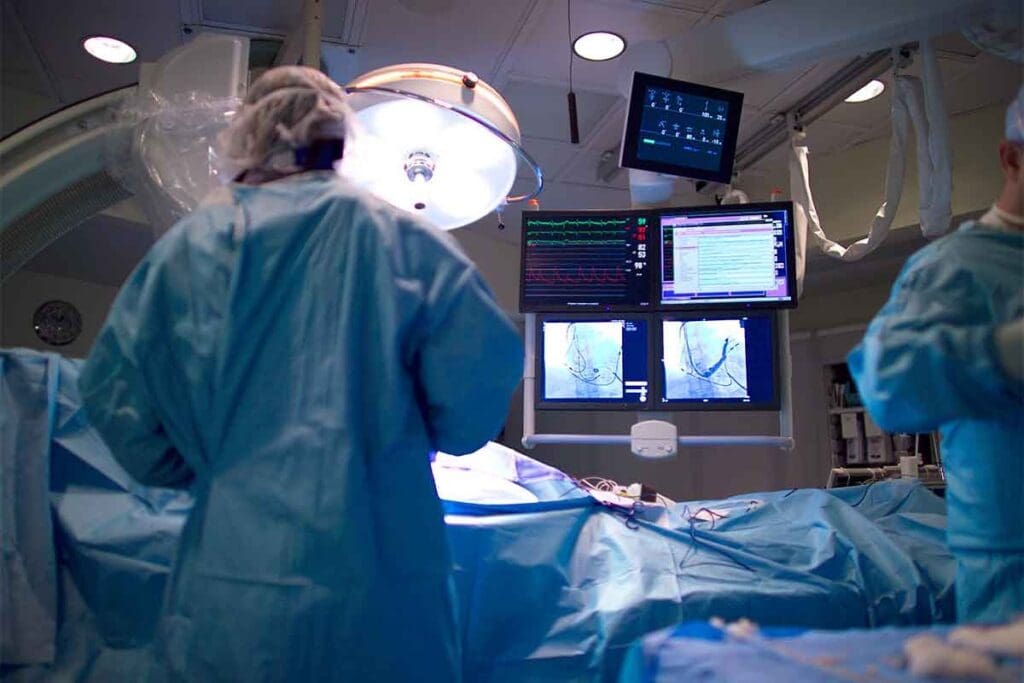
The Cath Lab is a high-tech room. It’s staffed by skilled cardiologists, nurses, and technicians. They’re all focused on keeping you safe and comfortable.
During your heart angiogram, our team will watch over you closely. The procedure involves a small incision in your leg or arm for a catheter. Our tech lets us see the catheter moving in real-time.
| Procedure Step | Description | Duration |
| Preparation | Administrative tasks and preparation for the procedure | 30 minutes |
| Catheter Insertion | Insertion of the catheter through a small incision | 15-30 minutes |
| Imaging | Advanced imaging to visualize heart’s blood vessels | 30-60 minutes |
Knowing what to expect during your angiography procedure for heart can make it less scary. We’re dedicated to giving you top-notch care and support.
How is Coronary Angiography Done: The Step-by-Step Procedure
Learning about coronary angiography can ease your worries. We’ll walk you through each step, from sedation to X-ray imaging. This way, you’ll know what to expect.
Sedation Administration and Consciousness Level
We give sedation to help you relax before starting. Some get conscious sedation, staying awake but calm. Others might get general anesthesia, based on their health and the doctor’s advice.
Conscious sedation keeps you comfortable and able to follow instructions. Our team watches your vital signs to keep you safe and comfortable.
Catheter Insertion Techniques
We then insert a catheter into an artery. This is usually done through the wrist or groin. The area is numbed to reduce pain.
We use a needle to access the artery and then a wire. A catheter is slid over the wire into the artery. X-ray imaging guides us to ensure it’s in the right spot.
Contrast Dye Injection Process
With the catheter in, we inject contrast dye to see the arteries. This dye shows up on X-rays, helping us spot any issues.
The dye might cause a warm feeling or a metallic taste. But these effects are brief. Our team works to make the process as comfortable as possible.
X-ray Imaging and Visualization Techniques
After the dye is in, we take X-ray images of the arteries. We take pictures from different angles to get a full view of the heart’s blood vessels.
The images are shown on a monitor. Our cardiologists can see your arteries in real-time. This helps them diagnose problems and plan treatment, like angioplasty.
Interpreting Your Coronary Angiogram Results
Your coronary angiogram results show how healthy your coronary arteries are. Knowing what these results mean is key to figuring out your next steps.
Understanding Normal vs. Abnormal Findings
Your cardiologist checks for blockages or narrowing in your coronary arteries during the angiogram. Normal findings mean your arteries are clear and working well. But, abnormal findings might show blockages or narrowing from plaque buildup, which can block blood flow to your heart.
It’s important to know that only a doctor can really understand these results. Small differences can change how they diagnose and treat you.
Blockage Assessment and Severity Grading
If blockages are found, your doctor will check how severe they are. They measure how much the arteries are narrowed and how it affects blood flow. Severity grading helps decide the best treatment, like medicine, angioplasty, or stenting.
- Mild blockages might not need immediate action but will be watched.
- Moderate blockages might need medicine or lifestyle changes.
- Severe blockages often need more serious treatments like angioplasty or stenting.
Immediate Treatment Decision Process
Your healthcare team will talk about treatment options based on your angiogram results. They consider your overall health, medical history, and what you prefer.
Immediate treatments might include opening blocked arteries with angioplasty or stenting. This is often needed if you have sudden symptoms like chest pain.
Discussing Results with Your Cardiologist
After your angiogram, your cardiologist will meet with you to go over the results. This is your chance to ask questions, understand your condition, and learn about your treatment plan.
Talking thoroughly with your cardiologist is important. It helps you understand your diagnosis, what the findings mean, and the treatment plan they suggest.
Potential Interventions During the Angiography Procedure for Heart
The angiography procedure for the heart is not just for checking; it can also fix problems. If blockages or other issues are found during the angiogram, your doctor might do interventions right away.
Angioplasty: When and How It’s Performed
Angioplasty is a common intervention. It uses a tiny balloon to open narrowed or blocked arteries. A catheter with a deflated balloon is guided to the blockage site. Then, the balloon is inflated to push the plaque against the artery wall, improving blood flow.
Doctors often recommend angioplasty for significant blockages. It’s done to restore normal blood flow to the heart muscle. This can help relieve symptoms like chest pain and shortness of breath.
Stent Placement Procedures
After angioplasty, or sometimes alone, stent placement may be performed. A stent is a small, mesh-like tube that keeps the artery open. Stents can be bare metal or drug-eluting, which means they are coated with medication to prevent the artery from re-narrowing.
The choice to place a stent depends on several factors. These include the blockage’s location and severity, and the patient’s overall health. Stent placement is very effective in keeping the artery open after angioplasty.
Other Possible Interventions
Other interventions can be done during angiography. These include:
- Atherectomy: Removing plaque buildup from the artery
- Thrombectomy: Removing blood clots from the artery
- Balloon valvuloplasty: Widening a narrowed heart valve
These procedures are designed to address specific heart conditions. They are chosen based on the individual patient’s needs.
When Separate Surgical Procedures Are Recommended
While many interventions can be done during angiography, some cases need separate surgeries. Coronary artery bypass grafting (CABG) is a surgical procedure for patients with complex or multiple blockages.
The decision to have a separate surgery depends on the disease’s extent, the patient’s health, and other factors. Your healthcare provider will talk to you about the best treatment.
Recovery After Your Dye Test for Heart
After your dye test for heart, your healthcare team will watch over you closely. It’s important to follow their care instructions to stay safe and comfortable.
Immediate Post-Procedure Monitoring
You’ll be moved to a recovery area after the test. Here, your vital signs will be checked often. Your healthcare team will look at your blood pressure, heart rate, and the catheter site for any bleeding or issues. They’ll tell you to stay calm and not move too much to avoid bleeding.
“The care you receive during the recovery phase is just as important as the procedure itself,” says your healthcare team.
Hospital Discharge Timeline and Criteria
How long you stay in the hospital can vary. If everything goes well, you might leave in a few hours. Your doctor will check your condition, the catheter site, and for any complications before you go home.
- Stable vital signs
- No signs of bleeding or complications at the catheter site
- Ability to walk and move without difficulty
- Understanding of post-procedure care instructions
Activity Restrictions and Gradual Return to Normal
You’ll get advice on what activities to avoid after your test. Avoid heavy lifting, strenuous activities, and bending for at least 24 hours. You can start doing normal things again when your doctor says it’s okay.
“It’s important to follow your doctor’s advice on activity levels to avoid problems and help you heal.”
Catheter Insertion Site Care
Your doctor will tell you how to take care of the catheter site. Keep it clean and dry, and watch for signs of infection or bleeding. If you see any unusual symptoms, like more pain, swelling, or redness, call your doctor right away.
By following these steps and your healthcare team’s advice, you can have a safe and effective recovery after your dye test for heart.
Risks, Complications, and Safety of Coronary Angiography
Knowing the risks and complications of coronary angiography helps patients prepare. It’s important to understand what might happen during and after the procedure. While it’s usually safe, knowing the possible issues is key.
Common Side Effects and Discomforts
Most people have coronary angiography without major problems. But, some might feel minor side effects. These can include:
- Bruising or discomfort at the catheter insertion site
- Allergic reactions to the contrast dye, though this is rare
- Temporary changes in kidney function, mainly in those with kidney issues
These side effects are usually mild and go away on their own. Healthcare professionals closely monitor patients during and after the procedure to manage these issues.
Potential Serious Complications
Though rare, serious complications can happen. These include:
- Major bleeding or hematoma at the catheter site
- Cardiac complications, such as heart attack or arrhythmias
- Stroke or transient ischemic attack
- Infection at the catheter site
Knowing about these serious complications is important. It helps patients know when to get immediate medical help.
Warning Signs to Watch For
After coronary angiography, watch for signs of complications. Look out for:
- Increasing pain or swelling at the catheter site
- Signs of infection, such as redness, warmth, or fever
- Chest pain or shortness of breath
- Weakness or numbness in the limbs
Spotting these warning signs early can lead to quick action. This can prevent more serious problems.
When to Contact Your Doctor or Seek Emergency Care
If you notice any warning signs, know when to seek help. For severe symptoms like severe chest pain or difficulty breathing, go to the emergency room right away. For milder issues, call your doctor or healthcare provider for advice.
Understanding the risks and complications of coronary angiography prepares patients for their procedure and recovery. Always talk to your healthcare provider about any concerns or questions you have.
Conclusion
Coronary angiography is a key tool for checking heart health. It shows detailed images of the coronary arteries. This test, also known as a dye test for the heart, helps doctors see any blockages or issues.
In this guide, we explained how coronary angiography works. We covered everything from getting ready for the test to what happens after. Knowing about the process helps patients prepare and understand what to expect.
This test is essential for making treatment plans for heart problems. It gives doctors a clear view of the arteries. This helps them decide on treatments like angioplasty or stent placement.
Our institution is dedicated to top-notch healthcare. We offer support and guidance for international patients. We hope this guide has helped you understand the importance of coronary angiography for heart health.
FAQ
What is coronary angiography?
Coronary angiography is a test that uses X-rays to see the heart’s arteries. It checks for blockages or narrowing.
Why is coronary angiography performed?
It’s used to find heart disease, see how bad blockages are, and decide on treatments like angioplasty.
How do I prepare for a coronary angiogram?
You’ll get medical checks, change some meds, and fast before the test. Your doctor will give you specific instructions.
What happens during a coronary angiography procedure?
A catheter is put in an artery, and dye is injected. X-rays show the arteries. You’ll be under sedation.
What are the possible risks and complications of coronary angiography?
You might feel pain or bruising where the catheter was. Serious issues like dye allergies or vessel damage can also happen.
How are coronary angiogram results interpreted?
Doctors look at the test to see if there are blockages. This helps decide on treatments and talks with your cardiologist.
What interventions can be performed during coronary angiography?
Angioplasty and stent placement can be done to fix blockages during the test.
What is the recovery process like after a coronary angiogram?
You’ll be watched closely, and your doctor will tell you what to do next. This includes activity limits and follow-up visits.
How is coronary angiography done?
A catheter is inserted, dye is injected, and X-rays are used to see the arteries. It helps diagnose and treat heart disease.
What is the difference between coronary angiography and other heart imaging tests?
Angiography is more detailed but invasive. Other tests like echocardiograms give different heart health info.
Can I undergo coronary angiography if I have other medical conditions?
Your doctor will check your health and conditions. They’ll decide if the test is right for you, considering risks.
References
- Patel, M. R., Calhoon, J. H., Dehmer, G. J., Grantham, J. A., Maddox, T. M., Maron, D. J., … & Weintraub, W. S. (2024). Coronary angiography: A review of the state of the art. Journal of the American College of Cardiology. https://pmc.ncbi.nlm.nih.gov/articles/PMC11625592/