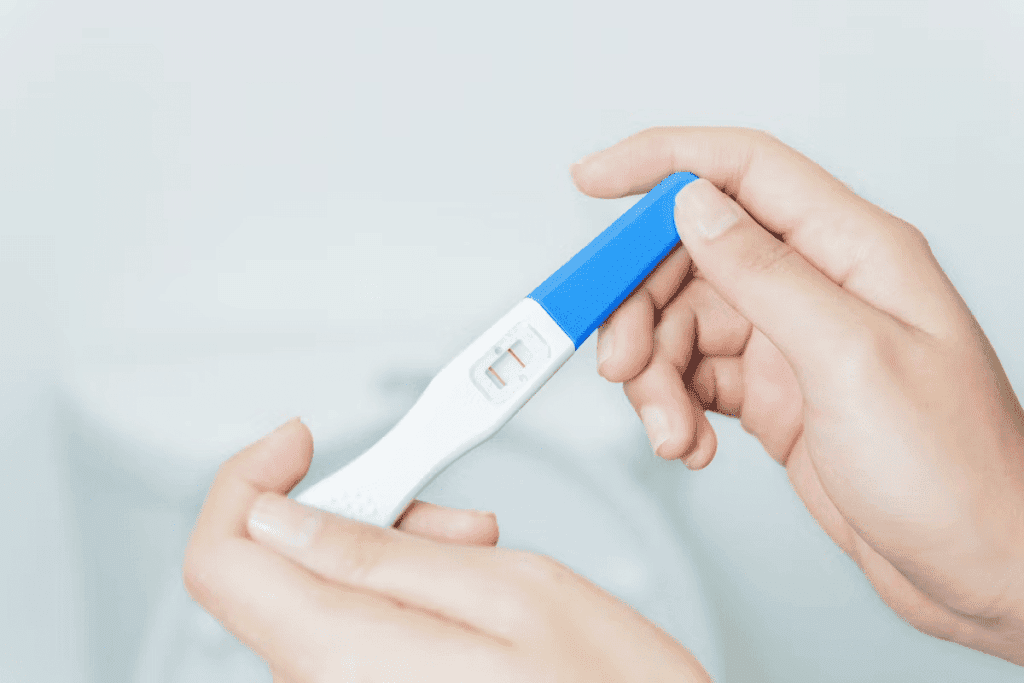
Women with Polycystic Ovary Syndrome (PCOS) often struggle to find out if they’re pregnant. This is because their periods can be off by weeks or even months. This makes it hard to know if they’re pregnant. How long can pcos delay your period? This ultimate guide reveals the alarming facts about amenorrhea and the critical steps to get your cycle back.
PCOS affects about 5 to 10 percent of women who can get pregnant. It causes hormonal imbalances. These imbalances can make pregnancy tests show up as negative even if you are pregnant.
Women with PCOS face many challenges when trying to get pregnant. They often get confused about pregnancy tests. We want to help clear up this confusion.
Key Takeaways
- PCOS can cause irregular menstrual cycles, making it difficult to detect pregnancy.
- Hormonal imbalances associated with PCOS can lead to false negative pregnancy tests.
- Understanding the impact of PCOS on pregnancy testing is essential for reliable results.
- Women with PCOS should be aware of the delayed periods and false negative pregnancy tests.
- Seeking medical guidance can help alleviate anxiety related to pregnancy testing with PCOS.
Understanding PCOS and Its Prevalence
Polycystic Ovary Syndrome (PCOS) is a complex disorder that affects women of childbearing age. It causes irregular periods, high male hormone levels, and polycystic ovaries. Knowing about PCOS helps manage its impact on menstrual cycles and fertility.
What is Polycystic Ovary Syndrome?
PCOS is a disorder caused by genetics, environment, and hormones. It’s not just about reproductive issues. It can also lead to metabolic syndrome, diabetes, and heart disease.
Key characteristics of PCOS include:
- Irregular or absent menstrual cycles
- Hyperandrogenism (high levels of male hormones)
- Polycystic ovaries as seen on ultrasound
Statistics on PCOS in Women of Childbearing Age
PCOS is common among women of childbearing age, affecting 8-13% worldwide. The exact number can vary based on the study and diagnostic criteria.
Population | Prevalence of PCOS |
Global | 8-13% |
United States | Up to 15% (varies by diagnostic criteria) |
Common Symptoms and Diagnosis
Diagnosing PCOS involves clinical evaluation, medical history, and tests. Symptoms include irregular periods, acne, excess hair, and obesity.
“The diagnosis of PCOS is often a diagnosis of exclusion, requiring the ruling out of other causes of hyperandrogenism and ovulatory dysfunction.” – Endocrine Society Guidelines
Early diagnosis and treatment of PCOS are key. They help prevent long-term health problems and improve life quality.
The Relationship Between PCOS and Hormonal Imbalances

It’s important to know how PCOS and hormonal imbalances are connected. PCOS, or Polycystic Ovary Syndrome, is a complex disorder that affects women of childbearing age. It causes many hormonal and metabolic problems.
Key Hormones Affected by PCOS
In women with PCOS, several key hormones are out of balance. This imbalance leads to symptoms like hirsutism and acne. Androgens, such as testosterone, are often too high. Insulin, which helps control blood sugar, is also often imbalanced, causing insulin resistance.
Hormone | Typical Effect in PCOS | Symptoms/Consequences |
Androgens (e.g., Testosterone) | Elevated levels | Hirsutism, acne, male-pattern baldness |
Insulin | Resistance to insulin action | Type 2 diabetes risk, weight gain |
Progesterone | Altered levels and timing | Irregular menstrual cycles, fertility issues |
How Hormonal Disruptions Impact Reproductive Function
The hormonal imbalances in PCOS affect reproductive function a lot. High androgens and insulin resistance can stop ovulation. This leads to irregular periods or no periods at all.
“The hormonal milieu in PCOS is characterized by hyperandrogenism and insulin resistance, which together create a challenging environment for ovulation and fertility.”— Medical Expert, Endocrinologist
The Role of Insulin Resistance in PCOS
Insulin resistance is common in PCOS. It leads to metabolic problems like type 2 diabetes. It also makes hormonal imbalances worse, creating a cycle that harms reproductive health.
Understanding the link between PCOS, hormonal imbalances, and insulin resistance helps doctors. They can then create better treatment plans. This improves reproductive health and overall well-being for women with PCOS.
How Long Can PCOS Delay Your Period
Understanding PCOS’s impact on menstrual cycles is key to managing it well. Women with PCOS often see irregularities in their cycles, leading to delayed periods. The length of these delays can differ a lot from person to person.
Normal Menstrual Cycle vs. PCOS Cycle
A normal cycle lasts from 21 to 35 days, with ovulation around the middle. But, women with PCOS might have cycles that are too long or too short. They might not ovulate regularly or at all. This is mainly because of hormonal imbalances in PCOS.
Key differences between a normal menstrual cycle and a PCOS cycle include:
- Irregular or absent ovulation
- Variability in cycle length
- Hormonal fluctuations
Typical Length of Delays in Women with PCOS
Delays in menstrual periods for women with PCOS can vary a lot. Some might wait a few weeks, while others might go months without a period. This difference is mainly because of how much hormonal imbalance and insulin resistance there is in PCOS.
Category | Normal Cycle | PCOS Cycle |
Cycle Length | 21-35 days | Variable, often longer |
Ovulation | Regular | Irregular or absent |
Hormonal Balance | Balanced | Imbalanced |
When to Seek Medical Attention for Delayed Periods
While some irregularity is normal in PCOS, some situations need medical help. If your periods are delayed for more than 90 days, you have heavy bleeding, or severe pain, see a doctor. They can check your condition and suggest the best course of action.
We suggest keeping track of your cycle and symptoms to talk to your doctor. This info helps them create a treatment plan to help your cycle become more regular and improve your reproductive health.
The Science Behind Pregnancy Tests
Home pregnancy tests are common, but knowing their science is key. They work by finding changes in the body’s hormones, like hCG. This hormone is important for detecting pregnancy.
How Home Pregnancy Tests Work
These tests look for human chorionic gonadotropin (hCG) in urine. hCG is made by the placenta early in pregnancy. The test uses a urine sample and a strip that changes color if hCG is found.
The Role of hCG in Pregnancy Detection
hCG levels rise quickly in early pregnancy. They double every 48 hours. Knowing about hCG helps understand test results.
Timing and Accuracy Factors
When you take the test matters a lot. Testing too soon or too late can mess up results. Also, how sensitive the test is and hCG levels in your urine play a part.
Factor | Influence on Test Accuracy | Tips for Improvement |
Timing of the Test | Testing too early can lead to false negatives | Wait until after missing a period |
hCG Levels | Variations in hCG production can affect detection | Understand that hCG levels double every 48 hours in early pregnancy |
Test Sensitivity | More sensitive tests can detect lower hCG levels | Choose high-sensitivity tests for early detection |
Knowing how pregnancy tests work and their accuracy helps women make better choices about their health.
Why PCOS Can Cause False Negative Pregnancy Tests
PCOS can lead to false negative pregnancy tests. This is because it affects ovulation and hCG production. Women with PCOS often have irregular ovulation. This can delay hCG production, making it hard for tests to detect pregnancy.
Irregular Ovulation and Its Impact on Testing Timeline
PCOS is known for irregular ovulation, leading to unpredictable cycles. This makes it hard to know when to take a pregnancy test. If ovulation is late, the fertilized egg may implant later, causing delayed hCG production.
Delayed hCG production means hCG levels might not be high enough for early detection. This can lead to false negatives if the test is taken too soon.
Hormonal Fluctuations Affecting hCG Levels
Hormonal imbalances in PCOS affect menstrual cycles and fertility. While hCG is different from these hormones, the overall hormonal disruption can impact hCG production or detection.
A study in the Journal of Clinical Endocrinology and Metabolism found PCOS women may have different hCG production profiles. This can affect pregnancy test accuracy. A researcher noted, “The variability in hCG secretion in women with PCOS may contribute to the challenges in detecting pregnancy early on.”
“The variability in hCG secretion in women with PCOS may contribute to the challenges in detecting pregnancy early on.”
Research Evidence on PCOS and False Negatives
Research shows women with PCOS are at higher risk for false negatives. A study compared pregnancy test results in women with and without PCOS. It found those with PCOS were more likely to get false negatives.
Group | False Negative Rate |
Women with PCOS | 25% |
Women without PCOS | 10% |
These findings highlight the need to understand PCOS, ovulation, and hCG production. Women with PCOS should be aware of the risk of false negatives. They should consult healthcare providers if they suspect pregnancy despite negative tests.
Signs That You Might Be Pregnant Despite a Negative Test
Women with PCOS need to watch for small changes in their body. Home pregnancy tests usually work well. But, women with PCOS might get false negatives because of hormone changes and irregular periods.
Early Pregnancy Symptoms with PCOS
It’s hard to tell if you’re pregnant with PCOS because symptoms are similar. Early signs of pregnancy include:
- Fatigue: Feeling very tired or exhausted.
- Nausea and Vomiting: Known as morning sickness, but it can happen anytime.
- Breast Tenderness: Hormones can make breasts swell and feel sensitive.
- Frequent Urination: As the uterus grows, it presses on the bladder.
- Mood Swings: Hormonal shifts can cause emotional ups and downs.
Distinguishing Between PCOS Symptoms and Pregnancy
PCOS and early pregnancy share symptoms like irregular periods and mood swings. To tell them apart, look at how strong and how many symptoms you have.
For example, breast tenderness is common in both. But, it might be more intense in pregnancy. Also, feeling very tired could be a big clue.
Physical Changes to Monitor
Watching for physical changes can help figure out if you might be pregnant. Key signs include:
- Implantation Bleeding: Light spotting or bleeding when the fertilized egg implants in the uterus.
- Increased Cervical Mucus: Noticeable changes in cervical mucus, which may become more abundant and have a different consistency.
- Bloating and Cramping: Mild cramping and bloating can occur as the embryo implants.
If you notice several of these signs, it’s a good idea to take a pregnancy test or see a doctor.
Best Practices for Pregnancy Testing with PCOS
Knowing when to take a pregnancy test is key for women with PCOS. PCOS can make it hard to know when to test because of irregular cycles and hormone imbalances. But, by following some tips, women can make their tests more accurate.
Optimal Timing for Taking a Pregnancy Test
The best time to take a pregnancy test is after a missed period. For women with PCOS, finding this time can be tricky because of their cycles. Waiting at least one week after a missed period can really help. This gives the pregnancy hormone, hCG, time to build up in the body.
It’s important to remember that hCG levels can differ a lot among women. Some may need to wait longer than others to get a clear result. Testing too soon can lead to false negatives, causing stress and confusion.
Recommended Testing Frequency
Women with PCOS should test for pregnancy once a week if they’re trying to conceive and haven’t had their period. Testing every day or a few times a week is not needed and can be expensive and stressful because of false negatives.
Instead, waiting a few days to a week between tests lets hCG levels increase. This makes it more likely to get a correct positive result if you are pregnant.
Morning vs. Evening Testing
The time of day can affect how accurate a pregnancy test is. Testing in the morning is usually best because hCG levels are highest in the urine after a night without urinating. This makes the test more sensitive to detecting pregnancy.
Evening tests may not be as accurate because hCG levels are lower from more urination during the day. But, if you’re feeling symptoms and have missed your period, it’s okay to test anytime if you can’t wait until morning.
Recommended Pregnancy Tests for Women with PCOS
Women with PCOS need the right pregnancy test for accurate results. PCOS’s hormonal ups and downs can cause false negatives or confusion about when to test.
High-Sensitivity Tests Worth Considering
High-sensitivity pregnancy tests are great for women with PCOS. They can spot small changes in human chorionic gonadotropin (hCG) early. This means they can give accurate results sooner than regular tests.
Some top-rated high-sensitivity tests include:
- First Response Early Result Pregnancy Test
- Clearblue Early Detection Pregnancy Test
- FRER (First Response Early Result) Ultra-Sensitive Test
Digital vs. Traditional Tests for PCOS Patients
Digital pregnancy tests show a clear “pregnant” or “not pregnant” result. This can be a big help for women with PCOS, who already deal with hormonal uncertainty. Digital tests offer clear answers.
But, traditional line tests can also detect pregnancy early. The choice between digital and traditional tests depends on what you value more: clear results or early detection.
Cost-Effectiveness and Reliability Comparison
Traditional line tests are cheaper than digital tests. But, high-sensitivity tests, whether digital or traditional, are worth the cost for women with PCOS. They provide the accurate results needed.
Test Type | Sensitivity | Cost | Reliability |
Digital Tests | High | Higher | Very High |
Traditional Line Tests | High | Lower | Very High |
In conclusion, women with PCOS should use high-sensitivity pregnancy tests. Whether digital or traditional, they ensure accurate and timely pregnancy detection.
When to Consult a Healthcare Provider
If you’re trying to conceive with PCOS, knowing when to see a doctor is key. Women with PCOS often have irregular periods and hormonal imbalances. This makes it hard to know if they’re pregnant.
Persistent Negative Tests Despite Pregnancy Symptoms
If you keep getting negative test results but feel pregnant, see a doctor. Morning sickness, fatigue, and tender breasts can mean you’re pregnant, even if a test says no.
Our doctors can do more accurate tests to check for pregnancy. They can also find out if something else is causing your symptoms.
Medical Tests That Can Confirm Pregnancy with PCOS
Doctors use different tests to confirm pregnancy in women with PCOS. These include:
Test Type | Description | Sensitivity |
Blood Test | Measures hCG levels in the blood | High |
Urine Test | Detects hCG in urine | Moderate to High |
Ultrasound | Visualizes the embryo | High |
The Importance of Early Prenatal Care with PCOS
Early prenatal care is very important for women with PCOS. Our doctors can watch the pregnancy, handle any problems, and give advice on staying healthy.
Early prenatal care can prevent problems like gestational diabetes and high blood pressure. It also helps catch any pregnancy issues early.
Seeing a doctor early can help women with PCOS have the best pregnancy outcomes.
Managing PCOS for Improved Cycle Regularity
Managing PCOS well means tackling hormonal imbalances and irregular cycles. Women with PCOS often struggle to keep their menstrual cycles regular. This can affect their fertility and overall health.
Lifestyle Modifications That Help
Making lifestyle changes is key in managing PCOS. Dietary adjustments and regular exercise can boost insulin sensitivity. This helps regulate menstrual cycles.
Eating a balanced diet, low in processed foods and sugars, and high in fiber can help manage insulin resistance. This is common in PCOS patients.
Exercise not only improves insulin sensitivity but also helps with weight management. This further aids in cycle regularity. Studies show that even moderate physical activity, like brisk walking, can make a big difference.
Medications That Regulate Cycles
Along with lifestyle changes, certain medications can help regulate menstrual cycles in women with PCOS. Hormonal contraceptives are often used to manage hormonal imbalances and induce regular bleeding. For women trying to conceive, medications like clomiphene citrate can stimulate ovulation.
It’s important to work closely with a healthcare provider to find the best medication. The choice depends on the individual’s health status, fertility goals, and other factors.
Medication | Purpose | Benefits |
Hormonal Contraceptives | Regulate menstrual cycles, reduce androgen levels | Improves cycle regularity, reduces acne and hirsutism |
Clomiphene Citrate | Stimulate ovulation | Enhances fertility, increases chances of conception |
Metformin | Improve insulin sensitivity | Helps with weight management, can induce ovulation |
Tracking Ovulation with PCOS
Tracking ovulation is vital for women with PCOS, whether they’re trying to conceive or not. Methods include basal body temperature tracking, ovulation predictor kits, and fertility awareness methods. These tools help identify the most fertile days, boosting conception chances.
Tracking ovulation can be tough due to irregular cycles. But using multiple methods can improve accuracy. Working with a healthcare provider who can offer guidance and support is also beneficial.
PCOS and Fertility: Beyond Pregnancy Testing
PCOS and fertility are closely linked, with many factors affecting ovulation and conception. Women with PCOS often face challenges in getting pregnant. This is due to hormonal imbalances, ovulation issues, and other related problems.
Fertility Challenges with PCOS
One major issue with PCOS is anovulation or irregular ovulation. This makes it hard to conceive because the ovaries don’t release an egg regularly. High levels of androgens also complicate fertility.
Other factors that make it tough for women with PCOS to get pregnant include:
- Insulin resistance and metabolic syndrome
- Obesity and related metabolic issues
- Disrupted menstrual cycles
Treatment Options for Conception
There are many ways to help women with PCOS get pregnant. These include:
- Lifestyle changes like diet and exercise to improve insulin sensitivity and hormonal balance
- Medications like clomiphene citrate or letrozole to stimulate ovulation
- Assisted reproductive technologies (ART) such as in vitro fertilization (IVF)
Success Rates and Expectations
The success of fertility treatments for women with PCOS depends on several factors. These include the severity of symptoms, age, and overall health. Many women with PCOS are able to conceive with the right treatment.
Treatment Option | Success Rate |
Lifestyle Modifications | Improved ovulation in 60-80% of cases |
Clomiphene Citrate | 50-80% success rate in inducing ovulation |
IVF | 40-50% success rate per cycle for women under 35 |
Women with PCOS should work closely with their healthcare provider. This helps find the best treatment plan for their needs.
Conclusion
Understanding PCOS and its effects on menstrual cycles and fertility is key for women trying to conceive. This article has covered the complexities of PCOS. It has also looked at its impact on pregnancy testing and how to manage it to improve fertility and menstrual regularity.
Women with PCOS often face irregular ovulation, hormonal changes, and challenges with pregnancy testing. By knowing these factors and using the best practices for pregnancy testing, women can handle their reproductive health better.
Managing PCOS needs a multi-step approach. This includes making lifestyle changes, using medications to regulate cycles, and tracking ovulation. By doing these things, women with PCOS can boost their chances of getting pregnant and keep their reproductive health in check.
We stress the importance of talking to a healthcare provider for personalized advice on managing PCOS and fertility concerns. With the right support and strategies, women with PCOS can reach their reproductive goals and have a healthy pregnancy.
FAQ
Can PCOS cause a false negative pregnancy test?
Yes, women with PCOS might get false negatives on pregnancy tests. This is because of irregular ovulation and hormonal changes that affect hCG levels.
How long can PCOS delay your period?
PCOS can make periods late, sometimes for weeks or even months. This is because of irregular cycles.
What are the early pregnancy symptoms with PCOS?
Early signs of pregnancy in women with PCOS can be hard to tell apart from PCOS symptoms. These include mood swings, tender breasts, and feeling tired.
How can I detect pregnancy with PCOS?
To find out if you’re pregnant with PCOS, track your cycle and ovulation. Use sensitive pregnancy tests in the morning when hCG levels are highest.
Can PCOS affect pregnancy test results?
Yes, PCOS can mess with pregnancy test results. Hormonal imbalances and irregular ovulation can lead to false negatives if tests are taken too early or late.
What type of pregnancy test is best for women with PCOS?
Women with PCOS should use high-sensitivity and digital tests. They are accurate and easy to use, helping to detect pregnancy sooner.
When should I consult a healthcare provider if I’m trying to conceive with PCOS?
If you keep getting negative tests but think you might be pregnant, see a doctor. They can help with fertility treatments and prenatal care.
How can I manage PCOS to improve my cycle regularity and fertility?
To manage PCOS, make healthy lifestyle choices. This includes eating right, staying at a healthy weight, and taking medications to regulate cycles. Tracking ovulation also helps.
What are the treatment options for conception with PCOS?
To conceive with PCOS, try lifestyle changes and medications like clomiphene citrate. If needed, assisted reproductive technologies like IVF are also options.
Does PCOS impact the accuracy of home pregnancy tests?
Yes, PCOS can make home pregnancy tests less accurate. This is because of irregular hCG production and ovulation. It’s important to choose the right test and timing.
Can PCOS cause negative pregnancy tests?
Yes, PCOS can lead to negative pregnancy tests. This is more likely if the test is taken too early or if hCG levels are too low.
How can I distinguish between PCOS symptoms and pregnancy symptoms?
It’s tough to tell PCOS symptoms from pregnancy ones. But, look for signs like morning sickness and needing to pee more often. These can hint at pregnancy.
References
National Center for Biotechnology Information. Evidence-Based Medical Guidance. Retrieved from https://www.ncbi.nlm.nih.gov/pmc/articles/PMC5041928/