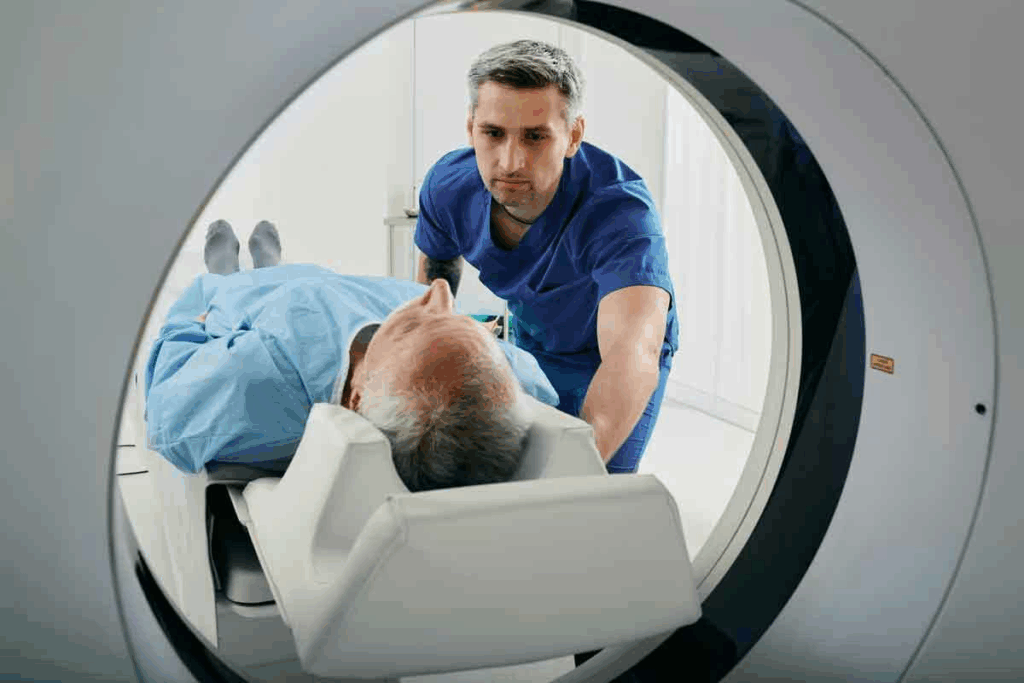
Getting a CT scan can make many people nervous. At our place, we aim to make it as easy and quick as possible. A CT scan, or CAT scan, is a common tool for checking the body’s inside.
Many patients often ask, “how long does a CT scan last?” A CT scan usually takes about 10 to 30 minutes to complete. However, the entire visit might take up to 60 minutes, including preparation and post-scan steps.
Knowing how long a CT scan lasts helps you prepare better and feel more relaxed before your appointment. Understanding the process can ease your worries and make your visit smoother and stress-free.
Key Takeaways
- The actual CT scan typically takes between 10 and 30 minutes.
- The overall visit, including preparation and post-scan procedures, may last up to 60 minutes.
- The duration of a CT scan can vary depending on the type of scan.
- Our institution strives to provide a comfortable and efficient experience.
- Knowing what to expect can help ease anxiety and prepare you for a smooth visit.
Understanding CT Scans: Basic Overview and Purpose

CT scans are a key tool for doctors. They let us see inside the body without surgery. We use them to look at organs, bones, and tissues. This helps us find and treat many health problems.
What is a CT Scan?
A CT scan, or Computed Tomography scan, combines X-rays and computer tech. It makes pictures of the body’s inside parts. We get many images from different angles. Then, these images are put together to show us the body’s inside.
How CT Scans Differ from Other Imaging Tests
CT scans show more than X-rays because they take many pictures. This gives us a clearer view of the body’s inside. They are great for finding complex problems, seeing how diseases spread, and checking if treatments are working.
Common Reasons for Getting a CT Scan
CT scans help in many ways. They can find injuries, cancers, and track diseases. They also help guide procedures like biopsies and surgeries. Here are some reasons for getting a CT scan:
- Diagnosing and monitoring cancer
- Assessing injuries to internal organs
- Detecting vascular diseases
- Guiding interventional procedures
The table below shows how CT scans differ from other imaging tests:
| Imaging Test | Key Features | Common Uses |
|---|---|---|
| CT Scan | Cross-sectional images, detailed internal structures | Cancer diagnosis, injury assessment, vascular disease detection |
| X-ray | 2D images, bone and lung assessment | Fracture diagnosis, lung disease detection |
| MRI | Detailed soft tissue images, no radiation | Soft tissue injuries, neurological disorders |
How Long Does a CT Scan Last? Standard Timeframes

Many people wonder how long a CT scan takes. The time depends on the scan type and the patient’s health. At our facilities, we aim to be quick and accurate while keeping patients comfortable.
Average Scanning Time
The actual scan time is between 10 to 30 minutes. The expert says the scan itself is usually under five minutes. The rest is for getting ready and possibly giving contrast dye.
Getting ready for the scan is key for clear images. This includes giving instructions, positioning the patient, and giving contrast dye if needed. We know this time is as important as the scan for good results.
Total Visit Duration
Though the scan is quick, the whole visit can take up to 60 minutes. This includes time for registration, getting ready, the scan, and after-care.
The visit time can vary. For example, using contrast dye adds extra time for administration and monitoring.
Factors That Affect CT Scan Duration
Several things can change how long a CT scan takes. These include:
- The type of CT scan (e.g., head, chest, abdominal)
- If contrast dye is needed and how it’s given
- The patient’s health and ability to stay calm during the scan
- The scan’s complexity and the area being checked
Medical experts say, “A successful CT scan needs good preparation and understanding.” This helps manage patient expectations and makes the process smoother.
By thinking about these factors, we can guess the scan time better. This helps our patients know what to expect during their visit.
Duration by Scan Type: Body Part Comparison
Knowing how long different CT scans take can help patients get ready. The time needed for a CT scan changes based on the body part and scan complexity.
Most scans, like those for the head, chest, or belly, take 10 to 20 minutes in the scanner. But, the whole visit might take longer because of prep and other things.
Head CT Scan Duration
A head or brain CT scan usually takes 10 to 15 minutes. It’s used to find problems like strokes, bleeding, or tumors.
Chest CT Scan Duration
A chest CT scan lasts 15 to 20 minutes. It looks at the lungs, heart, and other chest stuff.
Abdominal CT Scan Duration
An abdominal CT scan takes 20 to 30 minutes. It checks organs like the liver, kidneys, and intestines.
Pelvic CT Scan Duration
A pelvic CT scan also takes 20 to 30 minutes. It looks at the reproductive organs, bladder, and lower intestines.
Here’s a quick look at the scanning times for different CT scans:
| Type of CT Scan | Typical Duration (minutes) |
|---|---|
| Head or Brain CT | 10-15 |
| Chest CT | 15-20 |
| Abdominal CT | 20-30 |
| Pelvic CT | 20-30 |
These times are close but can change. This depends on the tech used and if contrast dye is needed.
Whole Body CT Scan: Extended Timeframes
A whole body CT scan is a detailed medical imaging method. It captures images of your whole body. This tool is key when doctors need to check many body parts at once.
Duration of a Full Body CT Scan
A full-body CT scan usually lasts 30 to 45 minutes. It takes longer because it scans more areas. This means more time to get clear images of different body parts.
Using contrast dye adds 10 to 15 minutes to the scan. This is for preparation and to watch how the dye reacts.
Why Whole Body Scans Take Longer
Several reasons make whole body CT scans longer:
- They need to image many areas, like the head, neck, and chest.
- They must get precise images to find problems in different body systems.
- Contrast dye might be used to make images clearer and more accurate.
When Full Body Scans Are Necessary
Whole body CT scans are used in many situations, such as:
- When trauma is suspected and many injuries might be present.
- In cancer staging to see how far the disease has spread.
- For thorough health checks on people at high risk.
Our team works hard to make the scan process quick and efficient. We aim for the best imaging quality. We also want to make sure our patients are comfortable during the scan.
The Impact of Contrast Dye on CT Scan Duration
Contrast dye is key in making CT scans better. It makes certain body parts stand out, helping doctors spot problems. But, it also means the scan takes longer.
What is Contrast Dye and Why It’s Used
Contrast dye is a special substance that makes certain body parts show up better on CT scans. It’s used to find issues that might not be seen without it. Doctors decide if contrast is needed based on what they need to check.
Additional Time for Contrast Administration (10-15 minutes)
Using contrast dye adds 10 to 15 minutes to the scan. This time is for giving the dye, either by mouth or through an IV. It depends on the type of scan.
Oral vs. IV Contrast: Time Differences
How the contrast is given can change the scan’s length. Oral contrast is given before the scan, while IV contrast is given right before or during. IV contrast usually doesn’t add as much time as oral contrast.
Recovery Time After Contrast Administration
After the scan, most people can go back to their day right away. But, some might feel a bit sick or itchy from the dye. These feelings usually go away quickly.
In summary, contrast dye makes CT scans more accurate but takes longer. We work fast to give the dye to keep the scan time down.
Before the Scan: Preparation Time and Requirements
To have a smooth and successful CT scan, patients need to follow certain steps. We help our patients get ready for their scan. This is key for getting accurate results and staying safe during the scan.
Pre-Scan Paperwork and Registration
When you arrive, you’ll need to fill out paperwork and register. This is important for updating your records and making sure the healthcare team has all the info they need. Try to get there at least 30 minutes early to have enough time for this.
Changing and Removing Metal Objects
You might need to wear a hospital gown for the scan. This is to make sure there’s no metal or other materials that could mess up the scan. We also ask you to take off any metal jewelry, glasses, or clothes with metal parts. This helps keep the scan images clear and of high quality.
Fasting Requirements for Certain Scans
For some CT scans, like those of the abdomen or pelvis, you might need to fast. This usually means not eating for 4-6 hours before the scan. Your healthcare provider will tell you exactly how long you need to fast. Fasting helps make sure the scan images are clear and accurate.
Preparation Instructions for Different CT Types
Each type of CT scan has its own special preparation needs. For example, scans with contrast might need you to arrive early to get the dye. We give you all the details you need for each scan. Our team is here to answer any questions and help you get ready.
By following these steps, you can help make sure your CT scan goes smoothly. This way, you’ll get the best results possible.
During the CT Scan: What Happens in the Scanner
When it’s time for your CT scan, you’ll head to the scanning room. Our skilled technologists will get you ready. They make sure you’re comfortable and informed every step of the way.
Positioning and Initial Setup
You’ll lie on a padded table that moves into the CT scanner. Our technologists will position you carefully. You might need to hold your breath for a few seconds to get clear images.
The Actual Scanning Process
The scanning itself is quick, lasting 10 to 30 minutes. The table moves slowly through the scanner. You might hear some sounds as the machine takes images.
What You’ll Experience During the Scan
As the scan goes on, you might feel the table move or hear the machine. But you won’t feel any pain. Our team works hard to keep you comfortable. If you’re feeling anxious or uncomfortable, let us know.
Communication with Technologists
You can talk to our technologists through an intercom system. They watch over you from another room and can help if you need it. We aim to make your experience as smooth and stress-free as possible.
After the Scan: Post-Procedure Time
After your CT scan, we focus on your safety and what comes next. This is a key time to make sure you get the care and advice you need. We’re here to help you through the wait for your results.
Immediate Post-Scan Monitoring
If you had contrast dye, you might wait a bit for us to check on you. This is normal to see if you had any bad reactions. Our team is ready to watch over you and answer any questions.
When You Can Leave the Facility
Usually, you can go home after the scan, unless you had sedation. If you did, we need to keep an eye on you for a bit longer. This is to make sure you’re safe.
Follow-up Instructions
Before you go, we give you instructions on what to do next. This includes how to take care of yourself, any medicines you might need, and when to see your doctor. We want to make sure you have all the info you need.
Results Timeframe
It usually takes 24–48 hours to get your CT scan results. Our radiologists will look at the images and send them to your doctor. Then, your doctor will talk to you about the results.
| Procedure | Timeframe | Notes |
|---|---|---|
| Immediate Post-Scan Monitoring | 10-30 minutes | Especially if contrast dye was used |
| Leaving the Facility | After monitoring | Unless sedation was used |
| Results Timeframe | 24-48 hours | Results sent to referring physician |
Emergency and Urgent CT Scans: Expedited Timeframes
When every minute matters, we focus on emergency CT scans. This ensures quick diagnosis and treatment. Quick access to body images can save lives in critical situations.
How Long Emergency CT Scans Take
Emergency CT scans are fast, usually done in 15 to 30 minutes. This speed is key in emergency rooms where quick decisions are vital.
The actual scan time is even quicker. It ranges from a few seconds to a few minutes. This depends on the body part and the technology used.
Prioritization in Urgent Situations
In urgent cases, we make CT scans a top priority. This means:
- Rapid registration and preparation
- Immediate access to the CT scanner
- Quick communication between radiologists and emergency staff
This ensures patients get the care they need fast, without delay.
Streamlined Processes for Critical Cases
We’ve set up several ways to speed up emergency CT scans:
- Dedicated emergency CT scanners
- Pre-arrival prep for patients
- Fast image reconstruction and reports
These steps help us provide high-quality diagnostic images quickly. This supports timely treatment in critical cases.
Medical experts say, “The quick availability of CT scans in emergencies greatly improves patient outcomes. It allows for timely interventions that are often critical in life-threatening conditions.”
Mental and Physical Preparation for Your CT Scan
Getting ready for your CT scan can make you feel less anxious and more comfortable. We know medical tests can be scary, but we’re here to help. We’ll guide you on how to prepare mentally and physically for your CT scan.
Managing Anxiety About the Procedure
Feeling nervous about a CT scan is normal, even if it’s your first time. To ease your anxiety, try these tips:
- Arrive early to fill out any paperwork
- Talk to our staff or the radiologist about your worries
- Bring a friend or family member for support
Knowing what to expect can also help calm your nerves. Our team is here to make you as comfortable as possible during the scan.
Comfort Measures During Longer Scans
Comfort is important during longer scans. Wear loose, comfortable clothing and remove any metal items. You’ll lie on a table that slides into the CT scanner. Try to relax and stay as steady as you can for the best images.
What to Bring to Your Appointment
Bring these items to make your visit smoother:
- Your doctor’s referral or prescription for the CT scan
- Any relevant medical records or previous imaging studies
- A list of your current medications
- Comfortable clothing and any personal items you might need
Having these items ready can help reduce stress and make your visit more efficient.
Real-World Waiting Times and Scheduling Tips
Waiting times can change based on the facility and how urgent your scan is. To avoid delays, consider these tips:
- Schedule your appointment when it’s less busy
- Check your appointment details a day or two before
- Arrive 15-20 minutes before your scheduled time
Being prepared and flexible with your schedule can make your experience smoother.
Conclusion: What to Remember About CT Scan Duration
Knowing how long a CT scan takes can help you feel more at ease. At our place, we work hard to make medical tests easy and stress-free.
The ct scan duration changes based on the scan type and body part. Usually, a CT scan takes 10 to 30 minutes. But, the whole visit might last up to 60 minutes.
Learning how long does a ct scan last helps you prepare better. This can make you feel less anxious. Our team is here to make your visit comfortable and quick.
Remember, ct scan time includes more than just the scan. It also includes getting ready and recovering. We try to keep things moving smoothly so you get the care you need fast.
FAQ
How long does a CT scan typically take?
A CT scan can take from 10 to 30 minutes. But, the whole visit might last up to 60 minutes. This depends on the scan’s complexity and your needs.
How long does a whole body CT scan take?
Whole body CT scans take longer because they cover more area. The exact time varies, but it’s longer than a standard scan.
What factors affect the duration of a CT scan?
Several things can change how long a CT scan takes. These include the body part scanned, the use of contrast dye, and your personal needs.
How long does it take to administer contrast dye?
Giving contrast dye adds 10-15 minutes to the scan. This depends on whether it’s given orally or through an IV.
What is the recovery time after contrast administration?
After getting contrast dye, you’ll be watched for a bit. The recovery time varies, but most can go back to normal activities soon after.
How long does it take to get the results of a CT scan?
Getting CT scan results takes different amounts of time. We’ll tell you when to expect them and give you follow-up instructions.
Can I eat before a CT scan?
Eating before a CT scan depends on the type of scan and your needs. We’ll give you clear instructions on what to eat or not to eat.
How can I manage anxiety about undergoing a CT scan?
We know CT scans can make you anxious. We offer tips on managing anxiety and what to bring to make you more comfortable.
How long does an emergency CT scan take?
Emergency CT scans are done quickly to get you the care you need fast. The time can vary, but we work fast without sacrificing quality.
What should I bring to my CT scan appointment?
Bring any medical records, insurance info, and comfy clothes to your appointment. We’ll let you know what else you might need.
References
- NHS. (2022). CT scan. https://www.nhs.uk/conditions/ct-scan/