
How long does a pain blocker last after surgery? Our expert guide explains the typical duration and what you can expect from this powerful relief.
Most patients find a surgical nerve block lasts from a few hours to 24 hours. Some may last up to 48 hours, depending on the medication and the surgery. Unlike general anesthesia, nerve blocks only numb the area being operated on.
We focus on top-notch, ethical care. We use the latest methods and team up with experts to give you the best care. Our team is here to help you know what to expect during your recovery.
Key Takeaways
- Nerve blocks are a type of regional anesthesia used to manage pain during and after surgery.
- The duration of a nerve block can vary from several hours to 48 hours.
- Nerve blocks numb only the specific area being operated on, unlike general anesthesia.
- At Liv Hospital, we provide high-quality, ethical care with the latest protocols and multidisciplinary support.
- Our team is committed to helping you understand what to expect during your recovery.
Understanding Pain Blockers in Surgical Procedures

It’s important for patients to know how pain blockers work before surgery. These blocks, or nerve blocks, are key in modern surgery. They help by stopping pain signals from reaching the brain.
What Is a Surgical Nerve Block?
A surgical nerve block is a procedure where a local anesthetic or steroid is injected around nerves. This blocks pain signals to the brain. It’s used to reduce pain during and after surgery, cutting down on the need for strong pain meds.
“Nerve blocks have changed how we handle surgical pain,” they offer a focused way to manage pain. This approach reduces the side effects of traditional pain meds.
How Pain Blockers Work to Disrupt Nerve Signals
Pain blockers stop pain signals from reaching the brain. When a nerve block is given, the medication blocks the nerve cells’ sodium channels. This stops the nerve impulses, leading to numbness or less pain in the area.
The power of pain blockers is in their ability to give targeted pain relief. This helps patients feel better after surgery.
Common Surgical Procedures That Utilize Nerve Blocks
Nerve blocks are used in many surgeries, like joint replacements and soft tissue surgeries. They’re also used for surgeries on the shoulder, knee, and ankle.
- Orthopedic surgeries
- Soft tissue surgeries
- Surgeries involving the shoulder, knee, and ankle
There are different types of nerve blocks with varying lengths of action. Short-acting ones last 8-36 hours. Longer-acting methods, like radiofrequency ablation, can last months or even years.
How Long Does a Pain Blocker Last After Surgery?
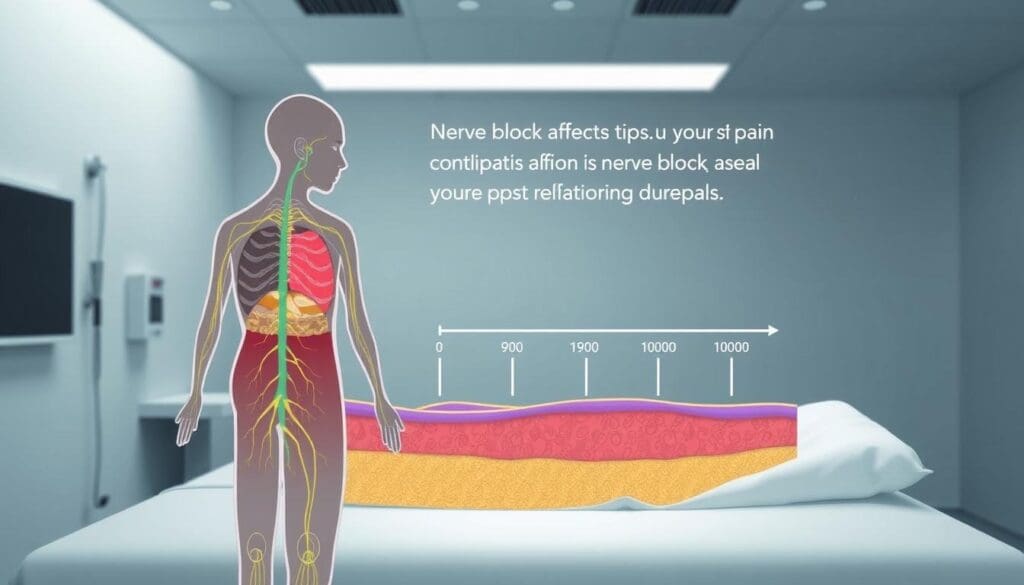
Knowing how long a pain blocker lasts after surgery is key to managing pain well. A nerve block usually helps for up to 24 hours after it’s done. But, some effects might last even longer.
Standard Duration Ranges
The time a nerve block lasts can vary from 8 to 24 hours. This depends on the block type and the surgery done. Some nerve blocks can last up to 48 hours, helping with pain for a longer time during recovery.
Factors That Influence How Long Nerve Blocks Last
Several things can affect how long a nerve block lasts. These include:
- The type and dose of local anesthetic used
- The location of the nerve block
- The individual’s metabolic rate and overall health
- The presence of any conditions that may affect nerve function
These factors can make nerve block duration vary. So, getting care that’s tailored to you is very important.
Signs That Your Nerve Block Is Wearing Off
When a nerve block starts to wear off, you might feel sensations coming back. You might notice:
- Tingling or pins and needles sensations
- Gradual return of pain
- Increased sensitivity to touch or movement
It’s vital to watch for these signs and tell your healthcare provider about them. This way, they can adjust your pain management plan.
Types of Surgical Nerve Blocks and Their Duration
Knowing about the different types of surgical nerve blocks is key for managing pain after surgery. These blocks can cut down on opioid use and help patients recover faster by focusing pain relief.
The length of time a nerve block lasts depends on the type and the medication used. We divide nerve blocks into three groups: short-acting, medium-acting, and long-acting, based on how long they last.
Short-acting Nerve Blocks: These last from 8 to 12 hours. They’re good for small surgeries where pain is not expected to last long.
Medium-acting Nerve Blocks: They last 12 to 24 hours. These are used for many surgeries, giving enough pain relief for the first day or two after surgery.
Long-acting Nerve Blocks: These can last up to 48 hours or more. They’re for bigger surgeries where pain needs to be managed for a longer time.
Choosing the right nerve block depends on several things. These include the surgery type, the patient’s health, and how much pain they might feel after surgery.
| Type of Nerve Block | Duration | Typical Use |
| Short-acting | 8-12 hours | Minor surgical procedures |
| Medium-acting | 12-24 hours | General surgeries |
| Long-acting | 24-48 hours or more | Extensive surgeries |
Understanding the different nerve blocks and their durations helps doctors create better pain management plans. This improves recovery and makes patients happier with their care.
The Procedure: How Pain Blockers Are Administered
The process of giving pain blockers is detailed and precise. We mix advanced tech with medical know-how to make sure the nerve block works well.
Before the Procedure: Preparation Steps
We prepare carefully before a nerve block to keep you safe and comfy. We look over your health history, talk about allergies, and explain the process. We also use ultrasound to find the best spot for the block.
Preparation is key for a successful nerve block. Our team makes sure to take all the right steps to avoid risks and get the best results.
Does a Nerve Block Injection Hurt? What to Expect
Many worry if a nerve block injection hurts. You might feel a little discomfort when the needle goes in, but it’s short and not too bad. We numb the skin first to lessen any pain.
As we do the procedure, you might feel some pressure or mild discomfort. Our team is trained to make this as easy as possible for you.
Technology and Techniques Used for Precision
We use advanced tech like ultrasound and nerve stimulators for precision. These tools help us find the nerves and guide the needle accurately, making the block more effective.
Ultrasound guidance lets us see the needle and nerve in real-time. This tech, along with our medical skills, ensures you get the best care.
What to Expect While Your Pain Blocker Is Active
When your pain blocker is working, you might notice some changes. It’s key to know these changes to help with your recovery.
Numbness and Sensation Changes
The main effect of a pain blocker is numbness in the targeted area. This numbness can last from 8 to 24 hours, sometimes longer. You might also feel tingling or a heavy feeling in the affected limb.
Temporary Weakness and Mobility Limitations
A nerve block can make muscles weak. This weakness is usually short but can affect how you move. For example, after a leg nerve block, you might need help walking or standing.
It’s important to have someone with you for daily tasks until the block fades away.
Safety Precautions During the Numbness Period
To stay safe while the pain blocker is active, follow these tips:
- Be careful with hot or cold objects to avoid burns or frostbite, as you may not feel temperature changes.
- Avoid putting pressure on the numb area to prevent injury.
- Keep the affected limb elevated to reduce swelling.
Managing Activities of Daily Living
Doing daily tasks can be tough with a pain blocker. Rest as much as you can and get help for tasks that need mobility or fine motor skills. Even simple things like bathing or dressing might need to wait until the numbness goes away.
By knowing what to expect and taking the right precautions, you can get through this safely and effectively.
The Transition Period: As Your Nerve Block Wears Off
When the nerve block starts to fade, you might feel different sensations. These signals mean your nerves are coming back to normal. This time is key for managing pain and getting better smoothly.
Timeline of Sensation Return
How fast you feel sensations again can vary. Some people might feel tingling or numbness first. Always follow your surgical team’s advice on pain management.
It’s a good idea to take pain relief medicine as your doctor suggests. This can help reduce any discomfort.
Managing Breakthrough Pain Effectively
Breakthrough pain is sharp and sudden, even with regular meds. Having a plan for this pain is important. This might include extra doses of pain medicine.
Here’s how to handle breakthrough pain:
- Keep an eye on your pain levels
- Know your medication schedule well
- Talk to your doctor if your pain isn’t controlled
Coordinating Other Pain Medications
As the nerve block fades, managing other pain meds is key. Your healthcare team will help you switch to new pain plans.
| Medication Type | Dosage | Frequency |
| Oral Pain Relievers | As prescribed | Every 4-6 hours |
| Breakthrough Pain Medication | As needed | As directed by your doctor |
When to Contact Your Healthcare Provider
Knowing when to call your doctor is important during this time. If you have severe pain, unusual symptoms, or worry about your recovery, reach out.
Seek immediate medical help if you notice:
- Severe pain that meds can’t control
- More numbness or weakness
- Signs of infection or other issues
Benefits of Pain Blockers After Surgery
Pain blockers have changed how we care for patients after surgery. They offer many benefits that make recovery better and outcomes more positive.
Reduced Need for Opioid Medications
One big plus of pain blockers is they help use fewer opioids. Opioids can lead to serious side effects and addiction. Nerve blocks manage pain well, so patients need less opioids and face fewer risks.
Improved Recovery Outcomes and Patient Satisfaction
Pain blockers help patients feel less pain right after surgery. This makes patients happier and helps them get back to normal faster. They can also do more in their recovery, which speeds up healing.
Fewer Side Effects Than Systemic Pain Medications
Pain blockers work only where needed, unlike medicines that spread through the body. This means less chance of side effects like nausea and dizziness. Patients can feel more comfortable while they heal.
Impact on Hospital Stay Duration
Using nerve blocks to manage pain can also shorten hospital stays. When patients are more comfortable, they can meet discharge criteria sooner. This helps hospitals save time and resources.
In summary, pain blockers offer many benefits after surgery. They help use fewer opioids, improve recovery, and might even shorten hospital stays. As we keep improving pain management, nerve blocks will play a bigger role in better surgical care.
Potential Risks and Complications of Surgical Nerve Blocks
It’s important to know the risks and complications of surgical nerve blocks. They are useful for managing pain during surgery but come with some risks.
Common Side Effects You May Experience
Most people do well with nerve blocks, but some may have side effects. You might feel numbness or weakness in the area where the block was given. This usually goes away when the block wears off. Other side effects could be:
- Pain or discomfort at the injection site
- Bruising or swelling
- Infection
- Nerve damage (rare)
Talking to your healthcare provider about these side effects is key. They can help you understand how they might affect your recovery.
Rare but Serious Complications to Be Aware Of
Even though they are rare, serious complications can happen. These include:
- Permanent nerve damage
- Severe allergic reactions to the medications used
- Infection that spreads or is difficult to treat
- Bleeding complications
Knowing about these risks helps you spot symptoms early. If you notice anything unusual, get medical help right away.
Risk Factors to Discuss With Your Doctor
Some factors can make nerve block complications more likely. These include:
| Risk Factor | Potential Impact |
| Pre-existing nerve damage | Increased risk of further nerve injury |
| Bleeding disorders | Higher risk of bleeding complications |
| Diabetes | Potential for slower healing and increased infection risk |
Talking to your doctor about these risk factors is important. It helps manage and reduce the chance of complications.
How Complications Are Managed If They Occur
If complications happen, getting medical help quickly is key. Treatment might include:
- Monitoring and supportive care for minor side effects
- Antibiotics for infections
- Additional surgery or interventions for severe complications
Knowing how complications are handled can give you peace of mind. It helps you understand what to expect if problems arise.
Long-Term Pain Management: Beyond the Initial Nerve Block
Managing pain long-term is key after the first nerve block. As patients move past the immediate recovery, controlling pain becomes a top priority.
Transitioning to Oral Pain Medications
When the nerve block fades, patients often switch to oral pain meds. Doctors guide this change to pick the right meds for each patient’s pain and health history.
We first check the patient’s pain and health to choose the best oral pain meds. We aim for effective pain control with few side effects.
Non-Pharmacological Pain Management Strategies
Along with meds, non-drug methods are vital for long-term pain control. These include physical therapy, acupuncture, and cognitive-behavioral therapy.
- Physical therapy boosts mobility and strength, easing pain.
- Acupuncture uses fine needles to stimulate healing and pain relief.
- Cognitive-behavioral therapy changes how patients see and handle pain.
Radiofrequency Ablation for Chronic Pain Cases
For chronic pain, radiofrequency ablation might be an option. It uses radio waves to heat and disable pain-carrying nerves.
This procedure can offer relief for months or years. It’s a good choice for those who haven’t found relief with other treatments.
When Additional Nerve Blocks May Be Considered
In some cases, more nerve blocks are needed for ongoing pain control. This choice depends on the patient’s past response to blocks and overall health.
| Procedure | Duration of Relief | Potential Side Effects |
| Nerve Block | 8-24 hours typically | Numbness, weakness |
| Radiofrequency Ablation | Months to years | Pain at the procedure site, infection |
| Oral Pain Medications | Varies by medication | Nausea, drowsiness, dependency |
For more on regional anesthesia risks, like nerve damage after a block, visit the Royal College of Anaesthetists website: https://www.rcoa.ac.uk/patients/patient-information-resources/anaesthesia-risk/nerve-damage-after-peripheral-nerve-block.
Conclusion: Making Informed Decisions About Pain Blockers
Pain blockers are key in managing pain after surgery. Knowing what to expect from them helps patients make smart choices. Nerve blocks offer great pain relief with fewer side effects than general anesthesia.
The length of time a pain blocker works varies, usually from 8 to 24 hours. Knowing when it starts to wear off helps patients manage their recovery better. Pain blockers also reduce the need for opioids and improve recovery, making them very useful.
Patients should talk to their healthcare provider about their needs and worries. This ensures their pain management plan fits them perfectly. Making informed choices about pain blockers is vital for a smooth recovery and the best results after surgery.
FAQ
How long does a surgical nerve block last?
A surgical nerve block can last from 8 to 24 hours. Sometimes, it can last even longer, depending on the type and individual factors.
What is a nerve block, and how does it work?
A nerve block is a procedure where medication is injected into or around a nerve. It blocks pain signals, providing relief during and after surgery.
How long should a nerve block last after surgery?
After surgery, a nerve block usually lasts between 8 to 24 hours. The exact time depends on the type of block and individual factors.
Does a nerve block injection hurt?
You might feel some discomfort during the injection. But the procedure is generally well-tolerated, and steps are taken to reduce pain.
What are the benefits of using pain blockers after surgery?
Pain blockers can reduce opioid medication use. They also improve recovery and have fewer side effects than systemic pain meds.
What are the possible risks and complications of surgical nerve blocks?
While safe, nerve blocks can cause numbness and temporary weakness. Rare but serious complications can also occur. Always discuss these with your doctor.
How long do nerve blocks last after surgery?
Nerve blocks can last from a few hours to several days after surgery. This depends on the type and individual factors.
What can I expect while my pain blocker is active?
You might feel numbness, sensation changes, and temporary weakness in the affected area. It’s important to take safety precautions during this time.
How do I manage breakthrough pain as my nerve block wears off?
Your healthcare provider can help you manage breakthrough pain. They can suggest other pain medications and strategies.
Can I use nerve blocks for long-term pain management?
Nerve blocks are usually for short-term pain management. But options like radiofrequency ablation can be considered for chronic pain.
How long does a pain block last?
Pain blocks typically last between 8 to 24 hours. Some can last longer, depending on the type and individual factors.
What is the difference between short-acting, medium-acting, and long-acting nerve blocks?
Short-acting blocks last a few hours, medium-acting blocks last several hours, and long-acting blocks last a day or more.