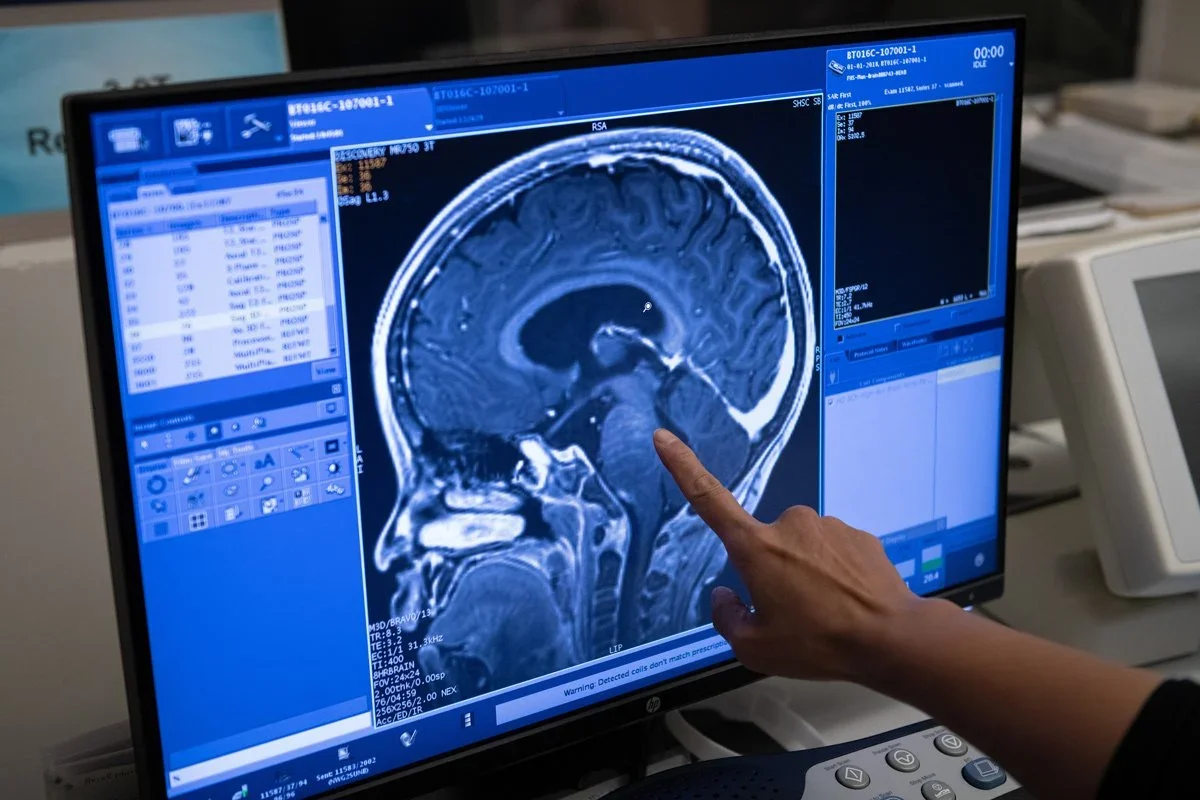
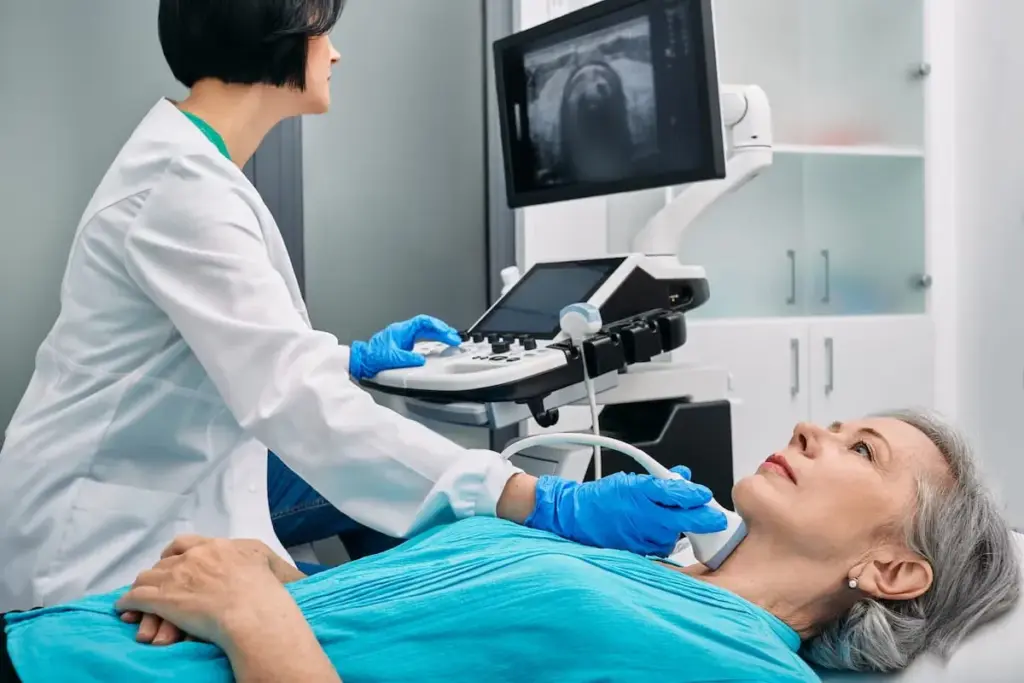
Heart disease is a big problem worldwide. It affects millions of people. Doctors use a test called an echocardiogram to find out if someone has it. This test uses sound waves to show pictures of the heart. Finished the test? How long does an echocardiogram take to review? Get the best follow-up plan and understand your next steps now.
Getting ready for a medical test can be scary. But an echocardiogram is easy. A technician will put gel on your chest and use a probe to take pictures of your heart. You’ll be in a calm place, so you can relax while we work.
Key Takeaways
- An echocardiogram is a non-invasive test that uses sound waves to create heart images.
- It’s a key tool for checking the heart’s function and spotting problems.
- The test involves applying gel to the chest and using a probe to capture heart images.
- Our skilled technicians make sure you’re comfortable and calm.
- Echocardiograms are vital for diagnosing and treating heart disease.
What is an Echocardiogram?

Echocardiograms are non-invasive tests that use ultrasound waves to show the heart’s details. They help doctors see how the heart works and its structure.
Definition and Purpose
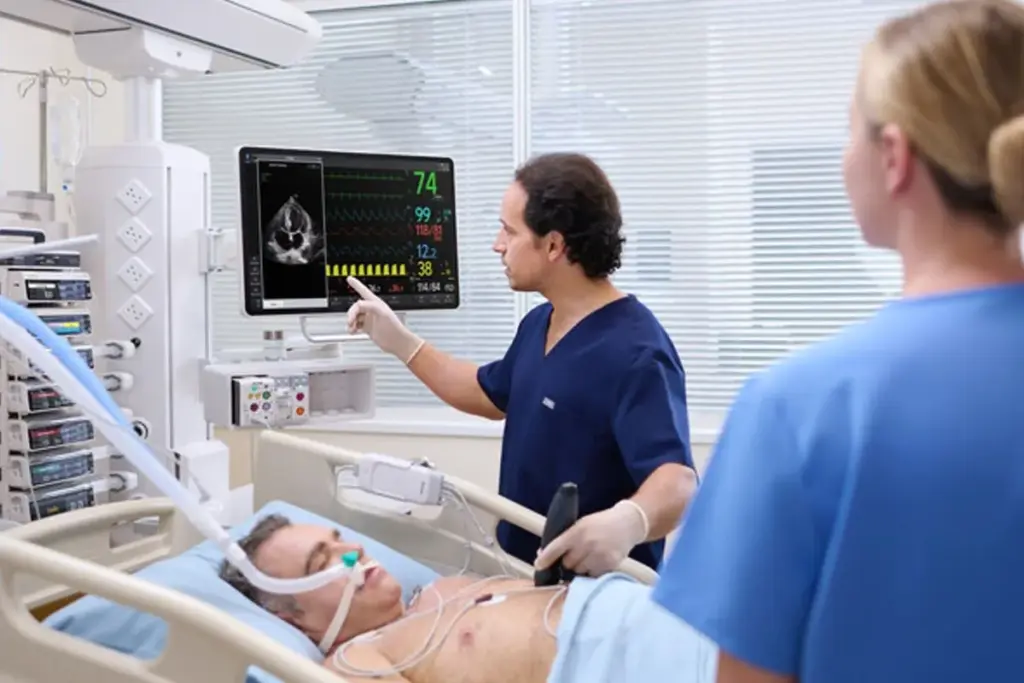
An echocardiogram, or “echo,” uses sound waves to make heart images. It helps find and track heart issues like valve problems and heart failure.
This test gives doctors key info about the heart. It helps them decide the best care for patients.
Types of Echocardiograms
There are many echocardiograms, each for a different reason. Here are a few:
- Transthoracic Echocardiogram (TTE): This is the most common. The probe is on the chest to see the heart.
- Transesophageal Echocardiogram (TEE): A probe goes through the esophagus for clearer images, mainly of the heart’s back.
- Stress Echocardiogram: This is done while exercising. It shows how the heart works when stressed.
|
Type of Echocardiogram |
Description |
Usefulness |
|---|---|---|
|
Transthoracic Echocardiogram (TTE) |
Ultrasound probe on the chest |
General heart health assessment |
|
Transesophageal Echocardiogram (TEE) |
Probe inserted through the esophagus |
Detailed images, specially of the heart’s back |
|
Stress Echocardiogram |
Performed during physical stress |
Assessing heart function under stress |
Preparation for an Echocardiogram
To get the most out of your echocardiogram, it’s essential to understand how to prepare properly. Preparing for an echocardiogram involves several steps. These steps help ensure the test is conducted smoothly and that the results are accurate.
Necessary Procedures Before the Test
Before your echocardiogram, you may be advised to avoid eating or drinking for a certain period. This is similar to the preparation required for an EKG or ECG, where avoiding caffeine and certain foods is often recommended. The healthcare provider performing the echocardiogram will give specific instructions, so it’s essential to follow their guidance.
In some cases, patients might be required to change into a hospital gown to facilitate the procedure. Understanding the 12-lead ECG placement is not directly relevant to an echocardiogram, but knowing how different heart tests are prepared for can be helpful.
What to Wear and Bring
On the day of the test, wear comfortable, loose-fitting clothing that allows easy access to your chest area. You may be asked to remove jewelry or other items that could interfere with the test. Bring any relevant medical records, a list of your medications, and insurance information to the appointment.
It’s also a good idea to arrive a few minutes early to complete any necessary paperwork. If you have had previous heart tests, such as an EKG, bringing those records can be helpful for comparison.
|
Preparation Step |
Description |
|---|---|
|
Avoid Eating/Drinking |
Follow the healthcare provider’s instructions regarding fasting before the test. |
|
Comfortable Clothing |
Wear loose, comfortable clothing for easy access during the test. |
|
Medical Records |
Bring relevant medical records, including previous heart test results like EKGs. |
|
Medications List |
Provide a list of your current medications to the healthcare team. |
Understanding the basics of heart tests, such as knowing what a normal PR interval is or understanding the significance of the QRS complex in an EKG, can provide valuable context. The specific preparation for an echocardiogram is relatively straightforward. Ensuring you have a normal EKG before the test is not typically a requirement, but being prepared for the test by following the instructions given by your healthcare provider is essential.
The Duration of an Echocardiogram
Knowing how long an echocardiogram takes is key for planning your day. We’ll cover the usual time it takes and what can make it longer or shorter.
Typical Time Frame for the Procedure
The test usually lasts between 30 to 60 minutes. This time can change based on the test’s needs and your health. For example, adding an electrocardiogram might make it a few minutes longer. This is because ECG leads need to be placed on your chest.
Factors Affecting the Length
Many things can affect how long an echocardiogram takes. The type of test and your health are big factors. A stress echocardiogram, for instance, might take longer. This is because it includes a stress test, which uses an ekg machine to watch your heart.
|
Type of Echocardiogram |
Typical Duration |
|---|---|
|
Transthoracic Echocardiogram |
30-45 minutes |
|
Transesophageal Echocardiogram |
45-60 minutes |
|
Stress Echocardiogram |
60-90 minutes |
Understanding these factors and the usual time helps you prepare. It can also reduce your anxiety about the unknown. Remember, a 12 lead ecg might be done during or before the test. It gives more info about your heart’s electrical activity.
During the Echocardiogram
When you have an echocardiogram, a professional will help you. This test is non-invasive and uses sound waves to show your heart’s details.
The Process Explained
You’ll lie on a table, usually on your back or side. This helps get clear images. A technician will put gel on your chest for the probe to move smoothly.
The probe sends sound waves that bounce off your heart. These waves create images on a screen. The technician will take pictures from different angles, moving you or the probe as needed.
You might need to hold your breath or move to get the best images. The goal is to make you comfortable. If you’re uncomfortable or have questions, speak up.
Types of Equipment Used
The main tools are the ultrasound machine, the transducer, and gel. The ultrasound machine turns sound waves into images. The transducer sends and gets these waves. Today’s machines make very clear images for accurate diagnoses.
Knowing about the equipment and process can help you feel more at ease. Our team is here to make sure you’re comfortable and know what’s happening.
After the Echocardiogram
After your echocardiogram, you can usually go back to your normal activities right away. This test is non-invasive and doesn’t need any recovery time. It’s a convenient way to check your heart.
What Happens Post-Test
After the test, a cardiologist will look at the images taken. These images show important details about your heart’s health. They help spot any heart problems.
The cardiologist will check how well your heart pumps blood and look for any heart structure issues. This is key to diagnosing heart conditions and finding the right treatment.
Recovery Time and Next Steps
As mentioned, you don’t need to rest after an echocardiogram. You can go back to your daily routine right away. But, it’s important to talk to your healthcare provider about the results and what comes next.
Your healthcare provider will tell you what to do next. This could be more tests, treatment, or just keeping an eye on your condition. Knowing what’s next can help you feel more at ease and ensure you’re taking good care of your heart.
To understand what happens after an echocardiogram, here’s a quick overview:
|
Procedure |
Timeline |
Description |
|---|---|---|
|
Echocardiogram Completion |
Immediate |
The test is finished, and you can resume normal activities. |
|
Image Analysis |
Shortly after the test |
A cardiologist reviews the images captured during the echocardiogram. |
|
Results Discussion |
Within a few days |
Your healthcare provider discusses the results with you and outlines next steps. |
An echocardiogram is a safe and effective way to check your heart. Knowing what happens after the test helps you understand your care better. It lets you make informed choices about your heart health.
Interpreting Echocardiogram Results
Understanding your echocardiogram results is key to managing heart health. After the test, many patients wonder about the meaning of their results. They want to know what they say about their heart.
How Soon Will You Get Results?
When you’ll get your echocardiogram results varies. Sometimes, you’ll get them right after the test. Other times, it might take a few days. We know waiting can be tough, so we aim to give you quick and accurate results.
Understanding the Findings
Echocardiogram results give a detailed look at your heart. They show the heart’s size, valve health, and how well it pumps. Our team will explain these findings in a way that makes sense for your health.
To make sense of your results, let’s look at some important parts:
|
Aspect |
Description |
Normal Values |
|---|---|---|
|
Ejection Fraction (EF) |
Measures the percentage of blood that is pumped out of the left ventricle with each heartbeat. |
55-70% |
|
Left Ventricular Size |
Assesses the size and thickness of the left ventricle wall. |
Varies by age and sex |
|
Valve Function |
Evaluates the condition and function of the heart valves. |
Normal function |
Knowing about these parts can help you understand your results better. Our team is here to answer your questions. We’ll guide you on what to do next based on your results.
Follow-Up Appointments
After your echocardiogram, your healthcare team might schedule a follow-up. This is to talk about the findings and what steps to take next. It’s a key part of your heart care, helping to clear up any doubts or worries.
Importance of Scheduling Follow-Ups
Getting a follow-up after your echocardiogram is very important. It lets us dive into your test results, discuss treatments, and answer your heart health questions. It’s like looking at a detailed data set, like the complex process of 3rd wave coffee making, where every detail counts.
Follow-up visits also let us keep an eye on your heart health over time. We can adjust your treatment plan as needed. This ongoing care is key to managing your heart health well.
What to Expect During Follow-Ups
At your follow-up, you’ll get a detailed talk about your echocardiogram results. Your doctor might use My Charts Cleveland Clinic to share your results and explain them. This is your chance to ask about your condition, treatment options, and any lifestyle changes.
Your doctor will also talk about how your test results affect your heart health. They might explain what is a EKG, the QRS interval normal range, and the U wave on ECG. This ensures you get all-around care.
Lifestyle Adjustments After an Echocardiogram
After your echocardiogram, your next steps are key to your heart health. “An echocardiogram is not just a diagnostic tool; it’s a stepping stone towards a healthier lifestyle.” We suggest making smart lifestyle changes for your well-being.
Recommendations for Heart Health
Keeping your heart healthy requires a few steps. Eat a diet full of fruits, veggies, and whole grains. Cut down on saturated fats and sodium. Try to do at least 150 minutes of moderate exercise each week.
It’s also important to watch and manage high blood pressure and diabetes. Learning about ekg rhythms and heart health signs can help. Work with your doctor to keep these conditions in check, possibly using a 12 lead ekg for detailed monitoring.
Managing Stress and Anxiety
Stress and anxiety can harm your heart. Try meditation, deep breathing, or yoga to lower stress. Talking to a mental health expert or doing hobbies can also help.
“The mind and body are not separate. When a person is stressed, their body reacts as if it’s under attack.”
— American Heart Association
Look into stress-reduction methods and add them to your daily life. Having a supportive group and saying “have a good one meaning” can make a big difference.
Frequently Asked Questions
Patients often have questions about echocardiograms. They want to know what to expect and how to understand the results. We’ll address some common concerns and offer tips for a successful experience.
Understanding ECG and EKG
Many people wonder about the difference between ECG and EKG. Actually, they are the same test. “ECG” is used in Britain, and “EKG” in America. An ECG or EKG measures the heart’s electrical activity.
Tips for a Successful Echocardiogram
To have a successful echocardiogram, follow your healthcare provider’s preparation instructions. If you’re looking for an “ekg near me,” choose a reputable facility. Knowing how to interpret ECGs is also key for accurate results.
When you have an echocardiogram, you might wonder what it involves and what the results mean. Knowing what “ECG” stands for and what an “EKG” is can help. Being informed makes the testing process easier.
FAQ
What is an echocardiogram?
An echocardiogram is a non-invasive test. It uses sound waves to create heart images. Doctors use it to diagnose and monitor heart conditions.
How long does an echocardiogram take?
An echocardiogram usually takes 30 minutes to an hour. This time can vary based on the type of test and the patient’s needs.
What are the different types of echocardiograms?
There are several types, like transthoracic echocardiogram (TTE) and transesophageal echocardiogram (TEE). Stress echocardiogram and fetal echocardiogram are also available. Each type is used for different heart conditions.
Do I need to prepare for an echocardiogram?
Yes, you might need to prepare. This could mean avoiding certain foods or medications. You should also wear comfortable clothing.
What happens after the echocardiogram?
After the test, you can usually go back to your normal activities. A healthcare professional will interpret the results. They will then discuss the findings and suggest next steps.
How soon will I get the results of my echocardiogram?
You’ll get your results in a few hours or days. This depends on the test’s complexity and the healthcare provider’s schedule.
What do the results of an echocardiogram mean?
The results show heart images. A healthcare professional will interpret these images. They will then diagnose or monitor heart conditions and plan treatment.
Why are follow-up appointments necessary after an echocardiogram?
Follow-up appointments are important. They allow for discussing results, addressing concerns, and planning treatment. This ensures the best heart health outcomes.
How can I maintain heart health after an echocardiogram?
To maintain heart health, adopt a healthy lifestyle. This includes a balanced diet, regular exercise, stress management, and following any treatment plans.
Can I reduce stress and anxiety after an echocardiogram?
Yes, you can manage stress and anxiety. Try relaxation techniques like deep breathing, meditation, or yoga. Also, seek support from healthcare professionals or loved ones.
National Center for Biotechnology Information. Evidence-Based Medical Insight. Retrieved from https://pubmed.ncbi.nlm.nih.gov/25712077/