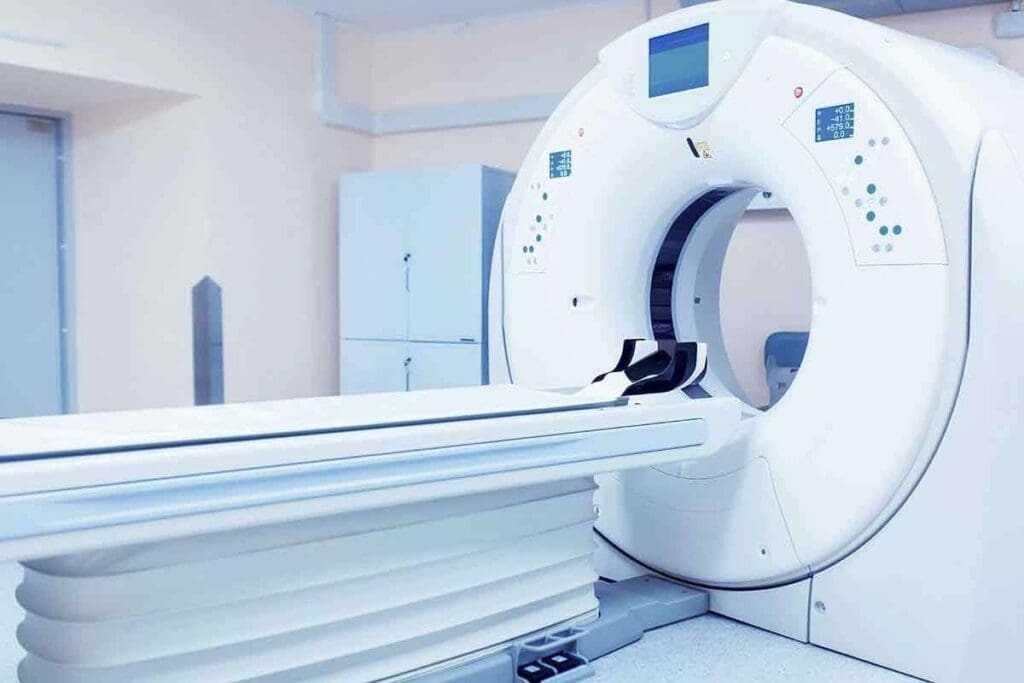
CT scans are used for detailed, non-invasive body imaging. They show bones, organs, and soft tissues clearly. At LivHospital, we know you might wonder how long the CT scan process will take. We focus on making you comfortable and trusting us, following international standards and patient needs. Find out how long does it take to get a CT scan. Our best and ultimate guide provides powerful timing insights from start to finish for patients.
CT scans use X-ray technology to take images of your body’s inside. The CT scan duration can change, but the scan itself usually takes just minutes. We aim to give you top-notch healthcare advice, so you know what to expect from your CT scan.
Key Takeaways
- CT scans provide detailed, non-invasive imaging of the body.
- The procedure is typically completed in minutes.
- LivHospital prioritizes patient comfort and trust.
- International standards ensure efficient and precise CT scans.
- Patient-centered protocols tailor the experience to individual needs.
What is a CT Scan?
Diagnostic imaging has been transformed by the CT scan. It uses X-rays and computer processing to create detailed body images. A CT scan, or computed tomography scan, is a diagnostic imaging procedure. It uses X-rays and computer technology to produce cross-sectional images of the body.
Definition and Basic Principles
A CT scan works by rotating an X-ray machine around the body. It captures multiple images from different angles. Then, a computer reconstructs these images into detailed cross-sectional images, or slices, of the body’s internal structures.
This technology allows medical professionals to visualize the body’s anatomy in great detail. It aids in the diagnosis and treatment of various medical conditions.
The basic principle behind CT scans is the differential absorption of X-rays by different tissues. By measuring this absorption, CT scans can distinguish between various types of tissue. This makes CT scans useful for diagnosing a wide range of conditions, from injuries and cancers to cardiovascular diseases.
Common Uses and Applications
CT scans have become an indispensable tool in modern medicine. They have a wide range of applications across various medical specialties. Some of the most common uses of CT scans include:
- Diagnosing and monitoring cancers
- Evaluating injuries, such as internal bleeding or fractures
- Assessing cardiovascular diseases, including coronary artery disease
- Guiding interventional procedures, such as biopsies or tumor treatments
CT scans are valuable in emergency situations, where rapid diagnosis is critical. They provide detailed images that help medical professionals make informed decisions quickly.
| Application | Description | Benefits |
| Cancer Diagnosis | Detailed imaging of tumors and their spread | Accurate staging and treatment planning |
| Injury Assessment | Rapid evaluation of internal injuries | Quick decision-making in emergency situations |
| Cardiovascular Evaluation | Imaging of coronary arteries and heart structures | Early detection of cardiovascular diseases |
The actual CT scan process is usually completed in just a few minutes, often less than five. The entire appointment usually takes between 15 to 30 minutes. This includes preparation, positioning, and any additional procedures that may be required.
The Complete CT Scan Process Timeline
The CT scan process has several stages that affect its duration. Knowing these stages helps patients prepare and manage their expectations.
Pre-Scan Registration and Paperwork
Before the scan, patients go through a registration process. This includes filling out paperwork with personal and medical info, insurance details, and consent forms. The time needed for this can vary based on the paperwork’s complexity and the facility’s efficiency.
To avoid delays, it’s best to arrive early and have all documents ready. Some places offer online pre-registration, which can cut down paperwork time on the scan day.
Preparation and Positioning
After paperwork, patients get ready for the scan. They change into a gown, remove metal items or jewelry, and lie down on the table. The technologist makes sure the patient is in the right spot for the images.
This stage is key to a successful scan. Correct positioning means clearer, more accurate images, often avoiding the need for repeat scans. The time needed here can change based on the patient’s mobility and the scan’s complexity.
The Actual Scanning Time
The scanning itself is the quickest part. Most CT scans take a few seconds to a few minutes. But the total time in the scanning room can be longer. This is because of the need to prepare the scanner and possibly give contrast dye.
| Stage | Average Time | Description |
| Pre-Scan Registration | 15-30 minutes | Completing paperwork and administrative tasks |
| Preparation and Positioning | 10-20 minutes | Changing into a gown, removing metal objects, and positioning on the scan table |
| Actual Scanning Time | 1-5 minutes | The time the CT scanner is actively capturing images |
The total time for a CT scan can be from 45 minutes to over an hour. This depends on the scan type and individual factors. Knowing the stages helps patients prepare better and feel less anxious.
How Long Does It Take to Get a CT Scan?
Many people wonder how long a CT scan takes. The time you spend at the imaging center varies. It depends on the scan type, if contrast is used, and your medical history. Knowing what to expect can make your visit easier.
Actual Scan Duration vs. Total Appointment Time
It’s important to know the difference between the scan time and the total visit time. The scan time is when the CT scanner takes pictures of your body. The total visit time includes getting ready, registering, and waiting.
For example, even if the scan itself is quick, you’ll likely spend more time at the center.
Average Duration Expectations
The time for a CT scan can change based on what’s being scanned. Here are some general times:
| Type of CT Scan | Actual Scan Duration | Total Appointment Time |
| Head or Brain CT | 10-15 minutes | 30-60 minutes |
| Chest CT | 15-20 minutes | 45-90 minutes |
| Abdominal or Pelvic CT | 20-30 minutes | 60-120 minutes |
| Full Body CT | 30-45 minutes | 90-180 minutes |
These times are just estimates. They can change based on your scan needs and the imaging center’s policies.
Duration by CT Scan Type
CT scans vary in length, and knowing this helps patients get ready for their visits. The kind of CT scan needed affects how long it lasts.
Head and Brain CT Scans
Head and brain CT scans are fast, lasting 10 to 15 minutes. They help find issues like strokes, hemorrhages, or tumors. Their quick time is because they scan a small area.
Chest CT Scans
Chest CT scans take a bit longer, from 15 to 20 minutes. They look at the lungs, heart, and nearby areas. They need more time to get clear images of the chest.
Abdominal and Pelvic CT Scans
Abdominal and pelvic CT scans last 20 to 30 minutes. They check the digestive, urinary, and reproductive systems. More time is needed to scan all important areas.
How Long Does a Full Body CT Scan Take?
A full-body CT scan is the most detailed, lasting 30 to 45 minutes. It scans from head to toes, often in trauma cases or health checks. It takes longer to scan the whole body.
Using contrast dye adds 10 to 15 minutes for prep and monitoring. This is to give the dye and watch for reactions.
| CT Scan Type | Typical Duration |
| Head and Brain CT Scans | 10-15 minutes |
| Chest CT Scans | 15-20 minutes |
| Abdominal and Pelvic CT Scans | 20-30 minutes |
| Full Body CT Scans | 30-45 minutes |
Knowing the time for different CT scans helps patients prepare. Always talk to your healthcare team for details about your scan.
“The key to a successful CT scan is not just the technology used, but also the preparation and care provided to the patient throughout the process.”
Radiologist
Contrast vs. Non-Contrast CT Scans
Knowing the difference between contrast and non-contrast CT scans is key for patients. At LivHospital, we aim to offer top-notch healthcare. We use the latest, proven protocols for all CT scans.
What is Contrast Dye?
Contrast dye is a substance that makes certain tissues and blood vessels show up better on a CT scan. It helps highlight areas of interest and find abnormalities not seen on non-contrast scans. The dye is given through an IV, based on the exam type and patient health.
Contrast dye makes it easier to see certain tissues and blood vessels. This is vital for spotting tumors, vascular diseases, and inflammation.
How Contrast Affects Scan Duration
Using contrast dye can make the CT scan take longer. The actual scan time is short, but getting ready and giving the dye adds to the wait. In contrast, the scan itself might take a few minutes more, but the whole process can take longer.
- Getting ready for a contrast CT scan might include putting in an IV.
- The dye is given right before the scan.
- Patients might wait a bit after to check for any dye reactions.
Post-Contrast Monitoring Period
After a contrast CT scan, patients are watched for a short time to see if they react to the dye. This watch time is usually 15-30 minutes, but it can change based on the patient and hospital rules. At LivHospital, we make sure patients are safe and comfortable during this time.
In summary, whether to have a contrast or non-contrast CT scan depends on many things. By knowing the differences, patients can get ready better and understand what to expect.
Factors That May Extend Your CT Scan Time
The time it takes for a CT scan can vary. At our hospital, we focus on giving top-notch care. Knowing what affects scan time helps us do better.
Patient-Related Factors
How long a CT scan takes can depend on the patient. If a patient can’t stay perfectly steady, it might take longer. This could be because of pain, fear, or a health issue.
Also, a patient’s size and weight can matter. Bigger patients might need more time to get clear images. We also think about patients who are scared of tight spaces or need special help, as these can affect the time, too.
Technical and Equipment Factors
Old or broken CT scanners can slow things down. Using contrast dye and how it’s given can also add to the time.
We have the latest CT scanners to keep scan times short. But sometimes, technical problems or calibration needs can make it longer.
| Technical Factor | Impact on Scan Time |
| Outdated Scanner Technology | Increased scan time due to slower processing |
| Contrast Dye Administration | Additional time for preparation and administration |
| Equipment Calibration | Periodic calibration can delay the scan process |
Medical Complications or Special Requirements
Some health issues or special needs can make a CT scan longer. Patients with complex conditions might need extra care or special setups.
Also, needing extra scans or special protocols can add to the time. Our team works hard to meet patients’ needs while keeping the scan efficient.
Understanding these factors helps us improve the CT scan process. This way, we can give our patients the best care quickly and effectively.
The Technology Behind CT Scan Speed
Modern CT scans are fast and efficient thanks to years of tech progress. These advancements have made CT scans a key tool in healthcare.
Evolution of CT Scanners and Scan Times
The first CT scanners came out in the 1970s. They were simple and slow, taking a long time for one image. Then, CT scanner technology started to get better.
In the 1990s, spiral CT scanners were introduced. They could scan continuously without moving the patient. This was a big step forward.
Later, multi-detector CT (MDCT) scanners were developed. They could take many images at once. This made scans faster and clearer. Now, CT scanners can scan big parts of the body quickly.
Modern CT Technology Advancements
New tech has made CT scans even better. Dual-source CT scanners use two X-ray tubes. This makes scans faster and better for the heart.
Artificial intelligence (AI) and machine learning are now part of CT systems. They help make images clearer and more accurate. AI can also cut down on the need for extra scans.
Detector and X-ray tube improvements have also helped. Iterative reconstruction techniques allow for scans with less radiation but better images.
As CT scan technology keeps getting better, we’ll see even faster scans and lower doses. New tech and methods will keep making CT scans a vital part of healthcare.
Preparing for Your CT Scan to Minimize Time
Getting ready for a CT scan is key to a smooth experience. Being well-prepared helps avoid delays and problems during the scan.
Before Your Appointment
Before your CT scan, there are steps to take. Arrive 30 minutes early to fill out paperwork.
Follow any instructions from your doctor or the imaging center. This might mean not eating or avoiding certain medicines.
Day of the Scan Preparation
On the day of your scan, wear loose, comfy clothes. You might need to take them off. Don’t wear jewelry near the scan area.
If you need contrast dye, you’ll drink or get it injected. It makes some body parts show up better on the scan.
What to Bring and Wear
Bring your medical records, past scans, and a list of medicines to your scan. Wear clothes you can easily change out of. You might need a hospital gown.
| Item to Bring | Purpose |
| Medical Records | To provide your medical history to the healthcare team |
| Previous Imaging Studies | To help compare with the current scan results |
| List of Current Medications | To inform your healthcare team about any medications you’re taking |
Being well-prepared for your CT scan helps avoid delays. It makes the process more efficient. If you have questions, ask your doctor or the imaging center.
What Happens During the CT Scan Procedure?
When you get a CT scan, you’ll go through a detailed process. A trained technologist will help you every step of the way. They make sure you’re comfortable and safe.
Step-by-Step Process
The CT scan procedure has several steps:
- Preparation: You’ll change into a hospital gown and take off any metal or jewelry.
- Positioning: You’ll lie on a table that moves into the machine. The technologist will help you get in the right spot.
- Scanning: The table will move into the machine. The CT scanner will take X-rays from different angles.
- Contrast Dye (if used): You might get a contrast dye to highlight certain areas. It’s given through an IV line.
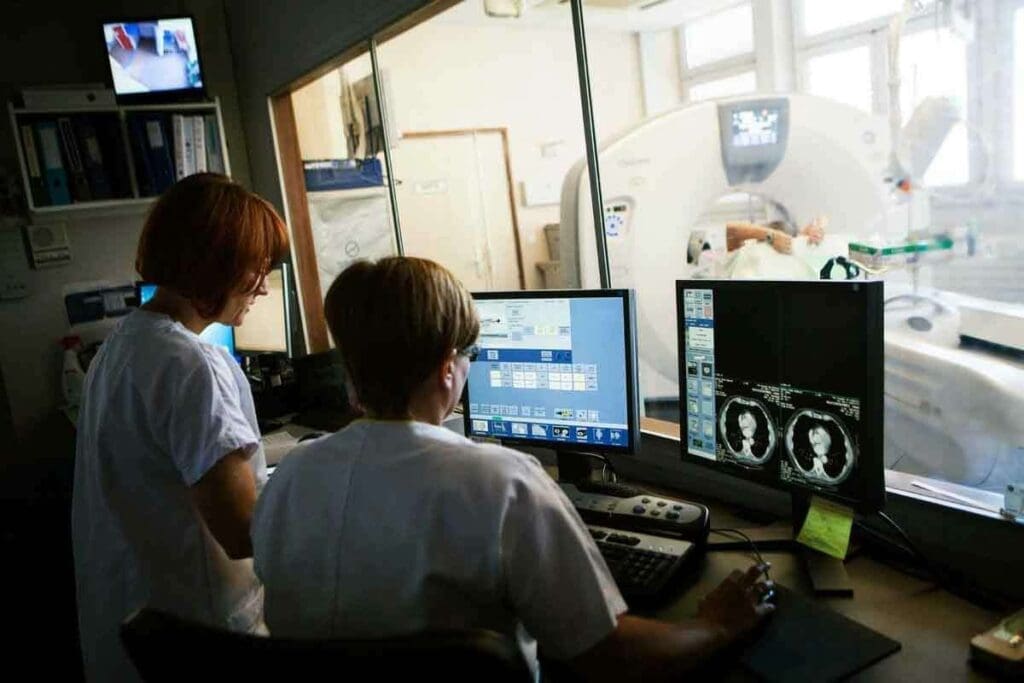
- Monitoring: The technologist will watch you from another room and talk to you through an intercom.
What You’ll Experience During the Scan
During the CT scan, you might feel a few things:
- Movement of the table: You’ll feel the table move slowly into the machine. This is normal.
- Noise: The CT scanner makes clicking and whirring sounds. It can be loud but is safe.
- Contrast dye sensation: If you get contrast dye, you might feel warmth or a metallic taste. It’s temporary and usually safe.
- Breath-holding: You might need to hold your breath for a few seconds. This helps get clear images.
The technologist is in charge during the scan. They make sure it’s done right and you’re comfortable. The whole process is designed to be easy and stress-free.
After Your CT Scan: What to Expect
After your CT scan, you’ll go through the immediate post-scan period. This is when you might be watched for any bad reactions, if dye was used. “The care doesn’t stop after the scan; it’s just the beginning of understanding your results,” say doctors. They stress how important it is to take care of yourself after the scan.
Immediate Post-Scan Period
Right after your CT scan, you’ll be watched for a bit. If dye is used, our team will keep an eye on you for any reactions. This is key to making sure you’re safe and to handling any quick issues. The expert says, “After your CT scan, a radiologist will review and interpret your CT images and provide the results to your doctor.”
You might have to wait a bit before leaving. Our team will tell you what to do next and what to expect in the days ahead.
Results Timeline and Follow-up
The CT scan results usually come in a few hours to a few days. This depends on how complex the scan was and how urgent your case is. A radiologist will look at the images and send a detailed report to your doctor. You’ll get your results and follow-up care instructions from your doctor, who will talk about the findings with you.
It’s very important to follow up with your healthcare provider. They will help you understand your results and answer any questions or concerns. We’re here to give you the best care every step of the way.
Safety Considerations and Radiation Exposure
CT scans are very useful for diagnosing health issues. But they do involve some radiation. This is something to think about carefully. It’s important to consider the benefits of CT scans against the risk of radiation.
Understanding CT Scan Radiation
CT scans use a small amount of radiation to see inside the body. The amount of radiation depends on the type of scan and the facility’s protocols.
The dose from a CT scan is measured in millisieverts (mSv). A chest X-ray is about 0.1 mSv. A CT scan of the chest, abdomen, and pelvis can be 10 to 20 mSv or more.
Risk vs. Benefit Assessment
It’s important to look at both the benefits and risks of CT scans. They can save lives by finding serious problems early.
When deciding on a CT scan, think about the patient’s health and the need for the scan. Also, consider if other tests could work without radiation.
It’s key to use CT scans wisely. Make sure the dose is as low as possible while getting the needed information.
Special Populations
Some groups need extra care with CT scans and radiation. These include pregnant women, children, and the elderly.
- Pregnant women: The risks to the fetus must be weighed against the benefits for the mother. Ultrasound or MRI is often a better choice.
- Children: Kids are more sensitive to radiation. So, CT scans for them are designed to use less radiation while keeping image quality.
- Elderly: For older adults, the benefits of a CT scan are often greater than the risks. But the decision should be made with care, considering the patient’s health.
Knowing about the safety and radiation of CT scans helps patients and doctors make better choices.
Conclusion
We’ve looked into CT scans, from the basics to how long they take. Our aim is to give you all the info you need for your scan.
Knowing about CT scans can make you feel less nervous. The time it takes for a scan can change a lot. This depends on the scan type, if dye is used, and your own health.
We want to help you get top-notch healthcare advice. We aim to give you the confidence to handle your health journey. We hope this info makes you ready for your CT scan.
FAQ
How long does a CT scan typically take?
CT scans can last from a few seconds to several minutes. This depends on the scan type and body area. But the whole visit, including getting ready and checking in, can take 15 to 60 minutes.
How long does a full-body CT scan take?
A full-body CT scan usually takes 30-45 minutes. But the whole visit might take longer.
What is the difference between a contrast and an on-contrast CT scan?
Contrast CT scans use dye to highlight body areas. Non-contrast scans don’t. Contrast dye adds time for preparation and monitoring.
How long does it take to get the results of a CT scan?
Getting CT scan results can take a few hours to days. It depends on the scan’s complexity and the radiologist’s work.
Are CT scans safe?
CT scans are mostly safe but involve radiation. The benefits usually outweigh the risks. Talk to your doctor if you’re pregnant, a child, or have health issues.
How can I prepare for a CT scan to minimize delays?
Arrive early and wear comfy clothes. Remove metal objects and jewelry. Follow your doctor’s instructions, like dietary rules or medication.
Can I eat or drink before a CT scan?
It depends on the scan type. Some scans require fasting or avoiding certain foods. Your doctor will tell you what to do.
How long does a head or brain CT scan take?
Head or brain CT scans usually take 10-15 minutes.
What happens during the CT scan procedure?
You’ll lie on a table in a doughnut-shaped machine. The machine will take X-ray images from different angles. You might need to hold your breath or stay very quiet.
How long does a chest CT scan take?
Chest CT scans usually take 15-20 minutes.
How long does an abdominal and pelvic CT scan take?
Abdominal and pelvic CT scans usually take 20-30 minutes.
References
- Easton, R. (2012). Time to computed tomography scanning for major trauma at a level I trauma centre. ANZ Journal of Surgery, 82(10), 738–743. https://pubmed.ncbi.nlm.nih.gov/22882660/