
Ureteroscopy with laser lithotripsy is a small procedure to remove, So how long does it take to pass a kidney stone. kidney stones from the ureter. It’s a big deal, and knowing how to recover is key for a good outcome.
Usually, people can go back to light activities in 2“3 days. Full recovery takes about a week. The lithotripsy procedure breaks stones into small pieces. These can then be passed out or removed.
Even though recovery is quick, it’s important to follow the doctor’s advice. Our team is here to help and guide you every step of the way.
Key Takeaways
- Ureteroscopy with laser lithotripsy is a minimally invasive procedure for removing kidney stones.
- Most patients can resume light activities within 2“3 days.
- Full recovery is typically expected within a week.
- The procedure involves breaking down stones into smaller fragments for easy removal or passage.
- Following post-procedure guidelines is key to a safe recovery.
1. What Happens During Ureteroscopy and Laser Lithotripsy
Ureteroscopy and laser lithotripsy are advanced medical procedures used together to treat kidney stones. They offer a minimally invasive approach. This reduces recovery time and improves patient outcomes.

1.1 The Ureteroscopy Procedure Explained
A thin, flexible scope (ureteroscope) is inserted into the bladder during ureteroscopy. It is then guided up into the ureter to find the kidney stone. This is done under general anesthesia or sedation for comfort.
The ureteroscope has a camera for a clear view of the stone. The surgeon can see its size, location, and any complications. After finding the stone, it’s time to break it down.
1.2 How Laser Lithotripsy Breaks Down Kidney Stones
Laser lithotripsy is used with ureteroscopy to break down the stone. A laser fiber is inserted through the ureteroscope and aimed at the stone.
The laser energy breaks the stone into smaller pieces. These pieces can then be passed out of the body or removed. The process is monitored to ensure the pieces are small enough.
1.3 Success Rates and Effectiveness
The success rate of ureteroscopy with laser lithotripsy is about 88%. But, success can depend on the stone’s location, size, and how stuck it is.
Factors affecting success include the stone’s location and whether it’s stuck. Despite these challenges, ureteroscopy and laser lithotripsy are very effective for treating kidney stones.
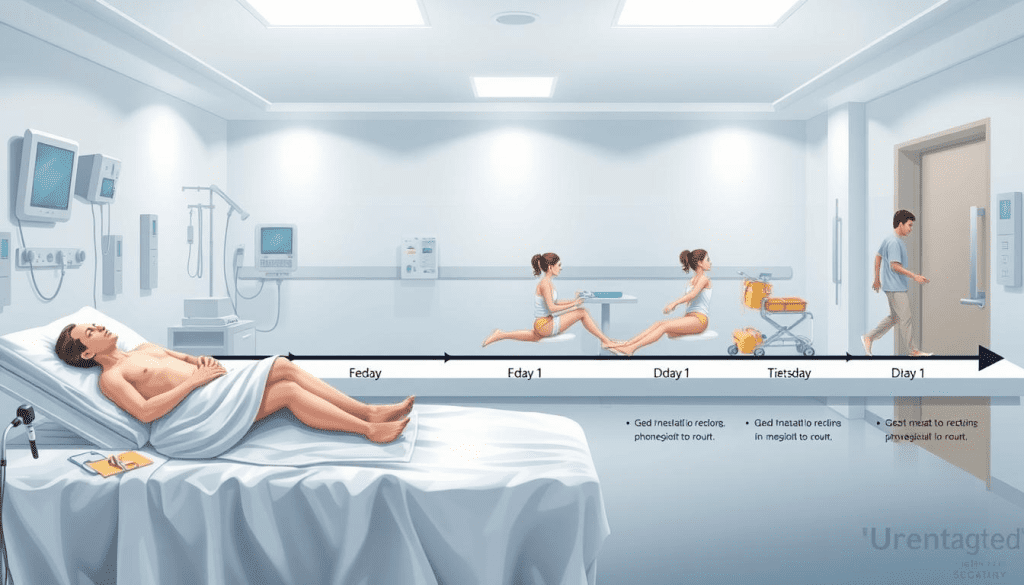
2. The Day-by-Day Recovery Timeline
Knowing the recovery timeline after ureteroscopy and laser lithotripsy helps patients prepare. Everyone recovers differently, but most can do light activities in a few days. Full recovery usually takes about a week.
2.1 First 24 hours after the procedure
The first 24 hours are very important for recovery. Rest is key during this time. Avoid hard work, heavy lifting, and bending.
Some pain or urgency is normal. It’s important to manage pain well. Follow the pain medicine your doctor gives you.
Drinking lots of water is also important. It helps get rid of stone bits and lowers infection risk. Watch your urine; it should be clear or light yellow.
2.2 Days 2-3: Beginning light activities
Days 2 and 3, most people start to feel better. Light walking is good for healing and preventing blood clots. But, avoid heavy lifting and hard exercise.
Urinary issues might not go away yet. But they usually get better. Keep taking your medicine and drink plenty of water.
2.4 Beyond one week: Complete healing
By the end of the first week, most are almost fully recovered. But, the ureter and any remaining stone bits might take longer to heal. Keep following your doctor’s instructions and go to all follow-up appointments.
Watch out for signs of infection or severe pain. If you see these, get medical help right away. Usually, people can go back to normal activities in a week. But, avoid hard work for longer.
3. How Long Does It Take to Pass a Kidney Stone After Lithotripsy
Knowing how long it takes to the kidney stone fragments after lithotripsy is key. It helps manage expectations and recovery. After the procedure, patients go through a period of adjustment as their body passes the remaining fragments. Understanding how long does it take to pass a kidney stone helps patients manage pain, follow hydration tips, and seek timely medical care for faster stone passage and recovery.
3.1 Expected timeline for stone fragment passage
The time it takes to the kidney stone fragments to form after lithotripsy varies. It can take from a few days to several weeks. Most people pass most of the fragments in 2-4 weeks.
Key factors influencing the timeline include:
- The size of the original stone
- The number of fragments produced during lithotripsy
- The patient’s overall health and hydration level
3.2 Factors that speed up or slow down stone passage
Several factors can affect how fast or slow stone fragments pass. Hydration is key; drinking lots of water helps flush out fragments. But, reduced mobility or certain medical conditions can slow it down.
- The effectiveness of the lithotripsy procedure in breaking down the stone
- The presence of any urinary tract issues or obstructions
- The patient’s adherence to post-procedure care instructions

3.3 Tips to help stone fragments pass more quickly
To help stone fragments pass quickly, patients can follow these tips:
- Stay hydrated: Drink at least 8-10 glasses of water per day to help flush out the fragments.
- Maintain a healthy diet: Eating a balanced diet can help prevent new stones from forming.
- Avoid strenuous activities: While light movement is encouraged, avoid heavy lifting or bending.
- Follow medication instructions: Adhere to any prescribed medications to manage pain or prevent infection.
By understanding what affects stone fragment passage and following these tips, patients can better navigate the recovery process after lithotripsy.
4. Common Recovery Symptoms You May Experience
After ureteroscopy and laser lithotripsy, you might notice several symptoms. Knowing what to expect can help you deal with them better.
Pain and Discomfort Management
Managing pain is key during recovery. You might feel kidney stone pain or discomfort in your lower back, abdomen, or groin. We often give pain medication to help with this.
It’s important to take the medicine as directed and tell your doctor if the pain gets worse or doesn’t go away.
Doctors might also suggest over-the-counter pain relievers like ibuprofen or acetaminophen. But always check with your doctor first to avoid any problems.
Urinary Urgency and Frequency
Urinary urgency and needing to urinate often are common after these procedures. These symptoms usually go away in a few days to a week.
To help with urinary urgency, try:
- Drinking lots of water to flush out your system
- Avoiding caffeine and spicy foods that can irritate your bladder
- Slowly increasing your fluid intake to help your bladder adjust
Blood in Urine: When It’s Normal vs. Concerning
Seeing blood in urine can be scary, but it’s common after these treatments. Most of the time, it’s just part of healing. But, it’s important to know when it’s not normal.
If you notice:
- Pink, red, or cola-colored urine that lasts more than a few days
- Passing clots or heavy bleeding
- Severe pain with the bleeding
You should call your doctor right away.
Fatigue and Energy Levels During Recovery
Feeling tired after surgery is common. The body’s response to the procedure and possible sleep issues can make you feel very tired.
To fight fatigue:
- Rest as much as you can to let your body heal
- Slowly start doing more as you feel better
- Eat a balanced diet to help your body recover
By understanding these symptoms and how to handle them, you can get through the recovery period more confidently. If you’re worried or have severe symptoms, always reach out to your healthcare provider.
5. Living With a Ureteral Stent During Recovery
After ureteroscopy and laser lithotripsy, a ureteral stent is often used. It’s a small, hollow tube that keeps the ureter open for drainage. We’ll explain its purpose, how long it stays in, what activities to limit, and what to expect when it’s removed.
Purpose of Stent Placement
The main goal of a ureteral stent is to prevent the ureter from narrowing or blocking. It helps the ureter stay open, allowing stone fragments to pass through. This reduces the risk of complications. Health resources show that stent placement is common for a smooth recovery.
Duration of Stent Placement
A ureteral stent usually stays in for 2 to 10 days. The exact time depends on the stone’s size, location, and the patient’s health.
Activity Limitations with a Stent
With a stent, patients may need to limit certain activities. Avoid heavy lifting, bending, or strenuous tasks. Most can go back to normal activities in a few days. Always follow your healthcare provider’s advice on what activities to avoid.
Common symptoms with a stent include:
- Urinary urgency and frequency
- Discomfort or pain in the lower abdomen or back
- Blood in the urine
These symptoms are usually temporary and go away after the stent is removed.
Stent Removal Process and Recovery
Removing a ureteral stent is a simple procedure done in the office or clinic. A cystoscope is used to see the stent, then it’s gently pulled out. Most find the removal process easy. After, they can usually go back to normal activities quickly.
Following your healthcare provider’s post-procedure care is key for a good recovery. Always follow their advice for the best results.
6. Key Factors That Affect Your Recovery Time
Many things can affect how long it takes to recover after ureteroscopy and laser lithotripsy. Knowing these can help you get ready for the surgery and recover well.
6.1 Stone Characteristics
The size, location, and how stuck the kidney stone is matter a lot for recovery time. Bigger stones or those stuck deeper might need more work, making recovery longer.
Stone size is key because big stones are harder to break and take out. The location of the stone in the urinary tract also affects surgery complexity and recovery time. Stones in hard-to-reach spots can make the surgery longer.
6.2 Patient Age and Overall Health
Your health and age can really affect how fast you recover. People with health issues or who are older might need more time to get better. This is because they might not have as much energy and could face more risks.
6.3 Surgical Complexity and Duration
The surgery’s complexity and how long it lasts also impact recovery time. More complicated surgeries, like those with big stones or hard-to-reach spots, can mean a longer recovery.
6.4 Post-Procedure Care Adherence
Following your doctor’s care instructions after surgery is very important for a good recovery. This means taking your meds, going to follow-up visits, and not doing too much as your doctor says.
By following these steps, you can avoid problems and help your body heal faster. This can make your recovery time better.
7. When to Call Your Doctor: Possible Complications
Knowing the signs of possible problems after ureteroscopy and laser lithotripsy is key to a smooth recovery. These procedures are usually safe, but issues can arise.
Signs of Urinary Tract Infection
A urinary tract infection (UTI) is one possible complication. Look out for these symptoms:
- Burning sensation while urinating
- Frequent urination
- Cloudy or strong-smelling urine
- Fever or chills
If you notice any of these signs, call your doctor right away.
Severe Pain or Bleeding
Some discomfort is normal after these procedures. But severe pain or heavy bleeding is not usual. Tell your healthcare provider if you’re experiencing this.
Fever or Chills
A fever or chills could mean an infection. Keep an eye on your temperature. If it’s over 100.4 °F (38 °C), get medical help.
Follow-up Appointment Importance
Regular follow-up appointments are important. They help your healthcare provider check on your recovery and spot any issues early. These visits are a chance to discuss any concerns you have.
Being aware of these possible complications and talking openly with your healthcare team can help avoid risks. This way, you can have a successful recovery.
8. Conclusion
Recovery after ureteroscopy and laser lithotripsy is key in treating kidney stones. With the right care and follow-up, patients can have a smooth recovery. At Liv Hospital, we focus on advanced, patient-centered care that meets international standards.
Understanding the procedure and managing symptoms are vital. Following post-procedure care instructions helps avoid complications. For example, caring for a ureteral stent is important to prevent discomfort.
Regular follow-up appointments are essential to track recovery and address concerns. Our team combines medical knowledge with empathy to support patients. A successful recovery after these treatments shows the quality of our care.
FAQ
What is the typical recovery time after ureteroscopy and laser lithotripsy?
Most people can start with light activities in a few days. Full recovery usually takes about a week.
How is ureteroscopy and laser lithotripsy performed?
A thin scope is inserted into the ureter to find the stone. Then, laser lithotripsy breaks it down into smaller pieces that can pass easily.
What is the success rate of ureteroscopy and laser lithotripsy?
The success rate is about 88%. It depends on the stone’s size, location, and complexity.
How long does it take to the kidney stone fragments to pass after lithotripsy?
Passing stone fragments can take a few days to a week. It varies for each person.
What are the common symptoms during recovery from ureteroscopy and laser lithotripsy?
Symptoms include pain, urgency, frequency, and fatigue. These can be managed with medication and rest.
What is the purpose of a ureteral stent, and how long is it typically left in place?
A ureteral stent keeps the ureter open for healing. It’s usually left in for 2-10 days.
What factors can influence recovery time after ureteroscopy and laser lithotripsy?
Recovery time can be affected by the stone, patient age and health, surgery complexity, and post-procedure care.
When should I seek medical attention during the recovery period?
Seek medical help for urinary tract infections, severe pain or bleeding, fever, or chills.
How can I manage pain and discomfort during recovery?
Manage pain with medication and rest. Your healthcare provider can guide you.
How can I facilitate the passage of kidney stone fragments after lithotripsy?
Stay hydrated and follow post-procedure care to help pass stone fragments.
What are the activity limitations with a ureteral stent in place?
Avoid heavy lifting, bending, or strenuous activities. This helps with comfort and healing.
References
- Aboumarzouk, O. M., et al. (2012). Ureteroscopic versus shock wave lithotripsy for stone treatment: A meta-analysis and systematic review. European Urology, 62(6), 1162-1172.
- Matlaga, B. R., et al. (2009). The use of ureteroscopy to treat ureteral stones in an outpatient setting. Urology, 73(3), 576-580.
- Assimos, D., et al. (2016). Surgical management of stones: American Urological Association/Endourological Society Guideline. The Journal of Urology, 196(4), 1153-1160.
- Zukerman, G. I., et al. (2020). Recovery after ureteroscopy with laser lithotripsy. Journal of Endourology, 34(5), 585-591.
- European Association of Urology. (2023). EAU Guidelines on Urolithiasis.https://uroweb.org/guidelines/urolithiasis/