Knowing how fast liver tumors grow is key for patients and their families. Our institution offers top-notch healthcare and support for patients from around the HCC world.
Liver tumors can be either benign or malignant. Their growth rates differ a lot. Hepatocellular carcinoma, a common liver cancer, grows differently than others like hemangiosarcoma or angiosarcoma.

The speed at which liver tumors grow depends on several things. This includes the cancer type, the patient’s liver health, and genetics. For example,hepatocellular carcinoma tends to spread later than others. But other types might grow and spread faster.
Key Takeaways
- Liver tumor growth rates vary depending on the tumor type.
- Hepatocellular carcinoma is a common type of liver cancer.
- The growth rate of liver tumors is influenced by the patient’s underlying liver condition and genetic factors.
- Some types of liver cancer, like hemangiosarcoma, grow and spread quickly.
- Symptoms of liver cancer often appear when the tumor size increases.
The Nature of Liver Tumors and Growth Variability
Liver tumors can be either benign or malignant. This affects how they grow. We will look at the differences between these tumors and what influences their growth.
Benign vs. Malignant Liver Tumors
Benign liver tumors are not cancerous. They usually don’t spread or grow too much. On the other hand, malignant tumors are cancerous. They grow fast, spread, and can invade other organs. Knowing the difference is key for treatment.
Characteristics of Benign and Malignant Liver Tumors:
- Benign Tumors:Typically non-cancerous
- May not require aggressive treatment
- Usually do not metastasize
- Malignant Tumors:Cancerous and can grow rapidly
- Can invade surrounding tissues and metastasize
- Often require extensive treatment strategies
Cellular Mechanisms of Tumor Growth
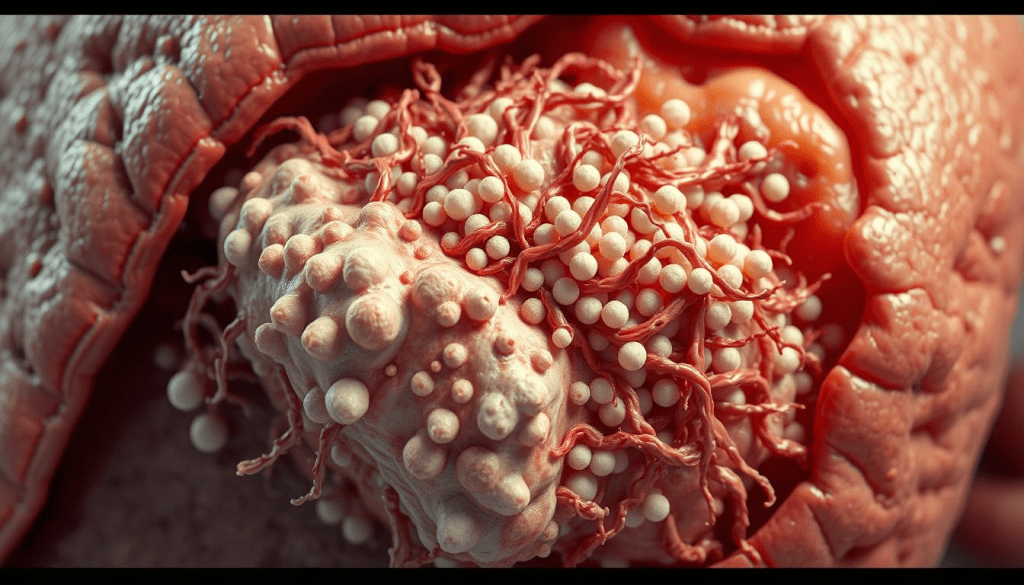
Liver tumors grow due to complex cell changes. Genes can mutate, causing cells to divide uncontrollably. Exposure to toxins or viruses like hepatitis B and C can also play a role. This can lead to liver cancer symptoms and signs of liver cancer.
Key Factors Influencing Liver Tumor Growth:
- Genetic mutations
- Environmental exposures (e.g., toxins, hepatitis viruses)
- Immune system dysfunction
Spotting symptoms of liver cancer early is vital. Knowing what causes liver cancer helps in prevention and early detection.
Measuring and Tracking Liver Tumor Growth
It’s key for doctors to measure liver tumor growth to plan treatment. By tracking tumors, doctors can see how the disease is moving. This helps them decide the best treatment.
Imaging Techniques for Monitoring Growth
CT scans and MRI are top choices for watching liver tumors grow. CT scans give detailed pictures of the liver, helping doctors measure tumors. MRI shows soft tissues well, helping spot changes in tumors.
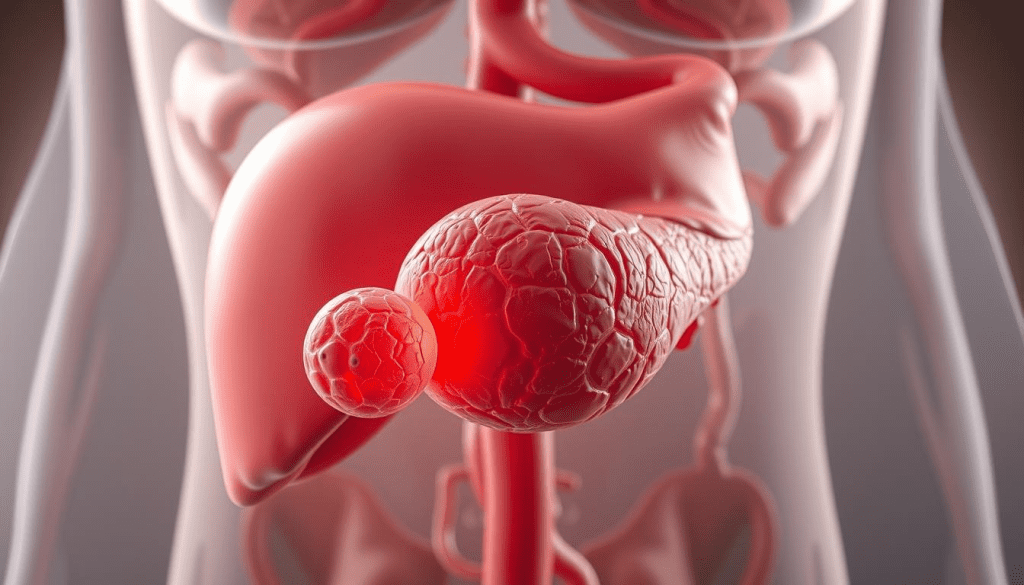
Choosing the right imaging depends on the patient’s health and the tumor type. These tools help doctors keep an eye on tumors and change treatment plans as needed.
Challenges in Accurate Growth Assessment
Even with new imaging, there are hurdles in measuring tumor growth. Different scanners and protocols can cause measurement issues. Tumors can also be complex, with many parts and variations.
These problems can affect how well a patient does with liver cancer. Wrong measurements can lead to wrong treatment plans. So, it’s important to use the same imaging methods and the latest technology.
To understand liver cancer’s outlook, doctors need to look at tumor growth and other details. Accurate tracking of tumors helps predict outcomes. This way, doctors can plan better treatments.
Hepatocellular Carcinoma (HCC): Growth Patterns and Rates
Hepatocellular carcinoma (HCC) is a common liver cancer. It grows at different rates. Early-stage HCC can double in size every 85 to 163 days. Knowing how fast HCC grows helps doctors choose the best treatment.
A study inNature shows liver cancer cases will increase. By 2040, there could be 1.3 million deaths worldwide. This makes finding new treatments for stage 4 liver cancer even more urgent.
We at our institution focus on treating HCC patients. We offer advanced treatments and support. Our team works with each patient to create a treatment plan that fits their needs.
FAQ
What are the common symptoms of liver cancer?
Liver cancer symptoms include abdominal pain, weight loss, and fatigue. Jaundice is also common. As the cancer grows, symptoms get worse. This can include swelling in the legs and belly.
What is hepatocellular carcinoma (HCC)?
Hepatocellular carcinoma (HCC) is the main type of liver cancer. It starts in the main liver cells. It’s often linked to liver disease, like cirrhosis or hepatitis B and C.
How quickly does a liver tumor grow?
Liver tumor growth varies. It depends on if it’s benign or malignant and the person’s health. Malignant tumors, like HCC, can grow fast.
What are the stages of liver cancer?
Liver cancer stages are based on tumor size, number, and spread. The Barcelona Clinic Liver Cancer (BCLC) system is commonly used. It helps decide treatment.
What causes liver cancer?
Liver cancer often comes from liver diseases. These include hepatitis B and C, cirrhosis, and NAFLD. Heavy drinking, aflatoxin, and some genetic conditions also increase risk.
How is liver cancer diagnosed?
Diagnosis involves imaging tests like CT scans and ultrasound. Lab tests, like alpha-fetoprotein (AFP) levels, are also used. A biopsy confirms the diagnosis.
What are the treatment options for stage 4 liver cancer?
Stage 4 liver cancer treatment focuses on comfort. Options include systemic therapies and symptom management. Sometimes, treatments like TACE or radiation therapy are considered.
References
Centers for Disease Control and Prevention. (2024). Facts about birth defects.https://www.cdc.gov/ncbddd/birthdefects/facts.html
Hockenberry, M. J., Wilson, D., & Rodgers, C. C. (2019). Wong’s nursing care of infants and children (11th ed.). Mosby.https://www.elsevier.com/books/wongs-nursing-care-of-infants-and-children/hockenberry/978-0-323-54939-5
The Society of American Gastrointestinal and Endoscopic Surgeons (SAGES). (2023). Patient information on hernia repair.https://www.sages.org/publications/patient-information/patient-information-for-hernia-repair-from-sages/