

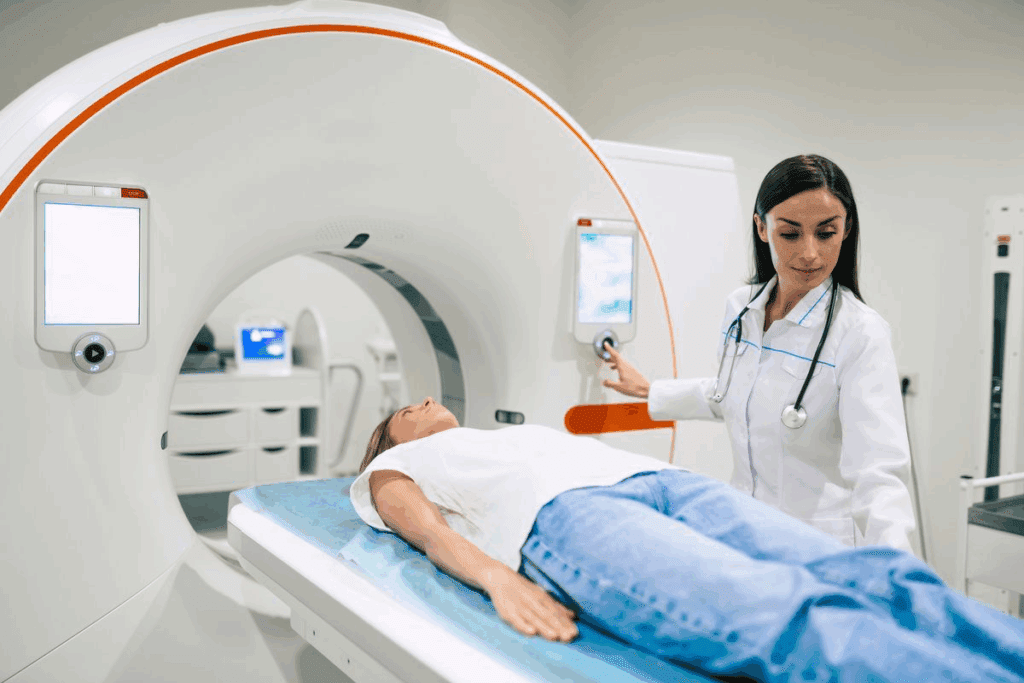
Millions of people get PET scans each year to check their health. You might wonder how reliable are PET scans, given their widespread use and importance. PET scans generally have high diagnostic accuracy for detecting cancer and other diseases, with sensitivity rates often between 80% and 95%, and specificity ranging from 70% to over 85%, depending on the condition and technology used. Newer-generation digital PET/CT scanners have further improved sensitivity, reaching above 90%, making them highly effective for detecting even small metastatic lymph nodes. However, while PET scans are reliable, false positives and negatives can occur, and interpretation must consider clinical context and other diagnostic results. Overall, PET scans are one of the most trusted imaging tools for cancer diagnosis and staging.
One big worry is the radiation they use. This can raise the chance of getting cancer or other health issues. Also, PET scans cost a lot. This can make it hard for many people to get them, because insurance might not cover it.
The biggest problem with PET scans is the long-term risks from radiation. This shows we need to think carefully before getting a PET scan.
Key Takeaways
- PET scans involve significant radiation exposure.
- Radiation exposure can increase cancer risk.
- PET scans are expensive and may not be covered by insurance.
- Limited accessibility due to specialized equipment and trained personnel.
- Careful consideration is necessary before undergoing a PET scan.
Understanding PET Scan Technology
PET scan technology uses radioactive tracers to show how the body works. Doctors use it to find and track diseases like cancer, brain disorders, and heart problems.
The Science Behind Positron Emission Tomography
PET scans detect energy from positrons and electrons. A patient gets a special tracer, often Fluodeoxyglucose (FDG), which goes to active areas. This includes growing cancer cells.
The PET scanner catches this energy, making detailed images of the body’s functions. Unlike other scans, PET scans show how the body works, not just its structure.
How PET Scans Differ from Other Imaging Methods
PET scans are unique because they show metabolic activity. CT scans and MRI give detailed pictures of the body’s shape. But PET scans show how different parts of the body function.
| Imaging Modality | Primary Information Provided | Common Applications |
| PET Scan | Metabolic Activity | Cancer detection, Neurological disorders, Cardiovascular disease |
| CT Scan | Anatomical Detail | Injury assessment, Internal injuries, Tumors |
| MRI | Soft Tissue Detail | Neurological disorders, Soft tissue injuries, Tumors |
This makes PET scans great for tracking cancer, checking how treatments work, and studying the brain.
Common Applications of PET Scans in Medicine
PET scans are very useful in diagnosing and managing many medical conditions. They are used in different medical fields because they show how the body’s cells work. This helps doctors understand what’s happening inside the body.
Cancer Detection and Staging
PET/CT scans are key in finding cancer, figuring out how far it has spread, and checking if treatments are working. They spot cancer cells that are active, which is important for knowing how to treat the disease.
Neurological Disorders Assessment
PET scans help with Alzheimer’s disease and Parkinson’s disease. They look at brain activity and how cells work. This helps doctors find these diseases early and track how they change over time.
Cardiovascular Disease Evaluation
In heart health, PET scans check myocardial perfusion and how well the heart works. They find out where the heart might be damaged. This info is key for deciding on treatments like surgery or angioplasty.
Prostate Cancer Detection Capabilities
PET scans for prostate cancer are getting more attention. They can spot prostate cancer when other tests don’t work. This is very helpful for finding cancer again and seeing if it has spread.
PET scans have many uses in medicine today. They give doctors important details about how the body works. This helps doctors make better choices for treatment.
The Primary Disadvantage: Radiation Exposure
PET scans are useful for diagnosis but have a big drawback: radiation exposure. This is because they use radioactive tracers. These tracers emit positrons that the PET scanner detects.
Understanding the Radioactive Tracers Used
FDG (fluorodeoxyglucose) is the most common tracer in PET scans. It’s a glucose analog that builds up in areas with high activity, like cancer cells. When it decays, it sends out positrons that the scanner catches, making detailed images of the body’s metabolic processes.
Using radioactive tracers like FDG is key for PET scans to work. But, it means patients get exposed to some radiation. The amount of radiation from a PET scan can change based on the tracer and dose used.
Short and Long-term Radiation Risks
PET scans expose patients to radiation, which has both short and long-term risks. Short-term risks include cell damage, which could lead to acute radiation syndrome in extreme cases. But, the doses in PET scans are usually not high enough for this.
Long-term risks are more serious. They include a higher chance of getting cancer. The radiation can harm DNA in cells, leading to cancerous mutations. While the risk is small, it’s a big concern, mainly for those who have many scans.
Comparing Radiation Doses to Other Medical Procedures
To understand PET scan radiation better, compare it to other imaging methods. The dose from a PET scan can be between 4 to 14 millisieverts (mSv). This depends on the specific scan and tracer used.
| Procedure | Typical Effective Dose (mSv) |
| PET Scan (FDG) | 4-14 |
| CT Scan (Abdomen) | 8-14 |
| Chest X-ray | 0.1 |
| Mammogram | 0.4 |
The table shows PET scans have a similar dose to some CT scans but more than chest X-rays or mammograms. Knowing these comparisons helps patients and doctors decide on the best diagnostic tests.
Cost as a Major Limiting Factor
PET scans are very useful for diagnosing diseases. But, their high cost can be a big problem. This cost issue affects both patients and the healthcare system.
Average Costs in the United States
These prices are much higher than many other imaging tests. This makes PET scans a big expense for both patients and healthcare systems.
Insurance Coverage Challenges
Getting insurance for PET scans can be tricky. While many plans cover them for some conditions, the coverage can vary a lot. Patients might have to pay a lot out of pocket, including deductibles and copays.
Cost-Benefit Analysis for Patients
Patients have to think carefully about getting a PET scan. They need to weigh the scan’s benefits against the cost. A cost-benefit analysis looks at the scan’s value, how it affects treatment, and its impact on health.
Even with the high cost, a PET scan can be very valuable. It can lead to better treatment plans. But, patients should talk to their doctors to decide if a PET scan is right for them.
Limited Availability and Accessibility Issues
PET scans are not available everywhere. Their limited availability in some areas makes it hard for patients to get them. This is a big problem.
Geographic Distribution of PET Scanners
The geographic distribution of PET scanners affects how easy it is to get one. Big cities have more PET scans than rural areas. This makes it harder for people in rural areas to get a PET scan.
| Region | Number of PET Scanners per Million People |
| Urban Areas | 5.2 |
| Rural Areas | 1.1 |
Urban areas have more PET scanners than rural areas. This shows how hard it is for people in rural areas to get a PET scan.
“The uneven distribution of PET scanners poses a significant challenge for healthcare providers aiming to offer equitable diagnostic services across different regions.”
Scheduling and Wait Time Challenges
Another problem is scheduling and wait times. When many people want PET scans, it can take a long time to get one. This can slow down getting a diagnosis and treatment.
- Average wait time for a PET scan appointment: 7-10 days
- Maximum wait time reported: up to 3 weeks in some cases
Healthcare providers need to work on these wait times. They must make sure patients get diagnosed and treated on time.
In conclusion, PET scans are very useful for diagnosis. But, their limited availability and long wait times are big problems. We need to fix these issues to make sure everyone can get a PET scan when they need it.
How Reliable Are PET Scans: Examining Accuracy Concerns
It’s important to know how reliable PET scans are. They are a key tool in healthcare, but their accuracy can change based on several things.
Factors Affecting PET Scan Reliability
Many things can affect how reliable PET scans are. These include how well the patient is prepared, the quality of the scanner, and the skill of the person reading the scan.
- Patient Preparation: Getting ready for a scan, like fasting or avoiding certain meds, is key for good results.
- Scanner Quality: The latest tech and setup of the PET scanner greatly affect how clear the images are and how accurate the scan is.
- Reader Expertise: The skill and training of those reading the scans are very important for making accurate diagnoses.
A study in the Journal of Nuclear Medicine found that PET scan accuracy depends a lot on the scanner’s tech and the reader’s skill.
“The accuracy of PET scans is highly dependent on the technical parameters of the scanner and the expertise of the reader.”
Journal of Nuclear Medicine
False Positive and False Negative Rates
False positives and negatives are big worries when it comes to PET scans.
| Result Type | Description | Implications |
| False Positive | Shows disease when there isn’t any | Can cause worry, more tests, and wrong treatments |
| False Negative | Misses disease that’s there | Can lead to late diagnosis, wrong treatment, and false calm |
Studies show that false positive and negative rates can change based on the disease and the scan method used.
Variability in Interpretation
How different people interpret PET scans can also impact their reliability. Different readers might see the same images in different ways.
Standardizing how scans are read and keeping professionals up-to-date can help fix this problem.
By understanding these factors and improving PET scan tech and reading skills, doctors can make PET scans more reliable. This leads to better care for patients.
PET Scan Sensitivity and Specificity Analysis
PET scans are key in diagnosing diseases. Their accuracy depends on sensitivity and specificity, which change with each condition. Knowing these metrics helps us see how well PET scans work in different health issues.
Understanding PET Scan Precision Metrics
PET scan accuracy is based on sensitivity and specificity. Sensitivity is how well the scan finds people with the disease. Specificity is how well it finds those without the disease.
These metrics are key to trust PET scan results. A sensitive scan is great at finding cancer, cutting down on false negatives. A specific scan, on the other hand, helps avoid false positives, which can cause unnecessary worry and more tests.
Sensitivity Variations Across Different Conditions
PET scan sensitivity changes with each condition. For example:
| Condition | PET Scan Sensitivity |
| Cancer Detection | High |
| Neurological Disorders | Moderate to High |
| Cardiovascular Disease | Moderate |
This table shows how PET scan sensitivity changes with different diseases. It shows its strong points in cancer and some limitations in other areas.
Specificity Challenges in Certain Patient Populations
Specificity can be tough in some groups, like those with inflammation or infection. For example, in sarcoidosis, PET scans might see inflammation as cancer, lowering specificity.
It’s important for doctors to understand these issues. This helps them correctly read PET scan results and make better decisions for their patients.
Time-Related Disadvantages of PET Scanning
Getting a PET scan takes more than just the scan itself. There are several steps that take a lot of time. Knowing these can help plan better.
Preparation Requirements
Getting ready for a PET scan is a big deal. You often have to fast for hours before. This can be hard, like for people with diabetes.
You also might have to stop taking some medicines. This is to make sure the scan works right. Getting ready can take a day or more, adding to the time you spend.
Duration of the Procedure
The actual PET scan can take anywhere from 30 minutes to a few hours. But, you’ll spend more time at the facility. This is because of getting ready and other steps.
For some scans or when done with other tests, it can take even longer. The time depends on the scan type, your health, and if more tests are needed.
Factors influencing scan duration include:
- The type of PET scan being performed
- The patient’s overall health and mobility
- The need for additional imaging or tests
Post-Scan Waiting Period
After the scan, you have to wait for the doctor to review the images. This wait can be anywhere from a few minutes to hours. It depends on how fast the doctor can look at them and how busy they are.
The post-scan waiting period can be influenced by several factors, including:
- The complexity of the scan
- The availability of the radiologist to interpret the images
- The need for additional diagnostic tests
In conclusion, PET scans are very useful but they take a lot of time. Knowing this can help everyone plan better.
Patient-Specific Limitations and Contraindications
Certain patient-specific limitations and contraindications can significantly impact the utility and safety of PET scans. These factors are key for healthcare providers to consider when evaluating the suitability of PET scans for their patients.
Diabetes and Blood Sugar Concerns
Diabetes is a significant consideration for PET scans, as the procedure involves glucose tracers. Patients with diabetes may have altered glucose metabolism. This can affect the tracer’s distribution and uptake, potentially leading to inaccurate scan results. Proper management of blood sugar levels before the scan is essential to ensure the reliability of the PET scan. Healthcare providers often advise diabetic patients to follow specific instructions regarding their medication and fasting before undergoing a PET scan.
Pregnancy and Breastfeeding Considerations
Pregnancy and breastfeeding are critical considerations due to the risks of radiation exposure to the fetus or baby. Pregnant women should only undergo PET scans when absolutely necessary, and after a thorough assessment of the risks and benefits. Breastfeeding mothers may need to temporarily stop breastfeeding after a PET scan due to the radioactive tracer being secreted in breast milk. The exact duration of this pause depends on the type of tracer used.
Weight and Size Restrictions
PET scan technology has limitations related to patient weight and size, mainly due to the scanner’s design and the weight capacity of the scanning table. Some PET scanners have weight limits, typically around 350-400 pounds, though this can vary. The scanner’s bore size can also be a limiting factor for patients with a larger body habitus. These physical constraints can affect the availability and quality of PET scans for larger patients.
Understanding these patient-specific limitations and contraindications is vital for healthcare providers to make informed decisions about the use of PET scans. By carefully evaluating each patient’s condition and circumstances, providers can minimize risks and optimize the diagnostic benefits of PET scans.
Technical Limitations of PET Technology
PET scans are very useful for diagnosis, but they have some technical limits. These limits can affect how well PET scans work.
Spatial Resolution Constraints
PET scans have a lower spatial resolution than other imaging methods like MRI or CT scans. This means they can’t always spot small tumors or lesions well. This issue can make it harder to get accurate diagnoses.
Sensitivity to Patient Movement
PET scans are very sensitive to patient movement. Even a little movement can blur the images or create artifacts. This makes it hard to get clear images. To avoid this, strict rules are needed to keep patients from moving too much.
Challenges in Detecting Small Lesions
Finding small lesions is tough for PET scans. Their limited spatial resolution and sensitivity to movement make it hard. Researchers are working on new technologies to improve this, like better detectors and algorithms.
In summary, PET scans are very useful, but knowing their limits is key to understanding their results. Scientists are always looking for ways to improve PET scans, making them even more useful in medicine.
PET-CT and PET-MRI: Addressing Disadvantages Through Combined Imaging
By combining PET scans with CT or MRI, we can overcome some of the PET scan’s limitations. This has led to the creation of hybrid imaging technologies like PET-CT and PET-MRI. These offer a more detailed diagnostic approach.
These technologies bring many benefits. They improve diagnostic accuracy and provide both functional and anatomical information in one session.
Benefits of Hybrid Imaging Technologies
PET scans combined with CT or MRI enhance the diagnostic process. PET-CT combines PET’s functional data with CT’s anatomical details. It’s great for cancer staging and checking how treatments work.
PET-MRI has better soft tissue contrast than CT. This is helpful for complex anatomical structures and certain lesions. It’s very useful for neurological and some oncological cases.
- Improved diagnostic accuracy through the combination of functional and anatomical imaging.
- Enhanced patient convenience by reducing the need for multiple imaging sessions.
- Better assessment of complex anatomical structures and lesions.
Remaining Limitations Despite Technological Advances
Even with hybrid imaging, some challenges remain. These include higher costs and more radiation exposure with PET-CT. There’s also a need for specialized equipment and trained staff.
Interpreting hybrid imaging data can be tricky. It requires expertise in both functional and anatomical imaging. This can be a challenge in some clinical settings.
But, research and technology are continually improving. They aim to make PET-CT and PET-MRI more accessible and useful.
Comparing PET Scan Disadvantages to Alternative Diagnostic Methods
When we look at different ways to see inside the body, we must weigh the good and bad of each. Positron Emission Tomography (PET) scans have their pluses and minuses. Knowing how PET scans stack up against other imaging methods helps doctors make better choices.
PET vs. CT Scans: Pros and Cons
CT scans and PET scans are used for different things. CT scans show the body’s structure, while PET scans show how active the body’s cells are. CT scans are quicker and more common than PET scans, but they don’t show the same level of cell activity.
“The choice between PET and CT scans often depends on the specific clinical question being addressed,” notes a study comparing the two modalities. For example, in cancer, PET scans are better because they highlight active tumor cells.
PET vs. MRI: When Each is Preferable
Magnetic Resonance Imaging (MRI) is another tool that shows detailed images without radiation. MRI is great for looking at soft tissues and is best for the brain and muscles. But, MRI doesn’t show the metabolic activity that PET scans do.
Using PET with MRI (PET-MRI) can be the best choice in some cases. It combines the metabolic info of PET with the detailed images of MRI. This is very useful in complex cases.
PET vs. Ultrasound and X-rays
Ultrasound and X-rays are also used to see inside the body. Ultrasound is safe for pregnant women and good for checking the gallbladder. X-rays are quick but use radiation and don’t show soft tissues well.
PET scans are used for more complex cases because they are more expensive and use radioactive tracers. The right choice depends on the situation, what information is needed, and the patient’s needs.
In summary, PET scans have their downsides but are very useful in some situations. By comparing PET scans to other methods, doctors can make better choices for their patients.
Future Developments Addressing Current PET Scan Limitations
Medical technology is getting better, and researchers are finding new ways to improve PET scans. They want to fix issues like too much radiation, making scans hard to get, and not being precise enough.
Emerging Technologies to Reduce Radiation Exposure
One big goal is to cut down on the radiation from PET scans. New tracer technologies are being made to use less radioactive material but keep the images clear. Scientists are also looking into alternative isotopes that last shorter, which means less radiation overall.
New detector tech is also key. Modern PET scanners have better detectors that need less radioactive material for great images. This makes scans safer and could mean more scans when needed.
Improvements in Accessibility and Cost Reduction
There’s a push to make PET scans more available and cheaper. Compact and portable PET scanners are being worked on. They could reach more places, even remote or underserved areas.
Also, better software and image algorithms are cutting costs. Improved image processing techniques make images clearer. This might mean fewer scans, which saves money.
Enhanced Accuracy and Resolution Innovations
PET scans are getting better at showing what’s inside the body. Hybrid imaging techniques, like combining PET with MRI or CT, give more detailed info. These combos offer a clearer look at the body’s inner workings.
Artificial intelligence and machine learning are being used too. They help doctors spot things they might miss. This makes diagnoses more accurate.
Conclusion: Weighing the Benefits Against the Disadvantages
PET scans have changed how we diagnose diseases, giving us deep insights into the body. Despite their downsides, PET scans are very useful in many medical situations.
The main good points of PET scans are their high sensitivity and ability to find diseases early. But, we also have to think about the downsides like radiation and cost. Knowing the benefits vs. disadvantages helps doctors and patients decide when to use them.
There are many PET scan pros and cons. But, new research and tech are working to fix the current problems. For example, new tech could mean less radiation and clearer images.
In conclusion, PET scans are a key tool in medicine. They offer benefits that are often more important than their drawbacks. As medical tech keeps getting better, PET scans will likely stay a big part of diagnosing diseases.
FAQ
What is a PET scan, and how does it work?
A PET (Positron Emission Tomography) scan is a medical test. It uses a radioactive tracer to see how active the body’s cells are. The scan detects the radiation from the tracer, showing where the cells are most active.
What are the main disadvantages of PET scans?
PET scans have some downsides. They expose patients to radiation, are expensive, and not always available. They also need special equipment and trained staff, making them hard to access.
How does radiation exposure from PET scans affect health?
Radiation from PET scans can raise cancer risk. The dose is usually low, but it can harm, mainly in the young. It’s a concern for children and teens.
Are PET scans accurate for detecting cancer?
PET scans are very good at finding some cancers, like lymphoma and lung cancer. But, their accuracy depends on the cancer type, its stage, and the scan quality.
Can PET scans be used for conditions other than cancer?
Yes, PET scans help with other conditions too. They’re used for neurological diseases like Alzheimer’s and Parkinson’s, and for heart disease. They check if treatments are working.
How do PET scans compare to other imaging modalities, such as CT scans and MRI?
PET scans show how the body works, while CT and MRI show its structure. They’re often used together for a full picture of the body’s health.
What are the benefits of combined imaging technologies like PET-CT and PET-MRI?
PET-CT and PET-MRI give more detailed information. They help overcome PET scan limitations, like poor spatial resolution. This improves diagnosis accuracy.
Are there any patient-specific limitations or contraindications for PET scans?
Yes, some patients, like those with diabetes or pregnancy, need special care. People with claustrophobia or certain medical conditions might not be good candidates for PET scans.
What are the future developments aimed at addressing current PET scan limitations?
Research is ongoing to make PET scans safer, more accessible, and accurate. New tracers and scanner designs aim to reduce radiation and improve image quality.
How reliable are PET scans, and what factors affect their accuracy?
PET scans are usually very reliable. But, their accuracy can change based on patient prep, scanner quality, and the reader’s skill. False positives and negatives can happen, affecting reliability.
Can PET scans be used for prostate cancer detection?
Yes, PET scans can detect prostate cancer, but only in some cases. Their accuracy for prostate cancer varies, depending on the tracer used.
Reference
- Kramer, E. L., Wahl, R. L., & Zasadny, K. (2011). Radiation safety in PET/CT: effective dose reduction and patient risk management. Journal of Nuclear Medicine Technology, 39(4), 223–229. https://pubmed.ncbi.nlm.nih.gov/22100815/

























