
Understanding the anatomy of the L4 L5 spine is crucial for effective treatment of back pain. Learn how l4 l5 spine surgery is performed, potential risks, and recovery expectations for patients.
Thinking about how serious is L4 L5 surgery? It’s important to know the surgery’s complexity and risks. We’ll dive into L4 L5 surgery, covering what patients can expect and how to get ready for this big medical step.
Key Takeaways
- Understanding the complexity of L4 L5 spine surgery
- The importance of pre-surgical preparation
- Potential risks and complications associated with the surgery
- Post-operative care and rehabilitation strategies
- The role of advanced medical technology in L4 L5 surgery
Understanding the anatomy of the L4 L5 spine is crucial for effective treatment of back pain.
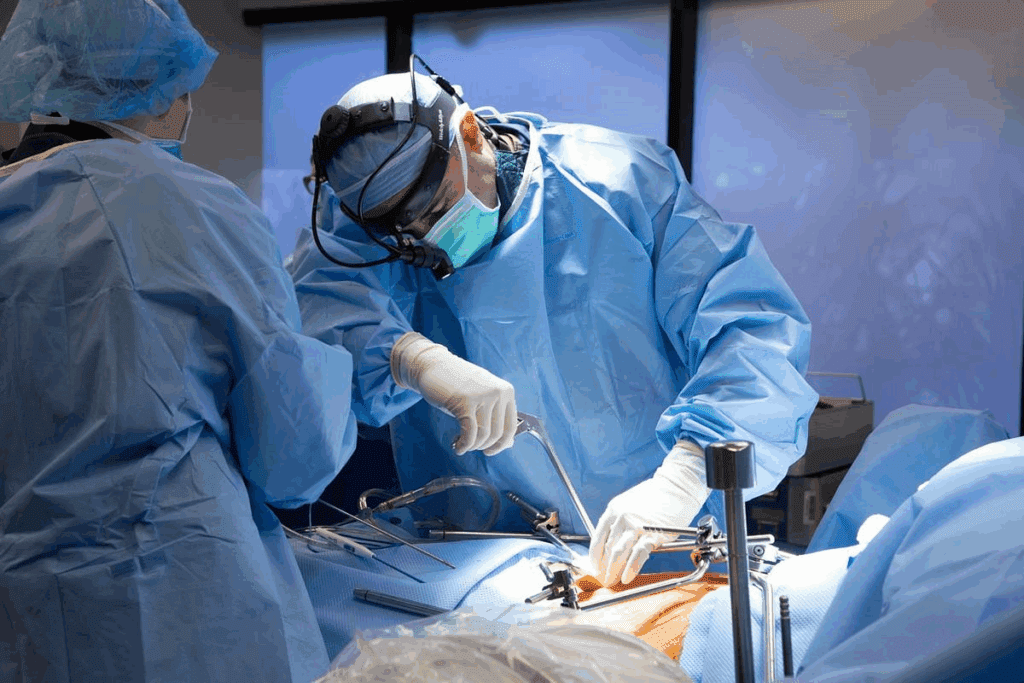
Understanding the anatomy of the L4 L5 spine is crucial for effective treatment of back pain. The lumbar spine, with five vertebrae, supports our upper body and helps us move. It’s a complex structure.
Location and Function of L4 and L5 Vertebrae
The L4 and L5 vertebrae are in the lower back. L4 is the fourth, and L5 is the fifth. Together, they form a segment prone to problems because of the stress they face.
These vertebrae help absorb shock and keep the spine flexible. The L4-L5 segment is vital because it carries a lot of our body’s weight and stress.
The Importance of the L4-L5 Segment in Spine Biomechanics
The L4-L5 segment is key in spine mechanics. It connects the upper lumbar spine to the lower lumbar and sacral regions. This area is under a lot of stress, making it prone to spinal issues.
| Function | Description |
| Weight-bearing | The L4-L5 segment supports a significant portion of the body’s weight. |
| Flexibility | It facilitates movements such as bending and twisting. |
| Shock Absorption | The disc between L4 and L5 vertebrae helps in absorbing shock. |
Nerves and Structures Associated with L4-L5
The L4-L5 segment has important nerves and structures. The L4 and L5 nerve roots are here, controlling our lower limbs. Problems with these nerves can cause pain, numbness, and weakness in our legs.
The L4-L5 disc is also critical, acting as a shock absorber. Problems with this disc can lead to herniated discs and degenerative disc disease.
Common Conditions Affecting the L4 L5 Spine

The L4 L5 spine can face many disorders, like herniated discs and degenerative disc disease. These issues can cause a lot of pain and make it hard to move if not treated right. We’ll look at the most common problems in this important part of the spine.
Herniated Discs at L4-L5
A herniated disc at L4-L5 happens when the soft center of the disc leaks out. This can hurt nearby nerves, causing pain, numbness, and weakness in the lower back and legs. L4 L5 herniated disc is a common issue that might need l4-l5 herniated disc surgery if other treatments don’t work.
Spinal Stenosis
Understanding the anatomy of the L4 L5 spine is crucial for effective treatment of back pain.
Degenerative Disc Disease
Degenerative disc disease is when the discs between vertebrae lose height and strength over time. At L4-L5, this can cause lower back instability and pain. While it’s a normal part of aging, some people may need medical help for their symptoms.
Spondylolisthesis
Spondylolisthesis is when a vertebra slips forward over the one below it. At L4-L5, this can press on nerves, causing pain and other neurological symptoms. It can be caused by a defect, degenerative changes, or trauma.
| Condition | Symptoms | Treatment Options |
| Herniated Disc | Pain, numbness, weakness in lower back and legs | Conservative management, surgery (e.g., l4-l5 herniated disc surgery) |
| Spinal Stenosis | Pain, numbness, weakness in legs, calves, or buttocks | Physical therapy, medications, surgical decompression |
| Degenerative Disc Disease | Lower back pain, instability | Conservative management, spinal fusion, disc replacement |
| Spondylolisthesis | Pain, neurological symptoms due to nerve compression | Conservative management, surgical stabilization |
When is L4 L5 Surgery Necessary?
Deciding on L4 L5 surgery depends on several factors. These include how severe the spinal condition is and if other treatments have worked. Surgery is considered when symptoms are severe and affect daily life.
Conservative Treatment Options
Before surgery, patients try non-surgical treatments. These include physical therapy, pain meds, and lifestyle changes. They might also try steroid injections to reduce swelling.
Conservative treatments are the first step for L4 L5 issues. Doctors watch how well these treatments work before moving to surgery.
Indications for Surgical Intervention
Surgery is needed when non-surgical treatments don’t help enough. This includes nerve compression, severe instability, or spinal deformity. These conditions can cause a lot of pain and weakness.
“Surgical intervention is considered when the risks associated with not having surgery outweigh the risks of the surgical procedure itself.” –
Spine Specialist
Emergency vs. Elective Surgery Scenarios
Surgery for L4 L5 can be urgent or planned. Emergency surgery is for serious conditions like cauda equina syndrome. This requires quick action to avoid permanent damage. Planned surgery is for conditions that can be prepared for.
| Surgery Type | Clinical Scenario | Urgency Level |
| Emergency | Cauda Equina Syndrome, Severe Neurological Deterioration | High |
| Elective | Chronic Pain, Nerve Compression, Spinal Instability | Low to Moderate |
The Decision-Making Process
Choosing to have L4 L5 surgery is a big decision. A spine specialist will evaluate your health and symptoms. This decision is made together, considering your needs.
Talk to your surgeon about your concerns. They can explain the benefits and risks of surgery.
Types of L4 L5 Surgical Procedures
There are several surgical options for L4 L5 spine issues. Each has its own benefits and things to consider. It’s important for both patients and doctors to understand these options well.
Microdiscectomy
Microdiscectomy is a small surgery for herniated discs at L4 L5. It removes the damaged disc material that’s pressing on nerves. This method has smaller cuts, less damage, and faster healing than big surgeries.
Laminectomy
Laminectomy, or decompression surgery, helps with spinal stenosis. It removes part or all of the lamina to relieve pressure. This can greatly reduce pain and improve movement for those with spinal stenosis.
Spinal Fusion Techniques
Spinal fusion joins two or more vertebrae together with bone grafts and rods. It’s used for spondylolisthesis or severe disc disease at L4 L5. It makes the spine stable and can lessen pain.
Artificial Disc Replacement
Artificial disc replacement swaps a damaged disc with an artificial one. It’s for those with degenerative disc disease who haven’t gotten better with other treatments. The aim is to keep the spine moving and ease pain.
| Surgical Procedure | Purpose | Benefits |
| Microdiscectomy | Treat herniated discs | Minimally invasive, quick recovery |
| Laminectomy | Relieve spinal stenosis | Reduces pain, improves mobility |
| Spinal Fusion | Stabilize spine, treat spondylolisthesis | Provides stability, reduces pain |
| Artificial Disc Replacement | Treat degenerative disc disease | Maintains spinal mobility, alleviates pain |
Minimally Invasive Surgery for the L4 L5 Spine
Understanding the anatomy of the L4 L5 spine is crucial for effective treatment of back pain.
Endoscopic Discectomy
Endoscopic discectomy is a small procedure for herniated discs at L4 L5. This method uses a small endoscope and special tools to remove the bulging disc. It’s done under local anesthesia, so patients can heal fast and get back to their lives.
Minimally Invasive Spinal Fusion
Minimally invasive spinal fusion stabilizes the spine at L4 L5. This method uses small cuts and a tube to put in graft material for fusion. It causes less damage and helps patients recover faster, but it needs careful planning.
Robotic-Assisted Spine Surgery
Robotic-assisted spine surgery is a new technology that makes surgery more precise. Robotic systems give surgeons real-time images and precise control, helping with complex surgeries at L4 L5.
Benefits and Limitations of Minimally Invasive Approaches
These surgical methods have many benefits, like smaller cuts and quicker healing. But, they also have downsides, like needing special training and not working for all spinal problems.
“The future of spine surgery lies in its ability to balance technological advancements with the nuanced needs of patients, ensuring that treatments are both effective and minimally disruptive.”
As we learn more about minimally invasive techniques for the L4 L5 spine, they will become more key in spinal care. They offer patients more choices and better results.
Assessing the Seriousness of L4 L5 Surgery
Understanding the seriousness of L4 L5 surgery means looking at the procedure’s complexity and risks. Like any surgery, it has its own challenges and possible complications. The surgery’s seriousness depends on several factors. These include the type of surgery, the patient’s health, and any underlying medical conditions.
Classification of Surgical Complexity
L4 L5 surgeries vary from simple procedures like microdiscectomy to more complex ones like spinal fusion. The surgery’s complexity is based on how invasive it is, the surgeon’s skill, and the risks involved.
Surgical complexity classification:
| Surgical Procedure | Complexity Level | Typical Risks |
| Microdiscectomy | Low to Moderate | Nerve damage, infection |
| Laminectomy | Moderate | Infection, spinal instability |
| Spinal Fusion | High | Pseudoarthrosis, hardware failure |
Comparison to Other Spine Surgeries
L4 L5 surgery is compared to other spine surgeries in terms of complexity and risk. For example, surgeries on multiple spine levels are more complex than single-level surgeries like L4 L5.
Factors That Increase Surgical Risk
Several factors can raise the risk of L4 L5 surgery. These include:
- Age: Older patients face higher risks due to decreased physical reserve and comorbidities.
- Smoking: It can impair healing and increase complications.
- Obesity: Excess weight can stress the spine and complicate surgery.
- Pre-existing medical conditions: Conditions like diabetes or heart disease can affect outcomes.
Questions to Ask Your Surgeon About Risks
It’s important for patients to discuss risks and complications with their surgeon. Some questions to ask include:
- What are the specific risks associated with my surgery?
- How will you manage complications during and after surgery?
- What are the chances of successful outcomes, and how will success be measured?
- Are there any alternative treatments or less invasive options available?
By understanding the seriousness of L4 L5 surgery and discussing concerns with a healthcare provider, patients can make informed decisions about their care.
Potential Risks and Complications
It’s important for patients to know about the risks of L4 L5 surgery. This surgery can help with severe back pain and improve life quality. But, it’s key to understand the possible complications that can happen.
Short-term Complications
Short-term issues after L4 L5 surgery include infection, bleeding, and nerve damage. Infections are a risk with any surgery, and antibiotics are used to prevent them. Bleeding might need a blood transfusion in some cases.
Nerve damage can cause numbness, weakness, or pain in the legs. This can be temporary but sometimes permanent.
Long-term Complications
Long-term issues can appear months to years after surgery. A big risk is Failed Back Surgery Syndrome (FBSS). This is when patients keep feeling chronic pain after surgery.
Another long-term risk is adjacent segment disease. This is when the spinal segments next to the fusion site degenerate, possibly needing more surgery.
Anesthesia-Related Risks
Anesthesia risks are a big deal for any surgery, including L4 L5. These risks can be mild or severe, like allergic reactions or respiratory problems. In rare cases, it can even be fatal.
To lower these risks, a detailed pre-anesthetic check is done. This helps create a safe anesthesia plan.
Failed Back Surgery Syndrome
Failed Back Surgery Syndrome is when back pain keeps coming back after spinal surgery. It can be due to many reasons, like not fully understanding the problem or not doing the surgery right.
Handling FBSS often needs a team effort. This includes pain management experts, physical therapists, and sometimes more surgery.
| Complication Type | Description | Management Strategies |
| Short-term | Infection, bleeding, nerve damage | Antibiotics, monitoring, possible more surgery |
| Long-term | Failed Back Surgery Syndrome, adjacent segment disease | Pain management, physical therapy, possible more surgery |
| Anesthesia-Related | Allergic reactions, respiratory issues | Pre-anesthetic check, careful anesthesia plan |
Success Rates of L4 L5 Surgery
Recent studies have given us insights into L4 L5 surgery success rates. They show how effective these surgeries can be. This depends on the surgery type and the patient’s health.
Statistical Outcomes by Procedure Type
Different surgeries for L4 L5 conditions have different success rates. For example:
- Microdiscectomy: This surgery is very effective, with success rates over 90%. It helps patients with herniated discs a lot.
- Laminectomy: This surgery’s success rate is between 70% and 85%. It removes part of the vertebra to ease pressure on nerves.
- Spinal Fusion: The success rate for spinal fusion varies. It depends on the technique and patient selection, usually between 60% and 90%.
Factors Affecting Success
Several things can affect how well L4 L5 surgery works. These include:
- The patient’s age and health
- The specific condition being treated (like herniated discs or spinal stenosis)
- The surgeon’s experience and skill
- How well the patient recovers after surgery
Measuring Surgical Success
Success in L4 L5 surgery isn’t just about avoiding complications. It also includes how well the patient feels afterward. This includes:
- Less pain
- Being able to do more things
- Feeling better overall
Patient Satisfaction Studies
Studies on patient satisfaction after L4 L5 surgery show most patients are happy. They talk about the importance of knowing what to expect before surgery.
Understanding what makes surgery successful helps patients make better choices. It also helps doctors give better advice to their patients.
Preparing for L4 L5 Surgery
Getting ready for L4 L5 surgery is a big step. It’s important to know what to do to make your recovery better. Understanding the preparation steps can help you have a good experience.
Medical Evaluations and Tests
You’ll need to go through medical checks and tests before surgery. These help doctors see if you’re healthy enough for the surgery. They’ll look at your medical history, do physical checks, and might do X-rays or scans.
Some of the common tests include:
- Blood work to check for infections or bleeding disorders
- Electrocardiogram (ECG) to assess heart health
- Imaging studies to evaluate the spine and surrounding structures
Lifestyle Adjustments Before Surgery
Changing your lifestyle a bit before surgery can help. We suggest:
- Stop smoking a few weeks before to help your body heal better.
- Maintain a healthy diet to help your body heal.
- Exercise regularly but avoid too much to not make things worse.
We might also tell you to stop or change some medicines that could affect your surgery or recovery.
Mental Preparation
Getting your mind ready for surgery is key. We recommend:
- Educate yourself about the procedure and what to expect.
- Discuss any concerns or fears with your healthcare provider or a mental health professional.
- Practice relaxation techniques such as deep breathing or meditation to help manage anxiety.
Home Preparation for Recovery
Getting your home ready for recovery can help a lot. We suggest:
- Arranging for someone to stay with you for a few days after surgery.
- Setting up a comfortable recovery area with necessary supplies, such as pillows, blankets, and medications.
- Removing tripping hazards and ensuring clear pathways to reduce the risk of falls.
By doing these things, you can make your home a supportive place for recovery.
Understanding the anatomy of the L4 L5 spine is crucial for effective treatment of back pain.
Getting ready for L4 L5 surgery can make you feel less anxious. Knowing what to expect helps you feel more in control. We’re here to guide you through every step of the way.
What to Expect on Surgery Day
You’ll arrive at the hospital a few hours before your surgery. You’ll change into a surgical gown and get any needed IV lines. Our team will explain everything to you, making sure you’re comfortable and informed.
Anesthesia Process
For L4 L5 surgery, you’ll likely get general anesthesia. This means you’ll be asleep and won’t feel pain. Our anesthesiologist will talk to you about your options and any worries you have. They’ll make sure you’re safe and comfortable during the process.
Duration and Hospital Stay
The surgery’s length can vary. It might take one to several hours. After, you’ll go to the recovery room to wake up. How long you stay in the hospital depends on your health, the surgery, and your doctor’s advice.
Immediate Post-Operative Care
Right after surgery, we focus on your recovery. We’ll manage your pain with the right medicines and strategies. We’ll also watch for any complications and teach you how to care for yourself at home.
Our main goal is to give you the best care. We want you to be safe, comfortable, and have a good outcome. By knowing what to expect, you can face your surgery with confidence.
Recovery Timeline After L4 L5 Surgery
Understanding the anatomy of the L4 L5 spine is crucial for effective treatment of back pain.
Hospital Recovery Phase
The recovery starts right after surgery, while you’re in the hospital. This is a critical time for watching for any issues and managing pain. You’ll likely stay in the hospital for 1-3 days, based on your surgery and health.
Medical staff will keep an eye on your vital signs, pain, and how your nerves are doing. Managing pain well is a top priority. They use medicines and other methods to keep pain low.
Pain Management Strategies
Managing pain is a big part of getting better. Here are some ways to do it:
- Medications: A mix of opioids and non-opioids to control pain.
- Regional anesthesia: This method targets pain in specific areas.
- Alternative methods: Like ice, relaxation techniques, and gentle exercises.
It’s important to follow your surgeon’s pain management plan. This helps avoid problems and makes recovery smoother.
First Few Weeks at Home
After leaving the hospital, you’ll continue to heal at home. The first weeks are very important for your recovery. You should:
- Rest and avoid hard activities.
- Take your medicines as told.
- Start moving a bit with short walks and gentle stretches.
Watch for signs of complications, like infection or nerve problems. Having a plan to reach out to your doctor if you have concerns is key.
Physical Therapy and Rehabilitation
Physical therapy is a big part of getting better. It helps you regain strength, flexibility, and function. A custom rehab program can:
- Improve how you move and reduce stiffness.
- Make your spine muscles stronger.
- Boost your overall physical function and lower the chance of future problems.
By knowing the recovery timeline and sticking to a rehab plan, you can get the best results from L4 L5 surgery. It’s a journey that needs patience, dedication, and the right support.
Life After L4 L5 Surgery
Understanding the anatomy of the L4 L5 spine is crucial for effective treatment of back pain.
Activity Restrictions and Modifications
Patients should avoid heavy lifting, bending, or twisting for a few weeks after surgery. These activity restrictions help prevent problems and aid in healing.
- Avoid lifting objects heavier than 10-15 pounds
- Limit bending or twisting motions
- Gradually increase walking and other low-impact activities
As recovery progresses, patients can start to do more strenuous exercises. They should do this with their healthcare provider’s guidance.
Return to Work Expectations
The time it takes to go back to work varies. It depends on the job and how well the patient is recovering. Desk jobs might allow a return in 2-6 weeks. Jobs that require more physical effort might take 6-12 weeks or longer.
| Job Type | Typical Return to Work Time |
| Desk Job | 2-6 weeks |
| Physical Labor | 6-12 weeks |
Long-term Lifestyle Adjustments
To keep the benefits of L4 L5 surgery, patients should make long-term lifestyle adjustments. This includes regular exercise, staying at a healthy weight, and good posture.
Follow-up Care Schedule
A follow-up care schedule is vital for checking on healing and addressing any issues. Follow-up appointments are usually within the first few weeks after surgery. More appointments may be needed later.
- First follow-up: 1-2 weeks post-surgery
- Subsequent follow-ups: as directed by the surgeon
By following these guidelines, patients can improve their recovery and enjoy a better life after L4 L5 surgery.
Conclusion
Understanding the anatomy of the L4 L5 spine is crucial for effective treatment of back pain.
FAQ
Understanding the anatomy of the L4 L5 spine is crucial for effective treatment of back pain.
L4 L5 surgery is a procedure done on the L4 and L5 vertebrae in the lower back. It treats issues like herniated discs, spinal stenosis, and degenerative disc disease.
How serious is L4 L5 surgery?
L4 L5 surgery is a major procedure. Its seriousness depends on the condition, surgery type, and patient factors.
What are the common conditions that affect the L4 L5 spine?
The L4 L5 spine can be affected by herniated discs, spinal stenosis, degenerative disc disease, and spondylolisthesis. These issues can cause pain, numbness, and mobility issues.
When is L4 L5 surgery necessary?
Surgery is needed when other treatments don’t work, or if there’s nerve damage or spine instability. Each case is different.
What are the different types of L4 L5 surgical procedures?
Procedures include microdiscectomy, laminectomy, spinal fusion, and artificial disc replacement. The choice depends on the condition and patient needs.
What is minimally invasive L4 L5 surgery?
This surgery uses smaller incisions and less tissue disruption than traditional surgery. It includes endoscopic discectomy, minimally invasive spinal fusion, and robotic-assisted surgery.
What are the possible risks and complications of L4 L5 surgery?
Risks include infection, bleeding, nerve damage, anesthesia issues, and failed back surgery syndrome. Knowing these risks helps in making informed decisions.
How successful is L4 L5 surgery?
Success rates vary by procedure, patient condition, and individual factors. Studies and patient feedback give insights into different surgical outcomes.
How can I prepare for L4 L5 surgery?
Preparation includes medical checks, lifestyle changes, mental readiness, and home setup for recovery. Following your surgeon’s advice is key for a smooth experience.
What is the recovery timeline after L4 L5 surgery?
Recovery time varies by surgery type and individual factors. It includes hospital stay, pain management, physical therapy, and rehabilitation. Most patients gradually get back to normal activities.
What are the activity restrictions after L4 L5 surgery?
Restrictions include avoiding heavy lifting, bending, and strenuous activities for weeks. Your surgeon will guide you on post-operative activities.
When can I return to work after L4 L5 surgery?
Work return varies by surgery type, job, and recovery. Generally, patients can go back to work in weeks to months after surgery.
What long-term lifestyle adjustments are needed after L4 L5 surgery?
Adjustments may include maintaining a healthy weight, regular exercise, and good posture. Your surgeon or healthcare provider can offer personalized advice.
References
- Nehme, B. et al. (2023). Risks and complications after lumbar spine surgery. Neurosurgery, 92(5), 850-862. https://www.ncbi.nlm.nih.gov/pmc/articles/PMC5361463/