
During pregnancy, doctors take many ultrasound measurements to check on the baby’s growth. One key measurement is the Biparietal Diameter (BPD). It shows the widest part of the baby’s skull, from one side to the other. Find out the earliest possible time how soon can pregnancy be detected by ultrasound. Know the timelines for gestational sac visibility.
The BPD helps doctors guess the baby’s weight and age. It also shows how fast the baby is growing. This important check is done during an ultrasound examination. It helps doctors keep an eye on the baby’s health and spot any issues early.
Key Takeaways
- Biparietal Diameter (BPD) is a fundamental measurement in prenatal ultrasound assessment.
- BPD is used to estimate fetal weight and determine gestational age.
- This measurement is vital for monitoring fetal growth and detecting possible complications.
- BPD is usually measured during an ultrasound examination.
- Getting the BPD right is key for reliable prenatal care.
The Fundamentals of Prenatal Ultrasound Assessment
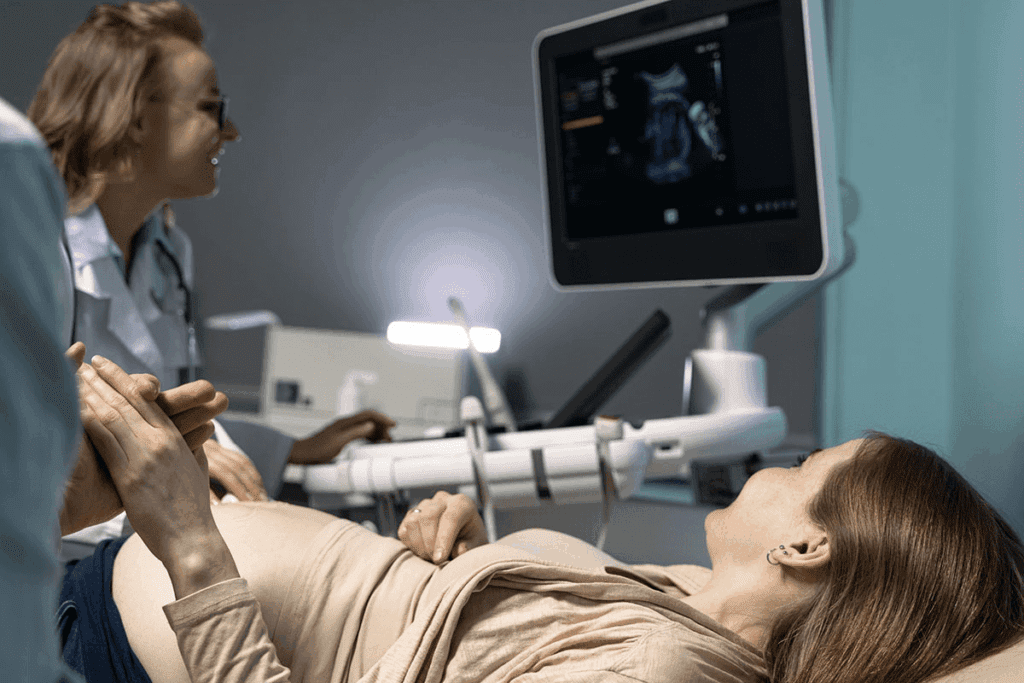
Understanding prenatal ultrasound assessment is key for healthcare providers. It helps them make better decisions for patient care. Prenatal ultrasound assessment is now a must for tracking fetal growth and spotting issues early.
evolution of Fetal Measurement Techniques
Fetal measurement techniques have greatly improved. At first, technology was limited, but now we have high-resolution ultrasound. This lets us get exact measurements of fetal growth.
Thanks to these advances, doctors can track fetal development better. They can spot problems early and act quickly.
Overview of Key Fetal Biometric Parameters
Important fetal biometric parameters include Biparietal Diameter (BPD), Head circumference, Abdominal Circumference, and Femur Length. These measurements give a full picture of fetal growth and development.
Fetal Biometric Parameter | Description | Significance |
Biparietal Diameter (BPD) | Measurement of the distance between the two parital bones of the fetal skull | Indicates fetal head growth and development |
Head Circumference | Measurement around the fetal head | Assesses fetal head growth in relation to gestational age |
Abdominal Circumference | Measurement around the fetal abdomen | Reflects fetal growth and nutritional status |
Femur Length | Measurement of the length of the fetal femur | Indicates fetal skeletal growth |
The BPD measurement is a key part of a full fetal ultrasound. BPD can be measured via ultrasound starting at 13 weeks of pregnancy. The most accurate time is between 13 and 20 weeks, when the fetal head grows fast.
BPD Ultrasound Definition and Measurement Principles
BPD, or biparietal diameter, is a key part of prenatal ultrasound checks. It measures the widest part of the fetal skull from one parietel bone to the other.
Anatomical Definition of Biparietal Diameter
The biparietal diameter is a vital fetal measurement. It looks at the distance between the two parietel bones of the skull. This measurement is taken at the widest part of the skull, giving important info on fetal growth and development.
To get an accurate BPD, a clear view of the fetal head is needed. This view should be at the level of the thalami and cavum septum pellucidum. This ensures the measurement is precise and reliable.
Standard Planes for Accurate BPD Measurement
For accurate BPD measurement, a specific ultrasound plane is needed. This plane should show:
- The thalami, two rounded structures in the midbrain
- The cavum septum pellucidum, a fluid-filled space between the two frontal horns of the lateral ventricals
- A symmetric appearance of the cerebral hemispheres
By getting this precise plane, healthcare providers can ensure BPD measurements are accurate and consistent. This allows for reliable monitoring of fetal growth.
To show the importance of accurate BPD measurement, let’s look at the standard ranges for BPD measurements throughout pregnancy:
Gestational Age (Weeks) | Average BPD (mm) | Range (mm) |
13 | 24 | 20-28 |
16 | 35 | 30-40 |
20 | 48 | 43-53 |
As the table shows, BPD measurements are a clear sign of fetal growth and development. Understanding the anatomical definition of BPD and how to measure it accurately helps healthcare providers make informed decisions about fetal health.
When BPD Measurements Begin and Optimal Timing
Knowing when to measure BPD is key for tracking fetal growth. BPD, or biparietal diameter, shows how a fetus is growing. It’s a main part of prenatal ultrasound checks.
Let’s look at when BPD measurements start. BPD measurement can be done via ultrasound from 13 weeks of pregnancy. This is when we start to closely watch how a fetus is growing.
First Detection at 13 Weeks Gestation
The 13-week mark is important. It’s when the fetus’s head is big enough for accurate BPD measurements. This is a key time for checking how the fetus is doing.
Peak Accuracy Window (13-20 Weeks)
The time from 13 to 20 weeks is the best time for BPD measurements. During this time, the measurements are very accurate. Ultrasound checks during this period give us important info on how the fetus is growing.
Gestation Period (Weeks) | BPD Measurement Accuracy |
13-20 | High |
21-28 | Moderate |
29-40 | Variable |
Frequency of BPD AssessmentThroughout Pregnancy
BPD checks are not just one-time; they’re part of ongoing monitoring. How often they happen can change based on the pregnancy. More checks are needed if there’s a worry about growth or development.
“Regular ultrasound evaluations, including BPD measurements, are key for watching fetal growth and spotting problems early.” –
Expert in Fetal Development
By knowing when to start BPD measurements and the best time for them, doctors can give better prenatal care.
Normal BPD Measurements and Growth Patterns
Normal BPD measurements are key to checking how a fetus grows and spotting issues early. Knowing these measurements and how they change is critical for doctors to track a baby’s development.
Standard Ranges from 13-40 Weeks Gestation
From 13 to 40 weeks, BPD usually ranges from 23 millimeters to 95 millimeters. Below is a table showing these standard ranges. It helps us understand normal BPD measurements during this time.
Gestational Age (Weeks) | Average BPD (mm) | Normal Range (mm) |
13 | 23 | 20-26 |
20 | 50 | 45-55 |
28 | 72 | 67-77 |
36 | 88 | 83-93 |
40 | 95 | 90-100 |
Expected Growth Rates During Different Trimesters
BPD growth changes with each trimester. In the second trimester, it grows about 3 millimeters a week from weeks 14 to 28. Knowing these growth patterns helps doctors spot any issues.
BPD as a Component of Complete Fetal Biometry
Understanding how a fetus grows is complex. BPD is a key part of this. Fetal biometry looks at many factors to show how a fetus is growing.
Relationship Between BPD and Head Circumference
BPD and head circumference (HC) are closely linked. BPD measures the distance between two parts of the fetal skull. HC measures the head’s circumference. Both are important for checking how a fetus is growing.
By looking at both BPD and HC, doctors can better understand fetal head growth. This helps spot any growth problems early.
Integration with Other Critical Measurements
Fetal biometry looks at more than just BPD and HC. It also includes abdominal Circumference (AC) and femur length (FL). These measurements together give a full view of fetal growth.
Using all these measurements helps doctors guess fetal weight and age more accurately. This detailed approach is key for watching over fetal growth and catching any problems early.
The table below shows how different fetal biometric parameters work together to check fetal development:
Parameter | Description | Importance |
BPD | Biparietal Diameter | Assesses fetal head growth |
HC | Head circumference | Monitors fetal head development |
AC | Abdominal Circumference | Assesses fetal abdominal growth |
FL | Femur Length | Monitors fetal limb development |
By combining these measurements, doctors can get a full picture of fetal development. This helps them spot any issues early on.
Clinical Applications of BPD Ultrasound Measurements
BPD ultrasound has many uses in prenatal care. It helps estimate gestational age and track fetal growth. This is key to checking if the fetus is doing well.
Determining and Confirming Gestational Age
BPD ultrasound is mainly used to figure out and confirm how far along a pregnancy is. Knowing the exact gestational age is important. It helps plan prenatal care and schedule important screenings.
In the first and early second trimesters, BPD is very helpful. This is because fetuses grow at similar rates during this time.
Monitoring Fetal Growth Trajectory
BPD measurements are also key for tracking how a fetus grows. By watching BPD changes over time, doctors can see if growth is normal.
This helps spot problems early. It allows for quick action if needed.
Identifying Potencial Growth Restrictions
Abnormal BPD readings can point to growth issues or other problems. For example, a smaller BPD might mean the fetus is not growing right. This calls for more checks and monitoring.
Spotting growth issues early helps doctors plan the best care. This is good for both the mom and the baby.
Factors That Can Affect BPD Measurements
Knowing what affects BPD measurements is key for doctors. BPD ultrasound checks are important in prenatal care. They help track how a fetus is growing. But, these checks can be off due to different reasons.
Maternal Factors Affecting Accuracy
Health issues in the mother can change how a fetus grows. For example, diabetes or gestational diabetes can slow down fetal growth. This can make BPD measurements vary. Other things like nutrition and overall health also matter for the fetus’s growth.
Being overweight can also make it harder to get clear ultrasound images. The extra tissue can block the ultrasound signal. This makes it tough to get precise BPD measurements.
Fetal Position and Considerations
The way the fetus is positioned during an ultrasound can affect BPD measurements. Fetal head engagement or odd positions can make it hard to get accurate readings. Doctors might need to change their approach or use other imaging methods to get the right measurements.
Fetal movement can also mess with the accuracy of ultrasound images. Even with modern tech, big movements can be a problem. This is because they can blur the images.
Ethnic and Variations in Normal Ranges
What’s considered normal for BPD measurements can vary by ethnicity. Different ethnic groups may have different head sizes and shapes. Doctors need to take these differences into account when looking at BPD measurements. This ensures they’re comparing them to the right standards for the patient’s ethnic background.
It’s important to understand these factors for accurate BPD measurements. By looking at the mother’s health, the fetus’s position, and ethnic differences, doctors can better manage pregnancies. This helps in making informed decisions about fetal development.
Interpreting Abnormal BPD Findings
Understanding BPD findings is key to spotting possible issues in a baby’s growth. If BPD measurements are off, it might mean the baby has a condition that needs more checking and watching.
Microcephaly and Smaller-Than-Expected BPD
A smaller BPD can hint at microcephaly, where a baby’s head is much smaller than usual. This condition might lead to delays in brain development and other birth defects. Spotting it early is very important for managing it well.
- Microcephaly can come from genes or things like infections during pregnancy.
- Diagnosing it in the womb means looking at BPD and other signs.
Macrocephaly and Larger-Than-Expected BPD
On the other hand, a bigger BPD might mean macrocephaly, where a baby’s head is unusually large. This can sometimes be harmless or linked to certain genes. Getting a correct diagnosis and keeping an eye on it is key to figuring out what to do.
- Macrocephaly might run in families or be linked to certain health issues.
- More tests, like genetic ones, might be suggested.
Dolichocephaly and Braachycephaly Implications
Abnormal BPD can also point to dolichocephaly (long-headed) or braachycephaly (short-headed) shapes of the fetal head. These shapes can affect how the baby grows and is born. Knowing the head shape is vital for checking on the baby’s health.
- Dolichocephaly might mean the baby is more likely to be in a breech position.
- Brachycephaly could be linked to certain genetic conditions.
BPD in Multiple Gestations
In cases of twins, triplets, or more, BPD is very important for tracking each baby’s growth. By comparing BPD values, doctors can spot if any baby is growing differently. Keeping a close eye on all babies is essential for their health.
Condition | BPD Implication | Potential Concerms |
Microcephaly | Smaller-than-expected BPD | Neuro-developmental delays |
Macrocephaly | Larger-than-expected BPD | Genetic conditions |
Understanding abnormal BPD findings needs a detailed look at many factors and might involve more tests. By grasping what these signs mean, doctors can give the right care and support during pregnancy.
How Healthcare Providers Use BPD Ultrasound Results
Healthcare providers use BPD ultrasound results to make decisions during pregnancy. These results help check how the fetus is growing and guide prenatal care.
Clinical Decisions Based on BPD Findings
BPD ultrasound results are key in managing pregnancy. Accurate BPD measurements help doctors know the baby’s age and growth. They also spot any possible issues.
If the BPD is smaller than expected, it might mean the baby is not growing right. This could lead to more tests and actions. On the other hand, a bigger BPD might mean the baby is too big, changing the delivery plan.
When Additional Testing May Be Recommended
If BPD results are not clear or show problems, more tests might be needed. This could be a detailed anatomy scan or fetal MRI. These tests help confirm or rule out issues, giving parents the right information and care.
Communication of BPD Results to Expectant Parents
Telling parents about BPD ultrasound results is very important. It helps reduce worry and helps parents make good choices. Doctors should explain the results clearly, answer questions, and talk about what to do next.
This way, we create a supportive space. It helps ensure the best health for both mom and baby.
Limitations and Challenges of BPD Ultrasound Definition
It’s key to know the limits of BPD ultrasound for accurate readings and making decisions. BPD measurements are vital in checking on a fetus, but they come with their own set of problems.
Technical Challenges in Accurate Measurements
Getting precise BPD measurements can be tricky. Things like the baby’s position, the mother’s body shape, and the sonographer’s skill level can mess with the accuracy. For example, if the baby is in a breech position or if the mother’s body makes it hard to see, getting a clear BPD measurement is tough.
Also, the angle of the ultrasound and the quality of the equipment matter a lot. So, when looking at BPD data, these technical aspects need to be kept in mind.
Decreasing Reliability in Pregnancy
As pregnancy goes on, BPD measurements get less reliable. After 20 weeks, other measurements might be better for checking on the baby’s growth. This is because the baby’s head shape and size change more as they grow.
So, when using BPD for decisions, it’s important to remember these points, mainly in the later stages of pregnancy.
Alternative Measurements When BPD is Unreliable
If BPD isn’t reliable, doctors might use other ways to check on the baby. These include head circumference (HC), abdominal circumference (AC), and femur length (FL). Below is a table that shows these alternatives and how they’re useful.
Measurement | Clinical Utility |
Head Circumference (HC) | Provides an overall assessment of fetal head size, useful when BPD is unreliable. |
Abdominal Circumference (AC) | Reflects fetal growth and nutritional status, particularily useful in the third trimester. |
Femur Length (FL) | Assesses fetal skeletal growth, useful in conjunction with other biometric parameters. |
Knowing the limits and challenges of BPD ultrasound helps doctors make better choices and care for their patients better.
Conclusion
BPD ultrasound is key in prenatal care. It gives us important info on how a baby grows. We’ve looked at what BPD is, how it’s measured, and its role in tracking a baby’s growth and spotting problems.
Getting BPD right is vital for good care and outcomes for parents-to-be. Knowing how to measure BPD helps doctors give top-notch care. This knowledge supports both the baby and the parents.
Prenatal care works best when BPD ultrasound is used with other important tests. This way, doctors can keep an eye on the baby’s growth and catch any issues early. As prenatal care gets better, BPD ultrasound will keep being a key part of it.
FAQ
What is biparietal diameter (BPD) in pregnancy?
Biparietal diameter (BPD) is a key measurement for tracking a baby’s growth. It measures the widest part of the baby’s skull, from one side to the other.
How is BPD measured during pregnancy?
Doctors use an ultrasound to measure BPD. They look at the widest part of the baby’s skull.
When can BPD be measured during pregnancy?
Doctors can measure BPD as early as 13 weeks. The most accurate readings are between 13 and 20 weeks.
What is the significance of BPD in prenatal care?
BPD helps doctors check the baby’s growth and age. It also helps spot any possible issues early on.
How does BPD relate to head circumference?
BPD and head circumference are connected. Both give insights into the baby’s head growth. BPD is part of a full check-up of the baby’s size.
What factors can affect BPD measurements?
Several things can change BPD readings. These include the mother’s health, the baby’s position, and the mother’s ethnicity. Knowing these can help doctors understand BPD better.
What are the implications of abnormal BPD findings?
If BPD is not normal, it might mean the baby’s head is too small or too big. Doctors need to look into it closely.
How do healthcare providers use BPD ultrasound results?
Doctors use BPD results to make decisions about care. They also talk to parents about the baby’s growth.
What are the limitations of BPD ultrasound definition?
There are some challenges with BPD ultrasound. It might not be as reliable later in pregnancy. Sometimes, other measurements are used instead.
How often are BPD assessments performed throughout pregnancy?
Doctors do regular ultrasounds to check on the baby. This includes measuring BPD to track growth.
What is the role of BPD in fetal biometry?
BPD is a key part of checking how a baby is growing. It helps give a full picture of the baby’s development.
Can BPD be used to determine gestational age?
Yes, BPD can help figure out how far along a pregnancy is. It’s most useful in the second trimester.
How does fetal position affect BPD measurements?
The baby’s position can make BPD readings less accurate. Doctors consider this when looking at BPD results.
References
National Center for Biotechnology Information. Evidence-Based Medical Guidance. Retrieved from https://pubmed.ncbi.nlm.nih.gov/10689843/