


Deciding on a medial thigh lift is a big choice. You want to look better, not worse. We aim to guide you through this safely.

Most surgeries go well, but being prepared is key. Choosing skilled surgeons and setting realistic goals helps a lot. Knowing how thigh lift scars after 2 years look helps you make smart choices.
Key Takeaways
- Prioritize board-certified surgeons with extensive experience in body contouring.
- Understand that realistic expectations are essential for long-term satisfaction.
- Follow all pre-operative and post-operative care instructions to minimize risks.
- Recognize that minor complications are manageable with professional medical guidance.
- Focus on the long-term healing process to ensure optimal aesthetic results.
Understanding the Risks and Reality of a Medial Thigh Lift
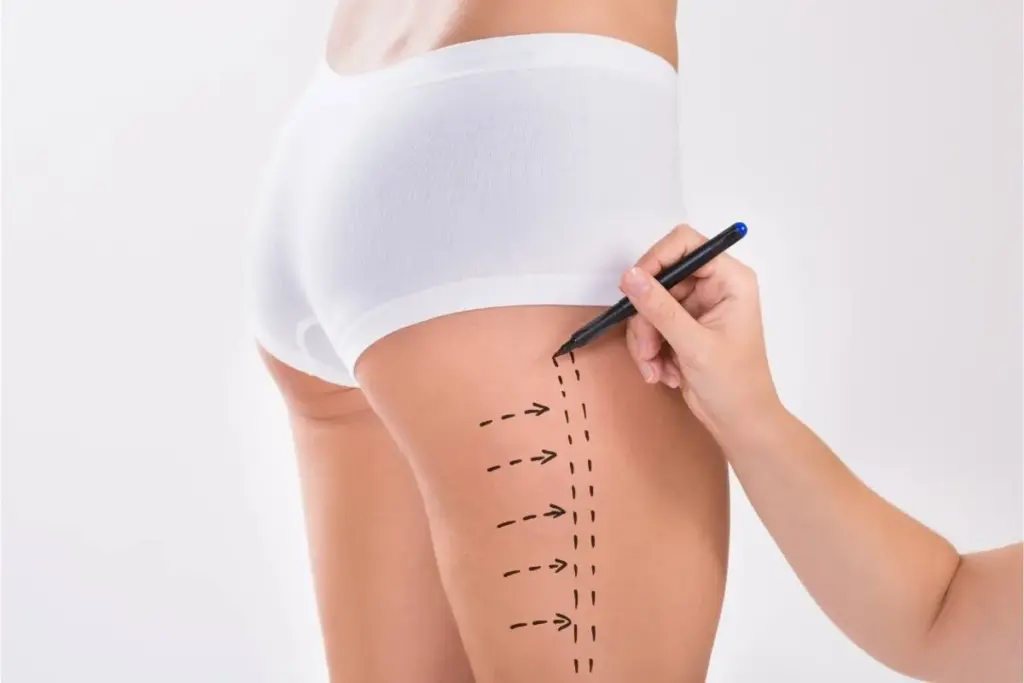
Before getting a medial thigh lift, it’s important to know the risks and possible problems. This surgery aims to make the thigh area look better. But, like any surgery, it can have its own set of risks and complications.
Common Complications and What Defines a Botched Result
Some common issues with a medial thigh lift include scarring, infection, and unevenness. A botched result happens when the surgery doesn’t meet the patient’s hopes or causes big problems. For example, very noticeable scars or unevenness can be seen as a botched result.
It’s true that these problems can happen. But, they can be lessened with the right surgery and care after. Patients should have clear expectations and follow their surgeon’s advice closely to avoid these issues.
Common Complications:
- Scarring
- Infection
- Asymmetry
- Unsatisfactory results
Managing Expectations for Thigh Lift Scars After 2 Years
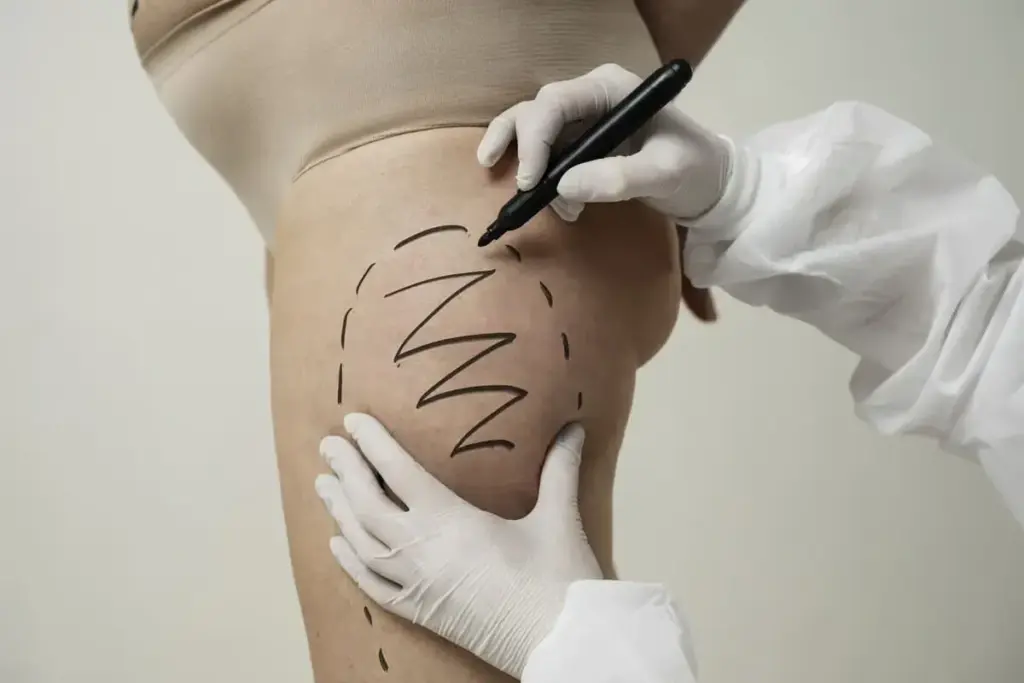
Scars from thigh lifts can look different for everyone after 2 years. Things like skin type, age, and after-care can affect how scars heal. It’s said that “The thigh lift incision is disguised in the inner portion of the thigh and groin crease, minimizing long-term visibility and distortion.” Also, “Loose skin that remains after lipocontouring alone contracts by roughly 8% throughout the year following surgery.”
To set realistic expectations, remember that scars are a normal part of healing. They can look better over time. Taking good care of the wound and following the surgeon’s advice can help a lot with how scars look.
| Factors Influencing Scar Healing | Description | Impact on Scar Appearance |
| Skin Type | Different skin types heal differently | Significant |
| Age | Older skin may take longer to heal | Moderate |
| Post-operative Care | Proper care can minimize scar visibility | High |
Selecting a Qualified Surgeon to Prevent Surgical Errors
Finding a skilled surgeon is key to a good medial thigh lift surgery. This choice is vital to avoid mistakes and get the best results. A surgeon’s experience is very important for this delicate surgery.
Verifying Board Certification and Specialized Experience
Start by checking if the surgeon is board certified and has experience with medial thigh lifts. Board certification shows they meet high standards. Look for surgeons certified by the American Board of Plastic Surgery.
It’s also important to see if the surgeon has done many of these surgeries. A surgeon with lots of experience can handle any problems that come up. Ask them about their experience with cases like yours.
Evaluating Before and After Galleries for Consistency
Before and after photos show a surgeon’s skill and consistency. Look for consistency in results in these photos. This shows the surgeon can deliver what they promise.
Focus on photos that are similar to your situation. A variety of successful results is a sign of a skilled surgeon.
The Importance of In-Person Consultations
An in-person meeting with the surgeon is very important. It lets you ask questions and understand the risks and benefits.
Listen to how well the surgeon listens to you and explains things. A good surgeon will make sure you know what to expect and feel comfortable.
By looking at these factors, you can make a smart choice. This can help avoid surgical mistakes.
Addressing Specific Concerns for Lipedema Patients
Lipedema makes thigh lift surgery tricky. It causes fat to spread unevenly in the legs. Surgeons need to know how to handle this to treat it safely and effectively.
Why Lipedema Botched Inner Thigh Lipo Occurs
Several reasons lead to lipedema botched inner thigh lipo. These include not fully understanding lipedema, not planning well before surgery, and using the wrong surgical methods.
- Inadequate understanding of lipedema: Doctors without experience may not get the condition.
- Insufficient pre-operative planning: Not considering the fat and tissue in lipedema patients can lead to bad results.
- Inappropriate surgical techniques: Using standard methods on lipedema can cause uneven fat removal, scarring, and other problems.
Tailoring the Thigh Lift for Lipedema Patients
Surgeons need to customize the thigh lift for lipedema patients. This means a personalized approach that meets the patient’s unique needs and condition.
- Personalized pre-operative assessment to understand the extent of fat accumulation and skin elasticity.
- Modified surgical techniques that are adapted to the unique challenges of lipedema.
- Post-operative care that includes detailed instructions and follow-up to manage swelling and promote healing.
Safety Protocols for Complex Tissue Removal
When removing complex tissue in lipedema patients, safety is key. Important steps include using advanced imaging, gentle tissue handling, and watching for complications.
- Advanced imaging techniques: To understand the anatomy and plan the surgery accurately.
- Gentle tissue handling: To minimize trauma to the tissues and reduce the risk of complications.
- Monitoring for complications: Being vigilant for signs of infection, hematoma, or other issues that may arise during or after surgery.
Conclusion
Understanding the risks and realities of a medial thigh lift is key to success. We’ve talked about common complications and the need to manage expectations, like thigh lift scars after 2 years.
Finding a qualified surgeon is essential to avoid surgical mistakes. Patients should check for board certification, look at before and after photos, and have face-to-face meetings. This helps lower the chance of a bad medial thigh lift.
Lipedema patients need a custom approach to thigh lift surgery. This ensures their specific concerns are met safely. By following the advice in this article, patients can make smart choices and get a good result from their surgery.
FAQ
What are the main signs of a botched medial thigh lift?
Signs include asymmetry, excessive scarring, skin irregularities, sagging, wound separation, and numbness or persistent pain beyond normal healing.
How can I minimize the appearance of thigh lift scars after 2 years?
Options include silicone gels or sheets, laser treatments, microneedling, and professional scar revision; consistent sun protection also helps prevent discoloration.
Is it safe to combine a medial thigh lift with liposuction?
Yes, in experienced hands it can be safe, but surgeon expertise and careful planning are critical to avoid compromising blood supply or increasing complications.
Why is board certification so important for this specific surgery?
Board certification ensures the surgeon has formal training, experience, and adherence to safety standards, which is crucial for complex areas like the inner thighs.
Can a botched inner thigh lipo from a previous surgery be fixed with a thigh lift?
Often, yes—a thigh lift can remove excess or irregular skin and improve contour, but results depend on tissue quality and scar patterns from the prior procedure.
How does a thigh lift lipedema procedure differ from a standard thigh lift?
A lipedema thigh lift focuses on removing diseased fat and excess skin, often with careful lymphatic preservation, whereas a standard thigh lift primarily targets cosmetic tightening and contouring.
National Center for Biotechnology Information. Evidence-Based Medical Insight. Retrieved from https://pubmed.ncbi.nlm.nih.gov/24343623/


 Departments
 Related Videos
 Our Doctors
 News
News


